HORN (Maurycy) - NARGIELLO (Stefan) - KAWERSKA (Krystyna) -Livre Rare Book

345 résultats
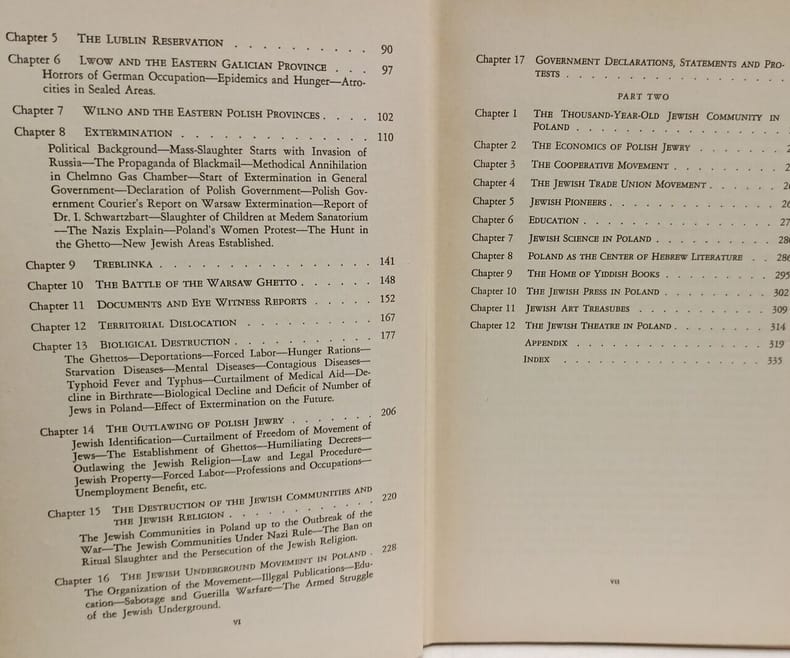
40314Warszawa : Panstwowe Wydawnictwo Naukowe, 1980 - un volume 17,3x24,4cm tolé sous jaquette illustrée, 412 pages illustrées en noir dans et hors texte - bon état -
4to., First Edition, with numerous coloured and monochrome photographs in the text; original pictorial wrappers, a near fine copy. Includes an impressive collection of photographs, many not easily available elsewhere.
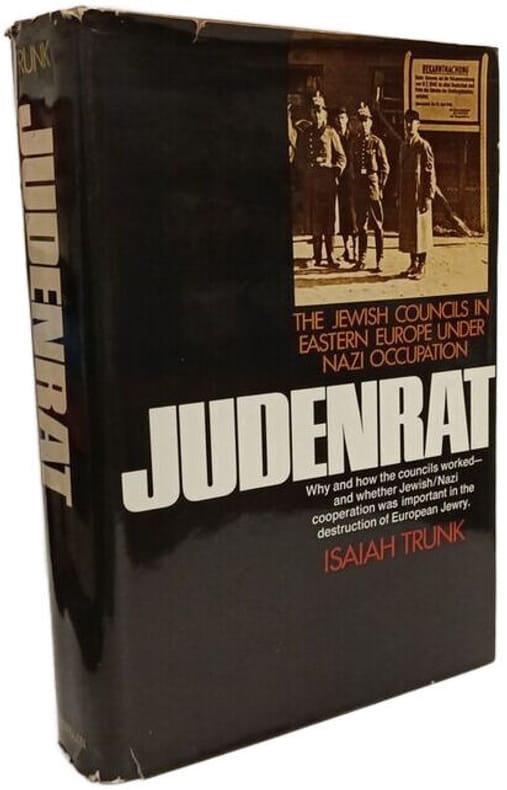
1972100147077The macmillan company 1972 in8. 1972. Cartonné jaquette. Cet ouvrage académique d'Isaiah Trunk historien et expert de l'Holocauste analyse le rôle et le fonctionnement des Judenräte (Conseils juifs) établis par les autorités nazies dans les ghettos d'Europe de l'Est pendant la Seconde Guerre mondiale. Il examine notamment la stratégie controversée de "sauvetage par le travail" mise en œuvre par ces conseils visant à démontrer la valeur économique des Juifs pour l'effort de guerre nazi. Le livre couvre la situation de plus de cinq millions de Juifs sous occupation nazie en Pologne dans les pays baltes en Biélorussie et en Ukraine
A CURA DI MARIA OLSOUFIEVA TRADUZIONI DI MARIA OLSOUFIEVA E LIA WAINSTEIN FELTRINELLI 1961 XX-413 PP. E 12 TAVOLE FUORI TESTO. SOVRACCOPERTA STANCA CON STRAPPI E LIEVI MANCANZE MARGINALI, COME DA FOTO, SEGNI DEL TEMPO, PER IL RESTO INTERNI IN OTTIMO ED ECCELLENTE STATO
1984100147321Cambridge University Press 1984 240 pages 46x549x351cm. 1984. Cartonné jaquette. 240 pages.
1943100147338Roy Publishers 1943 in8. 1943. Cartonné. Ce livre publié en octobre 1943 est un compte-rendu détaillé du martyre des Juifs de Pologne depuis le début de l'invasion allemande en septembre 1939 jusqu'au printemps 1943 couvrant notamment la liquidation du ghetto de Varsovie. Il est présenté comme un document compilant les événements tragiques de l'extermination alors que plus de 80% des victimes de la Shoah avaient déjà été assassinées
15 ILLUSTRAZIONI NEL TESTO GARZANTI 1972 353 PP. UNA DISCRETA RIPARAZIONE A SCOTCH AL MARGINE ANGOLARE SUPERIORE ESTERNO DELLA SOVRACCOPERTA (COME FORSE SI VEDE IN FOTO, IN ALTO A DX), LIEVI SEGNI DEL TEMPO, LIEVI FIORITURE, BUONE SE NON OTTIME CONDIZIONI GENERALI.
20101213762(Krakau), 2010. 94 Seiten; Illustrationen; 20 cm; kart.
danni con mancanza alla costola e copertina. Firma di appartenenza in copertina
19721170691972 Editions Fayard - 1972 - In-8, broché - 222 pages
Good Solid condition.; 8vo; 387 pages; In Yiddish. Not in Robinson & Friedman nor Wolff. Jewish partisan's memoirs of resistance against the Nazis in Poland. Illustrated with many photographs throughout. Inscribed by Kaczerginski in year of publication. Kaczerginski (19081954) was a Yiddish writer and cultural activist. Born in Vilna to a poor family and educated at that citys Talmud Torah, Shmerke (Pol., Szmerke) Kaczerginski lost both his parents during World War I. As a youth, he was involved with outlawed Communist groups and was arrested several times, serving a lengthy prison term. In the 1930s, two of his revolutionary poems became popular in Poland. He wrote short stories with a radical bent and was a correspondent and reporter for literary publications, including the semilegal leftist press in Poland and the New York Communist daily Morgn-frayhayt. Kaczerginski played a key role in shaping the writers and artists group Yung-Vilne; he organized its evening events and was the de facto publisher of its three miscellanies between 1934 and 1936. During the period of Soviet control over Lithuania in 19401941, he was even more active in the field of Yiddish culture, but at the same time experienced his first disappointments with the attitude of the Soviet regime toward Jewish culture. During the first period of Nazi occupation, Kaczerginski wandered through villages and towns posing as a deaf mute; after many difficulties, he ended up in the Vilna ghetto. Kaczerginski was very involved in the ghettos cultural activities. As a leader of its youth club, he wrote its Yugnt-himen (Youth Hymn), a song that immediately became popular. In 1943, he wrote the song Shtiler, shtiler in memory of the mass murders committed at Ponar. Set to music that Aleksander Volkoviski (later known as Aleksander Tamir) had submitted to a contest organized by the ghetto, the song was first heard at an evening performance there and over the years became one of the best-known songs of the Holocaust. With Avrom Sutzkever and others, Kaczerginski became part of a group of forced laborers whom the Germans designated to sort Jewish cultural treasures at YIVO and other locations. Known as the Papir-brigade (Paper Brigade), the groups members risked their lives to hide the most significant items, smuggling them back into the ghetto or entrusting them to non-Jewish acquaintances. Kaczerginski was a member of the Fareynikte Partizaner Organizatsye (United Partisans Organization; FPO), and, since YIVOs building was located outside the ghetto walls, he took part in smuggling weapons into the ghetto. In September 1943, Kaczerginski, along with Avrom and Freydke Sutzkever and other members of the FPO, escaped from the Vilna ghetto as part of an organized group of fighters just before its liquidation. They joined a Soviet partisan unit in the Naroch Forests, where Kaczerginski fought as a partisan until liberation in July 1944. Kaczerginskis books describe the destruction of Vilna, the partisan struggle, and his own experiences during the Holocaust period: Khurbn Vilne (The Destruction of Vilna; 1947), Partizaner geyen (Partisans on the Move; 1947), and Ikh bin geven a partizan (I Was a Partisan; 1952) (YIVO, 2010). Wear to cover and edges, very good condition. (HOLO2-87-3A)
8vo., First Edition thus, with frontispiece and endpaper maps; blue cloth, gilt back, a very good, bright, clean copy in dustwrapper. Kaplan's astonishingly detailed diary was found hidden in a paraffin tin more that twenty years after the destruction of the Warsaw Ghetto. It is a unique and harrowing day-by-day account of life in the Ghetto from September 1939 to August 1942 when Kaplan saved his diary even when he knew he could not save himself.
188022593Prag, Brandeis, o. J. (ca. 1880). 93 S. Kl.-8°. Späterere Interims-Kart. (Rücken geklebt, stark Gebrssprn.). [3 Warenabbildungen]
32526Robert Laffont 0 XXV - 398 pp
389 pages. A truly memorable book, particularly for those of Polish extraction lucky enough to have been born after the second world war. The author recounts his painful experiences from the days just prior to the German invasion and for the following few years when he served in the Polish underground. Prior owner's details partially blacked out inside front board. Book review affixed to front free endpaper. Moderate wear. Binding intact. A sound copy. Laska 672, Kehr & Langmaid 5407, Weiner Library Catalogue Seven 997, Enser p.343. Book
Signed and inscribed by Jan Karski upon front free endpaper. Karski [1914-2000] recounts his experiences when his homeland of Poland was rent asunder by the joint Nazi and Soviet invasion of 1939, and his harrowing subsequent life as a member of the Polish underground, during which he was captured by the Gestapo and severely tortured. Provides a ghastly eyewitness account of life in the Warsaw ghetto, into which Karski was smuggled so his observations could be reported to the outside world. Firearms advocates will cringe at Karski's account of what happened after he and a large group of Polish soldiers handed over their weapons to their 'comrades' from the Soviet Union. In 2012 Karski was posthumously awarded America's highest civilan honor, the Presidential Medal of Freedom, by President Obama. 391 pages. Moderate wear to publisher's red cloth. Dust jacket now preserved in archival-grade Brodart. Binding intact. A sound copy of this truly unforgettable WWII narrative. Laska 672, Kehr & Langmaid 5407, Weiner Library Catalogue Seven 997, Enser p.343. Book
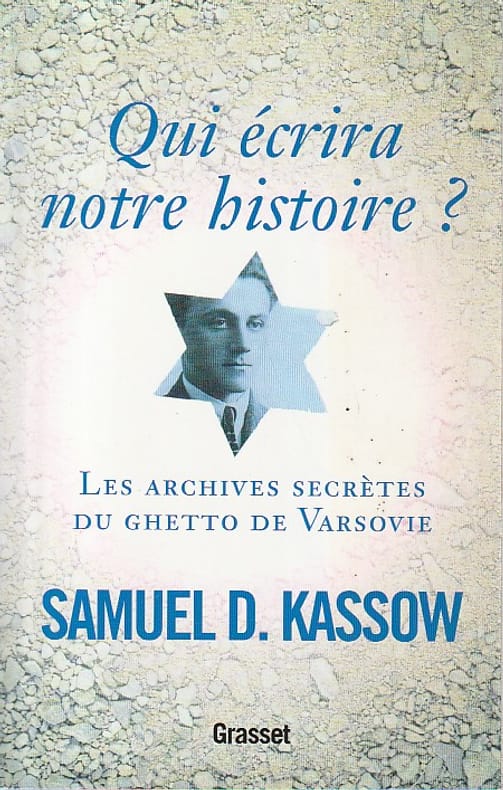
66930Grasset, 2011, 593 pp., broché, rousseurs sur la première page, bon état.
Grasset, 2011. In-8 broché de 593 pages, photos. Rares passages discrètement soulignés au crayon de papier sinon très bon état
Mm 160x225 Collana "Documenti" - Volume in copertina rigida con sovraccoperta editoriale, 359 pagine. Copia in ottime condizioni. Il volume ricostruisce l'arresto e la deportazione ad Auschwitz, il 16 ottobre 1943, di oltre mille ebrei romani.
74754Coll. "L'indicible", Paris, éd. Ramsay, 2008, EDITION ORIGINALE, in-8, cartonnage souple, couv. photos en noir éditeur, 280 pp., 1 plan et photos en noir, bibliographie, table des matières, L'histoire du ghetto de Varsovie occupé par les allemands durant la Seconde Guerre mondiale. Le témoignage d'un des derniers occupant. Très bon état
198458070Dover Publications Inc., New York 1984. 4°. XXV, 131 S., überwiegend schwarzweiss Fotos Softcover/Paperback, book in good condition, Exemplar in gutem Erhaltungszustand
198722203CBBerlin, Nishen (= Das Foto-Taschenbuch 9), 1987. 8°, 193 S. mit zahlreichen s/w-Abbildungen, illustr. original Kartonage (Paperback), Erstausgabe Einband minimal berieben, Rückdeckel mit zwei kleinen Schabspuren, sonst schönes, sauberes Exemplar.
193 S. : überwiegend Ill. ; 20 cm Broschur. Zustand wie neu. - The indicated shipping costs refer to books weighing up to one kilogram. - Bücher, die schwerer als ein Kilogramm oder größer als 35 x 25 cm sind, werden als Paket verschickt und kosten innerhalb Deutschlands bis zu zwei Kilogramm 6 Euro, darüber hinaus 7 Euro Porto. -
2018100150879ACTES SUD 2018 368 pages in8. 2018. Broché. 368 pages. À New York l'auteur Elias Khoury rencontre un mystérieux marchand de falafel israélien Adam Dannoun qui lui confie des cahiers calcinés contenant deux romans inachevés. Ce premier tome d'une trilogie explore la Nakba palestinienne de 1948 à travers une narration mêlant autobiographie références historiques et réflexions sur la restitution littéraire des crimes passés
1934B822Amsterdam, Verlag Allert de Lange, 1934. Ganzleinen, 8°, 216 S., 1. Auflage, Einband und Zeichnungen von P. L. Urban, Inhalt u.a.: Schime Kosiner verkauft ein Grundstück - Romanze von den bagdad-Juden - Die Messe des jack Oplatka - Der kabbalistische Erzschelm - Den Golem Wiederzuerwecken