Bauer, StefanAntiquariat.de
Wighton, CharlesAntiquariat.de
Eichmann: His Career and Crimes. 1.Auflage
1961142543London, Odhams, 1961. 287 S. mit Frontispitz und Illustrationen OLeinen, mit Goldprägung

Antiquariat Bäßler · DE - Vohenstrauss26,00 €
1 440 résultats
1995002145München, Oldenbourg, 1995. 466 S., 1 Blatt. Orig.-Pappband. Ein schönes, neuwertiges Exemplar der maßgeblichen Monografie in einwandfreiem Zustand.
196291073ABDüsseldorf, [ca. 1962]. 8°. 95 S. mit Abb. Original-Karton.
1961142543London, Odhams, 1961. 287 S. mit Frontispitz und Illustrationen OLeinen, mit Goldprägung
19613615ABFfm., Röderberg, (1961). 8°, 184 S., 32 Taf., OLwdbd.m. illustr. OUmschl., dieser m.hinterl. Einrissen; schönes Expl.
1964312699München: Piper, 1964. 344 Seiten. Originalkarton 22 cm
198723728CBMünchen, Piper (= Serie Piper sp 308), 1987. 8°, 357 S., illustr. original Kartonage (Paperback), 6. Auflage Buchrücken aufgehellt, obere Ecke des Vorderdeckels mit Knickspur
1961JUDA0192(Berlin:) Ausschuss für Deutsche Einheit (1961). 93 (3) S. Mit einigen Photos u. Faks. im Text, obrosch.
1967EEzz0434(Wien Mchn., Vlg. f. Jugend u. Volk 1967). 68 S. Mit 25 ganzs. Zeichn. quer-4°. OLn. Neuwertig.
19806338CBFrankfurt am Main, Johann Wolfgang Goethe-Universität, 1980. 8°, 141 S., original Kartonage (Paperback), Erstausgabe sehr schönes, sauberes Exemplar (hhreg)
1976134967Ludwigsburg. Pädagogische Hochschule 1976. Typoskript, (2), 51 Blätter. Folienumschlag. 30x21 cm
1989008932München, Adalbert Stifter-Verein, 1989. 256 S. Großformatige Orig.-Broschur. Ein schönes, gut erhaltenes Exemplar mit nur leichten Gebrauchsspuren.
1961ZEIT0579Poznán [u.a.] : Wyd. zachodnie, 1961. 240 S., einige Abb. u. Faks. im Text., ill.OBrosch., Umschlag mit Staubspuren In poln.
199421942ABKöln, Kiepenheuer & Witsch, 1994. Gr. 8°. 237 Seiten, mit Abbildungen des Dichters und 15 Fotografien des Originalmanuskripts. Pappband mit Schutzumschlag. Die Versandkosten für Kunstwerke und mehrbändige Werke können von den Standard-Versandkosten abweichen. Guter Zustand.
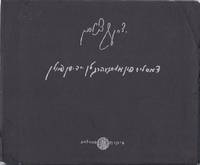
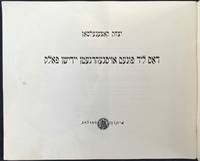
194829513New York; YKUF 1948. Paperback. Original Wrappers. 12mo. 79 pages. 17 cm. Undated edition. In Yiddish. <br> Includes introduction by Miriam Novitch as well as "Vi Yitshak Katsnelson hat geshribn zayne klog-lider" also by Miriam Novitsh on pages 15-16.<br> “Song of the Murdered Jewish People" by Itzhak Katzenelson 1885–1944 a Hebrew and Yiddish poet. â€Katzenelson’s world fell apart when in August 1942 his wife Hanna and two younger sons Ben-Tsiyon and Binyamin were deported to Treblinka. From then on his literary creativity was piercingly shaped by lamentations over the loss of his family. Nonetheless with his oldest son Tsevi he found the strength to join the Jewish Fighting Organization and took part in the first uprising of January 1943. <br> After the ghetto was destroyed in April and May 1943 he escaped to the Aryan section of Warsaw and obtained a Honduran identity document. Nevertheless he was sent to a German detention camp for foreign subjects in Vittel France. He was imprisoned there until April 1944 and devoted most of his time to writing. <br> Two important works were produced during that period: Pinkas Vitel The Vittel Diary a Hebrew composition that uses the language of an incensed diarist and reconstructs the days of terror in Warsaw during the mass deportations; and Dos lid fun oysgehargetn yidishn folk The Poem about the Murdered Jewish People a pathos-filled Yiddish poem that laments the destruction of the Jewish people and of the poet himself who has been become bitterly angry with humankind and God. These two works are among the boldest and most lofty literary expressions to emerge from the Holocaust.…<br> All of Katzenelson’s works from his Vittel period were either buried in hiding places or were given to people he trusted; consequently they were saved and published shortly after the end of the war. <br> In the middle of April 1944 Katzenelson and his son Tsevi were sent to the Drancy transit camp and from there one month later to Auschwitz where they were murdered. In 1950 the Ghetto Fighters kibbutz built a museum and an institute for research about the Holocaust that bear Yitshak Katzenelson’s name†YIVO Encyclopedia. <br> Subjects: Holocaust Jewish 1939-1945 -- Poetry. OCLC: 12260367. <br> Half Dollar size chip to cover no text loss institutional stamp on title page taped spine otherwise Good Condition. BK5 B HOLO2-97-33-XX-ELABCC. New York; YKUF paperback
196343253New York: YKUF 1963. Paperback. Original Wrappers. 12mo. 79 pages. 17 cm. In Yiddish. <br> <br> Includes introduction by Miriam Novitch as well as "Vi Yitshak Katsnelson hat geshribn zayne klog-lider" also by Miriam Novitsh on pages 15-16.<br> <br> “Song of the Murdered Jewish People" by Itzhak Katzenelson 1885–1944 a leading Hebrew and Yiddish poet. <br> <br> â€Katzenelson’s world fell apart when in August 1942 his wife Hanna and two younger sons Ben-Tsiyon and Binyamin were deported to Treblinka. From then on his literary creativity was piercingly shaped by lamentations over the loss of his family. Nonetheless with his oldest son Tsevi he found the strength to join the Jewish Fighting Organization and took part in the first uprising of January 1943. <br> <br> After the ghetto was destroyed in April and May 1943 he escaped to the Aryan section of Warsaw and obtained a Honduran identity document. Nevertheless he was sent to a German detention camp for foreign subjects in Vittel France. He was imprisoned there until April 1944 and devoted most of his time to writing. <br> Two important works were produced during that period: Pinkas Vitel The Vittel Diary a Hebrew composition that uses the language of an incensed diarist and reconstructs the days of terror in Warsaw during the mass deportations; and Dos lid fun oysgehargetn yidishn folk The Poem about the Murdered Jewish People a pathos-filled Yiddish poem that laments the destruction of the Jewish people and of the poet himself who has been become bitterly angry with humankind and God. These two works are among the boldest and most lofty literary expressions to emerge from the Holocaust.…<br> All of Katzenelson’s works from his Vittel period were either buried in hiding places or were given to people he trusted; consequently they were saved and published shortly after the end of the war. <br> <br> In the middle of April 1944 Katzenelson and his son Tsevi were sent to the Drancy transit camp and from there one month later to Auschwitz where they were murdered. In 1950 the Ghetto Fighters kibbutz built a museum and an institute for research about the Holocaust that bear Yitshak Katzenelson’s name†YIVO Encyclopedia. <br> <br> Subjects: Holocaust Jewish 1939-1945 -- Poetry. OCLC: 28824340. <br> <br> Some stains on covers Good Condition. B HOLO2-97-33A-XX-ELABCC. New York: YKUF paperback
1987ZEIT2045Wien, Picus 1987. Gr.-8°. 241 S. m. zahlreichen s/w Abb., OKart.
1959193093-1Ffm., United Restitution Organization 1959. 4°. 106 S. Original-Kartonband
19612565Ulm, Selbstverlag Stadt Ulm, 1961. 423 S., 2 leere Bl., Original-Halbleinenband mit Deckeltitel. Zustand 1.
1961145172Ulm 1961. Typoskript. 423 Seiten. Original-Halbleinwand-Einband. (Einband etwas randgebräunt. Gutes Exemplar). 29x20 cm
199424248Hamburg, 1994. 36 S. Mit zahlr. Abb. 4to. Geheftet.
199309149Berlin, ÖTV, 1993. kt, 88S, gutes Exemplar
1990G73716Baarn, Ambo 1990 203pp., 21cm., luttele onderlijningen, goed, G73716
1986193721-1Jerusalem, Beate Klarsfeld Foundation 1986. Gr.8°. 944 S. Original-Kartonband
198775666New York: Beate Klarsfeld Foundation 1987-. First edition. Five large octavo volumes. 22 493 `; 4 364; 4 467 plus some facsimile illustrations; 4 643 1; 4 561 1 pp/ Pubisher's yellow wrappers lettered in black and each front with an illustration of the Jews of the Grodno Ghetto. Unfortunately a couple of volumes have some tide marks but not horrifiically so. Part 3 has taken the brunt of it. Still an invaluable source record of a great sin of mankind.Comprosed of; v. 1. A. Accounts by Jewish survivors residing in the West. B. Accounts recorded in Poland and the Soviet Union. -- v. 2. Accounts by German witnesses or perpetrators of the final solution. -- v. 3. A. German justice seeking the truth. B. Documents. -- v. 4. Grodno in the Bialystok trial 1966-1967. -- v. 5. The Grodno trial in Cologne 1968. Jewish community in pre-war Grodno includes "Lista Platnikow Skladki Gmninnej Gminy Wyznaniowej Zydowskiej w Grodnie na rok 1937" v. 5 p. 1-97 in the section headed "Jewish Community in Pre-War Grodno"; German documents in Grodno archives: Testimonies concerning Grodno gathered by Jewish underground and recovered after the war; Testimonies gathered in years 1944-1946.; Testimonies gathered in Israel around 1957 in archives of Yad Vashem.From 1939 to 1941 the Soviet Union occupied Grodno. During this time some 4000–5000 Jewish refugees arrived from German-occupied lands to the west. About half of these refugees were later deported into the interior of the USSR. On 13 July 1941 after taking over the city the Germans executed 100 Jews among the intelligentsia and in November of that year they created two ghettos one in the city’s center—to house 15000 Jews designated as “productiveâ€â€”and the other in its suburb of S obodka to house 10000 “unproductive†Jews. The liquidation of the ghettos began in November 1942. The Germans deported Grodno’s Jews to Auschwitz—some via a transit camp in nearby Kelbasin where many died as a result of disease and inhumane conditions—and to Treblinka. On 12 March 1943 the approximately 1000 Jews remaining in the city were deported to the Bia ystok ghetto. When the Red Army entered Grodno on 14 July 1944 only about 250 Jews remained. Beate Klarsfeld Foundation unknown
199154481München: Oldenburg 1991. 584 S. Reg. Ln.mS: *einzelne Bleistiftanstreichungen.