2 859 résultats
1968PJE-2Alexander CALDER : SOLEIL ET LUNE (ou "Soleil Noir, Lune Rouge") - 1968 (62 x 88,9 cm) Lithographie en couleur, d'après la gouache originale de même format, sur papier d'édition. Signée et datée dans la planche en bas à droite, dimensions de la feuille : 62 x 88,9 cm. Tirage limitée non numérotée, signée et datée dans la planche. Épreuve originale en très bon état, de très légers plis de manipulation en marge droite. Jamais encadrée, la couleur est parfaitement préservée et le support immaculé sans jaunissement. —— ENGLISH DESCRIPTION: Alexander CALDER, "SUN and MOON", 1968 : Unsigned Lithograph. Paper size is 25 x 36.75 inches, with an image size of 24 x 32.5 inches. The lithograph is from an unknown edition size and was never framed, the color is perfectly preserved, no toning Printed by the Collector's Guild, New York, in 1968. The condition is excellent, slight marks of handling. Additional details: 1968 lithograph printed by the Collector's Guild, New York.
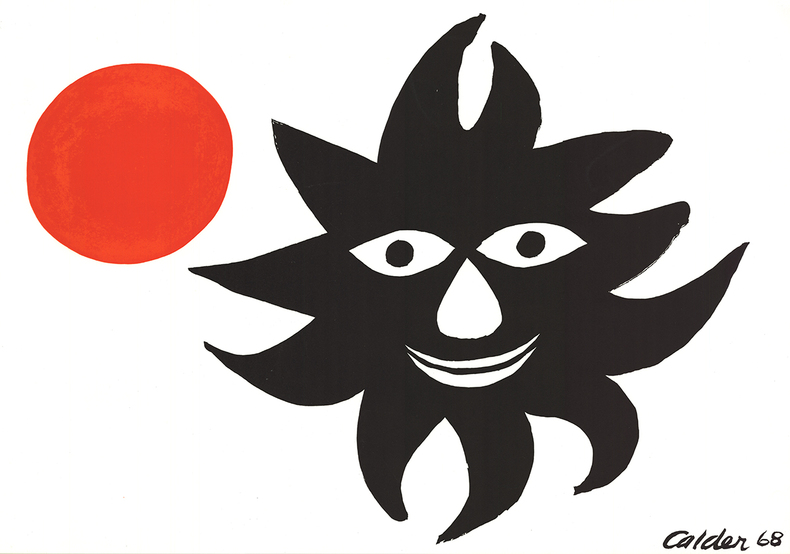
19683163Alexander CALDER : SOLEIL ET LUNE (ou "Soleil Noir, Lune Rouge") - 1968 (62 x 88,9 cm) Lithographie en couleur, d'après la gouache originale de même format, sur papier d'édition. Signée et datée dans la planche en bas à droite, dimensions de la feuille : 62 x 88,9 cm. Tirage limitée non numérotée, signée et datée dans la planche. Épreuve originale en très bon état, de très légers plis de manipulation en marge droite. Jamais encadrée, la couleur est parfaitement préservée et le support immaculé sans jaunissement. —— ENGLISH DESCRIPTION: Alexander CALDER, "SUN and MOON", 1968 : Unsigned Lithograph. Paper size is 25 x 36.75 inches, with an image size of 24 x 32.5 inches. The lithograph is from an unknown edition size and was never framed, the color is perfectly preserved, no toning Printed by the Collector's Guild, New York, in 1968. The condition is excellent, slight marks of handling. Additional details: 1968 lithograph printed by the Collector's Guild, New York.
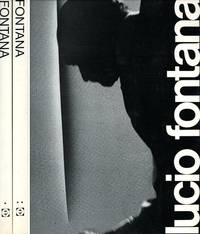
1974231469Bruxelles: La Connaissance 1974. Rilegato tela sovracoperta cloth dust jacket. Molto buono Very Good. Opera in 2 volumi: Volume I: Essays par <strong>Jan van der Marck et Enrico Crispolti</strong>. Volume II: Catalogue raisonné"; des peintures sculptures et environnements spatiaux redigè" par <strong>Enrico Crispolti</strong>. Testi critici in inglese francese e italiano.<strong> </strong>Con 120 illustrazioni a colori e in bianco e nero anche in tavole a piena pagina nel primo volume e circa 2800 riproduzione in bianco e nero di tutte le opere schedate nel secondo volume. 4to. pp. 148 - 242. Molto buono Very Good. Prima edizione First Edition. <em>Fondamentale primo catalogo ragionato di <strong>Lucio Fontana</strong> con importanti testi critici</em> La Connaissance, hardcover
347091 page in4 - bon état - En tête: "Louis Jou - Labora - Lege - Relege - Ora - Les Baux de Provence" -
197022037ROWOHLT ERNST 06/1970. 18. softcover. Don Camillo & Peppone ROWOHLT, ERNST paperback
196722461ROWOHLT ERNST 07/1967. 12. softcover. Don Camillo & Peppone ROWOHLT, ERNST paperback
40745BERTELSMANN CARL. 1. hardcover. Arnoldkinder Die BERTELSMANN, CARL hardcover
196721466ULLSTEIN LEOPOLD 1967. 1. softcover. ULLSTEIN, LEOPOLD paperback
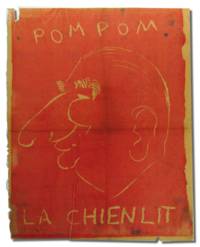
196840516Paris: np 1968. 55 x 43cm. Image of a silhouetted grinning male figure with an enlarged nose reading "Pom Pom La Chielit" which loosely translates to "Pom Pom the Shitty Mess" The nickname "Pom Pom" refers to Georges Pompidou the then Prime Minister and top aid to President Charles de Gaulle. The term "chienlit" was brought to notoriety by de Gaulle in an angry speech during the student protests when he used the vernacular term as a scatological pun "La reforme oui la che-en-lit non" meaning "Reform yes but chaos no." Subsequently the students reused the expression on leaflets and posters where silhouettes of political leaders were accompanied by confrontational slogans. np unknown
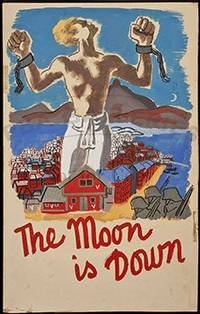
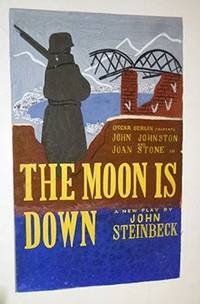
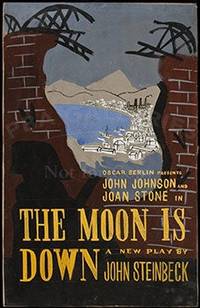
16-5570New York: Martin Beck Theatre1942. Gouache in 8 colors on board.'22 x 14 inches "Free men cannot start a war but once it is started they can fight on in defeat. Herd men followers of a leader cannot do that and so it is always the herd men who win battles and the free men who win wars.â€â€• John Steinbeck The Moon Is Down.The Moon is Down was John Steinbeck's second attempt at writing a novel in play form Of Mice and Men was his first. It was composed while on assignment from the Foreign Information Service a division of the Office of Strategic Services charged with combating Nazi propaganda. His original story depicting a small American town invaded by enemy troops was rejected by the FIS who feared that it might demoralize the civilian public. In his revised manuscript published by Viking in 1942 Steinbeck kept the same plot but set it in an unnamed Scandinavian town rather than the United States. Despite mixed critical reception the book was a remarkable public success outselling The Grapes of Wrath two-to-one in pre-publication; it would eventually pass through 76 editions. Shortly after publication the producer Oscar Serlin purchased the dramatic rights to The Moon is Down Herman Shumlin initially bought them but passed them on saying he “did not care for The Moon is Down’s politics.†Serlin known for his production of “Life with Father†accepted the challenge believing Steinbeck’s play would attract a large audience. “The Moon is Down†premiered on Broadway in April 1942 starring Otto Kruger as Colonel Lanser and Ralph Morgan as Mayor Orden. Like the novel before it the play was publicly adored but critically lambasted. Life magazine reported that it was “trumpeted louder than any literary event of the season†while the critical consensus was that “Steinbeck was too easy on the Germans too optimistic about the ultimate victory of the Allies and ultimately too moralistic." Despite its initial Broadway run lasting only nine weeks the play was immensely successful on the road and abroad especially in London and Stockholm. Rather surprisingly it was nominated for Best Play by the New York Drama Critics’ Circle and placed second.Provenance: From the estate of producer Oscar Serlin. New York: Martin Beck Theatre,1942 unknown
16-5574New York: Martin Beck Theatre1942. Gouache in 7 colors on paper mounted on board.'22 x 14 inches "Free men cannot start a war but once it is started they can fight on in defeat. Herd men followers of a leader cannot do that and so it is always the herd men who win battles and the free men who win wars.â€â€• John Steinbeck The Moon Is Down.The Moon is Down was John Steinbeck's second attempt at writing a novel in play form Of Mice and Men was his first. It was composed while on assignment from the Foreign Information Service a division of the Office of Strategic Services charged with combating Nazi propaganda. His original story depicting a small American town invaded by enemy troops was rejected by the FIS who feared that it might demoralize the civilian public. In his revised manuscript published by Viking in 1942 Steinbeck kept the same plot but set it in an unnamed Scandinavian town rather than the United States. Despite mixed critical reception the book was a remarkable public success outselling The Grapes of Wrath two-to-one in pre-publication; it would eventually pass through 76 editions. Shortly after publication the producer Oscar Serlin purchased the dramatic rights to The Moon is Down Herman Shumlin initially bought them but passed them on saying he “did not care for The Moon is Down’s politics.†Serlin known for his production of “Life with Father†accepted the challenge believing Steinbeck’s play would attract a large audience. “The Moon is Down†premiered on Broadway in April 1942 starring Otto Kruger as Colonel Lanser and Ralph Morgan as Mayor Orden. Like the novel before it the play was publicly adored but critically lambasted. Life magazine reported that it was “trumpeted louder than any literary event of the season†while the critical consensus was that “Steinbeck was too easy on the Germans too optimistic about the ultimate victory of the Allies and ultimately too moralistic." Despite its initial Broadway run lasting only nine weeks the play was immensely successful on the road and abroad especially in London and Stockholm. Rather surprisingly it was nominated for Best Play by the New York Drama Critics’ Circle and placed second.Provenance: From the estate of producer Oscar Serlin. New York: Martin Beck Theatre,1942 unknown
16-5571New York: Martin Beck Theatre1942. Gouache in 7 colors on paper mounted on board.'22 x 14 inches "Free men cannot start a war but once it is started they can fight on in defeat. Herd men followers of a leader cannot do that and so it is always the herd men who win battles and the free men who win wars.â€â€• John Steinbeck The Moon Is Down.The Moon is Down was John Steinbeck's second attempt at writing a novel in play form Of Mice and Men was his first. It was composed while on assignment from the Foreign Information Service a division of the Office of Strategic Services charged with combating Nazi propaganda. His original story depicting a small American town invaded by enemy troops was rejected by the FIS who feared that it might demoralize the civilian public. In his revised manuscript published by Viking in 1942 Steinbeck kept the same plot but set it in an unnamed Scandinavian town rather than the United States. Despite mixed critical reception the book was a remarkable public success outselling The Grapes of Wrath two-to-one in pre-publication; it would eventually pass through 76 editions. Shortly after publication the producer Oscar Serlin purchased the dramatic rights to The Moon is Down Herman Shumlin initially bought them but passed them on saying he “did not care for The Moon is Down’s politics.†Serlin known for his production of “Life with Father†accepted the challenge believing Steinbeck’s play would attract a large audience. “The Moon is Down†premiered on Broadway in April 1942 starring Otto Kruger as Colonel Lanser and Ralph Morgan as Mayor Orden. Like the novel before it the play was publicly adored but critically lambasted. Life magazine reported that it was “trumpeted louder than any literary event of the season†while the critical consensus was that “Steinbeck was too easy on the Germans too optimistic about the ultimate victory of the Allies and ultimately too moralistic." Despite its initial Broadway run lasting only nine weeks the play was immensely successful on the road and abroad especially in London and Stockholm. Rather surprisingly it was nominated for Best Play by the New York Drama Critics’ Circle and placed second.Provenance: From the estate of producer Oscar Serlin. New York: Martin Beck Theatre,1942 unknown
196840516Paris: np 1968. 55 x 43cm. Image of a silhouetted grinning male figure with an enlarged nose reading "Pom Pom La Chielit" which loosely translates to "Pom Pom the Shitty Mess". The nickname "Pom Pom" refers to Georges Pompidou the then Prime Minister and top aid to President Charles de Gaulle. The term "chienlit" was brought to notoriety by de Gaulle in an angry speech during the student protests when he used the vernacular term as a scatological pun "La reforme oui la che-en-lit non" meaning "Reform yes but chaos no." Subsequently the students reused the expression on leaflets and posters where silhouettes of political leaders were accompanied by confrontational slogans. <br/><br/> np unknown books
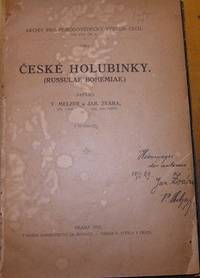
68-4643Prague: Rivnace 1927. 4to. 126 pp. Grey Cloth on Black Boards. B&W plates. Good with loss to title page text block browned from acidification. Hand written title affixed to cover. Text in Czech. Scarce. Prague: Rivnace, 1927. hardcover
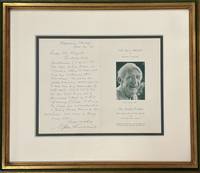
19653304891965. framed. near fine. Hand-written letter from American author Upton Sinclair. Written on an program from 'The Sinclair Exhibit' at Indiana University which took place in September 1963. The letter written on the opposite page was written by Sinclair in 1965 while in California. Please inquire for more information.<br/> <br/> Upton Beall Sinclair Jr. was an American author muckraker journalist and political activist and the 1934 Democratic Party nominee for governor of California. He wrote nearly 100 books and other works in several genres. Sinclair's work was well known and popular in the first half of the 20th century and he won the Pulitzer Prize for Fiction in 1943.<br/> <br/> unknown
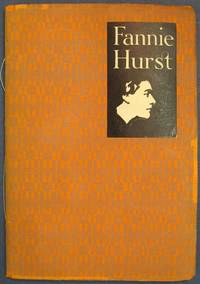
192834279New York and London: Harper & Brothers Publishers 1928. 1st edition. PRESENTATION copy INSCRIBED from Fannie to "Beautiful Hilda" Doolittle aka 'H.D.'. Orange patterned-paper wrappers with black paper title onlay to front wrapper. Custom orange cloth clamshell case. Some modest edgewear. Pamphlet re-sewn. A VG copy in a Nr Fine case. 6 41 1 pp. Photographic frontis of Fannie Hurst by Elzin of N.Y. 4 inserted photographic images of Fannie in text. 8vo. 7-5/8" x 5-1/4" <br/><br/>A 'puff' booklet for Ms Hurst's works which were quite popular in her day. why herein Broun states LUMMOX more thrilling than Cather's A LOST LADY and Nathan's PUPPET MASTER. Not having read any of the three I can't comment on his assessment but can say the inscription to H.D. comes as no surprise. both authors viewed in their day as progressive in terms of feminist & gay rights. "Two peas of the same pod" so to speak. Harper & Brothers Publishers hardcover books
197922036ROWOHLT ERNST 10/1979. 361.-370. Tsd. softcover. Don Camillo & Peppone ROWOHLT, ERNST paperback
198822033ROWOHLT ERNST 07/1988. 447.-451. Tsd. softcover. Don Camillo & Peppone ROWOHLT, ERNST paperback
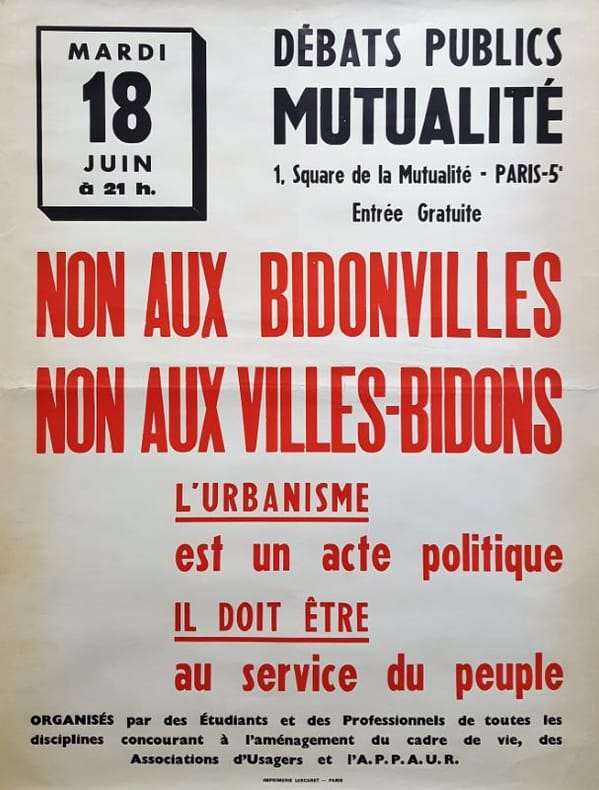
1360Affiche originale. Imprimerie Lescaret, Paris. Impression offset. Dim: 75,5 x 58 cm
Manifesto originale. Lievi tracce di piegatura. Serigrafia a inchiostro verde. Manifesto del Comité d’action du 5e. Timbro in parte sbiadito dell’École N.le Superieure des Beaux Arts.
Manifesto originale. Lievi segni di piegatura, piccolo strappetto al margine destro, ma senza mancanze. Serigrafia a inchiostro blu. Uno dei manifesti più celebri del maggio francese, dedicato agli scioperi della ORTF, emittente radiotelevisiva. Fa parte della tiratura in grande formato, a quanto risulta dai cataloghi e repertori on line più rara rispetto a quella in formato 46x58. Timbro in parte sbiadito dell’École Normale Supérieure des Beaux Arts.
Manifesto originale. Minimi strappetti perimetrali, ma ottimo esemplare. Manifesto per il boicottaggio del referendum francese del 27 aprile 1969 relativo alla creazione delle regioni e alla riforma del Senato. Il risultato negativo portò alle dimissione il presidente della repubblica Charles de Gaulle.
GF178562 pages in8 - trous de classeur - bon état -
198122035ROWOHLT ERNST 04/1981. 384.-395. Tsd. softcover. Don Camillo & Peppone ROWOHLT, ERNST paperback