98 résultats
Covers show light wear only, text/interior is clean and free of marking of any kind. 357 pages, translated from the Persian to English by George Morrison. This is a prose translation of the epic poem by Gurgani, and is one of the earlies of its kind in Persian literature. Looks like a pretty action-packed tale involving a sorceress who casts a spell of impotency; escapes, a wild boar, a brawl, a marriage ensue. Jacket is quite shelf-worn with several open tears, edge/corner wear but intact.
1885100146501G. Masson Éditeur 1885 in8. 1885. Relié. Cet ouvrage de Henri Filhol relate les expéditions sous-marines menées par les navires "Travailleur" et "Talisman" documentant la vie marine des grands fonds et l'importance scientifique de ces explorations pour comprendre l'origine de la vie. Il s'agit d'un texte patrimonial du 19ème siècle (1885) faisant partie d'une collection de conservation
New English Paperback. Pbo. 4to. (30 x 24 cm). In Turkish. 148 p., color ills. Ottoman charm seals from the Haluk Perk Collection. Osmanli tilsim mühürleri. Halûk Perk Koleksiyonu. OTTOMANIA Turkish and Islamic arts Talisman Ottoman culture Seal Collection Islamic culture health History of medicine Turkish folklore.
196640701München, Callwey, 1966. 1. Aufl. 270 S. mit zahlr. Ill. (z.T. farb.) 29 x 26 cm, Leinen mit OSchU
New English Original bdg. Dust wrapper. 4to. (32 x 25 cm). English Edition. 241, [1] p., color ills. The arms of the sultans. The arms collection of Topkapi Palace. Translated by Alev (Kerimoglu) Bulut. "Weapon is a device that was developed by the mankind in the ancient ages for protection against the events of nature and enemies. The arms that were used for the functions of drilling, cutting, defense, and the firing function to be acquired later, were accepted as works of art owing to the mastery and craftsmanship skills that they display. The present work title The arms of the sultans. The arms collection of Topkapi Palace was prepared for the purpose of presenting to the readers The Arms of Collection of the Topkapi Palace Museum, where some of the rarest examples of these works of art are on display, as a whole along with an analysis of its fundamental attributes". Covering 1,300 years and consisting of 52,000 weapons of Arab, Umayyad, Abbasid, Mamluk, Persian, Turkish, Crimean Tartar, Indian, European, and Japanese origin, the Topkapi Palace Museum's weaponry collection is also among the world's premier weapons collections. The collection is made up in part of weapons transferred from the cebehâne and those used by the palace guards; however, the collection's most noteworthy section consists of those weapons ordered by the sultan personally or specially made as gifts for him, which weapons are a part of the palace's private collection. This collection includes weaponry owned by such sultans as Mehmed II, Bayezid II, Selim the Grim, Suleiman the Magnificent, Selim II, Mehmed II, and Ahmed I, as well as the weapons of such high-level dignitaries as grand viziers, pashas, and palace chamberlains; all of these weapons are eye-catching with their fine craftsmanship and decorations. An additional factor that contributed to the diversification of the collection's highly artistic weaponry was the tradition of bringing to the palace the weapons of important figures that were obtained through plunder.
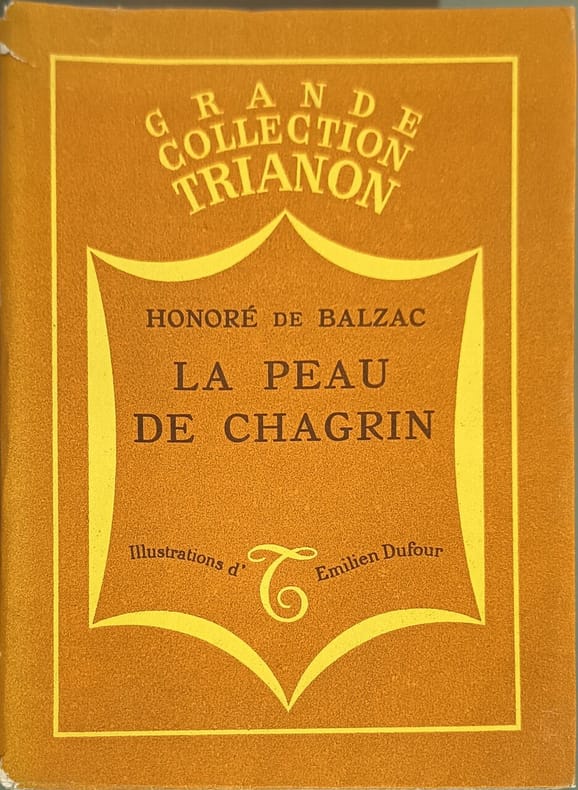
19308003Editions du trianon 1930 323 pages in8. 1930. Broché avec jaquette. 323 pages. Le roman raconte l'histoire de Raphaël de Valentin un jeune homme désespéré par la misère et les échecs qui acquiert un talisman magique une peau de chagrin ayant le pouvoir d'exaucer tous ses désirs. Cette quête de bonheur mène paradoxalement à sa destruction explorant l'interaction entre le désir la volonté et la vie
0282542272.Gpaperback. Good. Access codes and supplements are not guaranteed with used items. May be an ex-library book. paperback
9622Pierre Fanlac Périgueux 1971
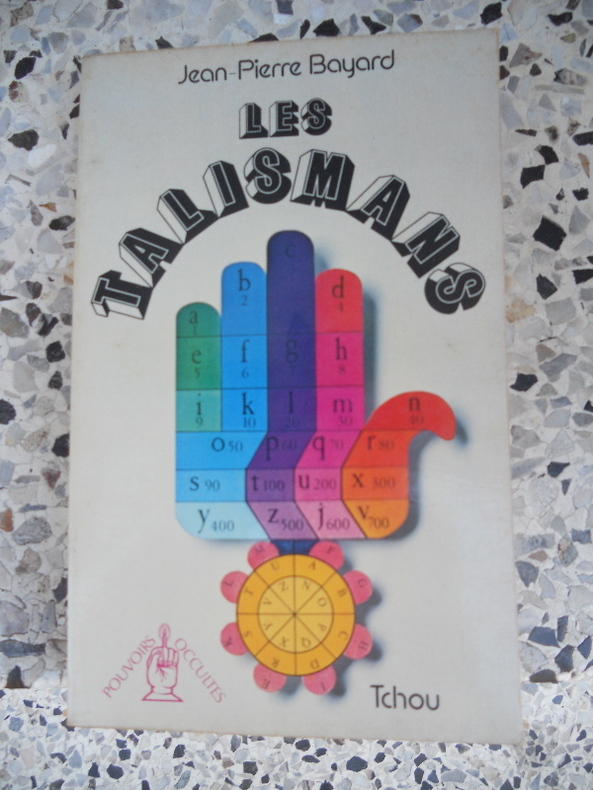
24130Tchou, collection "Les pouvoirs occultes", 1976. Format 13x21 cm, broche, 300 pages. Bon etat.
2002775102002 France Loisirs, 2003 - 1 volume in-8 , cartonnage noir de l'éditeur sous jaquette illustrée - 550 pages
19704323Den Haag: Couvreur um 1970 (?). 2. vollst. neubearb. Auflage. Mit 52 Abbildungen, 214 S., 8° , OKart.
197958871ABCH-Schwerzenburg, Ansata Verlag Paul A. Zemp 'Helfenstein', 1979. 8° (21x14), (VI), 360 S., 5 Bl., OPbd mit ill OU, Umschlag an der Kanten etwas angestossen, sonst sauber und wohlerhalten,
4530Paris, Librairie Orientaliste Geuthner, 1926. 1 volume in-16, 49 pp., XXVII planches hors-texte, reliure pleine toile, très bon état.
4323Paris, Librairie Orientaliste Geuthner, 1926. 1 volume in-16, 49 pp., XXVII planches hors-texte, broché, couvertures imprimées légèrement insolées, très bon état.
19961262841996 Editions Traditionnelles, Paris - 1996 - In-8 broché - 153 pages
Mm 240x290 Photos by Mauro Magliani. Printed Pages: 318 with colour illustrations throughout. Brand new in original shrinkwrap.
196670715München, Verlag George D.W.Callwey, 1966. Original-Leiennband mit Schutzumschlag, 4°, 270 Seiten.
198812949Rio de Janeiro, FUNARTE, 1988. Broschiert, 8°, 167 S., zahlreiche s/w Abbildungen; -wenig gebräunt, gutes Exemplar/ soft board, 8vo, 167 pp, numerous b/w illustrations; -very good copy.
New New Turkish Original bdg. Dust wrapper. 4to. (28 x 21 cm). In Turkish. 574 p., color ills. Study on the objects used in daily life in the Ottoman Empire. Osmanli'da günlük yasam nesneleri. Second Edition.
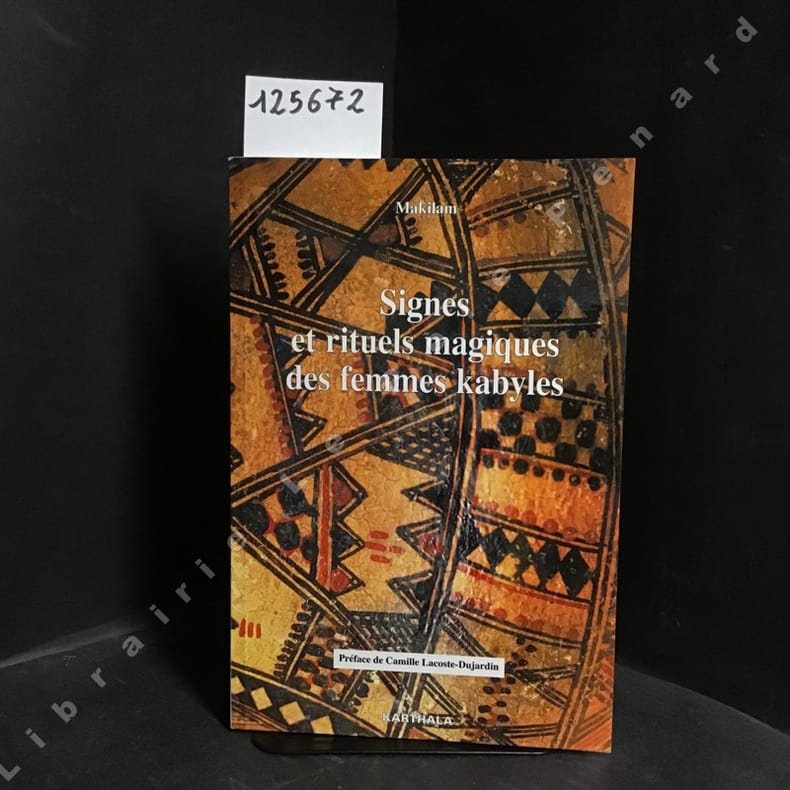
20111256722011 Editions Karthala, Paris - 2011 - In-8 broché, couverture illustrée - 207 pages
55165, AGDE 1999, 1999 Softcover, 144 pages, Texte en Francais, 300 x 210 mm, une bon exemplaire,.
24840PARIS, Editions De La Pensee Moderne - 1975 - E.O. - In-8 - broché - Couverture illustrée à rabats - illustrations en texte - 332 pages - Propre
in-8°, 330 pp., nombreuses figures dans le texte, quelques planches hors-texte, broche, couverture illustree à rabats Bel exemplaire. [DV-19]
PARIS, Editions De La Pensee Moderne - 1975 - E.O. - In-8 - broché - Couverture illustrée à rabats - illustrations en texte - 332 pages - Propre