2 922 résultats
S20C-02911The Fan Club Inc. Collectible - Very Good. Collectible - Very Good. Lot of 20 Star Wars Insider Magazine ranging 1999-2004. In polypropylene bag. Barbara G. Mertz Rev Trust custom bookplate on front inside cover of all issues.This book formed part of Barbara G. Mertz's personal collection at her home in Frederick Maryland. science fiction films movies pop culture NOT AVAILABLE FOR SHIPMENT OUTSIDE OF THE UNITED STATES. The Fan Club, Inc. unknown
MA03OS-00077Oakland MD: The Garrett County Historical Society. Collectible - Good. Oakland MD: The Garrett County Historical Society No date stated. Volume 3. 8vo Hardcover. 620ppindex. B/W photos. Good book. Many dog-eared pages. Otherwise inside clean. US history garrett county maryland MD genealogy Inquire if you need further information. Oakland, MD: The Garrett County Historical Society hardcover
56 pages. Features: How the French pay ship Le Chameau gave up its fortune to divers Alex Storm, Dave MacEachern and Harvey MacLeod off the coast of Cape Breton, Nova Scotia - great colour photos with article; Harold Wilson - My, how he's changed!; Michael Langham - this quiet man has been the Stratford Festival's undisputed monarch for 11 years; They learn to live with drinking parents; What's Next - a Canadian Tennis Star? - Bob Puddicombe, Bob Bardsley, Barry Shakespeare, Bob Moffat, Vic Rollins, Don McCormick; Divorce, Mexican Style - our reporter zips through the charade of a Juarez divorce to prove a point - but hundreds of Canadians do it in earnest; "You're a Damn Lying Scoundrel" - the last fatal duel to be fought in Canada between John Wilson and Robert Lyon; Vintage colour ad for Honda automobiles - convertible and G.T. Fastback Coupe; Canadiana with Gerald Stevens; Back cover ad by Carling introduces their 9 brewmasters. Average wear. Unmarked. A sound copy. Book
1974294293.Gpaperback. Good. Access codes and supplements are not guaranteed with used items. May be an ex-library book. paperback
1958140666N.p.: Regal Films 1958. Draft script for the 1958 film. Copy belonging to actress Lyn Thomas with annotations throughout relating to her character in the film Laura. <br /> <br /> A space probe returns to earth bearing an unusual extraterrestrial fungus which when accidentally mixed with human blood turns into space rust. The rust expands rapidly threatening to consume the entire planet. Produced on a tight budget $12500 with $25000 for the screenwriters and rushed to production so that the release would coincide with the Explorer launch. <br /> <br /> Shot on location in California. <br /> <br /> Red untitled wrapper lacking front wrapper. Title page present dated March 7 1958 with credits for screenwriters Daniel Mainwaring and George Worthing Yates. 108 leaves with last page of text numbered 102. mechanical duplication with blue pink and yellow revision pages throughout dated variously between 3/4/58 and 3/13/58. Pages Near Fine wrapper Near Fine lacking front wrapper. Bound with two gold brads. Regal Films unknown
1952151878Culver City CA: Columbia Pictures 1952. Two vintage reference photographs taken on the set of the 1952 film one showing actors Arthur Franz and Marie Windsor in conversation between takes the other showing Franz and Windsor sitting with director Edward Dmytryk assistant director Billy Reineck dialogue director Lauren Gage and script supervisor Frances McDowell. One with a mimeo snipe affixed to the verso along with a Columbia Pictures stamp the other with a RKO Radio Pictures stamp on the verso. <br/><br/>A severely mentally ill delivery man struggles with his irrational hatred of women and begins venting his rage by killing women from a distance using a M1 carbine. One of the most minimal and exciting noirs of the 1950s and Edward Dmytryk's first return to directing after his long tenure on the Hollywood blacklist. <br/><br/>Shot on location in San Francisco. <br/><br/>One 8 x 10 inches one 10 x 8 inches. Near Fine. <br/><br/>Grant US. Selby US. Selby US Canon. Silver and Ward Classic Noir. Spicer US. Columbia Pictures unknown books
The Shirley Temple story from child star to Ambassador to Ghana. Lots of photographs. This book is extra heavy, and may involve extra shipping charges to some countries
6 pages. Cover photo of Bing Crosby. From the Paramount film "The Star Maker". Above-average wear. Unmarked. A worthy working copy. Sheet music
1929150274Cardiff : University Press Board 1929. First Edition. Hardback. Fine cloth copy in a good if somewhat edge-nicked and dust-dulled dw now mylar-sleeved. Remains particularly and surprisingly well-preserved; tight bright clean and sharp-cornered. ; 225 pages; Description: viii 225 p. ; 26 cm. Subjects: Trials --Great Britain --Wales --History --Sources. Series: History and law series ; no. 1. Cardiff : University Press Board hardcover
86 pages. Features: Nice color ad for Laird & Co. Apple Brandy inside front cover; Samson card table ad; Chamberlain and British press censorship; Britain War Preparations; The Kaiser on Hitler; Myra Kingsley - Star of the Star-Gazers; The German-Japanese Spy Alliance - article with photos of Nazi spies in America, Lt. Comm. Farnsworth, Harry T. Thompson, Eric Glaser, Otto Voss, Guenther Rumrich and Johanna Hofmann; 20th-Century Wonder Girl Eleanora Sears of Boston; Feuding Among the FCC; Red Cross Surgeon in China describes how injuried and sick Japanese soldiers are killed rather than tended to, 'for the glory of the Emperoro'; Photos of yoga disciple Buddha Bose in various unusual physical states; Photo of toy tanks being painted in Nuremberg, Germany; Photo of toy battleships being painted by Japanese teen; Other photo subjects include French Foreign Minister Bonnet, Labor man Dave Beck, the Matanuska Valley colony in Alaska, Mr. Rolly sharpening a huge saw blade in Alaska, Japanese soldiers in action, Dr, Virgil Dickson, Principal Bruce Zimmerman, Dr. Vaclav Podstata, many photos of children being racially integrated in the U.S., the Budin Clinic in New York, X-ray devices, streetlighting for safety, and the Brooklyn bail bond racket; Dave Beck - Political and Economic Boss of the Pacific Northwest; Hugh Bartlett Monjar and his assorted 'clubs' make him a lot of money; Meddling in Matanuska; Article on Marihuana - "Our Newest Vice"; America's Solution to a Minority Problem - racial mixing of kids in California; Would You Have Noticed That? - Albert S. Osbornprobably has the world's most observant eyes and is a 'student of questioned documents'; Humanitarian surgeons look forward to the day when their intervention will no longer be needed; Proper Highway Illumination for safety; Cleveland's Negro Problem - the "Future Outlook League" uses racketeer-style methods to promote black employment; Hoaxes often invented to sell newspapers; Photo of bicycle polo game; Article on Crooked Bond Bailsmen in New York; Nice color-photo back cover ad for Lucky Strike features tobacco buyer James Walker and associates chatting around pot-bellied stove; and more. Above-average wear. Front cover nearly loose. A worthy vintage copy. Magazine
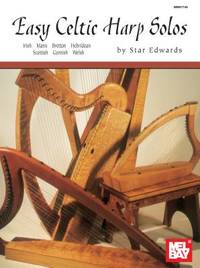
Q-0786643137Mel Bay Publications Inc 2015-06-26. Paperback. New. New. In shrink wrap. Looks like an interesting title! Mel Bay Publications, Inc paperback
1974BOOKS031225IGreensburg-KS:: the author. VG unmarked 8 1/2" x 11" Paperback. c. 1974-1982. ISBN: Life Account of a native American woman born 1828 of Sioux & Cheyenne. ISBN: parentage 320 pp. Catalogs: HISTORY. Keywords: HISTORY NATIVE AMERICANS CHEYENNE SIOUX ANTHROPOLOGY AMERINDIAN. [the author] paperback
43208N° 35 - Samedi 27 dimanche 28 avril 1946 - Direction, administration, rédaction : 5, rue du Faubourg Poissonnière - Journal de 2 pages illustrées
43209N° 36 - lundi 29 dimanche 28 avril 1946 - Direction, administration, rédaction : 5, rue du Faubourg Poissonnière - Journal de 2 pages illustrées
43190N° 15 - Lundi 1er et Mardi 2 avril 1946 - Direction, administration, rédaction : 5, rue du Faubourg Poissonnière - Journal de 2 pages illustrées
186524356.99<p>"<i>June 18. Reached Front Royal & met there the famous & very handsome rebel spy Belle Boyd who gave to me the rebel flag waving which she led the attack upon Kenly in May.</i>"</p><p>The "stars and bars" circular canton pattern with eleven-stars was used for First National flags from July 2 1861 when Tennessee and North Carolina joined the Confederacy until November 28 1861 when stars were added for Missouri and Kentucky. The other side of this rare two-pattern configuration is a tribute to the "Bonnie blue flag that bears the single star" the unofficial first Confederate flag.</p><p>Frederic d'Hauteville's small autograph note has been loosely stitched to the flag: "<i>Confederate flag. Taken by F.S.G d<i>'</i>H. and given by him to E.S.F. in 1862. To be given to Freddie d'Hauteville when he is fifteen.</i>" His first wife Elizabeth Stuyvesant Fish died in 1863. Freddy his son by his second wife was born in 1873 thus dating his note about the second gifting of the flag to between 1873 and 1888. The flag remained in his family preserved in perfect condition until 2015 when contents from their Swiss castle were sold clearing the way for the property to be sold; it is now on the market for $60 million dollars.</p> <b>ELEVEN-STAR "FIRST NATIONAL" FLAG WITH SINGLE STAR "BONNIE BLUE" FIRST UNOFFICIAL CONFEDEDERATE FLAG VERSO.</b>Belle Boyd the "Siren of the Shenandoah" gave the flag to Captain Frederic Sears Grand d'Hauteville on June 18 1862 telling him that it was the flag she waived to urge on Confederate troops at the Battle of Front Royal a month earlier. D'Hauteville's 25-page autograph manuscript war memoir with his account of the gift of the flag quoted above is included. See below for complete transcript. With additional photographs and manuscripts. Homemade perhaps even by Boyd or a family member and used only briefly before being given to d'Hauteville the flag has been perfectly preserved retaining the short ribbons along its hoist and showing no tears holes fraying loss or staining. Over 5 x 3 feet. <p><b>Historical Background</b></p><p>D'Hauteville had joined General Nathaniel P. Banks' staff before Banks advanced south up the Shenandoah valley the Shenandoah river flows north into the Potomac at Harper's Ferry so you go "up" the valley to the south and "down" the valley to the north to Strasburg maneuvering against Confederate General Thomas J. "Stonewall" Jackson's army.</p><p>Belle Boyd had moved to Front Royal to stay with relatives when her hometown of Martinsburg West Virginia had been occupied by Union troops in March 1862. Shortly after her eighteenth birthday Boyd hid in a local hotel in Front Royal where she overheard General James Shields and his officers discussing orders to transfer his division to the Union army along the Rappahannock River in eastern Virginia. Boyd reportedly rode fifteen miles on horseback through Union lines to tell Confederate Colonel Turner Ashby of the reduced Union presence in Front Royal. When approximately 3000 of Jackson's men attacked the Union force occupying Front Royal on May 23 Boyd ran to meet Jackson's men as they advanced and urged them onward. The Union garrison approximately 1000 strong under the command of Colonel John R. Kenly of the Union 1st Maryland Volunteer Infantry was routed. Kenly was wounded and he and nearly 700 of his men were captured. Jackson later sent Boyd a note of gratitude for her role.</p><p><b>Robert Gould Shaw </b>1837-1863 another officer in Banks' command confirmed d'Hauteville's account. In a letter to his mother Shaw wrote "Perhaps you have seen some accounts of a young lady at Front Royal named Belle Boyd. There was quite a long and ridiculous letter about her copied into the 'Evening Post' the other day. I have seen her several times but never had any conversation with her. Other men who have talked with her tell me that she never asked for any information about our army or gave them the slightest reason to suppose her a spy; and they were probably as capable of judging as the correspondent who wrote about her. She gave Fred. D'Hauteville a very pretty Secession flag which she said she carried when she went out to meet Jackson's troops coming into Front Royal." Shaw went on to command an African-American regiment the 54th Massachusetts Volunteer Infantry which obtained fame in the Second Battle of Fort Wagner at Charleston Harbor on July 18 1863. Shaw died with many of his men that day and was immortalized in a memorial by Augustus Saint-Gaudens in Boston and in the 1989 film <i>Glory</i>.</p><p>That both d'Hauteville and Shaw believed Boyd's account that she waved this flag to encourage the Confederate attack demonstrates her ability to manipulate both men and narratives. In her own entertaining and exaggerated memoir Boyd later wrote "As I neared our line I waved my bonnet to our soldiers to intimate that they should press forward." Another key witness Henry Kyd Douglas 1838-1903 a member of Jackson's staff later recalled in his memoir seeing "the figure of a woman in white glide swiftly out of town" and that Boyd "seemed when I saw her to heed neither weeds nor fences but waved a bonnet as she came on." Whether she actually waived her bonnet or this flag or perhaps both at different moments during the battle that day she clearly gave it to d'Hauteville to curry favor and that apparently worked. Rather than being prosecuted for her role in aiding the Confederates in what was a disaster for the Union she was celebrated for her charm. Before being banished to England Boyd was arrested six or seven times and always managed with the help of gentlemanly Union officers to avoid the most serious consequences. Her seemingly innocuous flirtations apparently provided her with her greatest source of influence.</p><p><b>Isabella Marie "Belle" Boyd </b>1844-1900 was one of the most famous and notorious Confederate spies. After her father enlisted in the Confederate army Boyd became an espionage agent at the age of seventeen aiding the Confederate forces in the Shenandoah Valley. Forced from her home in Martinsburg West Virginia when Union troops occupied it she moved in with relatives in Front Royal Virginia. During the spring 1862 Valley Campaign she was a courier and provided valuable information to General Thomas J. "Stonewall" Jackson. General Jackson reportedly made her a captain and honorary aide-de-camp on his staff. On one occasion she wooed a Northern soldier to whom she was "indebted for some very remarkable effusions some withered flowers and last but not least for a great deal of very important information. I must avow the flowers and the poetry were comparatively valueless in my eyes." Boyd continued in her melodramatic style "I allowed but one thought to keep possession of my mind—the thought that I was doing all a woman could do for her country's cause."</p><p>After being betrayed by a lover she was arrested on July 29 1862 and spent a month in the Old Capitol Prison in Washington D.C. Exchanged a month later she lived with relatives in the South for a time. She was again arrested in June 1863 while on a visit to her birthplace of Martinsburg. Suffering from typhoid fever she was released on December 1 1863 and banished to the South. While attempting to sail to England on May 8 1864 she was arrested again as a Confederate courier. With the help of Lieutenant Sam Hardinge a Union naval officer she escaped to Canada and then to England where she and Hardinge married in August 1864. While in England Boyd had a stage career and published a highly fictionalized two-volume work entitled <i>Belle Boyd in Camp and Prison</i> 1867. She died in Wisconsin while touring the western United States telling her story.</p><p><b>Frederick or Frédéric Sears Grand d'Hauteville</b> 1838-1918 was born in Boston Massachusetts to a Swiss nobleman and American mother who returned to the United States while pregnant. Their marital conflict led to a contentious custody battle over Frederick in 1840 in a Philadelphia court which his mother won. D'Hauteville graduated from Harvard University in 1859. He was appointed volunteer aide-de-camp to General Nathaniel Banks in December 1861 and served at the Battle of Winchester in March 1862. Commissioned captain on June 30 1862 he served on General Samuel Crawford's staff including action at Cedar Mountain in August. At the Battle of Antietam in September his commanding general was wounded in the leg while talking to him and a few minutes later d'Hauteville himself was struck by a musket ball that was deflected by his boot but still seriously bruised his leg but. By December he returned to General Banks' staff in the Department of the Gulf. He resigned his commission on March 1 1863. He married Elizabeth Fish daughter of Hamilton Fish of New York in 1863 but she died the following year. In 1872 he married Susan Watts Macomb 1849-1928 with whom he had three children. She was the grand-daughter of Major General Alexander Macomb 1782-1841 general-in-chief of the U.S. Army from 1828 to 1841.</p><p><b>Additional Items</b></p><p>Five additional brief notes including one on letterhead marked "Newport" are loose in the notebook. Most were written by d'Hauteville and two are initialed "F d'H." This lot also includes cartes-de-visite of d'Hauteville and his commander Major General Nathaniel P. Banks and an albumen image of four officers who attended d'Hauteville's alma mater Harvard University and served with d'Hauteville in the Shenandoah Valley in 1862 from left to right Major James Savage Jr. 1832-1862 killed at Cedar Mountain; Captain Robert Gould Shaw 1837-1863 killed at Fort Wagner; Major Robert Morris Copeland 1830-1874; Captain Henry S. Russell 1838-1905.</p><p><b>Provenance</b></p><p>These materials descended in the d'Hauteville family until sold in September 2015.</p><p>The d'Hautevilles kept a home in Newport Rhode Island but they also lived much of the time at his family's palatial estate overlooking Lake Geneva in Switzerland. Approximately 1600 items from the family's estate were sold. Having been cleaned out the 30-room d'Hauteville chateau built in 1760 and its 64-acre estate is now on the market.</p><p><b>More Historic Background</b></p><p>Learning that Confederates had captured Front Royal Banks retreated north to Winchester. There he tried to slow Stonewall Jackson's pursuit leading to another lopsided Confederate victory on May 25. Fearing that Washington D.C. was exposed President Abraham Lincoln ordered General John C. Fremont's forces in western Virginia and General Irvin McDowell's forces in Fredericksburg to converge and trap Jackson. The Confederates demonstrated against Harper's Ferry on May 29 and 30 but General James Shields leading the only division McDowell actually sent recaptured Front Royal on May 30.</p><p>Over the next week as Jackson retreated the opposing cavalries met in several small skirmishes. In battles on June 8 and 9 at Cross Keys and Port Republic Jackson repulsed Fremont's and Shields' armies and stopped their pursuit. After initially considering a counterattack in the valley Jackson instead joined General Robert E. Lee at Richmond opposing General George B. McClellan's Army of the Potomac. Although Jackson's daring actions had threatened Washington D.C. and relieved pressure on Richmond Union armies resumed their occupation of Winchester and Front Royal.</p><p><b>Civil War Memoir of Frederick Sears Grand d'Hauteville </b>included with the flag.</p><p>The notebook is bound in black leather stamped in blind and gilt with marbled endpapers and lined pages. Titled in manuscript "The War of Secession 1861" this memoir was written between 1887 and d'Hauteville's death clearly compiled from notes or a diary made during the conflict. The gilt decoration is still bright and the leather and pages still fresh.</p><p>D'Hauteville's Memoir includes fascinating accounts of and commentary on the Battles of Winchester Cedar Mountain and Antietam. At Cedar Mountain D'Hauteville was particularly moved by the losses of the 2d Regiment of Massachusetts Volunteers "one of the best in the whole Union Army… officered almost entirely by young men belonging to the leading families in the City of Boston. All of them were my friends & very dear friends. Their loss was enormous but they went to their deaths with sublime courage. There was no flinching there."</p><p><b>Complete Transcript of Civil War Memoir of Frederick Sears Grand d'Hauteville </b></p><p><i>The War of Secession 1861.</i></p><p><2> <i>I enlisted as "private" in the Fourth Battalion of Massachusetts State Infantry Militia at Boston Harbor Fort Independence in May 1861 & remained there for garrison duty and drill for one month. Afterwards drilled with the Battalion in Boston during the summer and autumn of that year.</i></p><p><i> Reported to Major General N P Banks commanding Fifth Corps Army of the Potomac at Darnstown Maryland about November 20 1861 as volunteer Aid de Camp without pay. Was appointed volunteer Captain & A.D.C. on General Banks Staff on December 5 1861. See General Orders no 70 Head Quarters Banks Division.</i></p><p><i> Was very busy learning duties during all the time that the division remained in Autumn field quarters at Darnestown and during the winter months at Frederick City.</i> <3></p><p><i>Darnestown Md. Headquarters of the Fifth Corps Army of the Potomac Banks Division November 1861.</i></p><p><i>Major General N. P. Banks Major General Commanding.</i></p><p><i>Major R Morris Copeland Asst. Adjt. Genl.</i></p><p><i>Major D. D. Perkins USA Chief Inspector.</i></p><p><i>Colonel S B Holabird Chief Quartermaster.</i></p><p><i>Colonel E S Beckwith Chief Commissary.</i></p><p><i>Captain Aberd U.S.A. Chief Engineer.</i></p><p><i>Captain C S Best Chief of Artillery.</i></p><p><i>Colonel John S Clark A.D.C.</i></p><p><i>Captain Schreiber German A.D.C.</i></p><p><i>Captain Schiffler German A.D.C. not speaking English</i></p><p><i>Captain Munther German A.D.C. not speaking English</i></p><p><i>Captain Strothers extra A.D.C. Old magazine writer Porter Crayon</i></p><p><i>Captain F. d'Hauteville Volunteer A.D.C.</i></p><p><i>Dr. King Medical Director </i></p><p> <4></p><p><i> The Division left Darnestown for Frederick City Md on December 4 1861 arriving there on December 6<u>th</u>. Quarters were assigned to me in the law office of Colonel Bradley T. Johnson of the Confederate Army. All law books and papers were carefully looked after by me. Friends made during the winter at Frederick City: General Shriver & family & Colonel Maudsley & family.</i></p><p><i> The advance of the Army of the Shenandoah into Virginia began on February 26<u>th</u> Head Quarters Staff left Frederick City on February 27 reached Harper's Ferry on that day & crossed to Virginia by pontoon bridge. Visit from General McClellan & staff on February 28<u>th</u> Comte de Paris & Duc de Chartes ADC accompanied by the Prince de Joinville.</i></p><p><i> From Harpers Ferry marched to Winchester by Charlestown. Winchester occupied March 10. </i>Confederate General Thomas J. "Stonewall"<i> Jackson retiring down the Valley of </i><5> <i>of the Shenandoah.</i></p><p><i> March 22. First battle of Winchester or Kernstown in which General Jackson was defeated by General Shield's Division. General Shields wounded.</i></p><p><i> The pursuit of Jackson by General Banks entire Army Corps began on the following day by main road passing Cedar Creek. First camp at Strasburg.</i></p><p><i>April 1st advanced from Strasburg to Woodstock. Artillery duel Cothran Battery. Bridge at the narrow pass saved then on to Edenburg. Bridge burned by enemy. Rebuilt next day by Pennsylvania men. Very heavy storm.</i></p><p><i>April 17th Pursuit of Jackson resumed reached Mt Jackson General Shields Division leading. Next day to Newmarket frequent Artillery duels & rear guard & advanced guard skirmishes & picket firing. Lovely country.</i></p><p><i>April 25. Moved on to near Harrisburg</i> Harrisonburg. <6></p><p><i>May 5. Started on return towards Strasburg after many reports of impending battle with Jacskon who report said had been largely reinforced. Strasburg May 13.</i></p><p><i> <b>May 23. Colonel Kenly attacked & overwhelmed at Front Royal. The first news was received by <u>me</u> at Head Quarters at 4. P.M. General Banks was absent but Captain Brown of the 2d Mass was with me at the time.</b></i></p><p><i> May 24. Retreat commenced towards Winchester by Middletown Newtown & Kernstown.</i></p><p><i> May 25. Battle of Winchester. See General Banks Official Report. United States War of the Rebellion Series I Volume XII. Part 1 pages 550</i><i> 552 606</i><i>Personal notice of myself. In this battle my attention was called to the very gallant conduct of a Confederate General Officer in leading his men alone on horseback over the Hill on the Federal right to what appeared</i> <7> <i>certain death. </i><i>After the conclusion of the war I asked General Richard Taylor whose Brigade fought on the Confederate side if he could tell me the name of that gallant Officer. He replied very modestly that it was himself and that it gained for him the rank of Major General.</i></p><p><i> Banks defeated & much demoralized Army retreated in disorder to Williamsport & remained there until June 10.</i></p><p><i> On June 10 the army largely reinforced recrossed the Potomac & marched towards Winchester through Falling Waters and Bunker Hill.</i></p><p><i> <b>June 18. Reached Front Royal & met there the famous & very handsome rebel spy Belle Boyd who gave to me the rebel flag waving which she led the attack upon Kenly in May.</b></i></p><p><i> July 6. Advance again passing through Chester Gap Luray Amissville Little Washington</i> <8> <i>Sperryville Gaines Cross Roads to Fairfax Culpepper August 4<u>th</u>. </i></p><p><i> Although ordered several weeks previously by the War Department to report to General Crawford for assignment as Ass<u>t</u> Adj<u>t</u> Gen<u>l</u>to his Brigade General Banks short of Staff Officers could not spare me and he ordered me to remain with him until the Army reached Culpeper and it was not until August 4 that I was detached from his Staff.</i></p><p><i>Advanced towards Cedar Mountain on August 8 and crossed the Creek.</i></p><p><i> August 9 1862 Battle of Cedar Mountain. See Official Reports War of the Rebellion Series 1. Volume XII. Part II. Page 149 150.</i><i> Personal notice</i></p><p><i> During the battle my blankets strapped behind my saddle were pierced by one ball making more than a dozen holes.</i></p><p><9></p><p> <i>The battle of Cedar Mountain was one of the most sanguinary of modern times having in view the numbers engaged and the losses sustained. It should never have been fought. The Commander of the Corps </i>Banks<i> was a political General without military experience or training & the plan of the battle was thoroughly bad. Nothing but disaster could have been the result & there was no co-operation from beginning to end. The right flank of the attacking Brigade General Crawford was exposed to the fire of a largely superior force. No reconnaissance of the ground was made during all the morning previous to the enemy's advance while the troops were lying idle under arms & there were no reserves. Any advantage which the Union Army might have temporarily gained was therefore lost in advance before the battle began as it could not be held. </i></p><p><10></p><p><i>General Banks was afterwards charged by General Pope the Commander in Chief with disobedience of orders in forcing the battle. This accusation was unjust and was clearly an afterthought on the part of General Pope. As the Assistant Adjutant General of the advanced Brigade these written orders were shown to me by General Banks and no question whatever arose in the minds of everyone who saw them in regard to their purpose & intent. They were worded as follows & taken down in writing when they were given: "If the enemy advances attack him instantly & be reinforced from here." Culpepper. The enemy certainly forced the attack to which General Banks replied with disastrous results. The explicit orders were strictly obeyed but the disposition for the attack & the general management of the battle could not have been worse. </i></p><p><11></p><p> <b><i>General Pope afterwards claimed that General Banks should have attacked only with his "skirmishers" & wait to be reinforced on the following day. The written orders cannot be twisted into such a construction as this. An instant attack against any advance of the enemy was ordered early in the morning in writing and it was naturally inferred that the necessary orders for reinforcements were arranged for <u>then</u>.</i></b></p><p><b><i> The 2d Regiment of Massachusetts Volunteers one of the best in the whole Union Army in General Gordon's Brigade was officered almost entirely by young men belonging to the leading families in the City of Boston. All of them were my friends & very dear friends. Their loss was enormous but they went to their deaths with sublime courage. There was no flinching there.</i></b></p><p><i> The retreat began on August 11<u>th</u> & the</i> <12> <i>Brigade reduced in numbers by exactly one half reached Culpepper on August 12.</i></p><p><i> August 18. fell back towards the Rappahannock.</i></p><p><i> August 19. Brandy Station & Beverley ford. Sharp skirmish across the river & very heavy rain.</i></p><p><i> August 20. Sulpher Springs. Very heavy shelling from Confederate batteries. Next day to Bealton Station by Fayetteville then Catletts. August 28. Kettle run. First day of second battle of Manassas.</i></p><p><i> August 30. Broad run.</i></p><p><i> August 31. Burned by urgent orders all wagons including ammunition. Attack expected at any moment by overwhelming forces. It did not come. Passed through Brentsville & forded the Occoquan to Bull Run & Centreville.</i></p><p><i> September 1<u>st</u> Battle of Chantilly. Generals Kearny & Stevens killed. The Brigade was on the extreme right of the</i> <13> <i>line & was not actually engaged.</i></p><p><i> September 2. on towards Alexandria.</i></p><p><i>September 3d camped near Fort Albany</i></p><p><i>September 4<u>th</u> Crossed the Potomac & encamped just outside of Washington on the Rockville turnpike.</i></p><p><i>September 5. Rockville.</i></p><p><i>September 9. Advanced along the Rockville Road & encamped near Middlebrook. The 124 125 & 128 Pennsylvania Regiments new were assigned to Crawford's Brigade.</i></p><p><i>September 10. Encamped near Damascus.</i></p><p><i>September 12 General Crawford in command of Division.</i></p><p><i>September 13 Crossed the Monocacy and encamped just outside Frederick City.</i></p><p><i>September 15 Battle of South Mountain Brigade acted as reserve & was not engaged. General Reno killed.</i> <14></p><p><i>September 16. Advanced during the day. Crossed the Antietam and encamped in fields just across the stream. Heavy rain at night.</i></p><p><i>September 17. Under arms at 5. AM and advanced. Was very promptly met by very heavy firing from both Artillery & infantry. The battle in our immediate front had its ups & downs all day long & the Regiments became very much broken up & formations lost. General Crawford was with the old Regiments & I was with the new ones from Pennsylvania. About noon when we were together under very heavy fire & close to the enemy General Crawford was wounded in the leg & a few minutes later a musket ball struck the calf of my leg but my heavy top boots stopped its entrance.</i> <15> <i>The leg however was very much bruised. Shortly before this <b>General Williams temporarily in command of the Corps General Mansfield having been killed early in the Battle gave an order for the Commanding Officer of a small Brigade which did not belong to his Command to charge the woods from which we had just been driven back.</b></i></p><p><b><i> I took the order under a very heavy fire but the Commanding Officer very properly questioned the authority.</i></b></p><p><b><i> To obey it would have been the destruction of his Brigade without the slightest chance for success.</i></b></p><p><i> Colonel Wilder Dwight of the 2d Massachusetts & a very dear friend was killed at Antietam.</i></p><p><b><i> From the eighth of August when we marched from Culpepper en route for Cedar Mountain until the battle of</i> </b><16><b> <i>Antietam on September 17<u>th</u> I had slept for four nights only under any kind of shelter. The weather had been very wet & officers & men slept on the grass without shelter tents. Everyone was starved during Pope's retreat as all supplies were cut off & our principal ration was the growing green corn. I remember very well picking up a piece of "hard tack" dropped in the mud by a soldier & eating it ravenously. The horses from want of fodder could hardly stand. </i></b><i>The result was a very severe attack of diarrhea which I could not shake off for many weeks.</i></p><p><i> For the official reports of General Crawford's Division at the Battle of Antietam see No 107 167 page 484 Official Records War of the Rebellion. Series 1. Vol XIX Part I Personal record.</i></p><p><17></p><p><i>After Antietam General Crawford's wound obliged him temporarily to relinquish his command & he ordered me to report to General Banks who was then in command of the Defences of Washington to help me to recover from an attack of jaundice which the acute diarrhea had promptly brought on. General Banks assigned me to the task of passing upon all applications for furlough for the whole army around Washington. My offices were on the whole of the ground floor in the historic building which had served as Head Quarters for the General in Chief since the beginning of the war. It was a very arduous & responsible duty as the orders from General Halleck were very positive. No leaves of absence were to be given except upon Surgeons certificate that there was danger to life or permanent disability.</i></p><p><i> I remained in Washington on duty for about a month. My dear Mother</i> <18> <i>my Grandmother & Mr Amory paid me a visit of a few days.</i></p><p><i> In the early part of October General Banks invited me to go with him as one of the Assistant Adjutant Generals in his Staff on a proposed expedition South by sea no one knew where. I accepted promptly as General Banks paid me the compliment of asking me first before any other officer to join his staff. The expedition was being fitted out in New York & the Head Quarters of the Command were located there. About October 15 General Banks paid an official visit to Boston and I went with him. My dear Mother was then far from well but upon the advice of Dr Warren I went back to New York as it was feared that by remaining with her & missing</i> <19> <i>the Expedition the worry & anxiety of my remaining near her would very likely do her more harm than good. On the evening of November 29 Mr Frank Davis brought me a telegram from Boston telling me that my dear Mother was dying and that all hope was gone. I was able to catch the night train & reached her bedside very early in the morning.</i></p><p><i> My darling mother was then unconcious & at half past nine on November 30 1862 she passed away.</i></p><p><i> About December 10 I returned to New York. General Banks Expedition having sailed I was ordered to report to General Andrews who was in charge of a number of regiments to be dispatched later on.</i></p><p><i> While with him I had charge of sanitary inspection duty among other things & I found that there was much irregularity which required correction.</i></p><p><i> On January 5<u>th</u> I was ordered by</i> <20> <i>General Andrews to report at once to General Banks & I sailed for New Orleans by way of Havana. I remained at New Orleans for about six weeks with nothing to do but office work & on occasion uneventful expedition up the Mississippi to Baton Rouge & elsewhere.</i></p><p><i> My resignation was offered on March 1st & accepted as my Mothers death & the consequent urgency of winding up her estate & other matters called me home.</i></p><p><i> I shall never cease to regret as long as I live that I did not remain in the Army until the end of the war.</i></p><p><21></p><p><i>Details.</i></p><p><i>Private Fourth Battalion Massachusetts State Militia May 1861.</i></p><p><i>Volunteer Aid de Camp to Major General N. P. Banks Commanding Division Army of the Potomac Darnestown November 1861. Rank of Captain Volunteer December 5 861 Frederick City M<u>d</u></i></p><p><i>Head Quarters Department of the Shenandoah February to July 1861.</i></p><p><i>Captain & Assistant Adjutant General N P Banks Commanding Department of Washington September 1862.</i></p><p><22></p><p><i>Assigned to duty with "Banks Expedition" as Assistant Adjutant General with others November 1862. Sailed for New Orleans Department of the Gulf January 5 1862</i></p><p><i>Resigned alas! March 1 1863.</i></p><p><i> During all my services with General Banks from Frederick City to Culpepper I always acted as his personal Aid de Camp. All his private & official papers & dispatches came under my notice & I occupied not only a very interesting but also a very responsible position on his Staff.</i></p><p><i> During the retreat of General Banks</i> <23> <i>Corps from Strasburg to the Potomac in the temporary absence of the Assistant Adjutant General Major R. Morris Copeland practically all the duties were performed by me & I think to the entire satisfaction of the Commanding General. Proof of this is forthcoming in the double offer of Generals Crawford & Gordon to accept the regular position of Assistant Adjutant General upon their Staff. Both of these Generals had recently been appointed to the command of Brigades in General Banks Army Corps & both were present during the retreat.</i></p><p><i> During all the spring months I alone in all the Army Corps was entrusted with the Government Cyphers. During General Pope's retreat I was one day sent for by Generals Pope & Banks to</i> <24> <i>put into cypher a very important dispatch to General McDowell with whom direct communication had been cut off by the enemy.</i></p><p><i> I was obliged to reply that during the severest part of the Battle of Cedar Mountain when I was in the greatest danger of being killed or captured at any moment I had felt it my duty to destroy the cypher which I tore up into a hundred or more very small pieces & swallowed some of them. My action was approved. I then offered to carry the orders unwritten myself to General McDowell if I could find him and take my chances.</i></p><p><i> My offer was accepted but while</i> <25> <i>the instructions were being prepared the advance of General McDowells Corps came in sight & I was relieved from a duty which would have put me in the greatest danger of capture or otherwise.</i></p> books
186524356.99<p>"<em>June 18. Reached Front Royal & met there the famous & very handsome rebel spy Belle Boyd who gave to me the rebel flag waving which she led the attack upon Kenly in May.</em>"</p><p>The "stars and bars" circular canton pattern with eleven-stars was used for First National flags from July 2 1861 when Tennessee and North Carolina joined the Confederacy until November 28 1861 when stars were added for Missouri and Kentucky. The other side of this rare two-pattern configuration is a tribute to the "Bonnie blue flag that bears the single star" the unofficial first Confederate flag.</p><p>Frederic d'Hauteville's small autograph note has been loosely stitched to the flag: "<em>Confederate flag. Taken by F.S.G d<em>'</em>H. and given by him to E.S.F. in 1862. To be given to Freddie d'Hauteville when he is fifteen.</em>" His first wife Elizabeth Stuyvesant Fish died in 1863. Freddy his son by his second wife was born in 1873 thus dating his note about the second gifting of the flag to between 1873 and 1888. The flag remained in his family preserved in perfect condition until 2015 when contents from their Swiss castle were sold clearing the way for the property to be sold; it is now on the market for $60 million dollars.</p><p><strong>ELEVEN-STAR "FIRST NATIONAL" FLAG WITH SINGLE STAR "BONNIE BLUE" FIRST UNOFFICIAL CONFEDEDERATE FLAG VERSO.</strong> Belle Boyd the "Siren of the Shenandoah" gave the flag to Captain Frederic Sears Grand d'Hauteville on June 18 1862 telling him that it was the flag she waived to urge on Confederate troops at the Battle of Front Royal a month earlier. D'Hauteville's 25-page autograph manuscript war memoir with his account of the gift of the flag quoted above is included. See below for complete transcript. With additional photographs and manuscripts. Homemade perhaps even by Boyd or a family member and used only briefly before being given to d'Hauteville the flag has been perfectly preserved retaining the short ribbons along its hoist and showing no tears holes fraying loss or staining. Over 5 x 3 feet.</p><p><strong>Historical Background</strong></p><p>D'Hauteville had joined General Nathaniel P. Banks' staff before Banks advanced south up the Shenandoah valley the Shenandoah river flows north into the Potomac at Harper's Ferry so you go "up" the valley to the south and "down" the valley to the north to Strasburg maneuvering against Confederate General Thomas J. "Stonewall" Jackson's army.</p><p>Belle Boyd had moved to Front Royal to stay with relatives when her hometown of Martinsburg West Virginia had been occupied by Union troops in March 1862. Shortly after her eighteenth birthday Boyd hid in a local hotel in Front Royal where she overheard General James Shields and his officers discussing orders to transfer his division to the Union army along the Rappahannock River in eastern Virginia. Boyd reportedly rode fifteen miles on horseback through Union lines to tell Confederate Colonel Turner Ashby of the reduced Union presence in Front Royal. When approximately 3000 of Jackson's men attacked the Union force occupying Front Royal on May 23 Boyd ran to meet Jackson's men as they advanced and urged them onward. The Union garrison approximately 1000 strong under the command of Colonel John R. Kenly of the Union 1st Maryland Volunteer Infantry was routed. Kenly was wounded and he and nearly 700 of his men were captured. Jackson later sent Boyd a note of gratitude for her role.</p><p><strong>Robert Gould Shaw </strong>1837-1863 another officer in Banks' command confirmed d'Hauteville's account. In a letter to his mother Shaw wrote "Perhaps you have seen some accounts of a young lady at Front Royal named Belle Boyd. There was quite a long and ridiculous letter about her copied into the 'Evening Post' the other day. I have seen her several times but never had any conversation with her. Other men who have talked with her tell me that she never asked for any information about our army or gave them the slightest reason to suppose her a spy; and they were probably as capable of judging as the correspondent who wrote about her. She gave Fred. D'Hauteville a very pretty Secession flag which she said she carried when she went out to meet Jackson's troops coming into Front Royal." Shaw went on to command an African-American regiment the 54th Massachusetts Volunteer Infantry which obtained fame in the Second Battle of Fort Wagner at Charleston Harbor on July 18 1863. Shaw died with many of his men that day and was immortalized in a memorial by Augustus Saint-Gaudens in Boston and in the 1989 film <em>Glory</em>.</p><p>That both d'Hauteville and Shaw believed Boyd's account that she waved this flag to encourage the Confederate attack demonstrates her ability to manipulate both men and narratives. In her own entertaining and exaggerated memoir Boyd later wrote "As I neared our line I waved my bonnet to our soldiers to intimate that they should press forward." Another key witness Henry Kyd Douglas 1838-1903 a member of Jackson's staff later recalled in his memoir seeing "the figure of a woman in white glide swiftly out of town" and that Boyd "seemed when I saw her to heed neither weeds nor fences but waved a bonnet as she came on." Whether she actually waived her bonnet or this flag or perhaps both at different moments during the battle that day she clearly gave it to d'Hauteville to curry favor and that apparently worked. Rather than being prosecuted for her role in aiding the Confederates in what was a disaster for the Union she was celebrated for her charm. Before being banished to England Boyd was arrested six or seven times and always managed with the help of gentlemanly Union officers to avoid the most serious consequences. Her seemingly innocuous flirtations apparently provided her with her greatest source of influence.</p><p><strong>Isabella Marie "Belle" Boyd </strong>1844-1900 was one of the most famous and notorious Confederate spies. After her father enlisted in the Confederate army Boyd became an espionage agent at the age of seventeen aiding the Confederate forces in the Shenandoah Valley. Forced from her home in Martinsburg West Virginia when Union troops occupied it she moved in with relatives in Front Royal Virginia. During the spring 1862 Valley Campaign she was a courier and provided valuable information to General Thomas J. "Stonewall" Jackson. General Jackson reportedly made her a captain and honorary aide-de-camp on his staff. On one occasion she wooed a Northern soldier to whom she was "indebted for some very remarkable effusions some withered flowers and last but not least for a great deal of very important information. I must avow the flowers and the poetry were comparatively valueless in my eyes." Boyd continued in her melodramatic style "I allowed but one thought to keep possession of my mind—the thought that I was doing all a woman could do for her country's cause."</p><p>After being betrayed by a lover she was arrested on July 29 1862 and spent a month in the Old Capitol Prison in Washington D.C. Exchanged a month later she lived with relatives in the South for a time. She was again arrested in June 1863 while on a visit to her birthplace of Martinsburg. Suffering from typhoid fever she was released on December 1 1863 and banished to the South. While attempting to sail to England on May 8 1864 she was arrested again as a Confederate courier. With the help of Lieutenant Sam Hardinge a Union naval officer she escaped to Canada and then to England where she and Hardinge married in August 1864. While in England Boyd had a stage career and published a highly fictionalized two-volume work entitled <em>Belle Boyd in Camp and Prison</em> 1867. She died in Wisconsin while touring the western United States telling her story.</p><p><strong>Frederick or Frédéric Sears Grand d'Hauteville</strong> 1838-1918 was born in Boston Massachusetts to a Swiss nobleman and American mother who returned to the United States while pregnant. Their marital conflict led to a contentious custody battle over Frederick in 1840 in a Philadelphia court which his mother won. D'Hauteville graduated from Harvard University in 1859. He was appointed volunteer aide-de-camp to General Nathaniel Banks in December 1861 and served at the Battle of Winchester in March 1862. Commissioned captain on June 30 1862 he served on General Samuel Crawford's staff including action at Cedar Mountain in August. At the Battle of Antietam in September his commanding general was wounded in the leg while talking to him and a few minutes later d'Hauteville himself was struck by a musket ball that was deflected by his boot but still seriously bruised his leg but. By December he returned to General Banks' staff in the Department of the Gulf. He resigned his commission on March 1 1863. He married Elizabeth Fish daughter of Hamilton Fish of New York in 1863 but she died the following year. In 1872 he married Susan Watts Macomb 1849-1928 with whom he had three children. She was the grand-daughter of Major General Alexander Macomb 1782-1841 general-in-chief of the U.S. Army from 1828 to 1841.</p><p><strong>Additional Items</strong></p><p>Five additional brief notes including one on letterhead marked "Newport" are loose in the notebook. Most were written by d'Hauteville and two are initialed "F d'H." This lot also includes cartes-de-visite of d'Hauteville and his commander Major General Nathaniel P. Banks and an albumen image of four officers who attended d'Hauteville's alma mater Harvard University and served with d'Hauteville in the Shenandoah Valley in 1862 from left to right Major James Savage Jr. 1832-1862 killed at Cedar Mountain; Captain Robert Gould Shaw 1837-1863 killed at Fort Wagner; Major Robert Morris Copeland 1830-1874; Captain Henry S. Russell 1838-1905.</p><p><strong>Provenance</strong></p><p>These materials descended in the d'Hauteville family until sold in September 2015.</p><p>The d'Hautevilles kept a home in Newport Rhode Island but they also lived much of the time at his family's palatial estate overlooking Lake Geneva in Switzerland. Approximately 1600 items from the family's estate were sold. Having been cleaned out the 30-room d'Hauteville chateau built in 1760 and its 64-acre estate were bouhgt by Pepperdine University in 2019.</p><p><strong>More Historic Background</strong></p><p>Learning that Confederates had captured Front Royal Banks retreated north to Winchester. There he tried to slow Stonewall Jackson's pursuit leading to another lopsided Confederate victory on May 25. Fearing that Washington D.C. was exposed President Abraham Lincoln ordered General John C. Fremont's forces in western Virginia and General Irvin McDowell's forces in Fredericksburg to converge and trap Jackson. The Confederates demonstrated against Harper's Ferry on May 29 and 30 but General James Shields leading the only division McDowell actually sent recaptured Front Royal on May 30.</p><p>Over the next week as Jackson retreated the opposing cavalries met in several small skirmishes. In battles on June 8 and 9 at Cross Keys and Port Republic Jackson repulsed Fremont's and Shields' armies and stopped their pursuit. After initially considering a counterattack in the valley Jackson instead joined General Robert E. Lee at Richmond opposing General George B. McClellan's Army of the Potomac. Although Jackson's daring actions had threatened Washington D.C. and relieved pressure on Richmond Union armies resumed their occupation of Winchester and Front Royal.</p><p><strong>Civil War Memoir of Frederick Sears Grand d'Hauteville </strong>included with the flag.</p><p>The notebook is bound in black leather stamped in blind and gilt with marbled endpapers and lined pages. Titled in manuscript "The War of Secession 1861" this memoir was written between 1887 and d'Hauteville's death clearly compiled from notes or a diary made during the conflict. The gilt decoration is still bright and the leather and pages still fresh.</p><p>D'Hauteville's Memoir includes fascinating accounts of and commentary on the Battles of Winchester Cedar Mountain and Antietam. At Cedar Mountain D'Hauteville was particularly moved by the losses of the 2d Regiment of Massachusetts Volunteers "one of the best in the whole Union Army… officered almost entirely by young men belonging to the leading families in the City of Boston. All of them were my friends & very dear friends. Their loss was enormous but they went to their deaths with sublime courage. There was no flinching there."</p><p><strong>Complete Transcript of Civil War Memoir of Frederick Sears Grand d'Hauteville </strong></p><p><em>The War of Secession 1861.</em></p><p><2> <em>I enlisted as "private" in the Fourth Battalion of Massachusetts State Infantry Militia at Boston Harbor Fort Independence in May 1861 & remained there for garrison duty and drill for one month. Afterwards drilled with the Battalion in Boston during the summer and autumn of that year.</em></p><p><em> Reported to Major General N P Banks commanding Fifth Corps Army of the Potomac at Darnstown Maryland about November 20 1861 as volunteer Aid de Camp without pay. Was appointed volunteer Captain & A.D.C. on General Banks Staff on December 5 1861. See General Orders no 70 Head Quarters Banks Division.</em></p><p><em> Was very busy learning duties during all the time that the division remained in Autumn field quarters at Darnestown and during the winter months at Frederick City.</em> <3></p><p><em>Darnestown Md. Headquarters of the Fifth Corps Army of the Potomac Banks Division November 1861.</em></p><p><em>Major General N. P. Banks Major General Commanding.</em></p><p><em>Major R Morris Copeland Asst. Adjt. Genl.</em></p><p><em>Major D. D. Perkins USA Chief Inspector.</em></p><p><em>Colonel S B Holabird Chief Quartermaster.</em></p><p><em>Colonel E S Beckwith Chief Commissary.</em></p><p><em>Captain Aberd U.S.A. Chief Engineer.</em></p><p><em>Captain C S Best Chief of Artillery.</em></p><p><em>Colonel John S Clark A.D.C.</em></p><p><em>Captain Schreiber German A.D.C.</em></p><p><em>Captain Schiffler German A.D.C. not speaking English</em></p><p><em>Captain Munther German A.D.C. not speaking English</em></p><p><em>Captain Strothers extra A.D.C. Old magazine writer Porter Crayon</em></p><p><em>Captain F. d'Hauteville Volunteer A.D.C.</em></p><p><em>Dr. King Medical Director </em></p><p><4></p><p><em> The Division left Darnestown for Frederick City Md on December 4 1861 arriving there on December 6<u>th</u>. Quarters were assigned to me in the law office of Colonel Bradley T. Johnson of the Confederate Army. All law books and papers were carefully looked after by me. Friends made during the winter at Frederick City: General Shriver & family & Colonel Maudsley & family.</em></p><p><em> The advance of the Army of the Shenandoah into Virginia began on February 26<u>th</u> Head Quarters Staff left Frederick City on February 27 reached Harper's Ferry on that day & crossed to Virginia by pontoon bridge. Visit from General McClellan & staff on February 28<u>th</u> Comte de Paris & Duc de Chartes ADC accompanied by the Prince de Joinville.</em></p><p><em> From Harpers Ferry marched to Winchester by Charlestown. Winchester occupied March 10. </em>Confederate General Thomas J. "Stonewall"<em> Jackson retiring down the Valley of </em><5> <em>of the Shenandoah.</em></p><p><em> March 22. First battle of Winchester or Kernstown in which General Jackson was defeated by General Shield's Division. General Shields wounded.</em></p><p><em> The pursuit of Jackson by General Banks entire Army Corps began on the following day by main road passing Cedar Creek. First camp at Strasburg.</em></p><p><em>April 1st advanced from Strasburg to Woodstock. Artillery duel Cothran Battery. Bridge at the narrow pass saved then on to Edenburg. Bridge burned by enemy. Rebuilt next day by Pennsylvania men. Very heavy storm.</em></p><p><em>April 17th Pursuit of Jackson resumed reached Mt Jackson General Shields Division leading. Next day to Newmarket frequent Artillery duels & rear guard & advanced guard skirmishes & picket firing. Lovely country.</em></p><p><em>April 25. Moved on to near Harrisburg</em> Harrisonburg. <6></p><p><em>May 5. Started on return towards Strasburg after many reports of impending battle with Jacskon who report said had been largely reinforced. Strasburg May 13.</em></p><p><em> <strong>May 23. Colonel Kenly attacked & overwhelmed at Front Royal. The first news was received by <u>me</u> at Head Quarters at 4. P.M. General Banks was absent but Captain Brown of the 2d Mass was with me at the time.</strong></em></p><p><em> May 24. Retreat commenced towards Winchester by Middletown Newtown & Kernstown.</em></p><p><em> May 25. Battle of Winchester. See General Banks Official Report. United States War of the Rebellion Series I Volume XII. Part 1 pages 550</em><em> 552 606</em><em> Personal notice of myself. In this battle my attention was called to the very gallant conduct of a Confederate General Officer in leading his men alone on horseback over the Hill on the Federal right to what appeared</em> <7> <em>certain death. </em><em>After the conclusion of the war I asked General Richard Taylor whose Brigade fought on the Confederate side if he could tell me the name of that gallant Officer. He replied very modestly that it was himself and that it gained for him the rank of Major General.</em></p><p><em> Banks defeated & much demoralized Army retreated in disorder to Williamsport & remained there until June 10.</em></p><p><em> On June 10 the army largely reinforced recrossed the Potomac & marched towards Winchester through Falling Waters and Bunker Hill.</em></p><p><em> <strong>June 18. Reached Front Royal & met there the famous & very handsome rebel spy Belle Boyd who gave to me the rebel flag waving which she led the attack upon Kenly in May.</strong></em></p><p><em> July 6. Advance again passing through Chester Gap Luray Amissville Little Washington</em> <8> <em>Sperryville Gaines Cross Roads to Fairfax Culpepper August 4<u>th</u>. </em></p><p><em> Although ordered several weeks previously by the War Department to report to General Crawford for assignment as Ass<u>t</u> Adj<u>t</u> Gen<u>l</u> to his Brigade General Banks short of Staff Officers could not spare me and he ordered me to remain with him until the Army reached Culpeper and it was not until August 4 that I was detached from his Staff.</em></p><p><em>Advanced towards Cedar Mountain on August 8 and crossed the Creek.</em></p><p><em> August 9 1862 Battle of Cedar Mountain. See Official Reports War of the Rebellion Series 1. Volume XII. Part II. Page 149 150.</em><em> Personal notice</em></p><p><em> During the battle my blankets strapped behind my saddle were pierced by one ball making more than a dozen holes.</em></p><p><9></p><p><em>The battle of Cedar Mountain was one of the most sanguinary of modern times having in view the numbers engaged and the losses sustained. It should never have been fought. The Commander of the Corps </em>Banks<em> was a political General without military experience or training & the plan of the battle was thoroughly bad. Nothing but disaster could have been the result & there was no co-operation from beginning to end. The right flank of the attacking Brigade General Crawford was exposed to the fire of a largely superior force. No reconnaissance of the ground was made during all the morning previous to the enemy's advance while the troops were lying idle under arms & there were no reserves. Any advantage which the Union Army might have temporarily gained was therefore lost in advance before the battle began as it could not be held. </em></p><p><10></p><p><em>General Banks was afterwards charged by General Pope the Commander in Chief with disobedience of orders in forcing the battle. This accusation was unjust and was clearly an afterthought on the part of General Pope. As the Assistant Adjutant General of the advanced Brigade these written orders were shown to me by General Banks and no question whatever arose in the minds of everyone who saw them in regard to their purpose & intent. They were worded as follows & taken down in writing when they were given: "If the enemy advances attack him instantly & be reinforced from here." Culpepper. The enemy certainly forced the attack to which General Banks replied with disastrous results. The explicit orders were strictly obeyed but the disposition for the attack & the general management of the battle could not have been worse. </em></p><p><11></p><p><strong><em>General Pope afterwards claimed that General Banks should have attacked only with his "skirmishers" & wait to be reinforced on the following day. The written orders cannot be twisted into such a construction as this. An instant attack against any advance of the enemy was ordered early in the morning in writing and it was naturally inferred that the necessary orders for reinforcements were arranged for <u>then</u>.</em></strong></p><p><strong><em> The 2d Regiment of Massachusetts Volunteers one of the best in the whole Union Army in General Gordon's Brigade was officered almost entirely by young men belonging to the leading families in the City of Boston. All of them were my friends & very dear friends. Their loss was enormous but they went to their deaths with sublime courage. There was no flinching there.</em></strong></p><p><em> The retreat began on August 11<u>th</u> & the</em> <12> <em>Brigade reduced in numbers by exactly one half reached Culpepper on August 12.</em></p><p><em> August 18. fell back towards the Rappahannock.</em></p><p><em> August 19. Brandy Station & Beverley ford. Sharp skirmish across the river & very heavy rain.</em></p><p><em> August 20. Sulpher Springs. Very heavy shelling from Confederate batteries. Next day to Bealton Station by Fayetteville then Catletts. August 28. Kettle run. First day of second battle of Manassas.</em></p><p><em> August 30. Broad run.</em></p><p><em> August 31. Burned by urgent orders all wagons including ammunition. Attack expected at any moment by overwhelming forces. It did not come. Passed through Brentsville & forded the Occoquan to Bull Run & Centreville.</em></p><p><em> September 1<u>st</u> Battle of Chantilly. Generals Kearny & Stevens killed. The Brigade was on the extreme right of the</em> <13> <em>line & was not actually engaged.</em></p><p><em> September 2. on towards Alexandria.</em></p><p><em>September 3d camped near Fort Albany</em></p><p><em>September 4<u>th</u> Crossed the Potomac & encamped just outside of Washington on the Rockville turnpike.</em></p><p><em>September 5. Rockville.</em></p><p><em>September 9. Advanced along the Rockville Road & encamped near Middlebrook. The 124 125 & 128 Pennsylvania Regiments new were assigned to Crawford's Brigade.</em></p><p><em>September 10. Encamped near Damascus.</em></p><p><em>September 12 General Crawford in command of Division.</em></p><p><em>September 13 Crossed the Monocacy and encamped just outside Frederick City.</em></p><p><em>September 15 Battle of South Mountain Brigade acted as reserve & was not engaged. General Reno killed.</em> <14></p><p><em>September 16. Advanced during the day. Crossed the Antietam and encamped in fields just across the stream. Heavy rain at night.</em></p><p><em>September 17. Under arms at 5. AM and advanced. Was very promptly met by very heavy firing from both Artillery & infantry. The battle in our immediate front had its ups & downs all day long & the Regiments became very much broken up & formations lost. General Crawford was with the old Regiments & I was with the new ones from Pennsylvania. About noon when we were together under very heavy fire & close to the enemy General Crawford was wounded in the leg & a few minutes later a musket ball struck the calf of my leg but my heavy top boots stopped its entrance.</em> <15> <em>The leg however was very much bruised. Shortly before this <strong>General Williams temporarily in command of the Corps General Mansfield having been killed early in the Battle gave an order for the Commanding Officer of a small Brigade which did not belong to his Command to charge the woods from which we had just been driven back.</strong></em></p><p><strong><em> I took the order under a very heavy fire but the Commanding Officer very properly questioned the authority.</em></strong></p><p><strong><em> To obey it would have been the destruction of his Brigade without the slightest chance for success.</em></strong></p><p><em> Colonel Wilder Dwight of the 2d Massachusetts & a very dear friend was killed at Antietam.</em></p><p><strong><em> From the eighth of August when we marched from Culpepper en route for Cedar Mountain until the battle of</em> </strong><16><strong> <em>Antietam on September 17<u>th</u> I had slept for four nights only under any kind of shelter. The weather had been very wet & officers & men slept on the grass without shelter tents. Everyone was starved during Pope's retreat as all supplies were cut off & our principal ration was the growing green corn. I remember very well picking up a piece of "hard tack" dropped in the mud by a soldier & eating it ravenously. The horses from want of fodder could hardly stand. </em></strong><em>The result was a very severe attack of diarrhea which I could not shake off for many weeks.</em></p><p><em> For the official reports of General Crawford's Division at the Battle of Antietam see No 107 167 page 484 Official Records War of the Rebellion. Series 1. Vol XIX Part I Personal record.</em></p><p><17></p><p><em>After Antietam General Crawford's wound obliged him temporarily to relinquish his command & he ordered me to report to General Banks who was then in command of the Defences of Washington to help me to recover from an attack of jaundice which the acute diarrhea had promptly brought on. General Banks assigned me to the task of passing upon all applications for furlough for the whole army around Washington. My offices were on the whole of the ground floor in the historic building which had served as Head Quarters for the General in Chief since the beginning of the war. It was a very arduous & responsible duty as the orders from General Halleck were very positive. No leaves of absence were to be given except upon Surgeons certificate that there was danger to life or permanent disability.</em></p><p><em> I remained in Washington on duty for about a month. My dear Mother</em> <18> <em>my Grandmother & Mr Amory paid me a visit of a few days.</em></p><p><em> In the early part of October General Banks invited me to go with him as one of the Assistant Adjutant Generals in his Staff on a proposed expedition South by sea no one knew where. I accepted promptly as General Banks paid me the compliment of asking me first before any other officer to join his staff. The expedition was being fitted out in New York & the Head Quarters of the Command were located there. About October 15 General Banks paid an official visit to Boston and I went with him. My dear Mother was then far from well but upon the advice of Dr Warren I went back to New York as it was feared that by remaining with her & missing</em> <19> <em>the Expedition the worry & anxiety of my remaining near her would very likely do her more harm than good. On the evening of November 29 Mr Frank Davis brought me a telegram from Boston telling me that my dear Mother was dying and that all hope was gone. I was able to catch the night train & reached her bedside very early in the morning.</em></p><p><em> My darling mother was then unconcious & at half past nine on November 30 1862 she passed away.</em></p><p><em> About December 10 I returned to New York. General Banks Expedition having sailed I was ordered to report to General Andrews who was in charge of a number of regiments to be dispatched later on.</em></p><p><em> While with him I had charge of sanitary inspection duty among other things & I found that there was much irregularity which required correction.</em></p><p><em> On January 5<u>th</u> I was ordered by</em> <20> <em>General Andrews to report at once to General Banks & I sailed for New Orleans by way of Havana. I remained at New Orleans for about six weeks with nothing to do but office work & on occasion uneventful expedition up the Mississippi to Baton Rouge & elsewhere.</em></p><p><em> My resignation was offered on March 1st & accepted as my Mothers death & the consequent urgency of winding up her estate & other matters called me home.</em></p><p><em> I shall never cease to regret as long as I live that I did not remain in the Army until the end of the war.</em></p><p><21></p><p><em>Details.</em></p><p><em>Private Fourth Battalion Massachusetts State Militia May 1861.</em></p><p><em>Volunteer Aid de Camp to Major General N. P. Banks Commanding Division Army of the Potomac Darnestown November 1861. Rank of Captain Volunteer December 5 861 Frederick City M<u>d</u></em></p><p><em>Head Quarters Department of the Shenandoah February to July 1861.</em></p><p><em>Captain & Assistant Adjutant General N P Banks Commanding Department of Washington September 1862.</em></p><p><22></p><p><em>Assigned to duty with "Banks Expedition" as Assistant Adjutant General with others November 1862. Sailed for New Orleans Department of the Gulf January 5 1862</em></p><p><em>Resigned alas! March 1 1863.</em></p><p><em> During all my services with General Banks from Frederick City to Culpepper I always acted as his personal Aid de Camp. All his private & official papers & dispatches came under my notice & I occupied not only a very interesting but also a very responsible position on his Staff.</em></p><p><em> During the retreat of General Banks</em> <23> <em>Corps from Strasburg to the Potomac in the temporary absence of the Assistant Adjutant General Major R. Morris Copeland practically all the duties were performed by me & I think to the entire satisfaction of the Commanding General. Proof of this is forthcoming in the double offer of Generals Crawford & Gordon to accept the regular position of Assistant Adjutant General upon their Staff. Both of these Generals had recently been appointed to the command of Brigades in General Banks Army Corps & both were present during the retreat.</em></p><p><em> During all the spring months I alone in all the Army Corps was entrusted with the Government Cyphers. During General Pope's retreat I was one day sent for by Generals Pope & Banks to</em> <24> <em>put into cypher a very important dispatch to General McDowell with whom direct communication had been cut off by the enemy.</em></p><p><em> I was obliged to reply that during the severest part of the Battle of Cedar Mountain when I was in the greatest danger of being killed or captured at any moment I had felt it my duty to destroy the cypher which I tore up into a hundred or more very small pieces & swallowed some of them. My action was approved. I then offered to carry the orders unwritten myself to General McDowell if I could find him and take my chances.</em></p><p><em> My offer was accepted but while</em> <25> <em>the instructions were being prepared the advance of General McDowells Corps came in sight & I was relieved from a duty which would have put me in the greatest danger of capture or otherwise.</em></p>
1954152204Culver City CA: Columbia Pictures 1954. Vintage reference photograph taken on the set of the 1954 film showing actor Marlon Brando giving his parents a tour of the famed "roof" set from the film accompanied by producer S.P. Eagle. Printed mimeo snipe affixed to the verso along with the stamp of Columbia Pictures. <br /> <br /> Based on screenwriter Budd Schulberg's 1955 novel "Waterfront." A dockworker and would-be prizefighter witnesses a murder at the hands of the local mob boss' men and is forced to stand up to his corrupt union leaders. <br /> <br /> Nominated for twelve Academy Awards winning eight including Best Picture Best Director and Best Screenplay.<br /> <br /> Shot on location in Hoboken New Jersey and New York City.<br /> <br /> 10 x 8 inches. Near Fine. <br /> <br /> National Film Registry. Criterion Collection 647. Ebert I. Grant US. Scorsese A Personal Journey through American Movies. Selby US. Spicer US. Columbia Pictures unknown
1954151344Culver City CA: Columbia Pictures 1954. Vintage press kit for the 1954 film containing one full-color illustrated promotional pamphlet three black-and-white photographs of cast and crew members holding Academy Awards and one page of promotional reading material introducing the photographs. <br /> <br /> Based on screenwriter Budd Schulberg's 1955 novel "Waterfront." A dockworker and would-be prizefighter witnesses a murder at the hands of the local mob boss' men and is forced to stand up to his corrupt union leaders. <br /> <br /> Nominated for twelve Academy Awards winning eight including Best Picture Best Director and Best Screenplay.<br /> <br /> Shot on location in Hoboken New Jersey and New York City.<br /> <br /> Photographs and promotional material Near Fine.<br /> <br /> National Film Registry. Criterion Collection 647. Ebert I. Grant US. Scorsese A Personal Journey through American Movies. Selby US. Spicer US. Columbia Pictures unknown
1955152321Burbank CA: Warner Brothers 1955. Vintage reference photograph of actors James Dean and Julie Harris examining a small scale model of a farm on the set of the 1955 film. With holograph ink and pencil annotations identifying Harris and Dean to the verso. <br/><br/>Based on the 1952 novel by John Steinbeck about two brothers who struggle for the attentions and favor of their deeply religious emotionally troubled father. <br/><br/>Winner of Best Dramatic Film at Cannes and nominated for the Palme d'Or. Actress Jo Van Fleet would go on to win a Best Supporting Actress Oscar and the film was nominated for three more Academy Awards including Best Director Best Screenplay and the first ever posthumous acting nomination in Academy history for Dean's lead performance. <br/><br/>Set and shot on location in Monterey and Salinas California. <br/><br/>10 x 8 inches. Near Fine. <br/><br/>National Film Registry. Rosenbaum 1000. Scorsese A Personal Journey Through American Movies. Warner Brothers unknown books
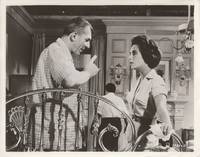
1958162526N.p.: N.p. 1958. Two vintage reference photographs of director Richard Brooks on the set of the 1958 film one showing Brooks talking with Elizabeth Taylor the other showing Brooks with Paul Newman. Printed mimeo snipes affixed to the versos along with the printed labels of Stillphoto in Amsterdam. <br /> <br /> Based on the 1955 Pulitzer Prize-winning play by Tennessee Williams about the deeply dysfunctional family of a dying plantation owner on the Mississippi Delta. Nominated for six Academy Awards. <br /> <br /> Shot on location in Long Island New York. <br /> <br /> 8 x 10 inches. Near Fine. N.p. unknown
20226838MARTINIERE BL 2022 208 pages 22 7x29 1x2 3cm. 2022. Reliure editeur cartonnée. 208 pages. Cette biographie de Marilyn Monroe par Ian Ayres cherche à percer le mystère de l'icône soixante ans après sa mort en démêlant le vrai du faux à travers des témoignages de personnes ayant assisté à la métamorphose de Norma Jeane en star. L'ouvrage accompagne un film documentaire et explore la vie personnelle et professionnelle de l'actrice révélant la femme derrière le mythe
199625432EClarkston GA: White Wolf Publishing 1996. First Paperbound Edition. Signed by Harlan Ellison on an affixed bookplate made and dated 1996 by Borders Books in Los Angeles. Paperbound. Near fine with a hint of handling. With an Expanded Introduction essay by Harlan Ellison. Afterwords by Leonard Nimoy DeForest Kelly George Takei Peter David Walter Koenig Dorothy C Fontana David Gerrold Melinda Snodgrass. White Wolf Publishing unknown
200439622Amsterdam; Singapore: The Pepin Press 2004. Third printing. Hardcover. vg. Folio. 255 1pp. Original photo-illustrated dust-jacket over red paper covered boards with white lettering to spine and front cover. Frontispiece. "The Van der Star collection of ethnic jewellery is unique both in size and quality bringing together masterpieces from Africa the Arab World India Central and Southeast Asia and the Pacific Islands. Each of these areas has their own specific designs and their own specific uses and symbolism attached to jewellery. Materials used include gold silver and many types of gemstones but also archaic materials such as leather coral beads bone teeth and shells. In this lavishly illustrated book more than 500 magnificent pieces are presented in color together with detailed descriptions. Authoritative texts are included about jewellery making and the history uses and designs from the various areas. These chapters are further illustrated with historical and contemporary photographs of jewellery being worn." From the Publisher. Dust-jacket binding and interior in overall very good condition. The Pepin Press hardcover
34 pages. Includes brief bio and one-page black and white photo of Elton Britt, plus sheet music for piano, lyrics and guitar chords for these songs: Buddy Boy; Chime Bells; Darling What Do You Care; Driftwood On the River; Ev'rything But You; I'll Be Cryin' Over You; Missouri Joe; Patent Leather Boots; Pinto Pal; Rocky Mountain Lullaby; There's a Star Spangled Banner Waving Somewhere; There's So Much That I Forgot; Too Many Tears; Why Did You Leave Me Alone. Unmarked with somewhat above-average wear. Complete and intact. A worthy vintage copy of this great Elton Britt collectible. Book