DULAURE Jacques AntoineLivre Rare Book
773 résultats
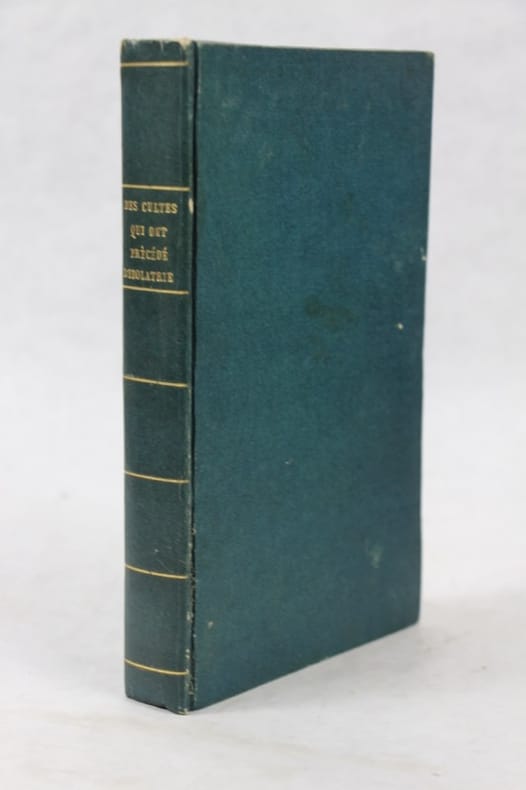
180770127P., Dentu 1807 In-8 cartonnage bradel ép., dos lisse orné de filets dorés, VIII-511 pp. Table raisonnée des matières principales. Auréoles au titre.
Minor shelfwear to book. DJ has a few tears, chipping and yellowing. Dustjacket is protected in mylar. ; 193pp, illustrated, + 82pp of b+w plates.; Large 8vo; 193 pages
Dustjacket has minor shelfwear and rubbing. Light Bumping to bottom of spine. ; Ancient Society and History; 1.68 x 8.76 x 8.78 Inches; 632 pages; Historians who viewed imperial Rome in terms of a conflict between pagans and Christians have often regarded the emperor Constantine's conversion as the triumph of Christianity over paganism. But in Constantine and the Bishops, historian H. A. Drake offers a fresh and more nuanced understanding of Constantine's rule and, especially, of his relations with Christians. Constantine, Drake suggests, was looking not only for a god in whom to believe but also a policy he could adopt. Uncovering the political motivations behind Constantine's policies, Drake shows how those policies were constructed to ensure the stability of the empire and fulfill Constantine's imperial duty in securing the favor of heaven. Despite the emperor's conversion to Christianity, Drake concludes, Rome remained a world filled with gods and with men seeking to depose rivals from power. A book for students and scholars of ancient history and religion, Constantine and the Bishops shows how Christian belief motivated and gave shape to imperial rule.
Minor shelfwear. Scholar's name to ffep (Robert Brown). Edgewear to wraps with a bit of Chipping. Ffep creased. ; 411 pages
Book has minor shelfwear and rubbing. ; Discusses the 3rd Century Crisis to the Fifth Century (including the foundation of the Byzantine Empire). ; Berkshire studies in history; 148 pages
Very light shelfwear. ; The first book to capture a complete picture of the most important of Greek gods in one reliable volume for almost seventy years, this masterly and comprehensive study brings a new-millennium examination of the fascinating god Zeus. Broad in scope, the book looks at myth, art, cult, philosophy, drama, theology and European painting amongst much more, and allows us to take seriously what it was to worship and respect the greatest of Greek gods, and to live through the aftershock of the Middle Ages and modern times. Showing the evidence along the way, Zeus is student-friendly and includes: a range of illustrations and maps translated passages from ancient authors a chronology and excellent indexing. Looking at the ancient Greeks their predecessor and their successors – the Romans and beyond – the book is engagingly written and speaks to a modern audience: this is Zeus from our remote ancestors to Wagner, and into the computer age. ; Gods and Heroes of the Ancient World; 192 pages
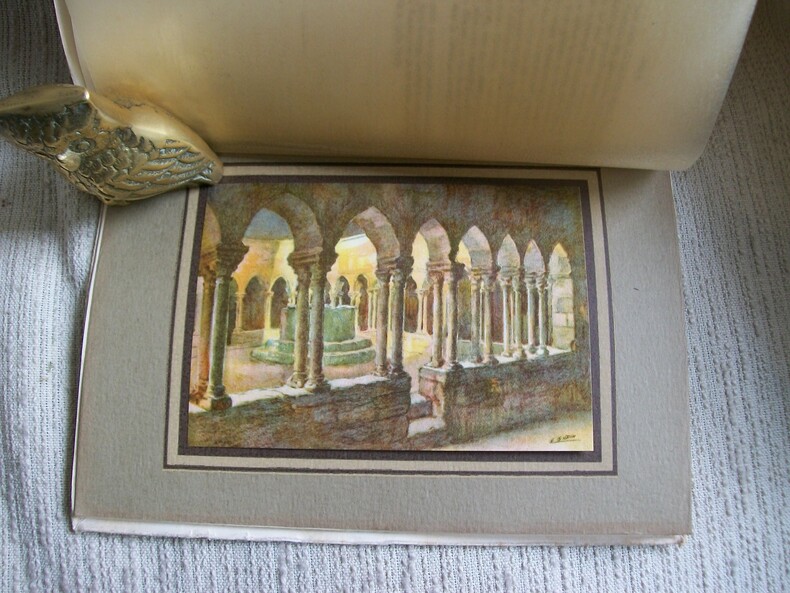
1928GITj605Paris Honoré Champion, Berger-Levrault 1928. In-8 broché couverture illustrée 249pp. Orné de 114 illustrations dans le texte en sépia ou hors texte sous serpente légendée; belle couverture en couleurs et 3 hors texte appliqués sur papier fort d'après les aquarelles de Emile Gudin. Couverture poussiéreuse et un peu fanée, intérieur très frais, complet, non coupé. (4952)
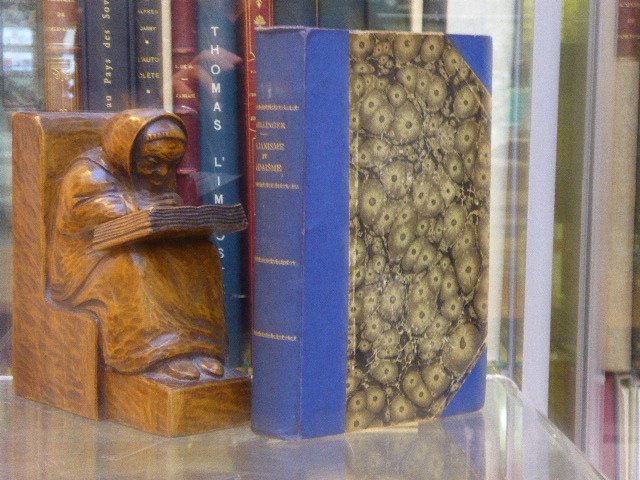
1858R101434Bruxelles, Goemaere 1858 Complet en 4 volumes: 344 + 332 + 304 + 317 pp., 21cm., reliures cart. uniformes (dos en cuir vert avec titre et fleurons dorés, coins peu frottés), feuilles de garde marbrées, cachet sur la page de titre, texte et intérieur frais sauf pour quelques rousseurs occasionelles, bon état, R101434
Complet en 4 volumes: 344 + 332 + 304 + 317 pp., 21cm., reliures cart. uniformes (dos en cuir vert avec titre et fleurons dorés, coins peu frottés), feuilles de garde marbrées, cachet sur la page de titre, texte et intérieur frais sauf pour quelques rousseurs occasionelles, bon état, R101434
636136J. Meyers, Editeur - H. Casterman - Verhoeven Frères Liège - Paris - Bois-le-Duc S.D. (1857) 4 parties en 2 tomes reliés en 1 volume in-8 ( 220 X 140 mm ) de III-IV-457 et XVI-XII-407 pages, demi-percaline bleue à coins, dos lisse orné de filets dorés. Edition originale. Bel exemplaire.Etude des Religions.Paganisme et Judaïsme.
Very light edgewear along top of DJ. ; 9.3 X 6.2 X 1.0 inches; 316 pages
Very Good German Original illustrated cloth. Roy. 8vo. (23 x 16 cm). In German. Stamp of Prof. Dr. N. Rhodokanakis. [xv], 472 p., 70 numerous b/w plates. Der dreieinige Gott in Religionshistorischer Beleuchtung. Vol. 1: Die drei Göttlichen Personen.
Faint shelfwear and minor pencilling to book. DJ has light creasing along upper edge. ; 9.4 X 6.1 X 1.2 inches; 448 pages
Explores the religious motivations for pilgrimage and reveals the main preoccupations of worshippers in Ancient Greece. Dillon examines the main sanctuaries of Delphi, Epidauros and Olympia, as well as the lesser known oracle of Didyma in Asia Minor and the festivals at the Isthmus of Corinth. He discusses the modes of travel to the sites, means of communication between pilgrims and the religious and ritual practices at the sanctuaries themselves. A unique insight into pilgrimage in ancient Greece is presented, focusing on the diverse aspects of pilgrimage; the role of women and children, the religious festivals of different ethnic groups and the colorful celebrations including music, athletics and equestrian events; 308 pages
Very minor shelfwear to book and DJ. Scholars' bookplate to inner cover (Slater & Dunbabin). ; Oxford Classical Monographs; 8.5 X 5.6 X 1.3 inches; 384 pages
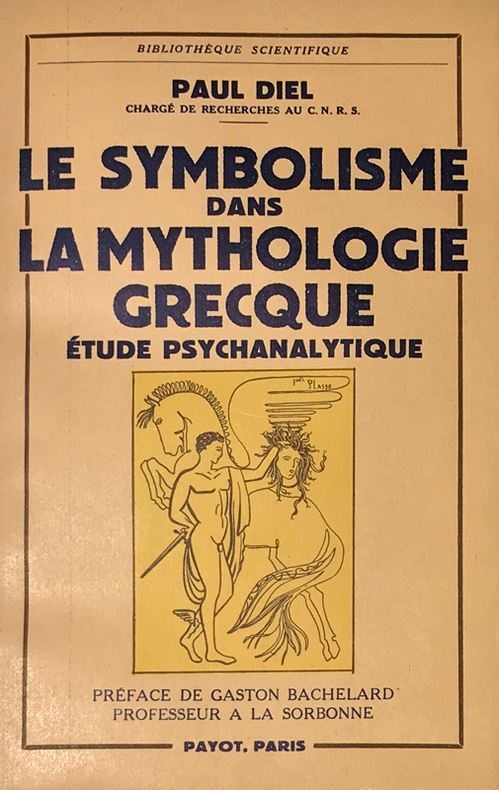
195214978Paris, Payot, 1952 ; in-8, broché ; 310 pp., (4) ff. de catalogue, couverture illustrée d'un dessin de Joel Plasse imprimée en jaune, brun et bleu marine.
Former owner's bookplate & name on ffep. Minor bumping to boards else NF. ; Text in German. Includes 40 black & white plates of pottery and sculpture showing details of festivals. Includes Fold-out 'Festkalendar'. ; 269 pages
Former owner has written additional titles in English related to subject on bibliographical page. Minor pencil marginalia on a few pages. Edgewear to top of spine. ; Text in German. Includes 40 black & white plates of pottery and sculpture showing details of festivals. Includes Fold-out 'Festkalendar'. ; 269 pages
Scholars' bookplate to inner cover (Slater & Dunbabin). Tiny tear to cloth at head of spine. ; Text in German. Includes 40 black & white plates of pottery and sculpture showing details of festivals. Includes Fold-out 'Festkalendar'. ; 269 pages
Minor shelfwear. Scholar's name to inner cover (Jenifer Neils). ; 284 pages; For the Greeks, the sharing of cooked meats was the fundamental communal act, so that to become vegetarian was a way of refusing society. It follows that the roasting or cooking of meat was a political act, as the division of portions asserted a social order. And the only proper manner of preparing meat for consumption, according to the Greeks, was blood sacrifice. The fundamental myth is that of Prometheus, who introduced sacrifice and, in the process, both joined us to and separated us from the gods—and ambiguous relation that recurs in marriage and in the growing of grain. Thus we can understand why the ascetic man refuses both women and meat, and why Greek women celebrated the festival of grain-giving Demeter with instruments of butchery. The ambiguity coded in the consumption of meat generated a mythology of the "other"—werewolves, Scythians, Ethiopians, and other "monsters." The study of the sacrificial consumption of meat thus leads into exotic territory and to unexpected findings. In The Cuisine of Sacrifice, the contributors—all scholars affiliated with the Center for Comparative Studies of Ancient Societies in Paris—apply methods from structural anthropology, comparative religion, and philology to a diversity of topics: the relation of political power to sacrificial practice; the Promethean myth as the foundation story of sacrificial practice; representations of sacrifice found on Greek vases; the technique and anatomy of sacrifice; the interaction of image, language, and ritual; the position of women in sacrificial custom and the female ritual of the Thesmophoria; the mythical status of wolves in Greece and their relation to the sacrifice of domesticated animals; the role and significance of food-related ritual in Homer and Hesiod; ancient Greek perceptions of Scythian sacrificial rites; and remnants of sacrificial ritual in modern Greek practices.
Foxing to top of textblock. ; Rich with implications for the history of sexuality, gender issues, and patterns of Hellenic literary imagining, Marcel Detienne's landmark book recasts long-standing ideas about the fertility myth of Adonis. The author challenges Sir James Frazer's thesis that the vegetation god Adonis-- whose premature death was mourned by women and whose resurrection marked a joyous occasion--represented the annual cycle of growth and decay in agriculture. Using the analytic tools of structuralism, Detienne shows instead that the festivals of Adonis depict a seductive but impotent and fruitless deity--whose physical ineptitude led to his death in a boar hunt, after which his body was found in a lettuce patch. Contrasting the festivals of Adonis with the solemn ones dedicated to Demeter, the goddess of grain, he reveals the former as a parody and negation of the institution of marriage. Detienne considers the short-lived gardens that Athenian women planted in mockery for Adonis's festival, and explores the function of such vegetal matter as spices, mint, myrrh, cereal, and wet plants in religious practice and in a wide selection of myths. His inquiry exposes, among many things, attitudes toward sexual activities ranging from "perverse" acts to marital relations. ; Mythos: the Princeton/ Bollingen Series in World Mythology; 256 pages
Tiny tear to DJ. ; As the perpetual stranger Dionysos is the embodiment of strangeness. He is nowhere at home, and yet in another sense the world is his home. Detienne evokes the manic activity of Dionysos in myths that connect him with the shedding of blood, the pouring of wine, and the ejaculation of semen. ; Revealing Antiquity 1; 8.3 X 5.5 X 0.7 inches; 90 pages
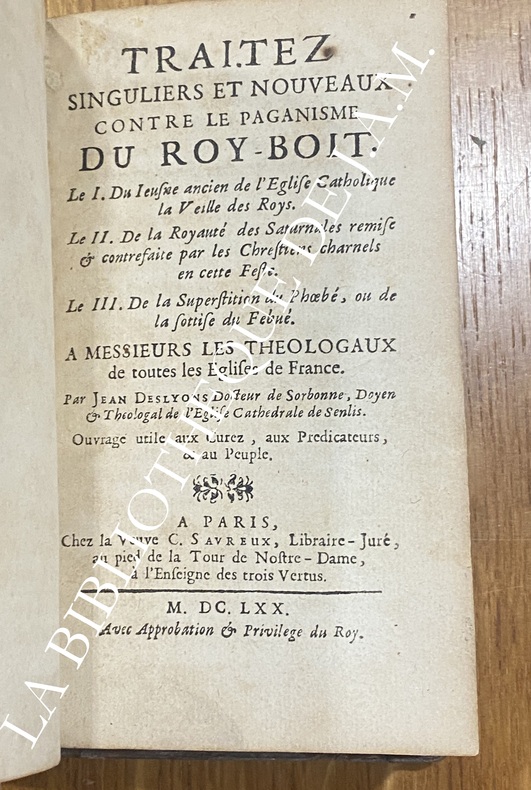
1670YRG-475Édition originale – In-12 Plein cuir marbré d’époque, dos à cinq nerfs, titre et fleurons, dorés, 346 pp. Intérieur frais, ancienne restauration aux coins et en bas du plat avant, quelques feuillets jaunis, quelques rousseurs Ex-libris contrecollé sur le contre plat au nom de A. Brölmann ( Famille alsacienne connue pour ses collections de droit humaniste et d’alchimie sources : catalogue vente Brölmann 1791). Chez la Veuve de CHARLES SAVREUX. Paris
21416Paris, chez Guillaume Desprez, 1664. In-12°, bas., dos orné à 4 n., plats muets (rel. du temps). Exlibris de la bib. Brölemann, (1) f., 186 p. (1) f. sur une collation linéaire / soit : instruction sur les Deux discours 60p. (3) ff., discours premier -64 p., discours second, 60 p., coins émoussés, épidermure en bord de plat (sans plus).
1857011032Caen Imprimerie de Delos 1857 plaquette in-8 Broché, couverture rose