Deshyons (Jean) :Livre Rare Book
773 résultats
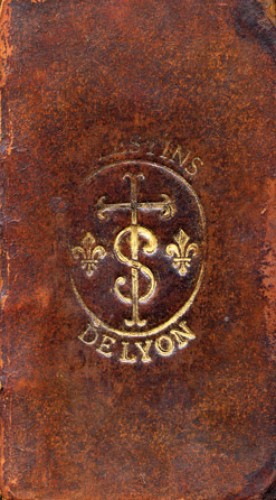
167011240Paris, Veuve C. Savreux, 1670 ; in-12 ; plein veau havane, dos à nerfs décoré et doré, armes dorées des Célestins de Lyon sur le plat supérieur, constituées d'une grande croix ancrée accompagnée de deux fleurs de lys, une de chaque côté, un grand S serpentant au centre de la croix, le tout dans un ovale et Celestins de Lyon en tête et en pied de l'ovale (OHR, 863 ; Armorial Bibliophiles du Lyonnais, p.92).
Very light shelfwear. ; Ausonius Éditions Scripta Antiqua 16; 9.1 X 6.7 X 0.8 inches; 278 pages
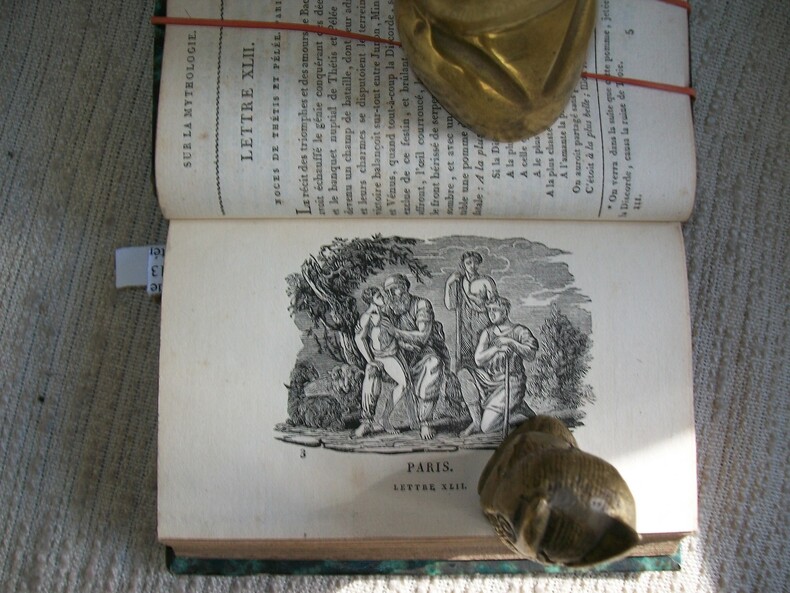
1809GITj144A Paris chez Antoine-Augustin Renouard 1809. 6 parties en 2 volumes petit in-12 (13,5cm x 8cm) X 127pp, 120pp, 96pp / 104pp, 112pp, 150pp. Demi basane bleu nuit, dos lisse orné d'un double filet doré, reliure de l'époque. Orné de 11 jolies vignettes naïves hors texte (4 dans la 1re partie, 7 dans la 3e). Exemplaire en bon état et complet même si la tomaison du 2e volume ne mentionne pas la 6e et dernière partie. (4772)
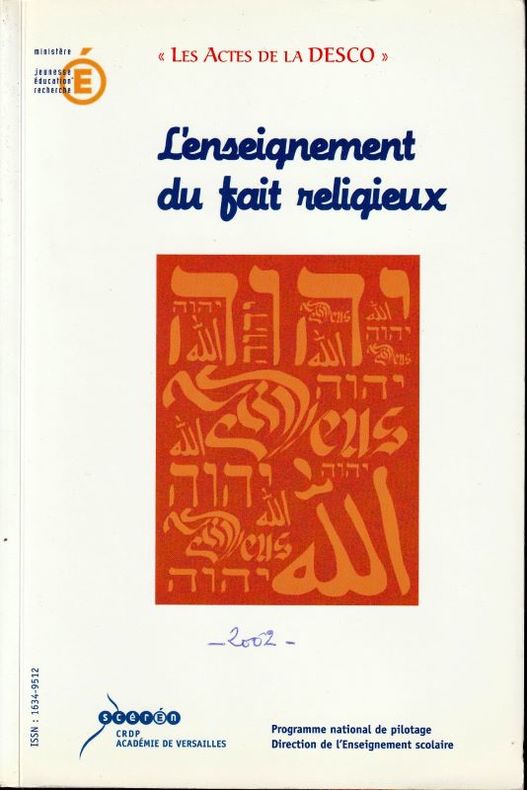
17056Canopé - Crdp De Versailles, 2003. Broché, couverture souple au format 241 x 160 mm, 375 pages, très bon état
Scholar's initial to inner cover (Jenifer Neils). Else minor shelfwear. ; 9.5 X 6.3 X 1.4 inches; 476 pages
1863Q119068Paris, Vrayet de Surcy 1863 xii + 503pp., 25cm., reliure cart. (plats marbrés, dos en toile), cachet, quelques rousseurs occasionnelles, cfr. Caillet 7599, [relié avec: DE MIRVILLE J.E., Question des esprits, ses progrès dans la science. Examen de faits nouveaux et de publications importantes sur les tables, les esprits et le surnaturel (Paris, Delaroque, 1855, xx + 224pp.)], poids: 1.2 kg., Q119068
1863Q119067Paris, Vrayet de Surcy 1863 lxvi + 437pp., 25cm., reliure cart. (plats marbrés, dos en toile), cachet, quelques rousseurs occasionnelles, cfr. Caillet 7599, Q119067
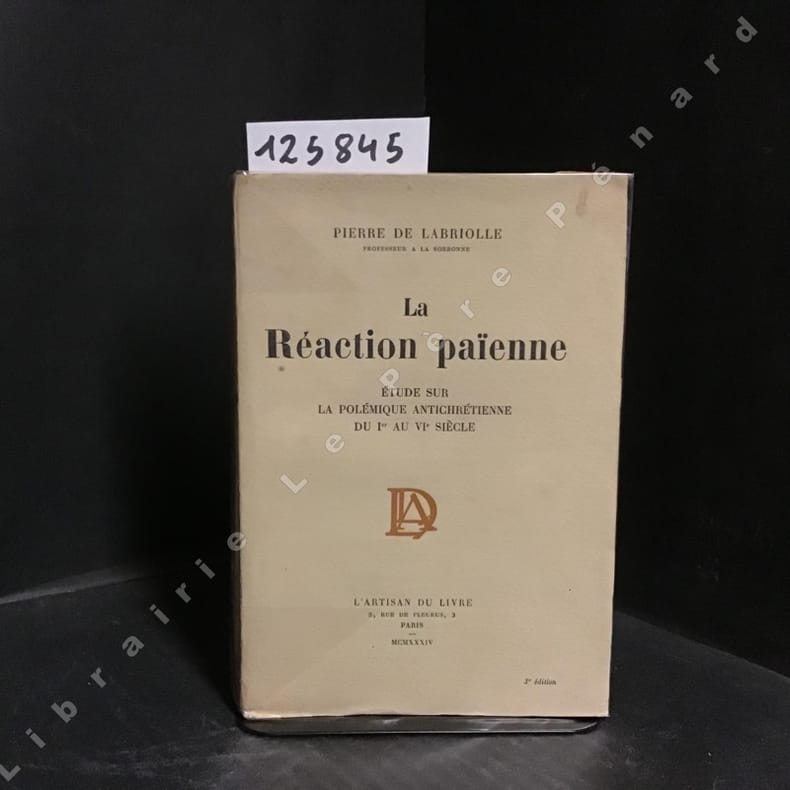
19341258451934 L'Artisan du Livre, Paris - MCMXXXIV (1934) - In-8 broché - 519 pages
78pp, nicely illustrated. The deities and heroes of the ancient Romans were popular subject matter for the frescoes that decorated the elaborate villas of Pompeii's wealthy citizens. This richly illustrated volume highlights various depictions of the heavenly and heroic pantheon of ancient Rome, while the text explores both the general characteristics of Pompeiian painting and their specific treatment of gods and heroes. ; 8vo - over 7¾" - 9¾" tall; 78 pages
Sections of wraps and spine are sunned and a little discolored. Small tear to top of spine (2 cm). Faint creasing to wraps. ; Xii, 145 p. , 75 p. Of plates; Istituto Universitario Orientale. Annali. Sezione Di Archeologia E Storia Antica. N. 3.; 145 pages
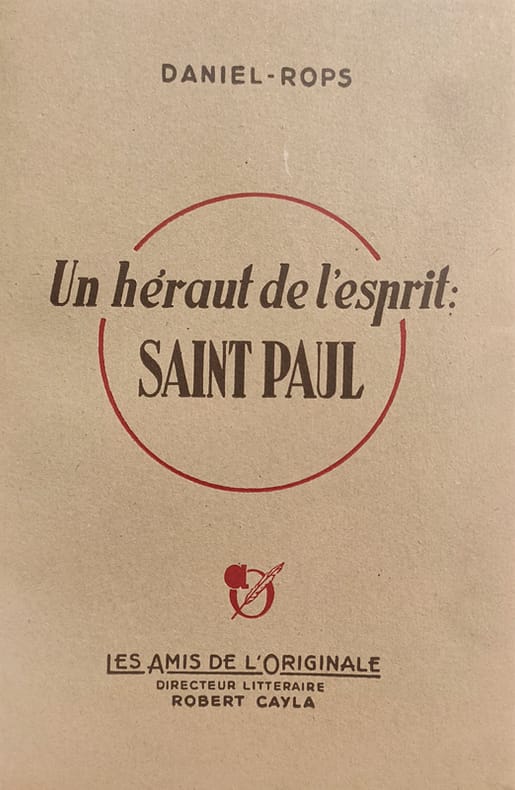
194610097Paris, Robert Caya, "Les Amis de l'Originale", 1946 ; in-8, broché ; 185, (2) pp., carte dépliante de la Méditerrannée, couverture rempliée.
Very light shelfwear. ; In Dutch. ; 140 pages
Very light shelfwear else Fine. ; This book is a study of the transformation of the landscape, civic life, and moral values of the pagan city of Rome following the conversion of the emperor Constantine in the early fourth century. It examines the effects of the rise of Christianity and the decline of paganism in the later Roman empire. ; Oxford Classical Monographs; 416 pages
in-12 (19 cm), xxv, 431 p , tres belle et solide reliure demi-percale à coins d'époque. Tres bel exemplaire, tres frais. [MI-19]
This book has some age wear and browning but generally it is in pretty good condition. Foxing to prelims. Bumping to spine ends and corners. Former owner's bookplate on inner cover. Inside hinge is cracked exposing webbing underneath. Light pencil notes to inner covers-- Text unaffected. ; Examines one of the most colorful historical epochs- between the republican period and the fall of Roman paganism. This was an era when religions, mysteries, and superstition fought, one with the other, for the true answer to the questions of life and after life. ; Mrs. Hepsa Ely Silliman Memorial Lectures
19293131917Paris: Paul Geuthner 1929. XVI, 339 Seiten. Gr. 8° (22,5-25 cm). Bibliotheks-Halbleinenband mit goldgeprägtem Rückenschild. [Hardcover / fest gebunden].
1963752681963 paris, Geuthner, 1963, grand in 8° broché, XVI-339 pages ; quelques phrases soulignées au crayon.
600513Paris, Librairie orientaliste Paul Geuthner, 1963. Petit in-4 carré broché, XVI-339 pp., 13 figures en n/b. in-t., 16 planches de reprod. photogr. sous serpente légendée, appendice, index.
1929606913Paris, Librairie orientaliste Paul Geutner, 1929. 1929 In-4 broché, XVI-339 pp., fig. en n/b. in-t., 16 planches d'ill. photogr. sous serpentes légendées, index. Ex.libris répété.
49935Paul Geuthner.1929.In-8 br.339 p.Planches.Etat moyen.Piqùres.Bas de la couv.salie.
Scholars' bookplate and former owner's name to inner cover. Top of spine and corners slightly bumped. Minor edgewear to extremities. Light soiling to back board. ; Contents: Part I. The Rise and Triumph of Astrology in the Latin world: I. Rise of Astrology in the hellenistic world; II. Conversion of republican Rome to astrology (250-44 BC) ; III. Astrologers - the power behind the throne, from Augustus to Domitian; IV. Astrology in Rome from Nerva to the death of Severus Alexander (96-235) ; Part II. Astrology in Roman Law until the End of the Principate: V. Expulsion of astrologers from Rome and Italy; VI. Empire wide legal restrictions of astrology and other divination during the principate. ; 291 pages
Still wrapped in plastic. ; 340 pages; Part I: Responses from Within HInduism: 1. Gandhi and Religious Pluralism; 2. The Responses of the Brahmo Samaj; 3. The Response of the Arya Samaj; 4. The Response of the Ramakrishna Mission; 5. The Response of Sri Aurobindo and the Mother; 6. The Response of Swami Bhaktivedanta; 7. The Response of Modern Vaisnavism; 8. Saiva Siddhanta and Religious Pluralsm; 9. India's Philosophical Response to Religious Pluralism; Part II: Responses from Other Religious Within India: 10. Parsi Attitudes to Religious Pluralism; 11. Modern Indian Muslim Responses; 12. The Sikh Response; 13. A Modern Indian Christian Response; 14. The Response of the Dalai Lama and the Tibetan Community in the Indian Exile;
Very light shelfwear else fine. ; Herakleides was a young man who lived and died in Roman Egypt almost two thousand years ago. This multidisciplinary study of his mummy, which is in the J. Paul Getty Museum's collection and on view at the Getty Villa, highlights the funerary practices and religious beliefs of his world. Through state-of-the-art technology Getty conservators, working with professionals from various other disciplines, sought to determine if the portrait over the mummy's face actually depicted the mummified remains, if precious jewels or amulets were present within the wrappings, and if the age of the mummy could be determined. The investigation was carried out without unwrapping the mummy. The iconographic symbols decorating the red-painted shroud of Herakleides depict gods and goddesses as well as express a desire for an eternal afterlife. Such concepts, popularly associated with ancient Egypt, remained influential into the time of the Roman Empire. The book concludes by comparing the data from the mummy of Herakleides to similarly decorated red-shrouded portrait mummies in collections worldwide; Getty Publications; 112 pages
1997100139008Or du temps 1997 in8. 1997. Broché.
DJ is price-clipped. Dustjacket has minor shelfwear and rubbing. ; 23pp of photos, 78 figures. "This is an account of the excavation of a Greek sanctuary in the south-west corner of the mainland of Asia Minor opposite Rhodes--once known as the Carian Chersonese. The excavations took place in 1959-1960. This is the first Greek temple of any size uncovered in that part of Asia Minor, and the discovery of the site of Kastabos, whose existence was known from book V of Diodorus' world history, has entailed the re-siting of several ancient towns in the region. The sanctuary itself, whose main buildings date from c. 300 B. C. , was dedicated to the Goddess Hemithea. It adds to our knowledge of a special sort of Greek shrine which was popular in the early Hellenistic age and is a perfect instance of a religious gathering place designed for a short, well attended festival. The excavations show that, although it was an Ionic temple, the style of the great contemporary temples in Ionia (such as that at Ephesus) has been modified and the design is somewhat similar, in plan and proportion, to that of the temple of Epidaurus. In particular, the discovery of a decorative screen with little shrines round the temple area throws new light on Greek architectural complexes." ; 180 pages