3 818 résultats
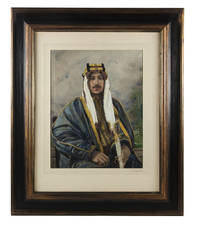
1930I7D9LIPN5PS6London 1930. In a wooden frame ca. 53 x 64 cm under glass. Matt silver print ca. 28 x 36 cm watercolour pastel gouache and oil paint. Mounted on paper in a passe-partout. Signed "Lafayette" in pencil on the mount. Impressively coloured photographic portrait of the Saudi crown prince Saud 1902-1969 by the eminent London photographic studio Lafayette. Prince Saud the future King Saud of Saudi Arabia had been appointed crown prince in 1933 and fought in the 1934 war against Yemen. After the war his father encouraged him to travel abroad and over the next few years he visited Saudi-Arabia's neighbours Europe and the United States. While in London Prince Saud had his portrait taken by the Lafayette studio originally established in Dublin in 1880. It is no coincidence that Prince Saud chose a firm that had photographed numerous emperors kings sultans earls early movie stars etc. The firm would also provide hand coloured prints on request and the current photograph is an example of the very high quality they provided. The photograph of Prince Saud was coloured by painting over the photograph with watercolours and pastel. A subsequent treatment made it possible to use tiny drops of oil paint to highlight the gold trimming on his robe the jewels and pearls on his sword and the small lights in his eyes. In very good condition with only very minor craquelure. A colour portrait of the future King Saud of Arabia: a photograph enhanced by an expert painter from the leading British firm for the genre.l For Lafayette: Russell Harris Narrated in calm prose. unknown
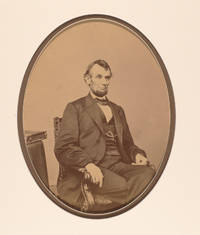
186442820809<p>Oval albumen print 8 x 6 in. original printed mount trimmed at bottom removing caption signed "BRADY & CO. PHOTOGRAPHERS." Browning and offsetting to mount light toning to image. Very good. Matted and framed.</p><p><strong>The classic Brady $5 bill photograph.</strong> This celebrated portrait the basis for the five-dollar bill engraving used for most of the 20th century is one of seven poses taken by Anthony Berger at Mathew Brady's Washington D. C. studio on February 9 1864. The most prolific photographer of Lincoln Brady himself did not actually operate his cameras during the war years instead training and employing men like Alexander Gardner and his successor Anthony Berger who took this picture to operate the camera.</p><p><strong>Lincoln's son Robert Todd Lincoln declared this famous portrait to be "the most satisfactory likeness" of Abraham Lincoln.</strong></p> Mathew Brady Gallery
02-0060London: The Studio. 1893-1910. A complete run of the first 17 years with 100 original graphic works. The preeminent art journal of the Arts and Crafts movement. All volumes with original graphics are present including the five lithographs by Whistler. The Studio commissioned original graphic works for inclusion in its periodical magazine as opposed to the Special Numbers.The artists include Whistler 5 original lithographs Pennell Nicholson Brangwyn and Riviére among others. 20.5 x 28.5 cm. Original cloth. Some front covers dampstained. A list of all the prints is available. London: The Studio. 1893-1910. hardcover
2 volumi in folio, pp. (20), 690; (2), 462, (38). Frontespizio inciso, ritratto dell'arciduca Leopoldo, entrambi su disegno di J.P. Schor, e 21 tavole numerate a 23, di cui 4 ripiegate. Numerose illustrazioni xilografiche, di cui tre a piena pagine. Foglio di Errata alla fine del vol. II. Legatura coeva in piena pergamena rigida con titolo su tassello al dorso. Piccolo strappo alla cuffia superiore
Penna, acquerello grigio e acquerello color bistro chiaro misure: mm 424 x 255 L’imponente studio architettonico è composto da un solido basamento a forma circolare su cui poggiano delle colonne con capitelli delineati in un riecheggiante stile corinzio. Al centro della composizione vi è la Sacra Famiglia, con la Vergine inginocchiata posta sulla sinistra mentre sorregge il Bambino in fasce. Sopra di esso tre cherubini lo vegliano. A destra San Giuseppe stante osserva il tenero gruppo tenendo le mani appena alzate in un delicato atteggiamento di amorevole contemplazione. Nella parte superiore la porzione centrale della trabeazione e il tetto sono spettacolarmente squarciati da un trionfo di angeli e angioletti; che emergono dall’apparizione celestiale emanata dalla figura del Padre, posto sull’apice della composizione. La luce propagata dal divino intervento si diffonde in tutte le direzioni, concentrandosi con grande effetto scenografico sulla Sacra Famiglia sottostante. Nonostante a tutt’oggi rimanga ancora anonimo, l’autore ci rivela qualcosa di sé grazie ad un linguaggio che riporta con una certa immediatezza alla cultura grafica francese del XVIII secolo, ed in particolare al vasto seguito di Francois Boucher, maestro incontrastato del gusto Rococò. Le fisionomie delle figure, le anatomie infantili affrontate con soffici volumi, le acquerellature dai toni leggeri stese con veloci campiture attentamente distribuite e ancora l’ariosità e teatralità della composizione fanno propendere per la cultura figurativa d’oltralpe. Nonostante ciò vi sono elementi che curiosamente riportano anche al linguaggio barocco, come ad esempio le vesti di San Giuseppe e della Vergine, che nel loro complesso svolgimento rimembrano i panneggi della Roma del ‘600. La stessa accentuata teatralità strizza l’occhio ai grandi progetti barocchi della lunga stagione berniniana. Segno forse di un viaggio di formazione in Italia che l’autore, come del resto molti del suo tempo, può aver affrontato per scoprire i tesori della Penisola e studiare da vicino i Maestri del passato. Ed è forse a quel periodo della vita dell’artista che il disegno risale, magari come esercizio di copia di un progetto o di un altare ad oggi noi ignoto o non ancora identificato; oppure come prova in cui il disegnatore mette in pratica le nozioni apprese a seguito del lungo pellegrinaggio in Italia. Opera in ottimo stato di conservazione, con le parti acquerellate ben apprezzabili in tutti i delicati passaggi tonali. Leggero foxing nella parte superiore a destra. Una piega centrale orizzontale appena visibile. Foglio applicato su supporto cartaceo del XVIII secolo. In basso a sinistra a china color seppia: “Boucher”. Filigrana: “Serpente”. Bibliografia: J. Bean, “15th-18th Century French Drawings in the Metropolitan Museum of Art”, the Metropolitan Museum of Art, 1986.
In-folio, (32) carte, inclusa antiporta, 560 [i.e. 558] pagine, (30) carte, errori di numerazione. Bellissima antiporta figurata allegorica incisa in rame da Conelis Bloemaert su disegno di Giovanni Angelo Canini, ritratto di Innocenzo X, 1 grande tavola più volte ripiegata, 5 incisioni in rame a piena pagina (di Pietro Miotte), numerose xilografie nel testo, iniziali xilografiche, testo in carattere romano, corsivo, arabo, greco ed ebraico, marca tipografica in fine volume, brunitura su qualche carta, legatura in pergamena coeava, piccoli difetti.
1931140941772Philadelphia: David McKay Publisher 1931. First Edition. Near Fine/Very Good. First edition. Unpaginated. Bound in illustrated paper-covered boards. Near Fine with wear along bottom edge and tips faint occasional thumbsoil and foxing in Very Good price-clipped dust jacket with a few short closed tears to edges sticker wear to bottom of front panel rectangular chip to top of back panel with associated closed tear and creasing a little foxing. Illustrated in color throughout. The very first book of Mickey Mouse published by Disney in its rare dust jacket. David McKay, Publisher unknown
Inchiostro e matita rossa misure: mm 291 x 214 Pittore italiano. Dopo un primo periodo a Como presso il ritrattista Girolamo Caprera, si trasferisce a Bologna dove frequenta la bottega del pittore Gabriele Ferrantini. Scoperto poi da Girolamo Curti, detto il Dentone, caposcuola dei quadraturisti bolognesi, diviene suo collaboratore. Inizialmente apprezzato come prospettico, il Colonna si perfezionò nella pittura di figura. Proprio come figurista segue il Curti a Ravenna, a Ferrara, a Parma nel 1628, e ancora a Modena nel 1631-32 e nel frattempo nell'atelier del Curti vediamo anche Agostino Mitelli. Tra i due artisti inizia una forte collaborazione che li vede impegnati in moltissimi e importanti cantieri fra cui nel 1665-67 quello di Bologna per la cappella del Rosario nella chiesa di S. Domenico. Il soggetto di questo straordinario foglio è lo studio preparatorio per uno degli angeli che reggono la grande corona di fiori nella Cappella del Rosario, l'artista studia diverse prospettive scorciate della figura. Opera inedita caratterizzata da un tratto fine e deciso. Due disegni ex collezione Villani oggi presso i Musei Civici di Reggio Emilia e relativi al medesimo cantiere sono un puntuale termine di confronto stilistico. Disegno applicato su carta antica del XVIII secolo, a sua volta montato su controfondo azzurro della fine del XVIII secolo. Iscrizione a penna sul montaggio in basso al centro: "Michele Colona Bolognese”. Il disegno è stato vincolato dalla Sovrintendenza archeologia belle arti e paesaggio di Milano in data 29 ottobre 2019 perché ritenuto di "interesse storico e artistico particolarmente importante" Bibliografia: R.Roli, Pittura bolognese 1650-1800. Dal Cignani ai Gandolfi, Bologna 1977, p. 165; A.D'Amato, I Domenicani a Bologna. 2 1600-1987,II, Bologna 1988, pp.637-669; A Mazza, “Angelo Michele Colonna: frammenti ricomposti di un antico fondo grafico” in Di segno antico. I disegni della collezione Villani donati ai Musei Civici di Reggio Emilia, catalogo della mostra di R. Emilia, Bologna 2000, scheda n 24.
12691 Album personnel de Willy Godenne, imprimeur à Malines et membre du Studio Novio avec le graphiste Jos Léonard. Il compte 83 travaux d'imprimerie et/ou publicitaire du Studio Novio, documents internes comme travaux réalisés pour d'autres comme le photographe René Malevez ou le sculpteur (!!) Willy Kessels, bientôt photographe également. Album oblong, 25,1 x 33,9 cm, couverture à motifs répétés imprimés + un ensemble de 15 feuillets. Malines, Godenne, [c. 1928] pour l'album.
12691 Album personnel de Willy Godenne, imprimeur à Malines et membre du Studio Novio avec le graphiste Jos Léonard. Il compte 83 travaux d'imprimerie et/ou publicitaire du Studio Novio, documents internes comme travaux réalisés pour d'autres comme le photographe René Malevez ou le sculpteur (!!) Willy Kessels, bientôt photographe également. Album oblong, 25,1 x 33,9 cm, couverture à motifs répétés imprimés + un ensemble de 15 feuillets. Malines, Godenne, [c. 1928] pour l'album.
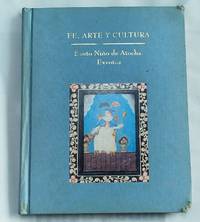
20008<p>Hermoso libro editado por el Consejo Nacional para la Cultura y las Artes y la casa Estudio Diego Rivera y Frida Khalo.</p><p>Con hermosas fotografías el tema es visto desde varios puntos como es el lietrario artístico religioso etcetera.</p><p>El libro esta lastimado en las puntas de las tapas pero las hojas estan en perfecto estado</p><p>Tapa dura forrada en tela primera edición año 2000.</p> Instituto Nacional de Bellas Artes hardcover
85063902Tokio 1901 Yamamoto. Oblong album color pictorial stiff wrs. purple silk ties mild/faint center fold a remarkably clean bright copy 58p. 40 large photos 26.5 x 20 cm. 21 smaller photos ca. 12.5 x 8.5 cm. album size 39 x 26.5 cm. . . . PHOTOGRAPHED BY THE EMINENT YAMAMOTO SANSHICHIRO . . . THE LEGENDARY AND OBSCURE PHOTO ALBUM OF . . . THE NORTH CHINA AFFAIR OR THE BOXER REBELLION . . . PRINTED IN A VERY SMALL FIRST & ONLY OBSCURE EDITION . . . WORLDCAT LOCATES ONLY 3 COPIES ! . THE BOXER UPRISING 1900 This work documents the results of the Boxer Uprising of 1899-1900 where in anti-foreign sentiments reached a boiling point. Several foreigners were killed mostly missionaries later when foreign embassies were besieged some diplomats were also killed. This resulted in the combined efforts of these foreign countries who teamed up to suppress this rebellion. This rebellion was mostly limited to North China where it began in Shandong province under German control and spread Westward across Northern China through Beijing. . This superb work contains a total of 114 b.w. photogravures. This work shows historic photographs of the foreign troops occupying Beijing Peking China. Good photographs of these troops in and around the Forbidden City namely those from Japan Russia France America and Germany. . What makes this graphic work important is that it shows a large part of the Palace and other Forbidden City buildings as they were before the troops actually damaged or pillaged these historic sights. Each country garrisoned their troops in a select group of old buildings hither to unseen by commoners and especially never by any foreigner. It is a superb look at the inner world of the Emperor of China. . THE PHOTOGRAPHER: YAMAMOTO Sanshichiro 1855-1943: . He was an eminent Meiji era photographer born in Okayama. From 1882 to about 1897 he had a photographic studio in Tokyo. Later when news of the Boxer Rebellion swept the world he quickly went to Peking to photograph the historic activities of foreign troops in the capitol including the Japanese living there. . After photographing the destruction & aftermath in Peking he finally settled down in Tianjin and opened his third photographic studio. . Color photos are posted to our website. . CONDITION: This work is truly an excellent copy externally and internally. There is a very tiny bit of edge wear at the lower right a tiny chip loss and upper left front corners. The purple silk ties are bright solid and very clean. There is a very slight hint of where this book was probably lightly folded in half but not hard and there is a mild hint remaining. From about the middle onwards there is not much evidence of this at all. By and large we feel this work is an excellent copy. There is NO damp or other condition issues with this item. Overall exceptionally clean and solid throughout. This is a very RARE book has seldom been found let alone in such lovely condition. A REMARKABLE COPY ! See photographs posted to our website from this copy. . RARITY: WorldCat only locates three copies in the world. This is indeed a very RARE book ! . See references below for more information. . BIBLIOGRAPHY: The author/photographer was noted for photographing and publishing two other superb photographic books on China: "Peking" published in 1906 and his stunning "View and Custom of North China" in 1909. . REFERENCE: Please see WorldCat: worldcat-org/title/views-of-the-north-china-affai r/oclc/25266060&referer=brief_results Yamamoto Sanshichiro is amazingly NOT FOUND in any of the 3 Terry BENNETT books: . History of Photography in China 1842-1860 vol. 1 2009 . History of Photography in China: Western Photographers 1861-1879 vol. 2 2010. . History of Photography in China: Chinese Photographers 1844-1879 vol. 3 2013. . . unknown
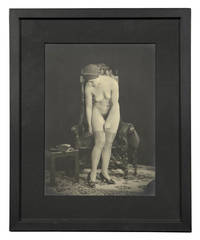
83369Paris c.1930s. . Six gelatin silver prints 22 x 16 cm. Very good condition and with very good tone. Framed. <br /> A series of six nude studies showing the same model posing in the photographer's studio. The style of the photographs which artistically combines high and low art allows to attribute the authorship to the Grundworth studio which is known to have been producing erotic postcards in Paris from the 1890s to the 1930s. <br /><br />Like most of the studios engaged in production of erotic photographs and postcards of the time little is known about it as despite the widespread circulation of these cards their production and distribution was illegal in France hence anonymity was essential. Given the time span and a number of different styles the name is unlikely to represent an individual photographer but more likely a group of photographers who were perhaps better known but wanted to hide their real identities.<br /> [Paris, c.1930s]. unknown
In-folio. 7 carte, 144 pp., 3 cc. (tavola ripiegata con Plani Villae Adrianae), 145-263 pp., 5 cc. Antiporta incisa da Romeyn de Hooghe, ritratto in rame di papa Clemente X, 25 tavole in rame (di cui 15 ripiegate) e 20 incisioni n.t. Qualche fioritura sparsa; Piena pergamena coeva con medaglione centrale e impressioni a freddo sui piatti, decorazioni al dorso. Qualche leggero difetto alle cerniere. Bibliografia: Caillet II, 5777.
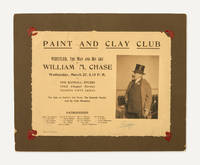
1901EPH25-04<p><em><strong>Platinum print affixed to paper</strong></em> <em><strong>20 x 25 inches overall</strong></em><br /><em><strong>Broadside with affixed platinum print photograph attached to board with red wax.</strong></em><br /><em><strong>With Randall's signature recto.</strong></em></p><p>A large and handsome broadside advertising a lecture entitled "Whistler the Man and His Art" which was delivered by William Merritt Chase at the photo studio of Herbert Randall in New Haven Connecticut and was sponsored by the city's Paint and Clay Club. The advertisement also lists the patronesses of the lecture and is illustrated by a stately portrait of Chase which was taken by Randall.<br /><br />American artists William Merritt Chase and James McNeill Whistler had to put it simply a complicated relationship. They met in the 1870s. Chase was already an admirer of Whistler who was more than ten years his senior and already very well-known. At first they struck up a friendship and at one point agreed to paint each other's portrait with the intention of exhibiting the two together. Chase painted a full size portrait of Whistler which he called "The Public Whistler." For this work Chase departed from his typical vibrant painting technique and mimicked Whistler's muted colors and style. In the meantime the two men's relationship began to strain as they traveled together and argued frequently. The final straw was Chase showing his portrait of Whistler without the latter in New York. The press coverage of the show presented the painting as an accurate ridiculing of Whistler's likeness and style and Whistler was insulted and declared himself finished with Chase and their friendship. Whistler's portrait of Chase has never been shown and in all likelihood was destroyed.<br /><br />Beginning around 1901 in what could perhaps be understood as an attempt to rewrite history or at least sway public perception of their relationship Chase began to tour with a lecture on his one-time close companion. Titled "Whistler: Man and his Art." Though he spoke of Whistler's hot-tempered nature the lecture was by all accounts a warm one. One review published in the Morris County Chronicle in 1902 recounts that Chase "gave an interesting description" of Whistler "consisting of personal reminiscence and criticisms on his many works" and that Chase "set forth the character of the man by his loyal devotion to art." Whistler passed away in 1903 and Chase continued his talks until the end of the decade.</p>
1939ZB445259Columbus etc.: Design Publishing Co. 1939. volumes 41-60 1939-1959 mostly bound with covers and ads retained ex library else texts clean & bindings tight. - If you are reading this this item is actually physically in our stock and ready for shipment once ordered. We are not bookjackers. Buyer is responsible for any additional duties taxes or fees required by recipient's country. Photos available upon request. Columbus, etc.: Design Publishing Co. unknown
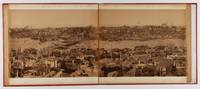
189054541Constantinople: Sebah & Joaillier 1890. First edition. Hardcover. vg- to vg. Oblong small folio. 12 1/4 x 14 1/4". Red pebbled cloth boards with decorative gilt ruling tooling and lettering on the covers. Rebacked maroon leather spine. Gilt-stamped crescent moon and star motif the national emblem of Turkey on the back cover.<br /> <br /> Taken from the Galata Tower in what is now the Karaköy neighborhood of Istanbul this magnificent panorama displays the skyline and cityscape of Constantinople as it appeared sometime in the late 1880s or early 1890s. The panorama is comprised of 10 original albumen photographs mounted on heavy card stock and bound together in accordion style leporello measuring a total of more then 11 feet when completely unfolded. Shot in a southwardly direction the viewer can see Galata Karaköy in the foreground and from left to right across the Bosporus to the Uskudar district on the Asian side and then across the harbor at the mouth of the Golden Horn the Galata Bridge and across to the Pérama neighborhood and the Faith district where many famous landmarks of the city can be seen including the New Mosque Topkapi Palace Hagia Sophia and many others. Each panel measures about 13" wide and 12" tall.<br /> <br /> The photography is credited to "Sebah & Joaillier" one of the most prominent and prolific photography studios of Ottoman Empire during the second half of 19th century. Originally founded sometime around 1857 in Instanbul by Syrian-Armenian photographer Pascal Sebah 1823-1886 the studio was one of the earliest in the city and all of Ottoman Turkey. By the 1870s Sebah had become among the most prominent Ottoman photographers having also opened a branch of the studio in Cairo. Upon Sebah's death in 1888 the firm was taken over by his 16 year-old son Jean Pascal Sebah who then partnered with photographer Policarpe Joaillier 1848-1904. The firm was renamed "Sebah & Joaillier". Therefore although this panorama is undated it could not have been issued earlier than 1888; most likely sometime shortly thereafter circa 1890.<br /> <br /> Spine of of the portfolio has been professionally re-backed. Plates with minor to light foxing although the images are still quite clean and vibrant. Binding in very good images in very good- to very good condition overall. A slightly later version of the panorama from Sebah & Joaillier simply titled "Constantinople" is comprised of 12 slightly smaller panels instead of 10 and measures around the same size in total.<br /> <br /> Bibliographic refences: Jacobson Ken. Odalisques & Arabesques: Orientalist Photography 1939-1925. Quaritch 2007; Özendes Engin. "Photography in the Ottoman Empire"; Öztuncay Bahattin. The Photographers of Constantinople. Aygaz 2003. Sebah & Joaillier hardcover
awd-106458 encres originales sur vélin au format 32/24 cm (dont 40 avec ajouts localisés aux crayons de couleur et 3 signées et datées 9-86) insérées dans un book en skaï gris texturé (35,5/29,2/3,8 cm).
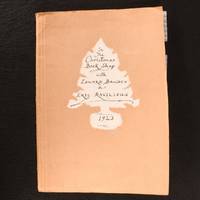
1923957Z15London: The Studio Limited 1923 . First edition. Paperback. Very Good Indeed. 11.5" by 8.5". Eric Ravilious; Edward Bawden. The vanishingly scarce first collaboration between the celebrated artists Eric Ravilious and Edward Bawden. One of the earliest examples of their impressive artwork being an advertisement for Christmas gift books from 'The Studio'. The first edition. A vanishingly scarce piece of art history being the first ever collaboration between Eric Ravilious and Edward Bawden. Not held by any institutional library. Illustrated with their dual tone wood engraving to the title page and six pages of dual tone wood engraved vignettes. Collated complete. An advertisement insert for the December issue for 'The Studio' advertising a number of Christmas gift books published by 'The Studio' and other notable publishers. 'The Studio' was an illustrated art magazine and publisher of art and design works. This advertisement is one of the earliest known published works for the noted artists Eric Ravilious and Edward Bawden and is the first collaboration between the two made while the two were still studying at the 'Royal College of Art'. Both Bawden and Ravilious are notable artists from the first half of the twentieth century being renowned for their work as war artists during WWII. The two collaborated many times on murals and other projects. In the publisher's original paper covers. In the publisher's original paper covers. Externally excellent with only minimal creasing. Bookseller's label to the verso of the rear cover. Internally firmly bound with light spotting. Very Good Indeed The Studio Limited paperback
19912091202133212933Mainichishinbunsha 1991. Soft Cover. Fine. Number of books: 2 in total Mainichishinbunsha paperback
Pietra nera misure: mm 400 x 255 Pittore. Probabilmente entra giovanissimo nella bottega di Giambattista Piazzetta diventandone senza ombra di dubbio il migliore e il più longevo dei suoi allievi. Ne assimila così profondamente lo stile e la pennellata che ancora oggi diverse sono le opere che dividono la critica circa la loro attribuzione ad una o all’altra mano. Francesco è citato per la prima volta in un documento del 1744 della Fraglia dei Pittori veneziani, tuttavia è molto probabile che già da tempo fosse celebre in città. La sua prima opera documentata è un Immacolata Concezione per la chiesa parrocchiale di Cortona, oggi conservata presso l’oratorio della Villa Tommasi a Metelliano. Nel 1749, grazie all’interessamento del Conte Giacomo Carrara di Bergamo, gli fu commissionata la Pala dei Quattro Santi che adorano la Croce e i due laterali con Santa Lucia e Santa Apollonia per la chiesa di San Martino ad Alzano Lombardo. I dipinti ebbero un grande successo e valsero al pittore la protezione del Conte Carrara ma attirarono l’attenzione anche dei Conti Albani che divennero anch’essi suoi committenti invitando il pittore nel 1757 ad eseguire gli affreschi per casa Albani a Bergamo. Tali affreschi sono considerati dalla critica come il momento centrale dell’attività dell’artista. Pur accettando nel 1755, su segnalazione tra l’altro di Tiepolo e di Pittoni, la nomina a professore del Collegio dell’Accademia di Venezia, l’attività nella bergamasca si fa sempre più intensa. Nel 1762 Capella si trasferisce definitivamente a Bergamo dove apre anche una scuola di pittura particolarmente fiorente. Si tratta di uno studio preparatorio per l'importante pala nella Basilica di San Martino ad Alzano Lombardo, così come attestato anche dalla scritta a matita sul verso, e a giudicare dalle pieghe, fu probabilmente ripiegato e spedito a mo' di lettera. Questo insolito invio di disegni doveva essere una prerogativa dell’autore poiché si conosce un altro suo disegno, proveniente dalla collezione del Conte Carrara ed oggi presso l’Accademia Carrara (Inv. n, 14), che presenta le medesime caratteristiche. Nella metà inferiore del disegno si vede il gruppo di quattro Santi: Santo Stefano a sinistra, San Vincenzo Ferreri, San Francesco Saverio e San Nicola di Bari a destra ritratti in movimentate posture e intenti a rivolge le proprie preghiere verso la parte superiore della composizione dove vediamo due angioletti che sollevano in volo la Croce. Rispetto alla redazione finale su tela vi sono alcune differenze. Santo Stefano anziché avere il braccio sinistro alzato a indicare la Croce ha entrambe le braccia alzate con le mani congiunte in segno di preghiera. Il Santo in piedi risulta leggermente più spostato verso destra, ma la modifica più consistente riguarda gli ultimi due Santi che vengono ricollocati spostando più verso il centro la figura di San Nicola e allontanando sensibilmente verso destra l’ultima figura, a cui viene inoltre cambiato atteggiamento nascondendo le mani che nel dipinto sono invece ben visibili. Il disegno è un tipico esempio dello stile grafico di Capella, caratterizzato dai modi soffici e dal tocco leggero, oltre che dall’uso del gessetto nero. Anche il cielo è realizzato con il caratteristico tratteggio obliquo tipico dell’autore che sfrutta la fragile consistenza del gessetto per creare leggere e movimentate campiture chiaroscurali. Opera in ottimo stato di conservazione eccetto le pieghe descritte. Nonostante la tecnica impiegata, il disegno mantiene tutta la leggerezza e la sensibilità di tocco del maestro veneto. Bibliografia: R. Pallucchini, “Francesco Daggiù detto il Cappella”, in Riv. di Venezia, XI (1932); L. Vaccher, “Opere del periodo bergamasco del C.”, in Arte veneta, XXII (1968); F. Rossi, “I Grandi disegni italiani dell'Accademia Carrara in Bergamo”, Silvana editoriale, 1985.
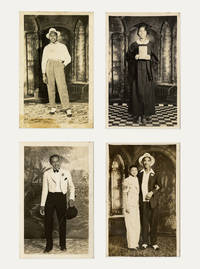
1920BB.23.031<p><em><strong>Silver prints 24; Each 5 1/2 x 3 1/2 inches; Some with "Nu Way Photo Shoppe" stamp verso one with Hicks Photo Studio embossed credit stamp some with subject identification recto or verso.</strong></em></p><p>Collection of real photo postcard studio-portraits of the African American community of Miami Florida in the 1920s-40s.</p><p>Eighteen of the photographs are from the "Nu Way Photo Shoppe" a commercial studio located at 939 N.W. 2nd Avenue in the Overtown neighborhood of Miami.The firm was opened by David Jenkins in the early 1940s and catered to a Black clientele. A 1942 issue of "The Crisis" advertises Jenkins' work in Overtown and notes that many of the photographs illustrating the issue were shot by his firm. Included in the collection are portraits of two young women posed proudly in her graduation uniform an identified soldier alongside his sister dapper men in pinstripe suits two-tone shoes and panama hats and equally sharp-dressed women.</p><p>There are six other photographs from other Miami-area studios. One of a woman seated has an embossed stamp for "Hicks Studio." Run by proprietor James E. Hicks the Hicks Studio was also located in Overtown at 225 N.W. 8th Street and is mentioned in the same issue of "The Crisis." Also included are a fun pair of photos showing a coolly-posed man in an all white suit and a second image showing him with a woman elegantly-clad in all white as well. There are also two photographs in front of the same tropical-backdrop one of a man dressed in a suit with tails holding a cane and bowler and the other of a man and woman. One of the last two photos show a woman in lavish evening wear and the other shows a couple in more conservative attire.</p><p>The second-oldest continuously inhabited Miami-area neighborhood after Coconut Grove Overtown is located just northwest of downtown. The area was originally settled in the late 19th-century by African American laborers who worked on the construction of the Florida East Coast Railway. Originally known as "Colored Town" it was one of the few places in Miami where black residents were allowed to live. During the early 20th-century Overtown became a thriving cultural center for Miami's black community with numerous businesses restaurants and nightclubs built primarily along Northwest 2nd Avenue where the Nu-Way Photo Shoppe was located. Its thriving Jazz scene earned Overtown the nickname "Little Harlem."</p><p>In the 1960s Overtown was largely demolished to make way for the construction of Interstate 95 which cut through the heart of the neighborhood. Many homes and businesses were destroyed and the highway effectively cut Overtown off from downtown Miami and the rest of the city. Today revitalization efforts are in place including the restoration of the neighborhood's historic Lyric Theatre.</p>
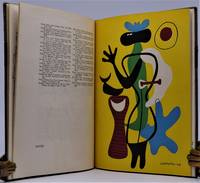
1949009041Santiago De Chile: Cuadernos del Pacifico 1949. Book. Near Fine. Cloth. Limited Edition. 4to - over 9¾" - 12" tall. One of the 100 copies that contain a sheet hand-colored by the artist this copy additionally has the frontispiece illustration also hand-colored by the artist. Handsomely bound in contemporary green cloth over boards with decorative black morocco strip lettered in gilt at front cover and spine ribbon marker bound without the original wrappers. Typeface by Mauricio Amster. Near Fine light soiling to boards slight wear to morocco at board edge small bookseller's plate front end page. Mario Carreno 1913-1999 was a Cuban-born Chilean painter known for his Cubist abstraction and surrealism with techniques seen in Mexican muralist paintings. A unique copy with the additional hand-colored illustration and in contemporary fine binding. Cuadernos del Pacifico Hardcover
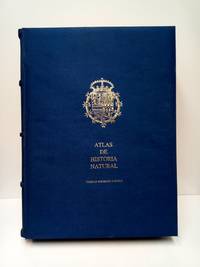
199047341EDICION FACSIMIL.- Valencia: Vicente García Editores S. A. Imp. en Artes Gráficas Vicent S. A. 1990.- 2 VOLS. El códice consta de 7 h. en blanco 218 láminas a todo color 8 h. en blanco 2 h. con el colofón y el DOY FE de la edición con firma y sello notariales y el estudio tiene 138 p; Gan Folio 347 x 245 cm; El facsímil totalmente compuesto por láminas a todo color e impreso sobre magnífico papel en imitación similar al del original y el estudio bilingüe en español e inglés sobre excelente papel offset satinado de fuerte textura; El facsímil encuadernado exactamente como el original en Plena Piel Pergamino con el lomo dorado con grecas y florones y con ambas tapas plenamente doradas y el estudio encuadernado en Media Piel Pergamino.- Esta edición se compone únicamente de: tres mil ejemplares numerados correlativamente del 1 al 3.000 ambos inclusive siendo este el n.º 613; un ejemplar con destino a S. M. el Rey Don Juan Carlos I; y además sin fines comerciales cincuenta ejemplares que se identificarán con números romanos y otros treinta ejemplares que se identificarán con las letras del abecedario de la A a la Z incluyendo dobles y compuestas. Sigue la autentificación notarial con su firma y sello. Excelentísimo estado de conservación por no decir como nuevo. Este códice pictórico que se conserva en la Biblioteca de la Universidad de Valencia -nos dice el Prof. D. José María López Piñero- es un volumen de de 335 x 23 cm encuadernado en pergamino con adornos dorados. En una de las cubiertas lleva la leyenda "Jardín de Cámara" y el la otra "Retrato de Naturaleza". Tradicionalmente ha venido llamándose sin embargo "Atlas de Historia Natural" denominación con la que fue incluido en el Catálogo de manuscritos existentes en la Biblioteca Universitaria de Valencia publicado en 1913 por Marcelino Gutiérrez del Caño. Consta de 234 hojas de papel del siglo XV como puede verse por sus marcas estando en blanco las seis primeras y las diez últimas. Las restantes 218 contienen dibujos en colores a la acuarela de plantas y animales pintados por una sola cara con la excepción de una que lleva figuras en ambas que corresponde a las páginas numeradas 51-52. En casi todas las hojas hay un solo dibujo; solamente en cinco se incluyen dos o tres. Sesenta dibujos corresponden a animales y los demás a plantas. HISTORIA DEL SIGLO DE ORO ESPAÑOL Libro en español Vicente García Editores, S. A. hardcover
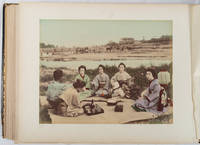
1890215089Japan. Circa 1890s. 50 hand-tinted albumen prints 30 captioned with studio stock references mounted on thick gilt-edged card leaves19.5 x 25 cms in an album 27.5 x 35 cms; elaborately lacquered boards scuffed and chipped inlaid with mother of pearl with loss over quarter calf renewed bevelled edges gilt dentelles endpapers gilt-flecked some fading and spotting to the images and toning to the margins of the card leaves but a very good handsomely bound collection.<P> Beautiful studio album containing a collection of 50 hand coloured photos of Japan with a splendid lacquered and decorated cover. The photos were commercially produced images which were sold to foreign visitors who had the studio place photographs in an album of their choice. This album is unusually interesting because unlike many where photographs were more randomly placed the images have been selected and arranged geographically beginning in Tokyo and moving southwards: Nikko Yokohama Miyanoshita & Hakone Lake Mount Fuji Kyoto Osaka Kobe and Nagasaki. <br> <br>There are fine images and portraits of geisha including an uncaptioned image of geisha seated possibly by the Kamo River in Kyoto entertaining a male guest. A lute is placed on the rice mat together with a tray of beer. One of the geisha is looking straight to camera a striking composition. Another uncaptioned in the Kyoto group is likely to be in Arashiyama shows a sandalled figure on a mountain path overlooking the leisure boating below. <br>There are also images of pagoda fishing rice planting street vendors and markets. <br> <br>More than half the photographs appear to be from the studio of the Yokohama based photographer Tamamura Kozaburo c.1856-192 who at his height was described as "the best photographer in Yokohama". As Terry Bennett has attested Tamamura's business strategy of selling souvenir albums of views and costumes to foreigners became a "winning formula". see Terry Bennett "Early Japanese Images" Tuttle 1996 and "Photography in Japan 1853-1912" Tuttle 2006<P> <b>When referring to this item please quote stockid 215089</b> . hardcover