[OPERA] [BEFFROY DE REIGNY, Louis-Abel]Biblio.com
1 196 résultats
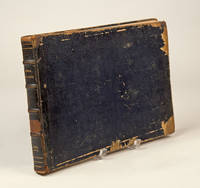
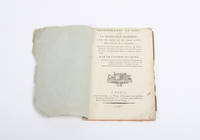
17913005370Paris: l'Auteur 1791. Some small tears and damage. A very good copy. Octavo; original condition stitched in plain blue-grey wrappers. <p><p>First edition of one of the most popular operas of the Revolution depicting the down-trodden villagers of the Moon after the arrival of the glamorous aviator Nicodème bringing news of events in France via Montgolfier balloon. Although this was an era of tremendous advances in stagecraft as the theatres of Paris and London vied with each other for the most stupendous effects Beffroy's lunar setting and the use of space travel by hot-air balloon was highly unusual. </p> <p>Beffroy de Reigny 1757-1811 was a successful journalist and dramatist usually writing under the nom-de-plume of "Cousin Jacques." His most important works were written in the period immediately following the French Revolution and he was fond of using lunar society to satirise the French as can be seen in his burlesque journal Les Lunes and its successor the Courrier des planètes.</p> <p>This is one of several Paris editions of the same year another appeared in Avignon and a "third" edition of 1797 is also recorded the last with subtle but pessimistic changes to the text. As the title confirms the opera was first performed in November 1790 running for over four hundred performances.</p> </p> . l'Auteur unknown
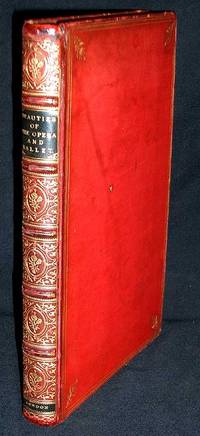
18448333London. David Bogue. 1844. Lavishly bound in sumptuous tri-gilt ruled full crimson calfskin. Gilt tooled fleurette motifs to corners of front and rear covers. Elaborate gilt ruled spine compartments with intensely ornate gilt tooled fleural vignettes. Gilt tooled raised bands. Decorative gilt tooled and titled morocco label. Elaborate and ornate paneled turn-ins. Marbled endsheets. a.e.g. 4to. 7.25" x 10.75". The First Edition. Illustrated with ten full page illuminated steel plate engravings and further throughout by various wood engravings en texte. Elaborate multi-chromatic decorative borders to each page. A Fabulous production detailing the mid-Victorian Opera and Ballet featuring plate engravings of notable singers dancers and productions. With its high gloss engravings whimsical en texte woodcuts and highly stylized colour page borders this volume represents one of the finest examples of Victorian book design. Niles and Leslie V1-225; Moroda-1272. Some darkening and/or mild scuffing to covers. Hinges present previous repairs but are tight and firm. Corners gently bumped. Head and tail pieces lightly chipped. A very Good copy of this breathtaking work. David Bogue. hardcover
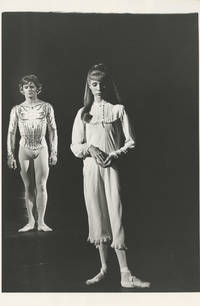
1977163168N.p.: N.p. 1977. Vintage oversize satin finish photograph from the 1977 production of the beloved 1892 ballet showing dancers Mikhail Baryshnikov and Gelsey Kirkland. Camera 5 stamp on the verso crediting photographer and Camera 5 founder Ken Regan. <br /> <br /> The 1977 production was staged by the American Ballet Theatre at the Kennedy Center and marked Baryshnikov's debut as choreographer. The ballet was adapted for television the same year directed by Tony Charmoli. <br /> <br /> From the archive of the PIX Agency an American photo house that acted as an intermediary between emigre photographers as well as those still living in Europe and the American magazine and newspaper market between 1935-1969. <br /> <br /> 9.25 x 14 inches archivally matted in a 14 x 18 inch 8-ply white mat. About Near Fine slightly wavy at the top and bottom edges. N.p. unknown
2000159893N.p.: N.p. 2000. Three vintage photographs of director Werner Herzog taken by noted jazz photographer Jeffrey Kliman during choir rehearsals for his staging of Richard Wagner's "Tannhäuser" held at The Lyric Opera House in Baltimore in March 2000. <br /> <br /> These prints are unique struck from the original negative by the photographer. Full provenance available.<br /> <br /> 8 x 10 inches. Fine. N.p. unknown
1934DEMO016439INew York: Random House 1934. First edition. Hardcover. Very Good/good. Octavo 57pp. black cloth; dj chipped archivally repaired chips; inked name of Nancy Doss on front pastedown some toning to endpapers from dust jacket. <br/><br/>Wilson A21a. Full-page inscription by Gertrude Stein to O. J. Kedlec a collector from Forest Park Illinois. Stein's inscription repeats the title of this work and she wrote it from Bilignin par Belley Ain France." Random House hardcover
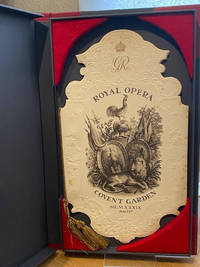
193963657London: Royal Opera House 1939. Folio. 8 pp. Large pictorial stiff card wrappers with tassels at spine. In custom made half red morocco solander box with leather title label and felt corner-pieces. Front and rear cover designs by Rex Whistler. Printed programme. Spotting to covers. Internally fresh. A performance by the Vic-Wells Ballet under the direction of Ninette de Valois and The London Philharmonic Orchestra conducted by Constant Lambert and Sir Thomas Beecham. Scarce. Very good example. . Near Fine. Wraps. 1939. Royal Opera House 1939 paperback
197917149JGarden City: Doubleday 1979. First Edition First Printing of his classic ballet novel. Signed and inscribed by the author Edward Stewart inscribed: “For Bob Tollett and Donn Harman with very best wishes Ned Stewart 7 March 79.†Bob Tollett was one of New York City’s leading rare autographs and manuscript dealers. Near fine in a near fine price-clipped dust Jacket with a few tiny chips. The origin of this novel involved Nora Kaye-Ross 1920-1987 who was an American prima-ballerina known for her ability to perform dramatic roles. Called the Duse of Dance after the acclaimed actress Eleonora Duse. Stewart and Nora Kaye-Ross spent extensive time together working on a potential non-fiction ballet book. The book never came to pass but their relationship allowed Stewart access to the highest and most intimate circles of ballet life in New York. Acknowledged as one of the top novels ever written dealing with the world of ballet. Doubleday unknown
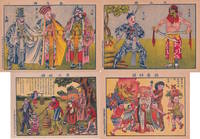
219368Tianjin.: 毓順成 芳記. Yushuncheng fangji. Early 20th Century. Four handbills showing popular images two 13.2 x 18.4 are images of characters from Peking Opera and two 12.2 x 16.5cm depict themes important in Chinese society at the time. Text in traditional Chinese characters. Light even browning tiny closed tears at margin of one sheet repaired with washi. Very good. Chinese opera characters in the style of traditional woodblock prints were popular in the late Qing dynasty and early Republican period. Handbills of characters from Beijing opera were sold as collectible items that also helped to familiarise people with the characters of different operas; their costumes make up weapons and names. In this case there are two characters from the opera 白水灘 on one handbill and three characters from the opera 落馬湖 on the other. <br> <br>Images with social themes also made popular handbills especially in places such as Tianjin where the influence of foreigners was pronounced. In 福壽財源 we see an immortal carrying a peach of longevity surrounded by images of fertility - a young woman and boys carry fruit and flowers as well as other items symbolic of wealth - a coin a vase gold ingots and so on probably issued for New Year. <br> <br>The final handbill of the four 娶大媳婦 tells the tale of a girl of eighteen married to a boy of seven. The Chinese custom of marrying a young boy to an older girl adopted into the family is thus open for discussion - everyone in the image clearly has a different opinion of the situation; from the young husband the older farmer in the background and the two men in long scholars robes to the modern young man in a western suit with leather shoes as well as the girl herself. The practice of adopting a girl to bring up as a future wife for a male child was made illegal in 1949. The text mentions some of the ways in which the girl would be expected to help in her adoptive family's home. . 毓順成 芳記. [Yushuncheng fangji] hardcover
2224712 March 1912 31 December 1912 and the other two without year; all on letterheads of 55 York Terrace Regent's Park N.W. Total of 7pp 12mo. All in good condition lightly aged and worn. Each folded once. All signed 'Percy Anderson'. ONE: 12 March 1912. Begins: 'Your properties are quite splendid.' He thanks Clarkson and his assistant for the trouble they have taken 'over the “Mâ€'. Ends: 'I thought everything as good as it cd be – I refer to yr work of course'. TWO: 31 December 1912. He thanks him for his 'delightful' card and for 'yr. good wishes & for the tickets you so kindly send me for The Miracle. It was most thoughtful of you.' He ends in the hope that 1913 will be a crowning success you for sic & that you will have a very happy time'. THREE: 19 January no year. He is seeing 'Mr. Simmons' at 11 am the following day and will 'look in' on Clarkson afterwards. He thanks him 'for all the good work' on 'The Country Girl' adding: 'I want you to put all yr “guts†please into the “Ulysses†wigs'. FOUR: 10 September no year. 'It is too kind of you to send me those lovely figs. There's nothing I like better & I am most grateful.' FOUR: 31 December 1912. The recipient William Clarkson was the owner of Clarkson's Wigs Wellington Street London. James Morton in his 'Gangland Soho' 2012 alleges that Clarkson who has a blue plaque to his name at 41-43 Wardour Street was not only a repeated insurance fraudster but a notorious homosexual blackmailer after whom the public lavatory in Dansey Place was named 'Clarkson's Cottage'. RE Anderson & G & S: "The artist and costume designer Percy Anderson 1851-1928 was based in London where he exhibited watercolours at the New Water Colour Society in 1886. He designed costumes for the original productions of the last four Gilbert and Sullivan operas at the Savoy Theatre - The Yeomen of the Guard 1888 The Gondoliers 1889 Utopia Limited 1893 and The Grand Duke 1896 and for several D’Oyly Carte revivals including that for Utopia Limited considered by Rupert D’Oyly Carte in 1926 and but never realised. Given Gilbert’s exacting attitude to his productions it is an accolade to Anderson that he worked with Gilbert on so many including Gilbert and Edward German’s Fallen Fairies 1909 when Gilbert said Anderson: ‘surpassed himself’". 12 March 1912, 31 December [1912], and the other two without year; all on letterheads of 55 York Terrace, Regent's Park, N.W. unknown
1794215352London: Debrett; Longman; Debrett; Debrett 1794. All but the last title first editions. 80; 6 42; 4 61 3; 4 32 pp. 1 vols. 8vo. Three quarters blue polished calf gilt spine t.e.g. Upper cover detached. All but the last title first editions. 80; 6 42; 4 61 3; 4 32 pp. 1 vols. 8vo. Debrett; Longman; Debrett; Debrett unknown
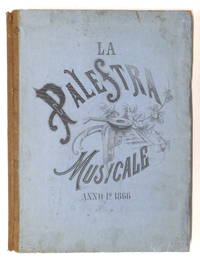
116404Musica Spartiti - La Palestra Musicale - Anno I - 1866 - Dal fascicolo 1 al fascicolo 38/39 - Pag. 316 - Copertina rigida - Lingua italiana. - Buone condizioni generali. Piccoli segni del tempo. - RARITA' - unknown
198461448Portland & Gresham OR: Susan Higgins Ballet Instructor & Artistic Director Cascade Athletic Club; Oregon Concert Ballet Co. 1984. 4to. Approx. 250 pp sections separately paginated and unnumbered some numbered in ink several with duplicate numbering consisting of typescript musical score and illustrations many of the pages with extensive ink and/or pencil annotations some updates photocopies with additional revisions many pages with updates taped onto the musical score approx. 200 pp. preserved in archival mylar sleeves remainder 3-hole punched at gutter margin and inserted. Contemporary black vinyl 3-ring binder minor scuffing edgewear still VG exemplar. A wonderful original ballet director’s art direction notebook for the Peter Pan ballet staged in 1984 intended to offer young up-and-coming ballet students at the time to experience live performances and to unify Eastside/Westside Royal Academy of Dancing trained students. It would be 5 years before the Oregon Ballet and Pacific Ballet Theater would consolidate under the direction of James Canfield to form the Oregon Ballet Theatre. This ballet featured four acts divided into The Nursery Neverland Ship of the Pirates and Conclusion featuring solos by Wendy Tinker Bell Peter and Captain Hook over the length of the production. Dancers 4-5 years old were featured as the Neverland Fairies 5-7 years old with 2 years of training and pre-primary Royal Academy examinations behind them played Forest Fairies; Lost Children were 6-9 years old and had performed Barre and footwork; followed by the Pirates and soloists including Wendy Heather Miller Peter Pan Laura Spradlin Captain Hook Elizabeth Johnson and the mermaids drawn from the Lake Oswego School of Ballet under the directorship of Christine Donald. The original score by Anita Perry b. 1960 an up-and-coming Canadian composer out of British Columbia where she had studied piano with Lee Kum Sing and composition with Cortland Hultberg. In her early 20’s M. Perry had already won several composition awards was known for her original ballet works and wrote this score with orchestration for a variety of instruments “lending to the performance. . . a more closely approximated real environment experienced by professional dancers.†Peter Pan as a ballet required a fair amount of athleticism and as indicated here in Higgins’s artistic director’s notebook required extensive choreography changes scene adjustments and revisions by M. Perry. Higgins studied and danced at the British Royal Ballet later with Elvie DeMarko 1924-1989 of Ballet Russe and then with Robert Barnett of the Atlanta Ballet. No similar notebooks or programs survive for this 1984 ballet and there are no recordings or printed musical scores this cataloguer could uncover. Susan Higgins, Ballet Instructor & Artistic Director, Cascade Athletic Club; Oregon Concert Ballet Co., unknown
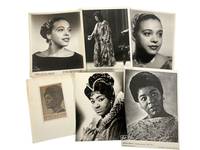
1957208291957. Press photograph archive of African American women opera singers 1957-1977 documents the emergence and international recognition of Black performers within mid twentieth century classical music and operatic institutions. The images center on four prominent singers whose careers developed during and after the era of segregation when access to major stages and audiences expanded unevenly for Black artists. Figures such as Marian Anderson who broke barriers at the Metropolitan Opera in 1955 established a precedent for subsequent generations; the performers represented here advanced that presence through sustained international careers providing visual evidence of African American participation in elite cultural institutions during a period of social and cultural change.<br /> <br /> Six black and white silver gelatin press photographs each approximately 8 x 10 inches with captions and markings on recto and verso. Subjects include Adele Addison in two studio portraits from the 1950s later known as the singing voice for Bess in Porgy and Bess 1959; Shirley Verrett in two images including an early news photograph prior to a performance at Ambassador College Auditorium and a later 1976 stage portrait in formal concert dress; Martina Arroyo in a 1977 portrait during the height of her international career; and Grace Bumbry depicted in costume as Princess Eboli in Verdi's Don Carlos at the Metropolitan Opera in 1965. The photographs capture both staged publicity portraits and performance contexts documenting professional presentation and artistic identity.<br /> <br /> Produced during decades of expanding civil rights advocacy and gradual institutional integration the archive situates African American women within a field historically shaped by exclusion and limited access. Their visibility in major opera houses and concert venues reflects broader shifts in cultural recognition and professional opportunity while also underscoring the continued significance of performance as a site of racial and gendered representation. Minor edge wear; captions remain legible; overall very good condition. unknown
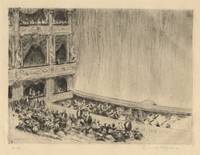
390891915. Signed in full in pencil just outside platemark at lower right. Also signed and dated in the plate "E. Oppler 15" at lower left inscribed in pencil "9-50" just outside platemark at lower left and "VII.II" at lower left corner with titling in pencil to lower margin. On ivory laid Bosquet watermarked paper. Impression size 180 x 270 mm. 7 x 9-1/2" with wide margins. <br /> <br /> A pre-performance or intermission scene depicting three tiers of an elaborate performance space with people both sitting and standing some in animated conversation with players in the orchestra pit before a closed curtain. Number 9 of an edition limited to 50 copies this impression an apparent second state of seven. <br /> <br /> Oppler is considered the premiere chronicler of ballet in Germany. "He spent his student years in Munich London and Holland before settling in Berlin in 1905. As a member of the Berliner Secession he developed into a sought-after portraitist and from 1912 through his drawings and graphic works to one of the perhaps to the most significant German artistic chroniclers of ballet history. Especially the Ballets Russes and their soloists owe to Oppler's enthusiasm an appreciation known until today only among ballet afficionados. Oppler is recognized as the inventor of an illuminated drawing pencil which enabled him to sketch from the audience during rehearsals and performances." Deutsches Tanzarchiv Köln. unknown
067981308X-11-1Random House Books for Young Readers. Very Good. It's a well-cared-for item that has seen limited use. The item may show minor signs of wear. All the text is legible with all pages included. It may have slight markings and/or highlighting. Random House Books for Young Readers unknown
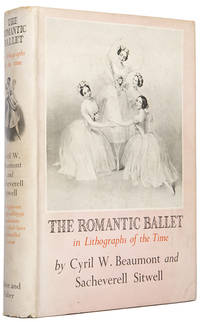
114610London Faber and Faber 1938. . First edition; 4to 28.5 x 20.5 cm; 81 tipped in plates as issued 9 of which in colour a couple of discreet ownership inscriptions to front endpaper; publisher's silver metallic cloth original pictorial dust-jacket gilt cloth lettering piece to spine top edge gilt clipped dust-jacket a little sunned and frayed binding a little bumped otherwise well preserved a near-fine copy in a good dust-jacket;<br /> A lovely copy of this luxurious inter-war production. Cyril Beaumont 1891-1976 and Sir Sacheverell Sitwell 1896-1988 collaborated on this work after meeting in Beaumont's bookshop on Charing Cross Road. Seeing as the bookshop specialised in ballet books it seems only right that ballet was the subject which Beaumont could exhibit her knowledge and access to lithographs of ballets of the Romantic ballet period from 1832 to 1849.<br /> London, Faber and Faber, 1938. hardcover
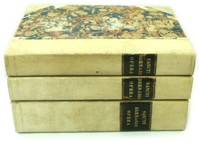
1781523404Venice: Balleoni 1781. Hardcover 6 volumes in 3; FULL TITLE: Sancti Bernardi abbatis primi Clarae-Vallensis Opera genuina videlicet in primo et secundo volumine; spuria dubiaque in tertio comprehensa; Horstii et Mabillonii notis aliusque permultis aucta juxta editionem Parisien. anni MDCCXIX; adjecta appendice Edmundi Martene ex veterum scriptorum & momentorum collectione; atque his omnibus in hac tertia editione Veneta accuratius revisis & illustratis. Half-bound in cream coloured leather with marbled paper sides and marbled endpapers. Gilt bands to spine have partially worn away and title labels to spine are lightly worn. Board edges are rubbed and worn leather is lightly spotted and paper sides are shelfworn. Light foxing to prelims in all 3 and on a few pages in mains throughout. V.1 and V.3 have slight hinge breaks at title pages. Water marks to gutter of pages 1182 to REP in V.3. and mark to spine of V.1. Very good condition for age. Text is clean and unmarked throughout. AD. leather. Very Good. Used. Balleoni Hardcover
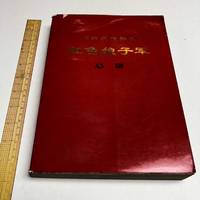
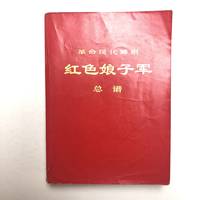
1970AG-10062<p><b><i>Red Detachment of Women full Score </i></b><b><i>红色娘å军总谱</i></b><b><i> Hong Se Niang Zi Jun</i></b><br /></p><p>Beijing: Published by People's Publishing House printed by Beijing Xinhua Printing Factory distributed by Xinhua Bookstore December 1970<b> FIRST EDITION</b>. The July 1970 Script Revised and Performed Collectively by Shanghai Peking Opera Troupe. 25×18 cm. xiv 534 1 pp. Colophon. Quotations from Chinaman Mao on the second and third page printed red tilted wrappers <i>minor tear to the cover slight tears to the foot of the binding else very fine condition.</i></p><p>北京:人民出版社,1970å¹´12月第一版,新åŽä¹¦åº—å‘行。本总谱由上海京剧演出团于1970年演出本集体改编,å‰ä¸¤é¡µå¸¦æœ‰æ¯›ä¸»å¸è¯å½•ï¼Œä¹¦çš®æœ‰è½»å¾®ç£¨æŸï¼Œå…¶ä»–å“相éžå¸¸å¥½ã€‚</p><p>In China revolutionary operas or model operas Chinese: yangban xi æ ·æ¿æˆ were a series of shows planned and engineered during the Cultural Revolution 1966–1976 by Jiang Qing the wife of Chairman Mao Zedong. They were considered revolutionary and modern in terms of thematic and musical features when compared with traditional Chinese operas. Many of them were adapted to film.</p><p>Originally eight revolutionary operas Chinese: Ba Ge Yangban Xi å…«ä¸ªæ ·æ¿æˆ were produced eighteen by the end of the period. Instead of the "emperors kings generals chancellors maidens and beauties" of the traditional Peking opera which was banned as "feudalistic and bourgeois" they told stories from China's recent revolutionary struggles against foreign and class enemies. They glorified the People's Liberation Army and the bravery of the common people and showed Mao Zedong and his thought as playing the central role in the victory of socialism in China. Although they originated as operas they soon appeared on LPs in comic books lianhuanhua on posters postcards and stamps; on plates teapots wash basins cigarette packages vases and calendars. They were performed or played from loudspeakers in schools factories and fields by special performing troupes. The Eight Model Operas dominated the stage in all parts of the country during these years leading to the joke "Eight hundred million people watched eight shows."</p><p>本组剧本属于文é©æ—¶æœŸçš„å…«å¤§æ ·æ¿æˆï¼Œç”±æ¯›ä¸»å¸å¤«äººæ±Ÿé’负责制作和演出。很多被æ‹æˆäº†ç”µå½±ã€‚</p><p>最åˆæœ‰å…«ä¸ªæ ·æ¿æˆï¼ŒåŽæ¥åœ¨æ–‡é©æ—¶æœŸçš„åŽæœŸå‘展到了18个。ä¸åƒå› å°å»ºå’Œèµ„产阶级的被ç¦äº†çš„ä¼ ç»Ÿäº¬å‰§ï¼Œé‡Œé¢å‡ºçŽ°çš„ä¸çš„国王大臣少女和美人,é©å‘½çŽ°ä»£äº¬å‰§ä¸»è¦è®²è¿°ä¸å›½è¿‘å¹´æ¥çš„抗战故事,宣扬人民解放军的光辉è£è€€å’Œæ¯›ä¸»å¸çš„英勇。虽然是京剧,很快就å˜æˆäº†å„ç§å½¢å¼å‡ºçŽ°åœ¨è¿žçŽ¯ç”»ã€æµ·æŠ¥ã€æ˜Žä¿¡ç‰‡ã€é‚®ç¥¨ã€é¦™çƒŸã€èŠ±ç“¶ã€æ—¥åŽ†ç‰å„ç§åœ°æ–¹ï¼Œç”¨æ‰©éŸ³å–‡å在å¦æ ¡ã€å·¥åŽ‚ç‰åœ°æ–¹ï¼Œç”±æ¼”出团进行表演。8ä¸ªæ ·æ¿æˆä¸»å¯¼äº†å…¨å›½æ‰€æœ‰çš„舞å°ï¼Œå› æ¤æœ‰äº†8亿人看8个剧的笑è¯ã€‚</p> People’s Publishing House paperback
1971AG-10054<p>Beijing: Published by People's Publishing House printed by Beijing Xinhua Printing Factory distributed by Xinhua Bookstore January 1971 <b>FIRST EDITION</b>. The July 1970 Script Revised and Performed Collectively by Shanghai Peking Opera Troupe. 8vo vi 397 pp. colophon consists of scripts stage photos selected theme score stage action instruction and the stage design started with quotations from Chairman Mao on the second and third page printed color stage photos and instructions inside printed pictorial wrappers <i>slightly curled at the head and foot of the wrappers else very good condition.</i><br /></p><p><i>北京:人民出版社出版,1971年第一版,由上海京剧团《智å–å¨è™Žå±±ã€‹å‰§ç»„集体改编åŠæ¼”出。本书包括了剧本ã€ä¸»æ—‹å¾‹ã€å‰§ç…§ã€åŠ¨ä½œæŒ‡å¯¼ã€èˆžå°ç¾Žæœ¯ç‰å†…容。包括éžå¸¸å¤šçš„照片。书皮上下ç¨å¾®å·èµ·ï¼Œæ— ç ´æŸï¼Œå“相éžå¸¸å¥½ã€‚</i></p><p>In China revolutionary operas or model operas Chinese: yangban xi æ ·æ¿æˆ were a series of shows planned and engineered during the Cultural Revolution 1966–1976 by Jiang Qing the wife of Chairman Mao Zedong.1 They were considered revolutionary and modern in terms of thematic and musical features when compared with traditional Chinese operas. Many of them were adapted to film.<br /></p><p>Originally eight revolutionary operas Chinese: Ba Ge Yangban Xi å…«ä¸ªæ ·æ¿æˆ were produced eighteen by the end of the period. Instead of the "emperors kings generals chancellors maidens and beauties" of the traditional Peking opera which was banned as "feudalistic and bourgeois" they told stories from China's recent revolutionary struggles against foreign and class enemies. They glorified the People's Liberation Army and the bravery of the common people and showed Mao Zedong and his thought as playing the central role in the victory of socialism in China. Although they originated as operas they soon appeared on LPs in comic books lianhuanhua on posters postcards and stamps; on plates teapots wash basins cigarette packages vases and calendars. They were performed or played from loudspeakers in schools factories and fields by special performing troupes. The Eight Model Operas dominated the stage in all parts of the country during these years leading to the joke "Eight hundred million people watched eight shows."</p><p>本剧是文é©æ—¶æœŸçš„å…«å¤§æ ·æ¿æˆä¹‹ä¸€ã€Šæ™ºå–å¨è™Žå±±ã€‹ï¼Œç”±æ¯›ä¸»å¸å¤«äººæ±Ÿé’负责制作和演出。很多被æ‹æˆäº†ç”µå½±ã€‚</p><p>最åˆæœ‰å…«ä¸ªæ ·æ¿æˆï¼ŒåŽæ¥åœ¨æ–‡é©æ—¶æœŸçš„åŽæœŸå‘展到了18个。ä¸åƒå› å°å»ºå’Œèµ„产阶级的被ç¦äº†çš„ä¼ ç»Ÿäº¬å‰§ï¼Œé‡Œé¢å‡ºçŽ°çš„ä¸çš„国王大臣少女和美人,é©å‘½çŽ°ä»£äº¬å‰§ä¸»è¦è®²è¿°ä¸å›½è¿‘å¹´æ¥çš„抗战故事,宣扬人民解放军的光辉è£è€€å’Œæ¯›ä¸»å¸çš„英勇。虽然是京剧,很快就å˜æˆäº†å„ç§å½¢å¼å‡ºçŽ°åœ¨è¿žçŽ¯ç”»ã€æµ·æŠ¥ã€æ˜Žä¿¡ç‰‡ã€é‚®ç¥¨ã€é¦™çƒŸã€èŠ±ç“¶ã€æ—¥åŽ†ç‰å„ç§åœ°æ–¹ï¼Œç”¨æ‰©éŸ³å–‡å在å¦æ ¡ã€å·¥åŽ‚ç‰åœ°æ–¹ï¼Œç”±æ¼”出团进行表演。8ä¸ªæ ·æ¿æˆä¸»å¯¼äº†å…¨å›½æ‰€æœ‰çš„舞å°ï¼Œå› æ¤æœ‰äº†8亿人看8个剧的笑è¯ã€‚</p><p><i><br /></i></p> People’s Publishing House paperback
1972AG-10053<p>Beijing: Published by C printed by Beijing Xinhua Printing Factory distributed by Xinhua Bookstore Beijing Distributing Agency February 1972 <b>FIRST EDITION</b> 8vo. The May 1970 Script Revised Collectively by the China Peking Opera Troupe. iv 374 pp. colophon consists of scripts stage photos selected theme score stage action instruction and the stage design started with quotations from Chairman Mao on the second and third page printed pictorial wrappers <i>slightly curled at the head and foot of the wrappers minor tears to the edge of the wrappers else fine condition.</i></p><p>北京:人民出版社出版。本书å‰ä¸¤é¡µå¸¦æœ‰æ¯›ä¸»å¸è¯å½•ï¼Œå†…容包括了剧本ã€å‰§ç…§ã€ä¸»æ—‹å¾‹ã€åŠ¨ä½œè¯´æ˜Žç‰è¯¦ç»†å†…容,由照片和文å—çš„å½¢å¼ç»„æˆï¼Œç…§ç‰‡å›¾ç‰‡å¾ˆå¤šï¼Œä¹Ÿæ˜¯æœ¬ä¹¦çš„一大特色。书皮上下两段ç¨å¾®å·èµ·ï¼Œå…¶ä»–部分å“相éžå¸¸å¥½ã€‚</p><p>In China revolutionary operas or model operas Chinese: yangban xi æ ·æ¿æˆ were a series of shows planned and engineered during the Cultural Revolution 1966–1976 by Jiang Qing the wife of Chairman Mao Zedong.1 They were considered revolutionary and modern in terms of thematic and musical features when compared with traditional Chinese operas. Many of them were adapted to film.</p><p>Originally eight revolutionary operas Chinese: Ba Ge Yangban Xi å…«ä¸ªæ ·æ¿æˆ were produced eighteen by the end of the period. Instead of the "emperors kings generals chancellors maidens and beauties" of the traditional Peking opera which was banned as "feudalistic and bourgeois" they told stories from China's recent revolutionary struggles against foreign and class enemies. They glorified the People's Liberation Army and the bravery of the common people and showed Mao Zedong and his thought as playing the central role in the victory of socialism in China. Although they originated as operas they soon appeared on LPs in comic books lianhuanhua on posters postcards and stamps; on plates teapots wash basins cigarette packages vases and calendars. They were performed or played from loudspeakers in schools factories and fields by special performing troupes. The Eight Model Operas dominated the stage in all parts of the country during these years leading to the joke "Eight hundred million people watched eight shows."</p><p>本剧是文é©æ—¶æœŸçš„å…«å¤§æ ·æ¿æˆä¹‹ä¸€ï¼Œç”±æ¯›ä¸»å¸å¤«äººæ±Ÿé’负责制作和演出。很多被æ‹æˆäº†ç”µå½±ã€‚</p><p>最åˆæœ‰å…«ä¸ªæ ·æ¿æˆï¼ŒåŽæ¥åœ¨æ–‡é©æ—¶æœŸçš„åŽæœŸå‘展到了18个。ä¸åƒå› å°å»ºå’Œèµ„产阶级的被ç¦äº†çš„ä¼ ç»Ÿäº¬å‰§ï¼Œé‡Œé¢å‡ºçŽ°çš„ä¸çš„国王大臣少女和美人,é©å‘½çŽ°ä»£äº¬å‰§ä¸»è¦è®²è¿°ä¸å›½è¿‘å¹´æ¥çš„抗战故事,宣扬人民解放军的光辉è£è€€å’Œæ¯›ä¸»å¸çš„英勇。虽然是京剧,很快就å˜æˆäº†å„ç§å½¢å¼å‡ºçŽ°åœ¨è¿žçŽ¯ç”»ã€æµ·æŠ¥ã€æ˜Žä¿¡ç‰‡ã€é‚®ç¥¨ã€é¦™çƒŸã€èŠ±ç“¶ã€æ—¥åŽ†ç‰å„ç§åœ°æ–¹ï¼Œç”¨æ‰©éŸ³å–‡å在å¦æ ¡ã€å·¥åŽ‚ç‰åœ°æ–¹ï¼Œç”±æ¼”出团进行表演。8ä¸ªæ ·æ¿æˆä¸»å¯¼äº†å…¨å›½æ‰€æœ‰çš„舞å°ï¼Œå› æ¤æœ‰äº†8亿人看8个剧的笑è¯ã€‚</p> People’s Publishing House paperback
175929663Paris: Basan 1759. 385 x 260 mm. Printed on laid paper. <br /> <br /> The outdoor scene with trees and statuary depicts Caroline and Charlotte daughters of Frédéric Sluyter performing in a production of Pygmalion at the Schouwberg Theatre in Amsterdam. The dancer at left is on her right foot with arms outstretched costumed in a dress with a low rounded neckline pointed waistline and a wide panniered skirt; the dancer at right is on her left foot with arms outstretched wearing male attire including cocked hat frock coat with stiff flared skirt breeches and heeless shoes. <br /> <br /> Browned; small stain to lower right corner. Scarce. NYPL: b12155632. BM 1854 0614.342.<br /> <br /> Caroline and Charlotte Frédéric were part of a troupe of child performers active in Amsterdam in the 1760s. Basan unknown
201352119London & Washington D.C.: Victoria & Albert Museum; National Gallery of Art 2013. Folio. 271 1 pp. Decorated title over 200 colour illustrations colour plates and black & white photo text illustrations. Black boards white raised & embossed lettering front cover spine w/ d.j. F/F copy. First edition stated of this lavishly illustrated work celebrating one of the most dazzling enterprises of the 20th century. The Ballets Russes revolutionized the art of ballet combining Russian and Western traditions with modernism. They thrilled and shocked audiences with brillian choreography music design and dances. Diaghliev brought together the vitality of contemporary art drawing upon the talents of Leon Bakst Natalia Goncharova Picasso Matisse and Giorgio de Chirico to create dynamic set designs and beautifully decorated costumes presenting on stage the artistic movements of Futurism Cubism and Surrealism. Victoria & Albert Museum; National Gallery of Art, hardcover
22363Marchetti's autograph on letterhead of the R. Accademia di S. Cecilia 'Liceo Musicale'. Rome 14 September 1892. Villari's autograph on reverse of leaf dated from Florence 2 November 1892. 1p 12mo. Leaf of lightly-browned and creased aged paper with closed tears to one edge. The two men are clearly writing in response to requests for autographs. Marchetti has written out four bars – slightly affected at end by closed tear – from what he states is 'Ruy Blas Preludio'. Beneath this he signs in a firm attractive hand 'F Marchetti'. At the head he dates: 'Roma 14 9bre 92'. On the reverse Villari has written out neatly an eight-line comment on 'Chi cessa d'essere bimbo prima del tempo' losing 'la gaiezza l'innocenza la spontaneità infantile' and all the qualities 'necessari all'uomo'. Beneath the quotation he signs in another attractive hand 'Pasquale Villari Firenze 2 Nov. 92'. Marchetti's autograph on letterhead of the R. Accademia di S. Cecilia ('Liceo Musicale'). Rome, 14 September 1892. Villari's aut unknown
1959161071New York: United Press International 1959. Two vintage reference photographs from the set of the 1959 film including one glossy and single weight and one matte finish borderless and double weight. One photograph shows actor Sidney Poitier talking with producer Sam Goldwyn and the other shows Poitier with actors Dorothy Dandridge and Brock Peters. One with a provenance stamp on the verso and both with annotations in manuscript ink identifying subjects on the versos. <br /> <br /> Based on DuBose Heyward's 1925 novel "Porgy" and its subsequent 1927 opera adaptation by DuBose Heyward and his wife Dorothy with music and lyrics by George and Ira Gershwin. <br /> <br /> One of the great enduring American musicals following a disabled man in a small fishing village in South Carolina who harbors a woman attempting to flee her disreputable past.<br /> <br /> Set in South Carolina shot on location in Stockton California with some scenes shot near the San Joaquin-Sacramento River Delta in California. <br /> <br /> Matte photograph 11 x 8 inches glossy photograph 10 x 8 inches. Very Good plus lightly edgeworn with matte photograph slightly curled. <br /> <br /> National Film Registry. United Press International unknown
36029Includes works of Battista 5 Donizetti 6 Mercadante 7 Pacini 1 Petrella 1 and Verdi 1. With contemporary mansucript index to front free endpaper. <br /> <br /> Contents:<br /> BATTISTA Vincenzio 1823-1873<br /> Ermelinda Dramma lirico in Quattro Atti di Domenico Bolognese. Monaco: Orlando e C. after 1850.<br /> - Duetto Signor Capitano. PN 599. 19 pp. <br /> - Coro alla danza. PN 600. 14 pp. <br /> - Terzettino Febo ei vieni. PN 606. 8 pp. <br /> - No. 13. Scena e Romanza. Partenopeo. PN 12093. 4 pp. <br /> <br /> Anna La Prie. Tragedia lirica di Nicola Leoncavallo. Napoli: Fabricatore e Co. ca. 1845. <br /> - Scena e cavatina Alboix. PN 105. 10 pp. <br /> <br /> DONIZETTI Gaetano 1797-1848<br /> La Favorita Melodramma tragico in 4 atti Posto in musica pel Real teatro di Parigi. Napoli: Girard e Ci. ca. 1844.<br /> - Aria O mio Fernando. PN 5181. 9 pp. <br /> - Scena e Duetto Ah moio bene un Dio t'invia. PN 5185. 12 pp. <br /> - Quartettino Deh paventa il furor. PN 5197. 4 pp. <br /> - Scene e Duetto Ah va t'invo la e questa. PN 5184. 13 pp. <br /> <br /> Maria di Rohan Melodramma tragico in tre atti di S. Cammarano . Riduzione per Canto con accompo. di Pianoforte di C. Czerny. Milano: Giovanni Ricordi 1843<br /> - N: 14. Scena e Freghier . No osoalzarcilumi! PN 14914HH. 6 pp. <br /> - Scena e Ballata . Cavalieri che veggio. Napoli: F. Fabricatore e C.; Palermo: R. Zerega. PN 146 ca. 1845. 7 pp. <br /> <br /> MERCADANTE Saverio 1795-1870<br /> Violetta Opera semiseria in 4 Atti . Rappresentata per la prima volta nel Teatro Nuovo di Napoli li 10 Gennajo 1853. Napoli: Partenopeo ca. 1856-60. <br /> - No. 22. Rondo Finale. PN 10756. 10 pp. <br /> <br /> Virginia Tragedia Lirica in tre atti di S. Cammarano . Rappresenta per la prima volta nel R. Teatro S. Carlo di Napoli il 7 Apr. 1866. Napoli: T. Cottrau ca. 1866.<br /> - No. 10. Preghiera di Virginia. PN 14610. 4 pp. <br /> - No. 14. Terzetto di Virginia Appio ed Icilio. PN 14614. 8 pp. <br /> <br /> Stratira opera tragica in tre Atti. Esuguita nel R. Teatro di S. Carlo li 8 Gennajo 1853. Poesie di Domenico Bolognese. Napoli: Partenopea ca. 1866. <br /> - No. 3. Scena e cavatina Cassandro. PN 10757. 15 pp. <br /> - No. 14. Romanza Cassandro. PN 10758. 4 pp. <br /> <br /> Orazi e Curiaze Tragedia lirica in 3 atti di S. Cammarano. Posta in musica per il Teatro di S. Carlo ov'é stata rappresentata á 10 Novembre 1846. Napoli: Girard ca. 1846<br /> - No. 2. Scena Romanza e Cavatina. PN 7555. 14 pp. <br /> - No. 13. Scena Preghiera ed Aria Finale. PNs 7565 7560 7567. 13 pp. Later issue of ca. 1856-60. <br /> <br /> PACINI Giovanni 1796-1867<br /> Malvina di Scozia. Opera in 3 acts<br /> Grande Scena Preghiera ed aria. L'orror mi rese immobile. Napoli: Fabricatore e C. PN 725 ca. 1852. 19 pp. <br /> <br /> PETRELLA Errico 1813-1877<br /> Elena di Tolosa. Melodramma in tre Atti. Eseguito nel R. Teatro del Fondo li 112 Agosto 1852. Poesia di Domenico Bolognese. Napoli: Successori della Ditta Girard ca. 1852. <br /> - No. 6. Duetto. Dembra mesta! . male! male! PN 10466. 14 pp. <br /> <br /> VERDI Giuseppe 1813-1901<br /> Rigoletto. Melodramma di F.M. Piave. Milano: Giovanni Ricordi after 1852<br /> - No. 9. Scena ed Aria "Coro nome che'il mio cor." PN N23079N. 7 i list of publisher's plate numbers for excerpts of piano-vocal piano 2-hands and piano 4-hands pieces pp. <br /> <br /> Oblong folio. 19th century black leather-backed boards. <br /> <br /> Binding somewhat worn and abraided; joints split. Occasional minor wear and soiling; some small tears. In very good condition overall. An interesting collection of scarce mostly Neapolitan imprints in all likelihood associated with contemporary performances. unknown