ASSIRE (Gustave).Livre Rare Book
2 863 résultats
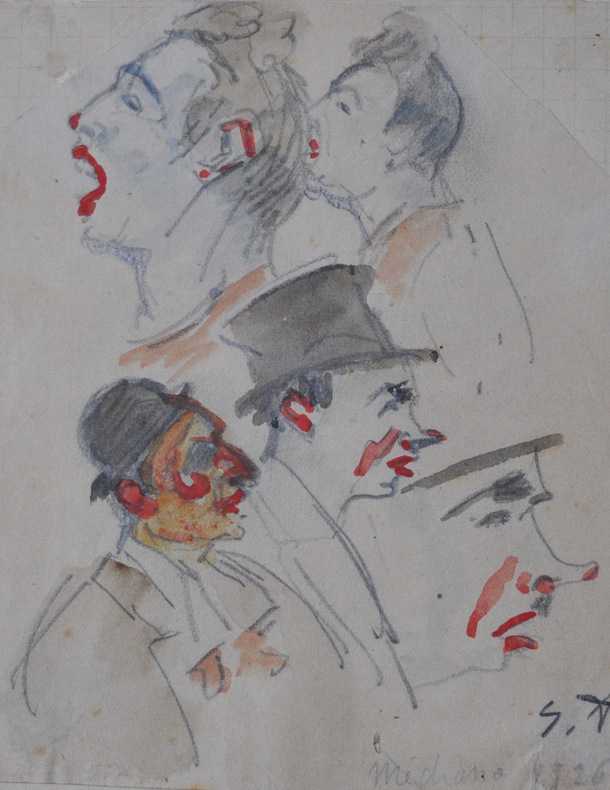
35601047, Petit in-4, peau de mouton retournée, dessins représentant des clowns collés sur les deux faces, non rogné. (Relié vers 1930). "Page de titre dactylographiée et 19 feuillets portant 21 dessins originaux à la mine de plomb ou à la plume, rehaussés d’aquarelle. Chacun porte la signature ou le monogramme de l’artiste. Ces belles études d’après nature ont été dessinées au Cirque Médrano vers les années 1925 . La mention Cirque Médrano manuscrite est répétée sur cinq dessins. L’un d’eux porte la date 1926. Clowns, cavaliers, écuyères, chevaux, Monsieur Loyal, etc. Gustave Assire, né à Angers en 1870 fut ; à l’Ecole des Beaux-Arts, l’élève de J.P. Laurens, Cormon et Gustave Moreau. Il exposa aux Artistes Français depuis 1900 et au Salon des Indépendants de 1927 à 1931. Il a illustré un certain nombre d’ouvrages dont : Mac Orlan. Images secrètes de Paris en 1930. Il disparut en 1941. Mors fendus, reliure un peu épidermée."
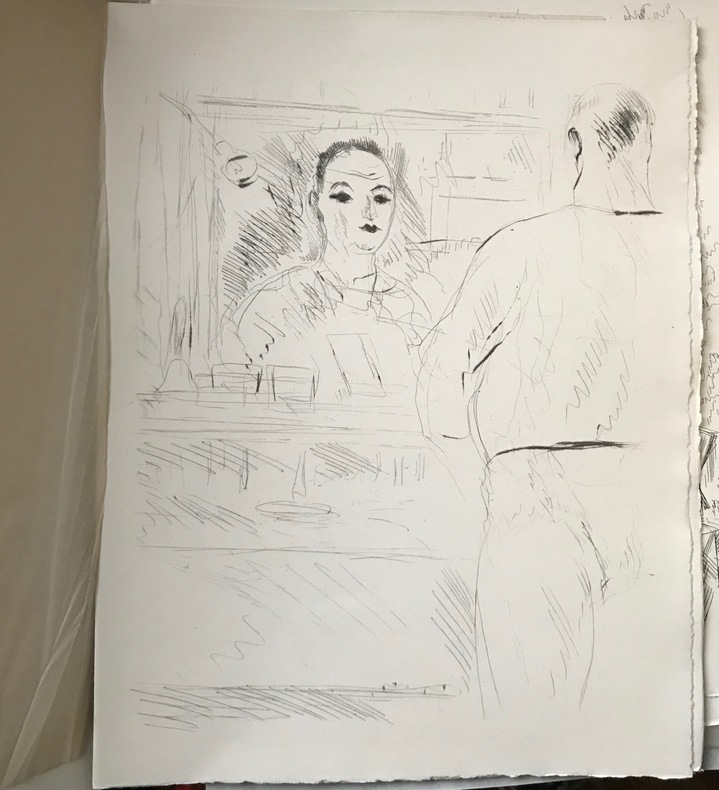
19857124(Paris), Éditions Flammarion, 1985. In-folio (48 x 31 cm), (38) ff., ouvrage imaginé, mis en page, gravé, calligraphié, avec 17 burins et eaux-fortes par Trémois, les illustrations sont protégées par des feuilles de plastique. En feuilles, couverture estampée à froid rempliée, sous chemise demi-maroquin noir au dos et plats en métal, titre calligraphié à froid sur le plat, titre doré au dos, étui en plexiglas. Très bel exemplaire en état parfait.
192038961Various places 1920. Two oblong albums or portions of albums with many detached images. In all approx. 300 photographs. Many trimmed and mounted mostly 2x3 inches or smaller. A fascinating archive of photographs relating to the famous family of Cooke's Royal Circus.<br/> <br/>The Cooke family was one of several notable families during their time of circus performers and owners that spanned several generations. In circus families family members were taught and trained in the necessary skills of various acts in the circus from a young age and then integrated into the family business. Cooke's Royal Circus was started by Thomas Cooke in Scotland around 1780 after which he and his extended family members traveled around Scotland and England doing performances. They were especially noted for their equestrian acts and continued to gain in popularity and grow to around forty participating family members by the 1830s. In 1836 Thomas Cooke's son brought the show to America where they performed in cities including New York Boston and Philadelphia before returning to Britain following a mixed reception. They continued to perform throughout the rest of the 19th century and the 20th century in both travelling shows and various "permanent" locations. Images include animal acts with elephants and horses as well as clowns stunts and other acts. Many images are captioned detailing locations including Great Britain including performances at Wembley Stadium France Italy and India. Although mostly from the 1920s the album includes a loose carte-de-visite of John Henry Cooke autographed by him on verso and dated 1874. unknown books
1970000886PHILADELPHIA PENNSYLVANIA PA. Very Good. 1970. On offer is an original huge archive of handwritten and typescript communication and orders sent to a bookseller for books related to the circus clowns performing animals and carnivals. Circa 1970s - 1980s this archive includes many items on circus or clown letterhead business cards from circus operators and performers and postal covers with stamps from all over the USA Canada UK and Australia. While some of the letters are lists of book orders relating to the circus others are correspondence directly from the circus performers themselves many contain illustrated circus advertising as well as autographs from performers and operators. There is a sensational mix of material here.Most of the letters are addressed to Frank Barry whose book selling business was located in Philadelphia. There are 230 individual letters/postal covers with most containing several pages of enclosures with an estimated 500 pages of circus material for the collector to sort through. All of the material is in very good to fine condition with most of the envelopes/covers opened with a letter opener neatly on one end. VG. ; Manuscript; 4to - over 9¾" - 12" tall; HANDWRITTEN MANUSCRIPT DOCUMENT LETTER AUTOGRAPH DIARY JOURNAL LOG KEEPSAKE WRITER HAND WRITTEN DOCUMENTS SIGNED LETTERS MANUSCRIPTS HISTORICAL HOLOGRAPH WRITERS DIARIES JOURNALS LOGS AUTOGRAPHS PERSONAL MEMOIR MEMORIAL PERSONAL HISTORY antiquité contrat vélin document manuscrit papier Antike Brief Pergament Dokument Manuskript Papier oggetto d'antiquariato atto velina documento manoscritto carta antigüedad hecho vitela documento manuscrito Papel CIRCUS PERFORMANCE ARTISTS TRAVELING SHOW TROUPE CARNIVAL HIPPODROME CIRQUE BIG TOP Circensian ACROBATS CLOWNS THE GREATEST SHOW ON EARTH TRAPEZE TIGHTROPE JUGGLERS THREE RING CIRCUS . unknown
188041184Offenbach, Andre, o.J. (um 1880). Druckplattennummer: 1194 B 9 S. 35 x 27 cm, lose Doppelblätter [4 Warenabbildungen]
193097671930 Paris, sans nom, 1930 ; in-4° en feuilles, couverture rempliée crème, titre en noir au dos avec illustration en pied, étui cartonné crème bordé de rouge; (95)pp., (2)ff.Illustré de 26 eaux-fortes : 12 eaux-fortes à pleine page hors texte, 12 eaux-fortes dans le texte , plus 1 sur le titre et 1 à l'achevé d'imprimer. Tirage total à 135 exemplaires numérotés, celui-ci 1 des XV exemplaires d'auteurs: n° XIV, un des X sur Hollande Van Gelder Zonen.
2243319474 Crayons gras, gouache et aquarelle, signé en bas à droite, (1947), 46.3 x 38.2 cm.
1863BB055Original carte-de-visite photographs of Charles Sherwood Stratton better known by his stage name "General Tom Thumb" a dwarf who achieved great fame as a performer under circus pioneer P. T. Barnum here photographed with his wife Lavinia Warren AUTOGRAPHED in Stratton's handwriting on verso <i>"Genl Tom Thumb & Mrs Tom Thumb - 1863 August"</i>. The couple were married in February 1863 for which it is said President Lincoln hosted them with a reception at the White House. The 2nd picture of the Strattons in their wedding costumes also a picture of their best man and bridesmaid Commodore Nutt and Minnie Warren Lavinia's sister and the wedding party together all in especially fine condition with dark brown hues each having facsimile autographs on the verso by their subjects. In addition an 1865 photograph of "Gen. Tom Thumb Wife and Child" verso blank. Altogether 5 carte-de-visite original mounted photographs the first with imprint verso backboard of Charles D Fredericks & Co 587 Broadway New York then three "from photographic Negative by Matthew Brady" imprinted by E & H T Anthony 501 Broadway the last by J Hall junction York and Fulton Sts Brooklyn.<br /><p>Born in Bridgeport 1838 to parents who were of medium height Charles was a relatively large baby weighing 9 pounds 8 ounces 4.3 kg at birth. He developed and grew normally for the first six months of his life at which point he was 25 inches 64 cm tall and weighed 15 pounds 6.8 kg. Then he suddenly stopped growing. By late 1842 4 years old Stratton had grown only one inch additional though his body was proportionate and functional. The showman Phineas T. Barnum heard about Stratton and after making arrangements with his parents taught the boy how to sing dance mime and impersonate famous people. He toured America and Europe in 1845 during which time his performances marked a turning point in the history of freak show entertainment. Prior to Stratton's debut the presentation of "human curiosities" for the purpose of entertainment was deemed dishonorable and seen as an unpleasing carnival attraction. However after viewers were introduced to Stratton and performances he was able to change the perception people held toward freak shows. Stratton's lively entertainments made these types of carnival shows one of the most favored forms of theatre in the United States.</p><p>His marriage to Lavinia Warren also a little person became front-page news. The wedding took place at Grace Episcopal Church and the wedding reception was held at New York City's Metropolitan Hotel. The couple stood atop a grand piano at the reception to greet some 10000 guests. Rare to find a vintage picture of the couple dated and inscribed so early in their marriage and nice companion images inscriptions on three other pictures are in facsimile handwriting.<br /></p><p><br /></p> books
178688648Chez l'auteur | Paris 1786 | 12.4 x 19.5 cm | Relié
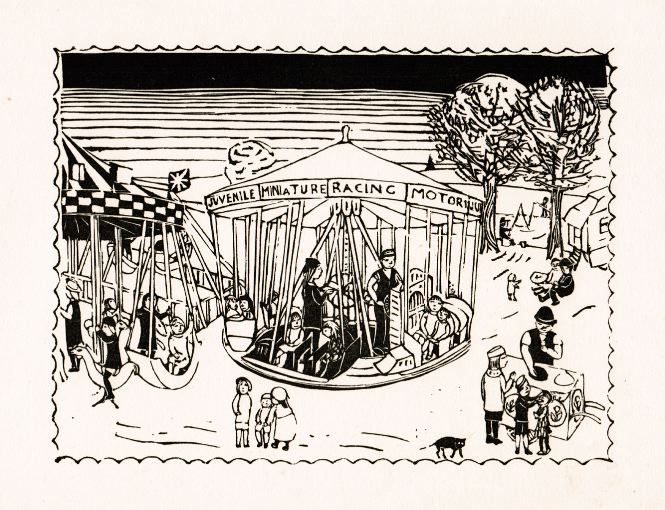
19253040Bruxelles Editions de la "Vache rose" 1925 in-4 oblong en feuilles Bruxelles, Editions de la "Vache rose", 1925. 28 x 34,5 cm (portefeuille) et 26 x 33 cm (planches), table des planches et 8 gravures sur bois en noir hors texte, en feuilles sous chemise à rabat rose imprimée.
Grande manifesto di cm. 36,5x85 su carta rosa stampato a Marsiglia nella Stamperia T. Samat (circa 1870/80). Grande figura del tendone del circo, Domatore di Leoni, Elefanti equilibristi. 125 Cavalli, 25 Cavallini (Ponys), Muli e Cammelli, 2 elefanti, 7 Leoni feroci, 150 Persone e 40 Carrozze. La Compagnia arriverà in questa città di mattina... Avrà luogo una Grande Cavalcata... Una carrozza a 4 Cavalli rappresentante degl’Indiani Aborigeni dell’America... Vettura allegorica tirata da Cammelli... RARO. Axs
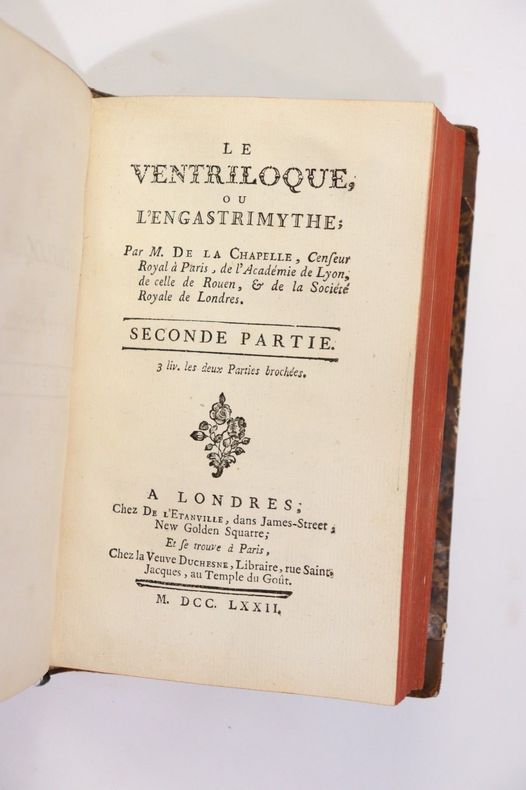
1772AMO-3059Le Ventriloque, ou l'Engastrimythe ; Par M. De La Chapelle, censeur royal à Paris, de l'Académie de Lyon, de celle de Rouen, & de la Société Royale de Londres. A Londres, chez de l'Etanville, en France (Paris) chez la Veuve Duchesne, 1772 2 parties en 1 fort volume in-12 (17 x 11 cm) de XXIII-(1)-572 pages (pagination continue). Reliure demi-veau à coins de la première moitié du XIXe siècle. Reliure légèrement frottée, la pièce de titre manque, tranches rouges. Intérieur très frais. Rare rousseurs. Edition originale rare du premier livre sur la ventriloquie. "Ouvrage curieux, et le plus complet que nous ayons sur cette matière" (Quérard IV, 361). On trouve également dans ce volume (pp. 27-30 ) une lettre de M d'Artus capitaine au corps du génie, sur les exercices du scaphandre (du 7 septembre 1770) (expérience menée à l'aide d'un scaphandre inventé et fabriqué d'après les plans de M. de la Chapelle et testé en août 1770 dans les eaux du Rhin - il publiera un ouvrage sur le sujet en 1774). "Les ventriloques sont ainsi nommés parce qu'ils paraissent faire sortir leurs paroles du fond de leur ventre. Cet art est dû à un jeu particulier des muscles du gosier, jeu qu'on peut acquérir par un exercice constant et soutenu ; mais les sons des ventriloques s'articulant dans l'arrière-bouche, pourquoi n'y rapporte-t-on pas à la voix, comme on le fait ordinairement à la bouche intérieure ? Cela vient, dit l'auteur de ce Traité, de nos jugements d'habitude, il n'y a que l'expérience qui nous apprenne à juger par les yeux, de la distance des objets ; nous apprenons de même à en juger par les sons. Toutes les fois que l'air sera modifié de près, comme il l'est, pour produire les sons que l'expérience nous a appris venir de loin, nous en rapporterons le bruit à la même distance, et dans la même direction, quand ils ne partiraient qu'à deux pouces de nos oreilles ; c'est là un principe d'expérience et d'observation. La voix du ventriloque est basse, grêle, peu nourrie, prolongée et comme expirante ; voilà bien les caractères d'une voix faible qui vient de loin ; on doit donc lui attribuer cette qualité, jusqu'à ce que l'expérience ait appris à corriger ce jugement. [...]" (extrait de l'Esprit des Journaux, septembre 1772) L'auteur insiste sur l'effet de dissimulation du ventriloque à l'égard de son auditoire et souligne que cet Art peut être source d'un dangereux manège et propre aux supercheries qu'il faut dénoncer, "c'est une des principales raisons qui m'ont déterminé à écrire sur ce sujet" écrit-il. "Le monde une fois bien instruit et bien prévenu que cette cause d'illusion existe et comment elle existe, n'aura plus à en redouter les effets." La science moderne explique désormais cet artifice spectaculaire. Un ventriloque est un illusionniste qui utilise ses cordes vocales et non son ventre pour prêter la parole à un autre personnage, généralement une marionnette, en émettant les paroles sans bouger les lèvres. C'est bien là, la difficulté : les labiales (B, P, M) et les fricatives (F, V) ne peuvent pas être articulées. C'est à force d'entraînement que l'articulation du langage pourra être crédible. Les muscles du visage restant parfaitement immobiles, comme si le ventriloque ne faisait qu'écouter sa marionnette, le public a l'impression que la voix vient de plus loin, d'où le nom ventriloque. Au-delà du don naturel de nombreux ventriloques, il est indéniable qu'un long entraînement dans la maitrise des muscles faciaux, de la langue et des cordes vocales soit nécessaire. Cette discipline nécessite également un grand travail de coordination afin de donner l'illusion de la vie à la marionnette tout en gardant sa propre attitude sur scène. Selon Jean-Eugène Robert-Houdin, qui en parle dans son autobiographie concernant Comte, la « ventriloquie est la science de l'engastrimysme ». L'abbé Jean-Baptiste de La Chapelle, mathématicien français (vers 1710-1792), donne le premier ouvrage en langue française concernant la ventriloquie, Le Ventriloque, ou l'engastrimythe. On crut pendant longtemps que les ventriloques parlaient du ventre gastronomique, ce qui les a fait désigner sous une foule de noms exprimant cette idée : engastriloques, engastrimandres, engastrimythes, engastromandres, gastriloques, sibilots, etc. Bon exemplaire de cet ouvrage rare.
Paris, non daté [1901-1902.]. Fort in-4, reliure éditeur demi-chagrin bordeaux, non paginé. (10 pages environ par revue du N° 1 à 29 et ensuite pour la Nouvelle série 20 pp) Cet album contient le N° 1 jusqu'au n° 29 (manque le n° 28) et ensuite les N° de La Nouvelle série du N° 30 au N° 40. Soit 39 numéros. Ecrivains ayant publié dans la revue : Alphonse Allais, (N°10 : Une bonne maison. N° Macédoine. N°17 : Une innovation à laquelle tout le monde applaudira. N° 21 : La malheureuse prononciation. N° 27 : La Science et la Religion - enfin - marchent main dans la main. Etc.)- Jean Lorrain, Tristan Bernard, Maurice Donnay, Jules Clarétie, Félix Galipaux, Charles Quinel, Marcel Prévost, Tené Maizeroy, Xanroff, G. Courteline, Yvette Guilbert, Henri Lavedan, Alfred Capus, etc, etc...La majorité des photographies n'est pas attribuée, mais pour les grandes compositions photographiques : E. Lagrange Notes : Revue paraissant à la suite de La Grande Vie en 1901. Image et texte monochrome, noir, brun, violet ou bleu. Gérant du n° 1: Henri Chevallier. Gérant des autres numéros : E. Le Barbier. Grandes compositions photographiques attribuées à A. [sic] Lagrange, fréquemment cité comme le photographe dans les romans parus chez Nilsson/Per Lamm (sous le nom « E. Lagrange »). A partir du N° 30 la couverture est illustrée en couleurs, ce numéro est consacré à La Vie au Cirque (18 pages). Très nombreuses publicités dans chaque revue, planches dans et hors-texte et certaines sur double-page en couleurs (Morin Au bois de Boulogne). Un seul numéro ne possède pas sa première de couverture, n° 31 (Les Boulevards Parisiens). Bel état intérieur mais fente sur un mors de la reliure.
26578Paris, non daté [1901-1902.]. Fort in-4, reliure éditeur demi-chagrin bordeaux, non paginé. (10 pages environ par revue du N° 1 à 29 et ensuite pour la Nouvelle série 20 pp)
ORD-17440Ateliers d'Art Engelmann, Lucien Serre et Cie Imprimeurs. 15 Avril 1931. In-f°à l'italienne (426 x 97 mm) cartonnage de l'éditeur, dos toile beige, plats aluminium flanqués de 2 bandes de tissu rouge, 8ff.n.ch. Bien complet des 60 planches couleurs par Fernel présentant des artistes du cirque en représentation, tous identifiés par leur signature. Tirage à 555 exemplaires, celui-ci N°46 un des 500 sur Velin pur fil Vidalon. Couverture un peu abîmée, première page un peu tachée, bon état des illustrations.
193888793s. n. | Marseille 1938 | 20.6 x 26.8 cm | Relié
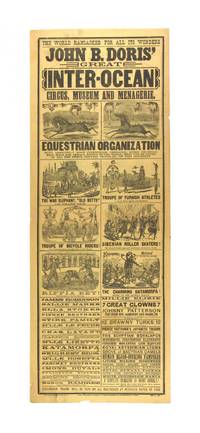
18867262St. Louis: Great Western Printing Co. Show Printers and Engravers 1886. St. Louis: Great Western Printing Co. Show Printers and Engravers 1886. Two-sided herald 10.5" x 28" printed in black on yellow newsprint. Text on bottom of each side reads "Black on Yellow Car No. 1 Great Western Printing Co. Show Printers and Engravers St. Louis. No. 4" with "Binghamton Mon. May 10" stamped in blue at bottom of verso in the "Will exhibit at" blank. Illustrations and performance roster in two columns. Headline on recto fabulously reads "The World Ransacked for All Its Wonders."<br /> <br /> Illustrations feature the Grand Street Demonstration the Egyptian Bovalapus actually a water buffalo two from the Equestrian Organization assumed James Robinson in his famous somersault and Emma Stokes wife of show proprietor John B. Doris "Old Betts" the War-Elephant a Troupe of Turkish Athletes another of Bicycle Riders Siberian Roller Skaters knife-thrower Riffia Bey and reptile-queen Katamorpa. Text roster adds everything from Human Blood-Sucking Vampires to a Menagerie of Infant Animals. The show carried a robust equestrian lineup including the aforementioned Robinson who was only the second person to execute a bareback somersault and at the height of his career was the highest paid equestrian in the United States. Another notable performance was the seven-person clown troupe led by Johnny Patterson the Irish humorist and songwriter best known for his song "The Garden Where the Praties Grow."<br /> <br /> In the show's route diary for this year compiler and Superintendent of the Confectionery Department E.C. White writes that the 1886 run was "one of the most successful seasons Financially and Professionally ever known.Notwithstanding the strong opposition experienced at the commencement and close of the season." On May 8th for the stop in Elmira NY just preceding this poster's show in Binghamton the diary notes "First day of the Forepaugh opposition." From there the rival Adam Forepaugh Circus & Wild West Show began to follow the Doris route a few days behind but sending their tack-spitters ahead to put up adverts for their own show before Doris's arrival in town. The Binghamton stand was 135 miles down the Lake Erie and Western Railroad and the opposition brigade had already gotten there. The diary entry for the date on this herald notes "Forepaugh bills us heavy here" but despite the opposition advertising and an amount of rain goes on to say "business good." Forepaugh would set up in Binghamton four days later on the 14th. The route diary as an aside descends into an almost Sisyphean resignation as this goes on simply writing "Forepaugh" or "Forepaugh again" entry after entry until on June 25th offers the existential almost-haiku "We ferry here. Forepaugh is billed here. Rain all day."<br /> <br /> In keeping with classic origin stories John B. Doris ran away at fourteen and joined the Dan Rice Circus. He soon bought privileges on the Rice show along with George Batcheller and soon the two split off to start Batcheller & Doris' Great Inter Ocean Circus. Doris bought out his partner in 1881 and continued as the sole proprietor until 1888 when heavyweight boxer John L. Sullivan became a partner. Sullivan one of the first true sports celebrities was meant to engage in a sparring exhibition each night but missed so many shows due to his excessive drinking that Doris closed the show mid-season and retired from traveling to work in theater production. Doris seems to have been well-liked by other circus folk earning the nickname Hunky Doris.<br /> <br /> Herald is in excellent condition overall with a shallow half-inch chip at bottom and a couple tiny chips and tears in margins along edges along with a few small pinholes to surface none involving or interfering with text. Flattened remnant of a horizontal crease at center. A couple smudged thumbprints to top margin on recto. Print is clean and color even. Great Western Printing Co., Show Printers and Engravers unknown
1950WAS449806 sheet lithographic poster measuring 80 x 84 inches small area of image loss at lower middle of image some chips and tears at edges. Blank section at top left edge was intended for the inclusion of the name and location of a particular event.<br /><br />This poster was acquired by a collector from the Majestic Poster Press of Los Angeles in the early 1970s. At the time the company held inventory of unused posters printed by other presses as well as their own. Large multi-sheet posters are quite scarce today. Alles Printing Co
1950WAS449792 sheet lithographic poster measuring 105 x 80 inches 4-inch closed tear at bottom edge. <br /><br />"Local No. 6 Amalgamated Lithographers Cincinnati" printed at bottom right edge.<br /><br />This poster was acquired by a collector from the Majestic Poster Press of Los Angeles in the early 1970s. At the time the company held inventory of unused posters printed by other presses as well as their own. Large multi-sheet posters are quite scarce today. books
1950WAS449806 sheet lithographic poster measuring 80 x 84 inches small area of image loss at lower middle of image some chips and tears at edges. Blank section at top left edge was intended for the inclusion of the name and location of a particular event.<br /><br />This poster was acquired by a collector from the Majestic Poster Press of Los Angeles in the early 1970s. At the time the company held inventory of unused posters printed by other presses as well as their own. Large multi-sheet posters are quite scarce today. Alles Printing Co books
215188Japan. Early Meiji. Black and white woodblock print 33 x 45.8cm few small stains a few small holes neatly repaired. A lively and attractive image. This fun-filled woodblock print is an advertisement for a visiting American circus to Japan in the early Meiji period most likely around the 1870s. The main attraction is the equestrian feats but other acrobatic entertainments including trapeze and clown acts are also featured. Seventeen American names with six others are listed in the left bottom corner. Western circuses such as Risley Circus and Chiarini Circus were very popular in Japan during the Meiji period. . unknown
187819724N. p. n. p. ca. 1878-1880. Some short shallow chips from one long edge; a trifle toned and soiled; in very good condition. Single leaf printed recto and verso approx. 20.25 x 7.13 inches illustrated with numerous woodcuts of human oddities. An attractive ephemeral showbill from the veteran circus promoter Giles Pullman who offers a "Grand Comic Concert Monster Museum and Feast of the Ferocious Wild Animals." The latter promises to be a "Crimson Carnival of Blood." One side of the showbill is devoted to woodcut portraits of the "Living Curiosities" to be seen without extra charge eight acts that include some of the better-known names of the period--the Madagascar Family Rudolph Lucasie and his wife and two children European albinos touted as Africans and performing in American since ca. 1860; the portrait is adapted from the well-known Currier & Ives portrait; Madame Lyons "the Wonderful Bearded Lady;" General Mite celebrated little man Francis Flynn 1864-1898; as well as "The Persian Beauty or Fan Woman" a variant on a Circassian woman; a living skeleton the fairy queen the Wild Man from the Island of Ceylon and "Nena the Egyptian Wild Girl." This seems certainly a late appearance of the Madagascar albinos; General Mite seems to have started performing around 1878 and married in 1884 and some accounts have Madame Lyons dying ca. 1880 n. p., unknown books
185781743J.-B. Baillière & fils | Paris & Londres & New York 1857 | 13.50 x 21.50 cm | relié
188985901Librairie Plon | Paris 1889 (S.d.) | 21 x 28.20 cm | relié
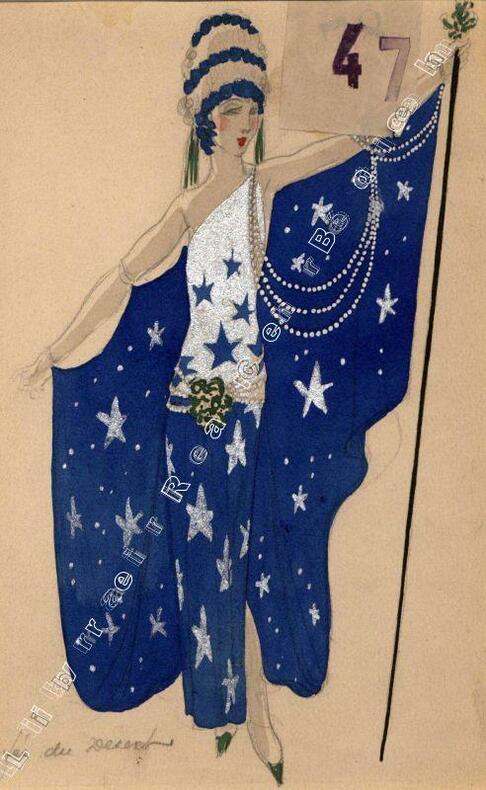
1920146111920 1 Aquarelle rehaussée d'argent, titrée, (1920), 25 x 18 cm., encadrée.