29 372 résultats
13262Shahn Ben. IMMIGRANT FAMILY. Serigraph 1941. Prescott 2. Edition size unknown; Prescott knew of only 3. This copy unsigned. 11 1/2 x 18 inches image 19 1/4 x 25 1/4 sheet framed to 23 x 28 1/4 inches. This was only the second print made by Shahn and the first serigraph a medium in which he continued to use for his prints throughout his career. Provenance: Kennedy Galleries with its label George Krevsky Gallery with its label and estate of Donald Brenwasser New Jersey. In excellent condition. Very Rare. unknown
163518006Amsterdam 1635. the author 2 works in 1 volume. 8vo. Contemporary calf rebacked with the original backstrip laid down. With a letterpress decoration on title-page Hebrew text of Psalm 85.11 in a frame a so-called "magical square" in which the the text can be read both horizontally as well as vertically some woodcut initials and some Hebrew passages in the text. 16 156 2 2 blank; 40 346 6 pp. Ad 1: First edition of a work on God's creation of Earth by the well-known Portuguese rabbi writer and printer Menasseh Ben Israel 1604-1657 who established the first Jewish printing office in the Netherlands. The work presents 30 questions or "problems" concerning God's creation of the Earth which Menasseh tries to answer and explain citing or referring to passages of the Tenach. Problems include "on which day were demons created" and "was there another world or earth before God created this one". The preliminaries including an important poem by Caspar Barlaeus which caused the Amsterdam authorities to consider the reintroduction of censorship for Jewish publications. As this didn't happen Barlaeus's poem can be seen as an indicator of the relationship between Jews and Christians and the religious tolerance in Amsterdam during the Golden Age.Ad 2: First edition of a work on the resurrection of the dead by the same author. The work is divided into three "books" and opens with several dedicatory letters an index of the chapters and 3 laudatory poems. The last page of the preliminaries gives a short list is of books translated from Hebrew into Spanish. The main text deals with the Last Judgment the resurrection of the dead and the immortality of the soul.With a bookseller's ticket and bookplate. Title-page of ad 1 slightly smudged browned throughout some water stains and small spots but still in good condition. Binding rubbed along the extremities and sides somewhat scratched rebacked with the original backstrip laid down.l Ad 1: Fuks & Fuks-Mansfeld p. 107; STCN 843242612 7 copies; ad 2: STCN 084840250 9 copies; for Menasseh in general: Fuks & Fuks-Mansfeld pp. 99-135; NNBW X cols. 604-613. unknown
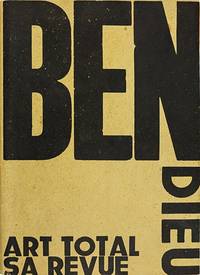
54842Nice: Centre d'Art Total 1963. Quarto 31.4 × 22.5 cm. Original printed wrappers consisting of two sections; 52 individual leaves with collages multiples hectographs on different types of paper. Due to age and material some glue is partially loose; else very good or perfectly preserved. First edition of the exceptionally uncommon artist's book the second edition of which is also very rare. Because of its rarity it is not listed in Jon Hendrick's "Fluxus Codex" but is mentioned in the foreword as a "landmark publication" of the Fluxus movement p. 22. With "Ben Dieu" Vautier documents his early Fluxus works on paper. He first met his Fluxus mentor George Maciunas in 1962 in London at the "Misfits Fair" organized by Daniel Spoerri. Vautier took part in the event as did Robert Filliou for example. Maciunas was passing through and a conversation ensued between the two which ultimately led Vautier to start Fluxus in Nice under the label "Total Art". Cf. Ben Vautier in: 1962 Wiesbaden Fluxus 1982 Wiesbaden Kassel Berlin 1983 p. 148ff. A lively exchange and close collaboration developed between the two. The catalog of the Sohm Archive states that Vautier was the only artist among all Europeans whom Maciunas liked to supervise extensively in the production of his artist's books. Thomas Klein "Fröhliche Wissenschaft". Das Archiv Sohm Stuttgart 1986 p 99. <br /> <br /> Vautier seems not only to have sent the artist's books individually to colleagues friends collectors and critics but also compiled them individually. Thus the copies known to us repeatedly reveal differences. A detailed documentation of all pages and supplements of the artist's book can be viewed on the website of the Fondazione Bonotto under the following link: fondazionebonotto. org/it/collection/fluxus/vautierben/2158.h tml as of January 2025 The copy offered by us differs in the following points: The following leaves are not in our copy: "Absolument n'importe quoi est art" - 2 leaves of "Partie du Tout a Ben" - "Jalousie". In comparison to the copy owned by the Fondazione Bonotto the copy we are offering has the following additional leaves and multiples: Poster "France Dimanche. L'illustre de Paris. Les enfants de Joséphine Baker a L'assistance" signed by Ben. - Sticker in the shape of a blue circle "15 compositions"<br /> <br /> Only 100 copies were produced.<br /> <br /> Sohm Happening & Fluxus Materialien Vautier.<br /> <br /> Cf. Fondazione Bonotto Code FX1263. <br /> <br /> As of January 2025 OCLC lists only three copies of the first edition in North America. unknown
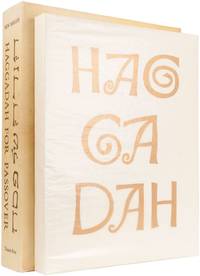
196620985151966. Paris: The Trianon Press 1966. 80 leaves. Large unbound folio in stiff glassine covered wrappers housed in large vellum box stamped with gilt lettering on front back and spine with double clasp closure. Loosely inserted foam cushions at front and back of box. Includes an extra set of the coloured plates an extra set of the uncoloured plates and a proof state of the frontispiece in paper folders enclosed in a linen portfolio with ties. Very clean copy.One of 20 copies numbered I to XX this being VII. Signed and stamped with the artist's cypher on the frontispiece. Ben Shahn 1898-1969 enjoyed a long career as a social realist artist and left wing visionary. Widely recognized for his murals paintings commercial illustrations and photography he collaborated with Diego Rivera and undertook commissions for the Farm Security Administration. Perhaps his most famous work the Jersey Homesteads Mural has also been linked to the Haggadah and the themes of slavery the struggles of immigrants deliverance and redemption which were important throughout his career. hardcover
169555262Amsterdam: Be-veit ha-meshutafim Asher Anshil ben Eliezer ve-Yisakhar Ber ben Avraham Eliezer/ Moses Wiesel 1695. First edition. Hardcover. fair. Small folio 29 by 18.5 cm. Collation: aleph-vav4 zayin2 = 26 numbered leaves. Additional engraved title page engraved folding map at rear; main title with woodcut vignette; 14 half-page engraved illustrations in the text. Contemporary quarter calf over dark brown pastepaper boards skilfully rebacked. Images of Moses and Aaron at engraved title excised the seven small engraved vignettes along with letterpress text of engraved title and imprint mounted on old paper. Old marginal repairs at main title resulting in slight loss of initial letters along right margin and several leaves; slight strictly marginal worming and occasional tears. Stained throughout sometimes heavily though not impairing legibility. Map mounted to reinforce tears with virtually no loss of text or engraved imagery apart from printed border at right side. A fair copy at best; despite all defects the half-page engraved illustrations have survived intact with minimal staining. Housed in new maroon buckram slipcase.<br /> <br /> First edition of this gorgeously illustrated work now referred to simply as the Amsterdam Haggadah. The first such work to be illustrated with copperplate engravings it ranks among the most imitated of the Jewish manuals for the Passover seder. The popularity of these illustrations can be attested by the huge number of reprint editions over the centuries. Fourteen finely printed half-page engravings appear throughout the text. Some of these images illustrate the traditional content of the Passover seder or the Exodus story while others reference other biblical tales. Images include: the Rabbis of Bene Brak discussing the Passover story the four sons Abraham smashing the idols of his father Abraham welcoming the three angels Moses slaying the Egyptian overseer the rescuing Moses from the river Moses and Aaron coming to Pharaoh w/ staves turning to snakes the ten plagues the Egyptian army drowning in the Red Sea the Exodus the receiving of the Ten Commandments at Mt. Sinai the eating of the Pascal Lamb King David composing his psalms and finally an exterior view of the Jewish Temple with the cityscape of Jerusalem in the background. All images are captioned with relevant passages in Hebrew. The engravings were all created by Abraham ben Jacob a German convert to Judaism who had moved to Amsterdam although some sources over the years misattributed them to financier Moses Wiesel 6 of which were adaptations and/or modifications of previous images by Swiss artist Matthäus Merian 1593-1650 from his original work "Icones Biblicae" 1625-30.<br /> <br /> In addition to the in text engravings there is famously fold-out engraved biblical map of the Holy Land in a notable format. Measuring a total of 19.5 by 11.5" the map shows the land of Israel the Wilderness of Sinai and Egypt in landscape orientation looking eastward towards the top of the map. It traces the journey of the Israelites starting with the Exodus from Egypt through the Sinai and into the Land of Israel. The map is detailed showing the areas of the twelve tribes important locations and cities as well as geographic features including the Red Sea Mount Sinai the Dead Sea the Sea of Galilee and many others. Additional illustrations appear near the bottom along with a legend. This beautiful work also by Abraham ben Jacob is considered among the earliest if not the first map of its kind to be printed within a Hebrew publication. It is now known to have been heavily based on the previously printed 1620 map in Hebrew by Jacob ben Abraham Zaddiq and Abraham Goos 1590 - ca. 1643 which itself was based on the map of 1590 by Christian Kruik van Adrichom Adrichem printed in Latin.<br /> <br /> Text throughout is printed in Hebrew with smaller text in Rashi script underneath containing famous commentary on the Passover Haggadah by acclaimed Portuguese Rabbi and scholar Isaac ben Judah Abarbanel 1437-1508. The verso of the title page contains the order of the Passover seder with brief instructions in both Ladino Judeo-Spanish and Yiddish Judeo-German a nod to the subtitle which references both the Ashkenazi and Sephardi traditions.<br /> <br /> Provenance and annotations: Full page of text appx. 1500 words in neat Hebrew cursive at front endleaf which discusses aspects of the Haggadah text; inscription in German at front endleaf by Isidor Adler who mentions his friend Hermann Mechlenburg dated March 1906; old annotations throughout in at least two hands. In one notable instance the Hebrew phrase l'shana ha-ba'ah be-hamburg next year in Hamburg! has been added in fine block characters above the traditional phrase l'shana ha-ba'ah bi-yerushalayim next year in Jerusalem. Hebrew title: סדר הגדה של פסח ×›×ž× ×”×’ ××©×›× ×– וספרד <br /> Alternate transliterations: Seder Hagadah shel Pesah Seder Hagadah sel Pesah<br /> <br /> References: Friedberg 278 Fuks HTN II 521; Yudlov Haggadah 93; Vinograd Amsterdam 627; Ya'ari no. 59; Laor 876 Map; Nebenzahl pp.138-1389 Map; Yerushalmi plate 59-62; Rosenau "Vision of the Temple" p.135 146-7. Be-veit ha-meshutafim [Asher Anshil ben Eliezer ve-Yisakhar Ber ben Avraham Eliezer]/ Moses Wiesel hardcover
19661253941966. First Edition. Signed. SHAHN Ben. Haggadah for Passover. Paris: Trianon Press 1966. Large folio 13 by 17 inches unsewn as issued original glassine wrappers original clasped parchment box. $6500.Beautiful large limited folio Passover Haggadah number 175 of only 228 copies out of a total edition of 292 on Arches Vergé paper illustrated by Ben Shahn with 21 color pictorial borders and line drawings and an additional beautiful double-page color lithograph also signed by him.Lithuanian-born graphic artist Ben Shahn executed many of the illustrations for this Haggadah around 1930 while working on a pictorial representation of the Dreyfus case and conceiving his celebrated series of paintings of the Sacco and Vanzetti trial. Like those for his secular works Shahn's Haggadah illustrations highlight the struggle against oppression a theme central to the story of Passover. In 1965 Shahn reproduced these Passover drawings which had already been acquired by the Jewish Museum incorporating them into this extraordinary Haggadah. Shahn's year-long visit to Djerba off the Tunisian coast and his masterful calligraphy lend this Haggadah an oriental feel. Text in Hebrew and English. Only very mild discoloration to original box. A beautiful production in fine condition. unknown
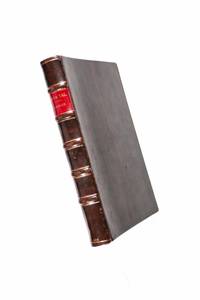
161249853Hannoviyah Hanau: Hans Yakop Hena 1612. First edition. Hardcover. vg- to vg. Quarto. 9 92 leaves. Rebound in modern dark brown leather boards with gilt lettering red label and raised bands on the spine. Title page illustrated with historiated woodblock lettering at the top and encircled by text borders. Missing the final unnumbered initial leaf containing approbations and the final two leaves index. <br /> <br /> First edition of this compendium of Kabblistic topics by Prague rabbi Shabtai Sheftel ben Akiva Horowitz 1565-1619. Illustrated throughout with a total of 15 prominent and intriguing Kabbalistic woodblock diagrams and charts in black as well as some small tables. Among the specific subjects the work provides commentary and analysis of the work of previous Kabbalists including "Iggeret ha-Te'amim" Letter on the Accents by 16th century rabbi Aaron Abraham ben Baruch Simeon ha-Levi the writings of Rabbi Moses ben Jacob Cordovero aka the RAMAK 1522–1570 Sefer Yetzirah and the Zohar.<br /> <br /> Text throughout in Hebrew printed in two and three-column formats in multiple size fonts and some of the text in Rashi script.<br /> <br /> Binding with some light scratches to the covers. Title page with some staining some small worm holes reinforcement along the gutter and most notably a repaired tear along the left margin resulting in some loss of border text and text on the verso. Repaired marginal tears also on the 2nd and 3rd unnumbered initial leaves with no loss of text. The large diagram on the leaf 8 has been trimmed in the margin resulting in minor loss of the image on the left side. Closed tear to leaf 18. Pages throughout with some age toning occasion minor chipping to the edges and some sporadic water stains and smudges. Binding in very good interior in very good- condition overall. Hebrew title: ספר שפה טל<br /> Author: שבתי שפטל בן ×¢×§×™×‘× ×”×œ×•×™ הורוביץ<br /> Publication: ×”×× ×© ×™×קופ ×”×¢× ×”<br /> Alternate transliteration: Shabtai Sheftel ben Akiva ha-Levi Horowitz<br /> <br /> Bibliographic References: Vinograd p.162 Hanau 13; Steinschneider col. 2241; Cowley 630. Hans Yakop Hena hardcover
22925New York and Amsterdam: W. A. Benjamin Inc. 1969 1975. First edition first printing. First edition first printing. Two volumes. Inscribed presentation copies from the joint Nobel Prize winning scientists to an Nordita colleague. Publisher's original dark blue volume I and brown volume II cloth with titles in blue and gilt and silver and gilt to the upper boards and spine in dustwrapper. Excellent near fine copies the bindings square and firm the cloth bright and fresh. The contents are clean throughout and without previous owner's marks. Complete with the very good rubbed and nicked dustwrappers that of volume II with a few small chips and tears. Publisher's flyer laid in to volume two as issued. Inscribed at the head of the front endpaper of volume one in blue ink "Til Peter Winge / med mange hilsner / Aage Bohr" next which Ben Mottelson has signed in full in black ink. Volume two is inscribed in blue ink at the head of the front endpaper "Til Peter / med mange hilsner / Aage" next to which Ben Mottelson has signed his first name. The recipient Peter Winge was a scientist and colleague of Bohr and Mottleson at The Nordic Institute for Theoretical Physics Nordita in Copenhagen. These volumes summarise a life's work on nuclear structure the centerpiece being the work for which Bohr and Mottelson won the Nobel Prize in Physics. The Nobel Prize in Physics 1975 was awarded jointly to Aage Niels Bohr Ben Roy Mottelson and Leo James Rainwater "for the discovery of the connection between collective motion and particle motion in atomic nuclei and the development of the theory of the structure of the atomic nucleus based on this connection". Further details and images for any of the items listed are available on request. Lucius Books welcomes direct contact with our customers. New York and Amsterdam: W. A. Benjamin, Inc. 1969, 1975. hardcover
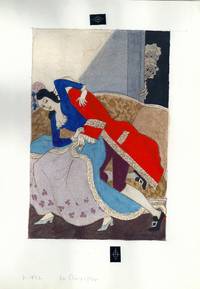
1972016607Haarlem Holland: Limited Editions Club 1972. Original Art. Fine. Rene Ben Sussan. The complete publisher's archive of 16 ORIGINAL watercolors some mildly erotic in theme and 17 ORIGINAL line drawings by Rene Ben Sussan used for the book. The watercolors are 5" x 8" on 7-3/4" x 11-1/4" paper with the line drawings on smaller various sized sheets. All are lettered in the upper corner in red ink with pencil annotations below the image. Housed in a paper folder from the publisher. Accompanied by an out-of-series copy of the book SIGNED by the artist that was bound upside down. <br/><br/>Rene Ben Sussan was active from the 1920s to the 1960s and illustrated many books including 8 for the Limited Editions Club alone. [Limited Editions Club] unknown
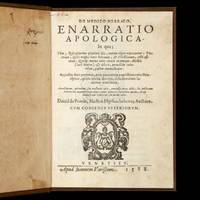
43448Venice : Apud Ioannem Variscum Giovanni Varisco 1588. First and only edition. Octavo 190 x 140 mm modern brown cloth over boards; faint trace of stamp tp front free endpaper original first blank with early ownership signature to verso browned clipped at upper corner title-page with vignette woodcut printer's device and with coat of arms to verso; pp. 7 Dedication to Francesco Maria II della Rovere Duke of Urbino 1 foreword by Paulus Manutius 2 foreword by Judah Alchalay 4 index 1-127; decorative woodcut initials; sidenotes; first few leaves with a mild horizontal crease at centre some occasional and very light foxing otherwise clean and crisp throughout; a very good copy in a modern binding. David de' Pomis 1525-1593 was a physician philosopher and linguist born in Spoleto to a Jewish family of bankers. He commenced medical studies in Todi under two of his uncles both rabbis and continued them at Perugia where he received his doctorate in 1551. He was then for a brief period rabbi and physician at Magliano in Tuscany. However there followed a number of years of insecurity during which successive papal edicts withdrew and restored the right of Jewish physicians to attend Christians; de' Pomis found himself forced to keep moving from town to town in Italy finally settling in Venice in 1569. It was here that he published most of his works. His tract De Medico Hebraeo Enarratio Apologica Venice 1588 is a refutation of aspects of a bull of 1581 issued by Gregory XIII 1572-85 which brought various charges against Jews - and more specifically Jewish physicians. De' Pomis argues that in accordance with the teachings of the Bible as well as the Talmud a Jewish physician is morally obligated to attempt to alleviate the suffering of every patient. He also cites numerous cases in the historical record to illustrate the fact that Jewish doctors can and have distinguished themselves by their medical prowess and civic-mindedness. The last section comprises a selection of Talmudic rules translated into Latin presented as a form of collective argument to counter the charge that the Talmud is to be despised for its moral character. The writings of the learned De’ Pomis were wide-ranging. He is now perhaps best known for his trilingual Hebrew Latin and Italian dictionary the Ẓemaḥ David Venice 1587 which he dedicated to Pope Sixtus V - although this work is more than a straightforward dictionary since it also contains disquisitions on scientific and historical subjects. He also wrote a philosophical essay on human suffering Discorso intorno a l'humana miseria e sopra il modo di fuggirla Venice 1572 a treatise on the plague Venice 1577 and another on geriatric conditions Venice 1588. Very rare. No sale record traced on Rare Book Hub. hardcover
000151132Almosnino Moshe ben Baruch. Pirkei Moshe. Salonica 1563. In Hebrew. The listing price is for a single volume of this title. The copy is in fair condition without binding. Some imperfections are among the following common defects: holes damaged pages tears water stains foxing worm holes or tracers age spots frayed margins handwritten notes inscriptions censorship stamps. Please contact us for more details on the condition of the book. SKU000151132 unknown
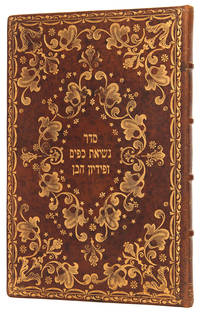
117129Hamburg 1831. . 8vo 18 x 12 cm; vocalised Hebrew manuscript on paper magnificent modern calf binding with elaborate floral gilt ornaments and Hebrew title to front housed in a cloth slipcase covered with marbled paper; 1 19 ii pp.<br /> Includes the order of the priestly blessings beginning from the 'Retzei' through the end of 'Sim Shalom' with the 'Yehi Ratzon' prayer for livelihood and 'Ribono Shel Olam' for better dreams followed by the order of the redemption of the first born Pidyon Ha'Ben and the rules of the priestly blessing. The hand-written text is accompanied by beautiful illustrations and priestly motifs Cohen's hands raised in blessing crown of priesthood etc.<br /><br />Leaf 13 notes: 'Written on Rosh Chodesh Iyar 1831'. Leaf 16 notes: 'This book was written in honor of R. Feibelman son of David Katz z"l of Altona'.<br /> Hamburg, 1831. hardcover
151831810Augsburg: S. Grimm and M. Wirsung 1518. Hardcover. Very good. Five parts small quarto 19.5 by 14 cm: a-d4 = 16 leaves. 32 pp. Text in Latin. Title within elaborate woodcut borders; woodcut initials. Modern marbled boards. Lightly toned with occasional faint smudges mostly marginal. Three discreet worm holes 1mm and less throughout sometimes obscuring a letter else a very good copy with crisp text.<br /> <br /> Early printing of the first Latin edition of Maimonides' Fi Tadbir al-Sihha On the Regimen of Health. Like his other medical and philosophical works it was composed in Arabic. The present translation however was likely based upon the 13th-century Hebrew version Sefer Hanhagat ha-Bri'ut attributed to Moses ibn Tibbon. The editio princeps first printed edition of this Latin version appeared at the monastic press of Sanctum Jacobum de Ripoli in Florence under the direction of Fra Domenico da Pistoia in an undated edition sometime between 1477 and 1481. In 1501 it appeared at Pavia as an appendix to a general treatise on the medical arts the Tabula Consiliorum of Giovanni Matteo Ferrari court physician to Francesco Sforza. The later editions of the Tabula which appeared at Venice in 1514 and again at Pavia in 1517 also include this Latin version of On the Regimen of Health. The present edition thus appears to be the first separate printing of this Latin translation to appear after the rare Florentine incunable.<br /> <br /> A philosopher physician rabbinic authority and codifier of Jewish law Maimonides Moses ben Maimon the Rambam; 1135 or 1138-1204 was the most illustrious Jewish scholar of the post-talmudic era. At the age of thirteen he and his family fled Cordoba to escape the Almohad persecutions and later settled in Fustat an ancient district of Cairo. "It was here that Maimonides started to practice and teach medicine. and became the physician of al-Qadi al-Fadil the famous counsellor and secretary to Saladin" Bos.<br /> <br /> On the Regimen of Health was composed at an unknown date for al-Malik al-Afdal Nur al-Din Ali ca.1169-1225 Saladin's eldest son. He was appointed by his father as governor of Damascus while still a youth and ascended to the throne as Sultan of the Ayyubid Empire in the winter of 1198/1199. Maimonides later served him in that capacity as court physician. In the Latin version of On the Regimen of Health al Malik al-Afdal is described as The Great Sultan of Babylon Magnifico Soldano Babylonie. In his preface Maimonides describes his work as divided into four tracts the first and last providing general medical advice suitable for all persons. The second treatise provides a regimen for the sick who are unable to consult a physician. The third is specifically intended for the Sultan who has informed Maimonides about his medical complaints -- constipation indigestion and depression -- through his emissary per suum nuncium significavit. There is a fifth part not mentioned in the preface which appears in the Florentine editio princeps as well in which Maimonides criticizes the treatment of the Sultan by other physicians.<br /> <br /> The "regimen of health" tadbir al-sihha genre has a long history in Islamic medical literature. Rooted in ancient Greek medical theory it was reinforced with the ritualistic hygiene of the Qur'an and the later Hadith traditions. "Maimonides teaches that physical convalescence is dependent on psychological well-being and rest. He stresses the necessity of hygienic conditions in the care of the body physical exercise and proper breathing work family sexual life and diet and suggests that music poetry paintings and walks in pleasant surroundings all have a part to play toward a happy person and the maintenance of good health" EJ.<br /> <br /> "On the Regimen of Health is frequently mentioned consulted and quoted in Hebrew literature; in the thirteenth century by Judah ben Samuel ibn Abbas and Shem Tov ibn Falaquera; in the fourteenth century by Israel ben Joseph Caslari Joseph ben Abba Mari ibn Kaspi Menahem ben Aaron ibn Zerah and Meir Aldabi. The physician Tobias ben Moses Cohn 1652-1729 quotes from Maimonides' On the Regimen of Health in his MaÊ¿aseh Tuviyyah which was 'the most influential Hebrew textbook of the sciences especially medicine'" Bos.<br /> <br /> Provenance: early 20th-century bookplate of Jan Kok at front pastedown. References: G. Bos Maimonides On the Regimen of Health: A New Parallel Arabic-English Translation Brill 2019 preface and intro; Durling NLM 16th 3304; Enc. Jud. 1st ed. 11: 779; Fürst vol. 2 p. 314; Proctor German 1501-1520 10875; Steinschneider 6513.145; VD16 M6423 providing imprint information: Sigmund Grimm and Marx Wirsung. For the first printed edition see British Museum 15th Century part VI Florence p. 623 IA. 27063; Hain 10525.<br /> <br /> Full title and imprint: Tractatus Rabbi Moysi de regimine sanitatis ad Soldanum Regem from colophon: Augustae Vindelicorum. Anno virginei partus. M.D.XVIII. die. ix Iulii.<br /> <br /> Opening line of text: Tractatus Rabbi Moysi quem domino et Magnifico Soldano Babilonie transmisit.<br /> <br /> Uniform titles: ספר ×”× ×”×’×ª הברי×ות Sefer Hanhagat ha-Bri'ut / FÄ« tadbÄ«r al-á¹£iḥḥah. S. Grimm and M. Wirsung hardcover
1957140949327New York: A. S. Barnes and Company 1957. First Edition. Near Fine/Very Good. First edition first printing. Signed and briefly inscribed by Ben Hogan on the front free endpaper "With all good wishes - and for better golf." Bound in publisher's green cloth boards over white spine lettered in green and orange. Near Fine with slight lean to binding small discoloration to free endpapers at fore edges. In a Very Good price-clipped dust jacket with rubbing light edge wear and tanning. A lovely signed copy of the golf champion's iconic instruction manual that explains his tried-and-true methods of the perfect swing. A. S. Barnes and Company unknown
195686675Lund Humphries. As New. 1956. Hardcover. FREE UPGRADE to Courier/Priority Shipping Upon Request - IN STOCK AND IMMEDIATELY AVAILABLE FOR SHIPMENT - AS NEW THE TEXT BLOCK IS PRISTINE CLEAN UNMARKED AND IN EXCELLENT CONDITION - - TWO 2 VOLUMES. Text in English and French. Volume 1: 32 pages; 203 illustrations. Volume 2: 4 pages of text; 142 illustrations. Catalogue Raisonné Catalogue Raisonne Catalog Raisonnee Complete Works -- with a bonus offer . Lund Humphries hardcover
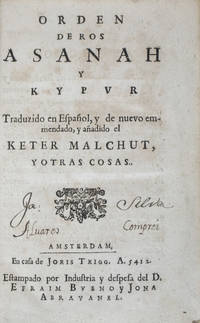
43935Amsterdam: En Casa de Joris Trigg/ D. Efraim Bueno y Jona Abravanel 5412. Hardcover. g- to vg-. Duoecimo. 7x4.5". 478pp. Original dark brown leather with blind-stamped ruling and tooling on the covers and spine. Raised bands on the spine. Metal clasps. Red-speckled edges of the book block. An early Spanish-language edition of the complete Jewish High Holiday prayer book Machzor based on the original translation by Abraham Usque originally printed in Ferarra Italy in 1553. This edition contains some added material not previously present including most prominently Solomon ibn Gabirol's famed philosophical poem "Keter Malkhut" Royal Crown which over the years has come to be read as part of the Yom Kippur service in some Jewish traditions. <br /> <br /> Published by Dr. Efraim Bueno and Jona Abravanel to serve members of the then sizable Sephardic Jewish community in Amsterdam. A significant portion of the community were former Conversos Jews who had outwardly converted to Catholicism during the inquisition in Spain who then emmigrated and were able to reestablish their Jewish identity and thus were unable to read Hebrew hence the text's publication in Spanish. As stated in the foreword this edition includes some additions to the text not included in previous versions and omits some material deemed to have been unnecessary. The prayer book starts with the penitential prayers Selichot p.3-47 which includes decorative head and endpeices. This section is followed by the Rosh Hashanah service p.48-195 and then the Yom Kippur service including the "Keter Malkhut" p.254-289. Title page is has a decorative vignette printed in woodblock and is printed with the Hebrew date "5412". Pages 305-352 are misprinted as "321-368" with their correct numbers handwritten above in ink. All text in Spanish. <br /> <br /> Binding with some rubbing and scratches to extremities and to the covers. Front hinge starting to split slightly at the head and tail of the spine. Missing one of the metal clasps on the back cover. Starting at interior covers. Some minor to light sporadic damp staining and foxing throughout the text. Period signature of the previous owner "Silva" in ink on on the title page and p.200. Name of another previous owner in ink on the interior back cover. Book block tight overall. Binding in good- interior in very good- condition overall. Quite scarce. Dr. Efraim Ephraim Bueno aka Martin Alvarez 1599-1665 was a Portuguese-born Jewish physician in Amsterdam of the famed Iberian-Jewish Bueno medical dynasty and prominent member of the city's Sephardic community. He served for many years as the personal physician to famed artist Rembrandt van Rijn who in fact depicted Bueno in two of his works one an etching and the other a painted portrait. He received his medical education and degree in Bordeaux and was known to have practiced medicine in Amsterdam until the time of his death. In addition to his medical practice Bueno was an accomplished biblical scholar who along with Jona Abravanel published numerous Jewish works the on the bible and Jewish Law. <br /> <br /> Jona Abravanel 1593-1667 was a Sephardic Jewish poet in Amsterdam from the prominent Abravanel family. He was the nephew of Famed Portueguse-Dutch Rabbi and printer Menasseh ben Israel. Together with his uncle and Dr. Efraim Bueno he was responsible for publishing numerous works of Judiaca in the 17th century.<br /> <br /> In this edition the title page was mistaken printed with the word "Kuyper" which was then correct via a scrap of paper pasted on top. References: KAYSERLING 1890 p. 7 31 61 under Abravanel Bueno and Liturgy PALAU 1923 under 202415 with an incorrect dat of 1662 PEETERS 1933 1037. <br /> <br /> This publication follows an edition with same title also from Amsterdam in 1630 but printed by David Pardo and Salom ben Yosseph Menasseh ben Israel with different pagination. En Casa de Joris Trigg/ D. Efraim Bueno y Jona Abravanel hardcover
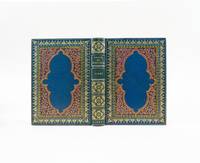
1902ST17129-011Paris: H. Piazza et Cie 1902. No. 248 OF 260 COPIES on papier vélin from a total edition of 300. 248 x 178 mm. 9 3/4 x 7". 175 1 pp. 1 leaf colophon. <br/> EXTRAVAGANT BLUE MOROCCO GILT AND INLAID BY OTTO SCHULZE stamp-signed on front turn-in covers with a very decorative gilt frame enclosing a Moorish design featuring a lobed central panel framed by a strip of terra cotta morocco inlaid with 96 black morocco and gilt flowers and between this and the outer frame a panel of lilac morocco inlaid with swirls of gilt vines terminating in 22 red blossoms; raised bands spine gilt in compartments with central fleuron surrounded by small tools and five inlaid red morocco flowers inner dentelles with brown morocco frame flanked by large and small decorative gilt rolls top edge gilt other edges untrimmed. Original color-illustrated paper wrappers bound in at the rear. With decorative borders enclosing text and with 58 CHROMOLITHOGRAPHED ILLUSTRATIONS BY DINET consisting of title page and three section titles four head- or tailpieces 41 illustrations in the text and nine full-page plates. Verso of front free endpaper with bookplate of John R. Menzies. Carteret IV 140. ◆Spine lightly sunned one tiny spot on half title but A VERY FINE COPY clean fresh and bright internally and in a binding with no signs of wear.<br/> <br/> This is a strikingly bound deluxe copy of the first book produced by the French Orientalist painter Étienne Dinet and his Arabic teacher and closest friend Sliman ben Ibrahim. The text of three Saharan folktales related here by Sliman are illustrated with Dinet's sensuous watercolors and the whole is bound with great animation and skill by Otto Schulze of Edinburgh. Dinet and Sliman met in Algeria in 1889 when Sliman saved the painter from an ambush. Sliman accompanied Dinet to Paris in 1896 where he met the French Society of Oriental Painters and impressed them with both his character and his couscous. Sliman and Dinet also collaborated on a biography of Mohammed and an account of the Hajj they made after Dinet's conversion to Islam. The binding here is reminiscent of an Oriental carpet and echoes Dinet's beautiful designs used inside the book. Operating during the first 10 or 15 years of the 20th century Otto Schulze was an Edinburgh publisher whose books sometimes appeared in bindings said to have been done by him. As in the case of other publishers and booksellers such bindings often were done for rather than by the party whose name is stamp-signed on the volume. Bindings signed by Schulze are consistently attractive but are not common: since 1975 ABPC has listed six such morocco bindings two of them described as "elaborate" or "extra." Since our volume says that the binding is by--and not for--Schulze we can only assume that our publisher had an in-house binder. From 1906 until his death in 1935 our previous owner John R. Menzies was chairman of John Menzies & Co. founded in Edinburgh in 1833 by his father. The firm sold books magazines and newspapers becoming with W. H. Smith one of two major newsagents in the United Kingdom in the 20th century until bought out by its rival in 1990. H. Piazza et Cie unknown
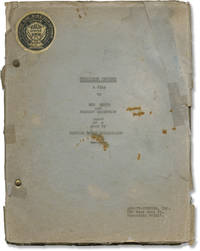
1932160793New York: Abbott-Dunning 1932. Draft script for the Broadway premiere of the 1932 play. Working copy belonging to playwrights Ben Hecht and Charles MacArthur with their annotations in manuscript pencil throughout. <br /> <br /> An early theatrical effort by legendary playwrights authors and creative collaborators Hecht and MacArthur preceded by "The Front Page" 1928 and "The Great Magoo" 1932.<br /> <br /> Based on "Napoleon of Broadway" an unproduced play by Charles B. Millholland about an egomaniacal theatrical producer based on real-life impresario David Belasco as he attempts to win back his former protégé now working as a Hollywood actress. The play made its Broadway premiere on December 29 1932 at the Broadhurst Theatre running for 152 performances. Adapted for film by Howard Hawks two years later starring John Barrymore and Carole Lombard. <br /> <br /> Set in New York. <br /> <br /> Blue titled wrappers with credits for playwrights Hecht MacArthur and Millholland on the front wrapper. Title page present dated December 29 1932 with credits for playwrights Hecht MacArthur and Millholland director George Abbott and others. 112 leaves with last page of text numbered 3-29. Mimeograph duplication rectos only. Title page lightly dampstained else Pages Near Fine wrapper Good moderately dampstained and edgeworn bound with two gold brads. Abbott-Dunning unknown
12326Nicholson Ben. San Gimignano. Lafranca 38. Etching 1966. Edition of 50 signed in pencil and dated "66" and numbered "1/50." With the chop of the printer Lafranca embiossed lower left. A trapezoidal shaped plate measuring 6 3/4 x 9 5/16 171 x 235 mm. in its longest dimensions; the sheet is 11 x 13 3/4 inches. Framed to 15 1/4 x 17 1/2 inches. In excellent condition. unknown
7535Shahn Ben. Shahn Ben. SUPERMARKET. Prescott 28. Serigraph in black with hand coloring 1957. Edition of unspecified size; Prescott states 80 known. 17 x 38 1/4 image; 25 1/4 x 38 5/8 inches sheet. Inscribed and signed in pencil. In excellent condition with the colors fresh and vibrant. unknown
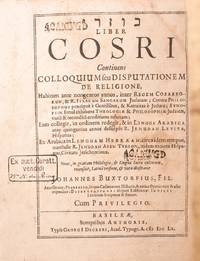
166066808Basileae Bâle Basel: Sumptibus authoris l'auteurtypis Georgi Deckeri 1660. Fine. Sumptibus authoris l'auteur typis Georgi Deckeri Basileae Bâle Basel 1660 16 x 20.50 cm relié Sumptibus authoris. Typis Georgi Deckeri Basileae Basel 1660 4to 16 x 20.5 cm 50 pp. 455 pp. 29 pp. modern vellum First edition of the Latin translation by Johannes Buxtorf The Younger of the first translation into Hebrew by Juda ibn Tibbon Juda Halevi's Arabic text not being rediscovered till 1887 today in the Bodleian. Modern vellum binding flaps. Skillful restoration to inside margin of final third of work without loss to text. A few small wormtracks filled in to lower margins of pastedowns as well as first and final endpapers. A few dampstains to lower portion and some pages browned. Stamp of the University Library at Leiden «Acad. Lugd.» to edges and title. Stamp of the restorer Willem Nicolaas du Rieu «Ex auct. Curatt. vendidi W. N. du Rieu» indicating its deaccession. A very rare copy of this classic of Medieval Jewish philosophy presenting the fears of Spanish Jews faced with two powerful religions Christianity and Islam. Written in 1140 in Arabic the Kuzari is couched in the form of a dialogue in five books. Charles Touati in his 1994 preface to the text summarizes the narrative thread of the work thus: «The king of the Khazars or Kuzari tormented by the religious question interrogates in turn a philosopher a Christian theologian and a Muslim one. Disappointed in their answers he feels he must turn to a learned man of the mocked and vilified minority a Rabbi who ends up convincing him at which the king converts to Judaism and continues his studies with the aid of this teacher.» This apologia allowed Juda Halevi to critique the appeal of philosophy Christianity and Islam for his contemporaries. According to him «philosophy denies all possibility of dialogue between Man and God and does not understand the religious phenomenon» ibid. Right from his starting point a proof of the existence of God he believes that we need only look to history and the revelation of God on Mount Sinai witnessed by thousands. Christianity and Islam are for him nothing but forgeries of Judaism: «they jeer at the humiliations and suffering of the Jews without realizing that they exalt in the founder of their own religions precisely that humiliation and suffering» ibid. The Kuzari is an emblematic text in the sense that it calls for the exiled community to return to Zion rather than submit. «It is better to leave everything and go back to Zion and there regain Divine favor instead of wearing ourselves out winning the favor of gentiles which in any case we will never have» ibid. Sumptibus authoris [l'auteur]typis Georgi Deckeri hardcover
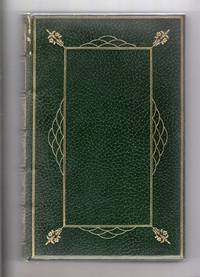
16169030996London: William Stansby 1616. 1st. Hardcover. Fine. Compiled and edited by Johnson published in two sizes. This is the small-paper edition originally 7 x 11 1/4 inches trimmed here to 6 1/2 x 9 7/8 inches with no loss of text. Rebound in dark green morocco with five raised bands on spine; spine and covers stamped in gilt. Contains 842 of roughly 1025 original pages including all plays: Every Man in his Humour Every Man out of his Humour Cynthias Revels Poetaster Seianus Volpone or The Fox Epicœne or The Silent Woman The Alchemist and Catiline as well as epigrams and Jonson's poetry collection "The Forrest." Missing engraved portrait title and contents page along with five of seven introductory dedication pages. Missing engraved title pages to all plays but "Poetaster" along with the Entertainments Panegyre Masques and Barriers which comprised the last 173 pages of the book. Two pages of introductory dedication have been rebound as final leaf. <br/><br/> William Stansby hardcover
18812091202133203423Yomisho Sanbo 1881. Soft Cover. Fine. Number of books: 16 books in total Yomisho Sanbo paperback
000304528Arepol Shmuel ben Yitschak. Lev Chakham Pirush Kohelet. Istanbul 1586. In Hebrew. The listing price is for a single volume of this title. The copy is in fair condition without binding. Some imperfections are among the following common defects: holes damaged pages tears water stains foxing worm holes or tracers age spots frayed margins handwritten notes inscriptions censorship stamps. Please contact us for more details on the condition of the book. SKU000304528 unknown
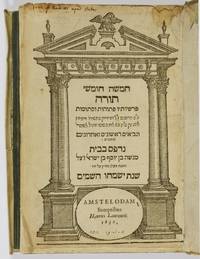
163155459Amsterdam: printed by Menasseh ben Israel for Henricus Laurentius 1631. First edition. Hardcover. Very good-. Octavo 16.8 by 11.4 cm. Collation: aleph-lamed-zayin8 = 296 leaves. 612 i.e. 592 pp: p. 464 erroneously numbered 484 465 as 485 and so on throughout. Two column text in unvocalized Hebrew; every fifth verse numbered in the margin. Title within architectural border; half titles with letterpress ornamentation for the Former and Latter Prophets. Contemporary vellumwith exposed thongs edges stained blue; yapp fore-edges; front joint cracked but holding strong. Intermittent light toning to text outmost leaves a bit more darkened; very occasional small stains. Title-page slighltly trimmed 4 mm at bottom edge; expert marginal repairs at bottom corners of 2 leaves; 1 leaf re-margined at fore-edge with no loss of text else a very good copy with crisp clean text.<br /> <br /> First Hebrew Bible published in Amsterdam printed by the rabbi diplomat publisher and religious thinker Menasseh ben Israel 1604-1657 one of the most distinguished members of the Portuguese Jewish community of Amsterdam and the first Jewish printer in the Northern Netherlands. The Amsterdam printer and publisher Hendrick Laurensz Lauretius provided the financing for this edition along with two other Bible editions and two editions of the Hebrew Psalms printed by Menasseh between 1631 and 1646. "These publications were not only made for the local market but mainly for international trade. Thanks to this financial help Menasseh was able to organize his printing office in a more professional way" Fuks hiring a Jewish compositor Judah Leb ben Mordecai Gimple from Posen and a gentile compositor Bartholomeus Laurensz. <br /> <br /> The printing activity of Menasseh was especially important in the steadily growing productions of the Hebrew press in the Northern Netherlands. Fulfilling the needs of the Sephardic community for Jewish ritual texts eliminated the need for expensive imports from Venice and Poland. Menasseh undersood that the relatively cheap paper and tools available in Amsterdam made it possible to compete in quality and prices with the Hebrew presses of Poland Italy and Basel. "Gentile publishers and booksellers in Amsterdam such as Jansonius and Laurentius were quick to see the opportunity of the opening Eastern European market and financed several of Menasseh's publications" Fuks. Menasseh was the first to introduce in the Netherlands waybertaytsch types for Yiddish publications along with illustrated Hebrew books. He was also the first Jewish printer to adopt the Dutch pocket-book format made famous by the Elzeviers.<br /> <br /> Notes on publication date and issue: The title is dated 1630 in Arabic numerals; the colophon notes the date of completion in Hebrew characters as 5 Adar 5391 = 7 February 1631 along with the printer's apology for being unable to provide the index of pericopes promised on the title-page due to lack of printing material. Darlow and Moule describe this issue as Variant A with a Latin imprint appearing in the cartouche beneath the Hebrew title.<br /> <br /> Provenance and annotations: early entry in brown ink at front paste-down with short Greek inscription Theos. dated 1700; old Latin inscription in black ink at top margin title in reference to Hebrew roots; date of 1812 beside Yiddish entry penned in black ink within imprint cartouche at title; old entry in German penned in black ink at verso title beneath which is an oval cartouche in imitation of the one at the title in which an owner has penned in black ink the Hebrew imprint information regarding Hendrick Laurensz as it would appear in the Varient B issue; old library shelf marks at rear paste-down; recent owner entry in blue ink in Hebrew at front paste-down. References: Darlow and Moule 5123a; Fuks/Fuks-Mansfeld no. 152; pp. 105; 111f.; Steinschneider no. 453; Vinograd Amsterdam 22.<br /> <br /> Full title and imprint: חמשה חומשי תורה פרשיותיו פתוחות וסתומות ×¢"פ ×”×¨×ž×‘× ×–"ל ומדוייק בחסירו' ויתרות להעתק ס"ת ×¢× ×œ×•×— בסופו מועיל לסופרי' ×•× ×‘×™××™× ×¨××©×•× ×™× ×•××—×¨×•× ×™× ×•×›×ª×•×‘×™×: × ×“×¤×¡ בבית ×ž× ×©×” בן ישר×ל ז׳׳צל והוגה בעיון × ×ž×¨×¥ על ידו ×©× ×ª ישמחו השמי×<br /> Amstelodami sumptibus Henrici Laurentii 1630. printed by Menasseh ben Israel for Henricus Laurentius hardcover