206 résultats
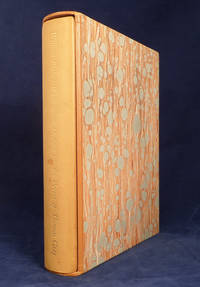
107381London: Trianon Press: 1977. 4to 155 pp. 51 plates. Original full brown morocco slipcase. A fine copy. § #5 of 36 de luxe copies signed by Keynes of a total edition of 562 copies. The definitive work about and reproducing all known portraits of Mr. and Mrs. Blake. The definitive work on all known portraits of Mr. and Mrs. Blake. Not in Bentley BB or supplement. Trianon Press 1977. 4to unknown books
107383London: Trianon Press: 1977. 4to 155 pp. 51 plates. Original full brown morocco slipcase. A fine copy. § Copy A of 26 copies for the Trustees and publishers signed by Keynes of a total edition of 562 copies.The definitive work on all known portraits of Mr. and Mrs. Blake. Not in Bentley BB or supplement. Trianon Press 1977. 4to unknown books
19771073811977. London: Trianon Press: 1977. <br /> <br /> 4to 155 pp. 51 plates. Original full brown morocco slipcase. A fine copy.<br /> <br /> § #5 of 36 de luxe copies signed by Keynes of a total edition of 562 copies. The definitive work about and reproducing all known portraits of Mr. and Mrs. Blake. Not in G.E. Bentley's Blake Books or its supplement. unknown
19723555London: printed in Paris at the Trianon Press for the William Blake Trust 1972. No. VI of 50 de luxe copies. 21 plates - 20 plates reproduced by colour collotype with water-color washes by hand through stencil and one engraving; together with a set of plates showing progressive stages of the collotype and hand stencil process with guide sheet and stencil. Edition de luxe limited to 50 copies with additional proof sheets progressive plates and original stencil etc. 2 vols. 4to and small 4to. full brown morocco in original marbled paper covered slipcase. Near fine prospectus inserted loose.The text is a clear statement of Blake’s beliefs regarding the nature of man. The full book only came to light in 1953 and this is the first reproduction of the text. Such maxims are included as “Man’s desires are limited by his perceptions none can desire what he has not perciev’d sic†and “If any could desire what he is incapable of possessing despair must be his eternal lotâ€.Bentley <em>Blake Books </em>202. One of only 50 de luxe copies with additional material printed in Paris at the Trianon Press for the William Blake Trust unknown
19681106824 vols. London: Trianon Press 1968. 4 vols. 8vo and 12mo Vol. I 8vo i-vii-viii 50 4 pp. Vol. II 12mo 2 pp. 22 plates Vol. III 4 pp. 31 plates Vol. IV 12mo 2 pp. 10 plates negative and copper plate. Original tan morocco volume 4 in brown cloth as issued cloth slipcase gilt lettering to backstrips of all three volumes. Backstrips slightly rubbed. § From an edition of 726 total copies including 700 numbered 1 to 700 of which the first 50 have additional material and are in a special binding. This is copy number 14 with the first three volumes bound in leather instead of the usual cloth. Volume I is an introductory volume followed by three volumes of plates. Bentley Blake Books 48. Trianon Press hardcover books
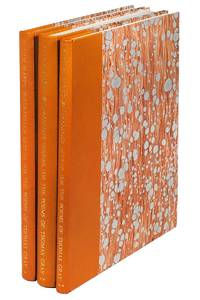
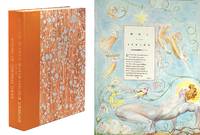
19721106813 volumes. London: Trianon Press 1972. 3 volumes folio with 116 color facsimile leaves reproduced by collotype and hand-stencil color the text of the poems reproduced from copper-plate with 3 additional printings to reproduce Blake’s pencillings and the tone of the paper. Marbled boards morocco backstrips slipcases backstrips stained slipcases worn internally a fine set as issued. § Edition limited to 518 copies in all including 100 copies for Paul Mellon personally of which 12 copies were a super de luxe issue in three volumes with extra material 36 copies were a de luxe issue also with extra material but in sheets unbound18 copies were hors commerce contents unrecorded and 352 copies either bound in 3 volumes in slipcases or as a single set of the loose sheets in a box. This is copy #37.The 116 water-color illustrations to Thomas Gray's poems are among Blake's major achievements as an illustrator. They were commissioned in 1797 by Blake's friend the sculptor John Flaxman as a gift for his wife Ann to whom Blake addressed the poem that ends the series. The commission may have been inspired by the Flaxmans' seeing Blake's water-color designs to Edward Young's Night Thoughts begun in 1795. The Gray illustrations follow the same basic format. Blake cut windows in large sheets of the same type of Whatman paper used for the Night Thoughts illustrations and mounted in these windows the texts of Gray's poems from a 1790 octavo edition published by John Murray leaving out some prefatory materials fly-titles the notes and the 7 engraved illustrations. Blake then drew and colored his designs surrounding the letterpress texts. On blank versos near the beginning of each poem and in one case on a separate piece of paper pasted over letterpress text Blake inscribed with pen and ink either titles for each design or quotations from the poem to indicate the passage illustrated. On most text pages Blake also drew a pencil cross left of the first line of the illustrated passage. He numbered most leaves consecutively in pen and ink beginning a new sequence for each of the 13 poems.Blake conceived of his work as an illustrated book rather than a series of unbound designs as indicated by his offsetting Gray's texts above and to the right left on versos from the middle of each leaf—then the convention for all letterpress books. Although listed by William Michael Rossetti in his catalogue of Blake's drawings and paintings published in the 1863 and 1880 editions of Alexander Gilchrist's Life of William Blake the Gray illustrations were virtually unknown until their rediscovery by Herbert Grierson in 1919.The Trianon Press reproductions are recognized as the finest examples of the art of facsimile reproduction; working from the originals in Paul Mellon’s collection each leaf is faithfully hand-colored through stencils to achieve an astonishing exactitude. The Times Literary Supplement stated that nothing like these books had ever been printed before and that it was highly unlikely that they could be printed again. Bentley Blake Books 385. Trianon Press hardcover books
1987107738Paris: Trianon Press for the Blake Trust 1987 Publisher’s proofs in a box including three copies of vol. 2 in variant bindings one copy of vol. 1 black and white reproductions and a suite of progressive proofs of plate 2. All within a quarter morocco box with gilt backstrip and marbled boards. § A unique publisher’s proof set lacking the rest of the text. A complete set would include:The de luxe issue includes David Bindman ed. William Blake’s Illustrations of the Book of Job: The Engravings and Related Material with Essays Catalogue of States and Printings Commentary on the Plates and Documentary Record by David Bindman Barbara Bryant Robert Essick Geoffrey Keynes and Bo Lindberg. London: The William Blake Trust 1987. Colophon verso of the title page: “In addition to the 387 copies of William Blake’s Illustrations of the Book of Job and Colour versions of Blake’s Book of Job designs issued and published by the William Blake Trust five copies containing extra material have been specifically made up for those most closely concerned with bringing the publication to completion. This copy is for Robert Essick.†The work is housed in four cloth slipcases trimmed in morocco as follows:1. Text volume with the title page and colophon quoted above. Contents:Stephen Keynes “Acknowledgments.â€Charles Ryskamp “Foreword.â€David Bindman and John Commander “Preface.â€Geoffrey Keynes “The Development of the Job Designs.â€David Bindman “The Book of Job Designs from Butts Series to Final Engravings.â€Robert Essick “Blake’s Engravings to the Book of Job: An Essay on Their Graphic Form and Catalogue of States and Printings.â€Barbara Bryant “The Job Designs; a Documentary and Bibliographical Record.â€Quarter morocco and cover label. In the same slipcase: William Blake’s Illustrations of the Book of Job: The Plates with related designs and with an Introduction and Plate-by-Plate Commentary by Bo Lindberg. Loose in fascicles in a quarter morocco folder quarter morocco clamshell box with cover label.2. Colour Versions of William Blake’s Book of Job Designs from the Circle of John Linnell. With an essay by Bo Lindberg. Text volume quarter morocco with cover label. Quarter-morocco clamshell box with cover label with the following quarter-morocco folders with cover labels as quoted below contents loose:a. “The New Zealand setâ€b. “The Collins setâ€c. “The Fitzwilliam platesâ€3. “Additional Material 1.†Quarter-morocco clamshell box with cover label with the following quarter-morocco folders with cover labels as quoted below contents loose:a. “Pages from the ‘Riches’ sketchbook with colour washes not publishedâ€b. “William Blake Illustrations of the Book of Job Alternative printing of the engravings without plate markâ€c. “Facsimiles of subjects from the Butts version watercolours printed collotype by Emery Walker for the Pierpont Morgan Library edition 1935â€. Two mounted color reproductions.d. “Proofs guides and stencils for colour plates from Colour versions of Blake’s Book of Job designs Trianon Press Paris c. 1974â€4. “Additional Material 2.†Quarter-morocco clamshell box with cover label with the following quarter-morocco folders with cover labels as quoted below contents loose:a. “Label printed for original publication March 1826â€b. “Colour versions of William Blake’s Book of Job designs from the circle of John Linnell Collins & New Zealand sets & Fitzwilliam plates.†Housed in three paper folders. The same reproductions as those in box 2 above.Materials added to box 4 by Essick:i. Xerox of the typescript of Lindberg’s commentary.ii. Xerox of the typescript of Lindberg’s essay on the New Zealand set.iii. Xerox of the typescript of Keynes’ introductory essay.iv. A set of loose Job reproductions housed in a paper folder inscribed in pencil as follows: “This set of proofs was given to me by John Commander Secretary of the Trust to help with my preparation of the catalogue of the states of the Job plates. It contains unpublished materials. R. N. Essick Summer 1983.â€Acquired Aug. 1987 from the William Blake Trust gift. BBS pages 198-99 this issue not recorded. For proofs of Essick’s essay see under Blake Trust/Trianon Press Facsimiles Production Materials.Idem. Trade issue housed as above but in cloth slipcases boxes and bindings. Two slipcases with contents as in the first two slipcases above. Colophon verso of the title page: “This publication of William Blake’s Illustrations of the Book of Job is limited to 387 copies: 22 copies lettered A-V contain additional material and are specially bound; 250 copies numbered 1-250; 50 copies numbered i-l; 65 copies numbered I-LXV are reserved by The William Blake Trust. This is copy 171â€. Acquired May 1987 from the William Blake Trust gift. BBS pages 198-99. Trianon Press for the Blake Trust hardcover books
1028821971. London: Trianon Press 1971. <br /> <br /> Small folio 72 pages with 16 color facsimile leaves suites of progressive plates and 116 monochrome illustrations. Marbled boards morocco backstrip slipcase. Signed by Keynes. A fine copy as issued.<br /> <br /> § Limited to 28 copies so inscribed and signed by Geoffrey Keynes this particular volume is labeled no. 2. This is the de luxe edition of the trade version of the Gray issued by the Trianon Press in 1972 using 8-color printing. Although the three-volume folio edition is a magnificent piece of book making this version is more accessible and easier to use and enjoy and the quality of the color printing is Trianon Press at its best. <br /> <br /> The 116 water-color illustrations to Thomas Gray's poems are among Blake's major achievements as an illustrator. They were commissioned in 1797 by Blake's friend the sculptor John Flaxman as a gift for his wife Ann to whom Blake addressed the poem that ends the series. The commission may have been inspired by the Flaxmans' seeing Blake's water-color designs to Edward Young's Night Thoughts begun in 1795. The Gray illustrations follow the same basic format. Blake cut windows in large sheets of the same type of Whatman paper used for the Night Thoughts illustrations and mounted in these windows the texts of Gray's poems from a 1790 octavo edition published by John Murray leaving out some prefatory materials fly-titles the notes and the 7 engraved illustrations. Blake then drew and colored his designs surrounding the letterpress texts. On blank versos near the beginning of each poem and in one case on a separate piece of paper pasted over letterpress text Blake inscribed with pen and ink either titles for each design or quotations from the poem to indicate the passage illustrated. On most text pages Blake also drew a pencil cross left of the first line of the illustrated passage. He numbered most leaves consecutively in pen and ink beginning a new sequence for each of the 13 poems.<br /> <br /> Blake conceived of his work as an illustrated book rather than a series of unbound designs as indicated by his offsetting Gray's texts above and to the right left on versos from the middle of each leaf-then the convention for all letterpress books. Although listed by William Michael Rossetti in his catalogue of Blake's drawings and paintings published in the 1863 and 1880 editions of Alexander Gilchrist's Life of William Blake the Gray illustrations were virtually unknown until their rediscovery by Herbert Grierson in 1919.<br /> <br /> The Trianon Press reproductions are recognized as the finest examples of the art of facsimile reproduction; working from the originals in Paul Mellon's collection each leaf is faithfully hand-colored through stencils to achieve an astonishing exactitude. The Times Literary Supplement stated that nothing like these books had ever been printed before and that it was highly unlikely that they could be printed again. Bentley Blake Books 385. unknown
197662884to. London: Trianon Press 1976. 4to 5 color plates and commentary and progressive states of the plates and an original copper plate etc. Full brown morocco slipcase. As new. § Copy # VII of XXXII de luxe copies in an edition limited to 512 copies in all. The companion volume to the Book of Ahania. One copy of The Book of Los is known. Bentley Blake Books supplement p. 62. Trianon Press unknown books
19701073694to. London: Trianon Press 1970. 4to 10 facsimile leaves and 5 pp. of commentary. Original full green morocco slipcase. Fine as issued. § Edition de luxe this being copy III limited to 36 copies specially bound with extra suites of the plates of an edition in all of 662 copies. Bentley Blake Books 5. All Religions are One c. 1788 is “a small tractate perhaps Blake’s first experiment in his illuminated printing it exists in only one copy. It affirms that the Imagination ‘is the true man’. and thus early Blake had completed his revolutionary theory of the nature of man and proclaimed the unity of all true religions.†Damon Blake Dictionary. Trianon Press unknown books
1073691970. London: Trianon Press 1970. <br /> <br /> 4to with 10 facsimile leaves 5 pp. commentary by Sir Geoffrey Keynes plus 32 pp. of the progressive collotype printings. Full green morocco near fine with green marbled slipcase. <br /> <br /> § Copy III of 36 de luxe copies. The total edition was of 662 copies including 36 de luxe copies numbered I-XXXVI 600 regular copies numbered 1-600 and 26 copies lettered A-Z reserved for the trustees of the William Blake Trust and the publishers. Bentley Blake Books 5. All Religions are One c. 1788 is "a small tractate perhaps Blake's first experiment in his illuminated printing it exists in only one copy. It affirms that the Imagination 'is the true man'. and thus early Blake had completed his revolutionary theory of the nature of man and proclaimed the unity of all true religions." Damon Blake Dictionary. unknown
1047771970. London: Trianon Press 1970. <br /> <br /> 4to 10 facsimile leaves and 5 pp. of commentary. Original full green morocco backstrip slightly faded as usual slipcase.<br /> <br /> § Edition de luxe this being copy h.c. ii limited to 36 copies specially bound with extra suites of the plates of an edition in all of 662 copies. Bentley Blake Books 5. All Religions are One c. 1788 is "a small tractate perhaps Blake's first experiment in his illuminated printing it exists in only one copy. It affirms that the Imagination 'is the true man'. and thus early Blake had completed his revolutionary theory of the nature of man and proclaimed the unity of all true religions." Damon Blake Dictionary. unknown
1957123810Folio. London: Trianon Press 1957. Folio with 9 color plates and 156 illustrations. Original quarter morocco a superb copy virtually mint preserved in a quarter blue morocco box lettered in gilt § Limited to 460 copies this is #219. A very scarce book in good let alone fine condition as the size of the book and the fact that it was not issued with a box or a slipcase eve means most copies are more or less worn. This was the first time that Blake’s Biblical illustrations had been brought together. The catalogue raisonné was compiled by Sir Geoffrey Keynes and comprises virtually every Biblical painting by Blake in existence. Bentley Blake Books 681. Trianon Press unknown books
19751052184to. London: Trianon Press 1975. 4to 8 plates 8 pp. commentary by Keynes with another plate plus 22 additional progressive proof plates and with a metal pochoir stencil mounted at the end. Full brown morocco prospectus inserted a fine copy in slipcase. As new. § #28 of 32 de luxe copies with the extra plates showing the progressive stages of the collotype and hand-stencil process. The total edition was limited to 458 copies. One of the richest and most elaborate Trianons. Bentley Blake Books A137. “The Song of Los completes the cycle of the four continents. the complete work tells the story of mankind from Adam to the Last Judgment the triumph of death and the general resurrection caused by the revolution.†Damon Blake Dictionary. Trianon Press unknown books
198710811222 separate plates. Paris: Trianon Press for the Blake Trust 1987. 22 separate plates approx. 15.75 x 12.25 inches 30 x 31 cm each printed in color on Arches housed in a tri-fold paper folder. Very good condition. § The New Zealand Set are careful watercolor copies of the central designs of the original engravings produced by the circle of John Linnell presented here in faithful facsimile. Butlin noted in the Blake Quarterly: “The long list of color facsimiles produced by the Trianon Press under Arnold Fawcus for the William Blake Trust were above all objects of beauty recreating as near to perfection as possible Blake’s original achievements.†Trianon Press for the Blake Trust unknown books
19681075944 vols. London: Trianon Press 1968. 4 vols. 8vo and 12mo Vol. I 8vo i-vii-viii 50 4 pp. Vol. II 12mo 2 pp. 22 plates Vol. III 4 pp. 31 plates Vol. IV 12mo 2 pp. 10 plates negative and copper plate. Original tan morocco volume 4 in brown cloth as issued cloth slipcase gilt lettering to backstrips of all three volumes. Backstrips slightly rubbed. § From an edition of 726 total copies this is the de luxe advance publisher’s copy including 700 numbered 1 to 700 of which the first 50 have additional material and are in a special binding. Volume I is an introductory volume followed by three volumes of plates. Bentley Blake Books 48. Trianon Press hardcover books
19681075954 vols. London: Trianon Press 1968. 4 vols. 8vo and 12mo Vol. I 8vo i-vii-viii 50 4 pp. Vol. II 12mo 2 pp. 22 plates Vol. III 4 pp. 31 plates Vol. IV 12mo 2 pp. 10 plates negative and copper plate. Original tan morocco volume 4 in brown cloth as issued cloth slipcase gilt lettering to backstrips of all three volumes. Backstrips slightly rubbed. § From an edition of 726 total copies this de luxe copy unnumbered out of series including 700 numbered 1 to 700 of which the first 50 have additional material and are in a special binding. Volume I is an introductory volume followed by three volumes of plates. Bentley Blake Books 48. Trianon Press hardcover books
1972110461Folio. London: Trianon Press 1972. Folio with 116 color facsimile leaves reproduced by collotype and hand-stencil color the text of the poems reproduced from copper-plate with 3 additional printings to reproduce Blake’s pencillings and the tone of the paper. Original sheets marbled boards morocco backstrip lettered in giltquarter brown morocco box. § Edition limited to 518 copies in all including 100 copies for Paul Mellon personally of which 12 copies were a super de luxe issue in three volumes with extra material 36 copies were a de luxe issue also with extra material but in sheets unbound18 copies were hors commerce contents unrecorded and 352 copies either bound in 3 volumes in slipcases or as a single set of the loose sheets in a box. This is #370.The 116 water-color illustrations to Thomas Gray's poems are among Blake's major achievements as an illustrator. They were commissioned in 1797 by Blake's friend the sculptor John Flaxman as a gift for his wife Ann to whom Blake addressed the poem that ends the series. The commission may have been inspired by the Flaxmans' seeing Blake's water-color designs to Edward Young's Night Thoughts begun in 1795. The Gray illustrations follow the same basic format. Blake cut windows in large sheets of the same type of Whatman paper used for the Night Thoughts illustrations and mounted in these windows the texts of Gray's poems from a 1790 octavo edition published by John Murray leaving out some prefatory materials fly-titles the notes and the 7 engraved illustrations. Blake then drew and colored his designs surrounding the letterpress texts. On blank versos near the beginning of each poem and in one case on a separate piece of paper pasted over letterpress text Blake inscribed with pen and ink either titles for each design or quotations from the poem to indicate the passage illustrated. On most text pages Blake also drew a pencil cross left of the first line of the illustrated passage. He numbered most leaves consecutively in pen and ink beginning a new sequence for each of the 13 poems.Blake conceived of his work as an illustrated book rather than a series of unbound designs as indicated by his offsetting Gray's texts above and to the right left on versos from the middle of each leaf—then the convention for all letterpress books. Although listed by William Michael Rossetti in his catalogue of Blake's drawings and paintings published in the 1863 and 1880 editions of Alexander Gilchrist's Life of William Blake the Gray illustrations were virtually unknown until their rediscovery by Herbert Grierson in 1919.The Trianon Press reproductions are recognized as the finest examples of the art of facsimile reproduction; working from the originals in Paul Mellon’s collection each leaf is faithfully hand-colored through stencils to achieve an astonishing exactitude. The Times Literary Supplement stated that nothing like these books had ever been printed before and that it was highly unlikely that they could be printed again. Bentley Blake Books 385. Trianon Press hardcover books
1081121987. Paris: Trianon Press for the Blake Trust 1987. <br /> <br /> 22 separate plates approx. 15.75 x 12.25 inches 30 x 31 cm each printed in color on Arches housed in a tri-fold paper folder. Very good condition. <br /> <br /> § The New Zealand Set are careful watercolor copies of the central designs of the original engravings produced by the circle of John Linnell presented here in faithful facsimile. Butlin noted in the Blake Quarterly: "The long list of color facsimiles produced by the Trianon Press under Arnold Fawcus for the William Blake Trust were above all objects of beauty recreating as near to perfection as possible Blake's original achievements.". unknown
19681075951968. London: Trianon Press 1968. <br /> <br /> 4 vols. 8vo and 12mo Vol. I 8vo i-vii-viii 50 4 pp. Vol. II 12mo 2 pp. 22 plates Vol. III 4 pp. 31 plates Vol. IV 12mo 2 pp. 10 plates negative and copper plate. Original tan morocco volume 4 in brown cloth as issued cloth slipcase gilt lettering to backstrips of all three volumes. Backstrips slightly flaked.<br /> <br /> § Copy #14 with the first three volumes bound in morocco. From an edition of 726 total copies including 700 numbered 1 to 700 of which the first 50 have additional material and are in a special binding and 26 reserved copies lettered A-Z. Volume I is an introductory volume followed by three volumes of plates. <br /> <br /> "In about 1818 Blake revised For Children: The Gates of Paradise giving the work the new title of For the Sexes: The Gates of Paradise and adding three new text plates at the end Plates 19-21. All twenty-one plates are intaglio etchings/engravings. Plates 19-20 contain brief interpretive statements keyed by number to the preceding design plates. The final plate is addressed to Satan as the "God of This fallen World." Blake Archive. Bentley BB 48. unknown
1268401972. London: Trianon Press 1972. <br /> <br /> 3 volumes folio with 116 color facsimile leaves reproduced by collotype and hand-stencil color the text of the poems reproduced from copper-plate with 3 additional printings to reproduce Blake's pencillings and the tone of the paper. Marbled boards morocco backstrips slipcases a fine set as issued.<br /> <br /> § Edition limited to 518 copies in all including 100 copies for Paul Mellon personally of which 12 copies were a super de luxe issue in three volumes with extra material 36 copies were a de luxe issue also with extra material but in sheets unbound18 copies were hors commerce contents unrecorded and 352 copies either bound in 3 volumes in slipcases or as a single set of the loose sheets in a box. This is copy #125.<br /> <br /> The 116 water-color illustrations to Thomas Gray's poems are among Blake's major achievements as an illustrator. They were commissioned in 1797 by Blake's friend the sculptor John Flaxman as a gift for his wife Ann to whom Blake addressed the poem that ends the series. The commission may have been inspired by the Flaxmans' seeing Blake's water-color designs to Edward Young's Night Thoughts begun in 1795. The Gray illustrations follow the same basic format. Blake cut windows in large sheets of the same type of Whatman paper used for the Night Thoughts illustrations and mounted in these windows the texts of Gray's poems from a 1790 octavo edition published by John Murray leaving out some prefatory materials fly-titles the notes and the 7 engraved illustrations. Blake then drew and colored his designs surrounding the letterpress texts. On blank versos near the beginning of each poem and in one case on a separate piece of paper pasted over letterpress text Blake inscribed with pen and ink either titles for each design or quotations from the poem to indicate the passage illustrated. On most text pages Blake also drew a pencil cross left of the first line of the illustrated passage. He numbered most leaves consecutively in pen and ink beginning a new sequence for each of the 13 poems.<br /> <br /> Blake conceived of his work as an illustrated book rather than a series of unbound designs as indicated by his offsetting Gray's texts above and to the right left on versos from the middle of each leaf-then the convention for all letterpress books. Although listed by William Michael Rossetti in his catalogue of Blake's drawings and paintings published in the 1863 and 1880 editions of Alexander Gilchrist's Life of William Blake the Gray illustrations were virtually unknown until their rediscovery by Herbert Grierson in 1919.<br /> <br /> The Trianon Press reproductions are recognized as the finest examples of the art of facsimile reproduction; working from the originals in Paul Mellon's collection each leaf is faithfully hand-colored through stencils to achieve an astonishing exactitude. The Times Literary Supplement stated that nothing like these books had ever been printed before and that it was highly unlikely that they could be printed again. Bentley Blake Books 385. unknown
1077171972. London: Trianon Press 1972. <br /> <br /> Folio with 116 color facsimile leaves reproduced by collotype and hand-stencil color the text of the poems reproduced from copper-plate with 3 additional printings to reproduce Blake's pencillings and the tone of the paper. Original sheets marbled boards morocco backstrip lettered in giltquarter brown morocco box.<br /> <br /> § Edition limited to 518 copies in all including 100 copies for Paul Mellon personally of which 12 copies were a super de luxe issue in three volumes with extra material 36 copies were a de luxe issue also with extra material but in sheets unbound18 copies were hors commerce contents unrecorded and 352 copies either bound in 3 volumes in slipcases or as a single set of the loose sheets in a box. This is copy 387. <br /> <br /> The 116 water-color illustrations to Thomas Gray's poems are among Blake's major achievements as an illustrator. They were commissioned in 1797 by Blake's friend the sculptor John Flaxman as a gift for his wife Ann to whom Blake addressed the poem that ends the series. The commission may have been inspired by the Flaxmans' seeing Blake's water-color designs to Edward Young's Night Thoughts begun in 1795. The Gray illustrations follow the same basic format. Blake cut windows in large sheets of the same type of Whatman paper used for the Night Thoughts illustrations and mounted in these windows the texts of Gray's poems from a 1790 octavo edition published by John Murray leaving out some prefatory materials fly-titles the notes and the 7 engraved illustrations. Blake then drew and colored his designs surrounding the letterpress texts. On blank versos near the beginning of each poem and in one case on a separate piece of paper pasted over letterpress text Blake inscribed with pen and ink either titles for each design or quotations from the poem to indicate the passage illustrated. On most text pages Blake also drew a pencil cross left of the first line of the illustrated passage. He numbered most leaves consecutively in pen and ink beginning a new sequence for each of the 13 poems.<br /> <br /> Blake conceived of his work as an illustrated book rather than a series of unbound designs as indicated by his offsetting Gray's texts above and to the right left on versos from the middle of each leaf-then the convention for all letterpress books. Although listed by William Michael Rossetti in his catalogue of Blake's drawings and paintings published in the 1863 and 1880 editions of Alexander Gilchrist's Life of William Blake the Gray illustrations were virtually unknown until their rediscovery by Herbert Grierson in 1919.<br /> <br /> The Trianon Press reproductions are recognized as the finest examples of the art of facsimile reproduction; working from the originals in Paul Mellon's collection each leaf is faithfully hand-colored through stencils to achieve an astonishing exactitude. The Times Literary Supplement stated that nothing like these books had ever been printed before and that it was highly unlikely that they could be printed again. Bentley Blake Books 385. unknown
3584London: printed in Paris at the Trianon Press for the Trustees of the William Blake Trust 1974. Limited to 32 deluxe copies with extra material proofs stencil etc. 25 colour plates printed using the collotype and hand-stencil method 8 proofs and commentary by Geoffrey Keynes at the end 8 colour facsimile trial proofs 12 pages of text plus an extra suite of 14 states of plate C & D with a matching guide-sheet and pochoir stencil. Folio original full brown morocco in the original morocco edged marbled paper covered slipcase. Very slight fading to spine otherwise extremely good.The longest of Blake’s prophetic books which tells of the fall of Albion Blake’s embodiment of man or the Western World. Six copies were printed between 1820 & 1827 and a further 4 copies were printed posthumously. This is the facsimile of Lord Cunliffe’s copy copy B and Kerrison Preston’s proofs; the colouring differs markedly from the Stirling copy which was the first Trianon Press Blake facsimile published in 1950.Bentley Blake Books A82. One of only 32 deluxe copies printed in Paris at the Trianon Press for the Trustees of the William Blake Trust unknown
197291063 volumes. London: Trianon Press 1972. 3 volumes folio with 116 color facsimile leaves reproduced by collo-type and hand-stencil color the text of the poems reproduced from copper-plate with 3 additional printings to reproduce Blake's pencillings and the tone of the paper. Marbled boards morocco backstrips slipcases a very good set as issued. § Limited to 220 copies thus; 100 copies were issued unbound in Port-folio and 36 de luxe copies with extra material. The 116 water-color illustrations to Thomas Gray's poems are among Blake's major achievements as an illustrator. They were commissioned in 1797 by Blake's friend the sculptor John Flaxman as a gift for his wife Ann to whom Blake addressed the poem that ends the series. The commission may have been inspired by the Flaxmans' seeing Blake's water-color designs to Edward Young's Night Thoughts begun in 1795. The Gray illustrations follow the same basic format. Blake cut windows in large sheets of the same type of Whatman paper used for the Night Thoughts illustrations and mounted in these windows the texts of Gray's poems from a 1790 octavo edition published by John Murray leaving out some prefatory materials fly-titles the notes and the 7 engraved illustrations. Blake then drew and colored his designs surrounding the letterpress texts. On blank versos near the beginning of each poem and in one case on a separate piece of paper pasted over letterpress text Blake inscribed with pen and ink either titles for each design or quotations from the poem to indicate the passage illustrated. On most text pages Blake also drew a pencil cross left of the first line of the illustrated passage. He numbered most leaves consecutively in pen and ink beginning a new sequence for each of the 13 poems.Blake conceived of his work as an illustrated book rather than a series of unbound designs as indicated by his offsetting Gray's texts above and to the right left on versos from the middle of each leaf—then the convention for all letterpress books. Although listed by William Michael Rossetti in his catalogue of Blake's drawings and paintings published in the 1863 and 1880 editions of Alexander Gilchrist's Life of William Blake the Gray illustrations were virtually unknown until their rediscovery by Herbert Grierson in 1919.The Trianon Press reproductions are recognized as the finest examples of the art of facsimile reproduction; working from the originals in Paul Mellon’s collection each leaf is faithfully hand-colored through stencils to achieve an astonishing exactitude. The Times Literary Supplement stated that nothing like these books had ever been printed before and that it was highly unlikely that they could be printed again. Bentley Blake Books 385. Trianon Press hardcover books
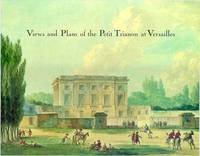
199839679France: Alain De Gourcuff. New. 1998. Hardcover. 2909838307 . FREE UPGRADE to Courier/Priority Shipping Upon Request IN STOCK AND IMMEDIATELY AVAILABLE FOR SHIPMENT - FLAWLESS COPY PRISTINE - Text in English. 30 color illustrations. -- with a bonus offer-- . Alain De Gourcuff hardcover