180 résultats
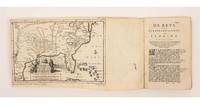
17063719Te Leyden: By Pieter Vander Aa Boekerkoper 1706. First edition. Later half-cloth boards covered with marbled paper spine with title vignette. Small wormhole affecting the first five leaves and the folding map; otherwise in very good condition. First edition. Later half-cloth boards covered with marbled paper spine with title vignette. 6 86 4 p. and an engraved folding map and 9 engraved folding plates. <p><br /> Scarce Dutch illustrated edition of the first eyewitness account of Hernando de Soto's expedition complete with a folding map of Florida and nine double-page engraved plates.<br /> <p><p><br /> Dutch abridged edition of the earliest published eyewitness narrative of Hernando de Soto's expedition to Florida and the interior of North America. The text derives from the Relaçam verdadeira dos trabalhos Évora 1557 written by an anonymous Portuguese gentleman from Elvas who participated in the expedition. That work is the first printed account of de Soto's journey and remains a foundational source for the early Spanish exploration of the southeastern regions of what is now the United States.<br /> <p><p><br /> De Soto landed in Florida in May 1539 and led a large expedition through present-day Florida Georgia the Carolinas Tennessee Alabama Mississippi Arkansas and Louisiana reaching the Mississippi River before his death in 1542. The narrative records sustained contact with Indigenous societies and documents the challenges of an extended inland expedition through the southeastern regions of North America.<br /> <p><p><br /> This Leiden edition was issued by Pieter van der Aa as part of his Naaukeurige versameling der gedenkwaardigste zee- en landreysen presenting the narrative in Dutch translation in an abridged form. It is illustrated with an emblematic engraved title a folding engraved map of Florida attributed to de Soto's discoveries and nine double-page engraved plates depicting episodes from the Spanish conquest. Van der Aa's engravings played a significant role in shaping early eighteenth-century European visual conceptions of Spanish America and its exploration.<br /> <p><p><br /> A well-preserved copy complete with the folding map and plates. An important Dutch contribution to European-Americana transmitting one of the principal sixteenth-century sources for the exploration of the North American interior.<br /> <p><p><br /> Not in Sabin. Scarce on the market; RBH records only four copies offered in the past 100 years. <br /> <p>. By Pieter Vander Aa, Boekerkoper unknown
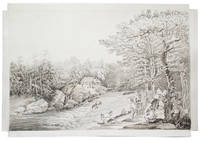
180052601Canada 1800. Graphite pen-and-ink and grey wash on wove paper watermarked "W. Elgar 1796". 13 5/8 x 20 inches. Corners clipped outside the image verso toned. Graphite pen-and-ink and grey wash on wove paper watermarked "W. Elgar 1796". 13 5/8 x 20 inches. Along the falls of a tree-lined river two First Nations men are pulling a canoe into the water directed by another in an elaborate feather headdress; a wigwam with mother and child is on the same shore to their left; across the river a longhouse and structure for smoking fish with another group of native people can be seen; at the far left a First Nations man is standing in his canoe fishing with a pole in the water just below the rapids.<br /> <br /> Although the 1796 watermark on the paper is consistent with drawings by Heriot the unfinished quality of this work make attribution difficult. However it is somewhat reminiscent of a smaller grisaille watercolor signed by Heriot titled FALLS OF THE POQUISQUE ON THE RIVER ST JOHN on verso sold at Waddington's March 15 2018 lot 137.<br /> <br /> Furthermore this scene is reminiscent of one described by Heriot in his Travels in the Canadas 1807 in which he describes Native American fishing on the cacasdes of St. Mary nine miles below the entrance to Lake Superior: "It is at the bottom of the rapids and even among their billows which foam with ceaseless impetuosity that innumerable quantities of excellent fish may be taken from the spring until the winter; the species which is found in the greatest abundance is denominated by the savages atticameg or white fish; the Michilimakinac trout and pickerell are likewise caught here. These aflford a principal means of subsistence to a number of native tribes. No small degree of address as well as strength is employed by the savages in catching these fish; they stand in an erect attitude in a birch canoe and even amid the billows they push with force to the bottom of the waters a long pole at the end of which is fixed a hoop with a net in the form of a bag into which the fish is constrained to enter. They watch it with the eye when it glides among the rocks quickly ensnare it and drag it into the canoe. In conducting this mode of fishing much practice is required as an inexperienced person may by the efforts which he is obliged to make overset the canoe and inevitably perish."<br /> <br /> Trained by Paul Sandby at the Royal Military Academy Woolwich London Heriot worked as a clerk for Board of Ordnance. "In 1792 Heriot was posted to Quebec and promoted clerk of the cheque in the Ordnance department. Heriot was to remain in Lower Canada until 1816 except apparently for two periods of absence in 1796-97 and in 1806. His first years at Quebec are not well documented. Sketches record visits in and about Quebec and Montreal perhaps on Ordnance business. In November 1792 he published a sketch of Jersey in the Quebec Magazine and the following year he prepared a view of Quebec perhaps also intended for publication. When he returned to Britain in 1796 he resided in London travelled to the south coast and made at least one sketching foray into Wales . A watercolour prepared from his sketches of Wales and two Canadian views were accepted by the Royal Academy of Arts for exhibition in the spring. Heriot probably sailed for Lower Canada soon afterwards taking notes and making sketches on the voyage. The impact of his visit to Britain was considerable. While there he had been stimulated by the art he had seen and by his success as an artist. He returned with a fresh enthusiasm for the Canadas; he began to read about their past and to make elaborate notes and numerous sketches of the places he visited and the peoples he encountered. His sojourn abroad had affected his artistic vision of the Canadas; his drawings and water-colours assumed a new confidence and his landscape forms developed a new strength and grandeur. In London he had probably studied the simply handled and remarkably strong water-colours of younger British artists such as Thomas Girtin Joseph Mallord William Turner and John Varley. Either in Britain or in Lower Canada he had also become familiar with Lieutenant George Bulteel Fisher's Six views of North America . London 1796. He was influenced by this work especially by Fisher's use of the Picturesque in depicting Canadian landscape" Dictionary of Canadian Biography. unknown
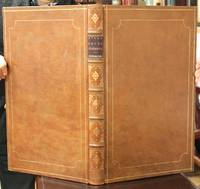
1742B6091Nuremberg/ Norimbergae:: Heirs of Homann c. 1742 . Near fine copy of the famous celestial atlas of copper engravings in contemporary hand-colour and attractive expertly restored contemporary binding; lacking the index sheet; two minor repaired tears at lower margins; fine plates depicting the solar system planetary motions constellations a moon map; small views featuring famous observatories in Berlin Kassel Nuremberg and Danzig. . Edition: First Edition of Doppelmayr’s important astronomic Binding: Contemporary full calf; panelled with outer double gilt filleted border and inner single fillet; expertly rebacked with five 5 raised bands gilt lettered title on brown morocco label on two and gilt ornamental design in remaining compartments; dated at bottom; red-black marbled endpapers. Notes: Text and captions in Latin. Johann Gabriel Doppelmayr 27 September 1677 – 1 December 1750 was a German mathematician astronomer and cartographer. His surname is also spelled Doppelmayer and Doppelmair. His studies included mathematics physics and jurisprudence. In 1698 he graduated with a dissertation on the Sun. After giving up his legal studies he then spent two years travelling and studying in Germany Holland and England spending time at Utrecht Leiden Oxford and London. He continued to study astronomy and learned to grind and figure his own telescope lenses. The DSB describes this work as a collection of diagrams with its explanations intended as introduction into the fundamentals of astronomy explaining the systems of Copernicus Tycho Brahe and Riccioli the elliptic theories of Kepler Boulliau Seth Ward and Mercator as well as the lunar theories of Tycho Brahe Horrocks and Newton and Halley's cometary theory. The atlas shows constellations cometary plates lunar maps lunar theories charts of satellite systems and the motion of planets with plates depicting celestial charts with diagrams tables and views of observatories. Size: Folio; 535x321mm. Illustration: Illustrated allegorical title by J. C. Reinsberger depicting Claud. Ptolemy Nic. Copernicus Ioh. Kepler and Tycho Brahe. preceding title in red and black with vignette of the heavens; extra illustrated with two additional double-page celestial maps entitled: 1. “SPHAERARUM ARTIFICIALIUM TYPICA REPRAESENTATIO†and 2.“PLANISPHAERIUM CAELESTEâ€; with the complete set of thirty 30 astronomical and cosmographical double-page plates in colour as listed under Rodney Shirley C.DOP-1c p.1336/7. Provenance: upper pasted endpaper bookplate of William Phelps. References: Shirley II C.DOP-1c 1136/7; DSB IV 166; Brown: 51; Warner Sky: 64a; Sotheran I: 1080; Poggendorff I: 593; LGK I: 177. Pages: Ff. 2f bl. Illustrated half-title leaf illustrated title leaf 32 double-page engraved plates 2f bl. Category: Book Astronomy; Book Europe Germany; Book Atlas & Cartography Heirs of Homann, hardcover
1762B6600Romae: Veneunt apud Auctorem in ædibus Comitis Thomati via Felice prope templum SS. Trinitatis in Monte Pincio; c.1762. Fine thick laid 18th century Italian paper with wide margined paper watermarked engravings; spine and corners worn – A handsome and attractive example plates are clean and crisp. Binding: Contemporary half calf; double gilt fillets bordering marbled boards; spine with five 5 matching gilt fillets on raised bands embossed gilt lettered title on two and four; pasted and free endpapers marbled; all edges marbled. Notes: Text in Latin and Italian.<br>This work was dedicated by Piranesi to one of his highly esteemed co-workers during the 1750’s Robert Adam. Concerning this Rome 1762 edition Luigi Ficacci states: “Edition Rome 1762. Engraved title on the title page: The Campus Martius of Ancient Rome the Work of G. B. Piranesi Fellow of the Royal Society of Antiquaries London. The Latin title page bears the title the date of the edition and the dedication to Robert Adam. The address is: “Veneunt apud Auctorem in aedibus Comitis Thomati via Felice prope Templum SS. Trinitatis in Monte Pincioâ€.<br>The volume is composed of 2 title pages Latin and Italian whose sequence varies according to the copy 2 ornamented letters 4 vignettes 42 plates by Piranesi 5 of these plates are composed of several copperplates and 1 engraved by Vesterhout 68 pages of text in Italian and Latin preceded by 6 pages of dedication to Robert Adam and followed by 29 pages of indices. …<br>The genesis of the work goes back to the second half of the 1750s: its publication is announced as imminent in the first volume of Antichita Romane 1756. The large Plan of Campo Marzio and 6 copperplates “Ichnographia†or plan of the Campus Martius ill. 493 executed in collaboration with Robert Adam and dedicated to him is dated 1757 on the plate. The approbatio is dated 1761. The plate by Vesterhout plate XXXI … reproduces the technical solution adopted by Carlo and Francesco Fontana for restoration of the Column of Antonius Pius in 1705.â€<br><br>Plate XXXI depicting the excavation of the Antonine column in 1705 was signed by both its engraver Arnold Van Westerhout or Vesterhout and by its designer and artist Franciscus Fontana. <br>The second illustrated title or title in Italian reads: 'Il Campo Marzio Dell'Antica Roma'.<br><br><br> Size: Folio 542 x 406mm. Illustration: Copper engravings with illustrated title in Latin illustrated title in Italian two half-page head-piece vignettes opening dedication at a1v-2r; two engraved decorative copper initials opening the text at A1v and A2r; two large end-piece vignettes at R2v and R3r; moreover Tab. I-XLVIII with fifty-two 52 copper engraved plates; these include: a double-page plate numbered XXXII two triple or oversized folding plates numbered II and XXXI; a larger oversized engraving 1500x1500mm encompassing plates V-X forming the plan of the Campus Martius; a single page numbered XLVIII depicting three copper plates entitled “Elevazione de’ Teatri…†“Elevazione del Pantheon…†and “Elevazione dell’ Anfiteatroâ€; single pages two half-page copper plates each - numbered XII entitled “Hypsographia…†and “Sectio…†and XLVI entitled “A Reliquiae…†and “Orthographia…†respectively; the remaining copper plates full or single page sized. Provenance: Upper marginal corner of upper pasted endpaper with sticker reading “C.E.Rappaport // Libri Rari // Romaâ€- References: Luigi Ficacci pp. 394-431; Focillon 1964: 428-479; Hind 1978: 85; Millard iv 2000: 91; RIBA Early Pr. iii 1999: 2551; Wilton-Ely 1994: 559-612. Pages: Ll: Bl. 2 Illustrated title in Latin illustrated title in Italian a1-b2 with dedication A1-Q2 R1-3 with approbation and explanatory texts; a1-c2 with Index ; 1-2 1-3 with catalogues; illustrations: Tab.I-XLVIII; bl. 2. Category: Book Art Architecture & Design; Book Europe Italy; Book Plate Books General; Book Antiquities; Veneunt apud Auctorem in ædibus Comitis Thomati via Felice prope templum SS. Trinitatis in Monte Pincio; hardcover
1770B6607Romae/Rome: Veneunt apud Auctorem in ædibus Comitis Thomati via Felice prope templum SS. Trinitatis in Monte Pincio; watermarks indicate: c.1770’s-1790’s. Plates and text crisp and clean near fine. Thick wide margined paper. Binding: Contemporary half calf with marbled boards; spine with five 5 blind raised bands flanked by gilt tooling; gilt lettered title on Morocco label on two; contemporary pasted and free endpapers; all edges speckled red. Notes: Text in Italian; captions in Latin.<br>This work was dedicated by Piranesi to one of his highly esteemed co-workers during the 1750’s Robert Adam. Concerning the Rome 1762 edition Luigi Ficacci states: “Edition Rome 1762. Engraved title on the title page: The Campus Martius of Ancient Rome the Work of G. B. Piranesi Fellow of the Royal Society of Antiquaries London. The Latin title page bears the title the date of the edition and the dedication to Robert Adam. The address is: “Veneunt apud Auctorem in aedibus Comitis Thomati via Felice prope Templum SS. Trinitatis in Monte Pincioâ€.<br>The genesis of the work goes back to the second half of the 1750s: its publication is announced as imminent in the first volume of Antichita Romane 1756. The large Plan of Campo Marzio and 6 copperplates “Ichnographia†or plan of the Campus Martius ill. 493 executed in collaboration with Robert Adam and dedicated to him is dated 1757 on the plate. The approbatio is dated 1761. The plate by Vesterhout plate XXXI … reproduces the technical solution adopted by Carlo and Francesco Fontana for restoration of the Column of Antonius Pius in 1705.â€<br> Size: Folio 542x406mm. Illustration: Etched copper engravings with illustrated title in Latin illustrated title in Italian ornamental head-piece and engraved decorative copper initial at A1r; the initial opens the text. Tab. I-XLVIII plus three full page engravings entitled “Sepulchrum Mariae Honorij Imp. Uxoris …†“Labrum aegyptiacum porphyreticum…†and Nonnulla monumenta sepulcralia quae recensentur…â€; these 51etchings include double-page plates numbered V-X forming the plan of the Campus Martius and one double page plate # XXXII; two triple or oversized folding plates numbered II and XXXI; a single page numbered XLVIII depicting three copper plates entitled “Elevazione de’ Teatri…†“Elevazione del Pantheon…†and “Elevazione dell’ Anfiteatroâ€; single pages two half-page copper plates each - numbered XII entitled “Hypsographia…†and “Sectio…†and XLVI entitled “A Reliquiae…†and “Orthographia…†respectively; the remaining copper plates are full page in size. Plate XXXI was engraved by Vesterhout after Fontana.<br>Thick wide margined paper; many watermarks pointing this Roman edition to the time frame of 1770’s -1790’s. Examples of watermarks: an unlisted on both free endpapers with an inner fleur de lis design within a circle; #19 1790’s at plate 43; #68 probably 1790’s at plate 35; #59 mid 1770’s -1790’s at plates 31 and 32; #64 1790’s also on plate 31; # 12 late 1780’s -1790’s at plate 30; #14 mid 1761 or #16 1790’s at plate 29; #59 mid 1770’s -1790’s and 64 1790’s at insert plate 21 entitled Scenographia Machinae qua Clemente XI. Pont. Max. An. D. MDCCV; #74 1790’s on unnumbered plate entitled “Sepulchrum Mariae Honorij Imp. Uxoris†generally featured as headpiece vignette of the Latin text.; #12 late 1780’s -1790’s on unnumbered plate entitled “Labrum aegyptiacum porphyreticum…†here as full plate otherwise a headpiece of the Latin text. <br>Plate XXXI depicting the excavation of the Antonine column in 1705 was signed by both its engraver Arnold Van Westerhout or Vesterhout and by its designer and artist Franciscus Fontana. The second illustrated title or title in Italian reads: 'Il Campo Marzio Dell'Antica Roma'.<br> References: Luigi Ficacci pp. 394-431; Focillon 1964: 428-479; Hind 1978: 85; Millard iv 2000: 91; RIBA Early Pr. iii 1999: 2551; Wilton-Ely 1994: plates 559-612. Pages: Ll: Bl. Illustrated title in Latin A1-H2 a1-c2 with catalogue and indices; illustrated title in Italian; Tab.I-XLVIII plus three full-leaf unnumbered plates bl. Category: Book Art Architecture & Design; Book Europe Italy; Book Antiquities; Book Plate Books General; Veneunt apud Auctorem in ædibus Comitis Thomati via Felice prope templum SS. Trinitatis in Monte Pincio; [ watermarks indicate: hardcover