15 962 résultats
Valencia, Editorial Castalia, 1949. 8vo.; 3 hs., 118 pp. 1 h. Edición limitada y numerada de 250 ejemplares impresos en papel offset. Cubiertas originales.
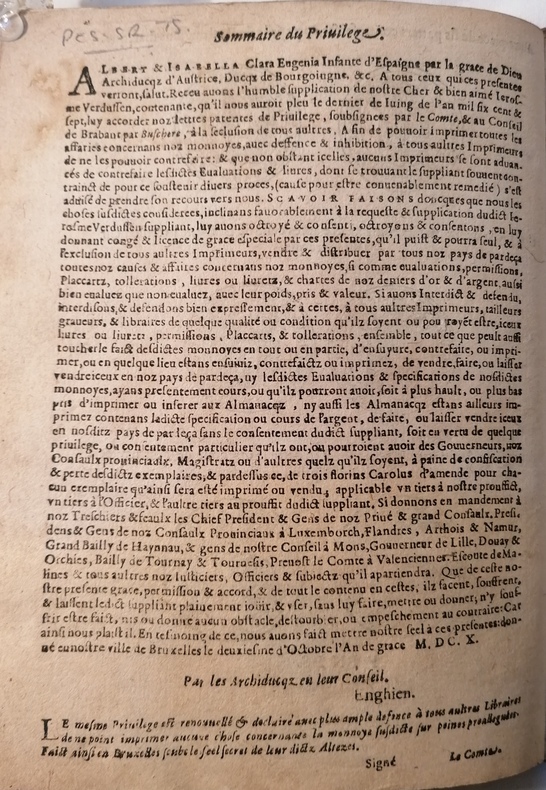
1627WOC-795Contenant le prix de chacun Marcq, Once, Eftrelin & As, poids de Troyes, de toutes les efpeces d'or & d'argent deffendues, legieres, ou trop vfeés, & moyennant ce declarées pour billon, comme les Maiftres des Monnoyes & Changeurs fermentez font tenuz d'en payer pour icelles, felon l'Ordonnance de fa Maiefté, faicte par les Generaulx des Monnoyes, au mois de Mars 2627, auec les figures defdictes efpeces. Anvers, Chez Hierofine Verduffen, Imprimeur des Monnoyes de fa Maiefté, demeutanten la ruë dicte Cammerftrate, à l'Enfeigne du Lion rouge, 1627, Avec Grace & Priuilege. In-8 (20x16cm) reliure moderne imitation demi veau ancien à coins, dos nerfs orné de fleurons doré et titre sur maroquin rouge. Ouvrage non paginé. Ouvrage contenant 3 ex-libris.
2003500157865Editions 84 2003 96 pages 12 8x1x19 8cm. 2003. Broché. 96 pages.
2322laffont 1974 in 8 broché 279 pages - illustrations
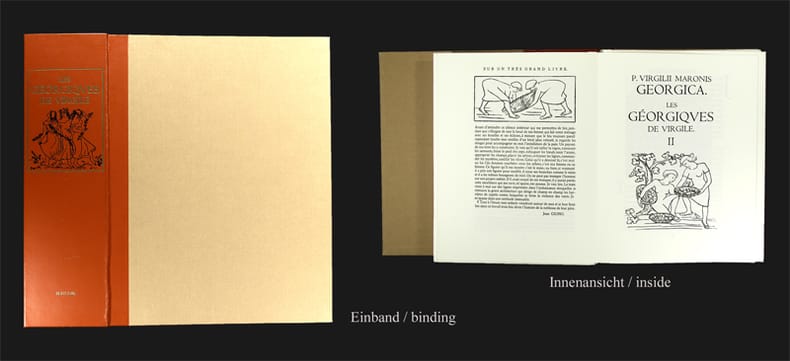
19503211BB2 Bde. in 1 Bd. Paris, Philippe Gonin, (nach 1950). 4°. (1)Bl., (2) 174 (4) S.; (1) Bl., (2) 154 (2) S., (1) Bl. Mit Illustrationen nach Holzschnitten von Aristide Maillol. Lose Bogen in Bütten-Umschlägen in Orig.-Halblederchemise in Papp-Kassette.
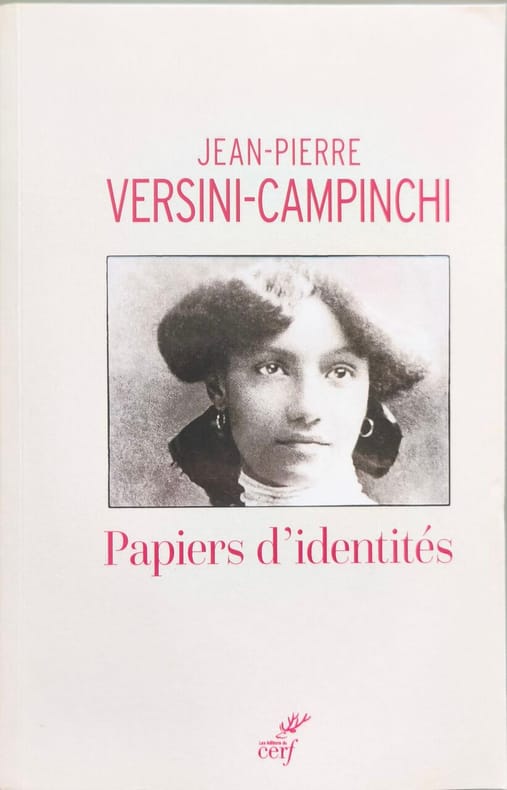
202014615CERF 2020 201 pages 14 1x21 5x2 4cm. 2020. Broché. 201 pages.
Bologna, Zanichelli, 1937, in-8, br. editoriale, pp. 15. Estratto.
Mm 240x280 Volume in copertina rigida con sovraccoperta, 186 pagine profusamente illustrate in nero e a colori. Copia in condizioni di nuovo-new; spedizione in 24 ore dalla conferma dell'ordine. "Il volume ricostruisce storicamente l'opera di Alfredo Ravasco (1873-1958), orafo-scultore e gioielliere che durante il Ventennio fu uno dei più importanti e innovativi maestri. In un contesto come quello della realtà orafa italiana agli inizi del XX secolo, ancora legata stancamente a moduli tardo ottocenteschi e sostanzialmente succube della schiacciante presenza dei modelli francesi, la sua esuberante creatività tracciò vie nuove. Erede delle straordinarie e bizzarre opere in cristallo, pietre dure e smalti del Manierismo milanese, ricercate da tutte le principali corti d'Europa tra Cinque e Seicento, Ravasco utilizzò per le sue opere materiali dal forte impatto cromatico, prima di lui esclusi dalla grande gioielleria"
In-4 (cm. 27.90), brossura illustrata, con alette, pp. 263, (1), con illustrazioni soprattutto a colori nel testo. In ottimo stato (nice copy). Poche corti possono eguagliare in sfarzo e ricchezza quella dei Visconti e degli Sforza tra XIV e XV secolo. Le spiccate esigenze di lusso e fasto della signoria milanese, infatti - analoghe a quelle delle principali casate d'Europa come Francia, Borgogna, Inghilterra, Baviera -, resero necessaria la produzione di oggetti preziosi, sia destinati alla vita di corte sia a quella del culto. Con virtuosismi tecnici ineguagliabili e grande maestria gli orefici milanesi realizzarono oggetti dalla straordinaria bellezza, che spiccano ancora in particolare per l'uso sapiente delle tecniche smaltarie. Una tradizione artigiana che ha radici antichissime, e che ha portato alla creazione di ornamenti personali, vasellame da tavola, altaroli per la devozione privata, reliquiari, calici e tabernacoli, ma anche carte da gioco, come i celeberrimi "tarocchi viscontei": oggetti che divennero veri e propri status symbol, segno tangibile di sfarzo e potere. Il volume ripercorre questa straordinaria stagione, presentando sessanta pezzi di altissima qualità prodotti dalle botteghe artigiane di Milano, dalla seconda metà del Trecento quando emerge, tra le personalità al servizio dei Visconti quella del miniatore Giovannino De Grassi - fino alla fine del Quattrocento, quando lavora Caradosso Foppa, orefice di fiducia di Ludovico il Moro, ampiamente elogiato tra gli altri da Benvenuto Cellini. Testi di: Michela Barbot, Paolo Bensi, Paolo Biscottini, Anna Melograni, Lucia Miazzo..
Santiago de Chile-Buenos Aires, Editorial Cruz del Sur, 1948 (Col. Divinas Palabras). 4to.; 163 pp., 1 h. Cubiertas originales.
Barcelona, Puvill Libros, 1983. 4to.; 47 pp., y 8 hojas, CCXXIV folios numerados. Ilustraciones. Edición limitada y numerada de 250 ejemplares. Encuadernación original en cartoné. Sobrecubiertas.
Madrid, Arco Libros, 1986. 4to.; 64 pp. 92 pp. para el facsímil, 1 h. Cubiertas originales.
Málaga, 2007. 4to.; 238 pp., 2 hs. Cubiertas originales.
1966ARCH0189(Sofia, Balkan Printing House 1966). quer-gr. 8°, ca 200 S. mit zahlr., farb. Abb., OLn. m. gldgepr. Deckelvign. u. (stärker läd.) OU.
1988131029Jusautor, Sofia, 1988. 100, XXXIX S. ; 33,5 x 24 cm ; Leinen.
2020500146652DALLOZ 2020 3270 pages 13 2x19 3x6 2cm. 2020. Broché. 3270 pages.
Valencia, Editorial Castalia, 1951. 8vo.; 118 pp., 1 h. Edición limitada de 275 ejemplares numerados. Cubiertas originales.
Valencia, Tératos, 2002. 4to.; LVIII pp., 212 pp. Cubiertas originales.
Lisboa, Academia Portuguesa da Historia, 1950. Folio; 209 pp. Cubiertas originales.
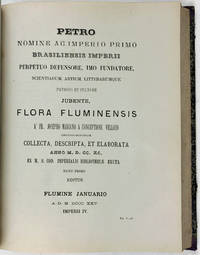
188145183Flumine Januario / Rio de Janeiro: Typ. Economica 1881. First complete edition. Half black morocco over marbled boards gilt spine title. A very good copy boards rubbed repaired tear and closed tear on Volume V half title and title page. xii vii 467 1 pp. 4to. Published in and taking up the entire volume of Archivos do Museu Nacional do Rio De Janeiro. Volume V. 1880 1881. Added title page: Petro nomine ac imperio primo Brasiliensis imperii perpetuo defensore . jubente Flora fluminensis a' fr. Josepho Mariano a Conceptione Vellozo Ordinis monorum collecta descripta et elaborata anno M.D. CC. XC. Ex M.S. cod. Imperialis bibliothecæ eruta nunc primo etitur. Flumine Januario A.D.M. DCCC. XXV imperii IV. José Xavier Veloso 1742-1811 born in what is now Minas Gerais Brazil was ordained in 1766 in the convent of St. Anthony in Rio de Janeiro where he studied philosophy and theology later geometry in San Paulo and finally natural history. He collected plants animals and minerals in the Rio de Janeiro area from 1783 to 1790 at which time he moved to Lisbon where he worked at the Royal Academy of Sciences while preparing Florae Fluminensis his greatest work for publication. Using the Linnaeus’ system of sexual classification of plants he prepared very highly detailed texts and 1700 prints many of them of new species. But the publication of the work was beset by problems. First sent to Venice the plates were never completed. Later the French invasion of the Iberian peninsular sent the Portuguese government then Veloso and his manuscripts into exile in Brazil where he died in 1811. In 1825 an abbreviated version of the text was published followed by the eleven volumes of the Icones in 1827 of which few copies survive. The complete text was not published until this edition in 1881.<br /> <br /> Bound with and proceeded by Archivos do Museu Nacional do Rio De Janeiro. Volume IV. 1879. Rio 1881. viii 151 1 pp vii plates. Folded color plate split at fold. Volume subtitle: Insectologia. Includes Müller Fritz: A metamorphose de um insecto diptero among other works. Rodrigues 2473. Sabin 98833n. For the shorter version of 1825 see: Barba de Moraes II p. 343. Pritzel 468. Jackson 377. Innocencio V.5 4258; V.13 p.122. Also see Nissen BBI 2046. Typ. Economica hardcover
188145183Flumine Januario / Rio de Janeiro: Typ. Economica 1881. First complete edition. Half black morocco over marbled boards gilt spine title. A very good copy boards rubbed repaired tear and closed tear on Volume V half title and title page. xii vii 467 1 pp. 4to. Published in and taking up the entire volume of Archivos do Museu Nacional do Rio De Janeiro. Volume V. 1880 1881. Added title page: Petro nomine ac imperio primo Brasiliensis imperii perpetuo defensore . jubente Flora fluminensis a' fr. Josepho Mariano a Conceptione Vellozo Ordinis monorum collecta descripta et elaborata anno M.D. CC. XC. Ex M.S. cod. Imperialis bibliothecæ eruta nunc primo etitur. Flumine Januario A.D.M. DCCC. XXV imperii IV. José Xavier Veloso 1742-1811 born in what is now Minas Gerais Brazil was ordained in 1766 in the convent of St. Anthony in Rio de Janeiro where he studied philosophy and theology later geometry in San Paulo and finally natural history. He collected plants animals and minerals in the Rio de Janeiro area from 1783 to 1790 at which time he moved to Lisbon where he worked at the Royal Academy of Sciences while preparing Florae Fluminensis his greatest work for publication. Using the Linnaeus' system of sexual classification of plants he prepared very highly detailed texts and 1700 prints many of them of new species. But the publication of the work was beset by problems. First sent to Venice the plates were never completed. Later the French invasion of the Iberian peninsular sent the Portuguese government then Veloso and his manuscripts into exile in Brazil where he died in 1811. In 1825 an abbreviated version of the text was published followed by the eleven volumes of the Icones in 1827 of which few copies survive. The complete text was not published until this edition in 1881. Bound with and proceeded by Archivos do Museu Nacional do Rio De Janeiro. Volume IV. 1879. Rio 1881. viii 151 1 pp vii plates. Folded color plate split at fold. Volume subtitle: Insectologia. Includes Müller Fritz: A metamorphose de um insecto diptero among other works. Rodrigues 2473. Sabin 98833n. For the shorter version of 1825 see: Barba de Moraes II p. 343. Pritzel 468. Jackson 377. Innocencio V.5 4258; V.13 p.122. Also see Nissen BBI 2046. Typ. Economica hardcover books
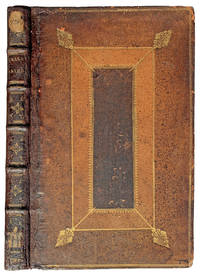
1719LV2044Lugduni Batavorum Leiden Netherlands:: Apud Samuelem Luchtmans 1719. 1719. 8vo. xl 748 118 pp. Engraved half title plate by F. Bleyswyk Bleyswyck red and black title with printer’s device woodcut decorative initials and tailpieces index; occasional light foxing. Original gilt and blind-stamped full calf five raised bands with gilt-stamped maroon spine piece; worn joints cracked but reinforced with painted Kozo paper. Ownership blind emboss stamps on first and last few leaves including title. Binding worn internally very good. This Compendium of Roman History by Velleius is an early edition of Dutch classical scholar Pieter Burman the elder. His history written in a rhetorical style covered the period from the end of the Trojan War to the death of Livia in 29 A.D. and most useful for the period from the death of Julius Caesar in 44 B.C. to the death of Augustus in 14 A.D. Bryan Michael. Bryan’s Dictionary of Painters and Engravers Volume 1. G. Bell 1903. p. 145. "Velleius Paterculus’ short work is the earliest surviving attempt on the part of a post-Augustan historian to survey the history of the res publica from its origins to his own times. In a period from which no other contemporary historical narrative survives in more than meagre fragments Velleius’ work is uniquely important. It is a critical counter to the later accounts of Tacitus Suetonius and Cassius Dio not simply because it offers a different view of Tiberius but because Velleius saw continuity where later authors saw only radical change which destroyed the Republic and put monarchy in its place. For other reasons too Velleius occupies a unique position in Roman historiography." – See: Eleanor Cowan ed. Velleius Paterculus: Making History Classical Press of Wales 2011. Apud Samuelem Luchtmans, 1719. hardcover books
1711LLV2175Oxoniae:: E. Theatro Sheldoniano 1711. 1711. 8vo. xvi 140 44 60 pp. Title engraved vignette index; few stains. Original gilt-stamped decorative panels mottled calf; joints reinforced stickers on spine. Former ownership blind emboss stamps on first and last few leaves including title. Very good. Second edition issued earlier in 1693. This edition printed at the Sheldonian Theatre of Paterculus’ Roman history contains the addition of 44 pages of additional notes. It contains not all copies do Dodwell’s Annales Velleiani. Lowndes vol. 4 p. 1798. "His Compendium of Roman History consists of two books dedicated to M. Vinicius and covers the period from the dispersion of the Greeks after the siege of Troy down to the death of Livia AD 29. The first book brings the history down to the destruction of Carthage in 146 BC; portions of it are missing including the beginning. The later history especially the period from the death of Julius Caesar 44 BC to the death of Augustus AD 14 is treated in much greater detail. / The author does not display real historical insight although generally trustworthy in his statements of individual facts. He may be regarded as something of a courtly annalist rather than an historian. His chronology is inconsistent though sometimes useful. On Caesar Augustus and above all on his patron Tiberius he lavishes praise or flattery; but his portrait of the latter is a useful corrective to the sensationalist attacks of a Tacitus as is his treatment of Livia. The repetitions redundancies and slovenliness of expression may be partly due to the haste with which as the author frequently states it was written. The inflated rhetoric the straining after effect by means of hyperbole antithesis and epigram belong firmly to the Silver Age of which Paterculus is the earliest example. He purposed to write a fuller history of the later period including the civil war between Caesar and Pompey and the wars of Tiberius; but there is no evidence that he did so. His chief authorities were Cato’s Origines the Annales of Quintus Hortensius Pompeius Trogus Cornelius Nepos and Livy." Wikip. See: Eleanor Cowan ed. Velleius Paterculus: Making History Classical Press of Wales 2011. E. Theatro Sheldoniano, 1711. unknown books
Zaragoza, 1998. 4to.mayor; 498 pp. Ilustraciones. Cubiertas originales.
Córdoba, Universidad, 1999. 4to.; 171 pp., 1 h. Texto en latín y traducción en español. Cubiertas originales.