15 963 résultats
19852090502113717880Not Available 1985. Soft Cover. Fine. The book is in fine condition. Not Available paperback
1986Persia psg<p><strong>Persia psg</strong> Āṣaf Muḥammad HÄshim 1765 or 1766-1841; and Birgitt Hoffmann translator. <strong>Persische Geschichte 1694-1835 erlebt erinnert und erfunden = <em>Das Rustam at-tawÄrīḫ</em>: in deutscher Bearbeitung. </strong>Series: <em>Islamwissenschaftliche Quellen und Texte aus deutschen Bibliotheken; Bd. 4</em>. Two volumes bound in one. Bamberg: Verlag Aku 1986 909 pages pagination continuous bib indexes. Very heavy volume. Originally issued in paperback but they have been bound in red library buckram cloth with gilt lettering on spine. Original wrappers bound into the hardcovers. Both volumes like new the text and the binding. <strong>The set: $100.00 Box B4 May need extra postage</strong></p><p>Notes: Translation of: <em>Rustam al-tavÄrÄ«kh</em> of Muḥammad HÄshim Āṣaf by Birgitt Hoffmann.</p> Aku, hardcover
Madrid, Casa de Velazquez, 1987. 4to. mayor; 384 pp., 1 h. Cubiertas originales.
Murcia, Antonio Pérez y Gómez, 1961. Un pliego en 4to. de 4 hojas sin numerar. Impresión en papel de hilo. Edición limitada y numerada de 350 ejemplares. Cubiertas originales.
Madrid, Nueva Librería e Imprenta de San José, 1885. 8vo.; XXVI pp., 412 pp. Encuadernación original en tela estampada.
Madrid, Casa Editorial Bailly-Baillière, 1912 - 1917 ("Nueva Biblioteca de Autores Españoles"). Dos volúmenes en 4to. mayor; 2 hs., LXVII pp., 574 pp. y XV pp., 527 pp. Impresión a doble columna. Encuadernación en media piel, de época, para el tomo primero y cubiertas editoriales para el tomo segundo.
Zaragoza, 2010. Folio; 179 pp., con 78 ilustraciones en color entre el texto y un mapa plegado. Cubiertas originales.
Buenos Aires, Espasa Calpe Argentina, 1953 ["Austral"]. 4to. menor; 152 pp. Cubiertas originales.
Madrid, 2000. 4to.; 310 pp. Cubiertas originales.
Madrid, Instituto de Estudios Madrileños, 1962. 4to.mayor; 55 pp. Cubiertas originales.
Oviedo, Universidad, 1982. 4to.; 206 pp. Cubiertas originales.
Valencia, "la fonte que mana y corre", 1963 (Duque y Marqués, Opúsculos Literarios Rarísimos). 4to. menor; XI pp., 153 pp., 3 hs. Edición limitada y numerada de 225 ejemplares. Cubiertas originales.
Valladolid, 2013. 4to.; 241 pp. Cubiertas originales.
187334559Edinburgh and London: William Blackwood and Sons 1873. True First Edition Very Scarce. 8vo publisher's original red cloth lettered in gilt on the spine. 2 ads. x 130 folding map at rear. A fine copy very well preserved with minimal mellowing to the red of the spine panel the binding tight and the text-block clean. RARELY SEEN FIRST EDITION. The three papers consider: I. The Relations Between Great Britain the Protected Tribes and Ashanti with the Causes of the Ashanti War. II. The Relations and Causes Continued. III. The Topography of Ashanti and the Protectorate of the Gold Coast. A folding map of the Gold Coast and Coomassie is tipped in at the end of the book. William Blackwood and Sons hardcover
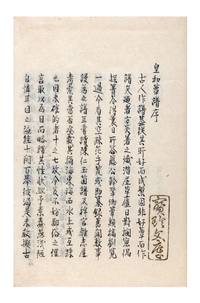
1053143 folding leaves. 8vo 240 x 170 mm. orig. patterned semi-stiff wrappers with orig. title-slip old stitching. Japan: 1791 date of Preface.<br /> <br> <br> <br /> <br /> A rare manuscript of Japanese natural studies or the “learning of roots and herbs†honzÅgaku 本è‰å¸ by ZÅ doctor and botanist 1758-1834. It was one of the major intellectual trends of the Tokugawa period with a large portion of the educated classes taking an interest in the topic. Initially inspired by the Chinese encyclopedic work Bencao gangmu 本è‰ç¶±ç›® Systematic Materia Medica Japanese natural studies came with time to focus on the natural environment of Japan in contradistinction to China. Our manuscript explicitly concerned with the mushrooms of “Our August Japan†is a case in point.<br /> <br> <br> It contains descriptions of 129 mushrooms divided into categories: wood mushrooms ground mushrooms bamboo mushrooms wood-ear mushrooms and poisonous mushrooms. Our author lists alternative names for a mushroom in question notes where it grows and describes its appearance. Literary references are given in many of the entries. Curiously despite the manuscript’s title ZÅ Han quotes from Chinese local gazetteers which often contained lists of local products.<br /> <br> <br> There is an appendix which contains four essays. discusses in turn different names of the mushroom in various parts of Japan; the etymology of the character kinoko 蕈 meaning mushroom; the method of ascertaining the poisonous character of a mushroom; and a prescription for breaking down the poison.<br /> <br> <br> ZÅ was the author of Seikei zusetsu An Illustrated Book of Agricultural Things the great agricultural and botanical work issued in the early years of the 19th century. It is an encyclopedic survey of all the agricultural products and practices of Japan. He served the Satsuma fiefdom under the lord Shimazu Shigehide<br /> <br> <br> Our text was never printed circulating only in manuscript form.<br /> <br> <br> â§ Ueno MasuzŠ上野益三 Nihon hakubutsugakushi 日本åšç‰©å¦å² Tokyo: Heibonsha 1973 p. 416. unknown
Madrid, Ediciones Fax, s.a. (1940). 4to. menor; 174 pp. Cubiertas originales, ligeramente fatigadas.
178 pages. Colour photos of the band. Includes songs from Deguello, El Loco, Eliminator and Afterburner: Cheap Sunglasses, Dust my Broom, Esther Be the One; A Fool for Your Stockings; Hi Fi Mama; I Thank You; I'm Bad, I'm Nationwide; Lowdown in the Street; Manic Mechanic; She Loves My Automobile; Don't Tease Me; Groovy Little Hippie Pad; Heaven, Hell or Houston; I Wanna Drive You Home; It's So Hard; Leila; Party on the Patio; Pearl Necklace; Ten Foot Pole; Tube Snake Boogie; Bad Girl; Dirty Dog; Gimme All Your Lovin'; Got My Under Pressure; If I Could Only Flag Her Down; I Got the Six; I Need You Tonight; Legs; Sharp Dressed Man; Thug; T.V. Dinners; Can't Stop Rockin'; Delirious; Dipping Low (In the Lap of Luxury); I Got the Message; Rough Boy; Sleeping Bag; Stages; Velcro Fly; Woke Up with Wood. Clean and unmarked with moderate wear. A quality copy of this sensational ZZ Top compilation. Hit after hit!!! Book
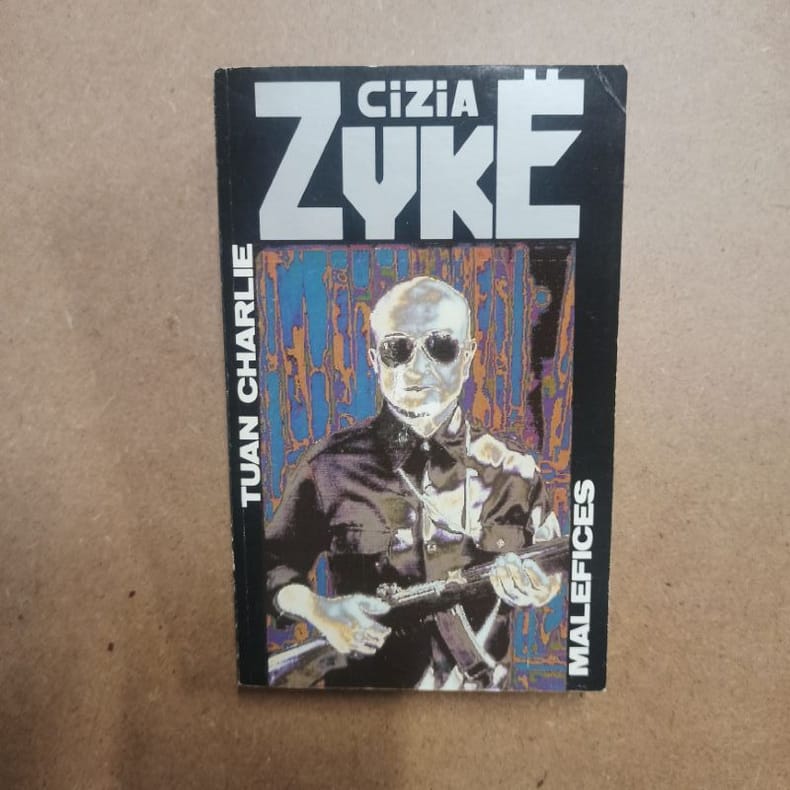
19895621989 - broché - Editions Media 1000 - 1989 - In-12 (format poche) broché - 218 pages - ISBN : 9782865643271 - Tome 1 de la série "Tuan Charlie"
Zaragoza, Institución Fernando el Católico, 1999. Tres volúmenes en gran folio (42x32 cm.). Facsímil: 728 pp. y 840 pp. Estudio: 232 pp. Ilustraciones y un mapa. Edición limitada de 500 ejemplares. Encuadernación original. Estuche en cartoné.
189526430Frankfurt. 1895. 8 Seiten. Originalbroschur. 21x15 cm
2011Q-0061725498Harper 2011-11-22. Hardcover. New. In shrink wrap. Looks like an interesting title! Harper hardcover
1992500223226FLAMMARION 1992 304 pages 381x69x559cm. 1992. Broché. 304 pages.
A clean, unmarked book with a tight binding. 122 pages. Signed by author. Black and white photos.
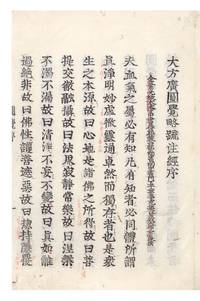
6775Eight columns per page 17 characters per column. Three sizes of type. 42; 41; 38; 40 folding leaves. Four vols. Large 8vo 280 x 195 mm. orig. dark wrappers dyed with persimmon juice shibubiki new stitching. Enryakuji Temple Mount Hiei: mid-Kan’ei ca. 1626-30.<br/> <br/> An unrecorded moveable type edition of the commentary and subcommentary of Zongmi 780-841 on the Sutra of Perfect Enlightenment. This is a rare example of an Eizan-ban a book printed with moveable type at the temples on Mount Hiei outside of Kyoto where Enryakuji Temple one of the most important monasteries of Japan and the headquarters of the Tendai sect of Japanese Buddhism is located. Printing began there in the 13th century. “There were few of these printed books in the medieval period perhaps due to the dominance of Kyoto itself as a printing centre…Eizan printing came into its own on a large scale only from the end of the sixteenth century with the introduction of movable-type printing. Typographic printing flourished at various temples on Hieizan from the Keicho to Kan’ei periods 1596-1644 and with the publication of Chinese works as well as Tendai scriptures publication and distribution at Hieizan began to develop into the beginnings of a commercial enterprise.â€â€“K.B. Gardner “Centres of Printing in Medieval Japan: Late Heian to Early Edo Period†reprinted in Brokaw & Kornicki eds. The History of the Book in East Asia 2013 p. 450.<br/> <br/> The writings of Dushun 557-640 Zhiyan 602-68 Fazang 643-712 and Zongmi are considered by many as the “crowning glory of Chinese thought… marking the maturation of a process by which the Chinese made Buddhism their own.â€â€“Bowring The Religious Traditions of Japan 500-1600 p. 104.<br/> <br/> Zongmi was a Tang dynasty Buddhist scholar monk; he was the fifth patriarch of the Huayan school as well as a patriarch of the Heze lineage of Southern Chan. The Sutra of Perfect Enlightenment was the scripture that led Zongmi to enlightenment in 808; he resolved to prepare a commentary and subcommentary on the text which he accomplished fifteen years later.<br/> <br/> As stated above this moveable type edition is unrecorded. Kawase in his bibliography of Japanese moveable type editions records another printing of this text dated 1626 but with ten columns per page and 20 characters per column Vol. I p. 304. Sorimachi in his amazing 40th anniversary catalogue of moveable type books issued in 1972 describes what appears to be yet another moveable type printing of this text with the same number of columns and characters as the Kawase example but using three different sizes of type they might be the same printing. It is described as four parts in two volumes in their original bindings printed in mid-Kan’ei ca. 1630 and with a slightly different title. The NIJL records no moveable type editions and only the woodblock-printed Seihan edition of 1644.<br/> <br/> On the printed title-labels of the second and fourth volume covers the title is given as Engaku ryakusho chu. The labels on Vols. I and III are no longer present.<br/> <br/> As mentioned above the wrappers have been dyed with persimmon juice which serves a dual purpose: to strengthen the paper and act as an insect repellent. Nevertheless the wrappers are somewhat wormed.<br/> <br/> Each volume has some worming but this set is in rather fresh and appealing condition. unknown
6775Eight columns per page 17 characters per column. Three sizes of type. 42; 41; 38; 40 folding leaves. Four vols. Large 8vo 280 x 195 mm. orig. dark wrappers dyed with persimmon juice shibubiki new stitching. Enryakuji Temple Mount Hiei: mid-Kan'ei ca. 1626-30. An unrecorded moveable type edition of the commentary and subcommentary of Zongmi 780-841 on the Sutra of Perfect Enlightenment. This is a rare example of an Eizan-ban a book printed with moveable type at the temples on Mount Hiei outside of Kyoto where Enryakuji Temple one of the most important monasteries of Japan and the headquarters of the Tendai sect of Japanese Buddhism is located. Printing began there in the 13th century. "There were few of these printed books in the medieval period perhaps due to the dominance of Kyoto itself as a printing centre.Eizan printing came into its own on a large scale only from the end of the sixteenth century with the introduction of movable-type printing. Typographic printing flourished at various temples on Hieizan from the Keicho to Kan'ei periods 1596-1644 and with the publication of Chinese works as well as Tendai scriptures publication and distribution at Hieizan began to develop into the beginnings of a commercial enterprise."-K.B. Gardner "Centres of Printing in Medieval Japan: Late Heian to Early Edo Period" reprinted in Brokaw & Kornicki eds. The History of the Book in East Asia 2013 p. 450. The writings of Dushun 557-640 Zhiyan 602-68 Fazang 643-712 and Zongmi are considered by many as the "crowning glory of Chinese thought. marking the maturation of a process by which the Chinese made Buddhism their own."-Bowring The Religious Traditions of Japan 500-1600 p. 104. Zongmi was a Tang dynasty Buddhist scholar monk; he was the fifth patriarch of the Huayan school as well as a patriarch of the Heze lineage of Southern Chan. The Sutra of Perfect Enlightenment was the scripture that led Zongmi to enlightenment in 808; he resolved to prepare a commentary and subcommentary on the text which he accomplished fifteen years later. As stated above this moveable type edition is unrecorded. Kawase in his bibliography of Japanese moveable type editions records another printing of this text dated 1626 but with ten columns per page and 20 characters per column Vol. I p. 304. Sorimachi in his amazing 40th anniversary catalogue of moveable type books issued in 1972 describes what appears to be yet another moveable type printing of this text with the same number of columns and characters as the Kawase example but using three different sizes of type they might be the same printing. It is described as four parts in two volumes in their original bindings printed in mid-Kan'ei ca. 1630 and with a slightly different title. The NIJL records no moveable type editions and only the woodblock-printed Seihan edition of 1644. On the printed title-labels of the second and fourth volume covers the title is given as Engaku ryakusho chu. The labels on Vols. I and III are no longer present. As mentioned above the wrappers have been dyed with persimmon juice which serves a dual purpose: to strengthen the paper and act as an insect repellent. Nevertheless the wrappers are somewhat wormed. Each volume has some worming but this set is in rather fresh and appealing condition. unknown books