100 résultats
1670FREP[BRE75Amsterdam: np c1670. 1670. 12mo. pp. 15 p.l. 179 lacking 1 presumably blank. sphere device on title. woodcut headpiece & initials. contemporary mottled calf very worn joints split library bookplate & number on lower spine. First Edition. Barbier III 813. Brunet Imprimeurs Imaginaires et Libraires Supposés p. 58. Goldsmith BM STC French 1742. Cioranescu 16388. Baldner p. 97. cfWilliams p. 18. F. [Amsterdam?: np, c1670]. unknown
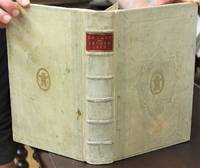
1626280462Paris: chez Samuel Thiboust au Palais en la Gallerie Iouxte la Coppie Imprimeé pour l'Autheur par les heritiers de langelier 1626. First Edition. Hardcover. Full contemporary veluum with a vellum tie. Some wear and tear as with age. Remains well preserved overall; tight bright clean and sharp-cornered. Physical description; multiple pagings. Subjects; Ovid 43 B.C.-17 A.D. or 18 A.D. Metamophoses. Fables. Classic Fables. French Translation. Paris: chez Samuel Thiboust au Palais en la Gallerie Iouxte la Coppie Imprimeé pour l'Autheur par les heritiers de langelier hardcover
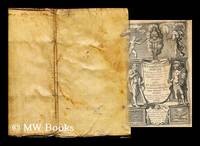
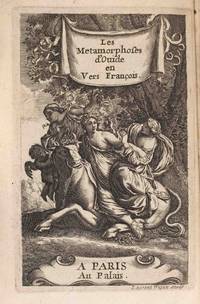
16691149Paris: Claude Barin 1669. <br/><br/>Corneille Thomas 1625 1709 translator. Ovid 43 B.C. 17 or 18 A.D. Les metamorphoses d'Ovide Traduites en vers Francois par T. Corneille. Paris: Claude Barin 1669. Original edition of the first two books of Ovid translated by Thomas Corneille. The full translation was not published until 1697. <br/><br/>12mo. Contemporary calf gilt spine with raised bands. Rubbed. Leaf with engraving on verso; leaf of title verso blank; 8pp. ded. to La Dauphin signed T. Corneille; 4pp. Av lecteur; 234pp. text with one engraving for book II on I viverso; 12pp. priv. dated 12 Aout 1668/31 Jan 1669. Collation: 1 a6 A-T6 V3 . STC French 1601-1700 O-236. An elegant edition with beautiful typography and ornamentation. <br/><br/>Thomas Corneille 1625-1709: playwright poet. To distinguish himself from his brother Pierre Corneille Thomas was known as “Monsieur Corneille.†He was one of the leading authors who began to produce plays during the Fronde and brought out even more plays than his brother Pierre: thirty-eight plays composed alone or in collaboration. His first tragedy Timocrate 1656 helped to restore the genre to popularity after the troubles of the Fronde. Although he was more attractive in manner and in conversation than Pierre he lacked Pierre's genius. Still "with Quinault he filled the interval in the history of the French drama between the zenith of Pierre Corneille and the advent of Racine" Harvey and Haseltine. <br/><br/>Although not as important a playwright as his brother Thomas wrote with great facility. He is credited with perfecting the French language as can be evidenced by this translation of Ovid begun shortly after he left school his notes to Claude Favre Vaugelas Remarques su la langue Francais 1647 his compilation of a dictionary of arts and sciences for the Academie Francaise 1694 and his editorship of Mercure galant with Donneau de Vise. <br/><br/>The artist of the two engravings fronting the books is the son of Hermann Weyen or Weyher Laurent Weyen 1643-1672 a Flemish engraver who died in Paris. Laurent also engraved illustrations for the works of Moliere. <br/><br/>Provenance: Goodspeed's Bookshop/Arthur and Charlotte Vershbow. Claude Barin hardcover books
16709851London: Henry Brome 1670. Fictionalised and satirical life of the supposedly chivalric highwayman Claude Du Vall who inspired a number of biographers and playwrights to add to his legend with claims of alchemy gambling and much womanising. Duval 1643-1670 was born in France worked for exiled Royalists before coming to England at the Restoration where he robbed stagecoaches on the roads to London being found guilty of six such robberies in January 1670. DESCRIPTION: Loose modern card wrappers; old flyleaf inscribed: 'John Sumner/ Sharston/ 1760' - perhaps the Provost of King's College Cambridge d.1772. Browned paper-stock: 2 pp22; old stab-sewing; wrinkling and several short marginal closed tears to foreedge of final leaf. This is one of four versions of Duval's life to appear following his execution: OCLC 27091282 Please contact Christian White Rare Books Ltd for more information or images of this item 1670 Henry Brome unknown
162134518Lisbon and Hangzhou China: Manuscripts ca.1623 and 1621. Very Rare A Similar Manuscript Exists in Brussels. We know of no others. The Latin text of both letters is written in a neat uniform cursive hand in brown. Folio leaves 33 x 20.5 cm The transcripts bound in 18th Century stiff blue wrappers the blank paste-downs and endpapers are late 18th century most likely the third quarter between 1745/1753 and 1776 since they contain a clear "lion/vryheit/pro patria" watermark with a crowned GR countermark which resembles Heawood 3148 3149 and 3154. The paper used for the manuscript contains a faint double-headed eagle watermark and it has been reinforced in the gutters. A very pleasing survival very well preserved edges slightly mellowed the wrappers show some signs of wear. VERY RARE MANUSCRIPT TRANSCRIPTS. Chrysostomus Johann Gall 1586-1643 was a German Jesuit and scholar. He left Ingolstadt Germany to teach astronomy mathematics and navigation in Lisbon fro 1620to 1627 before leaving to work in the Jesuit missions in India. The Colégio de Santo Antŕo benefitted from the arrival of many foreign mathematicians and other scholars as Lisbon serves as a gateway for all missionaries departing for Asia. The original letter by Gall was written in Lisbon September 1623 and concerns a newspaper style description of various events including details of the perseution of Christians in Japan particularly the execution of large numbers of the Christian community in Nagasaki in 1622.<br> The second letter in the present work is especially interesting as the original was written by Johannes Terentius also known as Johannes Schreck an Deng Yuhan Hanpo 1576-1630. Terentius was a prominent Jesuit scholar specialized in natural science and mathematics. Before joining the Jesuits as a novice1611 he already enjoyed a grea reputation in Germany as a scholar. In 1621 Terentius left for China to join the Jesuit mission. The original letter by Terentius was written in Hangzhou China on 30 August 1621 to the rector of teh Jesuit College in Munich Jakob Keller 1568-1631. He discusses his journey to China which he started in 1618 his intentions to participate in the planned calendar reform in China and his impressions of the city of Hangzhou which he reached in 1621 Terentius wrote several works on european medicine mathematics and technology in Chinese and together with Johann Adam Schall von Bell and G. Roho introduced European tigonometry and European astronomical instruments to China. In 1629 he began to reform the calendar which J.A. Schall von Bell ocmpleted after Terentius' early death a year later.<br><br>Backer & Sommervogel VII col. 1929-F<br> Manuscripts unknown
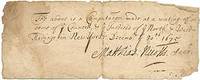
1675407229North & West Ridings Long Island New York 1675. Unbound. Good. Manuscript document. A single paragraph possibly removed from a larger document Signed at the conclusion by Matthias Nicolls. Approximately 8" x 3". Old fold some age-toning and small nicks and tears a little fragile but good. The document reads in full: "The above is a computacon made at a meeting of some of ye Councell & ye Justices of ye North & West Ridings in New York. Decembr. ye 30th 1675. Matthias Nicolls. secr." Matthias Nicholls 1626-1687 was the Provincial Secretary of New York. Born in Plymouth England he was selected to serve as secretary by Samuel Maverick who was one of the Royal Commissioners investigating conditions in New England. Accompanying the commission to New England which was headed by appointed Governor Richard Nicolls they were assigned the task of wresting the province of New York from the Dutch. Matthias held the position of provincial secretary continuously until 1680 except for the short period of 1674-75 when the Dutch briefly reoccupied New York. He was the Secretary of the Commission that accepted the Dutch surrender of New York. He served as the sixth Mayor of the city of New York in 1672-73. He is widely known as “the principal author of the legal code known as the 'Duke’s Laws'." He was at least partially responsibility for religious tolerance in New York and founded the town of Plandome around his estate of the same name. unknown
16113462Latin manuscript on vellum with large 6 in diameter suspended black wax seal of James I of England and autograph of Anne of Denmark dated July 23 1610 granting title to Corrodownan Manor in County Cavan Ulster to one John Browne Gent. of Gorgiemill near Edinburgh and his descendants during the Plantation i.e. colonization of Ulster under James I beginning in 1609. The colonists were settled on land confiscated from the Irish inhabitants following the conquest of Ulster 1594-1603 under James's predecessor Elizabeth I. The Plantation was intended to consolidate royal control of Ulster and repress rebellion by importing a substantial Protestant population. Like John Browne and indeed James himself many of the new colonists were Scottish. Some of these families went on to form the backbone of the Protestant Ascendancy in the province. John Browne and his heirs however were not among them. Sir George Carew sent by the king in 1611 to report on the progress of the Plantation noted that "he Browne . sent an agent who took possession set the lands to the Irish returned to Scotland and . performed nothing." The land was sold in 1613 to another Scottish colonist Archibald Acheson. Acheson's descendants were raised to the peerage of Ireland in 1806 as Earls of Gosford and still owned the property in the late nineteenth century. The first nineteen lines of the document grant the Scottish Browne the rights and privileges of James's English and Irish citizens. Especially notable are the requirement that the grantee maintain an adequate supply of arms for defense against the king's enemies lines 77-80 the attempt to encourage the growth of towns 74-76 and the ban on sale of the property to "mere Irish" or to anyone who failed to acknowledge the sovereign as head of the church thus excluding all Catholics by swearing the Oath of Supremacy 114-121. See Rev. George Hill The Conquest of Ireland. An Historical Account of the Plantation of Ulster at the Commencement of the Seventeenth Century 1608-1620 Belfast 1877 308; idem Plantation Papers. Containing a Summary Sketch of the Great Ulster Plantation in the Year 1610 Belfast 1889 188-190; F.J. McCaughey Arvagh. Sources for a Local History Arvagh 1998 16.; Moiré chemise lined with exact recess for seal housed in handsome ruled red morocco clamshell case with gilt title to front cover and raised bands gilt particulars and decoration to spine; gilt rolled edges. Two leaves 65 x 81 cm; the first illuminated with a portrait of the king. Stain to upper left see image.; 65 x 81 cm; 1 pages; Signed by Notable Personage Related; All shipments through USPS insured Priority Mail. . hardcover books
1655QQ0521No publisher 1655. Early or original speckled sheep boards. Rebacked in brown leather printed label to spine. Mild wear to boards; faint cupmark and two abrasions to rear board. Small 8vo 9.4 x 14.1cm. Endpapers reinforced at gutters. Recent bookplate of P. R. Glazebrook legal scholar to inside front board. Heythrop Library stamp and label to front free endpaper. Annot. in old hand to inside front board: '2.8 Campbell'. Numerical annots in old hand to blank front endpage and pen trials to t.p. Loss to t.p. bottom outer corner has been professionally repaired: some loss to t.p. text with lost imprint date handwritten in. Typographic headpiece and decorated initial. Scattered foxing. Variously attributed: pencil annot to blank front endpage has 'by H. Whitfield SJ'. De Backer and Sommervogel attribute to Thomas Whitfield SJ 1615-1686 born in Durham and active in Northampton and Devon. Clancy has 'Henry Wilkinson 1594-1673 alias Whitfield was an English Jesuit'. Scarce. De Backer and Sommervogel VIII 1098; ESTC R208388; Clancy 1099. Robust packaging. Tracking is always added to USA orders. It can be added to other overseas orders on request. Used books are exempt from USA tariffs. 1st edition. Binding sound text unmarked. Good. xvi 266 2pp. No publisher Hardcover
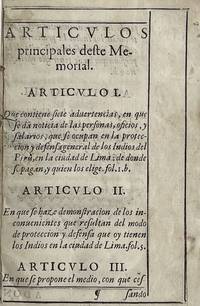
16262256En Madrid: En la Imrenta Real 1626. In later binding using old vellum. Title lettered in ink on the front panel. he engraved title page is not presented. Occasional inkblots and signs in ink and pencil at the margin. Traces of old restoration. 1 I2 restored with minor loss of text 2 G1 h1 “burnt†by ink with minor loss of text A2 “burnt†by ink. Wormholes from C4–F4 at gutter with some loss to the text from H1–I2 at outer margin no effect to the text. In good condition. In later binding using old vellum. Title lettered in ink on the front panel. ff. 2 34. Coll.: 2 A–H4 I2. Scarce first edition of this significant work on the Spanish administration of Peru.<br /> <p><p><br /> Larrinaga’s Memorial is related to the office and the role of the Defensor General of the Indians. In four articles he introduces the institution itself and its history describes its related problems and inconveniences and provides solutions to the problems and a working plan to achieve these proposals. Novoa 2016<br /> The author of the memorial Juan de Larrinaga Salazar 1588–1635 was a procurator for the city of Lima in Spain between 1625 and 1627 served as a regidor of Lima 1611–21 a professor at the San Marcos University in Lima 1618 later oidor in Panama 1628–35. Juan was the eldest son of Leandro de Larrinaga the first Creole lawyer to graduate from the San Marcos and advocate of Indians from 1601 to 1624 and the grandson of the Conquistador Juan de Larrinaga Salazar Ruiz de Urribari 1505–1600. The prominent Larrinaga or la Rynaga Reinaga or Reynaga family was linked to the protectorship institution as advocates of Indians and members of the family authored some of the most important sources of the early history of Peru and the protectorship institution.<br /> <p><p><br /> Extremely scarce. IB/USTC locates only 3 copies worldwide Houghton Library; JCB; Biblioteca Palafoxiana Puebla Mx.<br /> <p><p><br /> Literature:<br /> Novoa Mauricio. The Protectors of Indians in the Royal Audience of Lima: History Careers and Legal Culture 1575-1775. Leiden: Martinus Nijhoff Publishers 2015. [En la Imrenta Real] unknown
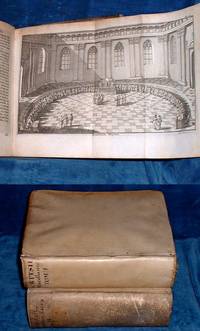
1692V70980Utrecht: Francis Halman Halman & William vande Water BOTH 1st First editions 1692 1700. Hardcover. Good. Frontis of Hebrews with background of sea monsters and emblematic Christ spouting fire with 7 candles by G. Hoet/J. Mulder. Woodcut printers mark to 1st TP & copperplate of a different printer's mark to 2nd TP 5 folding plates one with flap to be lifted. Two Volumes quarto laced through full vellum not quite uniform bindings spine darkened to second volume/tips worn. All edges sprinkled red and both stamped Ambrose Swasey Library to lower fore-edge. Frontis Titlepage with emblematic woodcut printer's mark 24pp Dedication & to Reader 859pp 49pp index Volume 2 titlepage in red and black with copperplate printer's mark 14pp dedication & contents folding portrait if Wits 951pp 56pp indices. There are 11 blindstamps of the Crozier Theological Seminary to each volume none on printed area except that on frontispiece which encroaches on the imprint below illustration. Plates are of building of the Tabernacle includes a neat flap engraved as a curtain that can be lifted to see the inner sactum. Entirely clean though a few pages are minimally more tanned as paper quality varied. Deals with various more esoteric theology such as prophesy revelations ecstacies Beasts of Daniel IV Jewish rites and customs some 60 pages about America etc by this noted Dutch theologian. Text in Latin with Greek and Hebrew. Shoulder notes printed through out and a few large floriated head- and tailpieces. Clean and crisp. Francis Halman + Halman & William vande Water BOTH 1st First editions hardcover
166023678London: Printed by John Redmayne for Philip Chetwin 1660. 1st edition Abbott W. Bib. of O. Cromwell #1060; Halkett and Lang IV 107 attributing the work's publication to Fiennes; Wing W-1988. Period full calf. A Gd copy minor worming to spine/A2 partially detached lower portion/lower corner lacking from leaf E3 does not affect text. Occasional period marginal annotation. 6 112 pp 8vo: A4 -A1 presumed a blank B - 4U4 4X - 4Z2. <br/><br/>Whitelocke's account of the Committee deliberations in which Cromwell ultimately declined to assume the mantle of 'king'. Printed by John Redmayne for Philip Chetwin unknown books
1630B6616Leiden/Leyden: bij de Elzeviers. Anno 1630. 1630. An important work in near fine condition; some maps watermarked. Brazil map with reinforcement; otherwise text and plates clean and crisp. Binding: Contemporary vellum; heavily tooled with a central medallion of a golden castle at the heart. Spine rebacked saving the original spine. Notes: Joannes or Johannes De Laet Latinized as Ioannes Latius 1581-1649 was a Dutch geographer and director of the Dutch West India Company in 1620 an office he retained for the rest of his life. The city of Leiden sent him as an elder-delegate to the great Synod of Dort 1618–1619. De Laet was the first to use expression derivatives developed later; i.e. ‘Manhattes’ ‘Manhatans’ and ‘Nieuvv-Amsterdam’ in-text; ‘Manbat tes’ and ‘N. Amsterdam’ on his NOVA ANGLIA map to describe the recently founded New York; and ‘Noordt Rivier’ and ‘Zuyd’ ‘Rivier’ for the Hudson and Delaware rivers. The first edition published in Dutch in 1625 as “Nieuwe Wereldt ofte Beschrijvinghe van West-Indien uit veelerhande Schriften ende Aen-teekeningen van verscheyden Natien†was followed by the second the present work in 1630 which was greatly improved due to its four additional maps and illustrations depicting animals and plants indigenous to America. <br>In terms of pagination and the maps in our work they are congruent with John Carter Brown Library’s copy. Concerning this work and the following maps in particular Burden states: <br>"Considerable effort went into the text and maps of this work which was the most accurate description of the Americas available at the time. It is arguably the finest published in the seventeenth century. The exhaustive research involved de Laet reading all of the published and manuscript material that he could find. For the cartographic work he had much to call on being a director of the recently formed Dutch West India Company in charge of all Dutch interests in America and Africa. He therefore had access to the latest geographic knowledge. He drew upon the fine talents of Hessel Gerritsz the official cartographer to the Company since 1617. Gerritsz attained this post before Willem Blaeu under whom he was apprenticed and who was his senior by ten years. <br>"The maps were some of the first to depart from the heavier style of the Mercator and Ortelius period. This more open style of engraving was one that both Blaeu and Janssonius would use in their atlases. The first edition of the book contained ten maps which with the exception of this one the NOVA HISPANIA. // NOVA GALICIA. // GVATIMALA. - Leiden 1625 concentrated on South America. There were none of North America until the second edition in 1630. Although many maps had been produced of New Spain few extended north into the area of present-day Texas. The Rio Grande is here still named the R. Palmas. The B. del Spiritu Santo possibly represents the Mississippi River. Some authorities have questioned this usual assumption. On the west coast of Florida we find the landing place of Juan Ponce de Leon. The delineation of the coastlines particularly of the Gulf of Mexico and the north-west coast of Mexico as the most accurate to date. The map appeared in the subsequent editions in Dutch 1630 Latin 1633 and French 1640. In all these there is no text on the reverse."<br>Burden: 215 p.267 <br>Re: De Laet's AMERICAE// sive// INDIAE OCCIDENTALIS// Tabula Generalis: <br>"The first of these maps was a general one of the continent. Its most interesting feature is that although we know de Laet had seen maps of California as an island he relies on the more trustworthy accounts such as Herrera in depicting a peninsular form. The map has the best west coast delineation to date. He also does not get drawn into the debate about the North West Passage preferring to cut his map short of these latitudes. It appeared in the subsequent editions in Latin 1633 and French 1640. In all these there is no text on the reverse." Burden: 229 p.284/5.<br>Reference: General: Alden & Landis 30/88; Borba de Moraes: 384; Sabin 38555; Shirley: 1554 G.LAET-1b. <br>Also for individual maps in this work: Burden The Mapping of North America 1996: 267 284-288; Cumming 1962: 35; Delanglez 1945; Keuning 1949: 61-2; O'Dea 1971: fig.18; Phillips 1909: 1147-1150; Stokes 1915 II: 86-88 141; Stokes 1915 VI: 261/2; Wagner1937: 309 p.94.<br><br> Size: Folio 281x183mm Illustration: Illustrated with engraved frontispiece title signed by Cornelius Claessen Dusent sculpsit with portraits by Pieter Heyn and Hendrick Lonck; fourteen 14 maps with accompanying text and in-text woodblocks depicting plants and animals; ornamental initials head- and tailpieces. <br>Tweede druck second edition with 14 maps and illustrations after the first of 1625 with 10 maps<br>Text in Dutch. Captions added in Latin.<br> Provenance: plate mark of a Czar with two accompany angles Fading manuscript ink note in contemporary hand on verso of final free endpaper. Pages: Bl.4 644 14 maps bl.4; signatures: bl. printed title illustrated title 3-4 1-6 1-4 2 maps. A1-C6 D1-4 map E1-G6 H1-4 map I1-O6 P1-4 2 maps Q1-S6 T1-8 U1-Z6 Aa1-Bb6 Cc1-4 map Dd1-Ee6 Ff1-4 Gg1-Hh6 map Ii1-Nn6 Oo1-4 map Pp1-Qq6 map Rr1-6 Ss1-8 map Tt1-Uu6 map Xx1-6 Yy1-4 2 Zz31-34 2 Aaa1-8 map Bbb1-Ddd6 Eee1-4 map Fff1-Hhh6 Iii1-4 bl. Category: Book Voyages General; Book Americas West Indies; Book Europe Benelux; bij de Elzeviers. A[nn]o 1630. hardcover
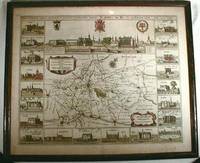
1647006302Amsterdam: N.P. 1647. Hard to find hand colored map included only in Blaeu's Atlas Major centering in the towns of Ipres and Rouselare near Bruges and Belgium with smaller engravings of towns surrounding the main map. Measures 18" tall by 21.75" wide mounted on paper board. Some foxing to margins no chips or tears colors bright. Behind glass in old black painted wooden frame with many paint chips. An attractive map. Good. N.P. unknown
1604H16669London: Printed for Mathew Lownes 1604. First printing. Hardcover. Good. Quarto 10.75 x 8 inches 18th century vellum over boards good copy light restoration to outer joint and inner hinges front endpapers somewhat soiled and stained two modern bookplates on pastedown and on flyleaf; with rarely seen portrait frontispiece of Caesar engraved title page 3 double-page plates 2 full page plates -- lacking one double page plate. Contents otherwise very good and clean minor occasional wear and soil occasional very short tear to edges. 7 199 1 138 pp. A copy in a contemporary binding and with all plates sold at Christie's in 2008 for a total of over $7300. STC 7490. Edmondes ca. 1568-1622 was an English government official likely in the employ of the Earl of Oxford Edward de Vere often mentioned as a possible author of Shakespeare plays. In 1600 he published a commentary on the first five books of Caesar's Commentaries dedicated to Sir Francis Vere Born about 1560 Francis was the second son of Geoffrey Vere of Crepping Hall Essex a younger son of John de Vere 15th Earl of Oxford. In this 1604 edition Edmondes augmented the previous edition with commentaries on books VI and VII and a short dissertation on the modern art of war. There is a further slight familial connection with Shakespeare. John Bernard 1604-1674 married firstly Elizabeth daughter of Sir Clement Edmondes; they had four sons who all predeceased him and four daughters. His second wife Elizabeth was the granddaughter and only surviving descendant of William Shakespeare. It is unlikely however that Shakespeare consulted Edmondes regarding the play Julius Caesar; the play was first performed in 1599 a year before Edmondes' commentary appeared. Good. Printed for Mathew Lownes hardcover
1609WB17560London: Print. for Math. Lownes 1609. Hardcover. Very Good. 2 parts in one volume folio 286 x 188mm. Pagination: 8 1-7 1-204pp. i. e. 208; 1-218pp. 2 with final blank. Signatures: A4 3 frontis. B-R6 S5 Cc4 B-V6 some signatures missigned. Engraved title of architectonic frame pair of Roman soldiers and at top portrait of Henry Frederick Prince of Wales; through the arch a military camp on either side of a river with shore in the foreground and hills in the background Imprint details are an after addition. Full-page woodcut oval portrait frontispiece of Julius Caesar wearing laurel wreath inscribed Ivlivs Caesar Dictator Perpetvvs Veni Vidi Vici Aestatis Svae 56 present and bound in before the note to the Reader A1. 12 engraved plates of various battles military formations and encampments of Caesars Roman army including Battles with the Helvetii Ilerda and the Gallic wars one labeled Cicero Besieged all but 2 double-page or folding. Woodcut engraved chapter head and tailpieces. Dedicated to the soldier Sir Francis Vere d. 1609. Verses by William Camden Joshua Sylvester Samuel Daniel and Ben Jonson. Contemporary calf gilt scrolling arabesque centerpiece on covers manuscript binders waste remnants in front hinge; extremities somewhat rubbed spine chipped at top and missing bottom compartment lacking ties and front endpapers; light marginal dampstaining some folding plates closely cropped some marginal fraying of title and two preliminaries small crack in inner portion of plate facing p. 86 in the first part later marginal note in ink on p. 190 in second part; overall a solid copy with all plates present. Later signature of Rebecca Ayre on title verso; a person seemingly untraceable it is notable at least this name suggests female ownership over some point in the life of the volume. <br/><br/>First published in 1600 in London by Peter Short dwelling on Bredstreet hill at the signe of the Starre two new editions of the Observations upon Caesars Commentaries appeared in 1604 one issued for Mathew Lownes and one for William Ponsonby and again three more editions appeared in 1609 two are linked to the printers office of Mathew Lownes ESTC S121465 as here and ESTC S91812 and the third ESTC S121472 indicates no publisher. All of the 1609 issues have variations in the titles and imprints as common. Mathew Lownes was a prominent bookseller in London at the Bishops-head in Pauls Church-yard from at least 1595 to 1625; Lowness activity is associated with several important publications on Roman imperial history between 1604 and 1623 which likely put him into the milieu of the author Sir Clement Edmondes d. 1622 who was by 1600 also an influential government official in the House of Commons and City of London. Edmondes wrote his observations on Caesars Commentaries the Gallic and Civil Wars to propagate the ways he believed ancient Roman military tactics might aid contemporary warfare. ODNB and larger scholarship notes that Edmondes carefully molded his remarks and included additional subjective material which was later seen as an attempt to influence the readers experience. This is an important publication thus for exemplifying the intent of some Roman histories written in the early Stuart years. It was popularly received in his time and Edmondes believed his efforts to draw out the true heroism of an ancient republic would help among other ideas the question of how to deal with an invasion of England. ESTC S121465. Print. for Math. Lownes hardcover books
161061311610 à Lyon chez Simon Rigaud en rue Merciere au souflet d'or 1610 2 tomes en 1 volume petit In8 reliure romantique demi chagrin dos orné 585 et 440 pages plus index
16176779Basel: Ludovici Regis 1617. Later printing. Full pigskin. Very Good. Thick 8vo. 9694272pp. Indices. Printer's woodcut device on title. Orig. roll-tooled pigskin somewhat rubbed. Fore-edge clasps. Small hole at outer blank edge of title & next two leaves. The author's d. 1524 often reprinted work on numerous topics of ancient history. This edition has additions by L. Geoffroi and L. G. Giraldi and is edited by Johann Jakob Grasser. Ludovici Regis unknown books
169619590Lugduni Batavorum: Hackium Boutesteyn Vivie Vander AA & Lucthmans 1696. Two volumes bound in one of this first collected edition of Giraldi's works; 20 772 26 928 30 pages Index Rerum et Verborum 1 page Catalogus Amicorum Lilii Quorum Meminit in epistola Direptionis Urbanae.; paginated in two columns except for the 'Varia' section; collated complete; text printed double-column; engraved illustrated frontispiece 7 full page and 2 double-page plates beautifully accomplished by Avele after Botard superb engravers' work with full and lively compositions realistically posed and drawn with action; title page with publishers' woodcut ornament and printed in red and black; the text with title and endpiece ornamentation and initial ornamentation as well nicely printed and with good wide margins; 11th ed. Britannica cites Giraldi Giglio Gregorio Lilius Gregorius Gyraldus 1470-1552 Italian scholar and poet born at Ferrara ".where he early distinguished himself by his talents and acquirements. he removed to Naples hwere he lived on familiar terms with Jovianus Pontanus and Sannazaro; and subsequently to Lombardy where he enjoyed the favour of the Mirandola family. At Miland in 1507 he studied Greek under Chalcondylas; and shortly afterwards at Modena he became tutor to Ercole afterwards Cardinal Rangone. About the year 1514 he removed to Rome where under Clement VII he held the office of apostolic protonotary; but having in the sack of that city 1527 which almost coincided with the death of his patron Cardinal Rangone lost all his property he returned in poverty once more to Mirandola whence again he was driven by the troubles consequent on the assassination of the reigning prince in 1533. The rest of his life was one long struggle with ill-health poverty and neglect; and he is alluded to with sorrowful regret by Montaigne in one of his Essais i. 34 as having like Sebastian Castalio ended his days in utter destitution. He died at Ferrara.a man of very extensive erudition; and numerous testimonies to his profundity and accuracy have been given both by contemporary and by later scholars. His Historia. marked a distinctly forward step in the systematic study of classical mythology; and by his treatises De Annis et Mensibus and on the Calendarium. he contributed to bring about the reform of the calendar which was ultimately effected by Pope Gregory XIII.Giraldi was also an elegant Latin poet."; approximately 15" tall by 10"; bound in full probably contemporary leather; seven raised spine bands gilt floral roll tool rectangles with fruit & leafy spray devices at corner of inner box surrounding a heavily-impressed and complex gilt central device with heroic figure surrounded by winged angel figures & cherubs figure holding a spear and a book shield below with cross device and the motto Sic Itur Ad Astra onward to the heavens; all edges tinted red; spine leather covering 1/3 gone very charred and worn; both boards still attached and the binding firm; first leaves a bit maladjusted at the inner margin from the heaviness of the binding pulling at them; text block with some spotting and darkening section at back with old bit of creasing at top corners; nevertheless mostly very fresh and clean free from markings or wear; in good condition and worthy of a rebacking or rebinding. First Edition. Leather Binding. Good. Hackium, Boutesteyn, Vivie, Vander AA, & Lucthmans books
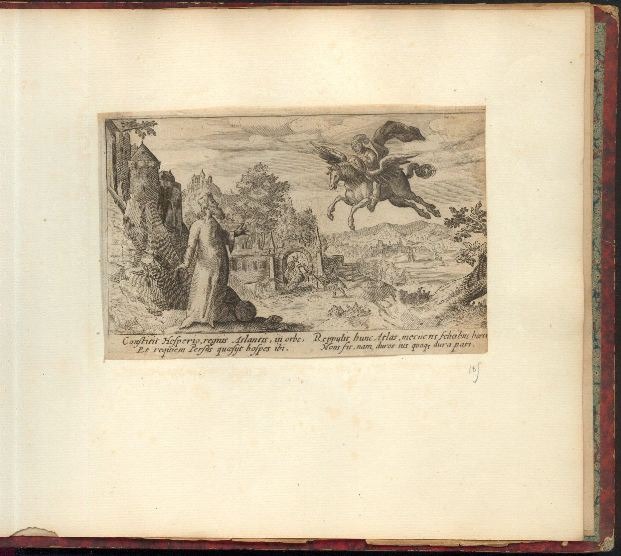
1604175871604 (Cologne 1604),106 gravures montées sur feuilles XVIIIe s.,numerotées au crayon 1 a 105 et une sans numero ,avec texte,coupées court,sans marge,texte en latin a double colonne.Cette série de fines tailles-douces incomplete ? a été dessinée et gravée par le buriniste hollandais Crispin de Passe (1564-1637)(Maarten de Vos or Crispijn de Passe).. Publié pour la première fois à Cologne en 1604, 1602 pour la planche 54, (=1604),date indiquée a la planche 76,quelques-unes avec monogramme ou initiales,bon etat.
160433228-471Leiden Henricus Hondius 1604-1605. Two printed titles with elaborate engr. architectural borders woodcut initials 1 of 2 engr. portrait in the text and 49 engr. plates in vol. 1 33 34 on 1 leaf and 24 engr. plates in vol. 2. Text printed in 2 cols. 9 of 10 unn. leaves; 3 unn. leaves. Oblong folio 280 x 350 mm. 17th cent. marbled boards new endpapers. Leiden Henricus Hondius 1604-1605. First edition of Vredeman's "Perspective" issued by Hondius and printed simultaneously also in French Dutch and German. Present here is the valuable Latin version "the classical language in which Vredeman's architecture is clad and thus becomes timeless in its character" Millard p. 20f. This is one of the most celebrated works on such a subject and was issued by the Flemish born Hendrik Hondius the Elder 1573-1650. The plates for the most part are engraved and a few signed by him after Hans Vredeman. Plate 14 in part 2 is after Paul Vredeman and 4 plates in this part are signed with the monogram DB probably Theodore de Bry or Bartholomaeus Dolendo. The painter and architect Hans or Jan Vredeman de Vries was born 1527 to a German soldier in Leeuwarden Netherlands and probably died in Antwerp 1604. "The King of Architects" Fowler together with Hans van Schille worked at the fortification of the city of Antwerp and also at the triumphal arches built for the entry of the future Philip II into Antwerp in 1549. As a consequence of the religious upheavals of the period Vredeman worked in Hamburg Danzig and Prague before returning to Holland. He wrote and illustrated the present guidebook on perspective for designers painters and architects. It became one of the major books on this subject and through Vredeman de Vries' various publications he is recognised as the "foremost among sixteenth century Netherlandish architectural authors" Millard p. 19. The two volumes illustrate stage perspective interiors furniture palace and garden architecture. Vredeman de Vries was capable of truly artistic landscaping in the Northern Renaissance and served as a model for some patrician gardens in Germany cf. E. Haupt Baukunst der Renaissance in Frankreich und Deutschland 1916. The book includes a number of scenes and projections employ one-and-multi-point perspective. These were essential demonstrations for artists of those days. This work on perspective summarizes Vredeman's knowledge of art science and geometry. This copy has the same collation as the Fowler copy at Johns Hopkins University library which also lacks at the beginning of vol. 1 the leaf A1v with an engraved portrait on left half and a printed poem on right half of this leaf. There are complete copies known but in fact there is no copy of this Latin edition in the holdings of the BL London the Royal Library The Hague Utrecht Dresden Heidelberg Beinecke or Centre d'Architecture at Montreal. The only two but incomplete copies in Austria are in the holdings of the University of Technology Library at Vienna and in the Univ. Libr. Salzburg. The only copy in Switzerland in the holdings of the ETH- Library in Zurich is also incomplete and a mixed-up one 1st part in Latin 2nd part in French. Other incomplete copies are known in the holdings of the Bavarian State Library Munich the V & A Mus. London the Pierpont Morgan Library New York.- Engr. titles slightly frayed at lower margin some foxing otherwise a neat and rare copy. - Cf. Cicognara 867 French ed.; Millard Northern European Books 139 lacking engr. title to part II; Berlin Cat. 4704; Fowler 432 same collation; cf. Nagler I 1757; Borggrefe Heiner. Hans Vredeman 2002. ART - GENERAL & APPLIED ; SCIENCE: ARCHITECTURE ; SCIENCE: GENERAL ; Leiden, Henricus Hondius hardcover
1681001379Amsterdam: Apud Janssonio Waesbergios 1681. Full Calf. Very Good. 330 6 pp. 12mo with copper engraved title page by Giovanni Van Den Avele. Pharsalia is considered a masterpiece and possibly the masterpiece of the Silver Age of Ancient Roman poetry. The epic poem concerns the Roman Civil War at the time of Caesar and most particularly the extended struggle between Caesar and Pompey the Great. Lucanus writing a century later during the reign of Nero far from glamorizing the warfare took a jaundiced view of the fraticidal battle and his portrait of both Caesar and Pompey was far from flattering. His "epic poem" therefore is epic in terms of length scope and ambition not in its portrayal of the principals. Because of the subject matter the popularity of "Pharsalia" has crested at times when a society still steeped in the Classical canon of literature descended into civil strife when the themes and point-of-view of Lucanus really resonated. Never was this more the case than in the seventeenth century when this copy was printed. First there was the final emergence of the Netherlands from under the yoke of Habsburg rule and then there was the English Civil War just to mention two instances both highly germane to the edition at hand. Thus the notes by Grotius and Modern calf with a black spine label and marbled endpapers. The work is incomplete and breaks off during the tenth book which Lucanus was still working on when he was forced to commit suicide. The binding is tight. Some leaves with more toning than others but overall quite clean. There are leaves in which the margins are parlously tight or the header is even close to being partially cut-off -- this is the upshot of the compact size of the copy and was the way the copy was issued over three centuries ago. This particular edition is not mentioned in Brunet. Apud Janssonio Waesbergios unknown
1681001379Amsterdam: Apud Janssonio Waesbergios 1681. Full Calf. Very Good. 330 6 pp. 12mo with copper engraved title page by Giovanni Van Den Avele. Pharsalia is considered a masterpiece and possibly the masterpiece of the Silver Age of Ancient Roman poetry. The epic poem concerns the Roman Civil War at the time of Caesar and most particularly the extended struggle between Caesar and Pompey the Great. Lucanus writing a century later during the reign of Nero far from glamorizing the warfare took a jaundiced view of the fraticidal battle and his portrait of both Caesar and Pompey was far from flattering. His "epic poem" therefore is epic in terms of length scope and ambition not in its portrayal of the principals. Because of the subject matter the popularity of "Pharsalia" has crested at times when a society still steeped in the Classical canon of literature descended into civil strife when the themes and point-of-view of Lucanus really resonated. Never was this more the case than in the seventeenth century when this copy was printed. First there was the final emergence of the Netherlands from under the yoke of Habsburg rule and then there was the English Civil War just to mention two instances both highly germane to the edition at hand. Thus the notes by Grotius and Modern calf with a black spine label and marbled endpapers. The work is incomplete and breaks off during the tenth book which Lucanus was still working on when he was forced to commit suicide. The binding is tight. Some leaves with more toning than others but overall quite clean. There are leaves in which the margins are parlously tight or the header is even close to being partially cut-off -- this is the upshot of the compact size of the copy and was the way the copy was issued over three centuries ago. This particular edition is not mentioned in Brunet. <br/><br/> Apud Janssonio Waesbergios unknown books
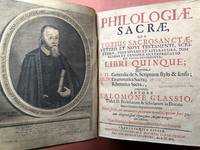
1691H3758Frankfurt and Leipzig: Apud Christophorum Davidem Fleischerum 1691. Hardcover. Very Good. Published 1691 small quarto 8.75 inches 22 cm old full vellum very good light splitting along front outer joint signs of a label removal to spine probably not institutional but private contents moderately tanned throughout. An impressive looking tome 80 1495 137 pp. This is the author's principal work published first in 1623 and considered a turning point in Biblical studies and criticism moving the entire field in the direction of Lutheran theologian Phillip Spener the Father of Pietism the principal arguments of which is to place individual faith and piety as central to Christian theology and pedagogy. Glassius also was a linguist and did much work on Hebrew especially its variations and various cognates. Apud Christophorum Davidem Fleischerum hardcover
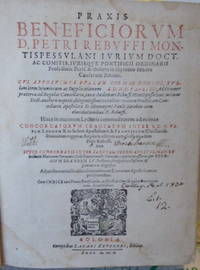
1610299331610. Three texts bound as one with continuous pagination. 1282 pages with unpaginated complete index to all three books. Bound in the original vellum with soiling to the covers. Age browning and some minor old damping to the text top corner of blank flyleaf clipped evidently to remove a prior owner name. A firmly bound very good copy of these scarce books. See pictures. . Full-Leather. Very Good. Hardcover
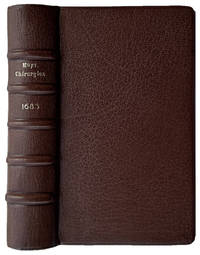
1683M14555Lugduni Batavorum: Apud Petrum vander Aa 1683 -1685. 1683. 12mo. 24 84; 4 44; 24 44 8 39 1; 94 2 pp. 1 figure showing the eyes p. 52 pt. I. Complete with all five parts seldom found together. With added engraved title pages showing a contemporary surgical scene repeated. Modern full brown morocco raised bands gilt-stamped spine edges ruled in blind. Bookseller's ticket: Masson & cie.; rubber stamp: Doctor Mario E. Spada. BOUND WITH: MUYS. Podalirius Redivivus sive Dialogus inter Podalirium & Philiatrum. In quo juxta normam philosophiae Solidioris multa Medico-Chirurgica illustrantur & examinantur. Lugduni Batavorum Apud Petrum vander AA 1686. 12mo. 16 137 1 pp. The complete text with all five parts bound together published from 1683-1685. This is a collection of case reports. Among those are an ophthalmological fungus of gangrene a leg problem erypelate ulcers eye wound tumors swelling tibia fracture dislocation of the humerus puncture of the neck pain in the head tendonitis bleeding ulcer contusion of the arm ganglion of the hand canker sore of the mouth punctured nerve head pain arm wound arm contusion urinary infection scurvy gingivitis bad gums hernia gonorrhea from impure intercourse a child with a raging cold 'but how did it happen that this evil has already returned several times this winter' V: p. 81 tonsillitis the hare-lip etc. The final section contains a dialogue between 'Philiater' one interested in medical science and 'Podalir' meaning in obstetrics in birth where the fetus is turned so that the feet emerge first in delivery. / Joannes Muys was a Dutch medical doctor. Mettler the medical historian called Muys one of the chief early writers on spina bifida and hydroachitis. Muys later became mayor of Leiden. REFERENCES: Krivatsy NLM 8223 Decas prima & secunda only. Apud Petrum vander Aa, 1683 [-1685]. hardcover