740 résultats
192453221New York: The Charles William Stores Inc. 1924-1925. Two vols. 4to. 548 8; 518 8 pp. With numerous colour plates colour-tinted text illustrations over 1000 black & white text illustrations diagrams. Colour-illustrated softcovers minor soiling wear slight sunning front cover of vol. 1 creasing to spine; minor creasing shelfwear vol. 2 light uniform interior toning as usual still VG- set. First edition of the complete year of Jazz Age catalogues from the Charles William Stores which offered a treasure trove of everyday fashions work clothes and household and consumer goods during the Roaring 20s offering the glamour and style of New York to the rest of the country. Their fashions were intended for the average American with emphasis on the more “endowed†woman and “stout†man during the Jazz Age emphasizing chic styles and well-woven fabrics. These catalogues detail the high grade work pants riding breeches denim jeans corduroy work pants along with triple-sewed work denim overalls and coats which could be purchased as well as those made out of Wabash Stripe Stifel denim cloth noted for its durability. No copies located in Worldcat of Spring & Summer 1925; 3 copies located of Fall & Winter 1925 Henry Ford Harvard American Textile History Museum. The Charles William Stores, Inc., paperback
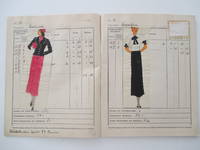
193111073AB1931. Vienna 1931. 245 : 20 cm. 43 pages With 34 mounted coloured designs for dresses. Interesting workbook indicating the time which was necessary to produce the dress the material which was used and the price of the material. Some of the designs with mounted samples of the material used. unknown
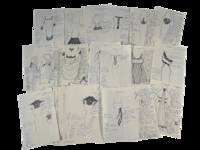
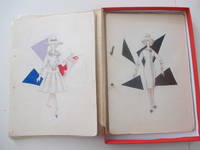
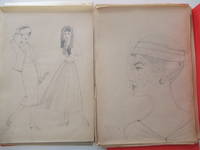
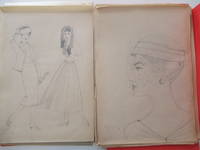
1950218271950. Unknown designer fashion illustration archive circa 1950s-1960s documenting women's garment design and construction practices in the mid-twentieth century. The material operates in Cultural/Representational Mode illustrating the aesthetics technical processes and stylistic evolution of women's fashion during the postwar and early modernist period and offering insight into how clothing design was conceptualized drafted and annotated at the working level. The archive reflects shifting silhouettes and decorative approaches associated with mid-century fashion including structured postwar forms and emerging streamlined influences.<br /> Archive comprises over 100 original fashion illustrations each executed in ink on sheets measuring approximately 6.5 x 9 inches. The drawings depict a range of garments including cocktail dresses coats suits blouses and eveningwear with attention to silhouette drapery and surface embellishment. Many sheets include handwritten annotations in cursive along margins and versos detailing construction elements such as measurements fabric choices and stylistic variations. Examples include labeled designs such as "cocktail dress" "coat" and "suit" with notes specifying features like "turtle neck - bare cut out - colors - gold" and "square low neckline with studded pearls. colors - purple - gold." The annotations suggest iterative design thinking with references to materials color palettes and structural adjustments indicating use as a working portfolio rather than presentation-only sketches.<br /> This archive provides detailed evidence of mid-century fashion design practices at the level of individual garment planning bridging artistic representation and technical instruction. The combination of visual sketches and written notes demonstrates how designers translated aesthetic concepts into wearable forms contributing to the study of dressmaking textile use and women's fashion history during a period of stylistic transition. The volume and consistency of the material suggest sustained use potentially within a professional or training context. Light wear and minor handling marks; overall very good condition. A substantial working archive illustrating mid-twentieth-century women's fashion design and construction methods. unknown
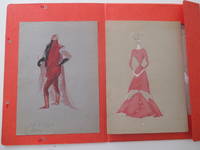
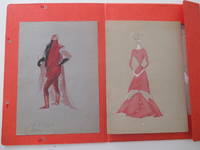
192014632AB1920. Vienna n.d. ca.1920 36 : 30 cm - 15 : 12 cm 21 water-colours partly heightened in white on grey cardboard. Beautiful very detailled elaborated custome designs in different colours white black blue red green yellow pink. The designs show mainly woman maybe designs for Bizet's 'Carmen' Two plates show actors and actress dancing with masks. unknown
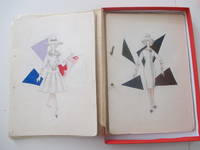
195014633AB1950. Vienna ca. 1950. 31 : 23 cm. Many designs on 97 pages some with mounted textile samples. Desgins for woman clothes coats pants etc. on plate with children's cloth 8 plates in colour with mounted textile samples. A few marked with 'Dior falte' Dior pleat some 'Dior Rock' Dior scirt some marked model summer model Margit etc. one plate with applications in different colours. hardcover
192018450AB1920. Vienna ca.1920 36 : 30 cm - 15 : 12 cm 21 acuarelas en parte elevados en blanco sobre cartón gris. Preciosos y muy detalladas diseños de trajes para el teatro y la opera en differentes colores blanco negro rojo verde amarillo lila. Los diseños muestran sobre todo mujeres tal vez para la opera de Bizet 'Carmen'. Dos láminas muestran actor y actriz bailando con mascaras. unknown
195018447AB1950. Vienna ca. 1950. 31 : 23 cm. Muchos diseños en 97 paginas con muestras de textil montados. Diseños para vestidos de mujeres abridos pantalones etc. 1 página con diseños para ropa de niños 8 páginas con muestras de textil in color montados. Algunos señalados con 'Dior falte' algunos con 'Dior Rock' Dior falda algunos señalados modela verano modelo Margit etc. Una página con aplicaciónes en diferentes colores. unknown
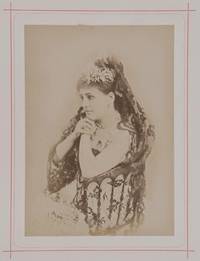
188553168London: Frederick Bruckmann 1885. Hardcover. vg to vg. Quarto. 31pp. interleaved with 15 mounted photographs. Original period lavish brown cloth boards with decorative tooling lettering and ruling in black and gilt on the front cover and spine. Back cover blind-stamped. Edges in gilt. Lustrous textured thick white endpapers. Issued by the London branch of the pioneering art publishing house of Friedrich Bruckmann Frederick Bruckmann 1814-1898. The work contains 15 examples of clothing styles from various traditional ethnic and national fashions and clothing styles from around the world. Each style is exemplified by an original albumen photograph mounted on heavy stock paper accompanied by 1-2 pages of text which is decorated with large initials and engraved head and tailpieces. The regions shown are Alsace Lorraine Suabia Austria Denmark Bohemia Poland Russia Bulgaria Italy Spain Egypt Turkey Syria and China.<br /> <br /> Binding with only the most minor rubbing to corners. A few minor scratches on the back cover. Book block tight. Interior with minor to light sporadic foxing. Blind stamp on the front free endpaper. Period inscription in ink dated to 1885 preceding the title page. Light age toning to the edges of a few pages. Interior overall quite clean especially the photographs. Binding in very good interior in very good good condition overall. Frederick Bruckmann hardcover
178842077London: Fores 1788. Framed and glazed. Fores unknown
14437English late nineteenth century. Tentatively dated in pencil to 1892. Circa 220pp. 8vo with the main text on rectos and additions and subheadings often in red ink together with some simple pencil patterns on versos. In ruled exercise book. In good condition on aged paper in worn original glazed black cloth binding. The volume has been compiled for his own use by a Victorian factory manager and contains material relating to clothing for men women and children. The seventeen entries on the first 41pp. are indexed on the front pastedown with the red-ink subheadings facing the text given here in brackets: Winding winders wages; waste; bad yarns American machine; giving out of yarn; Testing Yarns; Making marking the rolls; Giving out Giving out of ribs; Yarns <> dressing; wages & quantities of yarns Wages of frame hands; checking of books; measurement of Ribs; Widths machines different widths are made on; gauge; Mending Washouse sic; Course rolls dressing; fine rolls; Scouring Course rolls; Scouring Fine Rolls; <>; Trap; Milling Quantity of Soap; Overmilling; Milling without soap; Milling with soap; Round Mill; Clearing; Bleaching; Drying Damping Brushing; Stoving; Hydraulic; Cost of Making. There is a page listing 'Washouse sic Wages' with long note at end. Pages 45 to 56 carry an article titled 'Making up Department'. Facing the first page of the article is a 'sample of giving out ticket'. On facing pages to the article are a number of crude patterns. There follows a five-page article on 'Smocked Combinations'. The rest of the volume from p.62 onwards carries numerous tables of sizings with some facing patterns beginning with 'Mens Goods' trousers overshirts night shirts chest protectors boys sleeping suits pyjamas and followed by 'Ladies English Goods' drawers 'Womens English Vests Old Shape' skirts knickers bodices night dresses chemises. There are also tables on: Costing of Fabrics; Shrinkage; Making Up Prices. The penultimate section consists of thirteen pages of 'German Goods' and the volume ends with eight pages relating to patent frames. There are few personal touches but these include a note facing a page carrying a table with three columns Quality; Scotch Mills; and Round Mills: 'In these quality you have to go more by feel than anything as they vary so.'; and another note a few pages on: 'They will Bleach equally well in cold water only take longer doing'. English, late nineteenth century. (Tentatively dated in pencil to 1892.) hardcover
BN44063Japanese Photo Book <br/><br/> unknown
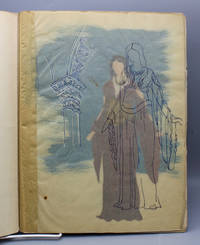
192017641<p>n.p. France: n.d. ca. 1920s architecture styles of historical periods in various geographical regions to the fashion styles of those periods. Styles illustrated include those of Greece Rome Egypt and Persia; late medieval Europe; the reign of Louis XIV; traditional Japanese attire; and fashionable 1920s dress. The background illustrations include a Roman archway seventeenth-century furniture and even a classical Greek vase that frames an illustration of three women. The fashion illustrations reflect certain design elements in the background illustrations for example the patterned fabric in the ancient Egyptian fashions match the decorative style of the columns in the background of the illustrations. . Original blue stiff paper folder with ribbon binding at spine. . 9 x 12 in. With twenty-eight pages of beautifully painted fashion designs dresses hats Greek chitons etc. from throughout history some with background elements furniture and architecture and two with real fabric accents pasted down and two pages of manuscript text explaining architectural and sculptural styles. Some of the fashion designs are captioned in manuscript. Also with eight tracing paper leaves illustrated in ink overlaying matching designs below one with pencil annotations noting types of fabric and other design elements. Some soiling to folder. Some offsetting and some foxing. Very good. We could not locate any information on Josette Eynac the student who illustrated this album though she was clearly a capable artist.</p>
196056965Pasadena CA: n.p. ca. 1960. Folio. 14.5 x 20 in. Twelve original gouache paintings on thick artist’s board 10 of them either w/ typed or manuscript labels 1 entitled “Garden Party†written in manuscript at upper fore-edge 8 preserving their cloth fabric swatch samples some w/ designer’s notes trimmings etc. All are preserved in a gray linen clamshell case minor edgewear rubbing wear to corners still a well-preserved fine set of paintings. This nicely executed set of fashion designs were apparently created for a Civil War theatre production in Southern California around 1960 with characters named Florence Bagshot Mrs. Ludley Bagshot Agatha Mrs. W.D.P.S. and Mrs. Forbes. The designs primarily focused on the women characters including one of a nurse standing in costume in gray striped dress apron and cap with Confederate cavalry trooper in kepi astride his horse and hatless officer with sash standing in the background. Many of the designs reflect the colour palate of the early 1960’s with avocado green vivid blues solid brown earth tones and bright nearly neon orange gauze fabrics in the renderings and samples which would not have been common in those combinations during the Civil War era. Still most of the dress designs incorporate the hoop skirts of the period often with crinoline and/or crinoline cage hoop skirts and high collars with ties and ribbons at the neck and trim patterns typical of the period. The design for Florence Bagshot’s bedroom wear incorporates elements of Mid 20th-Century design and sensibilities rather than the more common chemise and sturdy cotton for the 1860’s. The Confederate Nurse design was painted on “Brownie Board Cold Pressed Duncan Vail Co. Los Angeles†which appears in California art supply advertising from about 1960-1963. We were unable to identify the production after an extensive search through contemporary theatre production trade magazines newspapers and other industry publications. n.p., hardcover
BN127099Springer-Verlag GmbH & Co. KG. Stochastic Processes in Demography and Their Computer Implementation <br/><br/>Stochastic Processes in Demography and Their Computer Implementation Mode C. J. Springer-Verlag GmbH & Co. KG unknown
194157736New York: Apparel Arts Esquire Inc. Esquire Building Madison at 46th March 1941. Folio. 10.75 x 14.25 in. 98 pp. Numerous colour plates many double-page colour photographs 23 of 30 fabric samples tipped-in photo illustrations colour photo illustrations. Quarter-blue cloth over colour-illustrated photo boards cover art of divers in swim suits from high dive platforms edgewear rubbing rubbing to corners some dustsoiling still VG- copy. First edition of this World War II-era trade magazine launched in 1931 in the depths of the Great Depression by Weintraub Smart & Gingrich from the Menswear Service Corporation. This issue features illustrations and advertisements by such artists as John Lagatta 1894-1977; Allen for Portis hats the modernist master Paul Rand’s 1914-1996 Summer 1941 poster the iconic fashion illustrator Laurence Fellows 1885-1964 and other mainstays. This installment features advertisements from such menswear brands as Botany Worsted Mills Jockey Manhattan Shirt Co. Dobbs Hats Hickok John Cyril Woolen Co. and even Pittsburgh Plate Glass Co. fashion displays. By the 1940’s the magazine was printed by Esquire Inc. issued 8 times a year continuing in print until replaced by Gentlemen’s Quarterly GQ in 1959. See: Marianne Brown Apparel Arts & Conde Nast May 10 2017. Apparel Arts, Esquire Inc., Esquire Building, Madison at 46th, hardcover
1996403084California 1996. Hardcover. Near Fine. A Collection of 100 used concert tickets featuring punk new wave and heavy metal bands performing in California from 1983 through 1996. The tickets vary in size from 3†x 2†to 5.25†x 2.5â€. All items are near fine with light soiling and a modest amount of creasing except for three torn tickets and 4 tickets stubs from use. The L.A. and Bay Area rock scene started in the late 1970s until new wave and heavy metal bands became the central focus of the 1980s. Some of the bands include: Mötley Crüe Iron Maiden Guns N’ Roses Depeche Mode Fatal Attraction Porno for Pyros Billy Idol Culture Club and others. The tickets span from Los Angeles to San Francisco and cities in between from 26 different venues some of which include The Troubadour Coconut Teaszer The Stone Trocadero Transfer The Metro Cow Palace The Palomino and Filthy McNasty Station. Many of the tickets are bright colors with printed pictures and stamped band logos showing the typographic designs of the time frame.<br /> <br /> Many bands kicked off their careers in California during this time. Mötley Crüe a popular heavy metal band formed in Los Angeles in 1981 is featured here playing at Oakland stadium on October 10 1987. The band is well known for their heavy make-up shocking clothing high-heeled boots and their abuse of drugs and alcohol. In 1985 the band transitioned to a more glam metal style influencing the heavy metal signature look. Guns N' Roses formed in 1985 in Los Angeles and is featured here playing at the Warfield Theatre on February 5 1988. They are a hard rock band that quickly gained popularity after the release of their debut album “Appetite for Destruction†which has sold over 28 million copies worldwide. The band has been labeled as the "the most dangerous band in the world" due to their rebelliousness and were credited to the rekindling of rock music during a time of dance music and glam metal. 1n 1992 Porno for Pyros formed in Los Angeles as an alternative rock group formed out of Jane’s Addiction. They are featured here playing at the Trocadero Transfer on June 19 1996. Their shows featured props extras and pyrotechnics. The band lasted through the mid-1990s and mixed the sounds of grunge and rock together.<br /> <br /> In the 1980s California became the melting pot of music genres mixing in punk rock new wave and metal. Certain venues became synonymous with the music genres and bands of that time. The Stone opened in the 1980s and was linked to the Keystone Berkeley and Keystone Palo Alto. It was large enough for a capacity of 700 sold only hard liquor at the bar and attracted an audience with bigger hair bigger shoes and makeup. It featured many local and big name artists in its day and was an important part of the Bay Area rock scene in the 1980s. The Coconut Teaszer operated from the 1980s through the mid-2000s. It hosted bands from all genres and featured a downstairs acoustic bar named “8121â€. Sawdust on the dance floor and giant goblets for draft beer were some of the popular trademarks of the venue. One of the notable and peculiar policies of the venue was “no open toe shoes†which was painted on the front door. The Troubadour which is still functioning today opened in 1957. New wave and punk was the main feature for The Troubadour in the late 1970s and early 1980s. Through the 1980’s the venue became synonymous with the heavy metal genre and glam bands during that time. Today The Troubadour is revered as one of Hollywood’s most respected places to see live music.<br /> <br /> <br /> An attractive collection of brightly colored concert tickets featuring popular heavy metal and punk bands from the 1980s through the mid-1990s displaying over a decade of music in California. hardcover
21925From Brockwood Park Bramdean Hampshire and Ojai California. Between 1978 and 2008. A total of twenty-eight items of correspondence comprising: nineteen Autograph Letters Signed two on the backs of cards two Typed Letters Signed and seven Autograph Cards Signed. In good condition. All signed 'Mary' and the large part addressed to 'Christopher' with a few to 'Kit' and one to 'Dear Phyl i.e. Fry's wife Phyllis dear Christopher'. The correspondence indicates a deep affection and long-standing intimacy. In 1987 she transcribes entries from her diary of 1958 regarding dinners in Rome between the Frys and Zimbalists while Fry was working on the script of the film 'Ben Hur' which Sam Zimbalist produced commenting: 'it is startling to find how these pale ink lines evoke us then – almost 20 sic years ago'. Later in the letter she states: 'I wish I could have seen the tv broadcast of The Lady and hope you have a video recording of it. It is like wanting to again hear the English language rising and thundering like winter surf and pure as a Bach prelude. Since Christopher Fry this does not happen these days.' In 1997 she writes: 'So many things hovered in my head all night some of them reaching back to Italian summer days when you and Phyl and Sam and I were together. An unbroken line began then for me of feeling whenever I was with Phyl and you that all was well with the world. That has continued ever since – something wondrously enduring.' And in 2000 she tells him that hearing his news 'is a sort of centre of gravity'. Topics include: her pleasure in his messages and calls texts he has sent her 'What you have said about death and love touches so many things I feel profoundly and the eloquence is no less than the truth.' her admiration for his work 'Language is such a root of human understanding. Other writers seem to be stuttering alongside the eloquence of your plays. Your language unfolds in breadth in splendour a music of the mind. It is as if you are creating language of a different order new and yet with its original and intrinsic meaning freed.' her travels her health in 1988: 'I seem to be hobbling about with little grace but ground-covering success' the taking of vitamins a centenarian's death. In 1999 she comments on a list of 'Krishnamurti books' she is sending him concluding by noting that 'Krishnamurti's Notebook' is 'one that is not personal for a time a daily recording of consciousness. In it he notes the curious physical pain he called “the processâ€. It had begun with extreme severity in 1922 after a spiritual experience that altered his life and continued to manifest from time to time with differing intensity. He did not consider it as physical illness but as having to do with perceptive ability. He never took anything to mitigate or affect it and seldom spoke of it.' From Brockwood Park, Bramdean, Hampshire, and Ojai, California. Between 1978 and 2008. unknown
1940D12397America c. 1940s. Group of approximately 30 costume and fashion designs for women; on a variety of papers or board ranging in size from about 8x10 to 15x21 inches; using chalk crayon watercolor ink and even a bit of collage. Includes dresses hats and gowns -- many possibly for Advance Patterns Fashions and Fabrics. Some dated all signed by the artist. Some a little worn along the edges but condition is VG or better overall suitable for display. <br/><br/>Much of Teed's original artwork is now in the collection of the Museum of Fine Arts in Boston. This diverse group shows glamorous fashion in a variety of illustrative styles from spare line drawings on black paper to gowns trimmed in paper doily to finished and highly detailed watercolors. unknown
193963709Aussig Usti Nad Labem Czechoslovakia & Vienna: C. Wolfrum ca. 1939. Folio. 50 leaves. 1 leaf with type-written explanation of all the fashions illustrated in the catalogue. 44 hand-coloured pochoir fashion designs on translucent paper each with item number printed below 5 leaves with printed designs showing the backs of all the fashions some pencil shading and details added. Original textured beige softcovers embossed WMI Wolfrum Manufacturing on front cover metal spiral bound as issued some dustsoiling & wear to fore-edges of covers very slight bumping to couple corners still a VG copy w/ beautifully illustrated fashion designs. First edition of this exceedingly scarce original trade catalogue issued by the C. Wolfrum textile firm in Czechoslovakia for its Vienna Austria market around the time of the forced annexation of the Sudetenland by Nazi Germany in 1939. The firm was famed for its woolen & silk textiles for women’s fashions and their catalogues were very desired. This catalogue includes fashions for silk rayon & wool women’s dress suits leisure suits formal evening dresses & winter coats all evoking the fashion trends of the period. The designs in the catalogue reflect the rising influence of militaristic styles and fascism with square-edged shoulder pads the plate hats as well as the emphasis on tight waists and long skirts. There are a couple designs with distinctive chocolate brown for leisure wear reflecting the heavy Nazi-influenced fashion design of the period. In addition the slim lines were enhanced by cutting clothes across the fabric avoiding bunches of gathers at the waist for full skirts allowing material to flow. In addition the evening wear dresses emphasized low or no backs and hair was to be grown long and worn swept up. This catalogue also includes a few evening formal dress designs clearly inspired by the dresses worn by Vivien Leigh in the 1939 Gone With the Wind Movie with the puffed sleeves polk-a-dot patterns and fabrics. No copies in Worldcat. C. Wolfrum, paperback
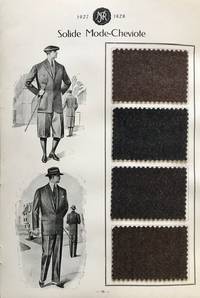
192757311Graz Austria: Richard Neurath Kaiserfeldgasse 19 und 21 1927. Two vols. 1st - Folio. 11 x 13.75 in. 45 1 pp. on thick boards. With 246 tipped-in fabric samples of wools wool blends 27 fashion plate illustrations 2 for women’s coats w/ price list and letter to salesmen dated August 1927. Original quarter-black cloth over embossed & decorated boards flaps at fore-edges w/ handle and clasp raised gilt lettering on front cover minor shelfwear rubbing clasp guard repaired & reinforced still VG complete exemplar retaining the original button clasp; together with 4to. 8.25 x 11.25 in. 4 pp unpaginated. w/ 16 additional wool and wool-blend samples tipped-in self-printed covers rounded corners. First edition of this unusually rare fashion salesman sample catalogue for men’s suits and sporting wear during the Roaring 20’s with many of the suits sporting vests while also featured are shooting & hiking suits sportswear and a rich array of fabrics drawing upon English fashion designs. Following World War I there was a concerted move away from starched collars and formal three-piece suits towards soft collars one- or two-button suit jackets and even often worn without a waistcoat. Also featured in this catalogue are many examples of the plus-fours developed out of ordinary knickers these short-legged pants were a baggier version of their predecessors and proved popular for hikers golfers and other outdoors activities. Also featured are winter coat fabrics and designs for women in velour and thick felt twill. The laid-in additional catalogue promoted the latest Loden Merino wool fabrics and thick camel hair woolens. Neurath 1882-1948 operated a successful mail-order tailoring business until the 1938 Anschluss when the Nazi’s annexed Austria and forced the April 10 plebiscite. He survived the War and later died in Tel Aviv Israel in 1948. The building which housed his offices and tailoring facilities in Graz is now the home of the popular Cafe Kaiserfeld. No copies in Worldcat. Richard Neurath, Kaiserfeldgasse 19 und 21, hardcover
193953215New York: Singer Sewing Machine Manufacturing Co. Departamento de Educacion January 1941; 1939. Two vols. 1st - Tall 8vo. 225 1 pp. Over 150 colour and black & white photo illustrations diagrams. Black textured softcovers gilt lettering & decoration printed on front cover edgewear bumping to corners minor soiling old tape repairs to front cover still G- copy; 2nd -- Oblong 4to. 12 x 7.75 in. 54 pp. on pink-tinted paper with 57 tipped-in fabric embroidered sewing samples including over on linen silk lace satin and wool textiles each w/ school stamp approving sample. Half-blue cloth post-binder over blue goards gilt lettering stamped on front cover sewn at gutter margin w/ white silk ribbon soiling minor dampstain curving to covers from the bulk of the tipped-in samples on the leaves still a VG exemplar. Both preserved in blue textured cardboard box & lid minor edgewear faint tidemark to lower fore-edge 1 corner. Fourth revised edition of this well-illustrated embroidery guide on stitches to be learned and executed on Singer Sewing Machines together with a beautifully done sample book showing Ms. Alos’ skills in learning the necessary skills in her Singer school in Villa Canas Argentina. The Singer Sewing Machine company developed special Singer Sewing Academia in Argentina Mexico and many other South American countries as well as Spain between the World Wars. These special private schools for professional dressmakers using the Singer manuals allowed female-owned dressmaking businesses to grow and create professional spaces separte from men. In addition these academias allowed women to pay by the class and embroidery was one of the advanced skills which commanded higher wages for women at the time. Singer actively encouraged this movement in order to develop home-based businesses and academias which in turn increased their sales of sewing machines. The sample book begins with a number of decorative types of embroidery stitches monograms and then displays floral patterns spider-web patterns laces a beautifully embroidered red roses and carnations on purple silks and satins. Worldcat locates 2 copies of the Libro Singer Bibliotecas del Tecnologico de Monterrey Mexico; British Library 3rd editions; See: Ketteler Sewing through the years in art women and society; Paula de la Cruz-Fernandez Atlantic Threads: Singer in Spain and Mexico 1860-1940 pp. 198-210. Singer Sewing Machine Manufacturing Co., Departamento de Educacion, paperback
195614629AB1956. Vienna 1956-1958. 47 : 32 cm. 64 pencil drawings of special paper. Womans dresses from the 1950-ties also designs for hats shoes etc. From a pupil of the prestigious Viennese fashion-school housed in the castle of Hetzendorf a suburb of Vienna which was founded in 1846 in an 1694 build castle and which is now famous worldwide. Gives a good inside of the designs and fashion the in the late 1950-ties. unknown
195618448AB1956. Vienna 1956-1958. 47 : 32 cm. 64 dibujos en lapiz en papel especial. Vestido de mujeres de los años 1950 tambien diseños para sombreros zapatos etc. Hechos por una alumna de la prestigiosa escuela de moda 'Hetzendorf' en las afueras de Viena la cual fue fundada en 1846 en un castillo que fue construida en 1694 y que ahora esta famoso en todo el mundo. Transmite una buena ojeada sobre la moda de los años 1950. unknown
191151747England: n.p. 1911. Tall 8vo. 5 pp. on thick card stock printed in gilt & black 7 x 10.24 in. with 240 vegetable ivory buttons all with stock numbers below and to the side many in the dark brown patterned material some jet black and many with incised or woven patterns each page with padded pink silk leaves to protect the buttons each of the cards has some contemporary ink annotations below the buttons or along the side in the margins. Quarter-black calf over black pebbled cloth gilt lettering & design on front cover spine minor chipping & tearing to head of spine affecting lettering slight shelfwear still a VG- exemplar with the buttons entirely complete and in perfect condition. First edition of this very scarce and beautiful Edwardian button sample catalogue. Included are a number of different styles of buttons in vegetable ivory for clothing coats sportswear and more which were sold by this English manufacturer for export. Vegetable Ivory is a very dense material that is manufactured into buttons from the Corozo nut that grows on the Tague Tree a type of Palm. It was named Vegetable Ivory in the 19th Century because it resembles real ivory but was not as heavy or dense. These types of buttons were first introduced at the 1862 International Exhibition in England and then reached full popularity at the 1867 Paris Exposition. The sample buttons preserved here come in pressed carved and fine lined patterns some of them painted with a dark flat black other shiny black and many with a beautiful rich shiny mottled effect. During the Victorian and Edwardian periods and prior to the growth in production and popularity these were the buttons of choice for men’s suits. No copies located in Worldcat. n.p.], hardcover
19692091502133700842Kakusado Publishing Co. Ltd. 1969. Soft Cover. Fine. The book is in fine condition. Kakusado Publishing Co., Ltd. paperback