740 résultats
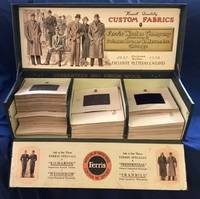
193773769Chicago: Ferris Woolen Company 1937. Original hinged sample case with drop front 27 3/4 x 11 x7 1/2 inches. Containing 174 thick cards printed in black and red; each with a mounted woolen worsted wool imported wool sample. Original sample display case w/ green textured cloth over boards divided into Three compartments nickel plate slider hinges printed advertising on inner lid and drop front reinforced corners a remarkable display case from the John the Tailor Shop Suits and Overcoats made to order. Wonderful graphic label on interior of lid featuring dapper dressers and period automobiles.Spectacular tailoring sample counter display for men’s suits and overcoats in the Fall & Winter of 1937-1938. Ferris Woolen Company a subsidiary of Wawak Woolens was originally founded in 1922 in Chicago along with Detmer Woolen Co. Bruner Woolen Co. Mason & Hanson Inc. and Salter & Wolf to supply woolens and trimmings to tailors and department stores across the United States. The companies were known for their high-quality wools at a reasonable price and often incorporated imported wool wool silk blends gabardines and tweeds especially from Scotland Wales France and Great Britain. In 1933 the Wawak Co./Ferris Woolen Co. purchased the exclusive right to all the Detmer Bruner Co. customers West of the Mississippi. They quickly began commissioning and producing display cases reflecting the change and proved very successful with the Ferris Woolen Co. catering to the trade into the 1960s. These sample cases were very expensive to produce and so were most often found in department stores mercantiles and men’s stores which would have these display on the sales floor for two seasons or more often adding or subtracting fabrics as they became available. The samples included with this case offer invaluable textile reference for the colors and fabrics during the era of fashion influenced by the elegance and glamor of Hollywood films and film noir at the time. The styles depicted on the inside of the lid and the drop-down front are reminiscent of the very popular Thin Man fashions worn by William Powell and Myrna Loy at the time. Ferris Woolen Company hardcover
193045898Troy NY: Arrow Shirt Co./ Cluett Peabody & Co. Inc. ca. 1930; 1955. Quarter-sawn oak salesman sample counter display case 18.75 x 6 x 6 ins. with glass top & front door in back with catch w/ original label at bottom of the display indicating that this case was only to be used for the display of the Company collars preserving two Arrow Shirt Co. Collars some scuffing and wear to label at bottom of case affecting lettering minor wear to sides of case together with original Leyendecker advertisement printed on canvas w/ oak frame 28.5 x 21.5 ins. the piece has been professionally cleaned and mounted on archival foam core and removed from the original bars which were damaging the image and placed back in the oak frame some sunning faint discoloration to upper left margin still remarkable pieces. A wonderful advertising display for Arrow shirts and collars including pre-World War II counter sample case and 1950s promotional ad reproducing one of the famed Leyendecker images. These pieces originally came out of a small men’s clothing shop in Bend Oregon. The Arrow collars grew from the marketing idea by Cluett Peabody & Co. in Troy NY that it gave women an easier way to clean their husbands’ stained shirt collars without having to wash the entire shirt. In addition the collars wore out a much faster rate than the rest of the shirts so these replaceable collars would extend the life of the garments. This style of detachable collars remained popular up until the mid-1930s and largely declined out of use by the end of World War II.Leyendecker 1874-1951 created the Arrow Collar Man which was an advertising campaign that ran from 1905 - 1931 and was perhaps one of the most successful product brands in history. He created 100s of images and many of them are still synonymous with men’s fashion and styles. This advertisement was part of a revived campaign by Arrow Shirt Co. in the 1950s through early 1960s as they revived the nostalgia of the Leyendecker ads and pushed their shirts with soft collars. Arrow Shirt Co./ Cluett, Peabody & Co., Inc., hardcover
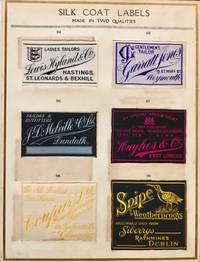
190555463Conventry London & New York: J. & J. Cash Ltd. ca. 1905. 4to. 16 pp unpaginated. thick double-sided coated card stock w/ 153 of 154 woven silk labels sized from .5 x 1 in. up to 3 x 3 in. or 2.25 x 5 in. in a myriad of colours many pictorial assorted font styles. Full calf gilt lettering stamped on front cover scuffing edgewear minor ink stain to fore-edge of front cover not affecting textblock minor damage & repair to inner front hinge still a VG- copy. First edition of this exceedingly rare and fascinating salesman sample catalogue of woven silk labels produced by the famed millinery and ribbon novelties company. Founded originally as a ribbon weaving company in 1846 by John and Joseph Cash the firm quickly expanded and developed it’s techniques and products throughout the Victorian and Edwardian eras. They developed whole lines of monogrammed silk labels striking manufacturers silk labels and tailoring labels for identifying clothing lines hosiery hats blankets and more. The labels could be purchased in “Best Quality†and “B Quality†lots by the prospective companies and these samples within the catalogue encompass such examples as those for Spirella Corsets I.&R. Morley’s Theta Flying Wheel shirts H.C Lucking Tailor & Outfitter Shoreham with view of the suspension bridge Snipe Weatherproofs with iconic image of snipe Dracoproof for all Weathers Fair or Foul with image of swimming mallard duck and so many others. The catalogue also includes silk millinery ribbons and labels made in 14 inch lengths quality coat hanger labels beautifully monogrammed badges and hat bands and also includes labels which can be carefully lifted from elastic to show the quality of the weaving. No copies located in Worldcat. J. & J. Cash Ltd., hardcover
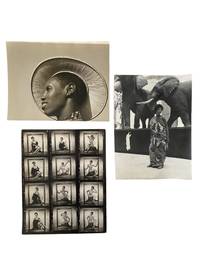
1950206231950. Archive of three black and white silver gelatin photographs of black models dating from the 1950s-70s. Photographs measure approx. 8" x 10". This archive includes a press photo from 1974 showing model Beverly Bradshaw posed in front of a museum display of elephants wearing a traditional Nigerian Ibo wrapped dress designed by Angie Ihejirika. Article on verso from the Chicago Sun Times details Mrs. Ihejirika's demonstration of the art of African wrapping at the Field Museum of Natural History. Photo has a bald patch on left side not affecting subject matter. Also included is a print of twelve Kodak film cells showing actress and model Nancy Westbrook in a series of poses sitting within a large picture frame. Seven images show Westbrook in a bikini and five wearing only a fur stole. These photographs date to the early 1950s and least one the third down on the left appeared in Jet Magazine with a short profile of Ms. Westbrook in 1953. Another photograph undated shows a black model in profile from the neck up smiling in a sun hat tilted away from camera to frame her head with a halo-like effect. Modeling in fashion and print has historically been dominated by white women reflecting a bias in beauty standards in the United States. These images show black women claiming space in the often exclusionary fashion world of the mid-late 20th century. Overall very good condition. Three images of black fashion models in the US 1950s-70s. unknown
190556908Chicago IL: American Woolen Mills Co. 1905. Thick elephant folio 17.5 x 21.5 x 3.25 in. 58 pp. printed on thick card stock each mounted on linen hinge. With 6 black & white fashion plates illustrating suit styles of the period with 380 of 400 -- many marked in pencil “O.S.†or Out-of-Stock mounted textile samples in wool wool-silk blends -- all samples clearly marked with prices and availability numerous text illustrations decorative borders printed in colour many showing bucolic scenes of sheep pastures and winter frolics. Black & blue cloth Arts & Crafts gilt lettering & ornament on front cover expertly rebacked and back cover renewed dustsoiling and occasional soiling to some leaves some samples w/ predation and minor loss dampstaining to gutter margin of last few leaves minor loss & damage to last couple leaves still a good copy. First edition of this scarce Progressive-era salesman sample catalogue for Winter season men’s suits overcoats and evening wear. The American Woolen Mills Company also known as the “Progressive Tailorsâ€maintained a huge tailoring operation in Chicago at Union & Washington until the Great Depression employing hundreds of tailors and seamstresses to fill orders. Unlike J.L. Taylor Royal Tailors and many of the other tailoring houses of the period the American Woolen Mills targeted the average white collar clerk or American immigrant salesman and merchant trying to look professional and offered $ 15.00 high class made to measure suits. These catalogues were very expensive to produce and were often issued with minimal company brand names allowing their sales force to target small shops mercantiles and general stores which would have these catalogues on the sales floor for several years. Sales people were directed to simply clip the corners of samples for out-of-stock and discontinued fabrics but they often chose to remove the entire sample in order to not distract potential customers. The catalogue offers invaluable illustrated historical reference for the colours styles and fabrics during the era of Teddy Roosevelt and the Anti-Trust policies even referring to these in their sales pitch by claiming that unlike Trusts which “by combining saves numerous expenses and sticks ALL the savings in its own pocket. . . there is no Trust in the tailoring trade.†They further claim that they remove all middlemen procure woolens directly from the weavers and by avoiding wastes of all kinds that AWM CO. lowers their prices and “it is a public benefit.†The textiles here focus on darker shades and very muted colours along with durable thick fabrics while marketing their double-breasted sacks 3-button frock coats 2-button single breasted suits assorted overcoats and more. No copies in Worldcat; See: Swell Nifty Suit Free! The Household Journal Vols. V No. 8 August 1912 p. 6; Machinists’ Monthly Journal Vol. XVII No. 3 March 1905 p. 282. American Woolen Mills Co., hardcover
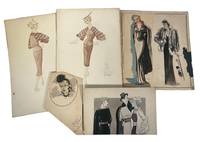
1920199741920. Vernacular fashion illustration archive circa 1920s-1950s documents the evolution of women's dress and stylistic ideals across early and mid-twentieth-century design with emphasis on silhouette material and aspirational presentation. The drawings capture shifts from the elongated androgynous forms associated with 1920s and 1930s fashion to the structured tailoring and fitted garments of the postwar period. Elements such as exaggerated shoulders cinched waists and coordinated ensembles situate the works within broader developments in women's fashion including the influence of tailored suits and formal eveningwear. The illustrations also record accessory culture including gloves hats and jewelry positioning dress within a larger system of social signaling and presentation tied to class gender norms and modern consumer identity.<br /> <br /> United States and possibly Europe circa 1920s-1950s. Archive of six original gouache and pencil fashion illustrations on hard mat boards and one on thick watercolor paper each measuring approximately 10 x 7 to 10 x 15 inches. Several works bear artist signatures or initials including examples signed "Virginia" and "G. Wichner." Two dated compositions from April 11 1954 depict coordinated ensembles including a rose-toned set with a pencil skirt and structured blazer rendered with detailed attention to tailoring and fabric accents. Other illustrations include multi-figure studies of women in draped garments with belted waists a single-figure composition in a long gown with fur coat and elongated cigarette holder and portrait studies featuring headpieces veils and bold cosmetic styling. Use of shading color variation and line work emphasizes fabric texture garment movement and body form.<br /> <br /> Produced during a period of significant transformation in women's fashion these illustrations align with the development of modern fashion media including editorial illustration design sketching and commercial garment production. The visual emphasis on proportion tailoring and accessorization reflects the increasing codification of fashion as both industry and cultural expression in the twentieth century. As original works the drawings provide insight into the processes of design visualization and stylistic interpretation supporting research into fashion history gender presentation and visual culture. Light handling wear to mounts and sheets; overall very good condition. unknown
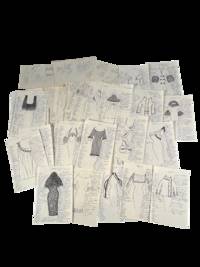
1950218261950. Fashion design archive. 1950s-1960s. This group documents mid-century women's fashion design practice through a sustained body of original sketches and working notes showing how garments were conceived annotated and prepared for construction during a period of stylistic transition in American dress. The material provides direct evidence of design thinking at the level of silhouette fabric selection and pattern planning including repeated attention to cocktail wear outer garments and formal dress. It captures the movement from structured postwar styles toward more experimental and decorative approaches associated with later mid-century fashion with particular emphasis on the technical and aesthetic decisions made by a designer or dressmaker.<br /> <br /> Archive of over 100 original hand-drawn fashion sketches on individual sheets measuring approximately 6.5 x 9 inches executed in ink with extensive handwritten annotations on rectos versos and margins. The drawings depict a range of women's garments including dresses blouses coats and evening wear with recurring titles such as "cocktail dress" "cocktail cape" and "dress." The figures are rendered with attention to line proportion and textile texture often emphasizing drape fitted bodices and surface embellishment. Annotations provide detailed construction guidance including measurements fabric types and pattern instructions. One design for a strappy dress specifies "Pattern: leopard or zebra fur attached.fabric velveteen.color red -- orange -- black." indicating experimentation with bold materials and color combinations. The consistent pairing of image and instruction suggests use as a working portfolio either for client presentation dressmaking production or formal training.<br /> <br /> Mid-century fashion in the United States expanded through department stores home sewing and professional dressmaking with designers and students producing working sketches that translated style into reproducible garments. The presence of detailed technical notes alongside finished illustrations places this archive within that production process linking aesthetic design to practical construction. Light wear from handling; overall very good. A concentrated record of mid-century women's fashion design practice preserving both the visual language and technical methods used to create garments during a period of evolving style. unknown
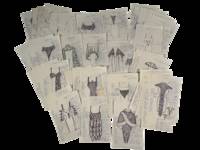
1950218281950. Fashion design archive likely 1950s to 1960s documenting women's garment design during the mid-century through original working sketches that preserve both style development and the practical language of dressmaking. The archive is strongest as evidence of how women's fashion was conceived on paper before production with repeated attention to silhouette trim fabric and construction. Dresses blouses coats and eveningwear appear throughout placing the material within the visual world of postwar American fashion as it moved from structured elegance toward sharper and more decorative later mid-century forms.<br /> <br /> Archive of over 100 original hand-drawn fashion sketches on individual sheets measuring approximately 6.5 x 9 inches. The drawings are executed in ink and depict a wide range of women's clothing including fitted dresses capes blouses coats and formal designs with careful attention to drape proportion neckline sleeve treatment and surface embellishment. Many sheets are accompanied by dense handwritten notes in the margins or on the reverse recording measurements fabric suggestions and pattern or construction instructions. The combination of illustration and notation gives the sheets the character of working designs rather than purely display drawings and suggests use in dressmaking training or client planning.<br /> <br /> The archive belongs to the history of women's fashion not only as a record of finished styles but as evidence of the design process itself preserving the intermediate stage between idea and garment. Such working sketches show how fashion circulated through manual skill technical knowledge and close attention to fabric and form in the decades before design became fully digitized. Light general wear from use; overall very good. A substantial mid-century design archive that preserves the visual and technical vocabulary of women's fashion making across more than one hundred original sketches. unknown
193754988Chicago: Ferris Woolen Co. Successor to Detmer Brewer & Mason Wawak Co. Inc. 1937. Sample case. 27.75 x 11 x 7.5 in. Containing 172 thick cards w/ black & red advertising lettering stock & style Nos. with 172 woolens worsted wool imported wool samples some preshrunk all mounted on the cards. Original sample display case w/ green textured cloth over boards divided into 3 compartments nickel plate slider hinges printed advertising on inner lid and drop front reinforced corners some minor wear insect predation around fore-edges of a few samples still a remarkable display case from the John the Tailor Shop Suits and Overcoats made to order Wausau WI w/ stamp on top Wawak sample card. First edition of this spectacular tailoring sample counter display for men’s suits and overcoats in the Fall & Winter of 1937-1938. Ferris Woolen Company a subsidiary of Wawak Woolens was originally founded in 1922 in Chicago along with Detmer Woolen Co. Bruner Woolen Co. Mason & Hanson Inc. and Salter & Wolf to supply woolens & trimmings to tailors and department stores across the United States. The companies were known for their high-quality wools at a reasonable price and often incorporated imported wool wool silk blends gabardines and tweeds especially from Scotland Wales France and Great Britain. In 1933 the Wawak Co./Ferris Woolen Co. purchased the exclusive right to all the Detmer Bruner Co. customers West of the Mississippi. They quickly began commissioning and producing display cases reflecting the change and proved very successful with the Ferris Woolen Co. catering to the trade into the 1960s. These sample cases were very expensive to produce and so were most often found in department stores mercantiles and men’s stores which would have these display on the sales floor for two seasons or more often adding or subtracting fabrics as they became available. The samples included with this case offer invaluable textile reference for the colours and fabrics during the era of fashion influenced by the elegance and glamor of Hollywood films and film noir at the time. The styles depicted on the inside of the lid and the drop-down front are reminiscent of the very popular Thin Man fashions worn by William Powell and Myrna Loy at the time. No copies located in Worldcat. Ferris Woolen Co., Successor to Detmer, Brewer & Mason, Wawak Co., Inc., hardcover
191148842Cincinnati OH: Goldman Beckman & Co. 1911. Elephant folio. 21 x 18 x 1.75 in. 50 pp unpaginated printed on thick card stock each mounted on linen hinge. 17 colour plates 1 page w/ colour-illustrated borders 8 black & white plates with 150 mounted textile samples in wool wool worsted blends some felt backed moleskin cashmere and more -- all samples clearly marked with prices and availability many with damage from insecty predation occasional soot soiling soiling to fore-edges many of the images with illustrations of models in period dress in backgrounds and around borders. Half-black cloth over green gilt lettering and embossing of Company logo on front cover illustrated endpapers with the different suit models on pastedowns occasional soot soiling foxing minor dustsoiling from fabric dust cloth covers renewed w/ original company logo & title mounted front cover still a G copy entirely complete with all samples present. First edition of this scarce salesman sample fashion catalogue for men’s suits in the Edwardian era prior to World War I. Goldman Beckman & Co. was owned by Louis Goldman 1850-1921 who had founded the firm in 1894 after decades in the wholesale suit tailoring business marketing to men & young men. The catalogues were very expensive to produce and so were most often found in department stores mercantiles men’s clubs and men’s stores which would have these catalogues on the sales floor in the Cincinnati area. This catalogue offers invaluable illustrated historical reference for the colours styles and fabrics during the Progressive Era. Many of the plates show elegantly dressed men and women in the park the flower show at the museum playing sports and even preparing to go on a canal boat. In addition there are a number of plates showing properly cut trousers and the available cuts special sections devoted to fancy cuffs and pockets fitted backs men’s hats formal wear and much more. No copies located in Worldcat. Goldman, Beckman & Co., hardcover
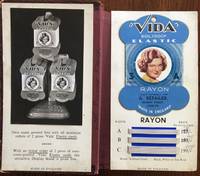
193057289Nottingham UK: Vida Mills Jones Stroud & Co. Ltd. ca. 1930. Thick 8vo. 26 pp unpaginated. on thick card stock w/ burgundy linen hinges at gutter margin w/ 113 rayon elastic nylon elastic rubber and silk rayon blend trims 1 silver gelatin frontisp. photo mounted on front pastedown sized 3.5 x 5.5 in. w/ 10 colour-printed & illustrated labels and elastic holders tipped-in numerous printed photographic plates. Quarter-burgundy coloured cloth over simulated alligator boards screw posts at gutter margin minor rubbing slight bumping to corners 1 sample removed still a VG copy. First edition thus of this extraordinary and inventive salesman sample catalogue for elastic trims between the Wars. Horace Jones had invented a specialized braiding machine in 1927 for creating elastics by braiding rubber filaments together with rayon nylon cotton or silk-rayon blends to create a number of different “Elastic†Boil Proof Vida trims. Prior to the widespread introduction of many stretchable and elastic fabrics following World War II Vida Mills products were used shoulder straps for lingerie suspenders both for men and women’s fashions swim trunk and briefs trunk top elastic bands. In addition these were used for car covers bags accessories creating pleats sleeve hems and much more. In addition there are a number of samples included here for durable boot and shoe laces. The coloured and metallic Ric Rac trims were used in costumes uniforms decorative elements on clothing and many other applications. By 1930 the company had deployed 3000 braiding machines generating over 52 million yards of elastic braid annually and in 1940 expanded into manufacturing glass tapes and woven fabrics for electrical installations and industrial Wartime applications. The company still operates today as the Jones Stroud Insulations Ltd. subsidiary of the Krempel Group since 2000. No copies in Worldcat; See: History of Jones Stroud Insulations -- Timeline Krempel 2015; Trade Marks Ordinance Official Gazette Kenya Dec. 4 1956 p. 1315. Vida Mills, Jones Stroud & Co., Ltd., hardcover
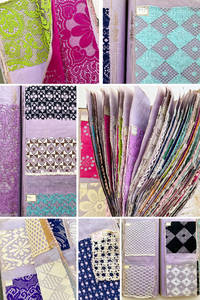
Q1242<p>A generous twentieth-century sample book representing several decades of the Nottingham lace trade. Assembled in a purpose-made binder 17 x 9.5 x 4.5 inches ideal for adding removing and generally rearranging pages. 157 total samples mostly half-page size ~8 x 6 inches. The tallest sample unfolds to 28" and several others extend between leaves up to 14 inches wide. Each specimen has a small label with manuscript number. Several numerical series are represented in the binder likely referring to different mills. 12 of the samples have an "Alan Litman Ltd." sticker a wholesaling firm founded in 1946 and one of the few businesses to weather the Nottingham lace industry's terminal decline throughout the twentieth century.</p><p>The samples are compiled in a Priestley & Swann "Patent Self Binder" that allows for contents to be regularly updated and changed out to reflect stock. Based on advertising and newspaper presence Priestley & Swann appears to have been the most active ca. 1910-1920s then fades from mention around the start of World War II. Another example of their "Patent Self Binder" is a lace sample book held at the Yale Center for British Art believed to be from another Nottingham lace maker in the 1920s Ernest Fewkes.</p><p>As the Nottingham lace businesses shuttered stock could be acquired by the remaining firms. The origin of this album is unknown but it was ultimately used as an in-house reference for Alan Litman confirmed by a current representative of the business. New samples were added through the 1960s with older samples and panels being removed to reflect changing inventory. The binder shows evidence of these changes where manuscript page numbers are crossed or cut out. Several pages were trimmed along the outer edge where some were paginated in the upper corner and at some point rearranged with new pagination assigned at the top center. Some later samples were mounted on pages that had already been repaired with tape also indicating its longtime use in the trade. The makeshift repairs extended the discontinued binder's lifespan a testament to Priestley & Swann's purpose-perfect format.</p><p>A beautiful object in salvaged condition subject to an eclectic series of repairs and repairs of repairs partially paginated in ballpoint pen with sporadic doodling and clipping to the foredges. About two-thirds of the pages were previously repaired with sellotape that had badly degraded and discolored; those mends have been remade with archival tape with additional reinforcements intended to allow the album to be gently handled without further deterioration. Discoloration has been corrected with acid-free pigment to lessen visual interference and strengthen the adhesive-damaged surfaces. New panels have been fitted to the binder posts which are reinforced with cloth binding tape. The result is a somewhat anachronistic object and rare active document of the firm's offerings with the final contents heavily representing the high fashion and novelty laces of the fifties and sixties. Remarkable for their large size and rejection of the delicate lace stereotype–more rock n roll than romance–these brilliant colors and dynamic designs are emblematic of Mod fashion and representative of how Litman adapted to stay in business.</p><p><em>Shipping will be calculated at cost. More photos available at https://alsobooksbooks.com/products/early-twentieth-century-nottingham-lace-specimen-book-with-samples-extending-into-the-1960s</em></p>
1930D4922likely America c. 1930s. Fine. Group of 10 original costume studies on heavy cardstock mounts ranging in size from about 9.5-by-10.5 inches to 13-by-18 inches in pen-and-ink or grey wash heightened in white. Circa 1930s America. Presumably created by S. C. Cavanagh Ltd. with the firm's name in pencil along the bottom edge of many of the studies. Expertly carried out illustrations of elegant women in long coats or evening jackets pinky fingers held delicately aloft. All cards a little rubbed and smudged along the edges but overall nice and bright suitable for display. A wonderful collection for the classic or vintage stylist. <br/><br/> unknown
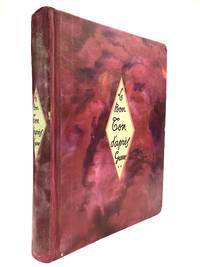
192278454Paris: Dorbon-Ainé 1922. Hardcover. The second volume only. Collection of beautifully colored pochoir plates depicting elite fashion published originally in La Gazette du Bon Ton between 1920 and 1922. Includes work by Barbier Benito Bonfils Brissaud and many others. Royal octavo: 2 pp. with 100 color plates one two-panel. The red marbled paper-covered boards have been expertly rebacked with the original spine strip laid down. Small indentation to the fore-edge of about a quarter of the plates not affecting the images. Some general edgewear to the boards. Dorbon-Ainé hardcover
25226Note dated 16 May 1999. Some of the photographs taken in 'France May 1999' for Italian Vogue. Bündchen’s career began in London in 1998. Since 2001 she has been one of the highest-paid fashion models in the world. In 2007 Forbes listed her as the sixteenth-richest woman in the entertainment industry. In 2019 Claudia Schiffer described her as the last of the supermodels. Comte’s fashion and portrait photography have appeared in a wide range of publications primarily Italian Vogue. In 2000 he was named Photographer of the year by PHOTO magazine. The present collection consists of sixty-three photographs of Bündchen five in colour and fifty-eight in black and white evidently taken by Comte laid down with a covering note to him from her on twenty-one pages over eleven leaves of foolscap 8vo extracted from an album. In good condition lightly aged. Covering the whole of the first page is the Autograph Note Signed by ‘Gisele Bündchen’ 16 may 1999 with a curl at the end of the signature enclosing a childish smiling face. At top right is a very simple drawing of a flower. The note is in a childish hand and is headed ‘Michel’ and reads ‘Obrigada por tudo. Tive um timpo moravilhoso. sic Um muito carinho / Gisele Bündchen / 16-05-99’. On the reverse of the leaf are three colour photographs variations of the same scene of Bündchen posing in front of a crowd of tourists the pages that follow carry similar triplets or quartets of photographs taken at the same time. The 31 photographs on the first ten pages arranged in ten groups appear to come from the same outdoor shoot with Bündchen striking a pose while surrounded by members of the public. The two pages that follow carry five associated images of Bündchen in a bikini striding across a rocky beach. These are followed by another five over two pages this time showing Bündchen’s head and shoulders as she drapes what looks like a mink stole over her head. There are also eight images in two groups of Bündchen screaming and a group of four that show her smoking a cigarette while adorned in a somewhat garish necklace and earings. The latter group is mounted on a leaf captioned ‘ “Gisele im Cannes†Italian. Vogue / France May’. Mounted on the twenty-second page of the eleven leaves is what appears to be an unrelated item: a letter in German also written in a childish hand in felt-tip pen with large illegible signature something like ‘Mamti Rigis’ dated from Paris 19 may 1999. It reads: ‘Merci Michel / Das war bis jetzt das beste Fotoshooting das ich bisher machen konnte! Sehr erfischend mit super Ideen! Ich hoffe auf ein baldiges wiedersehen: vielleicht mit Pferden. / Paris. 19. Mai ’99’. Note dated 16 May 1999. Some of the photographs taken in 'France, May [1999]' for Italian Vogue. unknown
1934FASHION004963J.H. Ltd no place. 1934. First edition. Folio. A fashion illustration portfolio with twenty nine colour lithographic plates each measuring approx 37 x 31cm showing women's dresses in various fabrics from silk to tweed. The covers are unusual: full gilt textured cloth with titles in art deco style on front.Some spotting. Very good indeed. J.H. Ltd, no place. hardcover
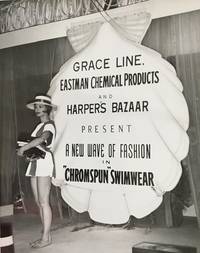
195956594New York & Rochester NY: Grace Line Harper’s Bazaar & Eastman Chemical Products subsidiary of Eastman Kodak 1959. 4to. With 33 black & white photographs inserted in mylar sleeves. Recent flexible black vinyl cover portfolio NF exemplar w/ images having bright strong contrast. First edition of this remarkably scarce group of photos advertising the 1959 fashionable swimsuits made from Chromspun acetate yarn developed for textiles by Eastman Kodak in the early 1950s. Discovered while developing cigarette filters the yarn proved durable and elastic enough for swimsuits other apparel home furnishings and other applications. The swimsuits modeled in this show were influenced by and possibly included the very popular Rose Marie Reid line of swimwear which was heavily marketed by Harper’s Bazaar during the 1940s and 1950s and was considered to be the quintessential California swimsuit worn by such stars as Jane Russell and Sandra Dee in the first Gidget movie produced by Columbia in 1959. Represented in these photos are the swimsuits included the strapless bikini princess bubble Baby Doll often with stripes and cover-ups. Although not indicated in the photographs this fashion show was probably held on one of the new Grace Line ocean liners the Santa Rosa which was delivered in 1958 and serviced the Caribbean South America and traveled through The Saint Lawrence Seaway into the Great Lakes. See: Rose Marie Reid Glamour by Design Special Collections Exhibit Brigham Young University 2015-2016; Michael Grace The Grace Line History Cruising the Past Travel and Social History 2009; Jean Was a “Young American Goddess of Paris Couture†Jean Patchett Prose on Genesis 2020. Grace Line, Harper’s Bazaar, & Eastman Chemical Products, subsidiary of Eastman Kodak, unknown
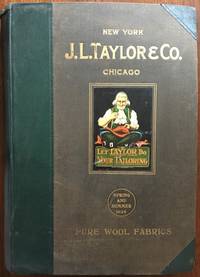
192658100New York & Chicago: J.L. Taylor & Co. 1926. Thick elephant folio 17 x 23.25 x 2.5 ins. 75 3 pp. printed on thick card stock each mounted on linen hinge. With 17 colour fashion plates illustrating Taylor styles of the period verso of almost all pages with 364 of 375 mounted textile samples in wool wool-rayon blends some felt backed silk moleskin corduroy cashmere waistband sample and more -- all samples clearly marked with prices and availability some of the 12 missing samples are indicated in pencil as being “Out†as well as a few present 1 additional pinned-in numerous illustrations throughout in blue-green colour tinting including Chicago & New York factories some diagrams charts and graphs. Original half-green cloth over gray green cloth corners gilt lettering on front cover colour plate w/ J.L. Taylor tailor mounted front cover some wear & minor bumping to fore-edges corners some minor soiling & occasional foxing to interior leaves -- some of it dust from the wool samples 10-15 samples with minor deterioration and evidence of old predation still a very good unsophisticated and remarkably complete example w/ original 9 x 21 in. double-sided stock list in red & black laid-in. First edition of this scarce and unusually complete salesman sample catalogue for Jazz era men’s suits in 1928-1929. J.L. Taylor maintained a huge tailoring operation in both Chicago and New York until after World War II employing hundreds of tailors and seamstresses to fill orders. The catalogues were very expensive to produce and so were most often found in department stores mercantiles and men’s stores which would have these catalogues on the sales floor for two years or more. The catalogue offers invaluable illustrated historical reference for the colours styles and fabrics during the era of F. Scott Fitzgerald and the Flappers. Most of the colour fashion plates illustrating the available styles have elegantly dressed women and settings in the background including with an emphasis on sporting in summer so golf tennis croquet canoeing boating and swimming all make an appearance. Of particular interest is the wonderful dress chart indicating styles needed clothes accessories and shoes which one would need for Day Wedding Matinee Reception Evening Dress and many others offering an excellent marketing opportunity for the store to sell the customer items to compliment his suits overcoats and other fashion wear ordered from J.L. Taylor. The final plate focuses on the lightweight “Palm Beach†& “Mohair†suits at the height of the 1920’s boom in Florida featuring snappily dressed models in Panama straw hats and a lightweight fedora. Worldcat locates 1 partial copy Preserved at the Library of Congress stripped of samples and used as scrapbook for Wilbur’s Drug Store prescriptions of Portland ME -- not an unusual occurrence. J.L. Taylor & Co., hardcover
191151748France: n.p. 1911. Tall 8vo. 6 leaves on thick card stock printed in gilt & black 7 x 11 in. with 369 black silk & vegetable ivory buttons all with stock numbers below and to the side many in the dark brown patterned material some jet black and many with incised or woven patterns each sample card carefully mounted within corners with facing padded red silk leaves to protect the buttons many with ink annotations indicating whether they were available in stock or not. Quarter-black cloth over purple patterned cloth gilt lettering on front cover spine very minor rubbing at the hinges slight bumping to corners still a NF exemplar with the buttons entirely complete and in perfect condition. First edition of this remarkably beautiful Edwardian button sample catalogue which are exceedingly scarce in such exceptional condition. Included are a number of different styles of buttons in vegetable ivory for clothing coats sportswear and more which were sold by this French manufacturer for export together with a number of beautifully woven black silk cloth buttons for women’s coats hats and dresses. Vegetable Ivory is a very dense material that is manufactured into buttons from the Corozo nut that grows on the Tague Tree a type of Palm. It was named Vegetable Ivory in the 19th Century because it resembles real ivory but was not as heavy or dense. These types of buttons were first introduced at the 1862 International Exhibition in England and then reached full popularity at the 1867 Paris Exposition. The sample buttons preserved here come in pressed carved and fine lined patterns some of them painted with a dark flat black other shiny black and many with a beautiful rich shiny mottled effect. During the Victorian and Edwardian periods and prior to the growth in production and popularity these were the buttons of choice for men’s suits. No copies located in Worldcat. n.p.], hardcover
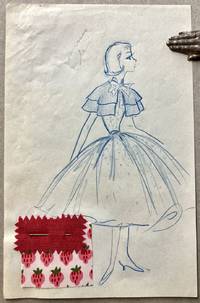
195516984n.p. Los Angeles areaa: 1955-57 Stored in a contemporary accordion-fold card paper portfolio hand-labeled "Sketches of Accepted Designs.". 137 sheets of hand-drawn sketches sixty-two on 9" x 11 " sheets 75 on 5 " x 8 " sheets. Most with handwritten design descriptions notes and accompanying fabric swatches pinned or taped onto the sheets. Also with price lists inventories and printed ads for the Candy Jr. brand ads correspond with designs made by Saunders that are included in the present set. Portfolio somewhat worn and creased. Enclosed are eight contemporary manila folders organized by season Holiday 1955 Fall 1956 Spring 1957 etc. all hand-labeled in pencil. Some designs signed "V. Saunders" or "Vivian Saunders." Some toning and creasing to leaves. A few fabric swatches detached from leaves. Overall a very good set of striking original sketches of 1950s-era fashion designs for young women. Most of the sketches are for party dresses and evening gowns made for young women in their early teens to early twenties juniors and misses. The designs include many iconic designs associated with the 1950s including "poodle" skirts with ample petticoats boleros and cardigans and sheath dresses with cinched waists. The 26 swatches indicate a wide range of textures colors and patterns like gingham plaid organza metallics appliques ribbon velvet fur and much more." unknown
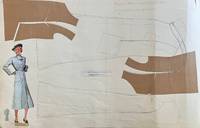
193059525Hannover: Schneidermister ca. 1930-1933. Oblong elephant folio. 23.5 x 14.5 in. 25 leaves unnumbered. Original women’s fashion patterns in pencil throughout many with tipped-in pattern cutouts mounted on the sheets as well as colour images of the finished design tipped-in and mounted manuscript pencil notes & directions in some colour pencil additions to a a few patterns. Stiff limp beige covers black cloth spine title mounted on front cover scutting edgewear repair to corners of front cover corner still a remarkable manuscript w/ tipped-in instructions for taking measurements and fashion by the Nazi Party on first leaf including one entitled “Ein Modewart macht Propaganda.†This German fashion pattern tailoring and pattern manuscript provides an exceptional original artifact of the period when the Nazi Party began to force educational and cultural changes upon German Society against the tailoring and fashion industry in Germany during the early 1930’s. By 1930 Berlin had emerged as an international fashion capital drawing Parisian fashion designers and most of the tailoring schools and fashion houses were operated by generations of Jewish family owners. Tailors and fashion designers were constantly reminded that they must create a wholly Aryan fashion and that they were to avoid French or other outside influences. Despite the pressure most women tailors and fashion designers in the tailoring or cutting schools continued to still draw their influences from Parisian and American couturiers by creating their own patterns and pattern books from which these internationally themed clothing designs could be made. This fashion pattern book by Bode focuses on women’s suits skirts capes coats and knickerbockers. However the Party never succeeded in creating a unique Fashion industry especially because of the drive to dress women in peasant costumes or uniforms even as the Nazi Party would confiscate the assets of over 2700 Jewish fashion houses retailers and manufacturers with 1000’s of tailors and seamstresses forced into labor and concentration camps to produce clothes for military and high society. See: Uwe Westphal Fashion Metropolis Berlin 1836-1939: The Story of the Rise and Destruction of the Jewish Fashion Industry 2019. Schneidermister, hardcover
194114713England 1941. Very Good. Substantial collection of original amateur artwork and fashion plates dated 1941 to 1945 by a young woman named Gladys Warren almost all pieces signed "G. Warren" "G.W." or "Gladys Warren". The collection consists of nine large format watercolors 56x38cm.; one small format watercolor 32.5x23; four large format pencil sketches 56x38cm.; and twelve small format pencil sketches 33.5x19cm. totaling twenty-six 26 individual pieces. Some dust soil and minor wear from handling watercolors not examined out of individual shrink wrap. A Very Good or better collection overall.<br /> <br /> Collection of drawings and watercolors almost exclusively depicting women in the latest fashions or in uniform. The range of the large format watercolors indicate that this was possibly a burgeoning professional dossier including examples of day wear sleep wear evening wear and swim wear. The large format pencil drawings include two historic fashion illustrations the only titled image in the group is "Madeira 1884" and one nude study. <br /> <br /> Of special note however is the series of twelve small pencil sketches all accomplished on the versos of what appear to be mimeographed World War II aircraft maintenance reports. Indeed the October 28 1941 "London Gazette" lists a Gladys Florence Warren among the members of the Women's Auxiliary Air Force WAAF though we find little else to pinpoint the artist. With the dearth of ready paper experienced during World War II perhaps Warren filched these leaves on which to practice her art Most of these sketches depict attractive women either seen in close-up or as usual modeling the latest uniforms and fashions while the verso details the assemblage or maintenance of engine covers handbrakes or a "carburettor." <br /> <br /> A pleasing survival of the English home front juxtaposing fashion femininity and aircraft mechanics. unknown
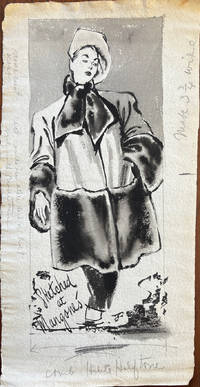
194261064Brooklyn NY: Barbara Duffy ca. 1942-1945. Seven pieces of original pen & ink art and gouache colouring and overpainting sized from 10 x 15 in. 3 up to 15 x 20 in. 3 on “Winsor & Newton’s Illustration Board 30 x 40†while the 7th piece is 9 x 17 in. executed on textured thick laid-paper pencil annotations in MS on fore-edges all pieces signed in thick black pen on versos some dustsoiling staining to fore-edges to a couple bumping to corners edgewear still a VG set of well-done exemplars. These original fashion design illustrations encompass women’s dresses hats fur coats evening wear and a post-War design by Mangone. The two dresses drawn by Duffy are reminiscent of the Claire McCardell easy to wear and comfortable dresses which emerged at the end of the War and featured a cinched-in waist floppy collars and padded shoulders retaining the influence of men’s tailoring on women’s fashions during the War. The “Toppers†are splendid examples of box or swagger coats often made in light wool cotton or rayon blends and in this case with fetching hats and cinched-in waists. The two smaller designs with mink or beaver coats include one with a matching purse and the other with a pillbox hat. The two “Paris†style Cloche hats are nicely drawn and one is fitted with a mesh veil. The exceptional Mangone design indicates it was “Sketched at Mangone’s†which was probably one of the frequent sessions the designer would put on fashion shows at the Fashion Institute or local boutiques in and around New York following World War II and features a coat trimmed in beaver fur with Cloche hat and according to Duffy was available in light and dark wool along with an ascot. Mangone 1884-1957 was not only a significant Italian-American designer who quickly adapted Paris fashion trends into his own American style and was very popular from before World War I until after World War II. Strikingly he also was a survivor of the Hindenburg disaster who managed to leap from the Zeppelin at Lakehurst NJ with his daughter and grand-daughter looking on suffering significant burns and after shock and hospitalization spent considerable time recovering. Duffy b. 1919 taught at the Jacob Gould Vocational School for girls in Prospect Park Brooklyn NY from the time she left college until after World War II after which she worked as designer in local department stores and then disappears from census and public records. Barbara Duffy, unknown
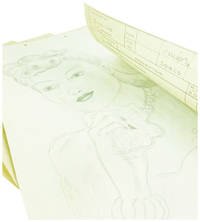
D21035Near Fine. A unique and visually interesting archive of 125 original womens fashion illustrations produced by several celebrated New York designers and illustrators active during the mid-twentieth century. Together the works capture an innovative and forward thinking American fashion industry post WWII. <br /> <br />The collection is highlighted by original couture evening wear and cocktail dress designs by John Paul Bozett and Frank Perullo both internationally accomplished New York fashion designers and illustrators working in New York City during the 1940s1960s. Additional contributors include De Zine Studio Henry Antonio and others illegible but presumably associated with the citys fashion community during this period. Ephemera includes a Womens Wear Daily typed letter signed TLS a press release and a TLS employment contract for David Hart Incorporated New York. <br /> <br />Rendered in graphite and colored pencil many sophisticated and detailed. Several sheets present multiple perspectives of a single design and retain original job numbers e.g. B-14 annotations regarding color styling and techniques and a few with fabric attached. Approx. 50 with ink signatures on the recto and some with studio stamps name address and telephone on the verso. Sizes vary but approximately 8 x 11 inches. Executed primarily on tissue paper with some examples taped or mounted to heavier stock. Undated but presumably date to the c. 1950s; a few might be a bit later. <br/><br/> unknown
0621QKUC5EJLeather Bound. Paris. Very Good. Nouvelle édition marquetée polie & vernissé Printed in red 1759 in quarter leather and decorated paper over boards moderately scuffed at spine tips and corners. Scarce. 12mo. xxxviii 88 pages ; 14 cm unknown