740 résultats
194157736New York: Apparel Arts Esquire Inc. Esquire Building Madison at 46th March 1941. Folio. 10.75 x 14.25 in. 98 pp. Numerous colour plates many double-page colour photographs 23 of 30 fabric samples tipped-in photo illustrations colour photo illustrations. Quarter-blue cloth over colour-illustrated photo boards cover art of divers in swim suits from high dive platforms edgewear rubbing rubbing to corners some dustsoiling still VG- copy. First edition of this World War II-era trade magazine launched in 1931 in the depths of the Great Depression by Weintraub Smart & Gingrich from the Menswear Service Corporation. This issue features illustrations and advertisements by such artists as John Lagatta 1894-1977; Allen for Portis hats the modernist master Paul Rand’s 1914-1996 Summer 1941 poster the iconic fashion illustrator Laurence Fellows 1885-1964 and other mainstays. This installment features advertisements from such menswear brands as Botany Worsted Mills Jockey Manhattan Shirt Co. Dobbs Hats Hickok John Cyril Woolen Co. and even Pittsburgh Plate Glass Co. fashion displays. By the 1940’s the magazine was printed by Esquire Inc. issued 8 times a year continuing in print until replaced by Gentlemen’s Quarterly GQ in 1959. See: Marianne Brown Apparel Arts & Conde Nast May 10 2017. Apparel Arts, Esquire Inc., Esquire Building, Madison at 46th, hardcover
BN127099Springer-Verlag GmbH & Co. KG. Stochastic Processes in Demography and Their Computer Implementation <br/><br/>Stochastic Processes in Demography and Their Computer Implementation Mode C. J. Springer-Verlag GmbH & Co. KG unknown
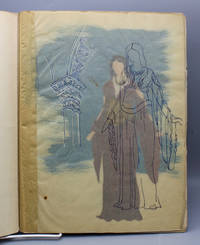
192017641<p>n.p. France: n.d. ca. 1920s architecture styles of historical periods in various geographical regions to the fashion styles of those periods. Styles illustrated include those of Greece Rome Egypt and Persia; late medieval Europe; the reign of Louis XIV; traditional Japanese attire; and fashionable 1920s dress. The background illustrations include a Roman archway seventeenth-century furniture and even a classical Greek vase that frames an illustration of three women. The fashion illustrations reflect certain design elements in the background illustrations for example the patterned fabric in the ancient Egyptian fashions match the decorative style of the columns in the background of the illustrations. . Original blue stiff paper folder with ribbon binding at spine. . 9 x 12 in. With twenty-eight pages of beautifully painted fashion designs dresses hats Greek chitons etc. from throughout history some with background elements furniture and architecture and two with real fabric accents pasted down and two pages of manuscript text explaining architectural and sculptural styles. Some of the fashion designs are captioned in manuscript. Also with eight tracing paper leaves illustrated in ink overlaying matching designs below one with pencil annotations noting types of fabric and other design elements. Some soiling to folder. Some offsetting and some foxing. Very good. We could not locate any information on Josette Eynac the student who illustrated this album though she was clearly a capable artist.</p>
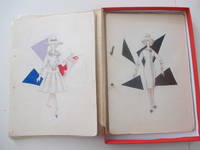
196056965Pasadena CA: n.p. ca. 1960. Folio. 14.5 x 20 in. Twelve original gouache paintings on thick artist’s board 10 of them either w/ typed or manuscript labels 1 entitled “Garden Party†written in manuscript at upper fore-edge 8 preserving their cloth fabric swatch samples some w/ designer’s notes trimmings etc. All are preserved in a gray linen clamshell case minor edgewear rubbing wear to corners still a well-preserved fine set of paintings. This nicely executed set of fashion designs were apparently created for a Civil War theatre production in Southern California around 1960 with characters named Florence Bagshot Mrs. Ludley Bagshot Agatha Mrs. W.D.P.S. and Mrs. Forbes. The designs primarily focused on the women characters including one of a nurse standing in costume in gray striped dress apron and cap with Confederate cavalry trooper in kepi astride his horse and hatless officer with sash standing in the background. Many of the designs reflect the colour palate of the early 1960’s with avocado green vivid blues solid brown earth tones and bright nearly neon orange gauze fabrics in the renderings and samples which would not have been common in those combinations during the Civil War era. Still most of the dress designs incorporate the hoop skirts of the period often with crinoline and/or crinoline cage hoop skirts and high collars with ties and ribbons at the neck and trim patterns typical of the period. The design for Florence Bagshot’s bedroom wear incorporates elements of Mid 20th-Century design and sensibilities rather than the more common chemise and sturdy cotton for the 1860’s. The Confederate Nurse design was painted on “Brownie Board Cold Pressed Duncan Vail Co. Los Angeles†which appears in California art supply advertising from about 1960-1963. We were unable to identify the production after an extensive search through contemporary theatre production trade magazines newspapers and other industry publications. n.p., hardcover
BN44063Japanese Photo Book <br/><br/> unknown
14437English late nineteenth century. Tentatively dated in pencil to 1892. Circa 220pp. 8vo with the main text on rectos and additions and subheadings often in red ink together with some simple pencil patterns on versos. In ruled exercise book. In good condition on aged paper in worn original glazed black cloth binding. The volume has been compiled for his own use by a Victorian factory manager and contains material relating to clothing for men women and children. The seventeen entries on the first 41pp. are indexed on the front pastedown with the red-ink subheadings facing the text given here in brackets: Winding winders wages; waste; bad yarns American machine; giving out of yarn; Testing Yarns; Making marking the rolls; Giving out Giving out of ribs; Yarns <> dressing; wages & quantities of yarns Wages of frame hands; checking of books; measurement of Ribs; Widths machines different widths are made on; gauge; Mending Washouse sic; Course rolls dressing; fine rolls; Scouring Course rolls; Scouring Fine Rolls; <>; Trap; Milling Quantity of Soap; Overmilling; Milling without soap; Milling with soap; Round Mill; Clearing; Bleaching; Drying Damping Brushing; Stoving; Hydraulic; Cost of Making. There is a page listing 'Washouse sic Wages' with long note at end. Pages 45 to 56 carry an article titled 'Making up Department'. Facing the first page of the article is a 'sample of giving out ticket'. On facing pages to the article are a number of crude patterns. There follows a five-page article on 'Smocked Combinations'. The rest of the volume from p.62 onwards carries numerous tables of sizings with some facing patterns beginning with 'Mens Goods' trousers overshirts night shirts chest protectors boys sleeping suits pyjamas and followed by 'Ladies English Goods' drawers 'Womens English Vests Old Shape' skirts knickers bodices night dresses chemises. There are also tables on: Costing of Fabrics; Shrinkage; Making Up Prices. The penultimate section consists of thirteen pages of 'German Goods' and the volume ends with eight pages relating to patent frames. There are few personal touches but these include a note facing a page carrying a table with three columns Quality; Scotch Mills; and Round Mills: 'In these quality you have to go more by feel than anything as they vary so.'; and another note a few pages on: 'They will Bleach equally well in cold water only take longer doing'. English, late nineteenth century. (Tentatively dated in pencil to 1892.) hardcover
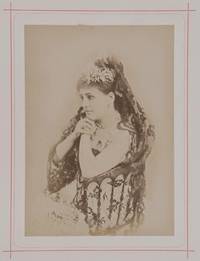
188553168London: Frederick Bruckmann 1885. Hardcover. vg to vg. Quarto. 31pp. interleaved with 15 mounted photographs. Original period lavish brown cloth boards with decorative tooling lettering and ruling in black and gilt on the front cover and spine. Back cover blind-stamped. Edges in gilt. Lustrous textured thick white endpapers. Issued by the London branch of the pioneering art publishing house of Friedrich Bruckmann Frederick Bruckmann 1814-1898. The work contains 15 examples of clothing styles from various traditional ethnic and national fashions and clothing styles from around the world. Each style is exemplified by an original albumen photograph mounted on heavy stock paper accompanied by 1-2 pages of text which is decorated with large initials and engraved head and tailpieces. The regions shown are Alsace Lorraine Suabia Austria Denmark Bohemia Poland Russia Bulgaria Italy Spain Egypt Turkey Syria and China.<br /> <br /> Binding with only the most minor rubbing to corners. A few minor scratches on the back cover. Book block tight. Interior with minor to light sporadic foxing. Blind stamp on the front free endpaper. Period inscription in ink dated to 1885 preceding the title page. Light age toning to the edges of a few pages. Interior overall quite clean especially the photographs. Binding in very good interior in very good good condition overall. Frederick Bruckmann hardcover
178842077London: Fores 1788. Framed and glazed. Fores unknown
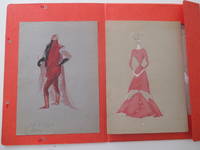
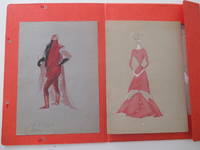
192014632AB1920. Vienna n.d. ca.1920 36 : 30 cm - 15 : 12 cm 21 water-colours partly heightened in white on grey cardboard. Beautiful very detailled elaborated custome designs in different colours white black blue red green yellow pink. The designs show mainly woman maybe designs for Bizet's 'Carmen' Two plates show actors and actress dancing with masks. unknown
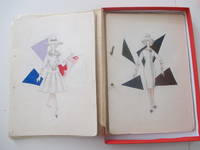
195014633AB1950. Vienna ca. 1950. 31 : 23 cm. Many designs on 97 pages some with mounted textile samples. Desgins for woman clothes coats pants etc. on plate with children's cloth 8 plates in colour with mounted textile samples. A few marked with 'Dior falte' Dior pleat some 'Dior Rock' Dior scirt some marked model summer model Margit etc. one plate with applications in different colours. hardcover
192018450AB1920. Vienna ca.1920 36 : 30 cm - 15 : 12 cm 21 acuarelas en parte elevados en blanco sobre cartón gris. Preciosos y muy detalladas diseños de trajes para el teatro y la opera en differentes colores blanco negro rojo verde amarillo lila. Los diseños muestran sobre todo mujeres tal vez para la opera de Bizet 'Carmen'. Dos láminas muestran actor y actriz bailando con mascaras. unknown
195018447AB1950. Vienna ca. 1950. 31 : 23 cm. Muchos diseños en 97 paginas con muestras de textil montados. Diseños para vestidos de mujeres abridos pantalones etc. 1 página con diseños para ropa de niños 8 páginas con muestras de textil in color montados. Algunos señalados con 'Dior falte' algunos con 'Dior Rock' Dior falda algunos señalados modela verano modelo Margit etc. Una página con aplicaciónes en diferentes colores. unknown
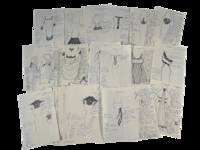
1950218271950. Unknown designer fashion illustration archive circa 1950s-1960s documenting women's garment design and construction practices in the mid-twentieth century. The material operates in Cultural/Representational Mode illustrating the aesthetics technical processes and stylistic evolution of women's fashion during the postwar and early modernist period and offering insight into how clothing design was conceptualized drafted and annotated at the working level. The archive reflects shifting silhouettes and decorative approaches associated with mid-century fashion including structured postwar forms and emerging streamlined influences.<br /> Archive comprises over 100 original fashion illustrations each executed in ink on sheets measuring approximately 6.5 x 9 inches. The drawings depict a range of garments including cocktail dresses coats suits blouses and eveningwear with attention to silhouette drapery and surface embellishment. Many sheets include handwritten annotations in cursive along margins and versos detailing construction elements such as measurements fabric choices and stylistic variations. Examples include labeled designs such as "cocktail dress" "coat" and "suit" with notes specifying features like "turtle neck - bare cut out - colors - gold" and "square low neckline with studded pearls. colors - purple - gold." The annotations suggest iterative design thinking with references to materials color palettes and structural adjustments indicating use as a working portfolio rather than presentation-only sketches.<br /> This archive provides detailed evidence of mid-century fashion design practices at the level of individual garment planning bridging artistic representation and technical instruction. The combination of visual sketches and written notes demonstrates how designers translated aesthetic concepts into wearable forms contributing to the study of dressmaking textile use and women's fashion history during a period of stylistic transition. The volume and consistency of the material suggest sustained use potentially within a professional or training context. Light wear and minor handling marks; overall very good condition. A substantial working archive illustrating mid-twentieth-century women's fashion design and construction methods. unknown
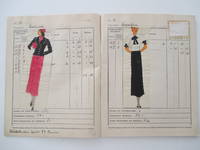
193111073AB1931. Vienna 1931. 245 : 20 cm. 43 pages With 34 mounted coloured designs for dresses. Interesting workbook indicating the time which was necessary to produce the dress the material which was used and the price of the material. Some of the designs with mounted samples of the material used. unknown
192453221New York: The Charles William Stores Inc. 1924-1925. Two vols. 4to. 548 8; 518 8 pp. With numerous colour plates colour-tinted text illustrations over 1000 black & white text illustrations diagrams. Colour-illustrated softcovers minor soiling wear slight sunning front cover of vol. 1 creasing to spine; minor creasing shelfwear vol. 2 light uniform interior toning as usual still VG- set. First edition of the complete year of Jazz Age catalogues from the Charles William Stores which offered a treasure trove of everyday fashions work clothes and household and consumer goods during the Roaring 20s offering the glamour and style of New York to the rest of the country. Their fashions were intended for the average American with emphasis on the more “endowed†woman and “stout†man during the Jazz Age emphasizing chic styles and well-woven fabrics. These catalogues detail the high grade work pants riding breeches denim jeans corduroy work pants along with triple-sewed work denim overalls and coats which could be purchased as well as those made out of Wabash Stripe Stifel denim cloth noted for its durability. No copies located in Worldcat of Spring & Summer 1925; 3 copies located of Fall & Winter 1925 Henry Ford Harvard American Textile History Museum. The Charles William Stores, Inc., paperback
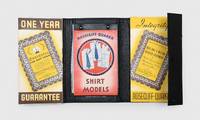
1938162513New York: Rosecliff-Quaker Corp. 1938. First in the field with the newest styles An ephemeral window onto menswear retailing in FDR's America offering the dream of personalized tailoring at an affordable cost. The Rosecliff-Quaker Corporation boasted that it employed 10000 people coast to coast used only unionized labour and guaranteed its shirts for a year. Octavo 214 x 120 mm. Original leatherette wallet binder unfolding to 214 x 460 mm two folding printed card advertising panels with mounted fabric samples 20 tie and 27 hosiery 50 shirt fabric samples each 170 x 120 mm in post-binder with four interleaved printed advertisements central panel lettered in silver. Occasional old pencil annotations. Binder sturdy and still fresh all samples present occasional offsetting and soiling to card panels majority of shirt samples with original paper information slips crudely removed with resulting paper residue. A very good example. hardcover
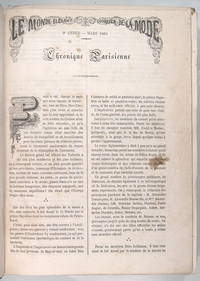
16286Le monde élégant courrier de la mode Revue mode. Paris 1865-1866. In/4 reliure demi-basane 100 gravures en noir et majoritairement en couleur. Gravures souvent débrochées reliure défraîchie. unknown
13270Without place in account book with label of 'Clements Newling & Co. Stationers & Printers and Account Book Makers &c. 96 Wood St. London E.C.' Entries dating from between 1897 and 1909. 353pp. small 4to. In brown calf half-binding with marbled endpapers and title 'DISSECTING BOOK' in gilt on red leather label on spine. In very good condition clean and tight in lightly-worn binding. Neatly written out throughout in the same hand with pencil running totals added in a second hand. Yearly figures each beginning on the first of March done in double-entry on facing pages for each of the departments Lace Dresses Wrappers Silks Gloves Furs Umbrellas Haberdashery Trimmings Jackets Millinery Underclothing Costumes with the first double-page spread for 'Lace' beginning on 1 March 1897 with the left-hand page giving 'Stock in hand' £1258 2s 10d with a balance of £503 11s 8d and the right-hand page giving 'Sales' £1033 18s 0d with £272 10s 0d in 'Transfers' and £454 6s 6d 'Stock in hand'. The largest turnover in 1897 was in the Costumes department £4647 4s 1d followed by 'U'clothing' £2786 18s 11d and Jackets £2316 14s 4d. As the years proceed and despite some ups and downs business appears to improve with the Clothing turnover in 1908 being £10102 2s 7d. The entries for the year 1909 are incomplete suggesting that the accounts were transferred to another volume. Without place, in account book with label of 'Clements, Newling & Co. Stationers & Printers and Account Book Makers &c. 96, Wood hardcover
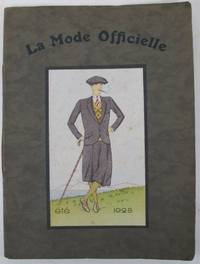
48676Paris: Publication de Luxe de l'Union des Journaux de Modes. 1928. Folio.37.5 x 28 cm. Title pp.162. Original grey thick paper wrappers with colour pictorial insert onto upper cover. The 16 pp. comprise full page colour illustrations of men's fashion 15 single figures back to back and the last with various waistcoats. The last text leaf describes the images. Quite rare. We can locate no other copies in commerce or past auction and just one record on Worldcat at the Bibliotheque Nationale. Paris: Publication de Luxe de l'Union des Journaux de Modes. 1928 unknown
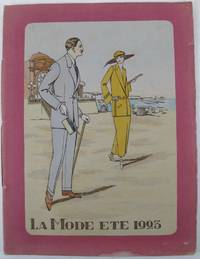
48678Paris: Publication de Luxe de l'Union des Journaux de Modes. 1923. Folio.37.5 x 28 cm. Title pp.162. Original pink thick paper wrappers with colour pictorial panel onto upper cover. The 16 pp. comprise full page colour illustrations of men's fashion 15 single figures back to back and the last with various waistcoats. The last text leaf describes the images. Quite rare. We can locate no other copies in commerce or past auction and just one record on Worldcat at the Bibliotheque Nationale. Paris: Publication de Luxe de l'Union des Journaux de Modes. 1923 unknown
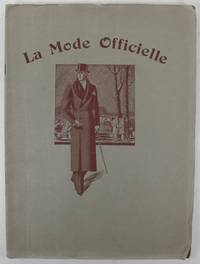
48679Paris: Publication de Luxe de l'Union des Journaux de Modes. 1936. Folio.37.5 x 28 cm. Title pp.162. Original grey thick paper pictorial wrappers. The 16 pp. comprise full page colour illustrations of men's fashion single or double figures. The last text leaf describes the images. Quite rare. We can locate no other copies in commerce or past auction and just one record on Worldcat at the Bibliotheque Nationale. Paris: Publication de Luxe de l'Union des Journaux de Modes. 1936 unknown
195025923n.p. 1950. Sold individually. Please inquire for images of each. Image approximately 12 x 10 inches plus margins. Sold individually. Please inquire for images of each. Image approximately 12 x 10 inches plus margins. Reynaldo Luza 1893-1978 pre-eminent fashion artist was born in Lima Peru. He began training as an architect at the University of Louvain Belgium but returned to Peru at the outbreak of World War I where he changed his studies from architecture to art. In 1918 he came to the United States where he earned his living by contributing drawings to several fashion publications principally VOGUE HARPERS BAZAAR and VANITY FAIR. In 1921 he joined HARPERS BAZAAR as the principal fashion artist a position he was to hold for 27 years. He divided his time between New York Paris and London working closely with all of the leading fashion designers of the times--Poiret Patou Lelong Paquin Douillet Doucet Cheruit Worth Drecoll Callot Soeurs Redfern Martial et Amand Premet Reboux Chanel Vionnet Molyneaux Schiaparelli Hartnell Steibel and Balenciaga among others.<br /> <br /> In 1940 Luza made New York his principal base where over the next few years he continued his activities at Harpers as well as creating fabric and furniture designs and the costumes for the movie "The Bridge of San Luis Rey". Among other distinctions he received several honorary appointments from the government of Peru including that of Artistic Director of the Paris Exposition of 1938 and the New York World's Fair of 1939-40; he also did the interior design of the new Lima airport.<br /> <br /> In 1950 Luza returned to Peru where he began a second career as a portrait painter exhibiting his work over the next few years in Paris New York and Washington D.C. unknown
1877List323Chicago: J.B. Westendorf 1877. Folio 10 ½ x 14 inches 6 pp. Very Good. J.B. Westendorf unknown
192462500Tacoma WA: A.V. Love Dry Goods Co. 2102-2106 Pacific Ave. 1924. 4to. 4 286 i.e. 338 10 pp. Including 52 pp. of colour lithograph sample pages many w/raised colour-embossed plates of bolts of cloth or fabric samples ribbon samples colour swatches 100’s of text illustrations photo illustrations. Brown-cloth backed colour-illustrated flexible covers cover art of 1920’s bobbed-hair woman measuring bolts of cloth Love Co. advertisement on back cover minor chipping & creasing to corners edgewear minor scuffing couple minor closed tears still VG- copy. First edition of this very scarce and lavishly illustrated wholesaler’s dry-goods catalogue issued by A.V. Love Dry Goods Co. during the Roaring 20’s. As a wholesale catalogue goods and counter displays are depicted and priced such as those for cuff buttons combs hair pins perfumes pipes sewing goods textiles and yarns. Of particular interest are the beautifully colour-printed & embossed inserted sample pages for trimmings silks silk threads yarns underwear towels blankets and more. Sections specifically devoted to work clothes including overalls work gloves boots logger’s plaid work shirts wool flannels and even bathing suits are also featured. Love Sr. 1868-1942 a Virginia grocer first moved to Washington State before 1900 and by 1902 had established his own firm in Tacoma for the A.V. Love Dry Goods Co. eventually with sample showrooms in Seattle Portland Bellingham Bremerton Everett Yakima Walla Walla Aberdeen Eugene Lewiston Wenatchee and Juneau & Fairbanks Alaska Territory. The company erected the Love Dry Goods and Loft Building in 1925 built by Heath Gove and Bell located in the Denny Triangle neighborhood and was an excellent example of Seattle’s early Art Deco Architecture. The company moved their base of operations to Seattle from Tacoma on Pacific Ave. after completion. No copies in Worldcat; See: A.V. Love Dry Goods and Loft Building Photograph Collection Boyle Wagoner Architects Univ. of Washington Lib. Spec. Collects. PH0639. A.V. Love Dry Goods Co., 2102-2106 Pacific Ave., hardcover
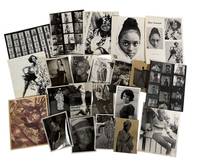
1950211751950. Archive of fashion photography documenting African American women's participation in commercial and editorial modeling from the 1950s through the 1980s a period in which the American fashion and advertising industries remained overwhelmingly centered on white beauty standards and limited Black representation in print media. Working in Cultural / Representational Mode the material illustrates changing presentations of Black femininity glamour and natural beauty across several decades of American fashion culture. The photographs provide visual evidence of evolving aesthetic conventions surrounding race cosmetics hairstyles leisure and commercial image-making during the postwar and Civil Rights eras. Particularly notable are several 1970s images depicting Black models with natural hairstyles and minimal cosmetic styling reflecting broader cultural shifts associated with Black pride movements and changing representations of African American identity in fashion and advertising imagery.<br /> Collection comprises 23 silver gelatin photographs and one color photograph produced by several professional photographers between the 1950s and 1980s. Images include editorial fashion shoots casting and publicity photographs scanned negatives and studio portraiture featuring predominantly Black women alongside several white models photographed by the same studios. Two 1970s editorial images depict a lean Black model with closely cropped natural hair posed in a leopard-print wrap. Four photographs focus specifically on Black women including close-up portraits emphasizing natural presentation and informal styling. One younger woman appears without visible makeup wearing a bandana and t-shirt while another is photographed in a straw hat with hoop earrings and patterned sash. Additional photographs include a Black model posed in a bikini atop the rim of a classical fountain featuring Aphrodite imagery. Four professional photographs and one casting card depict singer and actress Sylvia Vanderbeilt in commercial studio poses. Several scanned negatives portray a Black female model in multiple outfits and poses characteristic of 1970s fashion photography including one sequence featuring both the model and a young Black girl during apparent test shoots. The latest material consists of scanned negative strips from an apparent 1980s fashion session featuring a Black model with a sleek bob hairstyle modeling padded blazers and contemporary commercial attire. Other photographs depict white women in evening gowns fur wraps and casual mid-century fashions including two images by photographer Lee Brian showing the same model posed in mid-length evening gowns amid neoclassical architectural settings one with an elaborate mink shawl. Several photographs bear photographer or studio stamps on the verso including L.W. Ward of Cedar Rapids Iowa and Lee Brian of Palm Beach Florida.<br /> The archive traces substantial shifts in fashion photography and racial representation across three decades of American commercial imagery from heavily stylized mid-century glamour photography to the more natural aesthetics associated with 1970s fashion editorials and Black cultural self-presentation. The inclusion of both editorial and test photography offers insight into the production practices of commercial modeling studios as well as the visual conventions used in presenting Black women to advertising and fashion audiences during a period of gradual but uneven industry integration. Minor wear and light handling marks throughout; photographs otherwise remain in very good condition overall. A visually strong grouping documenting African American representation within postwar American fashion photography and commercial image culture. unknown