67 088 résultats
176525488New England 1765. Pen ink and wash on vellum done on a scale of approximately 1 inch per 9 miles. Later cartouche on paper mounted to the lower right corner reading "Map of Sir Francis Bernard's American Estate and the Adjoining Country." Mounted to board. Provenance: Sir Francis Bernard Colonial Governor of Massachusetts 1712-1779; by descent to Robert Spencer Bernard Nether Winchendon House Buckinghamshire England. An incredible eighteenth-century manuscript map on vellum accomplished for Massachusetts Colonial Governor Sir Francis Bernard: among the earliest English surveys of the interior of Maine and shows Mt. Desert Island.<br/> <br/> In November 1969 noted historian of cartography William P. Cumming discovered in the family home of Sir Francis Bernard "a collection of maps that in purpose and type differed so markedly from the more usual military coastal and general colonial maps of the time that it stands out in both interest and importance. These were domestic maps of a gentleman's estates and the roads to them." Cumming Specifically describing the present map Cumming writes: "This beautifully drawn map in black ink with bays rivers and lakes colored in green shows the coast from Broad Bay past Penobscot Bay and its islands to 'Passmaquiddy Bay' and Saint Croix River. The shoreline from Mount Desert Island to Passamaquoddy Bay is unmarked. The course of the St. Croix River to the Grand Lakes the Penobscot to Chesuncook Lake and the upper reaches of the Kennebec River to Mooshead Lake are traced carefully with the beginning of the overland trail to the River St. Lawrence." Cumming Sir Francis Bernard became the Colonial Governor of Massachusetts in late 1759 shortly after British troops were victorious in the Battle of Quebec. That decisive French and Indian War victory opened a vast region of present-day Maine for potential English settlement. To honor their new governor the Massachusetts Assembly petitioned the Crown to grant to Bernard "the Island of Mount Desart sic lying north eastward of Penboscot Bay." Bernard quickly began to establish a scheme to colonize the lands thereby affirming his grant. Writing to Viscount Barrington in June 1763 Bernard revealed his intentions to survey the region: "I propose to reconnoitre this Country this Summer with great accuracy the assembly having authorised me to employ a Mathematician to make observations all along the Coast. I have a very good Man for that purpose the Professor of Mathematics at this College i.e. John Winthrop whom I shall accompany and assist myself. And I shall make a further progress in surveying Mount Desert unless I am ordered off from home. I have concluded with 60 families with a Minister at their head and a Merchant to supply'm to settle there this Summer upon a plan already laid out: I want only power to make them a title. There are also 920 families ready to settle upon the continent adjoining to the Islands in 12 Townships already mark't out. I shall greive much setting aside my own interest if this settlement should be defeated; as it is compactly planned and laid out to great advantage. And when I consider how much it has Cost the Government of Great Britain to settle 4000 Souls in some other Parts of America I think it will be a great pity that such a Settlement should be refused when offered to be brought forward at no public expence at all. For my own part I have been drawn into this scheme imperceptibly: and now the People call on me to be their leader which I shall decline no longer than till I can learn that my establishing a New Colony in a desert which will long remain unpeopled if this opportunity is neglected will be approved." Bernard to Barrington 15 June 1763 quoted in Barrington-Bernard Correspondence p.70 The twelve townships referred to by Bernard are depicted on the present manuscript map via thin black lines. The year following that letter to Barrington the present manuscript map was drawn by the talented military mapmaker Francis Miller the details of which are recounted by Bernard in a 1766 letter to Barrington: "I am desired to certify to your Lordship that at the beginning of the Year 1764 Genl Gage at my Request gave Leave to Ensign Francis Miller of the 45th regiment then stationed in Newfoundland to come to Boston to assist me in some Works of Public Surveying which I had undertaken in pursuance of resolutions of the general Assembly and partly by Orders from England. Mr Miller being then at an outpost and not easily relieved did not arrive at Boston till Nov in that Year when the Season for actual Surveying was over. He was employed that Winter and Spring following in protracting the Surveys made that Summer i.e. the surveys by Chadwick among which was a compleat Route from Fort Pownal on the River Penobscot to Quebec and some other curious explorations of the Eastern parts of New England hitherto unknown to Englishmen: of which elegant Maps drawn by Mr. Miller have been transmitted to the Board of Trade. Early in the Last Summer I employed Miller having previously informed Genl Gage of the Intention to make an actual Survey from Boston to Albany and back again by another Way being near 200 Miles; and afterwards from Boston to Penobscot being above 200 Miles; by which Means a true Geometrical Line of 400 Miles in length through part of New York and all the habitable part of New-England has been obtained which will afford great Assistance to the Ascertaining the Geography of this Country and its Sea Coast. After this Survey was finished he was employed in protracting the Same and making Drawings thereof which he has done with great Accuracy and Elegance." Bernard to Barrington 11 January 1766 quoted in Barrington-Bernard Correspondence p.103 Chadwick's survey of 1764 would mark the beginning of the English exploration in the area. Chadwick's Journal the original in the Archives of Massachusetts and published in the Bangor Historical Magazine relates the reasons for the important and early survey: "The object of this survey was first to explore the Country secondly to view if it were practicable to make a road from Fort Pownal on Penobscot River to Quebec." His Journal continues with a direct reference to the present map: "Returned Jan. 1 1765 three plans the first directed to Lord Haliax etc. by order of His Excellency Francis Bernard etc. The second plan for the Secretary's office and a third plan for the Governor i.e. the present map; that the two last had no direction. That these plans were afterward delineated by Mr. Miller a regular officer." Thus the present manuscript map was one of two accomplished by Miller the other being in the Public Records Office London. As evidenced from Bernard's letter and Chadwick's journal this incredibly detailed map was drawn by Miller accomplished from Chadwick's surveys of 1764 and Miller's own surveys of the region. The map would also rely on Montresor's surveys of the region from 1761 as well as surveyor John Small's survey under Captain John Howard as the map extends beyond the region surveyed by Chadwick including the Kennebec River and the area to Lake Megantic. Bernard's maps would have a profound influence on the cartography of the area. In 1776 with the Revolution engendering great interest in the cartography of the colonies Thomas Pownall published a map which relied on the aforementioned surveys. Pownall's map used Lewis Evans's seminal 1755 mapping even printing it from the same plate but extended the map with a new plate to the east to encompass New England. On that portion of the map by means of two small asteriks Bernard's surveys were identified. A small caption on the Pownall map explains: "The Coast included within these marks is copied from Governor Bernard's Surveys including Mo. Desart Id. &c." Pownall's mapping of the northern New England coastline -- i.e. the mapping derived from the present survey -- would become the definitive mapping of the region and would be copied by countless cartographers into the 19th century. The origins of this influential map however began with Governor Bernard's surveys.<br/> <br/> Barrington-Bernard Correspondence p.70. Chadwick "An Account of a Journey from Fort Pownal Up the Penobscot River to Quebec in 1764" in Bangor Historical Magazine Vol.IV No.8. Cumming British Maps of Colonial America pp.29-30 Appendix A. Eckstrom "History of the Chadwick Survey" in Sprague's Journal of Maine History 14 pp.62-89. unknown
1765WRCAM46139New England 1765. Pen-and-ink on laid paper with the road colored in sepia and with water elements in green with a yellow wash border within the gradients on seventeen of eighteen sheets. Sheet size: 27 1/2 x 214 inches overall if joined. Minor repairs one small blank section in the upper border lacking. Very good. Provenance: Sir Francis Bernard Colonial Governor of Massachusetts 1712-79; by descent to Robert Spencer Bernard Nether Winchendon House Buckinghamshire England. A truly massive road map measuring over seventeen feet from east to west showing the roads across the colony of Massachusetts in great detail. It is one of only a handful of road maps to survive from the colonial era. It was created for Sir Francis Bernard then colonial governor of Massachusetts. <br> <br> In November 1969 noted historian of cartography William P. Cumming discovered in the family home of Sir Francis Bernard "a collection of maps that in purpose and type differed so markedly from the more usual military coastal and general colonial maps of the time that it stands out in both interest and importance. These were domestic maps of a gentleman's estates and the roads to them.Probably Sir Francis's most important contribution to cartography was to have careful surveys made of the roads from Boston.westward to Albany New York on a one-inch to two-thirds-mile scale. It was along part of this Albany to Boston road that the American rebels dragged the heavy cannon captured at Fort Ticonderoga that set up on Dorchester Heights forced General Howe's evacuation of Boston in 1776.No route maps as detailed as these except for two short New Jersey road maps are known for any other section of the eastern seaboard until those of Christopher Colles in 1789" Cumming pp.29-30. <br> <br> The present manuscript map depicts the road across Massachusetts but does not extend as far as Albany. The road divided into miles throughout extends from Boston to Springfield where it splits into two westward routes to Albany: the first a more southerly route via Great Barrington Massachusetts which ends on the present map at a point approximately thirty-three miles from Albany; and the more northerly route which is shown on the map as far as Northampton just past the Connecticut River. The map is done on a very large scale of approximately two-thirds of a mile to the inch with towns rivers mountains residences meetinghouses and numerous taverns identified along the way. Cumming records this map as four separate entries i.e. MP21-24 although with an incorrect sheet count. <br> <br> Comprised of eighteen sheets one narrow blank sheet is missing the top half of the map is comprised of ten narrow sheets varyingly long and short while the bottom half is comprised of eight uniform sheets each measuring 18 1/2 x 26 1/2 inches. The sheets are as follows: <br> <br> 1 Southeast corner of the map blank except wash border. <br> <br> 2 Blank except for wash border with a segment of rhumb line. <br> <br> 3 missing but would clearly be blank except for wash border with section of rhumb line <br> <br> 4 Text reading "Boston to Albany." <br> <br> 5 Text reading "Way to Spr-" with part of the southern road. <br> <br> 6 Text reading "-ingfield" with part of the southern road including Springfield and the Connecticut River. <br> <br> 7 A small sheet containing text reading "and" and part of the southern route. <br> <br> 8 blank except for wash border <br> <br> 9 blank except for wash border <br> <br> 10 Southwest corner of the map blank except for wash border. <br> <br> 11 Northeast corner of the map containing Medford Boston and the route as far as Framingham. <br> <br> 12 Text reading "the road" with the northern route from Sudbury to Westborough. <br> <br> 13 Text reading "from" with the route from Shrewsbury to Leicester. <br> <br> 14 Text reading "by" and "road b-" with the route from Brookfield west to Coy's Hill and the Porpoodock Mountains. <br> <br> 15 Text reading "-y way of Northampton to Albany" showing the route from Belchertown to Northampton including part of the Connecticut River and the Hadley Mountains. <br> <br> 16 Text reading "Gr-" with part of the route showing Blandford. <br> <br> 17 Text reading "-eat Barrington" showing the route from the Farmington River to Tyringham. <br> <br> 18 Northwest corner of the map showing Great Barrington and a bit beyond to the Massachusetts-New York border. <br> <br> Sir Francis Bernard became the colonial governor of Massachusetts in late 1759 shortly after British troops were victorious in the Battle of Quebec. That decisive French and Indian War victory opened a vast region for renewed English settlement and trade thus necessitating the need for more accurate surveys of the roads. The present manuscript map was surveyed and drawn by talented military mapmaker Francis Miller in 1765 for Bernard the details of which are recounted by Bernard in a 1766 letter to Lord Barrington: <br> <br> "I am desired to certify to your Lordship that at the beginning of the Year 1764 Genl Gage at my Request gave Leave to Ensign Francis Miller of the 45th regiment then stationed in Newfoundland to come to Boston to assist me in some Works of Public Surveying which I had undertaken in pursuance of resolutions of the general Assembly & partly by Orders from England. Mr Miller being then at an outpost & not easily relieved did not arrive at Boston till Nov in that Year when the Season for actual Surveying was over. He was employed that Winter & Spring following in protracting the Surveys made that Summer among which was a compleat Route from Fort Pownal on the River Penobscot to Quebec & some other curious explorations of the Eastern parts of New England hitherto unknown to Englishmen: of which elegant Maps drawn by Mr Miller have been transmitted to the Board of Trade. Early in the Last Summer I employed M' Miller having previously informed Genl Gage of the Intention to make an actual Survey from Boston to Albany & back again by another Way being near 200 Miles; & afterwards from Boston to Penobscot being above 200 Miles; by which Means a true Geometrical Line of 400 Miles in length through part of New York & all the habitable part of New-England has been obtained which will afford great Assistance to the Ascertaining the Geography of this Country & its Sea Coast. After this Survey was finished he was employed in protracting the Same & making Drawings thereof which he has done with great Accuracy & Elegance" Bernard to Barrington Jan. 1 1766 quoted in THE BARRINGTON-BERNARD CORRESPONDENCE p.103. <br> <br> This important manuscript map detailing the route from Boston westward towards Albany constitutes among the earliest of American road maps. CUMMING BRITISH MAPS OF COLONIAL AMERICA Chicago: University of Chicago Press 1974 pp.29-30 and Appendix A. THE BARRINGTON-BERNARD CORRESPONDENCE Cambridge: Harvard University 1912. unknown books
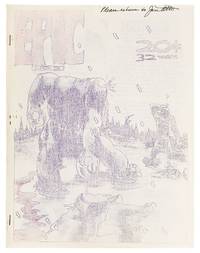
1972398768Montpelier Vermont: Frank Miller 1972. Softcover. Near Fine. Six issues. Quartos. Side stapled spirit-duplicated leaves; the three later issues with cardstock covers. Each between 28pp. and 50pp. Overall near fine or better with some fading to some of the mimeograph covers minor wear at the edges a few tiny oxidation spots; and four with names on the covers.<br /> <br /> An amazing group of six issues of the mimeographed fanzines EPIC drawn and edited by comic book legend Frank Miller while he was still in high school. The issues include 48 pages of stories written and drawn by Miller along with 13 spot illustrations three front covers four rear covers and four editorials. Miller stands as one of the most influential artists and writers in modern comic books and in many ways the person most responsible for dragging comics into the mainstream with his dark and gritty Batman stories of the 1980s and his daringly innovative creator-owned books Sin City and 300. These comics reveal a comic-obsessed teenager with a single-minded determination to become a comic book professional and with the clear goal to create according to one of Miller's editorials “new ideas necessary for the survival of the industry.â€. Frank Miller unknown
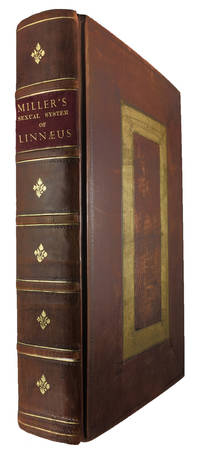
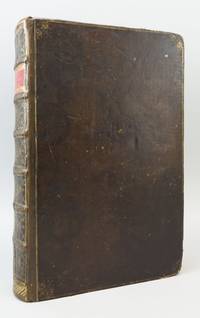
17703518London: published and sold by the author at his house . 1770. Contemporary uniform gold-tooled mottled calf sewn at 7 stations richly gold-tooled spine with red and green title labels each board with a border made with a flower roll gold-tooled board edges curl-marbled endpapers. Imperial folio 54 x 38 cm. Richly engraved frontispiece with medallion portraits of Miller and Linnaeus at the head 3 engraved title-pages identical except for the manuscript volume numbers 2 series of engraved botanical plates each series numbered in manuscript 1-104 each series printed from the same 104 plates but that in volume 1 in proof-states with no headings imprints or other text in the plates and beautifully hand-coloured that in volumes 2 & 3 in black and white with titles and imprints and 4 further plates numbered I-IV showing 178 varieties of leaves finely hand-coloured. With a full-page allegorical dedicatory pen and watercolour drawing for Queen Charlotte of England on the end-leaf before the frontispiece of the first volume and a professionally lettered index covering all 3 volumes specially made for this dedication copy at the end of volume 3. 3 volumes. Dedication copy with a stunning original pen and watercolour drawing in honour of Queen Charlotte of England of the first edition of a highly esteemed illustrated book on the sexual system of Linnaeus published in 20 parts from 1775 to 1777 with some plates issued as completed from 1770 onward. Our copy is bound in three volumes with the volume numbers professionally lettered on the title-pages in ink. Volumes 2 and 3 contain the suite of plates in black and white plus the four hand-coloured plates showing 178 varieties of plant leaves each plate with an engraved title and imprint. Volume 1 contains a suite of the same 104 plates in proof states with no lettering all in a fine contemporary hand-colouring. The present copy of this rare and impressive flower book is especially valuable for its beautiful dedicatory watercolour drawing for Queen Charlotte 1744-1818 wife of King George III of England. Probably drawn by Miller himself it shows Father Time and Britannia seated at the foot of an obelisk looking at the inscription "Charlotta Regina" that an angel just incised on it. A smoking incense burner sits on top of the obelisk which two putti adorn with garlands while a herald angel blows its trumpet emitting the word "extendo". The whole is veiled in thick clouds and below it appears the winged decorated royal device bearing the legend "honi soit qui mal y pense".Water stain in upper outside corner of one plate and one text leaf in volume 3 and 2 of the plates of leaf varieties foxed but generally in fine condition. The ink of the uncoloured plates has sometimes caused a shadow on the facing text page. The spine joints and board edges have been expertly restored with the loss of much of the gold-tooling on the spine of volume 1.l Blunt p. 150; Dunthorne 206; Henrey 1153; GFB p. 68; Nissen BBI 1372; Plesch p. 336; Pritzel 6523; Soulsby 667. published and sold by the author at his house ..., unknown
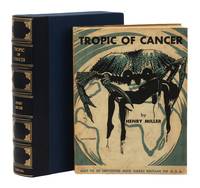
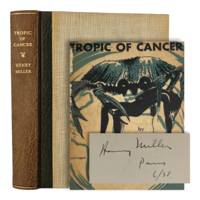
19391118Paris: The Obelisk Press 1939. First Editions. Minor rubbing and split to the spine of Tropic of Cancer else two near fine books in the originl wrappers without restoration. Both with custom boxes. Tropic of Cancer is primarily set in Bohemian Paris around 1930 where the locals could stay up on New Year’s Eve and watch their hopes drop. It’s half autobiography and half exaggerated fantasy but it’s mainly lighthearted and its promiscuous carnal zeal is from a more sincere time.<br /> <br /> Tropic of Capricorn is a first edition in English despite the Paris imprint and likely first issue though the price has been scratched out on front flap and spine a part of the ‘0’ is legible on the front flap so it was not stamped over and there is no ‘175.00’ printed on the rear wrapper. Despite this we will pretend it’s a 2nd issue and include it with Tropic of Cancer for free. <br /> <br /> Tropic of Cancer was banned in and difficult to buy in or even bring into the U. S. until 1961 and the preoccupations of the '30s '40s and '50s didn't help its ready availability migrating to my question about moral as opposed to political suppression. If some novel depraves and corrupts why then is the person chosen to be the censor always the person who is the most depraved and corrupted This paradox echoes Justice Potter Stewart's famous "I know it when I see it" obscenity standard from the 1964 Jacobellis v. Ohio case highlighting how subjective and self-referential censorship judgments inherently become as those who claim to identify moral corruption must necessarily be intimate with the very content they condemn. The Obelisk Press unknown
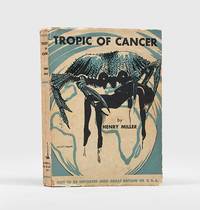
1934140946393Paris: The Obelisk Press 1934. First Edition. Near Fine. First edition first printing of this literary high spot. One of 1000 copies in publisher's original printed wrappers with price of 50 fr. intact Front wrapper printed with Maurice J. Kahane's striking crab and globe design. Near Fine with browning and light soiling to wraps light edge wear top corner lightly bumped and light creasing to wraps. Contents tanned. Housed in a custom chemise slipcase. <p>The scarce first appearance of Miller's scandalously erotic novel which would eventually test the boundaries of free speech in America and become a landmark of 20th century literature rare in the original wrappers. Since so many copies of the first edition were seized by authorities in England and the U.S. The Obelisk Press discarded the printed wrappers in favor of less conspicuous plain ones for the second and subsequent editions. Shifreen & Jackson A9a. The Obelisk Press unknown
31748286 ITEMS. Includes 47 signed items: Including a signed first edition of Miller's first play "All My Sons: signed first edition of "Death of a Salesman" a signed "round robin signed by complete cast of "Death of a Salesman" a first edition of his only children's book: "Jane's Blanket" a signed copy of "A View From the Bridge" original photos two letters a fine first in dj of "The Misfits" a signed limited edition of "After the Fall" a signed first of "Incident at Vichey" etc. Included also are play bills critical works magazine articles etc. A complete list is available. "Arthur Miller's first success came in 1947 with "All My Sons" for which he won the New York Drama Critics Circle award. Although it lacked the originality of some of his later works this family drama which told the story of a factory owner who caused the death of several American pilots during World War I by selling defective parts to the government dealt with issues of guilt and dishonesty that Miller would revisit and expand upon in some of his more memorable plays. His next play "Death of a Salesman" stunned audiences with its brilliance and was quickly earmarked as a classic of the modern theatre. It also sparked heated debates over the true nature of tragedy. Some critics criticized Miller for infusing the play with a deep sense of pity for the commonplace salesman Willy Loman. They insisted that Willy was a "little man" and therefore not worthy of the pathos reserved for such tragic heroes as Oedipus and Medea. Miller however argued that the tragic feeling is invoked whenever we are in the presence of a character any character who is ready to sacrifice his life if need be to secure one thing--his sense of personal dignity. And the "little" salesman was determined to do just that no matter what the cost. Arthur Miller was awarded the Pulitzer Prize in 1949 for Death of a Salesman. He has come to be considered one of the greatest dramatists in the history of the American Theatre and his plays a fusion of naturalistic and expressionistic techniques continue to be widely produced. unknown books
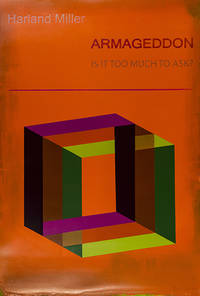
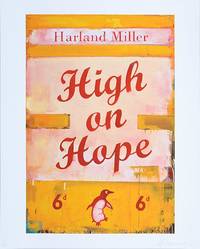
2017125606London: Paragon Press 2017. Edition of 50. Signed and numbered in pencil on the verso by Miller. Miller's own book cover design inspired by the op-art imagery of the popular psychology books from the 1960 and 1970s. Polymer gravure with photo-etching and wood block printing on Hahnemuhle Bright White 350 gsm paper. Sheet size: 180 x 119.5 cm. Framed size: 193 x 131 cm. Excellent condition. Presented in a black wooden frame with acrylic glazing. unknown
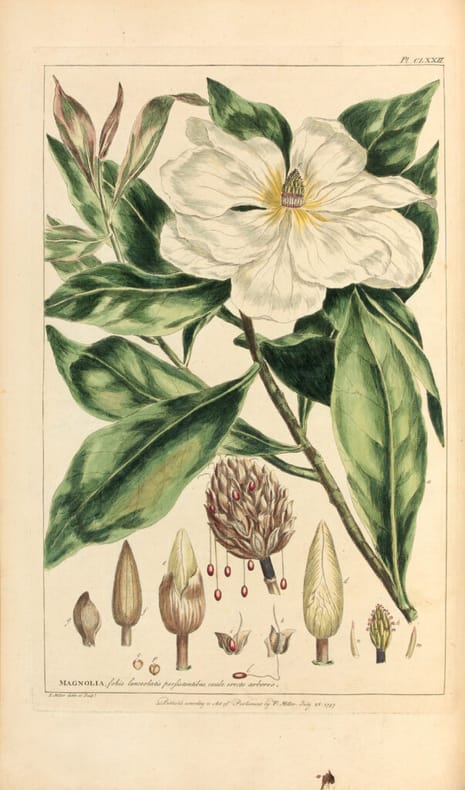
8130London: published and sold by the Author 1770- 1777. First edition. The frontispiece is lightly foxed the 2nd and 76th colored plates show slight flaking of the green pigmentation occasional offsetting from some uncolored plates onto the facing text leaves a few faint mars to the outer leather boards this large attractively-bound volume weighs about 40 pounds; a bright clean copy in near fine condition. Pp. 120 engraved emblematic frontispiece engraved title subscriber's list with 108 fine hand-colored engraved plates heightened with gum Arabic 4 hand-colored engraved plates of leaf shapes 104 hand-colored engraved plates of flowers and 108 uncolored plates printed in black all plates in this work appear in two states one state is hand-colored and the other is monochrome. Bound to style by the Studio Bindery of Kingston-on-Thames Surrey England in speckled calf the covers paneled in blind with on-laid light brown speckled panel surrounding a central area cross-hatched in blind spine in six compartments with raised bands the bands highlighted by tooling in gilt and blind red morocco lettering-piece in the second compartment the others with simple repeat gilt decoration of a centrally-placed flower-spray tool marbled endpapers lg thick folio 527 x 355mm. The text is printed in two columns one in Latin and on in English. The work was originally issued to subscribers in twenty parts between 1775 and 1777 to 85 subscribers who ordered a total 105 sets some plates printed as early as 1770; the edition was limited to these 105 copies subscriber's list included. "An immense work of botany where in Miller illustrated in a style of unprecedented elegance the sexual system of Linnaeus" J. C. Lettsom - Memoirs of John Fothergill 1789 p. 106. Linnaeus himself was full of praise for Miller's work in a letter of 25 July 1775 he described the sample plates he had been sent as "pulchiores et accuratiores quam ullae quas vidit mundus a condito orbe" more beautiful and accurate than any seen since the beginning of the world. Johann Sebastian Mueller was born in Nuremberg but moved permanently to England in 1744 changing his name to Miller. For the present work he worked chiefly from specimens in the garden of John Fothergill at Upton in Essex England. See also Great Flower Books 1990 p. 120; Soulsby 667; Stafleu & Cowan 6482. London: published and sold by the Author, (1770-) 1777. First edition. hardcover
177740827London: Published and Sold by the Author at his House in Dorset Court near Parliament Street 1777. 3 volumes. Folio. 20 1/2 x 14 inches. First edition. 104 engraved plates in both hand-colored and uncolored states plus 4 hand-colored engraved plates of botanical details. Engraved allegorical frontispiece engraved title preface subscription list explanation of classes. Each uncolored plate with an accompanying descriptive letterpress leaf. Unpaginated. Contemporary full calf with roll-tooled gilt foliate gilt-patterned board edges seven raised bands forming eight compartments on a richly gilt-patterned spine gilt-lettered red morocco lettering-piece in second compartment and brown morocco in third all edges gilt and sprinkled red<br/> <br/> Excellent example of Miller's prodigious Linnæan herbal with plates in two states. "An immense work . . . illustrated in a style of unprecedented elegance." Lettsom<br/> <br/> Miller's esteemed illustrated botanical book on the sexual system of Linnæus was published in twenty parts from 1770 to 1777 with plates issued as completed from 1770 onward. Volume I holds a suite of 104 engraved plates in proof states before letters all colored in a fine contemporary hand with penciled names at the bottom of each leaf printed recto with blank versos. Volumes II and III have the same suite of 104 plates with 53 in Volume II and 51 in Volume III each with an engraved title and imprint and each paired with a leaf of descriptive letterpress text. These plates are uncolored with botanical text in Latin and English. An additional four hand-colored engraved plates are at the rear of Volume III. 178 varieties of plant leaves are shown across a total of 212 plates. Miller issued the plates in two states: with letters on the uncolored plates for science and without letters on the colored plates for aesthetics. The plants themselves were sourced from Dr. John Fothergill's 1712-1780 renowned garden in Essex. Fothergill was an enthusiastic supporter of Miller and served as the superintendent of his book but refused Miller's attempt to dedicate the work to him stating that dedications were a "species of literary pageantry." Lettsom The text's botanical information was initially overseen by Gowan Knight 1713-1772 the first Principal Librarian of the British Museum and a friend of Fothergill's. According to the list of subscribers 106 copies were ordered by 83 individuals or institutions. Queen Charlotte subscribed for two copies while the booksellers P. Elmsley and B. White each took ten. Once the subscriptions had been filled there were evidently leftover sets of text and colored plates. Henrey records a copy of the work in the Natural History Museum Library with a new 1794 title-page with R. Faulder as the publisher. This re-set title accompanies a suite of the colored plates made up from what appears to be "the surplus of the plates of the 1777 edition." Henrey Miller born Müeller was a botanical artist and engraver from Nuremberg who studied with Johann Christoph Weigel and M. Tyroff before moving to England in 1744. He would reside there for the rest of his life. Miller came to the attention of the Swedish biologist Linnæus the father of modern taxonomy through the British naturalist John Ellis 1710-1776. Linnæus himself was sent samples of Miller's work for approval and had nothing but praise for the artist. Miller would go on to publish Botanical Tables in 1785 with John Stuart 3rd Earl of Bute 1713-1792 who served as the Prime Minister of Great Britain from 1762 to 1763. More than a thousand of Miller's original drawings now reside at the Natural History Museum in London. DNB<br/> <br/> Blunt p.150. DNB. Dunthorne 207. ESTC T91594. Henrey III 1153. Lettsom The Memoirs of John Fothergill p.106. Nissen BBI 1372. Plesch p.336. Sitwell Great Flower Books p.120. Soulsby 667. Sprague "John Sebastian Miller's 'Icones Novae'" in Journal of Botany Vol. 74 pp. 208-209. Stafleu TL2 6482. Published and Sold by the Author at his House in Dorset Court near Parliament Street unknown
LCS-17784Splendide recueil de fleurs et plantes délicatement coloriées à l'époque. London, Printed for the Author, John Rivington, 1755-1760. 2 volumes in-folio de : I/ (3) ff., 100 pp. de texte, 150 planches à pleine page ; II/ (1) f., pp. 101 à 200, planches 151 à 300 dont 2 dépliantes, (2) ff. ; 3 premiers ff. du tome I restaurés et réemmargés sans manque, 5 pl. légèrement piquées, 8 brunies ou tachées, pte déchirure à 1 pl. dépliante sans manque. Un dessin à l'encre, non signé a été relié p. 30 du tome I. Demi-maroquin rouge à petits coins de vélin crème, dos à nerfs ornés, pièces de titre et de tomaison de maroquin olive, tranches dorées. Reliure moderne. 410 x 252 mm.
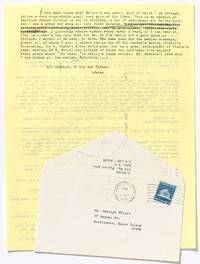
1973466924Los Angeles California 1973. Fine. An archive of 49 letters written by the American novelist and screenwriter Daniel Fuchs to Gabriel Miller author of an acclaimed biography of Fuchs. Most of the letters are typed and contain significant manuscript annotations by Fuchs. The collection also includes two letters by Miller one of which is heavily annotated by Fuchs together with all 51 mailing envelopes. The collection is in fine condition and rich in content with Fuchs providing detailed responses to Miller’s questions about his life and work.<br /> <br /> An Academy Award-winning screenwriter and widely acclaimed novelist on Jewish life Daniel Fuchs was born in 1909 on the Lower East Side of Manhattan and grew up in Williamsburg Brooklyn. Drawing on his Brooklyn upbringing when writing about the Jewish immigrant ghetto he began his career with a trilogy that many critics regard as his greatest work: Summer in Williamsburg 1934 Homage to Blenholt 1936 and Low Company 1937.<br /> <br /> Although all three were acclaimed by critics they sold poorly and Fuchs moved West to write screenplays including The Hard Way 1942 and Hollow Triumph 1948. In 1956 Fuchs won an Oscar for best original story for the MGM film Love Me or Leave Me.<br /> <br /> In 1961 Fuchs’ early trilogy won new critical acclaim and commercial success when it was reprinted under the collective title Three Novels and again in 1972 when it was published as The Williamsburg Trilogy. Encouraged by the positive reception of the trilogy Fuchs wrote another novel West of the Rockies in 1971 drawing on his Hollywood experience. Also throughout his career Fuchs contributed short stories to The New Yorker Esquire Collier’s Saturday Evening Post and New Republic.<br /> <br /> In his letters to Miller Fuchs is frank detailed and direct: “my God no the thirties were great Jesus who says different The Bway theatre was first rate surely the golden age. The English poorboy novels. Proust and Joyce washing in yes the 20’s but their full force in the 30’s. The whole business about Paris Transition the little magazines. The Continental novels. The whole publishing scene was different real geschmacht to it … .â€<br /> <br /> And here Fuchs on City College and how he came to Hollywood from a letter dated Dec. 23 1974: “Yes yes I liked City College very much. It was a beautiful place. It opened up the world a large statement & a vulnerable one but screw ‘em all true. Fine friends starting out fellows driving taxis all night sleeping & going to class by day … What did I major in English for a few years then the head the dept threw me out – I had offended him with some quasi-transition pieces do you know about transition magazine … So I majored eventually in philosophy.â€<br /> <br /> In another dated February 27 1975 he explains: “The 'transition' pieces loosened up the language Jolas: 'The Revolution of the Word' and Lewis Freeman Mott there at City College. Pater Cardinal Newman Arnold felt everything slipping away to the riff raff and struck back. The rabble apparently won out …. 'Capone' was the first or one of the 1st…. Went to the Catskills never worked there… We rented Joe Schrank’s 60 acre farm in Bucks Co. Erwinna and stayed all of two mos. S.J. Perelman living across the road dropped in one evening with dog and cane beat up on Hywd left and I left the next week or so for Hywd no connection. It just happened that way.â€<br /> <br /> As noted by Martin Greenberg in a 2007 article in New Criterion: “Daniel Fuchs keeps being rediscovered. Thirteen years after his death his three Brooklyn novels of the 1930s have again been published in one big book by the Black Sparrow Press Godine which has also issued a paperback reprint of Fuchs’s writings from and of his Hollywood years The Golden West … Fuchs liked being rediscovered not surprisingly and finding ‘he had become a kind of cult.’â€<br /> <br /> An important and historically significant collection of primary source autobiographical letters which further support Fuchs' status as an American master. Accompanied by transcriptions of most of the letters.<br /> <br /> References<br /> 1. Greenberg Martin. “Daniel Fuchs: ‘A man must make money’ On the novelist and screenwriter Daniel Fuchsâ€. New Criterion October 2007.<br /> 2. Oliver Myrna. “Obituaries: Daniel Fuchs; Novelist and Oscar-Winning Film Writerâ€. Los Angeles Times August 10 1993.<br /> 3. Saroyan Aram. “The Golden West: An Interview with Daniel Fuchsâ€. The Paris Review July 16 2014. unknown
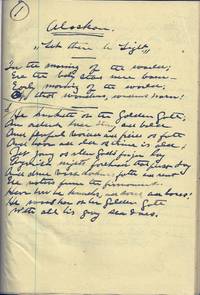
017375First Edition. Hardcover. Fine and rare beautifully bound. Folio 8-1/4" x 11-3/4" consisting of 53 pages numbered to 54 one page contains two numbers on lined yellow paper with a few additions at the end on white paper pasted to the yellow pages with a calligraphic title page facing a photographic reproduction of Miller. Bound in 3/4 maroon morocco leather and marbled boards housed in a slipcase of full burgundy morocco leather. Though some of the phrases such as the title are used in other of Miller's works this long narrative poem appears to be unpublished. The poem begins: "In the morning of the world;/Ere the holy stars were born--/Early morning of the world;/O that wondrous wondrous morn!" We have at this point not read much else because our lives are short and Miller's handwriting is trying but we are fairly confident that the text deals at least in part with the Alaskan Gold Rush of the 1890s as Miller visited the Klondike during that time returning to California after six months exhausted from his adventures with thousands of dollars of gold dust and $6000 from a publisher for his Alaskan letters. <br/><br/>The "Poet of the Sierras" also known as the Buffalo Bill of American literature Miller was indeed one of the more colorful authors of the late 19th century known for fabricating many features of life. While still a boy he headed from Oregon to California during the early gold rush where he worked in a number of mining camps. He survived several battles with Indians as well as several altercations with the law. He earned his keep mostly from mining and the Pony Express before his writing sustained him. hardcover
2019175588Margate: Counter Editions 2019. Edition of 75. Signed in pencil lower right by Miller numbered lower left. 20 colour screen print on Somerset Radiant White tub sized 410gsm paper. Sheet size: 76 x 60 cm. Framed size: 83.5 x 67.5 cm. Excellent condition. Presented in a dark stained wooden frame with conservation acrylic glazing. unknown
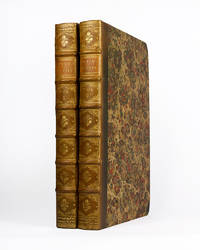
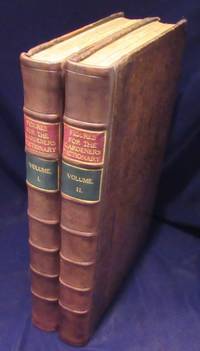
1755ST13850London: Printed for the Author; And Sold by John Rivington et al. 1755-60. FIRST EDITION. 425 x 270 mm. 16 3/4 x 10 5/8". vi 200 4 pp. Two volumes in one. <br/> Contemporary calf cover with thin gilt border and small cornerpieces raised bands compartments with much gilt tooling red label with gilt lettering skillfully rebacked preserving most of original backstrip. WITH 300 LOVELY HAND-COLORED ENGRAVINGS OF FLOWERS two of which are folding. Front pastedown with armorial bookplate of John Pollexfen Bastard. Sitwell "Great Flower Books" p. 121; Hunt 566; Henrey 1097; Pritzel 6242; Nissen 1378; Hazel le Rougetel "The Chelsea Gardener Philip Miller 1691-1771" pp. 110 114. Covers somewhat scratched corners a bit worn but the restored binding solid and appealing. Occasional mild thumbing or light browning perhaps a dozen plates with minor to moderate offsetting but A VERY PLEASING COPY INTERNALLY quite clean and fresh and with attractive coloring.<br/> <br/> By a man characterized by DNB as "the most distinguished and influential British gardener" of the time this lavishly illustrated work is called by celebrated botanist W. T. Stearn the most important horticultural work of the 18th century. And Richard Pulteny the British naturalist and historian of science said that "England had not before produced any work except the 'Hortus Elthamensis' or Catesby's 'Carolina' so superb and extensive." Published in 50 monthly parts containing six plates each these two impressive folio volumes comprise in Hunt's words a "complement and fulfillment" of Miller's popular but sparsely illustrated "Gardener's Dictionary" with 300 splendid depictions of plants drawn from live specimens in the renowned Chelsea Physic Garden where Miller served as head gardener. Miller 1691-1771 published "Figures" as a means to showcase in a grand fashion a selection of species deemed to be either noteworthy useful in trade or medicine or somehow overlooked by botanists. According to DNB the lovely plates here executed by eminent artists that include Georg Ehret were "commended at the time for being drawn from nature in the best state of flowering and for including illustrations of fruit and seed as they ripened." Miller boasts in the preface that "no Expense has been spared to render it as perfect as possible: The Drawings were taken from the living Plants; the Engravings were most of them done under the Author's Inspection; and the Plates have been carefully coloured from the original Drawings and compared with the Plants in their Perfection." This book appears with some regularity in the market but it is quite difficult to find in the kind of condition seen here. Printed for the Author; And Sold by John Rivington [et al.] unknown
176526259New England 1765. Pen-and-ink with grey and light green wash on two joined sheets of laid paper with an unlettered cartouche in the upper right corner in yellow wash a compass rose additionally decorated in green red and yellow period ink inscription on verso: "Kennebec River by Capt. Small." Provenance: Sir Francis Bernard Colonial Governor of Massachusetts 1712-1779; by descent to Robert Spencer Bernard Nether Winchendon House Buckinghamshire England. The earliest known survey of the upper Kennebec River here in manuscript.<br/> <br/> In November 1969 noted historian of cartography William P. Cumming discovered in the family home of Sir Francis Bernard "a collection of maps that in purpose and type differed so markedly from the more usual military coastal and general colonial maps of the time that it stands out in both interest and importance." Cumming The present manuscript map done on a scale of approximately 4 1/2 miles to the inch shows much of the length of the Kennebec from its mouth to a point approximately 100 miles north of Fort Western with its various tributaries and islands depicted. At the bottom of the map the coast of Maine is shown in much detail depicting the numerous small islands and inlets from Penobscot Bay in the north to Cape Elizabeth in the south. Numerous forts along the coast are shown including George's Fort Brunswick Fort and Pemmaquid Fort; a church is depicted at the mouth of Royall's River near North Yarmouth. West of the Kennebec a portion of the "Sagadehock" or "Amorescoggin" River is shown. Along the lower Kennebec Fort Francfort Fort Western and Fort Halifax are identified. Toponyms north of Fort Halifax include "Norridge Walk" and "An Indian Carrying Place" i.e. portage route which is drawn via hachured line. Bernard became the Colonial Governor of Massachusetts in late 1759 shortly after British troops were victorious in the Battle of Quebec. That decisive French and Indian War victory opened a vast region for renewed English settlement and trade thus necessitating the need for more accurate surveys of the roads and inland waterways. The present manuscript map was surveyed and drawn by the talented military mapmaker Francis Miller in 1765 for Bernard the details of which are recounted by Bernard in a 1766 letter to Lord Barrington: "I am desired to certify to your Lordship that at the beginning of the Year 1764 Genl Gage at my Request gave Leave to Ensign Francis Miller of the 45th regiment then stationed in Newfoundland to come to Boston to assist me in some Works of Public Surveying which I had undertaken in pursuance of resolutions of the general Assembly and partly by Orders from England. Mr Miller being then at an outpost and not easily relieved did not arrive at Boston till Nov in that Year when the Season for actual Surveying was over. He was employed that Winter and Spring following in protracting the Surveys made that Summer among which was a compleat Route from Fort Pownal on the River Penobscot to Quebec i.e. Chadwick's surveys and some other curious explorations of the Eastern parts of New England hitherto unknown to Englishmen: of which elegant Maps drawn by Mr. Miller have been transmitted to the Board of Trade." Bernard to Barrington 11 January 1766 quoted in The Barrington-Bernard Correspondence p. 103 emphasis added. The present map based on the surveys of little known Maine surveyor John Small would appear to have been among these "curious explorations." Small c.1722-1761 learned surveying from his father Samuel Small of Scarborough Maine and actively engaged surveying in that region from a young age. In 1745 he was commissioned in the Army serving at the first expedition against Louisburg and again in 1757-58 in Upstate New York including action at Ticonderoga. In 1758-59 he served as a surveyor on Pownall's Expedition to the Penobscot River and the construction of Fort Pownall and was commissioned as captain in 1759 for service in Amherst's march on Montreal. "At the expiration of his military duties January 12 1761 Captain John Small returned to his home in Scarborough. This contest i.e. the French and Indian War had been greatly protracted by the nature of the country. The problem of moving troops encumbered with baggage and artillery was most difficult. Massachusetts realized this need of roads to the utmost; and soon after the conquest of Canada a highway was projected by the government to connect Maine with that country by way of the Kennebec and Chaudiere rivers. Captain John Howard with a party of fifteen men was sent out from Fort Western on the Kennebec River to explore the immediate country ascertain the disposition of the Indians and survey the proposed road. Small joined these scouts on September 1 1761 as First Surveyor. Three weeks later while in the almost impenetrable forests of northern Maine Captain Howard shot at what he supposed to be a bear and was horrified to find that he had taken the life of one of his own men -- his first surveyor. At the death of Small since Captain Howard the commander of the expedition was entirely unfit to carry on the work the project for constructing a military road to Quebec was abandoned -- never to be resumed." Underhill Besides the inscription on verso indicating that the map was protracted after Small's surveys the map itself includes the inscription to the left of Fort Halifax "Here begins Capt. Small's Survey" as well as an inscription in the upper left corner "Here Capt. Small was killed."<br/> <br/> Barrington-Bernard Correspondence p.103. Cumming British Maps of Colonial America pp.29-30 Appendix A. Underhill Descendents of Edward Small of New England Vol. 1 164-213 pp. unknown
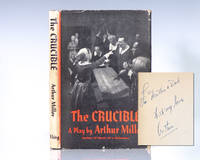
1953140347New York: The Viking Press 1953. First edition of Miller's Tony Award-winning play a bitter satire inspired by the heightened political repression and persecution of left-wing individuals during the McCarthy era. Octavo original half cloth over patterned boards top edge red. Association copy inscribed by Arthur Miller on the front free endpaper to his mother and father "To Mother & Dad With my love Arthur." Arthur Miller was the second of three children of Augusta Barnett and Isidore Miller. His father was born in Radomyśl Wielki Galicia then part of Austria-Hungary now Poland and his mother was a native of New York whose parents had immigrated from the same town. Miller's father Isidore owned a women's clothing manufacturing business which employed over 400 people and the family lived on West 110th Street in Manhattan owned a summer house in Far Rockaway Queens and employed a chauffeur. In the Wall Street Crash of 1929 the Millers lost almost everything and were forced to move to Gravesend Brooklyn where as a teenager Miller delivered bread every morning before school to help with their finances. After graduating in 1932 from Abraham Lincoln High School Miller worked several jobs in order to pay for his college tuition at the University of Michigan where he would major in journalism. Near fine in a very good dust jacket. Jacket photograph by Gjon Mili. With a picture of Miller's parents laid in. From the library of Arthur Miller. An exceptional association copy on this landmark of twentieth century literature. Written as an allegory for the heightened political repression and persecution of left-wing individuals during the McCarthy era Miller's 1953 play The Crucible offers a dramatized and partially fictionalized retelling of the Salem witch trials that took place in the Massachusetts Bay Colony during 1692–93. In 1952 Miller's close personal friend Elia Kazan appeared before the House Un-American Activities Committee HUAC and named eight members of the Group Theatre who had recently been fellow members of the Communist Party. Kazan's act outraged Miller and inspired him to travel to Salem to begin work on The Crucible. The play was first performed at the Martin Beck Theatre on Broadway on January 22 1953 starring E. G. Marshall Beatrice Straight and Madeleine Sherwood to largely hostile reviews but was soon awarded the 1953 Tony Award for Best Play. The HUAC took an interest in Miller himself not long after The Crucible opened and in 1956 summoned him to appear before the committee. During the hearing Miller refused to comply with the committee's orders to provide the names of colleagues who may have been involved with Communist Party and was found guilty of contempt of Congress a ruling which was overturned the following year. Though is was only somewhat successful at the time of its release The Crucible remains Miller's most frequently produced work. In 1996 a film adaptation of The Crucible starring Daniel Day-Lewis Paul Scofield Bruce Davison and Winona Ryder was released. Miller spent much of 1996 working on the screenplay and it earned him his only nomination for an Academy Award for Best Screenplay. The Viking Press hardcover
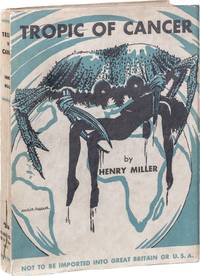
1934190433Paris: The Obelisk Press 1934. A gob of spit in the face of Art a kick in the pants to God Man Destiny Time Love Beauty First edition first printing of the author's first book rare in the original wrappers. Anticipating its censorship in America and Britain Miller published it with the expatriate Obelisk Press. The publisher Jack Kahane insisted the budding writer pay the work's printing costs to which Anaïs Nin contributed. It later proved a seminal event in 20th-century publishing and freedom of expression. "Long delayed in realizing his literary aspirations and often frustrated lonely and sometimes close to complete despair Miller reached a psychological 'bottom' in 1931 which prepared him to write a new kind of book. He denied that the book was a novel at all and he allied himself with the tradition of Walt Whitman in American letters by claiming that the book was wholly an expression of himself" ANB. It met with critical acclaim Orwell describing it as "a remarkable book" and Beckett as "a momentous event in the history of modern writing". The courts were not so enthused. Its distribution was immediately banned under obscenity laws in many countries outside of France and the front wrapper states that it is "Not to be imported into Great Britain or USA". The first American edition was published by the Grove Press in 1961 sparking a flurry of litigation that culminated in the Supreme Court case Grove Press Inc. v. Gerstein 1934 which cleared the novel of obscenity charges and allowed its publication. The first print-run consisted of 1000 copies. Many of the copies that survive were rebound either at the time of publication or in later years. The cover art is by the publisher's son Maurice Kahane later Maurice Girodias whom Neil Pearson asks we "forgive since he was fourteen years old at the time". Octavo. Original wrappers lettered and illustrated in blue and black. Housed in a custom green cloth slipcase. Slight wear to wrapper edges old glue repair to ends of front joint short closed tear and soiling to rear wrapper contents bright. A very good copy well-preserved. Neil Pearson Obelisk: A History of Jack Kahane and the Obelisk Press 2007. hardcover
176814010ABNürnberg, Winterschmidt, 1768. 42 x 27 cm. Titelbl. mit feinem Kupfer (ca. 8,5 x 12,8 cm), 1 Bl., 158 S., 150 handkolorierte Tafeln./Tbl. m. Kupfer, 155 (3) S., 150 handkolorierte Tafeln. Neue Halblederbände unter Verwendung des alten Bezugspapiers (Hardcover) auf echten Bünden geheftet. Ggpr. Rs. 2 Bände komplett. [Einzige deutsche Ausgabe] Museal gereinigte und restaurierte Bände. Durchgehend mit Feuchtigkeitsflecken. Band 2 Seiten und Tafeln zu Beginn mit deutlichen (angefaserten) Fehlteilen an der Außenkante mit minimalen Bild und Textverlusten. Ab Tafel 117 nur noch geringe Fehlteile.
1934I - 428 - 410 - 065 - I<p><em>First printing of Miller's landmark novel. Inscribed to American artist Beatrice Heide Thomas in 1938 a friend of Miller's during his days in Paris. Accompanied by a handwritten letter by Miller to Thomas three decades later.</em></p><p><strong>Publisher and Year:</strong> Paris: The Obelisk Press 1934.</p><p><strong>Edition:</strong> First edition first printing "First Published September 1934". Only 1000 copies of the first printing were produced many of which were destroyed by authorities in countries where the book was banned. Shifreen & Jackson A9a.</p><p><strong>Condition and Description: </strong>Rebound in quarter leather over cloth with the front wrapper featuring the iconic Maurice Kahane art and the rear flap bound in. Bottom-right corner of front board worn through as shown. Tanning to spine. Bottom-right corner of the front board bound in. Signed and inscribed on the original front free endpaper in June of 1938. Clean pages without any writing or underlining.</p><p><strong>Provenance and Association:</strong> Inscribed by Henry Miller to American artist Beatrice Heide Thomas 1913–2002 in Paris in June of 1938. Thomas lived in France from 1931 to 1939 coinciding with Miller's residency at 18 Villa Seurat 1930 to 1939. In 1971 Miller wrote Heide a handwritten letter from his California home which is sold as part of this listing:<br /><br /><em>Dear Beatrice Heide —</em><br /><br /><em>Only recently Betty Ryan gave me your address. I discovered in asking her about you that you once lent me a hundred dollars — probably when I was desperate.</em><br /><br /><em>Did I ever pay you back If not please let me know. I don't know how I could have overlooked such a kindness. All the best!</em><br /><br /><em>Henry Miller </em></p><p>The association with Betty Ryan confirms Heide's place in Miller's artistic circle. Ryan Miller's downstairs neighbor at 18 Villa Seurat was among the most formative influences in his Paris years. He credited her with inspiring his journey to Greece in The Colossus of Maroussi writing "I would never have gone to Greece had it not been for the girl named Betty Ryan who lived in the same house with me in Paris." That Ryan remained in contact with both Miller and Heide in 1971 firmly situates Heide within the close circle of artists and confidantes who shaped Miller's most vital decade.</p><p>This copy is part of a limited set of surviving materials documenting Miller's personal relationship with Heide which is otherwise absent from his published correspondence and biographies. The size of the loan nearly $2000 adjusted for inflation and the fact that Miller reached out 33 years later to reiterate gratitude underscores the personal significance of their connection.</p><p><em>"This is libel slander defamation of character. This is not a book in the ordinary sense of the word. No this is a prolonged insult a gob of spit in the face of Art a kick in the pants to God Man Destiny Time Love Beauty.what you will. I'm going to sing for you a little off key perhaps but I will sing."</em></p><p><em>Tropic of Cancer is not only regarded as one of the great literary triumphs of the 20th century but was a centerpiece in the battle for free speech and artistic expression. The novel was banned in the United States for nearly thirty years and was only legalized in a narrow 5-4 Supreme Court decision that recognized the work as having literary merit.</em></p><p><strong>Inventory ID:</strong> 428 - 410 - 065</p> Paris: The Obelisk Press, 1934 hardcover
175534775London: Printed for the Author; and sold by John Rivington and others 1755. 2 volumes folio. 16 1/2 x 10 3/4 inches. Engraved allegorical headpiece to the dedication leaf after and by J. S. Miller woodcut headpiece and initial-frame. 300 hand-coloured engraved plates two folding after G. D. Ehret J. Bartram W. Houston R. Lancake and J. S. Miller by Miller T. Jefferys and J. Mynde. Uncut. Contemporary marbled paper boards expertly rebacked to style in tan calf spine gilt with raised bands. Housed in a slipcase.<br/> <br/>A lovely set of the first edition of Miller's illustrated supplement to his overwhelmingly popular Gardeners Dictionary.<br/> <br/>While conceived as a complement to an earlier publication Miller's Figures of . Plants "is a sufficiently complete work and may be rated on its own merits" Hunt. In the preface Miller stated his intention of publishing one figure of a plant for every known genus but abandoned this in favor of ".those Plants only which are either curious in themselves or may be useful in Trades Medicine &c. including the Figures of such new Plants as have not been noticed by any former Botanists." The plants illustrated were either engraved from drawings of specimens in the Chelsea Physic Garden or drawings supplied by Miller's numerous correspondents including John Bartram the Pennsylvania naturalist cf. plate 272 and Dr. William Houston who travelled widely in the Americas and West Indies and bequeathed Miller his papers drawings and herbarium cf. plates 44 and 182. For the plants drawn from examples in the Garden Miller employed Richard Lancake and two of the leading botanical artists and engravers of the period Georg Dionysius Ehret and Johann Sebastian Miller. Like Miller's Catalogus Plantarum many of the etched and engraved plates are delicately printed in colour i.e. green to give a more life-like impression after hand colouring. The work was published by subscription in 50 monthly parts with each part containing 6 plates between 25 March 1755 and 30 June 1760. Two later editions were published in 1771 and 1809. Complete sets of the first edition are scarce particularly in such lovely original condition.<br/> <br/>Nissen BBI 1378; Great Flower Books p. 121; Dunthorne 209; Henrey 1097; Hunt 566; Stafleu and Cowen TL2 6059; Pritzel 6241. Printed for the Author; and sold by John Rivington [and others] unknown books
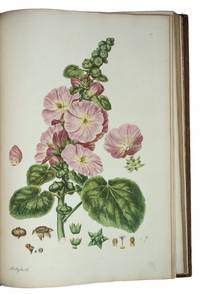
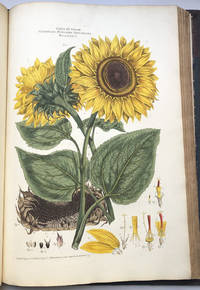
1794Flo467<p>Very good copy of the first collated edition of Miller's botanical classic</p><p>Complete with 108 handcoloured engraved plates engraved allegorical frontispiece engraved title list of subscribers explanation of classes and 108 leaves of descriptive letterpress in Latin and English</p><p>Plants include sunflowers tea pomegranate fig amaryllis peony canna mistletoe apple lemon horse chestnut rice belladonna fern mushrooms thistle mallow primrose etc.</p><p>"An immense work. illustrated in a style of unprecedented elegance." Lettsom</p><p>Miller's illustrated book on the sexual system of Linnaeus was published in twenty parts from 1770 to 1777 with the plates in two states: with letters on the uncoloured plates for science and without letters on the colored plates for aesthetics. The plants were sourced from Dr. John Fothergill's garden in Essex.</p><p>According to the list of subscribers 106 copies were ordered by 83 individuals or institutions. Queen Charlotte wife of the mad king George III subscribed for two sets along with botanists Joseph Banks Sir John Eden and Dr Daniel Solander Linnaeus' disciple actor David Garrick gardener Dr. Fothergill four sets physician Dr. William Pitcairn and booksellers P. Elmsley 10 sets and B. White 10 sets. Bristol Library Manchester Library the British Museum Jesus College Oxford and the Royal Library at the University of Gottingen all ordered a set.</p><p>Once the subscriptions had been filled there were evidently leftover sets of text and colored plates that were published with a new title page by R. Faulder in 1794. The new title-page accompanies a suite of the hand-coloured plates made up from "the surplus of the plates of the 1777 edition." Henrey Most of the plates in this copy have letters although two are without tea Camellia sinensis and arum Arum maculatum. The plates are "painted engraved and published by J. Miller in Dorset Court" and dated from 1770 to 1776.</p><p>John Miller born Johann Sebastian Mueller 1715-1792 was a botanical artist and engraver from Nuremberg who studied with engravers Johann Christoph Weigel and M. Tyroff before moving to England in 1744. Miller came to the attention of the Swedish biologist Linnæus the father of modern taxonomy through the British naturalist John Ellis. Miller sent samples of his work to Linnaeus for approval and received great praise: "More beautiful and more accurate than any since the world began." Miller also illustrated Philip Miller's <em>Most Beautiful Plants</em> 1755 a new edition of John Evelyn's <em>Sylva </em>1776 and John Stuart's <em>Botanical Tables</em> 1785.</p><p>Half-leather binding with spine with five raised bands gilt title label leather repaired and dyed with a dark stain green cloth boards rubbed and stained marble endpapers book block solid. Interior mostly clean and bright with some dust to page edges but all plates with superb handcolour. Oval blindstamps of Leyton Public Library on all plates outside the plate mark but no other markings. Title-page slightly spotted frontis repaired. Huge heavy imperial folio book.</p> R. Faulder hardcover
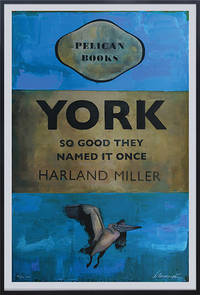
181812Amsterdam: Avant Art 2025. Originally published to support the York Museums Trust. Miller was inspired to make this print by his upbringing in 1970s Yorkshire. Edition of 50. Signed lower right by Miller numbered lower left. 27 colour silkscreen with spot colours on 600gsm Somerset Tub Sized Radiant White paper. Sheet size: 100 x 66 cm. Framed size: 108 x 74 cm. Presented in a black stained wooden frame with conservation acrylic glazing. Excellent condition. unknown
123929London for the author 1755-1760. . First edition; 2 volumes folio 44.5 x 28 cm; 300 original hand-coloured engraved plates of which 2 are folding after Ehret 16 plates Miller and others small ownership blind stamp to the title of each volume edges of both titles browned occasional light spotting primarily in the margins and some mild offsetting but contents generally clean new endpapers; nineteenth century green half morocco recent marbled boards spines gilt in compartments with tan morocco labels a very good set.<br /> First edition. A lovely copy of one of the most decorative botanical works of the eighteenth century.<br /><br />Born in south-east London Miller was chief gardener at the Chelsea Physic Garden from 1722 until he was pressured to retire shortly before his death. According to the botanist Peter Collinson who visited the physic garden in July 1764 and recorded his observation in his commonplace books Miller 'has raised the reputation of the Chelsea Garden so much that it excels all the gardens of Europe for its amazing variety of plants of all orders and classes and from all climates.' Miller corresponded with other botanists and obtained plants from all over the world many of which he cultivated for the first time in England and is credited as their introducer. His knowledge of living plants for which he was elected a Fellow of the Royal Society was unsurpassed in breadth in his lifetime.<br /><br />The Figures was intended as an accompaniment to Miller's The Gardeners Dictionary. This was one of the most popular gardening books of its time affordable to a wide range of people because Miller kept the cost down by not including many illustrations. In the Figures Miller provided a most luxurious set of plates including a selection by Georg Dioysius Ehret the greatest flower painter of the eighteenth century. It provides a superb record of plants in cultivation at the time some very rare.<br /><br />This copy belonged to Professor John Hutton Balfour 18081884 a prominent Scottish botanist who served as Professor of Botany at the University of Edinburgh. He was also the 7th Regius Keeper of the Royal Botanic Garden Edinburgh RBGE from 1845 to 1879.<br /> Dunthorne 209; Great Flower Books p.121; Henrey 1097; Hunt 566; Nissen 1378; Pritzel 6241; Stafleu TL2 6059. London, for the author, [1755]-1760. hardcover
17607686<p>Two volume set. Original full speckled calf professionally rebacked in calf; pastedowns renewed; fly sheets and title mounted. Complete with 300 full-page hand-colored copper plates 2 folding. Miller was the chief gardener at the Chelsea Physic Garden where many of the engravings were made under his supervision. Drawings were taken from living plants at their greatest expression of flowering. A high point in botany. ; 200; iv pages. 10.75 x 16.25 inches; 27 x 41.4 cm.</p> Printed for the Author hardcover