59 531 résultats
193463142Paris:: The Obelisk Press 1934. publisher's wrappers illustrated by Maurice J. Kahane rear wrapper detached. A dark brown stain affects the bottom 1-1/4 inch of the spine extending to a larger unprinted area on the back panel; small chips at the edges of the spine affecting the lettering at the bottom of the front panel. Old pencil ownership signature; contents otherwise clean and fine. 8vo. Preface by Anais Nin. The Obelisk Press, unknown
178625988Ephrata: The Cloister 1786. First edition 4to pp. 6 250 2; printed in black letter throughout; engraved vignette pasted on title page; prelims and terminals waterstained small tear in the lower margin of title not touching letterpress old ownership signature at the top of the title page of Christian Stauffer 1736-1808 and a 30-line poem also presumably by him on the final blank leaf as well as a few marginal annotations; contemporary full calf front cover detached but present; the whole in a new cloth clamshell box. An abstract of the diary of the Brotherhood which had been kept by Brother Lamech and continued and edited by Brother Jaebez Agrippa i.e. Johan Peter Miller. Brother Lamech has been identified as Jacob Gass by Seidensticker First Century of German Printing in America p. 117. Evans 19558: "This biography of Johann Conrad Beissel the founder of the Ephrata Community is the principal source of information regarding that remarkable institution. Brother Agrippa is Johann Peter Miller; and Brother Lamech's secular name is said to be Jacob Gass. An English translation was printed in Lancaster Pennsylvania in 1890." Howes G76 identifying this as the second issue of three with the title page seal pasted on. [The Cloister] unknown
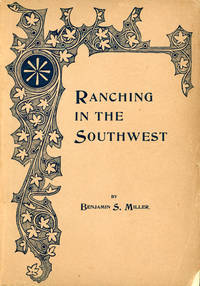
189651047New York: Fless & Ridge Printing Company 1896. 1896. First edition. 8vo. Original pictorial wrappers with title stamped in blue on spine and front cover 2.p 1. 7-163 1pp. portrait. "Offers a vivid portrayal of the challenges and triumphs experienced by early cattlemen in the late 19th-century American frontier. This memoir delves into Miller’s experiences as a novice cattle rancher in the southern Kansas and Indian Territory regions offering the reader insight into the rugged lifestyle of ranchers the intricacies of cattle trading and the dynamics between settlers and Native American tribes during this period in American history. The late 1800s were a pivotal time for cattle ranching in the American West. The expansion of the railroad system facilitated the transportation of cattle to eastern markets while interactions with Native American tribes were complex and often fraught with tension. Miller's account provides a unique perspective on these events." Miller was born in 1851 and went to Kansas in 1878. This colorful account of his life as a rancher there over the next five years is an excellent first-hand account of ranching in the Indian territory during that early period. Miller attended Cornell University spent a year and a half in Alaska in 1898-99 and died in Binghamton New York in 1930. Adams Herd 1485 says "rare." Streeter Sale 2387: "An account of herding in the Cherokee Strip in the seventies." The author was one of the early presidents of the Cherokee Strip Livestock Association in the early seventies. Adams Six Guns 1486: "Rare. The book contains some firsthand information on Billy the Kid and tells about the attempt of the mob at Las Vegas to take prisoners away from Pat Garrett an incident the author witnessed." Merrill Aristocrats of the Cow Country: "His book is a vivid portrayal of the business of the Cattle-barons on the plains and as he stated in the title 'How a Fortune Was Made in Cattle.'" Tiny chip to lower front corner and rear lower corner and minor wear to the spine ends else a near fine bright copy housed in a quarter leather and cloth clamshell case with titles stamped in gold gilt on the spine. A choice copy of this rare and important cattle book. Fless & Ridge Printing Company, 1896. hardcover
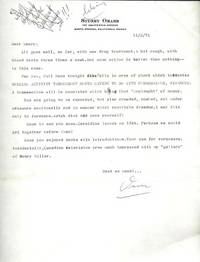
196531920Santa Monica: Omarr 1965. 1st Edition. Soft cover. 1st Edition. Soft cover. Signed by Author. Sydney Omarr / Henry Miller Archive. 6 typed letters 5 from Miller's great friend & Americas most popular astrologer Sydney Omarr - 1 from Joseph Chenko for Omarr 5 on Omarr's letterhead dated from 4/16/65 to 12/10/77 1 - 4/16/65 on yellow bond 2 pages - "Dear Henry / Am just starting to read LETTERS TO ANAIS NIN have been asked to review it for the Los Angeles Times. Hope I can do it justice. / Your vigor comes through even in those early letters: the misery of that teaching job the cold the emptiness these are made real. Your feeling for Nin too is there even so early - telling that it seems to me that one might have for a life-line something that provides the nourishment of home anticipating - kindred soul. . / any way it is good again to discover Henry Miller. . . / Your friend / signed Omarr" 2- 10/7/71 One page. On Sydney Omarr Letterhead. In part. "Dear Henry: Thanks for the items. The intro you did for Langman was splendid. All of us owe you a great deal. Naturally I am looking forward to the introduction you are doing for me. For that how can I thank you / I feel you would enjoy Gustav Holst's record THE PLANETS. . . / Did I ever tell you this That when Albert Dekker took his life he scrawled on his body the words I told him he would write about himself. That Gael once tried to take her life and wrote in soap on the hotel mirror "I love Sydney." That I once "boxed" a fellow and when he wanted to quit I kept pounding him until he began to cry in front of everyone. I have never been ashamed so much in my life. Hurts when I recall it. / Happy Days. . . To come! / Signed Omarr" 3- 11/2/71 One page. On Sydney Omarr Letterhead. In part. "Dear Henry: All goes well so far with the new drug treatment. / For you Full Moon tonight falls in area of the chart which indicates SPECIAL ACTIVITY THROUGHOUT MONTH HAVING TO DO WITH POSSESSIONS FINANCES. A transaction will be completed which begins that "onslaught" of money. . . Incidentally Canadian television crew much impressed with my "gallery" of Henry Miller. / Best as usual / Signed Omarr" 4 - 2/1/72 One page. On Sydney Omarr Letterhead. In part. "Dear Henry: . . . Sent you a copy of my new book. Check Aries and you will note recollection of our meeting with George Jessel. I have been interviewed by N.Y. times will be interviewed tomorrow by West Magazine of L.AA. Times and will be on KABC - Radio February 6th. . . Debating with the head of the UCLA dept of astronomy. . . Your chart shows you are slightly indisposed today. But it should be temporary. Merely intestinal gas moon in Virgo in your 6th sector. / See you soon / Best wishes. Signed Omarr" 5 - 12/3/75 One page. On Sydney Omarr Letterhead. In part. "Dear Henry: Enclosed are two analysis done by Sydney Omarr on Joan Kennedy and Caroline Kennedy. He asked me to send them to you and hoped you would comment on them. / I ordered your book. "My life and Times by Henry Miller" . . . / Best regards Joseph G. Chenko / Signed Joe / P.S. Sydney feels that the Joan Kennedy analysis is superior. . . 6 - 12/10/77 One page. On Sydney Omarr Letterhead. In part. "Dear Henry: By the end of the week or early next week you will receive a cashier's check for $2000. If you believe me - and I know you do - send Lilly's painting at your earliest convenience. / . . . She adores you admires you basks and glows when you talk to her or write to her. That is why I want to buy this one last thing - your painting. . . / Your friend Signed Omarr" Sydney Omarr born Aug. 5 1926 as Sidney Kimmelman was an astrologer & counselor to the rich & famous whose horoscopes were the most widely read in the world. A lifelong promoter of the ancient art of divining the future from the juxtaposition of the planets and stars He reached millions through his 13 books and his column which was owned by the Tribune Co. & carried by the Los Angeles Times. The column appears in more than 200 daily newspapers. Omarr's b. Omarr unknown
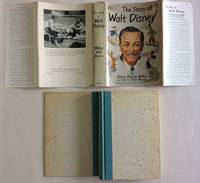
1956721010047<p>8vo 5.75"X8.5" very good copy. Signed by Walt Disney.on 3d frontis in green ballpoint ink.Some age tanning on front and back endpapers and on back cover. For its age in very collectible condition. Written by his daughter as told to Pete Martin. Curtis Publishing Company held the copyright in 1956 and Diane Disney Miller had the 1957 copyright. The green signature books were sold in the Disneyland Mainstreet Store for $3.95. Disneyland opened in 1955. CONTACT ME for information about authenticity.</p> Henry Holt hardcover
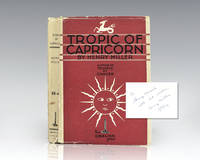
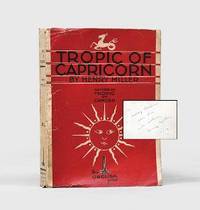
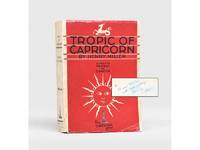
1939110655Paris: Obelisk Press 1939. First edition one of only 1000 copies printed in Paris to avoid obscenity laws in the United States. Octavo original red and white wrappers. Association copy inscribed by the author in the year of publication on the front free endpaper "To Henry Church with best wishes Henry Miller 5/5/39." Henry Church and his wife Barbara were patrons of the arts in 1930s-40s France and were friends with many of the important writers of the era. In near fine condition with light rubbing to the fragile wrappers. With first issue price of 60 francs printed on the spine. With errata slip often not found tipped to title page. Rare and desirable signed and inscribed example of this cornerstone of modern literature. Tropic of Capricorn with its focus on on Henry Miller’s Brooklyn youth concludes his famed autobiographical trilogy—following Tropic of Cancer 1934 and Black Spring 1936. Once hailed by Norman Mailer as “the last great American pioneer†Miller sparked much controversy over the novel’s explicit descriptions of sexual encounters. “Although his two most important works Tropic of Cancer and Tropic of Capricorn were published in Paris in the 1930s because of their heavy sexual content they were not published in the United States until the early 1960s when Miller’s work became the leading battlefield in the war over ‘pornographic’ literature†Hoffman 108. Listed by Modern Library as one of the 100 greatest novels of the twentieth century. Obelisk Press unknown
1939190227Paris: The Obelisk Press 1939. The controversial prequel to Tropic of Cancer inscribed to an adventurous poet First edition first printing first issue inscribed by the author on the front free endpaper prior to publication "To Audrey Beecham from her well wisher Henry Miller 1/5/39". Copies are rare inscribed. Beecham was a "poet and eccentric" ODNB and a descendent of Thomas Beecham founder of the eponymous pharmaceuticals empire. Miller published several of her poems while editor at Delta magazine. She once took an extended holiday from her Oxford studies to run guns for the anarchists in the Spanish Civil War and when she graduated in 1937 she moved to Paris where she befriended Miller Anaïs Nin and Lawrence Durrell. In the 1940s she spent much of her time in London where she garnered a serious poetic reputation and befriended Joe Ackerley and Dylan Thomas: "she prided herself on her mastery of martial arts and on her claim to have knocked out Dylan Thomas cold when he made unwelcome advances to her" ibid. To the surprise of her contemporaries she applied for and was appointed the warden of Nightingale Hall the women's residence at the University of Nottingham in 1950. Lord David Cecil remarked on her unexpected appointment "There's no martinet like a reformed rake" ibid. Pearson notes that publication of Tropic of Capricorn was initially scheduled for February 1939 but was delayed until 10 May 1939 "as a result of which few copies were sold before the beginning of the war the death of Kahane and the shutting down of the Obelisk Press". It was banned in America until the landmark 1961 obscenity trial that saw Tropic of Cancer declared non-obscene a watershed moment in 20th-century publishing that was instrumental in ushering in the liberal social mores of the Sixties. This is a first issue copy with the price of 60 francs printed on the spine and the errata slip present on the title page. Octavo. Original buff wrappers with flaps spine lettered in red front lettered in black on red ground with astrological motifs in buff edges untrimmed. Housed in a custom red cloth flat-backed box. With yellow errata slip tipped-in on title page as issued. Spine ends and upper corner of rear flap chipped wrappers creased but very bright nicked with a few short closed tears rear wrapper toned and soiled occasional marks to endmatter. A very good copy. Pearson A60; Porter p. 12. hardcover
197946029ROWOHLT ERNST 12/1979. 1. softcover. Bildgeschichte der Rockmusik ROWOHLT, ERNST paperback
197652748BASTEI-LÜBBE 1976. 1. softcover. Kojak Maloftege! BASTEI-LÜBBE paperback
197552743BASTEI-LÜBBE 1975. 1. softcover. Kojak BASTEI-LÜBBE paperback
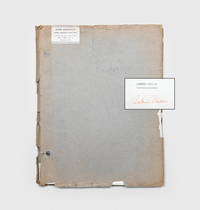
1944177450New York: no publisher 1944. A significantly different text to the published version Rehearsal script of the author's first Broadway play signed by the author on the title page. This copy is extensively annotated by Eugenia Rawls who created the role of Hester Falk. The script is significantly different from that first published in Cross-Section: A Collection of New American Writing in 1944. The play was the author's second major play following No Villain and was first presented on Broadway on 23 November 1944. There were only four performances and the failure of the play led Miller to question whether he could write for the theatre. The work would not be revived until 1990 with a Bristol Old Vic production that transferred to the Young Vic in London. Subsequently it has enjoyed a number of similarly successful productions. Eugenia Rawls 1913-2000 made her Broadway debut in 1934 and achieved recognition when she played opposite Tallulah Bankhead in Lillian Hellman's play The Little Foxes in 1939. She was regularly seen on US television and she would publish a book on Bankhead in 1979. Rawls has marked the text of this script with numerous additions deletions and corrections. There are 10 leaves on which she has added text on the hitherto blank verso. The final blank leaf features a rough drawing of a woman. The front wrapper is signed with Rawls's surname. The volume comprises a title page listing of cast annotated with names of the actors 1 leaf a listing of scenes 1 leaf a divisional title 1 leaf text of Act 1 50 leaves a divisional title 1 leaf text of Act 2 37 leaves a divisional title 1 leaf text of Act 3 43 leaves and a final blank leaf. Folio. Carbon typescript 137 leaves 274 x 212 mm printed on rectos only pagination includes "1-1-8-A". Original grey wrappers front wrapper with "Anne Meyerson Author's Manuscript Typing Service" label. Housed in a custom grey cloth folding box. Wrappers worn with loss and tears numerous leaves with creases and tears c. 16 leaves with adhesive tape repairs: a good copy. hardcover
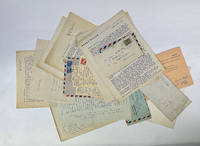
23033Original Manuscript. 1953-1956. Six autograph letters signed two autograph postcards signed three typed letters signed one typed poem with emendations; one typed letter signed from Eve Miller; one telegram from Henry Miller to Rothenborg with notes by the recipient. "Please do not think that I am unappreciative of all you are doing for me. I know you have done much more than merely translate my work. Things move slowly in your part of the world and to rouse the Danes and the Dutch and the Norwegians to say nothing of the Swedes to fever pitch about my work is a task I envy no man. To make haste slowly seems like a wise adage" Letter June 15th 1955 "To answer your question "stink-finger" means to put your fingers in a woman's vagina hence the "stink". PS are you sure you have no other questions to put me regarding the translation I am at your service." Letter April 4th 1953 A previously unpublished series of letters and postcards including a telegram and a draft of a comic poem from the novelist Henry Miller 1891-1980 to his Danish translator Jørgen Rothenborg. The letters provide a fascinating insight into the many obstacles Miller encountered in publishing his novels: practical problems of transatlantic multilingual communication and the perennial problem of censorship. They show the author's care regarding fine details of publication even in a language he couldn't read and the sane patient attitude to the continued international suppression of his novels. For much of his writing life Miller was better known for the alleged obscenity of his novels than for the writing itself. He was in his forties before Tropic of Cancer his first and still most famous novel appeared in 1934 having failed to find a publisher for the earlier Crazy Cock eventually published in 1991. The novel funded by the young Anaïs Nin was singled out for praise by T. S. Eliot "a. magnificent piece of work" Ezra Pound who mentioned it in the same breath as Ulysses Beckett "a momentous event in the history of modern writing" to name just three of its illustrious admirers. Critical acclaim though however gratifying wouldn't pay the bills. Although the series of trials initiated by Barney Rosset's 1961 Grove Press publication of Cancer would soon lead to Miller's novels becoming widely available in the 1950s when these letters to his Danish translator were written Miller was seemingly resigned to the continued suppression of his works. The correspondence begins with a telegram on the pink Danske Statstelegraf card instructing Rothenborg to contact Miller via his agent Dr. Hofmann in Paris. This will become a familiar refrain the busy novelist trying always courteously to steer his enthusiastic correspondent into a more formal professional relationship. The verso of the card includes a pencilled enquiry in Rothenborg's hand asking the author if he will sign 750 frontispieces for a forthcoming limited edition of the translation of Tropic of Cancer underneath which Miller has written "telegramme reçu: / Un peu perplexe = Henry Miller; and later "letter suitant le 6 avril 1953". The earliest letter here Paris 5th March 1953 though the cancellation of the envelope gives 4th April suggesting it to be the letter referred to on the verso of the telegram in the author's loose but always legible hand strikes the tone of mild though courteous impatience that will characterise the correspondence. Miller is "not sure whether you meant for me to come to Copenhagen he cannot afford to pay for a flight to Copenhagen himself "until I touch more French royalties" to sign the pages or whether you wished to send them to me here in Paris". The latter will involve wasting valuable time queueing at the customs office "I loathe going to the Douane to get packages have wasted hours there already. And no matter what I receive it arrives in a damaged condition". He requests information about the accuracy of the translation and regarding the proposed illustrations asking for photos "Excuse my bluntness but it is quite important to me". The next letter continues the saga of the frontispiece pages Miller now suggesting they be sent to Brussels where he will be stationed for a week in April. This clearly didn't happen but the next message in the form of a postcard showing a nice touch James Ensor's "L'Entrée du Christ à Bruxelles" is from Bruges and apologises in French for having forgotten to do something when in Brussels. By November 20th when the correspondence resumes Miller is back in Big Sur California his home since 1944 and back with his typewriter. Rothenborg it seems has asked Miller to travel to a California studio to make a recording. "You simply have no idea how great an undertaking it would be for me to gather up my wife and children and make for a studio . It is physically impossible. Knud Merrild the artist and friend of both correspondents may give you some idea of what it is like to live in this isolated spotwith two children aged 5 and 8!" the two children were from his marriage to Janina Martha Lepska; by this time he was married to Eve McClure. Keen to show his gratitude to Rothenborg and his "Danish compatriots so eager to be of service to me" "I regard your motives as perfectly pureunquestionably" he is equally keen to keep things in perspective "If I may say so without wounding you I think perhaps you are exaggerating the importance of this event: the publication of Cancer in Danish". The letter includes a measured and sane statement of his attitude to the continued suppression of his work: "My frank opinion is that my banned books will never be free to circulate in this country or England. Meanwhile however these books are gradually being translated and published in other countries of the world. Whether Denmark follows suit depends upon the Danish public. The law however absurd or unjust does in great measure respond to the needs or desiresor prejudices if you likeof the people who make them. To butt one's head against a stone wall is futile". Steering Rothenborg towards his existing statements on such matters "particularly The World of Sex and "Obscenity and the Law of Reflection" he confesses to being "a bit weary of defending my position". Even so Miller by now has clearly warmed to Rothenborg: "I would venture to add as a final word my dear friend that if my book has been an aid and an inspiration to you just you alone that is a great dealperhaps enough". By August of 1954 Big Sur handwritten Miller has three copies of the Danish Cancer "please accept my thanks. I like the format. Wish I knew Danish!" asking a number of questions is it limited where is the date printed which is the name of the publisher and which the printer and as if this was inevitable if "you have had had any trouble yet with the authorities" In May 1955 mentioning the recent suppression of Sexus in Japan Miller adds "I think you would have still more trouble in Denmark. Think it over!"; and in June broaching the matter of Sexus again he advises Rothenborg to "think twiceor three timesbefore spending your energies on the translation . If the two most liberal countries in the world liberal with regard to matters of sex at any rate have suppressed this book what chance have you with the Danes". He would have more chance with either Plexus "one of the books I like best of all I have written" his book on Rimbaud or The Colossus of Maroussi "which the Danes would probably like" a book as Miller's biographer Jay Martin notes "wholly without sex a celebration of the grace and wisdom of the Greek spirit". In June Miller's wife Eve writes to Rothenborg on her husband's behalf "He is hard at work on a new book Big Sur and the Oranges of Hieronymous Bosch and I will attempt to take over what I can of the correspondence". Eve like Miller is keen to persuade the avid translator to deal with Dr. Hoffman "Mr. Miller approves fully of everything that Dr. Hoffman does in his behalf". Within a week however Henry is writing again and again advising him to deal with Hoffman "Whatever difficulties you may be encountering can be straightened out if you simply speak frankly and honestly with himand trust him". Among the letters is a draft of an unpublished piece of comic verse typed in red ink and with corrections and additions in Miller's hand. It is unclear whether it is a single page from a longer work and what connection if any it has to Rothenborg. The poem in three quatrains each ending with the refrain "That's my stepson to you" and a couple of stray couplets ends with the lines "I've hunted up I've hunted down to start a family / I got one wife a second too and now a number three". By the time of these letters though Miller was already on wife number four with another to follow and he didn't have a stepson. Further details and images for any of the items listed are available on request. Lucius Books welcomes direct contact with our customers. Original Manuscript. 1953-1956 unknown
199550024BASTEI-LÜBBE 05/1995-11/97. 1. hardcover. Myst Deutsche Erstveröffentlichung! Mapo! BASTEI-LÜBBE hardcover
198614143HEYNE WILHELM 1986. 1. softcover. Leibowitz Sonderausgabe! HEYNE, WILHELM paperback
19492511217Viking Press 1949. first. hardcover. fine/near fine. INSCRIBED first edition with "Published by The Viking Press Inc in March 1949" stated on copyright page. Comes with provenance from seller of book to Bookbid. Book fine very light tanning to cover egdes top edge tint fully intact. Dust jacket near fine very slight rubbing to some areas of edges flap price $2.50. Housed in slipcase. Viking Press unknown
2013Atlantic-9780123749840Acad Pr 2013. 2nd Ed. Hardcover. New. Acad Pr hardcover
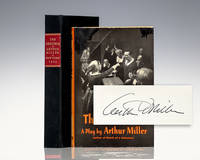
1953146122New York: The Viking Press 1953. First edition of this central work in the canon of American drama. Octavo original half cloth. Boldly signed by Arthur Miller on the title page. Near fine in a near fine dust jacket with some expert restoration. Jacket photograph by Gjon Mili. Housed in a custom clamshell box. Uncommon signed. The Crucible has been adapted for film television and opera. French philosopher Jean-Paul Sartre adapted it as the 1958 film Les Sorcières de Salem and later Miller himself adapted the play as the 1996 film The Crucible. The latter including in its cast Paul Scofield Daniel Day-Lewis and Winona Ryder and it earned Miller his only nomination for an Academy Award for Best Screenplay. On television the play has aired in 1968 and 2006. Finally the play was adapted by composer Robert Ward into an opera in 1961 for which it received the Pulitzer Prize. The Viking Press hardcover
1953140947149New York: The Viking Press 1953. First Edition. Very Good/Very Good. First edition first printing. Signed by Arthur Miller on the title page. Bound in publisher's pin-stripe paper boards over grey cloth backstrip with spine lettered in red. Very Good with light wear to crown toning at edges and light marking to text on 5 pp. In a Very Good unclipped dust jacket with fading to spine chipping to spine ends and top edges and light toning to covers and flaps. Miller's blockbuster drama centered on the Salem Witch Trials. The screenplay won him the 1953 Tony Award and was later adapted Academy Award Winning 1996 film starring Winona Ryder and Daniel Day Lewis. The Viking Press unknown
19408000213Chicago: J.H.N. John Henry Nash 1940. This is the scarce limited edition of the first edition of this early work by Miller limited to 250 copies in the first edition. The thing that makes this book so interesting is that besides being inscribed and signed by Miller to the NYC literary agent Henry Volkening there is a whole page of Errata notes 10 total in the author's neat hand. It is signed and dated 11/16/41. My thought is that Volkening was a go-between to the editor for the later NYC printing of the book -- and this is Miller's notes to him prior to that publication. A one-of-a-kind Miller signed collectable. Inscribed and Signed By Author. First Edition. Hard Cover. Fine/VG. J.H.N. (John Henry Nash) Hardcover
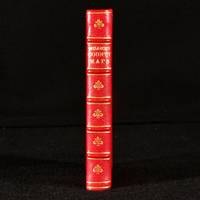
1810770L9London: R Miller 1810. First edition. Fine Binding. Very Good Indeed. 6" by 3.5". R Miller. A finely bound copy of this scarce miniature atlas produced by R. Miller. Notable for its inclusion of a map for every county. The first edition of this work. Undated dated from Chubb CCCXL. With all 56 engraved maps. This copy has been bound without the 'Catalogue of Books & Fancy Articles' usually found to the rear.A wonderful copy of this pocket-atlas in a superb full morocco binding. In a recent full morocco binding. Externally excellent with minor shelfwear. Internally firmly bound. Pages are generally bright. Occasional handling marks. Former owner has crudely outlined the maps in colour. Very Good Indeed R Miller unknown
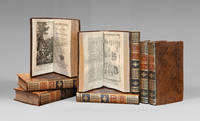
ABAA-75TH-VBF-48<p>A Bruxelles chez Benoit le Francq Imprimeur-libraire ; rue de la Magdelaine 1786-1789.</p><p>8 volumes 8vo with : I/ 1 engraved frontispiece L pp. 1 l. 543 pp. 8 numbered plates ; II/ 2 ll. 697 pp. 3 pp. ; III/ 2 ll. 597 pp. 2 plates ; IV/ 2 ll. 574 pp. ; V/ 2 ll. 592 pp. 2 plates; VI/ 533 pp. 8 plates ; VII/ 2 ll. 544 pp. 2 plates ; VIII/ 2 ll. 244 pp. 86 pp. 184 pp. 3 plates out of text.</p><p>Full marbled light-brown roan flat spine painted in black mottled edges orange morocco lettering pieces.<em> Contemporary binding.</em></p><p>214 x 125 mm.</p><p><strong>Rare Brussels edition with an allegorical frontispiece and 25 plates out of text.</strong></p><p><strong>The copy is printed on fine paper.</strong></p><p>The author of the main work Philippe Miller 1691-1771 a celebrated English gardener whose intelligence and erudition merit him a place among the botanists of the 18th century was born in 1691. In 1722 he succeeded his father as superintendent of the apothecary's garden in Chelsea and under his direction this rich establishment soon became the most magnificent in Europe for foreign plants. It was under his care that a large number of exotic plants were successfully acclimatized in England; and his numerous and multiplied relations with the most famous botanists either in Europe or in the Indies contributed mightily to the spread of botanical discoveries. He first made a name for himself with a few memoirs inserted in the Transactions philosophiques; but his <em>Dictionnaires des jardiniers</em> published in 1731 often reprinted and always with considerable additions set the seal on his reputation. Linné said that this book would be the dictionary of botanists rather than that of gardeners. The author had the unusual good fortune to publish the eighth edition thirty-seven years later. In the earlier editions he had followed only the methods of Ray and Tournefort; but in the 1768 edition he employed the principles and nomenclature of Linné of whom he eventually became one of the most zealous admirers. He was no less grateful for the lessons he had received from Ray his first teacher; and in his later years he prided himself on having remained the only botanist who could boast of having seen this great naturalist and he never quoted him without showing visible emotion on his face. Miller was a member of the Royal Society of London the Botanical Society of Florence etc.; he died in Chelsea on December 18 1771.</p><p>The eighth volume contains in addition to the important chapter on wine illustrated with 3 plates presses detailed catalogs of tree names French Latin and English and a calendar covering the work to be carried out during the year.</p><p>Laurent-Marie de Chazelles translated Miller's dictionary and added many unknown plants.</p><p>FR</p><p>A Bruxelles chez Benoit le Francq Imprimeur-libraire ; rue de la Magdelaine 1786-1789.</p><p>8 volumes in-8 de : I/ 1 frontispice gravé L pp. 1 f. 543 pp. 8 planches numérotés hors-texte ; II/ 2 ff. 697 pp. 3 pp. ; III/ 2 ff. 597 pp. 2 planches ; IV/ 2 ff. 574 pp. ; V/ 2 ff. 592 pp. 2 planches ; VI/ 533 pp. 8 planches ; VII/ 2 ff. 544 pp. 2 planches ; VIII/ 2 ff. 244 pp. 86 pp. 184 pp. 3 planches hors texte.</p><p>Pleine basane havane marbrée dos lisse peint en noir filet or sur les coupes tranches mouchetées pièces de titre et tomaison en maroquin orange. <em>Reliure de l'époque.</em></p><p>214 x 125 mm.</p><p><strong>Rare édition bruxelloise ornée d'un frontispice allégorique et de 25 planches hors texte.</strong></p><p><strong>L'exemplaire est imprimé sur beau papier.</strong></p><p>L'auteur de l'œuvre principale Philippe Miller 1691-1771 célèbre jardinier anglais qui par son intelligence et son érudition mérite de prendre place parmi les botanistes du XVIIIè siècle naquit en 1691. Il succéda en 1722 à son père dans la place de surintendant du jardin de la compagnie des apothicaires à Chelsea et sous sa direction ce riche établissement ne tarda pas à devenir le plus magnifique de l'Europe pour les plantes étrangères. C'est par ses soins qu'un grand nombre de plantes exotiques ont été acclimatées avec succès en Angleterre ; et ses relations nombreuses et multipliées avec les plus célèbres botanistes soit en Europe soit dans les indes ont puissamment contribué à répandre les découvertes botaniques. Il se fit d'abord connaître par quelques mémoires insérés dans les Transactions philosophiques ; mais son <em>Dictionnaires des jardiniers</em> publié en 1731 souvent réimprimé et toujours avec des augmentations considérables mit le sceau à sa réputation. Linné disait que ce livre serait le dictionnaire des botanistes plutôt que celui des jardiniers. L'auteur eut le bonheur peu commun d'en donner trente-sept ans après la huitième édition. Dans les premières il n'avait suivi que les méthodes de Ray et de Tournefort ; mais dans l'édition de 1768 il employa les principes et la nomenclature de Linné dont il finit par devenir un des plus zélés admirateurs. Il ne conservait pas moins de reconnaissance des leçons qu'il avait reçues de Ray son premier maître ; et dans ses dernières années il se faisait honneur d'être resté le seul botaniste qui pût se vanter d'avoir vu ce grand naturaliste et il ne le citait jamais sans montrer une émotion visible sur sa physionomie. Miller était membre de la société royale de Londres de la société botaniques de Florence etc. ; il mourut à Chelsea le 18 décembre 1771.</p><p>Le huitième volume contient outre l'important chapitre sur le vin illustré de 3 planches pressoirs des catalogues détaillés des noms des arbres français latin et anglais ainsi qu'un calendrier couvrant les travaux à effectuer pendant l'année.</p><p>Laurent-Marie de Chazelles traduisit le dictionnaire de Miller et ajouta beaucoup de plantes inconnues.</p> hardcover
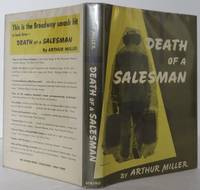
1949190494New York: The Viking Press 1949. Well dear life is a casting off. It's always that way First edition first printing signed by the author on the title page. Miller's classic play won multiple Tony Awards the Pulitzer Prize and the New York Drama Circle Critics' Award. It was published in March shortly after the Broadway premier at the Morosco Theatre on 10 February 1949. After the original production closed on 18 November 1950 the play was adapted for film in 1951. Octavo. Original orange cloth spine lettered in black pictorial design on front cover in black illustrated endpapers top edge brown. With supplied dust jacket. Housed in a custom brown quarter morocco folding box. Ownership inscription on first blank sometime neatly obscured. Spine faded soiling in crevice of front joint faint splash mark on rear cover clean internally knock leaving small closed tear to head of p. 55/6; jacket unclipped spine sunned a few nicks almost imperceptible splash mark at lower rear panel bright overall: a very good copy in like jacket. hardcover
1939185866Paris: The Obelisk Press 1939. A presentation copy First edition presentation copy inscribed by the author on the title page "To Ed and Colette with Xmas greetings Henry 5/27/1939". This copy of the controversial prequel to Tropic of Cancer is from the first issue with the price of 60 francs printed on the spine and the errata slip tipped onto the title page. The recipients were the American engineer Edward Roberts and his wife Colette Roberts. They later divorced and Colette moved to New York City during the Second World War where she quickly became an influential art gallery director. She organized Franco-American cultural exchanges became the director of the National Association of Women Artists and played an important role in championing lesser-known artists including Louise Nevelson. Publication of Tropic of Capricorn initially scheduled for February 1939 was delayed until 10 May 1939 "as a result of which few copies were sold before the beginning of the war the death of Kahane and the shutting down of the Obelisk Press" Pearson. It was banned in America until the 1961 trial that saw Tropic of Cancer declared non-obscene. This watershed moment in 20th-century publishing helped usher in in the liberal social attitudes of the Sixties. Octavo. Original white and red wrappers with flaps spine and front cover lettered in black rear cover with publisher's imprint in black edges uncut. Creased spine stabilized ends worn edges creased and nicked a few spots to rear wrapper and endpaper damp stain to inscription with offsetting to facing page: a notably bright copy in very good condition. Pearson A60; Porter p. 12. unknown
185421113New York: George P. Putnam and Co 1854. First edition. Hardcover. Very good plus. 8vo. Original publisher's maroon marbled cloth upper cover with elaborate blocked design in gilt and blind with large central sunken lozenge blocked with a gilt vignette of the "southern mocking bird" signed "Tompson" in reverse derived from the plate facing p. 66. <br /> <p><br /> Illustrated with chromolithographed plates drawn on stone by Max Rosenthal printed by L.N. Rosenthal of Philadelphia after Mrs. Webber 15 or Miller 5. The binding has been expertly and nearly invisibly rebacked indeed we had to use magnification to confirm the reback with the inner hinges strengthened. Some tissue guards are torn and there is occasional light spotting on the plates an offset from the guards. <br /> <p><br /> Miller's contribution consists of five views of Indian life four of which according to the author are of "scenes in the camp of the Delawares" although they are almost certainly based on the artist's sketches of the Snake Indians a sub-group of the Shoshone. The five prints in the present work were drawn on stone by Max Rosenthal. Two of them include images of bare-breasted Indian maidens which were later withdrawn and reissued with the women fully clothed. The prints are titled: 1. Indian Caressing His Horse; 2. Encampment of Indians; 3. Toilet of the Indian Girls; 4. Antelope Chase; 5. Indian Girl Swinging. <br /> <p><br /> The remaining prints in the present work are from drawings of birds 13 and flowers 2 by the wife of the author<br /> <p><br /> Bennett p.111; Reese 28; Ripley p.307; Tyler Prints of the American West pp.64-5; Zimmer p.667. Rare in this unrecorded deluxe binding. And with a presentation inscription signed in 1855 by R. McNeill whom we believe was affiliated with Putnam's.<br /> <p>. George P. Putnam and Co hardcover