Corporation Commission of OklahomaBiblio.com
12 649 résultats
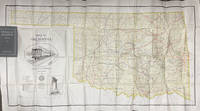
1909584St. Louis: Woodward & Tiernana Printing Company 1909. 52 1/4 x 26 3/4 inches. Very good condition with separation at the fold expertly repaired with archival mending tape. This large wall map of Oklahoma put out by the state's Corporate Commission. The legend indicates there are fourteen railroads operating in the state. The map shows their routes. The state also had numerous oil and gas pipelines. There was also a dominate agricultural product; cotton for which the legend notes where it is compressed and factories that produced cotton products. This is a decorative piece with its inset of the back of a railroad train and a vignette of a spouting oil well. Woodward & Tiernana Printing Company unknown
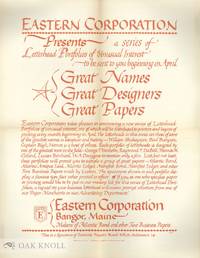
131390Bangor ME: Eastern Corporation n.d. loose leaves. Type Specimens. 4to. loose leaves. 25 folio leaves 24 quarto explanatory cards one issue of 'Let's Talk Type' 1989 New series No. 1. A collection of 12 large folding type specimen sheets together with 12 respected companion cards containing historical background and biographical information about the designers. Produced by the Eastern Corporation of Bangor Maine. Includes the preliminary broadside titled Eastern Corporation Presents a series of Letterhead Portfolios of Unusual Interest. Very minor toning to the edges of some of the specimens. A few specimens have tears albeit minor. A near fine set of this scarce production.<BR> <br /> <BR> <br /> The specimens included are: Baskerville Garamond Grayda & Barnum Caslon Old-Fashioned Types Futura The "Lost" Goudy Types Square-Serif Types Bodoni Cloister Black Lutetia Weiss Calligraphy Cheltenham Lydian Centaur Perpetua Goudy Old Style Bulmer Types Cast by Binny & Ronaldson Bernhard Modern Janson Fairfield and finally Alternate Gothic and Franklin Gothic.<BR> <br /> <BR> <br /> Also included is the 1989 New series No. 1 Let's Talk Type periodical produced by Mac McGrew. In it McGrew gives more information on this project by Eastern Corporation. The text is below:<BR> <br /> <BR> <br /> "In March 1947 Eastern Corporation manufacture of Atlantic Bond and other printing papers began publication of a series of typographic broadsides which have become collectors' items. Each month a new broadside featured a different typeface or family of faces and each was created by a different well known designer.<BR> <br /> <BR> <br /> The broadsides were 17x22 inches printed on one side and folded twice. Each was accompanied by an 8 1/2x11-inch card identifying the designer and telling something about him and the featured typeface and serving as a stiffener.<BR> <br /> <BR> <br /> A few of the broadsides were lithographed but most were printed letterpress usually in two colors. They were not numbered or dated; our numbers are only to indicate sequence. The dates in our list are of The Inland Printer containing a related ad announcing the broadside. The magazines normally were delivered early in the month of date and presumably the broadsides were mailed out about the same time.<BR> <br /> <BR> <br /> The printshop in which I was working at the time had the order to print the first of these sheets. As assistant production manager I handled some of the routine details but had no part in the actual production. As I recall locked-up forms were received from the typesetter; these may have been relocked to go on our flat bed presses. A number of press proofs were pulled in advance on another brand of paper while awaiting Eastern's shipment of Atlantic Bond. Of course I appreciated this as an interesting job at the time but didn't anticipate the variety of sheets to follow or their lasting value.<BR> <br /> <BR> <br /> Some time later a few of the sheets were reprinted. A new sheet on Times Roman was planned and perhaps other faces but I have found no evidence of its production. At this time I offered a layout titled The Family of Basic American Gothics. Eastern was interested but before arrangements could be completed a new advertising manager took over and the project was dropped. I later reworked my layout for another Pittsburgh typographer. Eastern Corporation unknown
BN124579MICROSOFT GMBH. Microsoft Windows 98. Original Microsoft Training. <br/><br/>Microsoft Windows 98. Original Microsoft Training. Microsoft Corporation MICROSOFT GMBH unknown
18994All but one of the 115 letters either from The Pavilion Hampton Court East Molesey Surrey or The Pavilion Greenfield Park Dublin. A few of the letters dated from between 1971 and 1979; the others from the same period. King's letters total 135pp. 12mo; 10pp. 4to. The earlier letters mainly from East Molesey all addressed to 'Mr Dossé'; 37 of the later letters all from Dublin addressed to 'Dear Philip'. The collection also contains the holograph of King's review of Graham Cleverley's 1976 book 'The Fleet Street Disaster' 6pp foolscap 8vo and 11 Autograph Letters Signed and three Autograph Cards Signed to Dossé from King's wife Ruth neé Railton dating from between 1971 and 1979. These are written in a chatty style the letters totalling 25pp. 12mo; 2pp. 4to. The collection is in good overall condition with a few items affected by damp. Although largely concerned with the business of reviewing Cecil King's forceful personality and reactionary politics are apparent throughout the correspondence. On 5 August 1978 he writes 'I am afraid we live in troubled times with no effective government. It looks as if the Russians will take over Western Europe. No one seems to think the Americans will prove to be any obstacle. Carter is a huge disappointment. He is a good little man hopelessly out of his depth.' And on 25 July 1979 following the election of Margaret Thatcher: 'I am afraid the country is by no means out of the wood yet. The North Sea Oil is a great bonanza but it will be frittered away in inflammatory wage settlements and social welfare. There is no reason to suppose that a Conservative Government will be any more able to cope with the Trade Unions than this one.' And on 31 December 1980: 'Of course I will review Diana Mosley's book. We both are much attached to her and I have a strong sense of her husband's ability.' A letter of 29 January 1977 deals with a personal tragedy in a curiously detached style: 'It was indeed kind of you to write a letter of sympathy to me in my bereavement. Colin was my youngest and most successful son & his death leaves a big gap in the huge concern of which he was a director. His little family is left quite desolate.' A letter of 29 May year contains some an interesting assessment of his dismissal by the IPC directors in 1968: 'At the I.P.C. I had announced my intention of retiring in two years time and meanwhile was sitting back to see how the team that was to succeed me was getting on. The result was due to impotence - why wait for two years: pressure from Harold Wilson: and a suspicion that the new team were not doing well & that I ought to be making changes. I thought they would be utterly foolish to vote me out of the chair at that juncture. They were indeed foolish but they didn't realise that until later. If you want peace of mind keep within your resources - human and financial. It is likely there will be an inflammatory book in the next few months but there is very rough water ahead. The Labour situation is played down in the papers but looks ugly.' On 11 January 1980 he writes of his former Daily Mirror editor: 'About Cudlipp's new book. I am certainly not prepared to review it by courtesy of Hugh Cudlipp. But I would be prepared to review it in the ordinary way - without reference to the author. I am not all that keen as it is likely to be a bad book and if I say so in a review I shall be accused of personal animosity.' And on 7 April 1980 on the same topic: 'I don't want to review the Cudlipp book. . The book is likely to be short self-centred and written in a style more suitable for the tabloid press than for a book.' On 11 September 1979: 'I was amused to have explained to me what the trouble was over the Brendan Bracken book. Apparently Bracken met the Duchess of Buccleuch at a party with Beaverbrook and said she was "as randy as a school girl". At the last moment they discovered the old girl is not dead so they cut out Buccleuch in the text - but left it in the index!' On 12 October year: 'I am alarmed by your statement that you intend to use Robert Maxwell. I cannot say I relish the idea of appearing in the same issue as Maxwell and Boothby.' On 2 July year: 'I am afraid I have to return the book you sent. Pearse is the Jesus Christ of the Nationalist religion and anything short of sustained and ecstatic praise would not be acceptable from a Dublin resident.' There are many covering letters enclosing copy with King writing in businesslike manner giving the name of the book whose review he is enclosing and usually giving his opinion of it 'a shamelessly dishonest piece of Communist propaganda' 'quite the dullest work you ever sent me' 'It was difficult not to be libellous but I hope I have avoided that pitfall' 'an outstandingly bad book but I hope the review is readable' 'a rather superficial work but I have done my best with it'. Interesting passing comments are scattered throughout the correspondence: 'I am not a touchy person' 'I see Sampson now describes me as a man of "icy arrogance". This seems to me a bit exaggerated.' 'I knew Stanley Morrison quite well and liked him'. On 31 May 1980 King apologises for having to miss a Foyle's lunch for Dossé: 'But my wife will be there on my & her own behalf. You deserve all the encouragement and congratulation that will come your way.' The correspondence contains a few allusions to the financial problems that would bring an end to Dossé's editorship and result in his suicide in 1980. On 25 October 1979 King writes a long letter regarding Dossé's 'difficulty retaining your ownership of B & B. It is a very personal enterprise and I doubt if it would prosper in other hands.' The letter contains suggestions regarding the magazine. And on 25 April 1980: 'This is a dreadful time for a small business like yours but this storm will not blow itself out soon - so be very careful.' A letter of 30 August 1980 records the end of Dossé's ownership of the magazine: 'Dear Philip I am terribly sorry that your valiant efforts to keep Hanson Books going have been brought to nought by trade depression and Government policy. I do hope you find a buyer who will keep the group going - anyway B & B which is a unique kind of literary journal.' All but one of the 115 letters either from The Pavilion, Hampton Court, East Molesey, Surrey, or The Pavilion, Greenfield Park, unknown
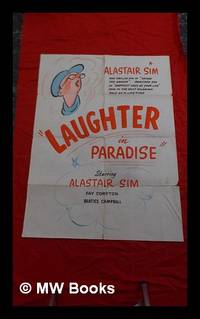
1951371561London : Associated British Picture Corporation 1951. First Edition. Softcover. Single sheet movie poster for Laughter in Paradise. Unique artist's paste mock-up - not subsequently used. Original paint etc. All in good condition save for a fold tear and some minimal edge wear. Remains well-preserved overall. Physical description: 104cm x 76cm. Synopsis: After a millionaire practical joker dies his fortune is divided among four heirs who must carry out his zany instructions to cash in. London : Associated British Picture Corporation paperback
1960033479New Jersey: Bendix Corporation 1960. Book. Very Good. Hardcover. These guides belonged to an engineer employed by the Bendix Corporation's Eclipse-Pioneer Division in the early 1960s. They cover the theory behind and application of that theory to missile guidance systems. These manuals center on the technical and mechanical aspects of weapons system guidance rather than the detailed strategic implications. The titles and volumes are as follows: A Delta Minimum Guidance System: 2 Vols Maroon cloth boards gilt titles. Unpaginated: Vol 1 approx 250pp; Vol 2 paginated 59pp. Tabbed indexing in Vol 1 Instrument Error Analysis features various reports signed off on by Bendix engineers and approval on the title page by W. Grunwald of the Army Ballistic Missile Agency in Huntsville AL and F. Weber of the Marshall Space Flight Center also in Huntsville. Includes one page of loose-leaf laid-in notes/calculations. The reports begin in September 1960 and the bound volume is dated Feb 15 1961. Vol. 2 is labeled Secret and Classified both marked out with black marker and replaced with the word UNCLASSIFIED stamped atop each page. The second volume contains a summary and numerous charts. Inertial Guidance: 3 Volumes in 4 spiral bound notebooks Vol 1: Background Theory is dated September 1963. 215pp. Authored by Leonard A. Alperwitz Lenard R. Feldhann John W. Giovannucci Howard A. Herzog Louis J. Malfaro and Louis A. Morine. Vol 2: Basic Principles features the same authors and runs to 165pp and builds on the theory concluding with a section on errors. Volume 3: Application of Basic Principles comes in two volumes 138pp and 178pp. The third volume contains numerous key equations like the other volumes and builds upon that with a number of detailed b&w illustrations and diagrams of the missiles and their component parts. Second copy of V3.1 available in blue binding with identical contents and date. Project Officer and Editor for Revision I Richard R. Gunter Captain USAF. Vol 1 238pp; Vol 2 97pp; Vol 3 124pp.; Vol 4 230pp; Chapter 4: Inertial Guidance for Cruise Missiles by J. C. Pinson Sc. D. Accopress binding 97pp. Part of a longer work but relevant in content to the other titles here. Contains numerous complex sets of calculations and a number of hand-drawn diagrams reproduced. Bendix Corporation Hardcover
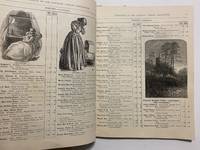
18914326Chicago: National Library Association 1891. Good. 4to. 182 2 pp. With woodcut-engraved illustrations throughout. Original gray printed wrappers chipped more prominent at the foot of spine; stains on front cover and first 18 pages - SEE IMAGES. A sound copy suitable for exhibition and study. NOW VERY LITTLE KNOWN THIS SCARCE AND GIGANTIC AMERICAN BOOK CATALOGUE WAS ONE OF THE VEHICLES FOR A NOTORIOUS AND LITIGIOUS PYRAMID SCHEME WHICH HAS SOME SEMBLANCE TO TODAY'S SUBSCRIPTION BOOK CLUBS. <br /> <br /> The perpetrator was a shadowy figure name George W. Borland 1851 or 1852-1931 of Chicago; according to legal records he was frequently sued and lost; after filing for bankruptcy he simply reformed his companies under different names. <br /> <br /> Borland claimed that his subscription services eliminated the middlemen and as the present amazing "stock catalogue" shows his firm offered to members desirable books published by Harper Brothers Appleton Scribner's Houghton Mifflin Lippincott and many others at slashed prices. In order to achieve such savings his National Library Association continually recruited new members who had to pay the so-called "subscription fee" and were enticed with discounts and prizes to recruit friends families schools libraries church congregations etc. <br /> <br /> Apparently Borland and his cohorts were complete scam artists; in the year 1884 alone Borland et al. were the subjects of major lawsuits the judgments of which resulted in massive losses approximately $100000 = $3.5 million today. Consequently these crooks simply reformed under another name and relaunched their enterprise. Contemporary newspaper and legal records show that Borland continued to lose cases from creditors such as Bradner Smith & Co. in 1891 -- the year in which the present catalogue was issued -- the judgment was $1491. In 1896 after the name was changed to National Merchants' Supply Co. he was forced into bankruptcy following by a lawsuit from Felix Marston & Co. <br /> <br /> Sidney Huttner in his innovative "Lucile Project" describes some of the consequences of Borland's dubious activities including his involvement with the National Library Association. In its hall-of-shame "Trade Embarrassements" column in Bradstreet's Weekly: A Business Digest vol. 10 July 5 1884 p. 13 Borland's name appears not once but three times: <br /> 1. G.W. Borland & Co. book publishers assigned to W. N. Lee having previously confessed five judgments for $40439.<br /> 2. Chicago Installment Book Co. and George W. Borland & Co. the proprietors of it closed by sheriff on confessed judgments for $40690 and both assigned to W. N. Lee.<br /> 3. Fairbanks Palmer & Co. publishers closed by sheriff. It is said they held papers of G. W. Borland for $40200.<br /> <br /> The catalogue also provides an excellent well-illustrated guide to the myriad of works available for the literate public during the 1890s including -- but certainly not limited to -- Atlases and Maps Historical Works Art and Art History Juvenile Works Architectural Books Law Books Agriculture and Floriculture Medical Books Photograph Albums Mechanical Books Biography Music and Music Books Books On The Civil War Bibles Building Industrial Arts Poetry Political Economy Government Book Binding Prayer Books and Hymnals "Cheap Books" Religious and Theological Books Cookbooks Housekeeping Shakespeare Fiction Self-Improvement Dictionaries Sports Games and Amusements Essays and General Literature Science and Philosophy Textbooks Testimonials Foreign Books and Periodicals Travel Discovery and Adventure Temperance Books Works of Reference Gift Books Wit And Humor Writing Paper Tablets etc. <br /> <br /> We have been unable to locate any useful information about Mr. Borland; even a cursory bio-bibliographical exposé of his antics is merited.<br /> <br /> Our copy like all others has the date altered in type: 1891 with the latter two digits printed in a slightly different font. Of this 1891 edition Worldcat locates 3 copies Grolier AAS UVA; there is also a copy in the Chicago Public Library's Trade Catalog Collection. A considerably smaller edition of the Catalogue of the National Library Association was issued in 1890 copy at Univ. Tulsa; NB: the type in our edition was completely reset. National Library Association unknown
19842092902143400686Japan Transportation Public Corporation Publishing Bureau 1984. Soft Cover. Fine. Size: B5 size Number of books: 6 in total Japan Transportation Public Corporation Publishing Bureau paperback
197190203Glendale CA: Allied Artists Corp 1971. Presumed First Edition First printing. Single sheet printed on one side. Fair. The format is approximately 45 inches by 27 inches. This has been folded so that there are eight panels per side. There is some wear and soiling and some tears and chips at the folds. There is a stamp on the 'blank' side that reads Cabaret 1 Sh. Dom. 72/36. Rare surviving copy. The poster contains the following statement: "Property of National Screen Service Corporation licensed for use only in connection with the exhibition of this picture at the theater licensing this material. License agreed not to trade sell or give away or permit others to use it nor shall licensee be entitled to any credit upon return of this materials. This material must either be returned or destroyed immediately after use." Allied Artists International Inc. AAI is an American multinational mass media and entertainment corporation headquartered in Glendale California United States producing and distributing motion pictures recorded music broadcast television online streaming video games and other media products. The company is the successor to Allied Artists Pictures Corporation formerly known as Monogram Pictures Corporation. Allied Artists Pictures the flagship AAFG studio is known for having produced and released such historic motion pictures as Cabaret starring Joel Grey and Liza Minnelli; Papillon starring Dustin Hoffman and Steve McQueen; and The Betsy starring Laurence Olivier Tommy Lee Jones Robert Duvall and Katharine Ross. Cabaret is a 1972 American musical period drama film directed and choreographed by Bob Fosse from a screenplay by Jay Presson Allen based on the 1966 stage musical by John Kander Fred Ebb and Joe Masteroff which in turn was based on the 1951 play I Am a Camera by John Van Druten and the 1939 novel Goodbye to Berlin by Christopher Isherwood. It stars Liza Minnelli Michael York Helmut Griem Marisa Berenson and Joel Grey. Multiple numbers from the stage score were used for the film which also featured three other songs by Kander and Ebb including two written for the adaptation. In the film the musical numbers are almost entirely take place inside the club with the exception of "Tomorrow Belongs to Me" which is not performed in the club or by the club characters but is a nationalistic song sung by a Nazi youth and the German crowd. The film received critical acclaim. It won Best Picture citations from the National Board of Review and the Hollywood Foreign Press Association and took Best Supporting Actor honors for Grey from the National Board of Review the Hollywood Foreign Press and the National Society of Film Critics. At the 45th Academy Awards the film won Best Director Fosse Best Actress Minnelli Best Supporting Actor Grey Best Cinematography Best Film Editing Best Original Song Score Best Art Direction and Best Sound holding the record for most Oscars earned by a film not honored for Best Picture. In 1995 Cabaret was the twelfth live-action musical film selected by the Library of Congress for preservation in the United States National Film Registry as being deemed "culturally historically or aesthetically significant". A film poster is a poster used to promote and advertise a film primarily to persuade paying customers into a theater to see it. Studios often print several posters that vary in size and content for various domestic and international markets. They normally contain an image with text. Today's posters often feature printed likenesses of the main actors. Prior to the 1980s illustrations instead of photos were far more common. The text on film posters usually contains the film title in large lettering and often the names of the main actors. It may also include a tagline the name of the director names of characters the release date and other pertinent details to inform prospective viewers about the film. Film posters are often displayed inside and on the outside of movie theaters and elsewhere on the street or in shops. The same images appear in the film exhibitor's pressbook and may also be used on websites DVD and historically VHS packaging flyers advertisements in newspapers and magazines and all other press related to the promotion of the film. Film posters have been used since the earliest public exhibitions of film. They began as outside placards listing the programme of short films to be shown inside the hall or movie theater. By the early 1900s they began to feature illustrations of a film scene or an array of overlaid images from several scenes. Other posters have used artistic interpretations of a scene or even the theme of the film represented in a wide variety of artistic styles. The first poster for a specific film rather than a "magic lantern show" was based on an illustration by Marcellin Auzolle to promote the showing of the Lumiere Brothers film L'Arroseur arrosé at the Grand Café in Paris on December 26 1895. Originally film posters were produced for the exclusive use by the theaters exhibiting the film the poster was created for and were required to be returned to the distributor after the film left the theater. In the United States film posters were usually returned to a nationwide operation called the National Screen Service NSS which printed and distributed most of the film posters for the studios between 1940 and 1984. As an economy measure the NSS regularly recycled posters that were returned sending them back out to be used again at another theater. During this time a film could stay in circulation for several years and so many old film posters were badly worn before being retired into storage at an NSS warehouse most often they were thrown away when they were no longer needed or had become too worn to be used again. Those posters which were not returned were often thrown away by the theater owner or damaged by being outside. Film posters have become increasingly coveted by art collectors in recent years due to their known relative rarity condition artist and art historical significance. Allied Artists Corp unknown
WALTER-FILM000042No binding. Very Good. Fine Art Print Vintage original 22 x 28"" 55 x 71 cm. half sheet poster USA. Beverly Michaels Jim Davis Joan Rice Richard Travis Paul Cavanagh dir: Elmo Williams; AFRC. Lurid crime drama about a stripper who lands in jail after violently defending herself. Engaged to a murderer a jail escape is arranged for her by a U.S. State Department agent who wants to find her fiancé and bring him in. Academy Award winning film editor Elmo Williams tried his hand at directing a few lower budget films during the mid 1950s. The Hammer group produced. The film was made in England and released there as WOMEN WITHOUT MEN. Discovered by exploitation film maker Hugo Haas Beverly Michaels was posed for B-movie stardom till he dropped her to promote Cleo Moore. Michaels posters are now highly collectible and this is one of the truly great 50s exploitation posters. Paper-backed NEAR FINE. unknown books
1986mon0000060541American Map Corporation 1986-01-01. Hardcover. New. 1.4000 in x 12.7000 in x 9.9000 in. American Map Corporation hardcover
19902110502151004620Ozorasha 1990. Soft Cover. Fine. Number of books: 7 Ozorasha paperback
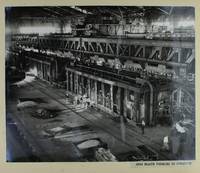
19573436Chiba Japan 1957. Very good plus. Title leaf plus 18 leaves illustrated with forty-three large photographs between 4 x 6 and 8 x 10 inches including a few small panoramic images most with typed captions mounted beneath the pictures. Oblong folio. Contemporary light brown leather. Minor scuffing and edge wear. A unique photograph album created for an American businessman named Richard F. Quandt "In Remembrance of Your Visit to Chiba Iron and Steel Works on May 14 1957" according to the printed dedication on the title leaf. The printed message is signed by the founder of Kawasaki Steel Yataro Nishiyama. The album is populated by over forty photographs featuring the construction and operation of Kawasaki Steel's new integrated steel mill in Chiba City Japan. The photographs picture the staff of Chiba Works a schematic of the plant aerial views of the plant images of the blast furnace coke oven ore yard and other exteriors. Some of the exterior shots include small panoramas of the plant's construction most notably a three-panel panorama showing the "Entire View of Hot & Cold Strip Mill Plant's Construction Work." The interior photographs document the heat control center open heart furnaces soaking pits and several candid shots of Mr. Quandt touring the plant with the managers of Kawasaki Steel.<br /> <br /> According to his 1974 obituary in The New York Times Richard Frederick Quandt was a Hungarian-born businessman who emigrated to the United States after World War II. He first worked for the Hambro Trading Company in 1949. At the time he visited the Chiba Iron and Steel Works he was serving as a loan officer for the International Bank for Reconstruction and Development the lending arm of the World Bank. He was quite likely visiting the Chiba Works at the request of their principal Yataro Nishiyama in search of funding for the steel mill. Nishiyama was an engineer who built Kawasaki Steel into one of the most important steel manufacturing companies in Japan in the ensuing decades. A wonderful and informative photographic artifact of American economic diplomacy in postwar Japan. unknown
195351074Washington DC: RCA and NBC 1953. First edition. <p>RCA Radio Corporation of America. Before the Federal Communications Commission Washington D. C.: Petition of Radio Corporation of America and National Broadcasting Company Inc. for approval of color standards for the RCA color television system. Washington D.C.: RCA and NBC 1953. 697pp. 255 x 180 mm. Original red soft covers margins a bit faded. Very good. Laid in is an 11-page reproduced typescript press release on RCA letterhead dated 25 June 1953 titled "RCA and NBC petition FCC to adopt standards permitting commercial broadcasting of compatible color television." From the library of television pioneer Vladimir K. Zworykin 1888-1982 with his initials written in his hand on the front wrapper and the first page of the press release.</p> <p> First Edition. All-electronic color television based on the dot-sequential color technology developed by RCA was introduced in the United States in 1953 after being approved by the FCC. From the library of television pioneer Vladimir K. Zworykin 1888-1982 with his initials written in his hand on the front wrapper and the first page of the press release. Zworykin played a key role in the development of RCA's color television system. </p> . RCA and NBC unknown
20052529190930084Leisure Arts Inc 2005-04-01. Paperback. Very Good. Nice looking book has minor edge wear. Leisure Arts, Inc paperback
19902080202102700224Japan Broadcast Publishing Association 1990. Soft Cover. Fine. Page size: 592 pages Size: B5 size Japan Broadcast Publishing Association paperback
1967BBS-2022624Desilu Productions Inc. / Norway Corporation 1967. Staplebound. Very Good. Signed. Two copies of a contract between Norway Corporation Gene Roddenberry's production company and Robert Bloch c/o Gordon Molson of the Molson-Stanton Agency with a cover letter addressed to Molson on Desilu letterhead Desilu having contracted to produce Star Trek with Roddenberry. Desilu would later become Paramount. Contract is for a story idea with teleplay option; both copies of the contract are signed by Robert Bloch with addenda initialed. Story information or episode identification is not present. Light toning and edgewear. Staplebound at top left corner; staples secure free of rust. Paperclip ghost to top margin of cover letter. Stored and sold boarded in protective Mylar sleeve. Desilu Productions Inc. / Norway Corporation unknown
1995ZB393024International Business Machines Corporation 1995. volumes 4-5; mostly in original paper wrappers PRICE IS FOR THE LOT. - If you are reading this this item is actually physically in our stock and ready for shipment once ordered. We are not bookjackers. Buyer is responsible for any additional duties taxes or fees required by recipient's country. Photos available upon request. International Business Machines Corporation unknown
1994DADAX0963865005Brand: Fluke Corp 1994-04-16. 2nd. hardcover. New. 1.00x8.00x15.00. Buy with confidence. Excellent Customer Service & Return policy. Brand: Fluke Corp hardcover
12335Paris, Librairie Gaston Saffroy, 1965-1976 ; 7 tomes grand in-8, brochés ; tome 1 : XXI, (1), 176 pp. ; tome 2 : (4), 201, (1) pp. ; tome 3 : (4), 202 pp. ; tome 4 : (4), 202 pp. ; tome 5 : (4), 202, (2) pp. ; tome 6 : (4), 198, (2) pp. ; tome 7 (Premier supplément. Sources utilisées et Bibliographie) : (4), VII, 203, (1) pp., couverture imprimée en rouge et noir, texte sur deux colones.
19702090502113709426Not Available 1970. Soft Cover. Fine. The book is in fine condition. Not Available paperback
19932080502106914981Not Available 1993. Soft Cover. Fine. The book is in fine condition. Not Available paperback
191149373Oklahoma City: The State/Corporation Commission 1911. 1911. First edition. Map is compiled and drawn by the Engineering Department Corporation Commission. 53" x 27" folded railroad map of Oklahoma. Colored routes of all the major railroad lines running through the state. Scale is 10 miles to 1 inch. Color-coded routes of all major railroad lines running through the state. Lines include Atchison Topeka & Santa Fe; Chicago Rock Island & Pacific; Clinton & Oklahoma Western; Ft. Smith & Western; Kansas City Mexico & Orient; Kansas City Southern; Midland Valley; Missouri Kansas & Texas; Missouri Oklahoma & Gulf; Missouri Pacific; Oklahoma Central; Poteau Valley; St. Louis & San Francisco; Texas Oklahoma & Eastern; and Wichita Falls & Northwestern. To left center of map is a 6" x 9" vignette showing 3 men and 2 women standing on the rear deck of a train. Below is a 3" x 1 1/2" illustration of an oil derrick. Housed in 7 3/4" x 4 7/8" gray cover with titles stamped in silver on the front cover A beautiful map with both binder and map in near fine condition. The State/Corporation Commission, 1911. unknown
195889643San Diego CA: Convair A Division of General Dynamics Corporation 1958. Presumed second revised and rewritten version--Special Weapon Section changed. Stated Presumed First printing. Three-hole punched disbound. Good. 1 178 pages. Three-hole punched. Illustrations. Pages 120 and 121 are fold-outs. RARE SURVIVING COPY. The major Table of Contents sections are Description Major Assemblies and Components Related Systems Rigging and Adjustment Electrical Checkout Armament System Operational Checkout Ground Operations and Loading/Unloading of Armament System; Trouble Shooting Summary of Safety Precautions and References. F-106A: Improved version of the F-102. Fitted with the MA-1 Integrated Fire Control System with SAGE datalink J-75 afterburning turbojet enlarged intake variable-geometry inlet ramps and shortened intake ducts refined fuselage shape modified wings and tailfin; tailpipe fitted to reduce the tendency of the jet exhaust to blow unsecured objects around while taxiing yet allowing virtually maximum performance at high thrust/afterburner settings. Performance was deemed unsatisfactory and modifications were made. The aircraft was capable of low supersonic speeds without afterburner and had a maximum altitude at least 57000 ft. Many were fitted with a conically cambered wing for improved takeoff supersonic and high-altitude flight. The aircraft was fitted with two streamlined external supersonic tanks that still kept the aircraft capable of sustained roll rates of 100 degrees per second. These tanks produced virtually no significant performance degradation were rarely jettisoned and were routinely carried. After 1972 many F-106s were refitted with a new canopy featuring improved visibility improved optic sights and provision for a gunpack in the center weapons bay. The Convair F-106 Delta Dart is an all-weather interceptor aircraft designed and produced by the American aircraft manufacturer Convair. The F-106 was designed in response to the 1954 interceptor program. Envisioned as an imagined "Ultimate Interceptor" it was a development of the F-102 Delta Dagger and commenced as the F-102B prior to being redesignated by the United States Air Force USAF. The F-106 was designed without a gun or provision for carrying bombs instead carrying its AIM-4 Falcon air-to-air missiles within an internal weapons bay; its clean exterior was beneficial to supersonic flight. Major differences from the F-102 included the adoption of the more powerful Pratt & Whitney J75 turbojet engine heavily redesigned air inlets along with a variable-geometry inlet duct to suit a wide range of supersonic speeds and a general increase in size. On 26 December 1956 the first prototype performed its maiden flight. After flight testing demonstrated lesser performance gains than anticipated the USAF only ordered 350 of the planned 1000 F-106s. <br /> Becoming operational in June 1959 the F-106 was the primary all-weather interceptor aircraft of the USAF through much of the Cold War era; it ended up being the final specialist interceptor to be used by the service to date. It was never used in combat nor were any exported. During the 1960s a competitive evaluation between the F-106 and the McDonnell Douglas F-4 Phantom II determined the latter to be marginally superior yet the type continued to be operated for a further two decades due to extensive demand for the F-4 in other roles. Convair proposed various improved models of the F-106 typically focused on the radar communications and other avionics but none of these schemes were pursued. In one incident over Montana on 2 February 1970 an unmanned F-106 recovered from a flat spin after its pilot had ejected belly landing relatively intact in a snow-covered field; it was recovered and continued to be flown for numerous years afterwards. The F-106 was gradually withdrawn from USAF service during the 1980s as the arrival of newer air superiority fighters particularly the McDonnell Douglas F-15 Eagle had made the role of dedicated interceptors obsolete. Numerous F-106s were operated for a time by the Air National Guard. Many withdrawn aircraft were converted into target drones and redesignated QF-106 under the Pacer Six program which were used up in 1998.123 A handful of F-106s were operated by NASA for experimental purposes such as the Eclipse Project until 1998. Convair [A Division of General Dynamics Corporation] unknown
1680632441680. The City Law Corporation of London. Court of Common Council. Lex Londinensis; Or The City Law. Shewing the Powers Customs and Practice of All the Several Courts Belonging to the Famous City of London: viz. The Lord Majors Court. The Orphans Court. The Court of Hustings. The Court of Common Councel. The Court of Aldermen. The Wardmotes. The Courts of Conservacy for the River of Thames. The Court of Conscience. The Sheriffs Court. The Chamberlains Court. Together with Several Acts of Common Councel Very Useful and Necessary to be Known by All Merchants Citizens And Freemen of the Said City. And also A Method for the Ministers Within the Said City to Recover Their Tithes. With a Table to the Whole Book. London: Printed by S. Roycroft for Henry Twyford 1680. viii 260 12 pp. Octavo 6-1/2" x 4". Later three-quarter calf over marbled boards rebacked retaining spine which has gilt ornaments and later lettering piece endpapers renewed. Some rubbing to boards and extremities corners bumped and lightly worn. Light browning and occasional light foxing to text. Early owner underlining to title page which has some edgewear interior otherwise clean. An appealing copy. $750. Only edition. This book was the first digest of the London's laws and guide to its courts after the revisions of the city laws from 1647 and 1658. A useful work that gathered a great deal of disparate information it is a valuable resource today for students of seventeenth-century London and its legal system. English Short-Title Catalogue R2792. unknown books