Georges BARBIER ; Albert FLAMENTBiblio.com
7 802 résultats
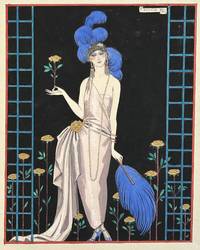
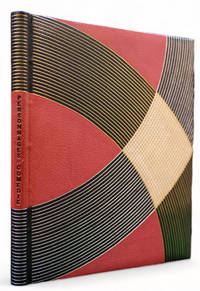
19221<p>SINGLE PRINT LIMITED TO 150 COPIES ON HOLLAND VELUM OF THE MOST FAMOUS WORK FROM THE COLLABORATION OF Barbier and Schlied. Copy n°97 signed by the author.</p><p>40 Figures headbands decorated letters by Georges Barbier engraved on wood in colors and worked by F.L. Schmied. Cover enhanced with gold and silver. Calligraphic text.</p><p>Lined and mosaic binding signed by Jeanne Langrand 1931.</p><p>Raspberry morocco crossed from one plate to the other and extending on the back with two wide strips of black morocco highlighted with twenty-five threads gilded for one of the strips palladium for the other the two strips crossing each other on a piece of cream morocco forming a decoration of iridescent lattices; smooth spine crossed with the same decoration gilded fillets at the head and palladium at the tail Title in large black letters; linings extending and repeating in symmetry the mosaic decoration of the covers; guards of pink moiré silk. Edges with matte gilding on witnesses. Covers and spines preserved.</p><p>Perfect condition case a little rubbed.</p><p><strong>DAZZLING ART-DECO MOSAIC BINDING DUE TO Jeanne LANGRAND.</strong></p><p>Jeanne Langrand was one of the pioneers of the modern style in the field of bookbinding. After the First World War with her sister Andrée she found herself at the School of Decorative Arts Jeanne as assistant professor and Andrée as director.</p><p>In this breathtaking binding of perfect mastery and great decorative audacity we can only admire the elegance of the mosaic tones the refined geometry of the composition with its symmetrical repetition in linings. Even the case bears witness to its particularly sober and relaxed style.</p><p>One of the great successes of the art of illustration from the interwar period in a brilliant binding in perfect harmonious harmony.</p> chez Meynial
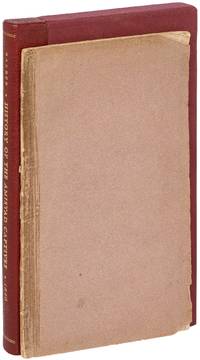
1840543798New Haven CT: Published by E.L. & J.W. Barber. Hitchcock & Stafford Printers 1840. Softcover. Very Good. First edition. Octavo. 32pp. Large folding wood-engraved frontispiece; 38 wood-engraved illustrations of silhouette profiles one map and two illustrations. In the original plain pale purple wrappers. Wrapper lightly toned a few small chips spine mostly perished with some glue residue along the spine. Scattered light foxing and slight offsetting from wrapper on one blank panel of the folded frontispiece and onto the final page. Very good with the striking folding frontispiece very bright and attractive. Neatly housed in a cloth chemise and quarter morocco and cloth slipcase gilt. <br /> <br /> Barber's highly important history documenting what one historian called "the most famous of all shipboard revolts" published in the same year that the New Haven court ruled that the slave traffickers had no claim on the Amistad rebels and preceding the publication of Adams and Baldwin's 1841 Supreme Court arguments. The work features Barber's famous large frontispiece engraving depicting the uprising on the ship and the death of the Amistad's captain; along with Barber's 38 engraved profiles of the Amistad rebels made during his visits to the New Haven jail where they were incarcerated. The work also features a map of Mende on the West African coast an engraving of a Mende village and an engraving of nine Amistad Africans chained in the ship bound to Cuba.<br /> <br /> In 1839 53 enslaved Africans aboard the Amistad rose up near Cuba killed the captain and one other crew member and captured their slavers José Ruiz and Pedro Montes. The new crew took control of the vessel and sailed it to Long Island where they were captured by the U.S. Navy and ultimately incarcerated in New Haven. In 1841 after a remarkable trial the Supreme Court declared the Amistad rebels free. Exceptionally uncommon. Sabin 3324; American Imprints 40-480; Library Company Afro-Americana 881. Published by E.L. & J.W. Barber. Hitchcock & Stafford, Printers unknown
2092902141700960Not Available N.A. Soft Cover. Fine. Volume: 2 vols. Not Available paperback
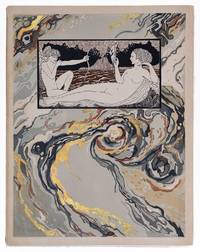
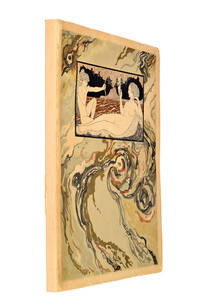
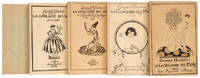
60214Paris: Chez Maynial 1922. FIRST EDITION. LIMITED EDITION 148/150. signed by Barbier. Large 4to. 37 x 29 cm. Loose as issued in original card wrappers upper cover with half-page woodcut repeated from half-title within full-page woodcut marbled border all printed in colour and gold original glassene outer wrapper. Woodcut illustrations by Barbier printed by F. I Schmied in collaboration with Pierre Bouchet and Louis Bracons. Half-title with half-page coloured woodcut title printed in green and black with a coloured woodcut Harlequin vignette 12 full-page and 2 half-page woodcut colour plates some with gold printing 22 historiated coloured woodcut four-line initials decorative woodcut ornaments in the text of which many printed in gold a final colour woodcut vignette. Light wear to extremities of spine generally an excellent copy of this important collaboration between Barbier and Schmied from the edition limited to 150 copies signed by Barbier in pencil. One of the most important works by Barbier rivalled only by his Le bonheur du jour. Albert Flament's text of 1914 is a diffuse meditation half-waking and half-dreaming which takes as its point of departure the great roles of world theatre. Barbier's vignettes have a general relevance to the theme of acting but most of his plates at least one of which dates from 1916 are simply magnificent decorative compositions. Ritchie 11; Carteret IV: 157 Paris: Chez Maynial, [1922]. unknown
121037Paris A La Belle Édition 1914. . Limited edition one of 10 copies with an extra suite in black this being copy number one4to 23.7 x 22.4 cm on Japon; 17 compositions by Barbier of which 13 are full-page printed in black and gold with an extra suite interleaved some foxing and staining more so to some leaves than others; finely bound by Creuzevault in dark brown morocco with gilt detail across the covers gilt title to spine top edge gilt black and gold patterned endpapers decorative gold paper covered black morocco entry slipcase a very good copy.<br /> Finely bound by Creuzevault in the same spirit as one of the Barbier compositions. From the édition de tête with an extra suite in black and white.<br /><br />Magnificent illustrations for the classically-themed story of 'The Song of Songs' elaborately printed in the bold palette of black white and gold. George Barbier's depiction of figures animals and plants is clearly inspired by both Greek and Roman imagery while retaining the seductive elegance of the early Art Deco.<br /> Paris, A La Belle Édition, 1914. unknown
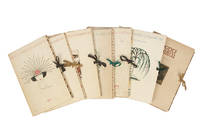
121033Paris Pierre Corrard 1913-1922. . 7 issues complete 8vo; all issues a total edition of 300 issue no.1 one of 271 copies on Japon no.276 12 plates after Lepape initialled in pencil by Lepape and Corard on the justification; issue no. 2 one of 17 copies with an original 'remarque' on Japon no.27 original signed in pencil by Lepape creased in the bottom corner 12 plates after Charles Martin signed by Martin on the justification; issue no. 3 one of 271 copies on Japon no. 139 initialled by Barbier on the justifcation 12 plates after Barbier; issue no.4 one of 17 with an original 'remarque' on Japon no.20 original drawing with silver monogrammed by Charles Martin 12 plates after Lepape; issue no. 5 one of 271 copies on Japon no.113 12 plates after Andre Marty; issue no. 6 one of 271 copies on vélin d'arches no. 74; 12 plates after Robert Bonfils; issue no. 7 one of 271 copies on vélin de cuve no.76 12 plates by Fernand Siméon; all loose as issued in the original portfolios with patterned paper folding paper internally each issue with a illustration on the upper by the corresponding artist some issues with some spotting to covers no. 4 with split spine no. 6 lacking one tie housed in a modern red cloth box with brown morocco label to spine a very good set.<br /> Complete set of seven volumes of Modes et Manières in the original portfolios with 84 plates in total. A fine bright copy of an Art Deco landmark. Two of the issues numbers 2 and 4 are from the smaller edition with an original signed drawing one by Lepape and one by Martin.<br /> Paris, Pierre Corrard, 1913-1922. hardcover
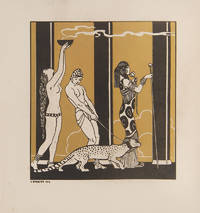
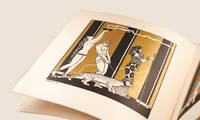
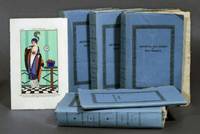
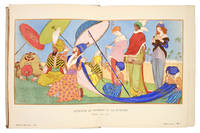
114438Paris Meynial 1922. Folio. 2 blank leaves. 30 leaves. 1 blank leaf. Printed wrappers in sheets as issued presented in a later slipcase with green morocco-covered spine and outer edges with a large reproduction of the cover in the center of the boards attributable to Brugalla. First Edition printed in only 150 copies of this emblematic work the result of collaboration between Art Deco icon Georges Barbier 1882-1932 and engraver François-Louis Schmied 1873-1941. Printed on Vélin de cuve de Hollande this work is distinguished by its exploration of iconic roles in world theater enriched by Albert Flament's meditative text from 1914 which navigates between dream and reality to offer a reflection on the art of theatrical interpretation. The drawings by Barbier an undisputed master of Art Deco illustration are decorative compositions of exceptional beauty evoking the myths of theater through fine imagery. They were hailed by poets such as Paul Valéry for their evocative power. The work represents an important milestone in the history of 20th-century decorative art reflecting the apogee of Art Deco and its refined aesthetic. The collaboration between Barbier and Schmied and Flament's evocative text create a universe where the imaginary and the decorative meet offering a dreamlike ethereal vision of human comedy. "Personnages de Comédie" is also an eloquent testimony to the perfect harmony between text and illustration constituting an Art Deco masterpiece that continues to inspire and fascinate with its timeless beauty and profound exploration of the themes of theater and performance. A very fine copy in sheets as issued in its printed cover and presented in a superb slightly posterior slipcase attributable to Brugalla. Number 105 signed by Barbier. hardcover
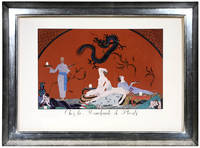
102802Paris Chez Meyniel 1924 . Group of six lithographs hand-coloured in pochoir by Henri Reidel after Barbier some with fully coloured backgrounds. Framed and glazed overall size: 52 x 38.5cm.<br /> The plates for Le Bonheur du Jour wee amongst the largest and most carefully meditated of Barbier's designs. So ambitious was this album that it took him from 1920 to 1924 to complete it to his satisfaction. A study of manners and fashion it was designed to appeal both to those who like to link the present to the past and to observers of the current scene.<br /><br />Barbier saw similarities between the period after the Napoleonic Wars and his own post-Great War era with dandies and their ladies free at last to enjoy frivolities and sensuality.<br /> C Paris, Chez Meyniel, 1924 unknown
191489054Paris: A la belle édition 1914. Fine. Copy on Japan A la belle édition Paris 1914 22.50 x 23.50 cm broché First edition totalling 240 numbered copies ours one of 10 copies on japon à la forme the deluxe issue complete at the end of the volume with its additional complete suite of illustrations in black as stated in the limitation. Illustrated with 17 splendid pochoir plates in black white and gold by George Barbier. A rare and handsome deluxe copy of this George Barbier masterpiece. A la belle édition unknown
1914191067Paris: La Belle Édition 1914. Neoclassical Art Deco First edition one of 25 copies on vergé paper and with the extra suite of monochrome illustrations from a total edition of 240 numbered copies of which this is number 63. Barbier transforms the Song of Songs into a sumptuous reverie both neoclassical and charged with the style of early Art Deco. Indeed this is "one of the few significant illustrated books in which the Art Deco style already predominates published in 1914 or earlier" Ray p. 32. Quarto. With 17 designs including 13 pochoir plates each present in two states: black and gold and monochrome. Original wrappers. With glassine dust jacket. Housed in a custom black cloth solander box by Sangorski & Sutcliffe. Contents possibly reglued into wrappers still a near-fine copy. Gordon Ray "The Art Deco Book in France" in Studies in Bibliography vol. 55 2002. hardcover
19279184<p>Limited to 150 copies this being number 141 but with an additional original 14 x 17 cm Barbier watercolor bound in before the half title. This original work had served as the model for Charles Frederick Worth's "Robe du Soir" as plate 21 in La Gazette du Bon Ton 1922 no. 3. Sumptous full Morocco by Georges Crette with gilt particulars to spine. All edges heavily gilt. Polished calf doublures and decorated endpapers with the original wraps bound in. Decorative slipcase with Morocco fore edges. Minor wear to corners of case see image. Pochoir frontispiece by Barbier as well as pochoir initials headpieces tail pieces.</p><p>8.25 x 10.25 in or 21 x 26 cm</p> A. Blaizot hardcover
19121091912. 1st Edition. Soft cover. Fine. FIRST EDITION OF ALL 79 ISSUES WITH 186 HAND-COLORED PLATES by some of the most famous artists of the era. Number 884 each issue from the same set of only 1250 sets on Holland paper out of a total edition of 1279. IN ORIGINAL WRAPPERS IN FINE CONDITION. "The Journal des Dames et des Modes lasted only two years the first issue appeared on 1 June 1912 and the last on 1 August 1914. This stylish periodical was issued regularly three times a month and ceased publication upon the outbreak of the First World War. With its expensive layout its society columns its poetic texts its colourful annotations and its fashion reports it represented the last brilliant refined impartial and aestheticizing impulse of a happy and optimistic society occupying the centre of the stage in the period that has aptly been called the 'belle époque'. It was essentially the testimony the history--illustrated or rather 'clothed' and narrated--of the customs ideas and ideals of a society and a period.<br /> <br /> "Every issue carefully reviewed all the current novelties of fashion and every issue carried coloured stencil prints reproducing the latest conceptions of the fashion designers." For the text "the magazine could count on the collaboration of the best known writers and littérateurs of the time" including Henri Duvernois Marcel Boulenger Paul Margueritte Jean Cocteau and many others. The artistic contributions "included the works of some outstanding artists and many promising young ones. Most frequent in his appearance and outstanding for the quality of his illustrations was Georges Barbier." Other artists included Léon Bakst Bernard Boutet de Monvel Umberto Brunelleschi H. Robert Dammy Paul Iribe Charles Martin and Fernand Siméon. Christina Nuzzi Parisian Fashion from the "Journal des Dames et des Modes". Note: all 186 plates are present numbered 1-184 with two unnumbered plates.<br /> <br /> Paris: 1912-1914. Octavo each issue loose as issued in original wrappers inserted loosely into four half-yearly plus one supplemental original large wrappers. A few plates with spots but generally exceptionally clean dampstaining to edges of five issue wrappers. A nearly immaculate set exceedingly scarce in original wrappers. unknown
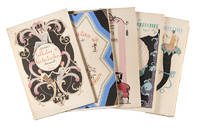
121036Paris Meynial 1922-26. . First editions 5 vols 8vo 25.2 x 17 cm; each issue with colour vignette to title and 12 colour pochoir plates 60 in total introductory text by Colette; loose as issued in original coloured pictorial wrappers by Barbier a fine set.<br /> A complete set of this exquisite series displaying fashion in magnificent and imaginative illustrations. The series includes Barbier's depiction of the seven deadly sins in the volume for 1925. Here one finds a great theme of the Western iconographical tradition at home in Barbier's special world. 'Anger' shows a modish couple quarelling in a formal garden; 'Envy' is displayed by a maid regarding her mistress as she steps from a Rolls Royce; and 'Gluttony' is depicted as a gourmandise.<br /><br />Falbalas et fanfreluches was the last of Barbier's books to reflect contemporary life. Its special value lies in the unique way in which it catches the tone and mood of les années vingts.<br /> Gaudriault p115. Paris, Meynial, 1922-26. unknown
192247635Paris.: Meynial éditeur. 1922 - 1926. Loose as issued in original publisher's printed wrappers with pochoir colour designs by Barbier. 5 vols. 8vo. c.260 x 175 mm. Each issue with title with colour vignette and 12 colour plates by George Barbier each with pochoir colour; monochrome head-piece to each essay and calendar for each year ruled in a different colour. A fine and complete set of Barbier's Art Deco gem 'Falbalas et Fanfreluches' in the original wrappers.The issue for 1923 features the essay 'Modes' by Colette; the remaining essays are by the Comtesse de Noailles Cécile Sorel Gérard d'Houville and the Baronne de Brimont. Meynial éditeur. unknown
192248789Paris.: Chez Meynial. 1922. Loose as issued in original publisher's printed wrappers with a colour design by Barbier heightened with gilt gilt black and purple marbled board chemise and matching slipcase. Folio. 380 x 294 mm. Illustrated half-title with colour wood-engraved design by Barbier title with colour wood-engraved Harlequin vignette 12 full- and 2 half-page wood-engraved colour plates 22 wood-engraved colour four-line initials as well as decorative devices in the text many heightened in silver and gold final wood-engraved colour vignette list of plates and colophon. Each leaf of text surrounded by decorative frame. The cover illustration is repeated on the half-title. A very fine copy of this delightful collaboration between two Art Deco masters: Georges Barbier and François-Louis Schmied.From the edition limited to 150 numbered copies signed by Barbier in pencil. The plates were engraved by Schmied after Barbier's magnificent original designs. Chez Meynial. unknown
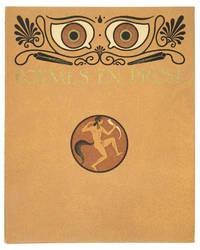
94761Paris A. Blaizot 1928. . First edition number 101 of 150 copies; 4to 26 x 21 cm; 27 text illustrations wood-engraved by Pierre Bouchet and printed in colour after designs by Barbier; presentation copy signed by Barbier on front blank; loose as issued in original pictorial wrappers after Barbier publisher's burgundy cloth chemise and slipcase.<br /> A French Romantic poet Maurice de Guérin 1810-39 achieved cult status in his lifetime as one of the first writers of 'prose poems.' The present work is illustrated by George Barbier who provides beautiful illustrations of the mythological Centaur and the Bacchante a follower of Bacchus Dionysus.<br /><br />The charming presentation inscription reads: 'À Mademoiselle Violette Gath / ces petites divinités d'autrefois déjà touchées par la mélancolie d'aujourd'hui / avec les respectueux compliments de l'artiste / George Barbier / juin 1928.' To Miss Violette Garth / These small deities of days past already touched by the melancholy of today / With respectful compliments of the artist George Barbier / June 1928.<br /> Carteret IV 195; Méhé II 309-310; Ritchie 25. Paris, A. Blaizot, 1928. hardcover
195448028Paris.: Les Bibliophiles de l'Amerique Latine. 1954. Original publisher's cream illustrated wrappers with printed titles in gold chemises with titles to spine and later red morocco-backed slipcases. 2 vols. 4to. 284 x 222 mm. Illustrated with 52 colour wood-engraved illustrations by Pierre Bouchet after George Barbier and Georges Lepape: full-page frontispiece to each vol. printed title to vol. I with vignette 6 vignette head-pieces vignette tail-piece 6 further full-page plates and 34 text vignettes as well as the two illustrations for the wrapper of each vol.; 33 decorative gilt initials numerous gilt text ornaments vignettes and head- and tail-pieces throughout; each vol. with two additional suites colour and black and white; additional portfolio consisting of 13 prints marked 'Décomposition de la gravure' for page 297; also included is a signed gouache by Barbier. An excellent example of Barbier's 'Aphrodite' with a signed gouache two pairs of suites and further unique material.From the edition limited to 150 copies with this one of 125 on Arches reserved for 'Membres de la Compagnie aux Archives et aux Collaborateurs'. The last book illustrated by George Barbier who died during its production. Barbier's contemporary Georges Lepape completed the project. The 52 colour wood engravings were cut and printed by Pierre Bouchet on his own press at Boulogne-sur-Seine. The seventh book published by 'Les Bibliophiles de l'Amerique Latine' 'Aphrodite' was produced during the presidency of the Comte de la Rochefoucauld-Montbel.The original gouache shows Aphrodite surrounded by birds. The image which uses a striking variety of purple / blue tones is reproduced on pg. 45 Chapter IV 'La Passante' Volume 1.This copy also contains a Menu from 'Les Bibliophiles de l'Amerique Latine - Assemblée Générale du 28 Mai 1952' with a gold cover design after Barbier printed in gold and numbered '5 / 60' with Bouchet's signature. Also included inserted loose is a typed press announcement for the publication with annotations dated '17 Juin 1954'. Les Bibliophiles de l'Amerique Latine. unknown
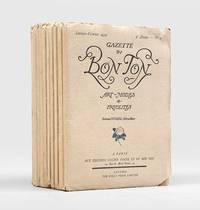
1920118958London: the Field Press Limited 1920. An attractive run of the hugely influential French fashion magazine. Founded by Lucien Vogel the first issue was released in November 1912. Publication was suspended in 1915 due to the First World War resuming in 1920 with the present volume and continuing until 1925. Extensive runs such as this especially in such bright condition are uncommon. "After the last issue of this excellent magazine in 1925 nothing else quite like it was ever produced. It has the prestige of having pioneered the idea of using the very best artists to illustrate the very best haute couture designs of having maintained a superb standard of printing on hand-made paper and for most of its life it was guided by one director Lucien Vogel" Robinson p. 28. Although short-lived Gazette du Bon Ton was a key publication and reported on the latest developments in fashion and lifestyle at the beginning of the twentieth century at a time when styles were changing dramatically in the space of a few years. The magazine was only available to subscribers at a price which equals $425 per year in today's money thereby creating a very exclusive image. Lucien Vogel the editor aimed to establish fashion as an art form and to create "good taste" for the Parisian elite. Contributing artists included all the greatest names of the day such as Dufy Bakst Barbier and Brunelleschi all of whom depicted the haute couture in a narrative and dramatic style using vivid colours and the pochoir technique on special handmade paper. Many of the designs were idealistic leisure scenes of the well-to-do illustrating the latest creations of Paris vintage fashion houses such as Worth Lanvin Doucet Poiret Callot Soeurs Paquin and Beers often without explanatory text. The literary content was also of the highest quality with essays by well-known art historians playwrights and novelists of the day. 10 vols quarto: 79 hand-coloured lithograph plates en pochoir 48 coloured croquis. Loose as issued in original printed paper wrappers. Housed in a custom orange cloth solander box. Trivial wear to edges corners very slightly defective to front wrapper of part I; a very good remarkably well-preserved set. Julian Robinson The Golden Age of Style 1976. hardcover
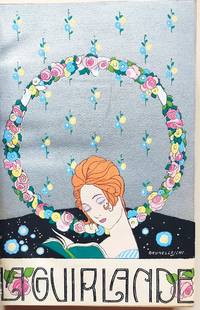
1917002990Paris: La Guirlande 1917. Book. Near Fine. Hardcover. 1st Edition. Complete set of this rare and highly decorative art deco periodical. Eleven issues all published bound in two volumes. 59 pochoir colored plates by renowned illustration artists Georges Barbier Umberto Brunelleschi Taquoy Vallee Bonotte Domergue Wegener Stab and others. Most pages with in-text color illustrations including head- and tail-pieces. All eleven original printed wrappers with colored and silver design by Brunelleschi are included. Brunelleschi was the artistic director of the short lived but significant La Guirlande. Jean Hermanovits was the literary director. Jean Saude one of the foremost artists to explore and promote pochoir techniques was responsible for the brilliant pochoir coloring. Texts by Lucie Delarue-Mardrus Rene Boylesve Jean Hermanovits Abel Hermant and others. Each issue numbered 79 of a total edition of 800 copies. Both Barbier and Brunelleschi at that time were at the top of their artistic prowess and their beautiful illustrations in La Guirlande reflect their talents. Includes duplicate of 'L'Heure du Bain' as stated in Colas. Each issue complete with mostly illustrated advertisements of 'Maisons de luxe'. Bound in two volumes half calf with raised bands and patterned boards matching patterned endpapers and gilt titles on spine. Top edges gilt. Besides the inevitable offsetting from the pochoirs this is a very fine complete set of all issues published. No marks or inscriptions no foxing. 28 x 20 cm. . La Guirlande Hardcover
1812M12282Paris:: Crapart & C.L.F. Panckoucke 1812-22. 1812. Complete set of 60 volumes. 127 engraved plates list of subscribers in the index volume 10 folding charts; occasional foxing ink and water-stains. Modern quarter green spines over original marbled boards gilt-stamped black leather spine labels; re-backed. Ex-lib bookplates and ink stamps of the Norwich & Norfolk United Medical Book Society early ownership inscription of Hudson Gurney. Fine. FIRST EDITION. 19th Century French Medical Encyclopedia Possibly one of the most important encyclopedia/dictionaries of medicine ever assembled and certainly the earliest. As Diderot's encyclopedia became the model for assembling scientific knowledge this massive set brings together all that was known about medicine in the post-Napoleonic era. Included here are numerous engraved plates of surgical instruments of the period. Also illustrated are facial expressions and signs of mental abnormality many in the style of Esquirol's work. A smaller set Dictionnaire abrege des sciences medicales. . . was concurrently published however that set is only 15 volumes. In 1821-25 Panckoucke published Dictionnaire des sciences medicales Biographie medicale. . . which includes biographies of medical luminaries. Nicolas Philibert Adelon 1782-1862 and Francois Victor Merat 1780-1851 were two of the prominent contributors to this medical encyclopedia. <br /><br /> This compendious work was not included amongst the items exhibited by the Library of Congress in their Circle of Knowledge exhibition of the history of the encyclopedia. Panckoucke 1736-1798 was involved with issuing various encyclopedias beginning with Diderot's Encyclopedie which ". . . was an immediate success: a new edition was called for even before the first had been completed. C.J. Panckoucke proposed such a new edition in 1761 and bought the rights to the first seven volumes. He approached Diderot to edit a new revised edition and when Diderot refused began to reissue the original volumes. The government intervened in 1770 and seized the three which had appeared. After the death of the last of the original proprietors in 1775 Panckoucke published a five-volume supplement to the Encyclopedie and later in 1780 a two-volume index. The complete first edition comprises Diderot's twenty-eight volumes plus Panckoucke's seven; its publication spanned the years 1751-80." Circle of Knowledge 1979 p. 8. <br /><br /> Provenance: Hudson Gurney 1775-1864 was an antiquary and verse-writer of Norwich. He became an M.P. for Newtown in 1816 and sat in six successive parliaments. In 1835 he was high-sheriff of Norfolk and was elected fellow of the Society of Antiquaries 1819 was vice-president from 1822-46 a fellow of the Royal Society and a member of the British Archaeological Association. As such Gurney may have been the donor of this set to the Norwich & Norfolk Library. <br /><br /> DNB Vol. VIII pp. 803-4. Circle of Knowledge 1968 1979; Wellcome II p. 465. Crapart & C.L.F. Panckoucke, 1812-22. hardcover
1934260057New York: The Derrydale Press 1934. First Edition ONE OF 55 LARGE-PAPER COPIES signed by Barber this being No. 22. 5 color plates one of them handcolored and 121 other illustrations. TOGETHER WITH BARBER'S ORIGINAL INK DRAWING FOR THE TITLE PAGE laid in. 1 vols. 4to. Original full red morocco gilt t.e.g. others uncut; very slight chipping to top of spine else a fine copy of a book seldom found approaching this condition. Half red morocco slipcase with Derrydale logo on spine and on upper cover leather label with chemise. First Edition ONE OF 55 LARGE-PAPER COPIES signed by Barber this being No. 22. 5 color plates one of them handcolored and 121 other illustrations. TOGETHER WITH BARBER'S ORIGINAL INK DRAWING FOR THE TITLE PAGE laid in. 1 vols. 4to. "One of the most important books published by Connett." -- Siegel This is the large paper edition of this work. The regular trade edition was published at the same time by Windward House a sporting press started by Connett in 1933. Both editions used Barber's vignette on the the title page. From this drawing it appears that Connett liked the artist's Windward design and used in it the Derrydale edition: in the margin of the drawing Connett has pencilled "reduce 1/4 inch" and the drawing was photographically reduced to the smaller dimension for the large paper copies. A simplified version of the design was used on the Derrydale edition spine. One of the rarest and most desirable productions of the Derrydale Press and by virtue of the drawing a unique copy. Siegel 85; Frazier B-5-a The Derrydale Press unknown
116864Paris Meynial 1917-1921. . First editions 5 vols 12mo 12.3 x 8.4 cm; 31 colour pochoir lithograph plates illustrations in the text; original pictorial satin over Bodoni boards with pictorial dust-wrappers original decorated slipcases some age-toning to dust wrappers and slipcases otherwise very attractive copies housed in a later Art Deco style box with tassle and gold tassle a fine set.<br /> A fine complete set of Barbier almanacs which although published in a small format due to wartime austerity are nevertheless extremely luxurious. The early volumes of these beautiful little annual almanacs often include images of men in military uniform. In addition to the pochoir illustrations Barbier contributed articles from 1918 to 1921 on such topics as the Ballets Russes epigrams opera and the pleasures of love. The fashions depicted show a radical post-war shift in style with the adoption of shorter and fuller skirts backless gowns and fabrics that incorporated more risqué elements of the tango.<br /> Paris, Meynial, 1917-1921. hardcover
95553Paris Lucien Vogel 1914. . First edition. 4to. 6 original parts comprising January to June 1914 the second year of this periodical 61 hand-coloured lithograph plates en pochoir by Barbier and others later cream cloth lightly soiled.<br /> It may have been short-lived but the Gazette du Bon Ton was hugely influential reflecting all the latest developments in fashion and lifestyle at the beginning of the twentieth century at a time when styles changed dramatically in the space of a few years. The magazine was only available to subscribers at a price which equals $425 per year in today's money thereby creating a very exclusive image. Lucien Vogel the editor aimed to establish fashion as an art form and also to create 'good taste' for the Parisian elite. Publication was suspended in 1915 due to World War I and resumed in 1920 continuing through 1925. <br /><br />Contributing artists included all the greatest names of the day such as Dufy Bakst Barbier and Brunelleschi etc and these artists would depict the haute couture in a narrative and dramatic style using vivid colours and the pochoir technique on special handmade paper. Many of the designs were idealistic leisure scenes of the well-to-do illustrating the latest creations of Paris vintage fashion houses such as Worth Lanvin Doucet Poiret Callot Soeurs Paquin and Beers often without explanatory text. The literary content was also of the highest quality with essays by well known art historians playwrights and novelists of the day.<br /> Ray Art deco Book in France pp.29-30. Paris, Lucien Vogel, 1914. hardcover
1912119004Paris: aux bureaux du Journal des dames 1912-13. First editions number 807 of 1250 copies. This journal which borrowed both the title and format of La Mésangère's periodical of a hundred years before was founded by Tom Antonginigini the secretary friend and biographer of the poet and collector Gabriele D'Annunzio 1863 - 1938 whom Antonginigini followed to Paris from Italy in 1910. It features colour pochoirs by Barbier Bakst Brunelleschi Dammy and Martin and was meant as a record of contemporary Parisian culture and fashion. Perhaps less deliberately it also documents the transition from the end of the Belle Époque to a radically different period in world history. The journal ceased publication in August 1914 due to the outbreak of the First World War. 2 vols octavo. With 1 facsimile plate 93 etched pochoir plates without advertisements. Contemporary red straight-grain boards smooth spines lettered and decorated in gilt. Original wrappers bound in. Spines slightly sunned and worn still excellent copies. hardcover
102348Paris A & G Mornay Éditeurs 1929. . Limited edition one of 67 copies on Japon this numbered 37; 8vo 21 x 17.5 cm; 325pp. 36 compositions in colour after Barbier including the printed wrappers title-page and vignette printed on wood by Gasperini with an additional suite of illustrations of the same composition but in a simplified outline design printed in red black grey or purple pages cut and in various sizes blue marbled endpapers minor age toning but otherwise very fresh; bound in contemporary quarter crushed dark blue morocco over marbled boards with the original wrappers bound in spine in six parts with raised bands and gilt title to second in fine condition.<br /> Théophile Gauthier's novel was undoubtedly inspired by the 'Orientalism' which dominated French culture in the middle of the XIX century. The text first appeared in parts in Le Moniteur universel between March and May 1857 and was published in book form in 1858. Set in the Valley of Kings a young English aristocrat and a German Egyptologist find a sarcophagus with a perfectly preserved mummy of a pharaoh named Tahoser inside. After this discovery the novel recounts the life of beautiful Tahoser and her lovers. <br /> Paris, A & G Mornay, Éditeurs, 1929. hardcover