BARBIER, George; VAUDOYER, Jean-LouisBiblio.com
7 802 résultats
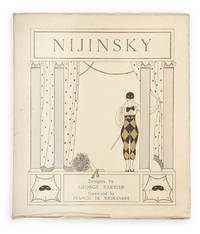
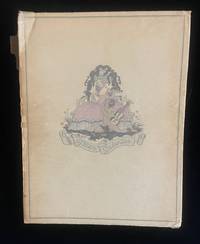
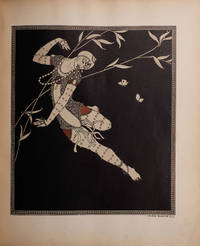
115833Paris Pierre Corrard 1914. . First edition limited edition one of 500 numbered copies on papier vélin d'arches folio 32.5 x 27.8 cm title page with pictorial vignette to head and verso 18pp. 12 full-page coloured illustrations by Barbier printed on rectos only very minor stains to margin of a couple of plates printer's leaf at end original pictorial wrappers wrappers a little browned a very good copy.<br /> Barbier's early masterpiece dedicated to Tamara Karsavina. <br /><br />'The cover design pays homage to Beardsley. and its 12 pochoir plates depict Karsavina in her principal parts. That their purpose is again to stir the emotion and delight the eye of the viewer not to document the performance is demonstrated by Le spectre de la rose glimpsed at the moment when the phantom lover of whom the young girl has dreamed after the ball is about to disappear as the rose drops from her hand.' Ray.<br /> Carteret IV 59. Paris, Pierre Corrard, 1914. unknown
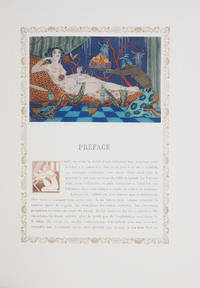
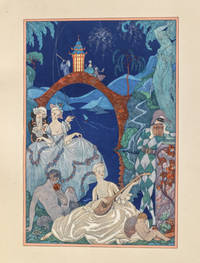
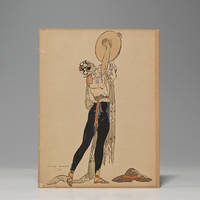
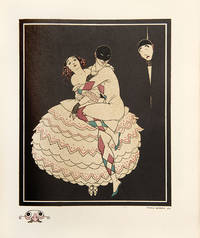
115832Paris La Belle Édition 1913. . First edition limited edition one of 340 copies on vélin from a total edition of 390 folio 33 x 28 cm; title 8pp. of text in French by Miomandre black and white vignette 12 full-page colour illustrations by Barbier printed on rectos only printed wrappers yapp edges slightly worn a very good copy.<br /> Barbier's wonderful illustrations for the Ballets Russes. Nijinsky is depicted here in Scheherazade Carnaval and L'Après-midi d'un Faune. <br /><br />'The designs although somewhat fantastic in treatment do convey the impression produced by Nijinsky in his famous characters' Beaumont.<br /><br />'In his brief time Nijinsky was the most famous male dancer in the world a pre-eminence due in part to his extraordinary virtuosity. But it was not his virtuosity alone that made him such a powerful stage presence. As contemporary reports make clear Nijinsky was a great and unusual actor. The ideal Fokine interpreter he was able to expand a simple choreographic design into a rich dramatic portrait using in keeping with Fokine's dicta the whole body as an expressive instrument. Nijinsky's influence as a dancer was immediate and huge. That ballet nearly extinguished artistically in western Europe was revived in this century is due to him and other great dancers of his generation such as Anna Pavlova and Karsavina as well as to Diaghilev. That male ballet utterly extinguished was also revived is due to him preeminently. Nijinsky was the first real ballet star of the male sex that Europe had seen since the retirement of Auguste Vestris nearly a century earlier. He initiated a renaissance.' Cohen: The International Encyclopedia of Dance Vol. 4 pp. 646-648.<br /> Paris, La Belle Édition, 1913. unknown
1934375021New York: The Derrydale Press 1934. First Edition ONE OF 55 LARGE-PAPER COPIES signed by Barber this being No. 4. 5 color plates one of them handcolored and 121 other illustrations. xix iii 156 pp. 1 vols. 4to. Original full red morocco gilt t.e.g. others uncut; Almost fine minor rubbing at head and tale of spine IN ORIGINAL SLIPCASE laid into a beige linen drop box with red morocco label. Barber Joel. First Edition ONE OF 55 LARGE-PAPER COPIES signed by Barber this being No. 4. 5 color plates one of them handcolored and 121 other illustrations. xix iii 156 pp. 1 vols. 4to. "One of the most important books published by Connett." -- Siegel <br /> This is the large paper edition of this work. The regular trade edition was published at the same time by Windward House a sporting press started by Connett in 1933. Both editions used Barber's vignette of a floating decoy on the the title page. This spine of this binding is fragile; this copy in better condition than typically encountered<br /> With ALS to Mr. Dobberteen laid in about decoys. Siegel 85; Frazier B-5-a The Derrydale Press unknown
8745<p>First edition copy number 7 of 100 of this sumptuously illustrated version of the story of the Queen of Sheba combining illustrations by Barbier and the Abyssinian artist Michel Engueda-Work. French scholar traveller and diplomat Hughes Le Roux had transcribed parts of the Ethiopian chronicle Kebra Nagast in 1904 with the help of local scholars from a manuscript looted by the British at Maqdala and subsequently returned. The Kebra Nagast or 'The Glory of the Kings' is a fourteenth-century national epic of Ethiopia written in Geʽez by the nebure id Ishaq of Aksum. In its existing form the text is at least 700 years old and purports to trace the origins of the Solomonic dynasty a line of Ethiopian Orthodox Christian monarchs who ruled the country until 1974 to the biblical king Solomon and the Queen of Sheba. </p><p>The story of the text's survival is interesting. The Battle of Maqdala the last struggle in the British Expedition to Abyssinia led to significant looting by the victorious British forces who took Emperor Tewodros II's crown along with ceremonial crosses chalices weapons and the holy icon Kwer'ata Re'esu along with two fine manuscripts of the Kebra Nagast which found their way to the British Museum catalogued as Oriental MS 818 and 819 respectively. 819 was returned to Ethiopia in 1872 on the request of the Abyssinian king who identified it as a fundamental source of law. Hugues Le Roux a French envoy from the President of the French Republic to Menyelek II King of Ethiopia later went to Addis Alem in order to see this manuscript and to obtain his permission to translate it into French. He notes in his introduction here the inscription 'This volume was returned to the King of Ethiopia by order of the Trustees of the British Museum Dec. 14th 1872'. Of the artist Michel Engueda-Work who is referred to elsewhere as an 'Abyssinian artist' almost nothing else is known but his illustrations are of course far truer to the Ethiopian style than Barbier's highly exoticised and eroticised interpretations in which Sheba is portrayed following long tradition as a white woman.</p><p>Folio 328 × 250 mm 4 xiii 1 84 1 pages six plates one a frontispiece and one vignette illustration by Barbier all hand/pochoir coloured illustrations some colour six sepia plates uncoloured by Michel Engueda-Work numerous vignettes and ornaments by Louis Popineau decorative borders. All plates and illustrations with lighter paper guards with printed captions. Original pale blue wrappers preserved in early red morocco by Joly fils with onlaid interlace cornerpieces gilt borders and spine panels silk and marbled endpapers top edge gilt other uncut. Marbled slipcase. Upper joint very slightly tender at head spine just a little faded. A super copy.</p> Goupil & C[ompagn]ie, Manzi, Joyant & C[ompagn]ie.
186782010Paris: Choudens 1867. Fine. Choudens Paris S.d 1867 19 x 28 cm relié Roméo et Juliette - Opera score in 5 acts by J. Barbier et M. Carré Choudens Paris n.d 1867 19x28cm bound. First edition. Opera in five acts based on the play Romeo and Juliet by William Shakespeare music by Charles Gounod for voice and piano and libretto by Jules Barbier and Michel Carré. Contemporary red half shagreen color restored gilt spine glazed calico boards double ruled in gilt central gilt initials of Ernest Beulé on the first board moiré silk endpapers with some spotting and staining to the margins first original cover preserved all edges gilt strictly contemporary binding. Rare inscription signed by Charles Gounod to archaeologist Ernest Beulé. Choudens hardcover
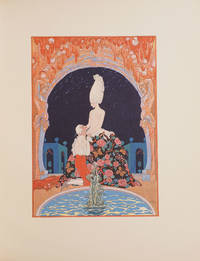
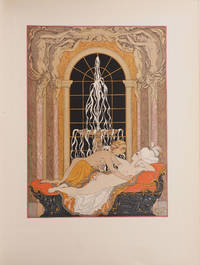
19281208301928. First Edition. BARBIER George VERLAINE Paul. Fêtes Galantes. Paris: H. Piazza 1928. Folio 9 by 12 inches original illustrated self-wrappers; original slipcase. $4500.Beautiful limited edition number 810 of 800 copies on Rives paper of a total edition of 1200 illustrated by George Barbier with 20 full-page hand-colored pochoir plates in his characteristic Art Deco style.Associated with the early Symbolists Verlaine ""wrote some of the finest and most musical lyrics in the French language"" Harvey & Heseltine 738. First published in 1869 Fêtes Galantes reflects the care for form and objectivity characteristic of Verlaine's early poetry. The designs in this splendid production are the work of Art Deco legend George Barbier who began his career as a costume and set designer for the Ballet Russes and later created décors and costumes for music-halls movies and the Folies Bergère through Max Weldy Studios. Renowned for his fashion illustrations for the leading magazines of the time including the Gazette du Bon Ton and Vogue his artistic style is recognized by a characteristically elegant stylized line. Text in French. Some toning to spine of scarce original slipcase; book fine. An excellent copy of this beautiful production. unknown
1928013579Paris: H. Piazza 1928. First Edition Limited. Soft cover. Near Fine. Limited edition. Printed paper covers with illustrations on front and back title on spine and tissue guards. Exceptionally rare this is numbered VI of XXV copies that were printed on imperial Japanese paper containing 20 colored illustrations by Barbier. The remaining two hundred copies numbered from 26 to 225 were printed on imperial Japanese paper containing a black version of the illustrations; and eight hundred copies numbered from 226 to 1025 were on pure vellum paper. In original glassine that is tanned and chipped. George Barbier 1882-1932 was a French illustrator in the early 20th century. He designed theater and ballet costumes illustrated books and produced haute couture fashion illustrations. Barbier led a group from the Ecole des Beaux Arts who were known as "The Knights of the Bracelet. H. Piazza unknown
1908165660Madrid: Imp. de la Sección de Hidrografia 1908. With appropriate military provenance First and only contemporary edition of the first Spanish translation of Clausewitz presentation copy inscribed by one of the translators at the head of the prologue: "A mi primer coronel hoy entusiasta é ilustrado general Don Joaquín Milans del Bosch Abilio Barbero." Scarce with just two locations recorded on WorldCat Biblioteca Nacional de España and Universidad Complutense de Madrid. In 1908 two students of the Escuela Superior first lieutenants Abilio Barbero and Juan Seguí published a partial translation of On War selecting passages they considered most relevant to contemporary Spanish military debate in the aftermath of the "Disaster of 1898". While Clausewitz was frequently cited in Spanish military education his work was often criticized for failing to provide the infantry-focused and colonial guidance sought by officers engaged in Morocco; a complete Spanish translation did not appear until the Second World War Baquer pp. 313-14. Barbero 1881-1940 entered the army in 1898 rose to colonel by 1925 and served with distinction in the Rif War later becoming chief of staff of the Third General Inspectorate. His co-translator Seguí 1888-1936 formerly military attaché in Brussels and Paris became a leading Falangist in Spanish Morocco and played a prominent role in the nationalist coup of July 1936 before being killed the following month. The recipient Joaquín Milans del Bosch 1854-1936 had a long and controversial career serving in the Third Carlist War the Philippines and later as captain general of Catalonia. Closely aligned with King Alfonso XIII and Miguel Primo de Rivera he was responsible for the military suppression of the 1919 La Canadenca strike and later led an aggressive anti-Catalanist campaign. After the failure of the July 1936 coup he remained in Madrid where he was arrested and executed. With the armorial bookplate of his son-in-law General José Serrano Rosales 1899-1993 bearing royalist and militant Catholic slogans and emblems underscoring the political and ideological milieu in which the volume was preserved. Octavo 217 x 145 mm. Quarter pale streaked sheep red morocco labels pale grey morocco-grain cloth grey marbled endpapers edges lightly sprinkled grey. Small press-mark tickets to front pastedown and half-title. A little rubbed headcap a touch scuffed. paper flaw crease to the title page contents lightly marginally toned overall very good. Miguel Alonso Baquer "Clausewitz Spain and the 21st Century" in Reiner Pommerin ed. Clausewitz Goes Global: Carl von Clausewitz in the 21st Century Commemorating the 50th Anniversary of the Clausewitz Gesellschaft 2011. hardcover
19191185931919. Signed. BARBIER George. Original pencil watercolor and gouache painting signed. Paris: 1919. Original pencil watercolor and gouache heightened in silver gilt on card measuring 8 by 10-1/2 inches; matted and framed wntire piece measures 14 by 18 inches. $4000.Striking original pencil watercolor and gouache design highlighted in silver gilt by legendary fashion designer George Barbier of a ""Gypsy"" with tambourine possibly relating to costumes designed by Barbier for the Gypsy ballet ""Amarilla"" danced by the Anna Pavlova and Alexandre Volinine at Drury Lane in 1920 signed and dated by Barbier.""George Barbier is one of the most valuable and most significant artists of our time so rich in all kinds of talent and original ideas. When our age is past it will just take a few drawings of Barbier to revive the taste and spirit of our time When I look at Barbier's costumes for the stage I see the characters of those magical stories come to life before me and tempt my imagination"" Edmond Jaloux. Renowned for his fashion plates in leading contemporary magazines including the Gazette du Bon Ton Journal des Dames et des Modes and Vogue Barbier's artistic style is readily identifiable by his elegant stylized line. Barbier later created costumes for the Folies Bergères in addition to the entire wardrobe for the movie ""Monsieur Beaucaire"" starring Rudolph Valentino. ""His flamboyant work continues to influence Vegas floor shows major designers and costumers worldwide"" Robert Inman. Fine condition. unknown
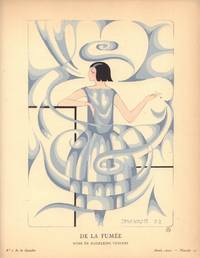
19228553<p>Volume 2 of the Apres le Guerre collection assembled by Dorbin-Aire. Marbled endpapers. Lacking spine paper see image and general wear to edges and corners of boards; plates themselves all fine. Artists included are: Georges Barbier Benito Robert Bonfils Bernard Boutet de Monvel Pierre Brissaud Jean-Gabriel Domergue Drian Iacovleff Chas Laborde Llano-Florez Georges Lepape Charles Martin Andre Marty Pierre Mourgue Simeon Zenker Zyg-Brunner and others. <br />Gazette's focus was on fashion lifestyle and beauty on a more elite level than that of Harper's Bazaar and Vogue. Part of their difference was publishing around 10 full page fashion illustrations per issue in the pochoir technique. This collection of 100 plates comes from the 1920-1922 issues. Plates are not trimmed c. 8 x 9.7 inches; 20.2 x 24.6 cm & are individually hinged.</p> Dorbon-Aine hardcover
19288724<p>First edition with Barbier's illustrations. Number LX of 175 copies on Japon for America the total edition was 1200 copies. The poems of Verlaine's Fêtes galantes first published in 1869 took inspiration from the pastorals of Watteau as well as the sumptuous fantasies of Fragonard and Boucher while drawing characters from the Italian traditions of the commedia dell'arte. Barbier's sensibilities made him the perfect artist to reinterpret Verlaine for the 1920s.</p><p>Large 4to 300 × 230 mm pp. 4 100 4 plus 20 coloured pochoir plates. Uncut in original wrappers and decorative slipcase the latter slightly rubbed and soiled.</p> [Imprimerie nationale for] H. Piazza,
19348726<p>First edition with Barbier's suitably libertine pochoir coloured illustrations. Number 206 of 650 copies on papier de Rives the total edition of 720 copies.</p><p>2 vols 4to 265 × 200 mm pp. 4 218 2; 2 217 3. 28 pochoir colour illustrations by Barbier consisting of 2 original upper cover illustrations 20 full page plates 2 decorative title pages 2 chapter heading vignettes and 2 justification vignettes. Original wrappers very lightly browned towards the margins spines slightly creased upper hinge of one volume slightly fragile. A very good set.</p> [R. Coulouma in Argenteuil for] Le Vasseur.
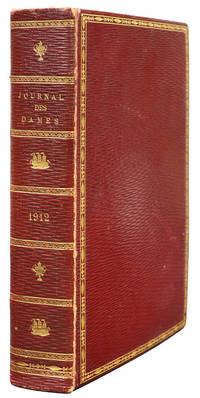
92854Paris June- December 1912. . First issue limited edition number 1150 of 1279 8vo 22.8 x 14.8 cm; 1 viii 1 facsimile 168 pp. limitation page 43 pochoir plates original blue printed paper wrappers bound adverts all bound in contemporary Bordeaux straight-grained morocco gilt boards ruled in gilt spine in 6 compartments top edge gilt; a superb copy. <br /><br /> This journal which borrowed both the title and format of La Mesangere's periodical of over a hundred years earlier is illustrated by George Barbier and Brunellschi the masters of pochoir among others and was founded by Tom Antonginigini secretary friend and biographer of poet connoisseur and collector Gabriele D'Annunzio 1863-1938 whom he followed to Paris from Italy in 1910. It was meant to be a reflection of the intellectual and artistic atmosphere of Paris as well as a record of Parisian culture and fashion at the time and also unwittingly reflects the end of the golden Belle Epoque and the beginning of another very different time in world history.<br /><br />The first issue appeared on 1 June 1912 the last on 1 August 1914 due to the outbreak of World War I.<br /> Paris, June- December 1912. hardcover
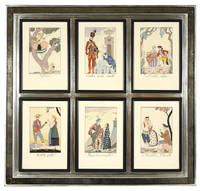
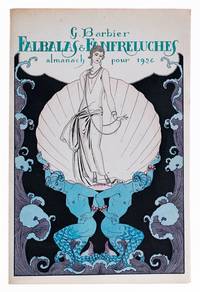
91768Paris Meynial 1923-1926. . Six pochoir plates by Barbier framed together and glazed overall size: 64.2 x 61.3 cm.<br /> An exquisite series displaying fashion in magnificent and imaginative illustrations by George Barbier the noted early twentieth century French artist and illustrator. <br /><br />Falbalas et fanfreluches was the last of Barbier's books to reflect contemporary life directly. Its special value is the unique way in which it catches the tone and mood of les années vingt.<br /> Paris, Meynial, 1923-1926. unknown
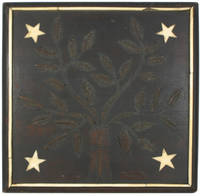
1863List308N.p. 1863. Dark carved wood 11 ½ x 11 ½ x 1 inches with bone border and star inlays in corners an inlaid tree with carved names of Civil War battles as leaves. During the Civil War wounded or captured soldiers would often pass their time waiting to return to duty carving relics. The practice was fairly common with pipes being the most commonly carved object and the quality of the relics varied wildly depending on the talent of the soldier. A.H. Barber from Wisconsin was wounded at Antietam and most likely carved this memorial piece while recovering from his wounds. Each leaf notes a different battle during the 1861-1862 campaigns. Barber enlisted in Company C of the 2nd Wisconsin in 1861 and was discharged in 1863 following wounds suffered at Antietam. The trunk reads Battles for the Union and the four branches read Dept. of the South Army of Virginia & of the Potomac and Dept. of the West with twenty-nine leaves naming battles. <br /> <br /> The resultant plaque is exceptional in timeliness craftsmanship and overall aesthetic beauty. Barber’s metaphorically growing tree is particularly timely for the Union cause as the 1863 failure of the Maryland Campaign would serve as inspiration to Lincoln to issue the Emancipation Proclamation. Wonderfully preserved in excellent condition with no notable flaws. From the collection of Norm Flaydernman the noted Americana dealer who personally collected carved Civil War pipes and had been planning to write a book on the subject at the time of his death. unknown
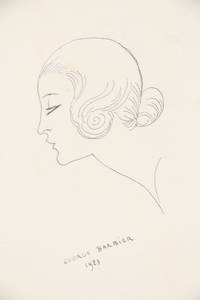
192388930No Location: s. n. 1923. Fine. George Barbier “one of the fascinating figures of Art Deco” and “master of Indian ink” Guillaume Garnier s. n. No Location 1923 24.2 x 30.2 cm Une feuille Five compositions in Indian ink signed and dated 1923 by George Barbier on a leaf of thick paper. Traces of paper pasted down at the four corners on the back a few very faint traces of previous pencil inscriptions on the front. An exceptional ink drawing by the eminent fashion illustrator George Barbier for the “Elegances” section of the newspaper La Vie Parisienne featuring four silhouettes at the height of 1920s fashion with boyish haircuts dressed in flowing low-waisted tube dresses or wrapped in luxurious furs. The silhouette in a headband and high heels in the lower left corner and the beautiful profile dated and signed in the center of the leaf appeared in the January 12 1924 issue of La Vie Parisienne No. 62 Year 2 p. 38 in the “Elegances” section which Barbier illustrated on numerous occasions. The three other silhouettes were published in the same section January 26 1924 no. 64 year 2 pp. 79-80. Superb fashion portraits with hieratic and elegant postures drawn by Barbier in the Art Deco style that made him famous.  s. n. unknown
200987065Institute; Foundation. New. 2009. Hardcover. 8493726028 . FREE UPGRADE to Courier/Priority Shipping Upon Request - IN STOCK AND IMMEDIATELY AVAILABLE FOR SHIPMENT - Flawless copy brand new pristine never opened -- Text in Spanish. 787 pages; over 300 illustrations in color. Catalogue Raisonne Catalog Raisonné Complete Works Catalogo Razonado Obra Completa Raisonnee Catálogo -- with a bonus offer . Institute; Foundation hardcover
19138720<p>First edition in English following the French edition of the same year Barbier's first illustrated book. 148 of 400 copies all on vellum paper. The foreword by Francis De Miomandre was translated by C. W. Beaumont. The bookseller publisher and dance historian Cyril Beaumont was instrumental in promoting and documenting the performances of Nijinsky and the Diaghilev's Ballets Russes in London and here published a suite of Barbier's iconic prints with an introductory text.</p><p>Large 4to 320 × 270 mm pp. 16 including final blank plus 12 pochoir coloured plates. A couple of the plates with their heavy black backgrounds very lightly rubbed. Original pictorial wraps slightly soiled. preserved in early buckram boards with pictorial onlay. Sometime rebacked rubbed corners worn and soiled. Still a very good copy.</p> C. W. Beaumont & Co,
1927013578Paris: Camille Bloch & Jules Meynia 1927. First Edition Limited. Soft cover. Near Fine. Limited edition this #129 of 300 numbered copies printed on blue laid paper. Printed covers with illustrated front cover title in green and tissue guards. Includes a mounted etched frontispiece portrait of Barbier by Charles Martin and 25 mounted colored plates depicting theater costumes with gold and silver highlights. The text and illustrations were printed by Frazier-Soye. In original glassine wrapper which is tanned and chipped but lacking slipcase. Internals near fine. George Barbier 1882-1932 was a French illustrator in the early 20th century. He designed theater and ballet costumes illustrated books and produced haute couture fashion illustrations. Barbier led a group from the Ecole des Beaux Arts who were known as "The Knights of the Bracelet. Camille Bloch & Jules Meynia unknown
2009C87065Institute; Foundation. As New. 2009. Hardcover. 8493726028 . FREE UPGRADE to Courier/Priority Shipping Upon Request - IN STOCK AND IMMEDIATELY AVAILABLE FOR SHIPMENT - Flawless copy brand new pristine never opened -- Text in Spanish. 787 pages; over 300 illustrations in color. Catalogue Raisonne Catalog Raisonné Complete Works Catalogo Razonado Obra Completa Raisonnee Catálogo -- with a bonus offer-- - May be EITHER: out of print OOP and extremely rare in this pristine condition; signed by author or contributor; or a first or special edition; inquire for details . Institute; Foundation hardcover
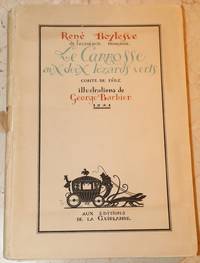
1921007075Paris: Éditions de la Guirlande. Printer: L'Imprimerie Studium 1921. First Edition Thus. Stiff Wraps. Very Good. 4to. 29 by 20 cm. Unpaginated 136 pp. 8 color pochoir plates by Barbier with many smaller color illustrations interspersed in the text. Unnumbered copy to match the 225 on Verge d'Arches from a total edition of 300. Condition: light soiling to the wraps. A few tears and one dangling piece of the spine with minor loss of the paper on the spine. Light age toning to the leaves within. Éditions de la Guirlande. Printer: L'Imprimerie Studium unknown
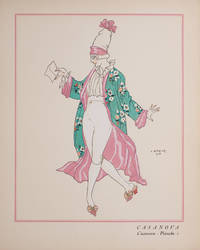
8719<p>First edition. Barbier designed the sets and costumes for the Bouffes-Parisiens production of Maurice Rostand's Casanova in February 1919. The 24 fine costume plates here are coloured by Jacomet et compagnie.<br />The commission for Casanova was an important moment in Barbier's artistic career leading to commissions with theatres the Ballet Russes and the Folies Bergère. Other successes followed and for a time he was the most sought-after costume designer in Paris recognized as the theatrical artist 'who better than any other had captured the mood of the age' Gordon Ray.</p><p>4to 245 × 190 mm pp. 4 iv 2. 24 pochoir coloured plates some with gold and silver. Loose as issued in original decorative portfolio. Slightly soiled wants ties but still a very good copy.</p> Lucien Vogel.
19302091202133212977A. & G. Mornay 1930. Soft Cover. Fine. Volume: 1 A. & G. Mornay paperback
60170Paris: Meynial 1924. One volume only of 5. 8vo. 26 x 17cm. Original pictorial wrappers. Decorative pochoir title page 12 full page pochoir plates and front cover colour illustrations by George Barbier. Complete. Georges Barbier 1882-1932 was at the forefront of the Art Deco movement and his images have become icons of an era of unsurpassed glamour elegance and decadence. His Falbalas et Fanfreluches 1922-1926 graphically display the artist's intense interest in fashion both of his and earlier ages as well as his sharp sense of humour. The issue for 1923 features the essay 'Modes' by Colette; the remaining essays are by the Comtesse de Noailles Cécile Sorel Gérard d'Houville and the Baronne de Brimont. There seems to be no direct translation of "Falbalas & Fanfreluches" but perhaps "Frills and Fripperies" works quite well. Paris: Meynial, 1924. unknown
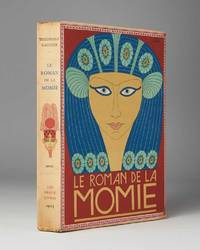
192921238021929. Paris: A & G Mornay. 1929. 8vo. Original pictorial paper wrappers with fold-over flaps with glassine dust jacket; pp. 6 323 1 untrimmed with colour illustrations by Barbier wood-engraved by Emile Gasperini including frontispiece title page chapter headings tail pieces and illustrations in the text; light shelf wear to spine ends corners a little bumped spine and top edge of rear wrapper gently toned else a near-fine bright copy; printed publisher's note loosely inserted.8vo. Original pictorial wrappers by Gasperini after Barbier with fold-over flaps with glassine dust-jacket partially untrimmed; pp. vi 325 2 colophon blank; over 30 wood-engraved illustrations by Gasperini after Barbier including frontispiece title-page head- and tailpieces initials and in-text illustrations; spine lightly bumped at head and foot slight wear to corners spine and head of rear wrapper lightly toned; else a near-fine bright copy; printed bifolium quire 21 and printed publisher's note on green paper loosely inserted see below.Uncommon first edition of Gautier's novel - set partly in the nineteenth century and partly in ancient Egypt - to be illustrated by Georges Barbier no. 289 of 834 copies printed on Rives paper from a total edition of 1091.Le Roman de la momie follows a young English aristocrat and a German Egyptologist on an expedition to the Valley of the Kings where they uncover a sarcophagus containing the perfectly preserved mummy of Tahoser the beautiful daughter of a high priest. The narrative then unfolds her past life and lovers. This edition is beautifully illustrated by Georges Barbier 1882-1932 celebrated designer of stage costumes and one of the most renowned French Art Deco illustrators and was one of the last illustrative projects executed before his death. Theophile Gautier 1811-1872 was a prolific and influential author whose work became a touchstone for later literary movements including Parnassianism Symbolism Decadence and Modernism and was much admired by the likes of Charles Baudelaire T. S. Eliot and Marcel Proust. First serialised in Le Moniteur universel in 1857 and published in book form the following year by Hachette Le Roman de la momie remains one of the most successful literary products of nineteenth-century Egyptomania.Loosely inserted is a printed notice from the publishers apologising for the colophon's erroneous statement that this is the forty-seventh volume in their Beaux Livres series it was the forty-eighth along with a printed bifolium in which the error has been corrected. 'Four of the five titles which Barbier undertook between 1924 and 1931 for Mornay's series Les Beaux Livres are tales by Henri de Regnier also with 18th century settings . More attractive is Gautier's Le roman de la momie of 1929 thanks in large part to the harmonious engravings printed in color by which Gasperini rendered the artist's designs. Barbier seems to have welcomed the opportunity offered by Gautier's Egyptian setting to rival the middle eastern subjects which preoccupied Schmied at this time' Ray p. 43.Outside continental Europe OCLC finds eight copies of which six in North America Fisher Morgan RIT Royal Ontario Museum SMU University Club Library one in Japan Waseda and only one in the UK NLA.See Ray The Art Deco Book in France II 2005; this edition not in Cartier cf. vol. III p. 179. unknown