George BARBIERBiblio.com
7 802 résultats
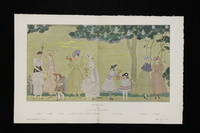
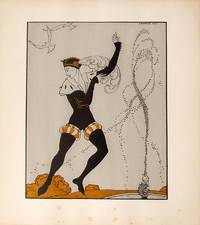
191554705Paris: Lucien Vogel éditeur 1915. Fine. Lucien Vogel éditeur Paris Eté 1915 36.50 x 24 cm une feuille Double original color print heightened with gold printed on vergé paper signed in the plate. An original print used to illustrate the Gazette du bon ton one of the most attractive and influential 20th century fashion magazines featuring the talents of French artists and other contributors from the burgeoning Art Deco movement. A celebrated fashion magazine established in 1912 by Lucien Vogel La Gazette du bon ton appeared until 1925 with a hiatus from 1915 to 1920 due to the war the editor-in-chief having been called up for service. It consisted of 69 issues printed in only 2000 copies each and notably illustrated with 573 color plates and 148 sketches of the models of the great designers. Right from the start this sumptuous publication was aimed at bibliophiles and fashionable society Françoise Tétart-Vittu La Gazette du bon ton in Dictionnaire de la mode 2016 and was printed on fine vergé paper using a type cut specially for the magazine by Georges Peignot known as Cochin later used in 1946 by Christian Dior. The prints were made using stencils heightened in colors some highlighted in gold or palladium. The story began in 1912 when Lucien Vogel a man of the world involved in fashion he had already been part of the fashion magazine Femina decided with his wife Cosette de Brunhoff the sister of Jean creator of Babar to set up the Gazette du bon ton subtitled at the time: Art fashion frivolities. Georges Charensol noted the reasoning of the editor-in-chief: In 1910 he observed there was no really artistic fashion magazine nothing representative of the spirit of the time. My dream was therefore to make a luxury magazine with truly modern artists I was assured of success because when it comes to fashion no country on earth can compete with France. Un grand éditeur dart. Lucien Vogel in Les Nouvelles littéraires no. 133 May 1925. The magazine was immediately successful not only in France but also in the United States and Latin America. At first Vogel put together a team of seven artists: André-Édouard Marty and Pierre Brissaud followed by Georges Lepape and Dammicourt as well as eventually his friends from school and the School of Fine Arts like George Barbier Bernard Boutet de Monvel and Charles Martin. Other talented people soon came flocking to join the team: Guy Arnoux Léon Bakst Benito Boutet de Monvel Umberto Brunelleschi Chas Laborde Jean-Gabriel Domergue Raoul Dufy Édouard Halouze Alexandre Iacovleff Jean Émile Laboureur Charles Loupot Chalres Martin Maggie Salcedo. These artist mostly unknown when Lucien Vogel sought them out later became emblematic and sought-after artistic figures. It was also they who worked on the advertising drawings for the Gazette. The plates put the spotlight on and celebrate dresses by seven designers of the age: Lanvin Doeuillet Paquin Poiret Worth Vionnet and Doucet. The designers provided exclusive models for each issue. Nonetheless some of the illustrations are not based on real models but simply on the illustrators conception of the fashion of the day. The Gazette du bon ton was an important step in the history of fashion. Combining aesthetic demands with the physical whole it brought together for the first time the great talents of the artistic literary and fashion worlds; and imposed through this alchemy a completely new image of women: slender independent and daring which was shared by the new generation of designers including Coco Chanel Jean Patou Marcel Rochas and so on Taken over in 1920 by Condé Montrose Nast the Gazette du bon ton was an important influence on the new layout and aesthetics of that little dying paper that Nast had bought a few years earlier: Vogue. Lucien Vogel éditeur unknown
191551292Paris: Lucien Vogel éditeur 1915. Fine. Lucien Vogel éditeur Paris 1915 37.60 x 24.20 cm une feuille Original color print printed on vergé paper signed in the plate. An original print used to illustrate the Gazette du bon ton one of the most attractive and influential 20th century fashion magazines featuring the talents of French artists and other contributors from the burgeoning Art Deco movement. A celebrated fashion magazine established in 1912 by Lucien Vogel La Gazette du bon ton appeared until 1925 with a hiatus from 1915 to 1920 due to the war the editor-in-chief having been called up for service. It consisted of 69 issues printed in only 2000 copies each and notably illustrated with 573 color plates and 148 sketches of the models of the great designers. Right from the start this sumptuous publication was aimed at bibliophiles and fashionable society Françoise Tétart-Vittu La Gazette du bon ton in Dictionnaire de la mode 2016 and was printed on fine vergé paper using a type cut specially for the magazine by Georges Peignot known as Cochin later used in 1946 by Christian Dior. The prints were made using stencils heightened in colors some highlighted in gold or palladium. The story began in 1912 when Lucien Vogel a man of the world involved in fashion he had already been part of the fashion magazine Femina decided with his wife Cosette de Brunhoff the sister of Jean creator of Babar to set up the Gazette du bon ton subtitled at the time: Art fashion frivolities. Georges Charensol noted the reasoning of the editor-in-chief: In 1910 he observed there was no really artistic fashion magazine nothing representative of the spirit of the time. My dream was therefore to make a luxury magazine with truly modern artists I was assured of success because when it comes to fashion no country on earth can compete with France. Un grand éditeur dart. Lucien Vogel in Les Nouvelles littéraires no. 133 May 1925. The magazine was immediately successful not only in France but also in the United States and Latin America. At first Vogel put together a team of seven artists: André-Édouard Marty and Pierre Brissaud followed by Georges Lepape and Dammicourt as well as eventually his friends from school and the School of Fine Arts like George Barbier Bernard Boutet de Monvel and Charles Martin. Other talented people soon came flocking to join the team: Guy Arnoux Léon Bakst Benito Boutet de Monvel Umberto Brunelleschi Chas Laborde Jean-Gabriel Domergue Raoul Dufy Édouard Halouze Alexandre Iacovleff Jean Émile Laboureur Charles Loupot Chalres Martin Maggie Salcedo. These artist mostly unknown when Lucien Vogel sought them out later became emblematic and sought-after artistic figures. It was also they who worked on the advertising drawings for the Gazette. The plates put the spotlight on and celebrate dresses by seven designers of the age: Lanvin Doeuillet Paquin Poiret Worth Vionnet and Doucet. The designers provided exclusive models for each issue. Nonetheless some of the illustrations are not based on real models but simply on the illustrators conception of the fashion of the day. The Gazette du bon ton was an important step in the history of fashion. Combining aesthetic demands with the physical whole it brought together for the first time the great talents of the artistic literary and fashion worlds; and imposed through this alchemy a completely new image of women: slender independent and daring which was shared by the new generation of designers including Coco Chanel Jean Patou Marcel Rochas and so on Taken over in 1920 by Condé Montrose Nast the Gazette du bon ton was an important influence on the new layout and aesthetics of that little dying paper that Nast had bought a few years earlier: Vogue. Lucien Vogel éditeur unknown
19881215253PN. New. 1988. Reprint Edition. Soft Cover. Date is copyright date; this is a later reprint edition . PN paperback
1988783072PN. New. 1988. Soft Cover. Date is original print. This is a reprint edition. . PN paperback
20022-8815063323Il Mulino 2002. Hardcover. New. Italian language. 8.27x5.59x1.34 inches. Il Mulino hardcover
0815104197.Ghardcover. Good. Access codes and supplements are not guaranteed with used items. May be an ex-library book. hardcover
SONG08151041970000-00-00. hardcover. Used: Good. xx. Buy with confidence. Excellent Customer Service & Return policy. hardcover
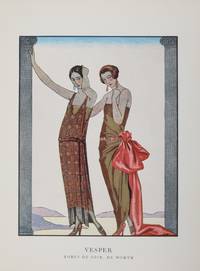
192284736Paris: Lucien Vogel éditeur 1922. Fine. Lucien Vogel éditeur Paris 1922 18 x 24 cm une feuille Original color print heightened with gold printed on vergé paper signed in the plate. An original print used to illustrate the Gazette du bon ton one of the most attractive and influential 20th century fashion magazines featuring the talents of French artists and other contributors from the burgeoning Art Deco movement. A celebrated fashion magazine established in 1912 by Lucien Vogel La Gazette du bon ton appeared until 1925 with a hiatus from 1915 to 1920 due to the war the editor-in-chief having been called up for service. It consisted of 69 issues printed in only 2000 copies each and notably illustrated with 573 color plates and 148 sketches of the models of the great designers. Right from the start this sumptuous publication was aimed at bibliophiles and fashionable society Françoise Tétart-Vittu La Gazette du bon ton in Dictionnaire de la mode 2016 and was printed on fine vergé paper using a type cut specially for the magazine by Georges Peignot known as Cochin later used in 1946 by Christian Dior. The prints were made using stencils heightened in colors some highlighted in gold or palladium. The story began in 1912 when Lucien Vogel a man of the world involved in fashion he had already been part of the fashion magazine Femina decided with his wife Cosette de Brunhoff the sister of Jean creator of Babar to set up the Gazette du bon ton subtitled at the time: Art fashion frivolities. Georges Charensol noted the reasoning of the editor-in-chief: In 1910 he observed there was no really artistic fashion magazine nothing representative of the spirit of the time. My dream was therefore to make a luxury magazine with truly modern artists I was assured of success because when it comes to fashion no country on earth can compete with France. Un grand éditeur dart. Lucien Vogel in Les Nouvelles littéraires no. 133 May 1925. The magazine was immediately successful not only in France but also in the United States and Latin America. At first Vogel put together a team of seven artists: André-Édouard Marty and Pierre Brissaud followed by Georges Lepape and Dammicourt as well as eventually his friends from school and the School of Fine Arts like George Barbier Bernard Boutet de Monvel and Charles Martin. Other talented people soon came flocking to join the team: Guy Arnoux Léon Bakst Benito Boutet de Monvel Umberto Brunelleschi Chas Laborde Jean-Gabriel Domergue Raoul Dufy Édouard Halouze Alexandre Iacovleff Jean Émile Laboureur Charles Loupot Chalres Martin Maggie Salcedo. These artist mostly unknown when Lucien Vogel sought them out later became emblematic and sought-after artistic figures. It was also they who worked on the advertising drawings for the Gazette. The plates put the spotlight on and celebrate dresses by seven designers of the age: Lanvin Doeuillet Paquin Poiret Worth Vionnet and Doucet. The designers provided exclusive models for each issue. Nonetheless some of the illustrations are not based on real models but simply on the illustrators conception of the fashion of the day. The Gazette du bon ton was an important step in the history of fashion. Combining aesthetic demands with the physical whole it brought together for the first time the great talents of the artistic literary and fashion worlds; and imposed through this alchemy a completely new image of women: slender independent and daring which was shared by the new generation of designers including Coco Chanel Jean Patou Marcel Rochas and so on Taken over in 1920 by Condé Montrose Nast the Gazette du bon ton was an important influence on the new layout and aesthetics of that little dying paper that Nast had bought a few years earlier: Vogue. Lucien Vogel éditeur unknown
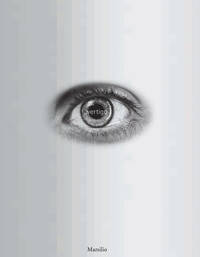
20172-8831726412Marsilio Editori Spa 2017. Paperback. New. bilingual edition. 176 pages. 10.75x8.25x0.75 inches. Marsilio Editori Spa paperback
71-4738Milan Italy: Skira Editore 2006. 4to. 325 pp. Hard Cover. Color and black and white plates throughout. Very Good. Minor rubs to the covers.Heavy volume could cost extra for shipping. Milan, Italy: Skira Editore, 2006. hardcover
71-4737Milan Italy: Skira Editore 2006. 4to. 325 pp. Hard Cover. Color and black and white plates throughout. Very Good. Minor rubs to the covers.Heavy volume could cost extra for shipping. Milan, Italy: Skira Editore, 2006. hardcover
2006__8876247440Skira 2006. Hardcover. New. new title edition. 336 pages. 11.55x9.55x1.25 inches. Skira hardcover
200672474Skira. New. 2006. Hardcover. 8876247440 . FREE UPGRADE to Courier/Priority Shipping Upon Request - IN STOCK AND IMMEDIATELY AVAILABLE FOR SHIPMENT - Flawless copy brand new pristine never opened -- Text in English. 328 pp. With 554 ills. 16 col. . 30 x 25 cm. -- with a bonus offer-- . Skira hardcover
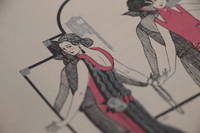
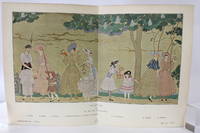
192284836Paris: Lucien Vogel éditeur 1922. Fine. Lucien Vogel éditeur Paris 1922 19.50 x 24.50 cm une feuille Text on double page by Vaudreuil illustrated with four original color prints finely heightened with palladium printed on laid paper signatures of George Barbier on the plate. La Gazette du bon ton one of the most beautiful and influential fashion magazines of the 20th century celebrating the talent of French creators and artists at the height of the Art Deco movement. Famous fashion magazine founded in 1912 by Lucien Vogel La Gazette du bon ton was published until 1925 with an interruption during the War from 1915 to 1920 due to the mobilization of its editor-in-chief. It consists of 69 issues printed in only 2000 copies and is illustrated notably with 573 color plates and 148 sketches representing models by great couturiers. From their publication these luxurious publications ""were aimed at bibliophiles and worldly aesthetes"" Françoise Tétart-Vittu ""La Gazette du bon ton"" in Dictionnaire de la mode 2016. Printed on fine laid paper they use a typeface specially created for the magazine by Georges Peignot the Cochin character adopted in 1946 by Christian Dior. The prints are created using the metal stencil technique heightened in colors and some outlined in gold or palladium. The adventure begins in 1912 when Lucien Vogel a man of the world and fashion - he had already participated in the magazine Femina - decides to found with his wife Cosette de Brunhoff sister of Jean the father of Babar the Gazette du bon ton whose subtitle was then ""Art modes et frivolités"". Georges Charensol reports the words of the editor-in-chief: ""In 1910 he observes there existed no fashion journal that was truly artistic and representative of the spirit of its time. I therefore thought of creating a luxury magazine with truly modern artists . I was certain of success because for fashion no country can rival France."" ""Un grand éditeur d'art. Lucien Vogel"" in Les Nouvelles littéraires n°133 May 1925. The success of the magazine is immediate not only in France but also in the United States and South America. Originally Vogel thus brings together a group of seven artists: André-Édouard Marty and Pierre Brissaud followed by Georges Lepape and Dammicourt; and finally his friends from the École des beaux-arts who are George Barbier Bernard Boutet de Monvel or Charles Martin. Other talents quickly come to join the team: Guy Arnoux Léon Bakst Benito Boutet de Monvel Umberto Brunelleschi Chas Laborde Jean-Gabriel Domergue Raoul Dufy Édouard Halouze Alexandre Iacovleff Jean Émile Laboureur Charles Loupot Charles Martin Maggie Salcedo. These artists mostly unknown when Lucien Vogel calls upon them will subsequently become emblematic and sought-after artistic figures. These same illustrators create the drawings for the Gazette's advertisements. The plates highlight and sublimate the dresses of seven creators of the period: Lanvin Doeuillet Paquin Poiret Worth Vionnet and Doucet. The couturiers provide exclusive models for each issue. Nevertheless some of the illustrations feature no real model but only the illustrator's idea of contemporary fashion. La Gazette du bon ton is a decisive step in the history of fashion. Combining aesthetic demand and plastic unity it brings together for the first time the great talents of the world of arts letters and fashion and imposes through this alchemy a completely new image of woman slender independent and audacious also carried by the new generation of couturiers Coco Chanel Jean Patou Marcel Rochas. Taken over in 1920 by Condé Montrose Nast the Gazette du bon ton would largely inspire the new composition and aesthetic choices of the ""dying little journal"" that Nast had bought a few years earlier: Vogue magazine. Lucien Vogel éditeur unknown
19811781150130043Telarc 1981-01-01. Audio CD. Like New. CDs plays perfectly & the case looks good. Telarc unknown
114933London C. W. Beaumont 1913. . Chromolithograph mounted minor spotting to margin; image size: 24.9 x 19 cm mounted size: 40.9 x 37.9 cm.<br /> 'The designs although somewhat fantastic in treatment do convey the impression produced by Nijinsky in his famous characters' Beaumont.<br /><br />'In his brief time Nijinsky was the most famous male dancer in the world a pre-eminence due in part to his extraordinary virtuosity. But it was not his virtuosity alone that made him such a powerful stage presence. As contemporary reports make clear Nijinsky was a great and unusual actor. The ideal Fokine interpreter he was able to expand a simple choreographic design into a rich dramatic portrait using in keeping with Fokine's dicta the whole body as an expressive instrument. Nijinsky's influence as a dancer was immediate and huge. That ballet nearly extinguished artistically in western Europe was revived in this century is due to him and other great dancers of his generation such as Anna Pavlova and Karsavina as well as to Diaghilev. That male ballet utterly extinguished was also revived is due to him preeminently. Nijinsky was the first real ballet star of the male sex that Europe had seen since the retirement of Auguste Vestris nearly a century earlier. He initiated a renaissance.' Cohen: The International Encyclopedia of Dance Vol. 4 pp. 646-648.<br /> London, C. W. Beaumont, 1913. unknown
2001Q-2843232465Brécourt Academic 2001-12-31. Paperback. New. New. In shrink wrap. Looks like an interesting title! Brécourt Academic paperback
1986Q-0793551250G. Schirmer Inc 1986-11-01. Paperback. New. In shrink wrap. Looks like an interesting title! G. Schirmer, Inc paperback
1986Q-0793529220GS LIBRETTO 5 1986-11-01. Paperback. New. New. In shrink wrap. Looks like an interesting title! GS LIBRETTO 5 paperback
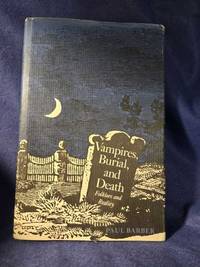
198824579Yale University Press New Haven CT 1988. 4th Printing. Hardcover Original Cloth. Fine Condition/Very Good. Dust Jacket with minor edgewear. Dust jacket in mylar guard. Quantity Available: 1. Category: Myths Legends & Folklore; ISBN: 0300041268. ISBN/EAN: 9780300041262. Pictures of this item not already displayed here available upon request. Inventory No: 24579. . 9780300041262 Yale University Press hardcover
1988Q-0300048599Yale University Press 1988-07-25. Paperback. New. New. In shrink wrap. Looks like an interesting title! Yale University Press paperback
2010Q-0300164815Yale University Press 2010-04-20. Paperback. New. In shrink wrap. Looks like an interesting title! Yale University Press paperback
0300041268.Ghardcover. Good. Access codes and supplements are not guaranteed with used items. May be an ex-library book. hardcover
19901-0300048599Yale Univ Pr 1990. Paperback. New. reprint edition. 246 pages. 9.25x6.25x1.00 inches. Yale Univ Pr paperback
19912081502112500218B6 with cover Kosakusha 1991. Soft Cover. Fine. Number of books: 1 B6 with cover Kosakusha paperback