226 résultats
1850List1929California 1850. With thirteen letters most multi-page written from Monterey in 1850 a 7 pp facsimile transcription of a 1834 Mexican land grant on cloth measuring 11 x 14 inches and and eleven page document on paper in Spanish relating to a Monterey land grant transcribing an 1841 document. Letters heavily worn with some loss at margins but mostly legible land grant in good to very good condition transcribed document in Spanish in fair condition with water damage to margins. Fair. An interesting archive of 1850s-era material relating to the life and career of the surveyor Edward Williams which recently surfaced in the central mother lode region. The group includes his personal letters from the California Gold Rush as well as well two interesting documents form his work for the Surveyor General J.W. Mandeville in 1858 where he transcribed two Mexican land grants. <br /> <br /> Lt. Edward Williams was a member of Company E New York Volunteers under Capt. Nelson Taylor. He came to California around 1847 and found employment as a deputy surveyor later working for the Office of the Surveyor General of the Unites States for California. In 1858 Surveyor General J.W. Mandeville commissioned a report on Mexican-era California Land Grants. Mandeville had Williams copy the original documents exactly - inclusive of an ink copy on linen that is an "exact tracing" of the original documents starting with 1834 up through about 1840. These "copies" were submitted to the Surveyor General in 1858 for use in the report. Williams continued the title work by copying other documents from about 1841 though this time not as a tracing but hand copied on the usual blue paper of the 1850s.<br /> <br /> The documents illustrate the length officials went to while they investigated Mexican Land Grant titles to California properties in the 1850s. The process was difficult and involved two distinctly separate cultures and legal systems that clearly conflicted. The Mexican Government granted rights for these large land parcels in California to various people but clearly stated they could not sell parts of the property. The wording was used many times in litigation of the period in both defense of the land grants and in opposition to how the land grants were handled. The issues were actually quite simple in that the Mexican legal standards for land grants was far different from those in the United States and the two differing forms of written land ownership and use clashed. <br /> <br /> These documents reflect a parcel of land granted to Francisco Mesa at "Corral de Tierra" a large parcel in Monterrey County California. Mesa had requested land for "his personal use and that of his family." In the Grant the title papers reflect "while the land is under Francisco's possession it cannot be divided mortgaged or a levy placed on it nor handed down." These original documents help illustrate the complex story of Mexican Land Grants in California. <br /> <br /> Also included are thirteen letters from Ed aka "Ned" to various family members primarily his mother and sister Alice and vice versa. About half are from Ed the other half are written to him. The dates of the letters are; 1850: February 10th April 15th April 16th April 28th June 10th July 30th October 11th and November 17th and 1851: September 9th. One undated letter with heavy loss is written from Panama. The letters are generally readable but the condition far from perfect with water stains throughout and chips abundant along edges and significant textual loss. The letters are generally at least two pages sometimes four or more inclusive of writing in the crossed line custom to save paper. Most are datelined at Monterrey where he discusses the people the customs setting and more. <br /> <br /> Despite the condition flaws there is much to be gleaned from his correspondence. In his April 15 1850 letter . he describes his trip to San Juan Bautista from Monterrey in detail while he was on his way to San Francisco. Williams writes of his great pleasure on tasting cooked beef by the Indians that he found was the best he ever tasted as they camped on the way to San Jose with the ultimate goal Mission Dolores in San Francisco: “this the beef they put on the embers of the fire and broiled it - I never tasted anything like it before so tender so juicy…†One of his first notes on San Francisco: "There are regular streets filled with all kinds of sorts of stores… The shipping covers the water as far as you can see. And those nearest the shore are converted into store houses the rigging being taken down and the and holes cut in the sides for doors.The best houses in town are occupied by gamblers . a large saloon filled with tables on which are played all kinds of games of chance - at some of the tables are displayed immense amounts of coin and gold in lumps worth from 1 to 5000 dollars which some poor infatuated fool of a miner has at some time lost to them."<br /> In his letter of April 16th he discusses both his difficulties with women in California and his lack of fitting in back east: “The Spanish Girls are very nice and all that sort of thing but the trouble is to find one that is educated. I can’t bear an uneducated wom an and I think I shall have to come to N.Y. and bring one out here… I know one or two in N.Y. but I don’t believe they would have such an uncouth specimen of an ‘hombre’ as me…†In his next letter he describes Carmel in detail. He states: “I haven’t been to the mines nor have I any inclination to go†though he intends to settle in California permanently. In his next letter he discusses the people he’s met and how he detests the anglophone community there: “How do I like the People Those of Spanish whom I call my friends I love with all my soul - there is not much society except among them… the Eng. and Am. population I detest from the bottom of my heart. This may sound strange but you will know the por que when you arrive.†He then praises the climate and scenery of Monterey. One letter written from Panama which has unfortunately sustained heavy losses at margins offers some details of the trip on the Chagres River. The replies to Williams from his family offer details on life in New York and are similarly compromised in condition but overall there is enough to glean from the group to provide a detailed example of family correspondence from the period. <br /> <br /> Overall a very interesting and unusual archive of a young professional who moved to California during the Gold Rush period and rejected the Anglophone mining community with particular interest to historians of Monterey and of the systems of land grants that shaped Mexican and American land policy in the nineteenth century. unknown
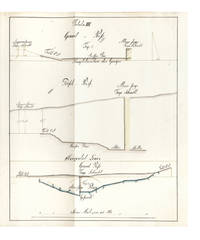
639640 leaves the final blank. Small folio 332 x 210 mm. orig. paste-paper boards spine & extremities somewhat worn uncut. Clausthal: ca. 1815.<br/> <br/> A fine and legible manuscript instructional manual on techniques and problems of mine surveying. The text is divided into five chapters: “Von der Vorbereitung zum Markscheiden†“On preparations for measuring the area in which mining may be carried out†“Von Bennenung der Gänge und Klüfte†“On the naming of seams and fissures†“Vom Observiren†“On Observations†“Vom Vermaß oder Verbestimmung eines Grubenfelds†“On measuring and defining a mining claim†and “Von Wasserfällen Wasserleitungen und Tiefbau†“On waterfalls water conduits and underground miningâ€.<br/> <br/> This manuscript was probably prepared in 1815 — plate X has the entry “Markscheide 1.7.15“ — at the newly founded mining school at Clausthal the famous mining town of the Harz Mountains in Lower Saxony the fine plates name mining locations in the area.<br/> <br/> The most attractive plates — all of which contain a number of figures — depict mine shafts mine surveying methods cartographical considerations techniques of prospecting and identification of mineral deposits problems of ownership rights and the constant problems of flooding. All the plates are finely drawn in black ink and have been heightened in grey blue pink and yellow wash.<br/> <br/> Internally fine. Stamp of Georg Riemschneider 1888-1946 “Oberbergrat†of Clausthal-Zellerfeld. unknown
639640 leaves the final blank. Small folio 332 x 210 mm. orig. paste-paper boards spine & extremities somewhat worn uncut. Clausthal: ca. 1815. A fine and legible manuscript instructional manual on techniques and problems of mine surveying. The text is divided into five chapters: "Von der Vorbereitung zum Markscheiden" "On preparations for measuring the area in which mining may be carried out" "Von Bennenung der Gänge und Klüfte" "On the naming of seams and fissures" "Vom Observiren" "On Observations" "Vom Vermaß oder Verbestimmung eines Grubenfelds" "On measuring and defining a mining claim" and "Von Wasserfällen Wasserleitungen und Tiefbau" "On waterfalls water conduits and underground mining". This manuscript was probably prepared in 1815 - plate X has the entry "Markscheide 1.7.15" - at the newly founded mining school at Clausthal the famous mining town of the Harz Mountains in Lower Saxony the fine plates name mining locations in the area. The most attractive plates - all of which contain a number of figures - depict mine shafts mine surveying methods cartographical considerations techniques of prospecting and identification of mineral deposits problems of ownership rights and the constant problems of flooding. All the plates are finely drawn in black ink and have been heightened in grey blue pink and yellow wash. Internally fine. Stamp of Georg Riemschneider 1888-1946 "Oberbergrat" of Clausthal-Zellerfeld. hardcover books
17722750NANTES 1772 in-folio demi-vélin janséniste un Manuscrit, reliure demi-velin janséniste in-folio, dos 5 nerfs - titre manuscrit à l'encre brune façon Janséniste au dos à l'encre brune, les 3 premières pages ainsi que les deux dernières ont été habilement restaurées en marge sur un centimètre de large lors d'une restauration ancienne, texte manuscrit à l'encre brune orné de trés nombreuses lettrines calligraphiées réhaussées en couleurs sur toute les pages ainsi que des calligraphies en ornementation du texte, en bandeaux et culs-de-lampes réhaussées en couleurs (Thèmes : oiseaux divers, portraits divers, papillons divers, fleurs diverses, lapins divers etc...), orné d'un dessin à l'encre brune réhaussé en couleurs sur la moitié de la page de titre représentant "la manière de tenir la plume" et d'un dessin à l'encre brune réhaussé en couleurs représentant un portrait en pied d'un NÉGOCIANT dans son intérieur devant une Sphère Armilliaire, dessin prenant toute la dernière page , quelques légères piqûres, Table des Matières et sur les dernières pages : Rêgles d'Arithmétique, 545 pages avec une erreur de pagination (mais complet), Fait à Lourmarin, le huitième octobre 1772,
2805<p>Manuscript 4to. 23.5 x 17.5 cm 2 ff. pencil sketch of arms Marlborough and blank 196 ff. and with 27 drawn folding plates many of which are colored. Bound in contemporary French calf spine gilt in six decorative compartments with title on letterpiece. Excellent with all plates drawn and many some colored in a very professional hand.<br /><br /></p><p>Very attractive early 18th-century French illustrated manuscript of practical geometry in seven books including individual sections on longimetry planimetry and stereometry—the fundamentals of precision surveying and draftsmanship. The manuscript closely follows but is not identical to Jacques Ozanam's <i>Géométrie Pratique du sr Boulenger</i> Paris 1684 which itself was a revision of <i>La Géométrie pratique </i>Paris 1640 by the mathematician Jean Boulenger. Though the work was reprinted well into the 18th C the present volume seems to follow Ozanam's 1693 edition most closely. Ozanam's book however lacks the drawn and colored figures of the present volume many of which are quite elaborate. The facade of Notre Dame is shown in an exercise for calculating the height of a wall and a segment on proportion features detailed miniature maps of the Brittany coastline identifying towns such as St. Malo and Mont St. Michel. <br /></p><p>The manuscript exemplifies the early 18th C approach to applied trigonometry—a field that by the mid-17th C was starting to resemble an exact science. Book II defines the common functions sine cosine secant etc.; Book V treats longimetric puzzles such as determining the height of a mountain or a spire or measuring the length of bodies of water; the final two books treat planimetry and stereometry including applied trigonometry—calculating the volumes of real bodies i.e. barrels pipes etc. Those sections of the manuscript that do not appear in <i>Géométrie Pratique</i>—mainly a tract on logarithms and a discussion of surveying instruments—also fall within Ozanam's oeuvre as he published a monograph on compasses in 1673 and a book of logarithmic tables and trigonometric functions in 1685.</p><p>Jacques Ozanam 1640-1717 was best known for his <i>Récréations mathematiques</i> Paris 1694 which "may be regarded as the forerunner of modern books on mathematical recreations." In addition to Boulenger's work he also revised that of Adriaan Vlacq 1600-1667 and the Jesuit mathematician Claude-François Milliet Dechalles.</p> DSB.10 pp.263-265. [France, early 18th century].
2805<p>Manuscript 4to. 23.5 x 17.5 cm 2 ff. pencil sketch of arms Marlborough and blank 196 ff. and with 27 drawn folding plates many of which are colored. Bound in contemporary French calf spine gilt in six decorative compartments with title on letterpiece. Excellent with all plates drawn and many some colored in a very professional hand.<br /><br /></p><p>Very attractive early 18th-century French illustrated manuscript of practical geometry in seven books including individual sections on longimetry planimetry and stereometry—the fundamentals of precision surveying and draftsmanship. The manuscript closely follows but is not identical to Jacques Ozanam's <i>Géométrie Pratique du sr Boulenger</i> Paris 1684 which itself was a revision of <i>La Géométrie pratique </i>Paris 1640 by the mathematician Jean Boulenger. Though the work was reprinted well into the 18th C the present volume seems to follow Ozanam's 1693 edition most closely. Ozanam's book however lacks the drawn and colored figures of the present volume many of which are quite elaborate. The facade of Notre Dame is shown in an exercise for calculating the height of a wall and a segment on proportion features detailed miniature maps of the Brittany coastline identifying towns such as St. Malo and Mont St. Michel. <br /></p><p>The manuscript exemplifies the early 18th C approach to applied trigonometry—a field that by the mid-17th C was starting to resemble an exact science. Book II defines the common functions sine cosine secant etc.; Book V treats longimetric puzzles such as determining the height of a mountain or a spire or measuring the length of bodies of water; the final two books treat planimetry and stereometry including applied trigonometry—calculating the volumes of real bodies i.e. barrels pipes etc. Those sections of the manuscript that do not appear in <i>Géométrie Pratique</i>—mainly a tract on logarithms and a discussion of surveying instruments—also fall within Ozanam's oeuvre as he published a monograph on compasses in 1673 and a book of logarithmic tables and trigonometric functions in 1685.</p><p>Jacques Ozanam 1640-1717 was best known for his <i>Récréations mathematiques</i> Paris 1694 which "may be regarded as the forerunner of modern books on mathematical recreations." In addition to Boulenger's work he also revised that of Adriaan Vlacq 1600-1667 and the Jesuit mathematician Claude-François Milliet Dechalles.</p> DSB.10 pp.263-265. [France, early 18th century]. books
[Agrimensura] (cm. 20,5) Bella piena pergamena originale, bel titolo calligrafato al dorso. cc.10nn., cc.344, cc.2, (con marca tipografica ed ultima bianca). Molte illustrazioni in xilografia n.t. di strumenti, schemi, figure ecc. Edizione originale molto rara e importante. Riccardi I 478: "opera interessantissima per la storia dell'aritmetica, ampiamente sviluppata ed applicata anche alla mercatanzia; e per quella della geometria pratica, trovandovisi la descrizione e l'uso degli strumenti allora conosciuti, fra i quali sono notevoli quelli che ora direbbersi di celerimensura". Cat. libri 2878:"This work is so scarce that it has escaped professor de morgan. It contains solution of several indeterminate problems.Amongst the Authors quoted by Forestani we find Galigai, Calandi, Lazzizio, Pagani, ecc." Vecchiolieve resturo al margine bianco del frontis ma esemplare molto bello e nitido. * Parenti prime edizioni 237; *Choix 6632; *Sotheran primo sopplimento 1149; *Brunet II 1341; *Graesse II 615.[f61] Libro
180545129London, W. Bulmer and Co., 1805. 4to. No wrappers as extracted from ""Philosophical Transactions"" 1805. With titlepage to Phil. Transactions Part I. Pp. 186-197. Having also the titlepage to the volume (Part II, 1805). A few scattered brownspots and very faint browning to outer margins, otherwise fine and wide-margined. A small stamp to verso of titlepage.
180545129London W. Bulmer and Co. 1805. 4to. No wrappers as extracted from "Philosophical Transactions" 1805. With titlepage to Phil. Transactions Part I. Pp. 186-197. Having also the titlepage to the volume Part II 1805. A few scattered brownspots and very faint browning to outer margins otherwise fine and wide-margined. A small stamp to verso of titlepage. <br/><br/><em>First printing of probably the first work to discover and correct for the errors of the compass caused by the iron in ships by the first circumnavigator of Australia."Captain Matthew Flinders RN 16 March 1774 - 19 July 1814 was one of the most successful navigators and cartographers of his age. In a career that spanned just over twenty years he sailed with Captain William Bligh circumnavigated Australia and encouraged the use of that name for the continent which had previously been known as New Holland. He survived shipwreck and disaster only to be imprisoned for violating the terms of his scientific passport by changing ships and carrying prohibited papers. He identified and corrected the effect upon compass readings of iron components and equipment on board wooden ships and he wrote what may be the first work on early Australian exploration A Voyage to Terra Australis."Wikepedia </em> unknown
19413877Kyiv 1941. Very good. Together 2 views 205 x 325 mm; 8" x 13" printed on cheap thin paper Ad 1: long closed tear through image without loss light staining creasing edges a little frayed; Ad 2: short closed tears along edges two small holes in blank area at lower left light staining. Overall in very condition suitable for exhibition and study. Tragically topical apparently unrecorded views of Kyiv being rude field printings on cheap paper likely created by Nazis during the so-called "First Battle" of Kiev Aug. 23 - Sept. 26 1941 or shortly thereafter. We are mindful that the present views are historically "toxic" but given the context of the current Russian war-crimes against the people of the Ukraine we believe that there is an urgent need for them to be preserved. <br /> <br /> The first print is a view of Kyiv looking at the city center from the south specifically from the wooded hill of Lysa Hora which had a complex fortification system. During the German occupation the fort became a military plant and tank base. Here Kyiv rises above the Dnipro river on the right. The key below identifies 22 sites mostly of military significance such as buildings bridges power plants hospitals factories churches and cloisters. To each site is assigned a code consisting of a letter or letters and a numeral or numerals: these are certainly map references i.e. K10 L10 F-G7 etc. We have been unable to locate this exact map but large bird's-eye maps of Kyiv taken by the Vermessungs- und Karten-Abteilung survive in the Kiev Polytechnic Museum and also the David Rumsey Collection. That a need for vantage-point views such as ours to accompany such a map seems self-evident. <br /> <br /> The second is a view of Kyiv taken from the Great Lavra Bell Tower in the Pechersk Lavra monastery strategically positioned in the city center looking towards the Dnieper Valley in the northeast. The key identifies 13 sites likewise militarily important but with the notable inclusion of the "Podol Judenstadt" no. 6 a Jewish neighborhood to the north of the city. <br /> <br /> Our prints may date before Nov. 3 1941 because on this day just two months into the German occupation of Kyiv a huge explosion brought down the Uspensky Sobor cathedral in the Pechersk Lavra monastery across the courtyard from the Bell Tower from which the present view was drawn.<br /> <br /> The "Motorized Surveying and Map Detachment" was an integral part of the German military and accompanied the army throughout the European and North African theater. These surveyors photographers and printers traveled with equipment to the front lines sometimes on special trains. The detachments were self-contained and had the capability to print onsite even in the most hostile conditions. Ephemeral views such as the present pair were printed in small numbers for the sole use of German occupying troops. The present prints were purchased by a Munich bookseller from a private collector in Germany along with other documents from the period.<br /> <br /> NOTA BENE: These prints were both purchased at an auction in Germany in early January 2021 i.e. BEFORE the Russian invasion of Ukraine on February 24 2022. unknown
181525378Vergèze 1815 in-folio Manuscrit, reliure plein veau in-folio, mais il ne reste quasiment plus rien du cuir de la reliure initiale, texte manuscrit à l'encre brune, verte et rouge orné de trés nombreuses lettrines calligraphiées en couleurs à l'encre brune, verte et rouge sur toute les pages ainsi que des Calligraphies en ornementation du texte, en bandeaux et culs-de-lampes en couleurs, la Table des matières et sur les 3 dernières pages : Règles d'Arithmétique, collationné complet, 255 pages, Fait à VERGÈZE, le 20 Septembre 1815, chez Mr J. JUEIRAL, signé Auquier (notés en bas de la dernière page avant les pages de Tables),
83400Ottawa, Lithographed at the Survey Office, 1889, 1 volume in-4 de 265x185 mm environ, 324 pages, demi reliure à coins en cuir noir, dos à 5 nerfs portant titres dorés, orné de filets dorés qui soulignent les nerfs, contient des figures dans le texte et 5 planches hors texte, 1 carte d'envoi de l'auteur. Légères rousseurs sur les pages de garde, petite trace blanche sur le dernier plat, sinon bon état. Un des 50 exemplaires de cette première édition, publiée au sein des Services d'arpentage (Canada), à l'usage des employés de l'équipe. Hommage de l'auteur sous forme de carte. (Nous laissons une enveloppe jointe contenant quelques photographies anciennes sans rapport avec l'ouvrage).
[Fig. Agrimensura] (cm.21,5) pieno vitello originale, nervi, dorso in oro con specchi decorati e titolo.-- cc. 6 nn., pp. 551 + 1 p. con marca tipografica. Molte illustrazioni n.t. in xilografia di strumenti, schemi, figure ecc. Seconda edizione definitiva più completa della prima del 1603. Molto rara e importante. Vedi Riccardi I 478: " Opera interessantissima per la storia dell' aritmetica, ampiamente sviluppata ed applicata anche alla mercatanza; e per quella della geometria pratica, trovandosi la descrizione e l' uso degli strumenti allora conosciuti, fra i quali sono notevoli quelli che ora direbbersi di celerimensura". Cat. Libri n° 2878-79: " This Work is so scarce that it has escaped Professor De Morgan. It contains solutions of several indeterminate problems. Amongst the authors quoted by Forestani we find Galigai, Calandri, Lazzisio, Pagani, ecc.". Alcune spellature al dorso e alle cuffie, sei carte (pag. 531) con vecchi strappo restaurato senza perdite, altrimenti esemplare molto bello e nitido. * Autori Italiani del '600 1551; * Sotheran Primo Supplemento 1150; * Graesse VIII 309.[f52] Libro
[Figurato Agrimensura-Matematica] (cm.20,5) ottima piena pergamena molle sec. XVIII, titolo al dorso. -- cc. 6 nn., pp. 551 + 1p. con marca tipografica. Molte illustrazioni n.t. in xilografia di strumenti, schemi, figure ecc. Seconda edizione definitiva più completa della prima del 1603. Molto rara e importante per la vastità di argomenti e notizie. Vedi Riccardi I 478: "Opera interessantissima per la storia dell' aritmetica, ampiamente sviluppata ed applicata anche alla mercatanzia; e per quella della geometria pratica, trovandovisi la descrizione e l' uso degli strumenti allora conosciuti, fra i quali sono notevoli quelli che ora direbbersi celerimensura". Cat. Libri n° 2878-79: "This work is so scarce that it has escaped professor De Morgan. It contains solutions of several indeterminate problems. Amongst the authors quoted by Forestani we find Galigai, Calandri, Lazzisio, Pagani, ecc.". Vecchio restauro al margine del frontis con le prime 5 lettere di (Pratica) ridisegnate. Qualche lieve alone al margine delle prime carte ma esemplare bello nitido e marginoso. * Autori Italiani del '600 1551; * Sotheran Primo Suppl. 1150; * Graesse VIII 309.[f72] Libro
Formato cm. 25x20. Pagine (9), 424, (8). Bella rilegatura in mezza pergamena. Alcune macchie e bruniture ma stato di conservazione molto buono. All'interno sono presenti molte pregevoli incisioni raffiguranti figure geometriche, misurazioni di terreni, botti, balle di fieno, mucchi di grano, altezze di edifici ecc. ed un ritratto ripiegato dell'autore. In fondo sono presenti due lettere del Guerino.
in-4, pp. (8), 423, leg. cart. rust. coevo. Con una tav. xilogr. rip. raff. diagrammi. Seconda ediz. (sulla prima del 1763), opera del milanese G. (1733-1778) molto ben illustrata da schemi, diagrammi e scene campestri. Dalla prefazione: “L’Euclide in Campagna divenne quindi in breve tempo il Manuale degli agrimensori, de’ periti, degl’agenti....”. Riccardi I, 639. Lieviss. insignificante alone marginale sulle prime 3 cc. Bell’esempl. in barbe su carta forte. [023]
177059178France (Paris ?), Undated, around 1770. Folio. (42,5 x 28 cm.). Loose, sewn 4 by 4 leaves in portfolio with ties. Title-page and 9 pp. written in a fine, large legible hand, but unidentified, in brown ink. Having 5 (No 1-5) manuscript maps and plans in double folio with some hand-colouring. On good thick paper, clean and fine.
177059178France Paris Undated around 1770. Folio. 425 x 28 cm. Loose sewn 4 by 4 leaves in portfolio with ties. Title-page and 9 pp. written in a fine large legible hand but unidentified in brown ink. Having 5 No 1-5 manuscript maps and plans in double folio with some hand-colouring. On good thick paper clean and fine. unknown
15897573CBVenedig, Per Francesco Franceschi, 1589. Kl.-4°. 143 (von 145) Bl., (3) Bl. Mit 2 gef. Tafeln and more than 145 Holzschnitte im Text. Pappband der Zeit, mit Kleisterpapierbezug. + Wichtig: Für unsere Kunden in der EU erfolgt der Versand alle 14 Tage verzollt ab Deutschland / Postbank-Konto in Deutschland vorhanden +
Dedicato all'Illustrissimo Francesco Ferroni. Seconda edizione definitiva più completa della prima del 1603. Molto rara e importante per la vastità di argomenti e notizie. Vedi Riccardi I 478 : " Opera interessantissima per la storia dell' aritmetica, ampiamente sviluppata ed applicata anche alla mercatanzia; e per quella della geometria pratica, trovandovisi la descrizione e l'uso degli strumenti allora conosciuti, fra i quali sono notevoli quelli che ora direbbersi celerimensura. In 4to, mm. 1675x235, 1 carta bianca, con ex libris e nota manoscritta di vecchio proprietario + 12 carte non numerate + 551 pagine + 1 carta bianca finale. Molte illustrazioni xilografiche nel testo. Marca tipografica incisa al verso dell'ultima pagina di testo: Lupa che allatta i gemelli, nota manoscritta coeva di possesso, sull'occhietto. Esemplare in barbe, l'opera si occupa di aritmetica, calcolo degli interessi dei cambi, rivelazione delle misure. Legatura coeva in cartone grezzo editoriale, titolo manoscritto, restauro ben eseguito al piede del dorso, rimarginatura della parte bianca alle ultime due carte. Codice inv.3024527
In-4°,(20), 360, (60), 328pp, 3 carte di tavola ripiegate, antiporta, illustrazioni; buone condizioni, legatura in pergamena piena, tassello al dorso. Buona edizione di questa raccolta, curata da Goes, di autori latini sul tema dell'agronomia e dell'agrimensura. In parte già edita nel 1554 da André Turnèbe, fu successivamente Nicolas Rigault (Paris, 1577-1654, erudito letterario e latinista, succeduto a Casaubon nella carica di bibliotecario regio) che ne promosse una nuova edizione a Parigi nel 1614 sotto il titolo Auctores finium regundorum... Entrambe le edizioni risultarono offuscate da codesta del 1674. Il trattato comprende opere di scrittori latini quali: Siculus Flaccus, De conditionibus agrorum; Julius Frontinus, De coloniis libellus e De agrorum qualitate; Hyginus, De limitibus constituendis; Innocentius, De litteris et notis juris exponendis. Le numerose incisioni in rame e legno nel testo rappresentano schematicamente paesaggi rurali con fiumi, monti, case, castelli, boschi, fonti e i simboli usati nelle piante dei catasti agrari romani e nella determinazione dei fondi rurali. Brunet, IV/1195. Bibl. Agronomique, n. 1718: "Ouvrage estimé et recherché; assez rare". In-4 °, (20), 360, (60), 328pp, 3 folded tables, frontispiece, plates; good condition, vellum binding, label at the spine. Good edition of this collection, edited by Goes, of Latin authors on the subject of agronomy and land surveying. Partly already published in 1554 by André Turnèbe, it was subsequently Nicolas Rigault (Paris, 1577-1654, literary scholar and latinist, who succeeded Casaubon in the position of royal librarian) who promoted a new edition in Paris in 1614 under the title Auctores finium regundorum ... Both editions were blurred by this 1674. The treatise includes works by Latin writers such as: Siculus Flaccus, De conditionibus agrorum; Julius Frontinus, De coloniis libellus and De agrorum qualitate; Hyginus, De limitibus constituendis; Innocentius, De litteris et notis juris exponendis. The numerous engravings in the text schematically represent rural landscapes with rivers, mountains, houses, castles, woods, sources and symbols used in the plants of the Roman land registers and in the determination of rural funds. Brunet, IV / 1195. Bibl. Agronomique, n. 1718: "Ouvrage estimé et recherché; assiz rare".
2 volumi in-12° (mm 156x81), pp. XI, (1), 327, (1); XXII, (2), 348. Legatura coeva in pergamena , titoli in oro su tassello ai dorsi, tagli spruzzati in rosso. La celebre opera di Gregorio Leti, apparsa per la prima volta a Roma nel 1674, non benevola illustrazione della corte pontificia in cui l'autore si cela sotto lo pseudonimo del Cavalier Lunadoro. Più volte riproposta anche nel secolo successivo, l'edizione che presentiamo è accresciuta da Francesco Antonio Zaccaria, e nella Parte seconda è inserito un capitolo dedicato alle funzioni e all'organizzazione del Tribunale dell'Agricoltura, "una speciale soprantendenza alle cause appartenenti ad animali, a pascoli, campagne, ed altre cose di simil fatta; ed a Persone impiegate in Campestri lavori" (pp. 326-327). Minime bruniture ma buon esemplare. A entrambi i frontespizi nota di possesso datata 1776 ‘Giambattista Motella' e timbro di antica collezione in inchiostro. . .
Approximately 340 pages in total. Originally printed in 1885. "Until recently the only comprehensive work on the Admiralty Hydrographic Department this book still remains one of the most important books on the history of hydrography... Particularly useful in providing information about the lesser-known hydrographers of the nineteenth century... Also includes a description of the United States coast survey. Contains a new Preface and a list of more than 80 corrections and additions compiled by researchers at the Admiralty." - from dust jacket. Usual library markings. Binding sound. Worthy reference copy. Book
8vo., Fourth Edition, with 16 engraved plates (a number double-page), and 115 woodcuts and numerous tables in the text; handsomely bound in red full morocco, back gilt with five raised bands, second and fourth compartments lettered and ruled in gilt, all other compartments tooled and ruled in gilt, uncut, original catalogue preserved, a most attractive copy ideal as a gift or for presentation. With 56pp publisher's catalogue bound in at end. Written for the use of junior officers of the Royal Engineers and those of the Honourable East India Company's Service, Frome's extensive treatise was first published from REE Chatham in 1839. Its value as a standard text was swiftly recognised in both military and civilian sectors and the third edition was exhausted by 1862. This is the fourth (first Warren) edition, considerably expanded as well as revised. A lovely copy.