19 924 résultats
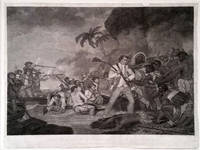
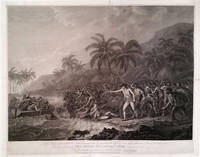
178422690London: W. Byrne No. 79 Titchfield Street & J. Webber No. 312 Oxford St. 1784. First printing. Print. Very good condition. The separately published image by Webber of one of the iconic images of the 18th century. Cook already a successful navigator was immortalized after his death at the hands of Hawaiian natives at Karakakoa Bay. Cook had spent two months on the Big Island in 1779 and was well received the natives believing he was a god. When he was forced to return due to a damaged mast he was viewed as a mortal who had already sorely stretched the supplies of the Hawaiians. It is also thought that his handling of the natives was uncharacteristically brusque leading to conjecture that this consummate traveler's judgment was somehow impaired. Copper engraving published as the Act Directs 1st Jan. 1784 by J. Webber No. 312 Oxford Street and W. Byrne No. 19 Titchfield Street London. 22 3/4 x 18 1/4" image size. A very crisp impression on laid watermarked paper. Without the impression mark with an archival border added to aid in framing. A very nice copy of an important separately published engraving. W. Byrne, No. 79 Titchfield Street & J. Webber, No. 312 Oxford St. unknown
178422657London: G. Carter 1784. Proof. A notable rarity in a proof edition with scratched text below the image after letters of the most beautiful depiction of the death of Captain James Cook. <br /> <br /> The artist George Carter was not an eyewitness to the events in Hawaii but his imagery and care in reconstructing the event places it as the most moving depiction of the event. Long a regular exhibitor at the Royal Academy and an accomplished portrait and historical painter the tragedy of Cook's death on 14 February 1779 was an ideal subject for his talents. His depiction is vivid showing Cook standing on the shoreline facing his attackers holding his rifle as a club. The detailed portraits of the Hawaiians and the English seaman are done with great intensity and variety and number more than 30 individuals. In this effort he was aided by John Hall who engraved the portrait of Cook and the other figures were engraved by I. Thornthwaite. The landscape was engraved by S. Smith. <br /> <br /> Carter painted the image in 1781 and helped to produce the print with the print makers Sayer and Bennet in 1784. The publishing line reads "London Published as the Act Directs by G. Carter of Margaret St. . Cavendish Square and Messrs. Sayer & Bennet in Fleet St." The artist and engravers line while somewhat indistinct follows this - "G. Carter pinxit; S. Smith engraved the Landscape; J. Hall engraved the Portrait of Captain Cook; the figures by I. Thornthwaite."<br /> <br /> We believe this image to be a proof for the following reasons- the simplified design of type used in the engraving of the title; the text of the publishing information matching that of the 1st edition but without the date of Jany. 1st 1784; the text of the artist/engravers line matching that of the 1st edition but appearing very faintly; the intensity of the image and a faint "Pr." in the bottom right margin of the print.<br /> <br /> The style of type used for the title is distinctly different than the first edition which was published "Jany. 1st 1784." In this edition the engraving of the title is quite unsophisticated and differs from the first edition significantly which is more highly decorated with four or five hatch marks on the letters DEATH JAMES and COOK. The style of this print's title matches that of a copy held in the British Museum. Call #Oc2006Prt.140. Unfortunately the BM print is missing the publishing line and much of the bottom margin. The State Library of New South Wales holds the first edition with the publishing line identical to this print with the publishing date of Jany. 1st 1784 Call # a1528432. The copy held by the National Library of Australia PIC Drawer 7452 #U3051 NK4835 erroneously states that their print is a first edition; the publication line reads "Published 18th April 1791 by ROBT. SAYER No. 53 Fleet Street London.<br /> The presence of a faint "Pr." in the bottom right margin confirms our suspicions. <br /> <br /> Beddie lists 5 issues of the print. These vary slightly in the size of the printed image and publication dates. This copy of the image measures 16 7/8 x 23 1/4". However slight variations in measuring devices could account for some of these differences and we don't regard the measurements as definitive of one edition over another. <br /> Beddie 2566 Jany 1st 1784 16 3/4 x 23 3/8"; <br /> Beddie 2567 Feby 1 1784 17 x 23 1/2"; <br /> Beddie 2568 as 'another' measuring 16 3/4 x 23 1/4; <br /> Beddie 2569 'The Same' publish'd 12 May 1794 by Laurie & Whittle 16 15/16 x 23 7/16"; Beddie 2570 'The Same' Proof before letters 16 15/16 x 23 7/16".<br /> <br /> Image size 16 7/8 x 23 1/4". Small margins trimmed within the plate mark laid on archival tissue some small sections of margin on the right side added but not affecting the printed surface title engraved in an unsophisticated style the publication line a bit rubbed and trimmed close the artist/ engravers line indistinct but not rubbed. No publication date listed after Fleet St. the 1st edition was published with the date Jany. 1st 1784 after "Fleet St.". <br /> <br /> A proof copy of a print that is a notable rarity. G. Carter unknown
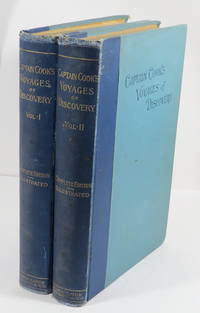
189226314London: Ward Lock Bowden & Co. Good with no dust jacket. c1892. Hardcover. Moderate rubbing and marks to boards. Small puncture hole in upper corner of front board of Volume One. 6mm loss of cloth at tip of lower corner of front board of Volume One. 6mm rubbing and slight fraying to cloth at ends of spines. Volume Two with split to gutter at frontispiece. ; The three voyages complete in two volumes. "Complete Unabridged Edition". No date c1892. Volume One: 4 xx 596 pages portrait frontispiece plates maps 2 folding World facing page 4 and Australia facing page 200. In-text illustrations. Volume Two: iii-xi 1 597-1176 pages frontispiece plates. In-text illustrations. Lacking the half-title leaf. Both volumes: light blue cloth boards with dark blue cloth spines. Gilt lettering on spines and dark blue lettering on front boards. Top page edges gilt. Page dimensions: 250 x 163mm. Title continues: "Describing his discoveries and adventures in Tierra del Fuego Tahiti New Zealand Van Diemen's Land Australia the Friendly Islands. New Hebrides New Caledonia the Sandwich Islands Western North America Etc. Partly narrated by the great navigator himself; and partly compiled from his notes and journals by Dr. Hawkesley sic for Hawkesworth. Reference: Beddie 191 . Ward, Lock, Bowden & Co. hardcover
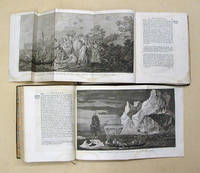
181364138354 438 and 295 pages Volume II has a Folding map and 2 folding plates Volume IV has 4 folding plates and a table volume V has 2 folding plates - 3 are listed but 'Inside of Hippah' plate is in volume 2 Published by Sherwood, Neely, & Jones hardcover
74020Paris Hôtel de Thou 1778. 4° Bd. 1: Schmutztitel gestochenes Frontispiz Porträt von Cook nummeriert als Taf. 1 Titelbl. XII V - XLIV 460 S. u. 17 gestochene Taf. nummeriert von 2 - 17 mit 10 und 10bis; davon 9 tlw. mehrfach gefaltet; Bd. 2: Schmutztitel Titelbl. VIII 432 S. u. 20 gestochene Taf. nummeriert von 18 - 37; davon 9 tlw. mehrfach gefaltet Priv.-Ldr. d. Zt. auf 5 echten Bünden reiche gold. Rückenpräg. Goldfileten a. Deckel Rundum-Marmorschnitt marmorierte Vs. Abspleissungen a. Vorderdeckel Ecken tlw. beschabt Kapitale etw. läd. Farbschnitt etw. verblasst oft mit in den ersten Bl. stärkerem im Text meist schwachem in den Tafeln tlw. bräunlichem Wasserfleck am Kopf- und Fusssteg; Bd. 1: Taf. 2 m. Riss 4 cm im Gelenk u. randknittrig Taf. 3 nicht am verzeichneten Ort eingehängt letztes Bl. m. Randverlust Jeweils frz. EA. Umfasst den Bericht zur Reise vom April 1772 bis Juni 1774 010 Paris, Hôtel de Thou, 1778 unknown
1980141824Mona Vale: Lansdown Slattery & Company 1980. Hardcover. Near fine. Mona Vale Lansdown Slattery & Company 1980 facsimile edition/ 1893. Quarto iv pages including a facsimile title page plus 12 folding charts. Cloth very slightly marked; a near-fine copy. The 'Historical Records of New South Wales' series comprised seven volumes of text in eight books and this atlas volume originally published between 1892 and 1901. Lansdown Slattery & Company hardcover
1993AOOte[CO94London: Academy Editions 1993. 1993. 4to. pp. 144. profusely illus. in colour. bds. dw. First Edition. F. Hardcover. [London]: Academy Editions, [1993]. Hardcover
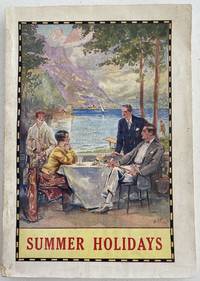
19311267London: Thomas Cook & Son Ltd 1931. Wraps. Very good. TRAVEL ADVERTISING EPHEMERA. 8vo; 287 1pp; stiff glazed color pictorial wrapper; b&w photographic illustrations; ads; chipping and creasing to wrapper; very good. Interesting look at the early 20th century British travel industry. Leicestershire cabinetmaker Thomas Cook founded an agency in 1841 to transport temperance supporters to a meeting site by rail. He expanded travel groups in support of the movement for Sunday schools and temperance societies through 1845. His first commercial venture was in 1845 a trip of more than 100 miles to Liverpool by train. Cook subsequently began organizing trips to Europe including hotels cruises and eventually airlines. It has been said that he invented the modern travel industry. Sold and reorganized several times throughout the late 20th and early 21st centuries the company collapsed in 2019 when bankers demanded repayment of loans. The company unable to pay stranded travelers around the world.<br /> <br /> This brochure covers travel promoted by the Thomas Cook company to Great Britain and Ireland Switzerland France Western Europe Belgium Holland Italy Czechoslovakia Poland Russia U.S.S.R. the Balkans Spain and Portugal Egypt Palestine and Syria Norway Sweden Denmark and Finland. A sea and land tour "Sea Holidays" to the Dalmatian Coast around Corsica and to Belgium Holland and Germany. Cruises advertised to Canada and U.S.A. Madeira and Canary Isles South America and Africa as well as "Pleasure Cruises." Includes travel pricing and delightful ads for hotels and resorts. OCLC only locates one copy at the National Library of Wales. Scarce. Thomas Cook & Son, Ltd unknown
180466604London: printed for James Asperne at the Bible Crown and Constitution Cornhill 1804. First edition 8vo pp. 8 444; stipple-engraved frontispiece portrait large engraved tailpiece on p. 8 woodcut tailpiece at the end; original blue paper-covered boards cream paper shelfback printed paper label on spine; overall soiling label darkened; all else very good sound and internally clean. From the Britannica: "Macklin first appeared as an actor at Bristol and in 1725 went to Lincoln's Inn Fields London. A man of violent nature he was a pioneer against the stilted declamation of his day. He went to Drury Lane Theatre in 1733 and later was concerned in its management. In 1735 he killed another actor in the greenroom over a dispute about a wig but although prosecuted he received no sentence. He set the seal on his stage career at Drury Lane on Feb. 14 1741 when he played Shylock rescuing the part from the broad comedy with which it had long been surrounded. Macklin played many parts with distinction but was constantly involved in disputes and lawsuits. He attempted to be a restaurateur but failed and returned to the stage. Two of his plays were outstanding Love à la mode 1759 and The Man of the World 1781. At the time of his death he claimed to be 107 years old; he may have been a centenarian but this is subject to dispute. The length of his association with the stage however unquestionably made him a pillar of the English theatre. printed for James Asperne, at the Bible, Crown, and Constitution, Cornhill unknown
1785004491Dublin: R. Moncrieffe C. Jenkin R. burton L. White et al. Good with no dust jacket. 1785. First Irish Edition. Hardcover. Vii 240 pp 2 ff Includes: A Catalogue of Dr. Johnson's works p.231-240 with half title and place of publication "Dubin" sic. What appear to be original leather boards with gilt and red spine label . Leather is smooth one small gouge to front cover front board nearly detached. Interior end papers quite foxed first blank missing a large corner back end papers have some black speckles that look like old ink spots interior has some foxing but otherwise clean and unmarked. The author Cook was a close friend of Oliver Goldsmith and a member of S. Johnson's Essex-street Club. "The pieces written in defence of Dr. Dodd had previously been suppressed at Mrs. Dodd's request." --Maggs 1038/246." ESTC N10402. ; 12mo - over 6¾" - 7¾" tall . R. Moncrieffe, C. Jenkin, R. burton, L. White, et al hardcover
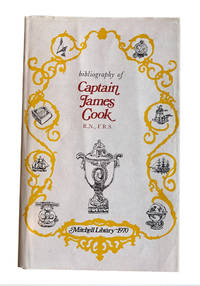
19705000601Sydney: Library of New South Wales 1970. Octavo; a fine copy in original cloth with dustjacket. <p><p>The second and by far best edition much revised and greatly expanded: the standard bibliography of Captain Cook.</p> </p> . Library of New South Wales unknown
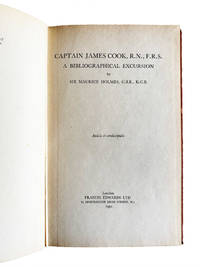
19525000610London: Francis Edwards 1952. Endpapers slightly spotted otherwise fine. Octavo; original brown cloth. <p><p>One of 500 copies published of this early and influential Cook bibliography by the doyen of Cook collecting Sir Maurice Holmes. One of two standard bibliographical references for the voyages of Captain Cook it is discursive and more attuned to the collector than Beddie's bibliography which by comparison is encyclopaedic. This is the second and best version revised and greatly expanded from Holmes' original 1936 essay which notes Holmes 'contained one shocking howler. and half a dozen more venial errors'.</p> <p>It was put together by a significant collector: Holmes's Cook collection is today in the UCLA library. Like Holmes's earlier and less authoritative "Introduction to the Bibliography of Captain Cook" of 1936 it was published by the English bookseller Francis Edwards at that time well known for its specialisation in books of voyages and travels.</p> </p> . Francis Edwards unknown
17843603426London: Sold in Spur Street Leicester Square 1784. Small crease in lower corner in good condition. Oval engraving 350 x 265 mm. image size; mounted. <p><p>Rare variant of the famous engraving of Cook's death showing as the caption notes "Part of the Original Plate after Webber" and presumably quite literally printed from an oval cut from the fuller engraved copper. This is only very rarely seen: the single example noted by Joppien and Smith was in the British Museum. </p> <p>The full-size engraving was first issued early in 1784. Based on the oil painting executed by Webber soon after he returned to London in 1780 the figures were engraved by Francesco Bartolozzi and the landscape by William Byrne. Quickly becoming the most famous of all eighteenth-century depictions of the massacre the view appeared at about the same time as the official third voyage account was published. This was no coincidence: although lavishly illustrated by Webber the official account did not include any depiction of the most famous scene of the entire voyage the death of Captain Cook. As a result the iconic engraving is often seen bound into extra-illustrated editions of the third voyage account.</p> <p>Reflecting the general opinion prevailing in published accounts of the voyage the original image as Joppien and Smith argue appeared to show Cook as 'an innocent victim killed in the act of pleading for peace'. This is here heightened by the changed composition as the oval shape dictates a radically different impact to that of the original engraving omitting the dramatic conflict between the British sailors and the Hawaiians and thus implying a scene in which Cook his arm raised in supplication to his men offstage stands alone and is overwhelmed by a seething crowd.</p> <p>The only copy noted among Australian holdings appears to be the heavily clipped copy in the National Library of Australia part of the Nan Kivell collection.</p> </p> . Sold in Spur Street, Leicester Square unknown
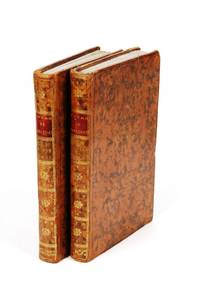
17715000651London: Printed for T. Becket and P.A. De Hondt in the Strand 1771. A fine copy. Quarto; a fine copy in a Sangorski-style binding of half green morocco spine panelled in gilt between raised bands. <p><p>First edition of the earliest published account of Cook's first voyage to the Pacific: the rare first issue with the leaf of dedication to "The Right Honourable Lords of the Admiralty and to Mr. Banks and Dr. Solander" inserted by the publishers to add authenticity. This copy also has the first state of p. 90 recently identified and to be distinguished from an amended state where text begins "quantities.".</p> <p>This was the first of a series of so-called "surreptitious accounts" of Cook's various voyages to appear in print: the Admiralty found it practically impossible to enforce their ruling that no unofficial publications should pre-empt the official and lengthier accounts of the voyages naturally much slower in the press. In this case however legal action was taken against the publisher for using an unauthorised dedication forcing removal of the leaf during publication. "It is accordingly of the greatest rarity and copies of the book containing the dedication are far more valuable than those without it." Davidson. In this large copy the offending leaf has generous margins and retains its printed instruction to the binder "Place this next the title" which also interestingly indicates that the leaf was printed quite separately from the rest of the work.</p> <p>The British public's eagerness for news of the voyage needed more than newspaper accounts while the officially sanctioned narrative would be a long time coming. Published anonymously some two months after the return of the Endeavour and nearly two years before Hawkesworth's official account the Cook scholar Beaglehole demonstrated that the sailor James Magra was the author. His illicit sale of his journal to the publishers might well have confirmed Cook's opinion of him: 'one of those gentlemen frequently found on board Kings Ships that can very well be spared or to speake more planer good for nothing.'. He was a New Yorker and a loyalist. Whatever his skipper and the authorities may have thought of him it was Magra who got the first description of the voyage into print - the earliest printed account of the east coast of Australia published even before acceptance of the name Botany Bay here called Sting-ray Bay as Cook originally christened it.</p> <p>Magra later changed his name to Matra to claim a family inheritance. As Alan Frost has shown "The Precarious Life of James Mario Matra: Voyager with Cook; American Loyalist; Servant of Empire" 1995 Matra used his experiences on the east coast of Australia to draft his 1783 proposal for a penal colony at Botany Bay. Never shy in self-promotion he announced his hope of being made Governor. His plan like Sir Joseph Banks's before and George Young's after him had its effect on the planners of the First Fleet and he was called as an expert witness to the committee in charge of solving the question of transportation see Frost pp.113-122. His life has prompted a considerable literature with multiple studies of his career and importance including those by G.B. Barton George Anthony Wood James Watson who christened him the "Father of Australia" an accolade more often awarded to Joseph Banks and more recently Antonio Giordano who has him as "Australia's Spiritual Father" and Andrew Tink.</p> </p> . Printed for T. Becket and P.A. De Hondt, in the Strand unknown
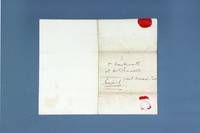
17716000068London 1771. Quarto autograph manuscript in ink; single page on a bifolium with address panel; on paper watermarked "LVG" <p><p>Amusing original letter from Sandwich to John Hawkesworth ghostwriter of the official account of Cook's first voyage. Sandwich writes: "That I may be certain whether you are alive or dead I shall be obliged to you if you will either come yourself or send your ghost to dine with me tomorrow. I am most sincerely yours Sandwich." This witty communication dates from the period when Hawkesworth was preparing the Cook account during Sandwich's third term as First Lord of Admiralty 1771-82; of course it was during this appointment that James Cook discovered Hawaii on his third voyage and named them the Sandwich Islands in his honour. The letter probably dates from late 1771 while Hawkesworth was at work on the journal. He died in November 1773 not long after the book's publication. </p> <p>Hawkesworth was introduced to Sandwich by Charles Burney in September 1771 when "the First Lord was casting around for someone to 'write the voyage' - that is to take Cook's journal and put it into a form suitable for the reading of the polite world; and not only Cook's journal but those of the three other circumnavigators Byron Wallis and Carteret. Cook and Banks we remember were patriotically anxious that this should be done as soon as possible and it was all the more important to get something authentic on the market. Burney recommended his friend Dr John Hawkesworth who had time and could do with the money." Beaglehole. </p> <p>Fanny Burney recorded in her diary for 15 September 1771 that "My father has had a happy opportunity of extremely obliging Dr. Hawkesworth. During his stay in Norfolk he waited upon Lord Orford who had always been particularly friendly to him. He there among others met with Lord Sandwich. His Lordship was speaking of the late voyage round the world and mentioned his having the papers of it in his possession; for he is First Lord of the Admiralty; and said that they were not arranged but mere rough draughts and said that he should be much obliged to any one who could recommend a proper person to write the Voyage. My father directly named Dr. Hawkesworth and his Lordship did him the honour to accept his recommendation. I cannot but be amazed that a man of Lord Sandwich's power &ca. should be so in ignorance of men of learning and merit as to apply to an almost stranger.".</p> <p>The money was decent: Hawkesworth earned a substantial £6000 from the publishers Strahan and Cadell and completed the first two volumes in just four months. A landmark publication this would help to cement Cook's reputation in the eyes of the public serving Sandwich's official purpose.</p> </p> . unknown
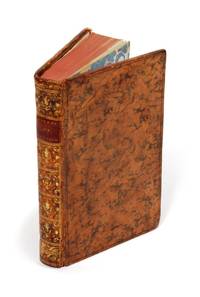
17723812970Paris: Saillant & Nyon 1772. Very slight rubbing to joints but a fine tall copy with good margin. Octavo blind-stamped ex-libris to half title; contemporary French marbled calf flat spine gilt in compartments red morocco label. <p><p>A fine copy of the first French account of Cook's Endeavour voyage and the first French book on the east coast of Australia. Fréville translates the text now considered to be by Magra which - published in English in 1771 - was the unauthorised and earliest account of the progress of the Endeavour voyage. This is one of two probably simultaneous issues this one having the "Supplément" title-page; in this form the publishers intended the book to complement the octavo edition of Bougainville's voyage. The work also includes some material that did not appear in the original London edition including a 'Lettre de M. de Commerson' the famed naturalist from Bougainville's circumnavigation who remained behind at Mauritius to continue his research. </p> <p>The second supplement is equally important: the 'Lettre de M. le B. de G.' is a learned treatise on the possibility of a northwest passage written at Königsberg modern Kaliningrad and quoting from experts on the region such as Gmelin Muller and Engel. Although the identity of this scholar remains hazy it is surprising that such an interesting - and relatively early - report on the northwest passage has been largely ignored. Continuing the parade of famous explorers included in this short work the Commerson letter is said to have been conveyed to France by none other than Kerguelen promoter of the "Terre Australe".</p> <p>Rolf du Rietz in the Kroepelien catalogue further notes that a letter from Sir Joseph Banks to the Académie des Sciences is also quoted in the introduction said to have first been published in the Journal des Savans. Despite his best efforts to distance himself from Magra's work including having the false dedication in the London edition removed it appears that his unwilling association with the work continued on the continent. Indeed one of the attractive aspects of this copy is not only the fine contemporary French binding but the spine label which reads 'Voyage de Solander': it was not unusual for Banks to be given top-billing in the excitement of the return of the Endeavour but there cannot be too many examples that plump for Solander.</p> </p> . Saillant & Nyon unknown
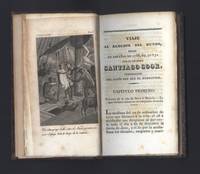
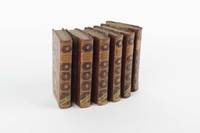
18324106630Madrid: Imprenta de Don Tomás Jordan 1832. Six volumes duodecimo with six engraved plates one in each volume original blue printed wrappers preserved a charming set in period Spanish quarter calf gilt. <p><p>Very uncommon first Spanish edition of Cook's first voyage published in 1832 as part of a series described as the 'New Library of Modern Voyages useful and interesting for Spanish youth.' The work has a charming series of six plates which include a scene in Tahiti featuring the Chief Mourner and two New Zealand scenes a warrior in profile the war canoe and conclude with a dramatic scene on board the Endeavour. The presence of the original printed wrappers bound-in is of more than passing interest as the back wrappers give an interesting overview of how the set was marketed being sold for 6 reales per volume as they were issued whether in Madrid or in the provinces and stressing the value of the work for the instruction of youth. Each volume would subsequently be priced 8 reales per volume.</p> <p>The translator Alvarado y de la Pena based his work on the French edition of Cook's first voyage. He also prepared at least one other work of Australian interest an edition of George Barrington published in Madrid circa 1815. Beddie listed copies in the Mitchell and National Libraries.</p> </p> . Provenance: Early owner's name on title-pages; old stamps from a Barcelona library; José Gallart Folch bookplates. Imprenta de Don Tomás Jordan unknown
17973807772Paris: De l'Imprimerie de Guillaume 1797. A few leaves a little foxed; a very good copy. Two volumes octavo six folding engraved plates after Parkinson a handsome set in contemporary French mottled calf flat spines gilt double red and tan morocco labels. <p><p>First French edition first issue: the artist's account of Cook's first voyage and the discovery of eastern Australia. Translated by C. Henri from the 1784 English edition it also contains material from later voyagers updating the account including the experiences of the Forsters on the second voyage. This is the octavo issue noted by Kroepelien as preceding the otherwise identical quarto of the same year.</p> <p>Parkinson had been employed in 1767 by Sir Joseph Banks who thought so highly of his work that he arranged for the young man to join him on Cook's first voyage. When the expedition's draughtsman Alexander Buchan died at Tahiti Parkinson was called on to take over all of the topographical work completing some 1300 sketches quite apart from compiling vocabularies in Tahiti and New Holland. At the end of the voyage en route from Batavia to the Cape of Good Hope he died of a fever and after the return of the Endeavour ownership of his manuscripts and drawings was disputed: Banks considered that they were his while Parkinson's brother Stanfield claimed them under the provisions of his brother's will. When Hawkesworth learned of the impending English publication of this work he got an injunction to delay its appearance until some time after his official account and despite having used Parkinson's work extensively retaliated by deliberately omitting Parkinson's name from the narrative: even the botanical illustrations in the official account have no credit to the artist.</p> <p>Some of the bibliographical history of this work is quite complex. An extended note by Rolf du Rietz in the Kroepelien catalogue explains that this octavo issue although textually identical to a quarto issue published the same year by the same publisher is actually the genuine first issue du Rietz demonstrates from an error in the signatures that the quarto was re-imposed. Du Rietz knew the octavo only from the copy in the University of Oslo although no complete census of the two issues has been attempted. A note in O'Reilly-Reitman suggests - as if we needed more complexity - that the number of plates is uncertain as they examined copies with any number between five and eight; nonetheless six plates is the standard collation.</p> </p> . De l'Imprimerie de Guillaume unknown
17974505245Leipzig vol. 1 and Berlin 1797. Six volumes small octavo two large folding engraved maps of North America a folding plate of the breadfruit and 19 other plates; in period bindings probably German of half calf and marbled boards flat spines gilt in compartments light brown leather labels and green diagonal numbering-pieces; a very attractive set. <p><p>A fine set of the first collected edition of the works of Georg Forster. The first volume was revised and edited by Forster himself who died before the remaining volumes were published and was the only volume to be published in Leipzig it was reprinted later in Berlin; the subsequent volumes were published in Berlin between 1794 and 1797. Some sets are therefore found with the second Berlin rather than the first Leipzig edition of the initial volume. As the title implies this set prints an important selection of Forster's shorter pieces. A great number of the essays printed here relate to Pacific voyaging reflecting Forster's enduring interest in the region. Fittingly the first essay is his important and long-overlooked memoir of Captain Cook 'Cook der Entdecker' first published as the introduction to the German edition of Cook's third voyage and only recently translated into English for the first time.</p> <p>Any number of the essays are of tremendous interest not least Forster's 1787 article on the British Colony in New Holland an essay on Tahiti and another on the breadfruit with folding plate the Latin preface to his Dissertatio de Plantis Esculentis insularum oceani australis of 1786 and his article on the red Bee-eater of Hawaii first printed in the Göttingisches Magazin in 1781 and recognised as the first major natural history article relating to the Sandwich Islands see Forbes 13. There are also two major essays on the Northwest coast of America both accompanied by excellent large folding maps the first with notes on the fur-trade and the map by Carl Gäck the Berlin cartographer 1791 and the second accompanied by another large folding map by Gäck but on this occasion based on an Arrowsmith chart of 1789. The two large folding charts were published for Forster's own German translation of Cook's third voyage but were included in some copies of his Kleine Schriften as here.</p> <p>Otherwise the essays show Forster's wide-ranging interests including pieces on English literature the Comte de Volney and his memoirs of the tumultuous year 1790 with many plates including a portrait bust of Benjamin Franklin.</p> </p> . Provenance: Original manuscript purchase inscription in vol. 1 dated 1797. unknown
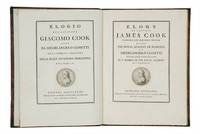
17855001066Florence 1785. Small folio original quarter calf and boards a fine copy. <p><p>Rare eccentric but beautiful elegy for Cook. This prose essay honouring the life and voyages of the navigator in florid style would have greatly embarrassed him. Describing his achievements in purple tones "this prodigy of nature" is lauded for his mapping of the St Lawrence to which the author ascribes much of General Wolfe's successes. Each of the three voyages of discovery is described in some detail while Cook like many sailors a non-swimmer is given powers that he never possessed: "From his infancy he was accustomed to the useful practice of swimming and could cleave the waves of the Ocean with the facility of its inhabitants".</p> <p>Although the poem exhibits a particular interest in the exotic islands of Tahiti and Hawaii as well as the sometimes violent interactions in New Zealand the work does include a particularly attractive passage on Cook's grounding on a reef and subsequent beaching at Endeavour River.</p> <p>This is a beautifully printed book in the best Italian eighteenth-century tradition much in the style of Bodoni using elegant roman and italic types classically composed within ruled borders. The dedication is to Sir Horace Mann then English ambassador to the Court of Tuscany.</p> <p>Gianetti was professor of anatomy at the hospital of Santa Maria Nuova and well-known as a dilettante poet and friend of English poets such as Hester Lynch Piozzi. The English translation is signed R.M. that is the English poet Robert Merry who wrote under the pseudonym Della Crusca and was the great English literary figure in Tuscany at this time. This work could be compared with Merry's own Ode on Rodney's defeat of De Grasse in the West Indies 1782 which appeared accompanied by a French translation by Sir Wogan Browne and an Italian translation by Gianetti himself Brian Moloney 'The Della Cruscan Poets' MLR January 1965 p. 50.</p> </p> . unknown
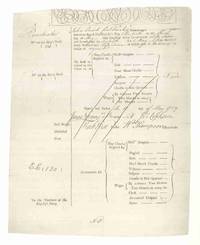
17595001037HMS Pembroke 1759. Folio single leaf partly printed and completed in manuscript in ink; docket-title on verso; original folds a little dusted head of leaf cropped; in excellent original condition tipped into a quarter morocco binding. <p><p>Original documents that relate to Cook's career are of extreme rarity and this example from a period of active duty off the American coast and a major stage in his early development is particularly desirable.</p> <p>Cook's time on the Pembroke was pivotal in his career. He served under the intellectual Captain John Simcoe on the voyage that took them to the Gulf of St. Lawrence for surveying work between 1757 and 1759. Simcoe guided the young Cook in the study of mathematics and astronomy and started him in the field of hydrographic survey. He lent Cook reference books and from various sources we know that during the very severe winter of 1758-59 at Halifax Cook used every moment for detailed study.</p> <p>The military surveyor Major Samuel Holland later recollected that when he met Cook in London in 1776 before he set out on his third voyage and by then the most famous sailor in the world Cook "candidly confessed that the several improvements and instructions he had received on board the Pembroke had been the sole foundation of the services he had been enabled to perform" Holland's letter to Simcoe's son 11 January 1792. He also remembered that "I was on board the Pembroke where the great cabin was dedicated to scientific purposes and mostly taken up with a drawing table. Under Capt. Simcoe's eye Mr. Cook and myself compiled materials for a chart of the Gulf and River St. Lawrence".</p> <p>Cook's time on the Pembroke was certainly the turning point in his career. The hydrographic skills that he acquired from working with Simcoe and Holland exemplified in the charting and survey of the St. Lawrence River led directly to his recognition by the Admiralty and his subsequent appointment to the Endeavour. This certificate to the Treasurer of the Navy is for payment of wages to First Lieutenant John Quick. It has four signatories James Cook as master along with James Norman Richard Wise as purser and William Thompson as boatswain.</p> </p> . unknown
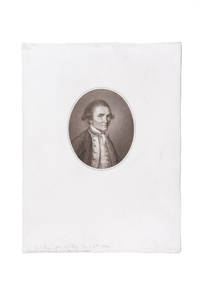
17844504227London: J.Webber June 4 1784. Very good. Stipple engraving oval 120 x 95 mm printed in sepia; a proof before letters; mounted. <p><p>Rare proof impression before letters of John Webber's and Francesco Bartolozzi's fine oval portrait of Captain Cook. This portrait has a very large margin unusual for this decorative oval shape which is perhaps more often seen clipped to fit an oval frame. </p> <p>The original portrait of Cook was painted by Webber in 1776 and has been in London's National Portrait Gallery since 1858. Webber had collaborated with Bartolozzi earlier in 1784 to execute his famous depiction of the death of Cook and the relationship was evidently a happy one as they also issued the rare oval version of the depiction of Cook's death as well as this portrait. It is fair to say that the original painting of Cook has not met with universal acclaim: Beaglehole claims that on first viewing Mrs Cook exclaimed 'Who is that low villain' Beaglehole On the Character of Captain James Cook p. 418.</p> <p>Born in Florence in 1728 Bartolozzi arrived in 1764 in England where he worked for the next three decades. He introduced the vogue of "stippled" engraving and this portrait is a particularly good example of his work.</p> </p> . J.Webber, June 4 unknown
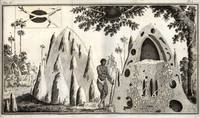
17872903123Paris: chez Buisson 1787. Good copy. Two volumes quarto with a folding map and 16 engraved plates some folding; original mottled calf binding. <p><p>Cook's second voyage and travels in South Africa by the famous Swedish naturalist. This is the first edition in French the most profusely illustrated of the early editions of the book. This is an example of the quarto version an octavo version appeared simultaneously. Sparrman professor of zoology at Uppsala University was in South Africa when Cook's second voyage called there in 1772; Forster engaged him to accompany the expedition as assistant naturalist. Though much of his book is a narrative of travels in Africa with emphasis on its flora and fauna and a remarkable series of plates on termites and their habitations he includes an interesting account of his voyage with Cook in the first volume - as Hocken notes "Hairbreadth escape from collision of the two ships not mentioned elsewhere. Shocking details as to the food on board. Described the plants which Georg Forster drew. Both interesting and amusing.".</p> <p>Sparrman published an expanded Swedish version of his account of the voyage in 1802 with a second volume in 1818 but this account in its various versions was the only eighteenth-century text by this member of the second voyage.</p> </p> . chez Buisson unknown
17875001042London: Alexander Shaw 1787. Quarto eight pages printed text followed by original blank leaves separating the 36 actual cloth specimens several full page as well as many smaller; original calf binding neatly lettered and decorated spine. <p><p>This rare and exotic publication of original Pacific artefacts is the most remarkable of the whole Cook canon: with a brief but significant letterpress introduction it mainly consists of actual specimens of eighteenth-century tapa cloth collected in the Pacific islands particularly Hawaii Tahiti and Tonga. </p> <p>In modern times the publication has become one of the great rarities of eighteenth-century Pacific exploration. This is an example of the first issue of the book with the strictly contemporary bookplate of Sir Corbet D'Avenant 1752-1823 Baronet of Stoke and Adderley. Donald Kerrr speculates in his census that D'Avenant was likely an original subscriber on first publication. </p> <p>Published only a few years after the return of the ships from Cook's third voyage it is not recorded how many of the cloth-books were prepared and up until the recent detective work of Erica Ryan at the NLA very little was known about the publisher Alexander Shaw either. However the limited supplies of the actual cloth must have dictated a very small edition - the most recent census of known copies by Donald Kerr stood at the tiny figure of 66 recently revised by us to 68 of which 57 were held by international libraries. This count of course includes the later issues of the book which continued to be sold often with dramatically varying contents as late as 1806. </p> <p>There has in effect never been a standard collation of the book - the fascinating dedication addressed to an unnamed "Sir" is genuinely vague on numbers - not least because it is obvious that Shaw was simultaneously selling individual samples and "fine specimens of the tree with the bark" at his shop in the Strand. </p> <p>Indeed as Forbes shows in some detail in the Hawaiian National Biography and others including Ian Morrison Maryanne Larkin Erica Ryan and Donald Kerr have all confirmed in more detail no two copies of the work are identical meaning that a precise collation is needed every time. Thus while 39 different samples are listed in Shaw's introductory list and "40" are mentioned at another point in the dedication many copies have quite different collations not least because the Jamaican sample perhaps the most surprising addition was apparently dropped in the course of publication. </p> <p>In short the present example has a total of 36 separate samples including particularly fine full-page examples of many of the more famous sheets. Almost none of the sheets have been particularly affected by the late-Georgian and Victorian practice of clipping: it is well-known that many collectors constructed what have become known as 'snippet books' of the Cook tapa cloths by cutting pieces from copies of Shaw's volume and pasting them into separate books or albums. </p> <p>As a result of this clipping habit copies of the original Shaw book survive in various states of completeness sometimes with only very small fragments of the once full-page specimens remaining. In this copy with its original blank leaves in place it is quite clear that the specimens have essentially retained their original shape with only four or perhaps five showing evidence of very minor clipping as can be shown from the ancient offsetting onto the adjoining blanks. </p> <p>The production of this book reflects the genuine curiosity aroused by tapa a fascination that drove competition between collectors of 'artificial curiosities' and generated an active market for the sheets brought home by Cook's men. The preface of the book contains descriptions of bark cloth manufacture by Cook Anderson Forster and an anonymous officer titled 'one of the navigators' and is followed by the list of the specimens compiled by Shaw. The list is indeed rich in fascinating details; for example we learn that the various uses of the tapa: 'wore sic by the people in the rainy season' or 'used at the human sacrifice'. Some of the notes in the list are longer and doubtless arise from tales told by the mariners who collected the tapa in the first place as boasted on the title page. </p> <p>Each island group used designs unique to its culture and the interest of Europeans in this material equalled the passion aroused by the extraordinary wood-carvings and exotic shells brought back by Cook. </p> <p>The Shaw Catalogue is of great significance as a repository of unique original tapa but it also speaks of the time when Cook's sailors were spreading their stories of the alluring South Seas while drawing-room chatter throughout the land luxuriated in descriptions of the new exotic. The publication forms a tangible link between these narratives the indigenous cultures of the South Pacific and Hawaiian islands the myriad personal and trading relationships that developed between the islanders and mariners and the genteel world of gentleman collectors and their cabinets of curiosities.</p> </p> . Provenance: Norton J. Whitmont collection; Kelton Foundation Los Angeles; original owner Sir Corbet D'Avenant 1752-1823 Baronet of Stoke and Adderley with armorial bookplate. Corbet d'Avenant was the son of Anne Corbet daughter of Sir Robert Corbet c.1670-1740 4th Bt of Stoke upon Tern. Upon the death of Anne's brother rector of Adderley from 1735 Sir Henry Corbet the seventh baronet on 7 May 1750 the baronetcy became extinct and the family estates passed to his nephew Corbet D'Avenant who assumed the name of Corbet and was created a baronet on 27 June 1786. Upon his death on 31 March 1823 the second baronetcy also became extinct. Alexander Shaw unknown
17835001095Hartford Connecticut: Nathaniel Patten 1783. Small octavo lacking the map as do virtually all known copies top four lines of title-page in well prepared facsimile; as always a little browned throughout but generally in rather better condition than most copies; in the original dark calf binding. <p><p>Highly important personal account of Cook's third voyage: the first American account of Cook's third voyage and thus the very earliest American account of the discovery of the Hawaiian Islands later to become the fiftieth state of America. This rare and significant book is notoriously hard to find in good shape. </p> <p>Ledyard one of several Americans on the voyage and the only one to publish an account of the expedition sailed as a corporal of marines. It is now generally acknowledged that he got hold of a copy of Rickman's narrative which he used to help him compile this account after his return to America. He himself describes the sealing of all diaries drawings memorandums and charts of all officers and crew aboard ship at Canton. However the narrative contains considerable information not available elsewhere including the first published description of the Russian presence on Unalaska the first permanent Russian settlement in northwest America only Ledyard Samwell and Edgar visited the settlement. The chart supposed to have been issued with the book which seems to have been an almost direct copy of the Rickman map is missing in almost every copy known and in view of the erratic nature of American eighteenth-century publishing it is nowadays accepted that it was not generally issued.</p> <p>Ledyard's description of his stay at Hawaii his expedition inland and the death of Cook occupies sixty-four pages of the text. The account of New Zealand and Australia is short but includes his observation that 'the island of New-Holland for its boundaries are now ascertained is by much the largest known and most eligably sic situated on the map of nature. even the Empress of Russia might be gratified with such a portion'.</p> </p> . Nathaniel Patten unknown