SALT, HenryBiblio.com
2 541 résultats
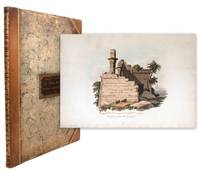
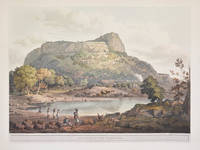
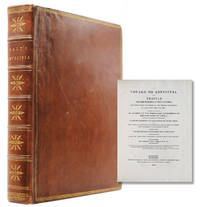
113616London William Miller 1809. . First edition; broadsheet folio 86 x 60 cm; aquatint title incorporating dedication printed in sepia 24 hand-coloured aquatint plates by D. Havell J. Hill and J. Bluck supervised by Robert Havell after Salt on thick Whatman paper watermarked 1806 mounted on guards and interleaved throughout these watermarked 'Ruse & Turners 1805' contemporary half morocco rebacked and recornered large morocco lettering piece to upper cover light scratches to boards very good.<br /> A fresh clean copy of the set of Salt's very fine large format views of India Abyssinia Egypt and elsewhere.<br /><br />Salt visited the Cape India and the Red Sea. In Calcutta the party was entertained by the Governor-General Lord Wellesley the dedicatee of the present work and then travelled to Benares Lucknow Ceylon and Madras. Salt then explored the Red Sea returned to Bombay and Poona to the Red Sea again before making an extensive excursion into the Abyssinian highlands here represented by six views. Contemporary advertisements make clear that the work was designed to be similar in size and presentation to the plates of Thomas and William Daniell's great work Oriental Scenery 1795-1808: the undoubted artistry of Salt and his engravers has ensured that this work is a worthy successor. A quarto text volume with the same title was published by Miller in the same year.<br /> Abbey Travel 515; Bobins 112; Tooley 440 the text 'is not important and the work is usually to be found without it'. London, William Miller, 1809. hardcover
1822323375London: William Miller 1822. First edition later issue. Hand-colored aquatint dedication/title and 24 hand colored aquatint plates by D. Havell J. Hill and J. Bluck supervised by Robert Havell after Henry Salt on thick Whatman paper watermarked 1822. Interleaved throughout with blanks. Without the separately-issued octavo text as usual. Elephant folio. Contemporary half calf and marbled paper boards large morocco label on the upper cover spine gilt. Foxing to a few plates. First edition later issue. Hand-colored aquatint dedication/title and 24 hand colored aquatint plates by D. Havell J. Hill and J. Bluck supervised by Robert Havell after Henry Salt on thick Whatman paper watermarked 1822. Interleaved throughout with blanks. Without the separately-issued octavo text as usual. Elephant folio. A very fine set of views after drawings by Henry Salt. Salt left London in 1802 for an eastern tour with Lord Valentia visiting Indian and Ceylon and taking part in the first British mission to Abyssinia. At Calcutta they were entertained by the Governor-General Marquis Wellesley the dedicatee and travelled to Benares Lucknow Ceylon and Madras. From Mangalore Salt explored the Red Sea. After returning to Bombay and Poona he travelled again to the Red Sea and made an extensive journey inland to the Abyssinian Highlands.<br /> <br /> Salt's original drawings remained in Valentia's possession and after Salt's death the plates too became his property. Like Fraser's Himala Salt's Twenty-Four Views was published in the same size and style as Daniell's Oriental Scenery and is seen very much as a continuation of that great work. The plates include fine views of Chowringhee; the fort of Jaunpur; 2 aquatints of Lucknow including the mosque in the Great Imambara; the great Temple at Tanjore; Poona; the Chaitya Cave; 2 aquatints of Cairo; Cape Town etc.<br /> <br /> The present example is the reissue by Thomas M'Lean printed on Whatman paper watermarked 1822 but otherwise printed from the same plates as the 1809 edition. Abbey Travel 515; Tooley 440; Prideaux Aquatint Engraving pp.234-237 William Miller unknown
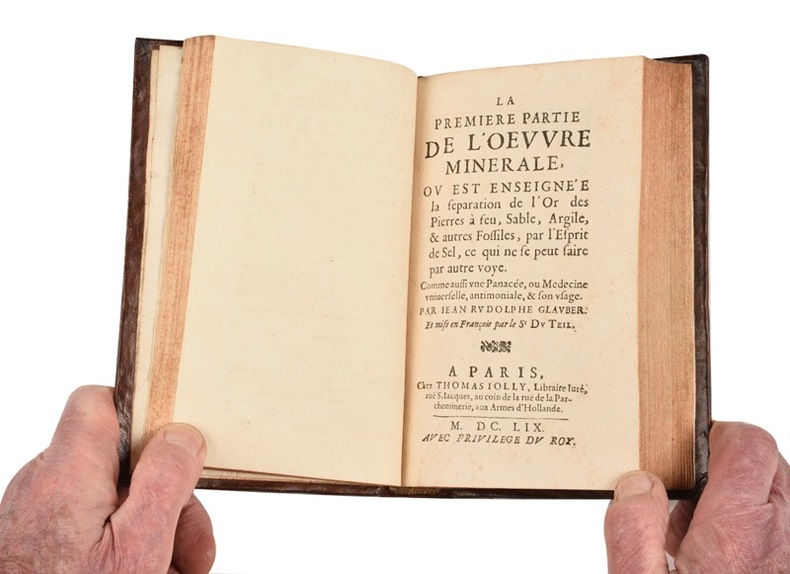
21548- Annotations sur l’appendix de la cinquiesme partie des “Fourneaux philosophiques”, où il est traitté de plusieurs secrets inconnus, et utiles. Mises en lumière, en faveur des incrédules et ignorans par Jean Rudolphe Glauber. Et traduites en françois par le Sr Du Teil. 62 pp., [1] f.bl. (Stanislas de Guaïta 1421-352)- L’Oeuvre minérale : La Première partie... ou est enseignée la séparation de l’or des pierres à feu, sable, argile, et autres fossiles, par l’esprit de sel, ce qui ne se peut faire par autre voye. Comme aussi une panacée, ou medecine universelle, antimoniale, et son usage. 64 pp.- L’Oeuvre minérale : La seconde partie... De la naissance et origine de tous les métaux et minéraux ; de quelle façon ils sont produits par les astres, sont composez d’eau et de terre, et reçoivent diverses formes. En faveur des curieux. 48 pp.- L’Oeuvre minérale : La troisième partie... ou commentaire sur le livre de Paracelse, appelé “le Ciel des Philosophes”, ou le livre des vexations, dans lequel sont enseignées les transmutations des métaux ; avec un appendix touchant la fonte, la séparation, et les autres opérations nécessaires. 111 pp., [1] bl.- La teinture de l’or ou le véritable or potable ; sa nature, et sa différence d’avec l’or potable, faux et sophistique. Sa préparation spargique et son usage dans la médecine. 22 pp., [1]f.bl. (Caillet 4588 - Stanislas de Guaïta 625)- Traité de la médecine universelle, ou le vray or potable. C’est à dire, une exacte description de la vraye médecine universelle, et de l’admirable vertu qu’elle exerce sur les végétaux, animaux et minéraux. Pour servir de clair flambeau au monde aveugle, luy enseignant le moyen de discerner le mensonge d’avec la vérité ; et de secourir les pauvres malades abandonnez. 61, [1] pp., [1] f.bl. (Stanislas de Guaïta 352 - Lenglet Du Fresnoy p.177)- La Consolation des navigants. Dans laquelle est enseigné à ceux qui voyagent sur mer un moyen de se garantir de la faim et de la soif, voire mesme des maladies qui leur pourraient survenir durant un long voyage. 64 pp. (E.O. trad. Caillet 4569 - Stanislas de Guaïta 352).
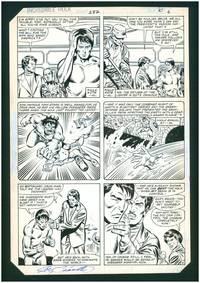
386461983. Original Art. Original comic art for page 6 of The Incredible Hulk #282. Pencil and ink on 10 x 16" art board. Featuring Bruce Banner Tony Stark Captain America and the Hulk smashing the Leader. Some whiteout and toning. Very good condition. unknown
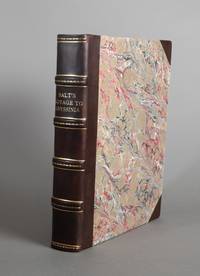
181421982London: F. C. and J. Rivington 1814. First edition and with the errata leaf. 37 maps charts views etc. including two vignettes and a very large multi-folding hand-coloured map of Abyssinia. Large 4to contemporary diced russia gilt decorated with double fillet lines and roll tooled borders on the covers raised bands with gilt decorations to the compartments of the spine gilt edged boards and turnovers marbled endleaves all edges marbled. xii 506 lxxv index pp. Rare in contemporary binding unrestored the hinges are cracking and could be refurbished quite well cords generally sound a few unobtrusive ex libris markings quite small in nature at the prelims plates and charts and maps in nice condition the text crisp and clean and sound. Salt was sent by the British government to Abyssinia to present gifts to the king report on the state of the country and cultivate relations with the tribes along the Red Sea coast. F. C. and J. Rivington hardcover
2 tomes en un volume in-4, T. 1: XX-38-124 p. et 29 pl. T. 2: VI-78-27 p. et 24 pl Veau marbré de l'époque, dos à 5 nerfs orné de caissons dorés et portant une pièce de titre en maroquin rouge 1754-1755, 1754-1755, in-4, 2 tomes en un volume in-4, T. 1: XX-38-124 p. et 29 pl. T. 2: VI-78-27 p. et 24 pl, Veau marbré de l'époque, dos à 5 nerfs orné de caissons dorés et portant une pièce de titre en maroquin rouge, Seconde édition, posthume et très augmentée, du premier traité français de microscopie. La première édition fut publiée en 1718. Louis Joblot (1645-1723), prolifique inventeur de microscopes, qui ne fut jamais fabricant, débuta ses recherches en microscopie et sur les organismes microscopiques à la suite des démonstrations de Huygens et d'Hartsoeker devant l'Académie des Sciences durant l'été 1678. La publication de 1718 forme donc l'aboutissement de 36 années de travail et d'étude. La seconde édition donne la prééminence, comme le souligne le nouveau titre, aux observations d'histoire naturelle qui se trouvent en tête de l'ensemble. Elles se composent des expérimentations et de résultats d'observation de 1718 servant à réfuter la théorie de la génération spontanée où, en outre, il reprend des observations sur les protozoaires qui avaient été faites précédemment par Leeuwenhoek ; et elles sont augmentées d'observations d'entomologie (pou, puce, mouche et moucheron), et, notamment, sur les cristaux de sel. La partie qui concerne la construction des microscopes forme ici le second volume. L'auteur y décrit l'utilité de ses 18 microscopes (microscopes à liqueurs, à tiges, à canon verre nommé "Tombeaux", un microscope monté d'une seule lentille, un très petit à deux verres, un porte-loupe, un microscope à trois verres convexes des deux côtés et des microscopes dits "universels"). Elle est augmentée de la description de deux nouveaux microscopes universels à plusieurs verres et de détails sur la "proportion des verres qui entrent dans [leur] composition". L'ouvrage est illustré de 53 planches gravées sur cuivre et de très belles vignettes dont l'une montre un observateur au microscope dans son cabinet scientifique. La plupart des planches représentent d'une part les microscopes et les accessoires utilisés par Joblot et, d'autre part, les "animaux" microscopiques qu'il avait observés dans les différents liquides analysés (vinaigre et infusions) et les insectes. On peut noter sur certaines planches des détails montrant les innovations apportées au XVIIIe siècle: vis à écrou pour la mise au point, cylindre à ressort pour glisser la lame du porte-objet, etc. Très bel exemplaire, grand de marges, dans son élégante reliure d'époque portant l'ex-libris imprimé de "R. Pillault". Un accroc à la coiffe de tête. Wellcome III, 356. Nissen 2114. DSB VII, 110
1969144659New York: Jerome Hellman Productions 1969. Draft script for the 1969 film. Copy belonging to the film's still photographer Ron Munkasci with his name in red manuscript ink at the top right corner of the title page.<br /> <br /> Based on the 1965 novel by James Leo Herlihy about an unlikely friendship between a would-be gigolo and an ailing con artist. Cornerstone film of the New Hollywood cinema nominated for seven Academy Awards winning Best Adapted Screenplay Best Director and Best Picture. <br /> <br /> Set in New York City shot on location in Miami Manhattan and Big Spring Texas. <br /> <br /> Dark blue titled wrappers noted as DRAFT SCREENPLAY at the bottom right and with the logo for JEROME HELLMAN PRODUCTIONS at bottom center. Title page present with credits for screenwriter Waldo Salt novelist James Leo Herlihy producer Jerome Hellman and director John Schlesinger noted as "A JEROME HELLMAN-JOHN SCHLESINGER PRODUCTION." 122 leaves with last page of text numbered 121. Mimeograph duplication rectos only. Pages Near Fine with some offsetting to the title page due to a newspaper clipping still present laid in wrapper Very Good plus.<br /> <br /> National Film Registry. Jerome Hellman Productions unknown
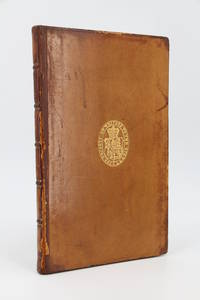
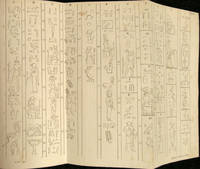
182586465London: A.J. Valpy 1825. Fine. A.J. Valpy London 1825 15.20 x 24 cm 1 volume relié First edition with seven folding plates engraved by Hallmandel after G. Schärf. Beige full calf binding spine with five raised bands framed in gilt gilt lettered morocco title label lengthwise stamped arms of the Society of Writers to the Signet in the center of the boards. Restored spine and corners brittle spine ends spalls and stains to boards. A very rare and important publication by the British Consul General in Egypt in 1815 Henry Salt 1780-1827involved in the excavation of several historical sites and the collection of numerous antiquities. The most remarkable of these is the colossal bust of Ramses II found at Thebes and housed in the British Museum which is said to have inspired Percy Shelley's ""Ozymandias"". Salt carefully reproduces and explains various inscriptions bearing the cartouches of Egyptian gods and pharaohs. He made valuable contributions to the understanding of hieroglyphics following Thomas Young's work on the Rosetta Stone and Jean-François Champollion's groundbreaking discoveries presented in 1822. Historiography even proved that he successfully translated some Egyptian names independently of Champollion's work. Provenance: bindings with the arms of the Society of Writers to the Signet Scottish sollicitors association founded in the late 16th century. Library shelf label glued to the flyleaf. A.J. Valpy hardcover
95427William Miller 1809. . Plate XII from Twenty-Four Views in St Helena The Cape India Ceylon The Red Sea Abyssinia and Egypt original hand-coloured aquatints 495 x 665 mm. Slight surface dirt c.f. Abbey Travel 515.<br /> <br /> William Miller, 1809. unknown
180941444London: William Miller 1809. Hand-coloured aquatint engraving by D. Havell after Henry Salt on wove paper watermark 'J Whatman'. A view of Lucknow showing the famous Asafi Mosque.<br/> <br/> Henry Salt artist traveller diplomat and collector of antiquities was born at Lichfield Staffordshire England on 14 June 1780. He was determined to become a portrait-painter and upon leaving school was taught drawing by Glover the watercolour-painter of Lichfield. In 1797 he went to London to study with Joseph Farington R.A. and then with John Hoppner R.A. in 1800. The turning point in his career was 3 June 1802 when Salt left London for an Eastern tour with George viscount Valentia afterwards Lord Mountnorris whom he accompanied as secretary and draughtsman. He visited India Sri Lanka and Abyssinia returning to England on 26 Oct. 1806. He made many drawings some of which served to illustrate Lord Valentia's Voyages and Travels to India published in 1809. The present image is from a work titled Twenty-four Views in St. Helena the Cape India Ceylon the Red Sea Abyssinia and Egypt published by William Miller with hand-coloured aquatints by D. Havell and J. Bluck from Salt's own drawings. The originals of all these drawings were retained by Lord Valentia who also retained the ownership of the copper plates after Salt's death. The format and style of presentation of the plates is similar to Thomas and William Daniell's great work Oriental Scenery 1795-1808 and displays great artistry by both Salt and his engravers. The Asafi Mosque is part of the larger Bara Imambara complex which was commissioned by Nawab Asaf-ud-Daula the fourth Nawab of Awadh in 1784 and was completed in 1791. The Asafi Mosque follows the Mughal architectural style characterized by grand arches domes and intricate designs. The mosque is a prominent example of the cultural and artistic heritage of the region during the Nawabi era.<br/> <br/> Abbey Travel II 515 no.3. William Miller unknown
18099205London: William Miller 1809. Hand-coloured aquatint engraving by J. Bluck after Henry Salt on wove paper. A lyrical South African view from the 'Roode Zand' Red Sand Pass inland from the Cape of Good Hope.<br/> <br/> Henry Salt artist traveller diplomat and collector of antiquities was born at Lichfield Staffordshire England 14 June 1780. He was destined to be a portrait-painter and on leaving school was taught drawing by Glover the watercolour-painter of Lichfield. In 1797 he went to London and became a pupil of Joseph Farington R.A. and in 1800 of John Hoppner R.A. The turning point in his career was 3 June 1802 when Salt left London for an eastern tour with George viscount Valentia afterwards Lord Mountnorris whom he accompanied as secretary and draughtsman. He visited the Cape India Sri Lanka and in 1805 Abyssinia returning to England on 26 Oct. 1806. He made many drawings some of which served to illustrate Lord Valentia's Voyages and Travels to India published in 1809. The present image is from a work titled Twenty-four Views in St. Helena the Cape India Ceylon the Red Sea Abyssinia and Egypt published by William Miller with hand-coloured aquatints by D. Havell and J. Bluck from Salt's own drawings. The originals of all these drawings were retained by Lord Valentia who also retained the ownership of the copper plates after Salt's death. The format and style of presentation of the plates is similar to Thomas and William Daniell's great work Oriental Scenery 1795-1808 and displays great artistry by both Salt and his engravers.<br/> <br/> Abbey Travel II 515 no.3. William Miller unknown
180941443London: William Miller 1809. Hand-coloured aquatint engraving by D. Havell after Henry Salt on wove paper watermark 'J Whatman'. An excellent view of Tamil Nadu including one of the great irrigation tanks: a true masterpiece of early technology.<br/> <br/> Henry Salt artist traveller diplomat and collector of antiquities was born at Lichfield Staffordshire England on 14 June 1780. He was determined to become a portrait-painter and upon leaving school was taught drawing by Glover the watercolour-painter of Lichfield. In 1797 he went to London to study with Joseph Farington R.A. and then with John Hoppner R.A. in 1800. The turning point in his career was 3 June 1802 when Salt left London for an Eastern tour with George viscount Valentia afterwards Lord Mountnorris whom he accompanied as secretary and draughtsman. He visited India Sri Lanka and Abyssinia returning to England on 26 Oct. 1806. He made many drawings some of which served to illustrate Lord Valentia's Voyages and Travels to India published in 1809. The present image is fromTwenty-four Views in St. Helena the Cape India Ceylon the Red Sea Abyssinia and Egypt published by William Miller with hand-coloured aquatints by D. Havell and J. Bluck from Salt's own drawings. The originals of all these drawings were retained by Lord Valentia who also retained the ownership of the copper plates after Salt's death. The format and style of presentation of the plates is similar to Thomas and William Daniell's great work Oriental Scenery 1795-1808 and the artistry displayed by both Salt and his engravers is in many cases more than a match for the Daniell's images. Salt visited Sri Lanka only a few years after the British had wretes power from the Dutch who had been the dominant western presence on the island from the middle of the 17th century until 1795.<br/> <br/> Abbey Travel II 515 no.13. William Miller unknown
180934489London: William Miller 1809. Hand-colored aquatint by Daniel Havell. Sheet: 21 1/4 x 29 inches. Mild bubbling in places. This view of Cairo from a hilltop near the Citadel shows Old Cairo with its walls domed buildings and minarets. Across the Nile in the hazy distance are the pyramids of Giza. Heny Salt later returned to Cairo as consul-general for the British. Henry Salt artist traveller diplomat and collector of antiquities was born at Lichfield Staffordshire England 14 June 1780. He was destined to be a portrait-painter and on leaving school was taught drawing by Glover the watercolour-painter of Lichfield. In 1797 he went to London and became a pupil of Joseph Farington R.A. and in 1800 of John Hoppner R.A. The turning point in his career was 3 June 1802 when Salt left London for an eastern tour with George viscount Valentia afterwards Lord Mountnorris whom he accompanied as secretary and draughtsman. He visited the Cape India Sri Lanka and in 1805 Abyssinia returning to England on 26 Oct. 1806. He made many drawings some of which served to illustrate Lord Valentia's Voyages and Travels to India published in 1809. The present image is from a work titled Twenty-four Views in St. Helena the Cape India Ceylon the Red Sea Abyssinia and Egypt published by William Miller with hand-coloured aquatints by D. Havell and J. Bluck from Salt's own drawings. The originals of all these drawings were retained by Lord Valentia who also retained the ownership of the copper plates after Salt's death. The format and style of presentation of the plates is similar to Thomas and William Daniell's great work Oriental Scenery 1795-1808 and displays great artistry by both Salt and his engravers.<br/> <br/> Abbey 515. William Miller unknown
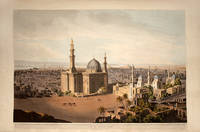
180934488London: William Miller 1809. Hand-colored aquatint by R. Havell. Sheet size: 21 1/2 x 29 3/4 inches. In this large panoramic view Salt demonstrates the appropriateness of the sobriquet "City of a Thousand Minarets". In the foreground is the great Sultan Hussan Mosque one of the largest mosques in Cairo. As we look through the streets towards the distant Nile we see many neighborhood mosques and holy places. Henry Salt artist traveller diplomat and collector of antiquities was born at Lichfield Staffordshire England 14 June 1780. He was destined to be a portrait-painter and on leaving school was taught drawing by Glover the watercolour-painter of Lichfield. In 1797 he went to London and became a pupil of Joseph Farington R.A. and in 1800 of John Hoppner R.A. The turning point in his career was 3 June 1802 when Salt left London for an eastern tour with George viscount Valentia afterwards Lord Mountnorris whom he accompanied as secretary and draughtsman. He visited the Cape India Sri Lanka and in 1805 Abyssinia returning to England on 26 Oct. 1806. He made many drawings some of which served to illustrate Lord Valentia's Voyages and Travels to India published in 1809. The present image is from a work titled Twenty-four Views in St. Helena the Cape India Ceylon the Red Sea Abyssinia and Egypt published by William Miller with hand-coloured aquatints by D. Havell and J. Bluck from Salt's own drawings. The originals of all these drawings were retained by Lord Valentia who also retained the ownership of the copper plates after Salt's death. The format and style of presentation of the plates is similar to Thomas and William Daniell's great work Oriental Scenery 1795-1808 and displays great artistry by both Salt and his engravers. William Miller unknown
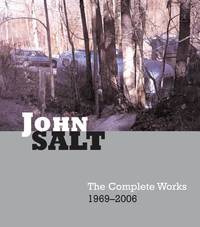
200794516Philip Wilson Publishers. New. 2007. Hardcover. 0856676349 . FREE UPGRADE to Courier/Priority Shipping Upon Request - IN STOCK AND IMMEDIATELY AVAILABLE FOR SHIPMENT - Flawless copy brand new pristine never opened -- 192 pages; 130 color illustrations. Publisher description: John Salt's exquisite and intriguing evocations of abandoned cars and dilapidated trailers often depicted in a rural setting expand our definition of landscape and place him among the foremost realist painters of his generation. A British artist who spent two decades living and painting in the United States he came to prominence in the early 1970s as a leading and innovative Photorealist. Catalogue Raisonne Catalog Raisonné Complete Works Life and Work Raisonnee Philip Wilson Publishers hardcover
124308London F. C. and J. Rivington 1814. 4to. xi i 4 506 pp. lxxv i pp. index. 37 plates and maps including one large engraved hand-coloured map of Abyssinia and two vignettes. Modern half calf. Gilt spine. Lacking half-title. Occasional light foxing. . unknown
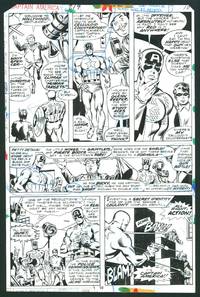
405571977. Original Art. Original comic art for page 10 of Captain America #219. Pencil and ink on 10.5 x 16.5" art board. Captain America meets. Captain America! when Bucky and Cap are assigned with safeguarding Democracy Pictures's serial "The Adventures of Captain America" against possible sabotage attempts by the Axis. A striking piece showcasing Captain America -- or his actor double -- in every panel and Bucky in four panels. unknown
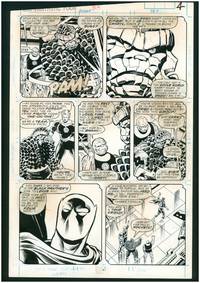
386561988. Original Art. Original comic art for page 4 of Fantastic Four #313. Pencil and ink on 11 x 16.5" art board. Featuring the Thing Johnny Storm and Black Panther. Some whiteout and toning. Very good condition. unknown
1814314823London: F.C. and J. Rivington 1814. First edition. With 28 engraved plates on 27 leaves 7 engraved maps and charts on 6 sheets including 4 folding and 1 hand-colored and 2 vignettes. xi 5 506 lxxv pp. 4to. Contemporary brown russia neatly rebacked. Fine copy. First edition. With 28 engraved plates on 27 leaves 7 engraved maps and charts on 6 sheets including 4 folding and 1 hand-colored and 2 vignettes. xi 5 506 lxxv pp. 4to. A fine copy of this important work by Salt on his two years journey to Abyssinia. "On 2 March 1809 Salt sailed on a mission from the British government to Abyssinia to carry presents to the king and report on the state of the country. Owing to factious unrest he was prevented from going to the king at Gondar and was obliged to deliver the presents instead to the ras of Tigré. While in Abyssinia he made many observations on the geography the customs of the people and the flora and fauna. He brought back many specimens including a previously unknown dik-dik . In 1812 he was elected one of the very few honorary members of the African Association in acknowledgement of information he had procured in its interest. In 1814 he published A Voyage to Abyssinia which was received with some acclaim" ODNB. Salt was subsequently appointed consul-general in Egypt and played an important role in fostering Egyptology financing the excavations of Belzonia Caviglia and d'Athanasi. Blackmer 1479; Czech African p. 141; Fumagalli 139; Gay 2683 F.C. and J. Rivington unknown
H299Weimar Industrie-Comptoir .1811 Bibliothek der neuesten und wichtigsten Reisebeschreibungen. Bd. 44/45. X 622 S. u. 2 Bl. 706 S. mit 2 mehrfach gefalt. Kupferkarten. Pappb‰nde der Zeit. mit R¸ckenschild leicht berieben sonst gutes sauberes Exemplar. Erste deutsche Ausgabe vollst‰ndig mit den beiden meist fehlenden Karten die wegen Krankheit des Stechers nachgeliefert werden mussten. - Der ber¸hmte Altertumsforscher Salt begleitete Viscount Valentia sp‰ter Lord Mountnorris als Sekret‰r auf seiner Reise nach Ost- und Nordafrika. Das Werk enth‰lt viele Nachrichten ¸ber Land und Leute politische Entwicklungen in dieser Zeit der napoleonischen Kriege sowie Schilderungen von Altert¸mern f¸r die sich besonders Salt interessierte. - Engelmann 102 Kainbacher 486. - Sehr selten vollst‰ndig. unknown
160754N.p.: N.p. 1973. Draft script for the 1973 film. Copy belonging to uncredited apprentice editor Harvey Rosenstock with his name in manuscript ink on the verso of the front wrapper and the top of the first page. With a memo on "Serpico" letterhead noting script adjustments laid in.<br /> <br /> Based on Peter Maas' 1973 biography "Serpico: The Cop Who Defied the System" about the titular plainclothes officer who exposes corruption in the New York City Police Department only to face harassment and threats from his fellow officers. Nominated for two Academy Awards.<br /> <br /> Set and shot on location in New York. <br /> <br /> Black titled Studio Duplicating Service wrappers. 130 pink revision leaves dated 6/18/73 with last page of text numbered 129. Mimeograph duplication rectos only. Pages Near Fine wrapper Very Good plus bound with two gold screw brads.<br /> <br /> Eureka MOC 79. Spicer US Neo-Noir. N.p. unknown
2007C94516Philip Wilson Publishers. As New. 2007. Hardcover. 0856676349 . FREE UPGRADE to Courier/Priority Shipping Upon Request - IN STOCK AND IMMEDIATELY AVAILABLE FOR SHIPMENT - Flawless copy brand new pristine never opened -- 192 pages; 130 color illustrations. Publisher description: John Salt's exquisite and intriguing evocations of abandoned cars and dilapidated trailers often depicted in a rural setting expand our definition of landscape and place him among the foremost realist painters of his generation. A British artist who spent two decades living and painting in the United States he came to prominence in the early 1970s as a leading and innovative Photorealist. Catalogue Raisonne Catalog Raisonné Complete Works Life and Work Raisonnee -- with a bonus offer-- - May be EITHER: out of print OOP and extremely rare in this pristine condition; signed by author or contributor; or a first or special edition; inquire for details . Philip Wilson Publishers hardcover
20142081502111904566China/Salt Industry History Research and Editing Department 2014. Soft Cover. Fine. Number of books: 10 joint editions China/Salt Industry History Research and Editing Department paperback
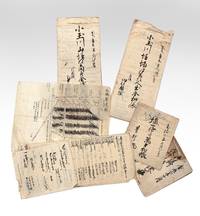
11058Two formats 190 x 152 mm. & 150 x 365 mm. Oguni machi Kotamagawa å°å›½ç”ºå°çŽ‰å·: 1865-67.<br /> <BR> <BR> This archive describes the manufacture and regulation of yamajio mountain salt in the town of Oguni machi on the Tama River in the mountainous area of Yamagata Prefecture north of Niigata. The onsen springs of the town are rich in minerals and were used to manufacture salt for local and regional inhabitants. Today there are very few producers of mountain salt due to the laborious process but it is highly valued by connoisseurs of salt for its delicate taste.<br /> <BR> <BR> Our archive consists of:<br /> <BR> <BR> 1. Manuscript drawing 243 x 327 mm. showing the process of spraying the water on well-ventilated racks covered with branches of the shiba 柴 tree. This allowed the mineral-rich water to slowly drip into a large deep basin. The gathered water would then be boiled down leaving salt crystals.<br /> <BR> <BR> 2 & 3. The first two notebooks 10 & 5 leaves dated February and August 1865 contain details of production of the salt and names of those involved.<br /> <BR> <BR> 4. This notebook 11 leaves dated February 1865 is entirely devoted to the business of making and selling salt with records of quantities sellers and buyers prices received etc;<br /> <BR> <BR> 5. A document 14 leaves from the local magistrate’s office dated February 1865 gives the names of salt manufacturers.<br /> <BR> <BR> 6. A notebook 5 leaves produced by the local magistrate’s office regarding the sale and distribution of salt to many wholesalers in the city of Yonezawa with their seals dated October 1866. Somewhat stained but very legible.<br /> <BR> <BR> 7. Dated 1867 this notebook 8 leaves describes in great detail the process of saltmaking with descriptions of tools and other equipment techniques etc. unknown
182729696Paris: Bobee et Hingray 1827. Rare the first French edition one of only 300 copies printed. With 5 folding lithographic plates lacking folding frontis. 8vo in a handsome French binding of quarter black morocco over marbled boards the spine with blind tooled compartments between gilt ruled raised bands one compartment finely gilt lettered additional gilt decorations at both tips. 4 ix 70 pp. A fine and handsome copy of this rare work as is always the case there is some light foxing and general toning due to the paper stock used. The binding is in very fine condition. THE RARE FIRST FRENCH EDITION OF SALT'S Essay on Dr. Young's and Champollion's System of deciphering the Hieroglyphics of ancient Egypt. Salt was appointed British Consul General of Egypt in 1816. Once set up in Cairo he began to work on his mission of securing antiquities and artifacts for the British Museum. Salt was able to foster beneficial relations between the British government and Pasha Mohammed Ali negotiating deals concerning trade and territorial rights. He also sponsored the excavations of Thebes and Abu Simbel personally carrying out significant archaeological research at the pyramids of Giza and the Sphinx. He earned praise from Jean-François Champollion for his ability to decipher hieroglyphs. Bobee et Hingray hardcover