MESUE the younger (MASAWAIH AL-MARDINI).Biblio.com
116 résultats
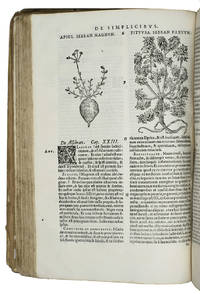
1581ABC_46255Venice: Lucantonio Giunta 1581. Near-contemporary vellum black morocco spine label with title in gold. Folio 23 x 34 cm. With 39 woodcut illustrations in the text. 2 parts in 1 volume. Second illustrated edition the first with the commentary of Costaeus of the collected works of the Arabic physician Mesue the younger also known as Masawaih al-Mardini in Latin with commentaries by Mondino de Liuzzi Christoph de Honestis Jacobus Sylvius Giovanni Mardi and Johannes Costaeus. It includes the "Canones universalis" dealing with treatment regimens; the second part "De simplicibus" about the properties of various pharmaceutical drugs; and the Grabadin "the most popular compendium of drugs in medieval Europe and . used everywhere in their preparation" Garrison. "The esteem in which these works were held is shown by the fact that a Latin translation of both was one of the first medical works to be printed Venice 1471" ibid.With the bookplate of the American botanist Edward Sandford Burgess 1855-1928 on the front paste-down. Also with the bookplate of the Horticultural Society of New York on the first free endpaper identifying this volume as part of the bequest of the American attorney and plant collector Kenneth Kent MacKenzie 1877-1934. Binding stained rubbed and chipped at the extremities. Interior shows occasional brown stains modern endpapers a little browned and brittle but overall in good condition.l Adams Y10; BM STC Italian p. 739; Durling 3131; EDIT 16 CNCE 27626. Lucantonio Giunta, hardcover
157963961Frankfort & Wechelus: Francofurti Ad Moenum Apud and Wechelum 1579. Around 1961 a previous owner writes "According to the recent national archives survey this is the second oldest book in the State of Florida." Ask for scanned images of this rare volume and the laid-in notes of early researcher. "THIS CONSISTS OF ORATIONS AND COMMENTS OF FAZELLUS or FAZELUS WHO WAS PROFESSOR OF THE CUSTOMS OF THE SICILIAR AND SACRED HERITAGE OF THE PREACHER.". First Edition 1st Edition. Hardback LEATHERBOUND. Good Used Antique Condition. 13 3/4 Inches X 8 1/5 Inches X 2 1/4 Inches. Francofurti Ad Moenum Apud and Wechelum Paperback
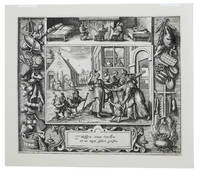
1590ABC_46070Antwerp 1590. Folio 7 of 8 plates trimmed. Adriaen Collaert 7 plates with the Acts of Mercy & Johannes Galle the Last Judgement Loose prints. 8 engravings ca. 17.5 x 20.5 cm on laid paper by Crispijn de Passe I the elder after Maarten de Vos with the central scene framed by an exquisite ornamental border showing crafts tools and scenes relating to the subject. All engravings captioned with engraved Latin text in a cartouche below the images. Complete series of the Acts of Mercy including the plate of the Last Judgement engraved by the engraver illustrator and publisher Crispijn de Passe I ca. 1564-1637 after Maarten de Vos 1532-1603 one of the most prolific and influential print designers of his generation. They were first published by the engraver Crispijn de Passe the elder I and subsequently by Adriaen Collaert Theodoor Galle and Johannes Galle. Our set shows the 7 prints of the Acts of Mercy in their second state of 4 by Collaert with his monogram "AC" in the plates. The eighth print showing the Last Judgement is in its third state published by Johannes Galle. The acts of mercy depicts feeding the hungry giving drink to the thirsty clothing the naked in a dress shop housing the homeless tending the sick visiting prisoners and burying the dead.One print feeding the hungry untrimmed. The 7 trimmed prints are reinforced with two small white paper slips in the head margin the Last Judgement very slightly toned and with a few spots. Otherwise in good condition with very sharp and dark impressions of the plates. The complete series of the Acts of Mercy including the Last Judgement.l Hollstein XV 471-477; New Hollstein Maarten de Vos 613.3; 614-620.2. ABE CAT Art History ABE CAT Bibles Sermons & Psalmbooks hardcover
151969853Princeton:: Princeton Tiger 1915-1916. framed to an overall size of 15-1/4 x 18-1/4 inches. Very slightest of silvering to the outside areas of the image; otherwise very fine. . Image size 9-3/4 x 13 inches . The sitters are named by last name only on the verso in ms. Signed in the image by the photographer: initial illegible White N.Y." Princeton Tiger, unknown
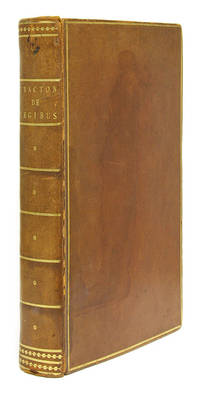
1569673671569. London 1569. First edition. Folio. London 1569. First edition. Folio. PMM 89: "The Crown and Flower of English Medieval Jurisprudence" Bracton Henry de d. 1268. De Legibus & Consuetudinibus Angliae Libri Quinq; In Varios Tractatus Distincti ad Diversorum et Vetustissimorum Codicum Collationem Ingenti Cura Nunc Primum Typis Vulgati; Quorum Quid Cuiq; Insit Proxima Pagina Demonstrabit. London: Apud Richardum Tottellum An. do. 1569. With imprimatur "Cum priuilegio" at foot of title. xvi 172 175-444 ff. Complete. Folio 11-1/4" x 7-3/4"; 28.6 x 19.7 cm. Nineteenth-century diced calf gilt rules to boards gilt fillets ornaments and title to spine gilt rules to board edges gilt inside rules marbled endpapers ribbon marker. Light rubbing to boards faint dampstain to front board moderate rubbing to extremities front joint starting at head rear joint cracked corners bumped and somewhat worn armorial bookplate "Ex Libris Munden" to front pastedown. Attractive large woodcut decorated initials. Light toning to text somewhat heavier in places light foxing and finger smudges to some leaves some fading to text of ff. 1 and 2. A handsome copy of a landmark work with an interesting provenance perserved in a navy blue clamshell box. $13000. First edition. Written between 1250 and 1256 De Legibus et Consuetudinibus Angliae The Laws and Customs of England is the first treatise on English law. A systematic work it emphasizes the separation of procedural and substantive matters and also cites cases as sources of at least intellectual if not formal authority. Both the principles formulated in this work and its use of precedents determined the development of English law and established the method adopted by Littleton and Coke. In Maitland's words it is "the crown and flower of English medieval jurisprudence" and "by far the greatest of our medieval law books." This copy belonged to Arthur Henry Holland-Hibbert 3rd Viscount Knutsford 1855-1935 of Munden House Hertfordshire. He served as both a justice of the peace and High Sheriff of Hertfordshire. His bookplate was engraved by Sir Henry Badeley who designed bookplates for a number of important clients including the House of Lords Library. Maitland Collected Papers II:43. Dauchy et al. Eds. The Formation and Transmission of Western Legal Culture: 150 Book. unknown
1562376729Frankfurt am Main: David Zöpfel 1562. Woodcut title vignette 43 woodcut illustrations some repeated. Title page in red and black. 8 300 leaves. Small 4to 7-3/4 x 5-7/8 inches. Late nineteenth century brown crushed morocco gilt by Frances Bedford marbled endpapers gilt edges. Provenance: William Title inscription dated 1856 on front free endpaper; C. S. Ascherson bookplate and inscription to; Edward Ascherson bookplate. Woodcut title vignette 43 woodcut illustrations some repeated. Title page in red and black. 8 300 leaves. Small 4to 7-3/4 x 5-7/8 inches. The first of two Frankfurt printings by David Zöpfel that year using the same woodcuts. The text is descended from the Low German version Reynke de Vos first printed at Lübeck in 1498. <br /> <br /> Among the most widely adapted of the beast fables the tales of Reynard the Fox originated in the 12th and 13th centuries with early versions in French Dutch Latin and German being notable. One of the most important secular literary traditions of the Middle Ages Reynard the Fox is at its essence biting satire and parody. The character of Reynard an anthropomorphic fox and trickster has since become almost an archetype in the literatures of many languages. "The supreme 'anti-hero' of medieval fiction" Cambridge Guide to Children's Books in English.<br /> <br /> This copy from the renowned library of the eminent British architect and book collector Sir William Tite 1798-1873 whose sale at Sotheby's in May-June 1874 took sixteen days certainly one of the greatest collections of the time. [David Zöpfel] unknown
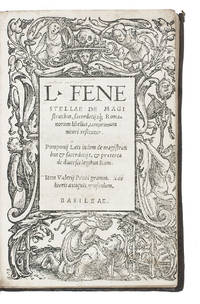
15236849Basel: colophon: Valentino Curio 1523. Contemporary panel-stamped calf sewn on 4 supports each board with the same 3 panel stamps: 2 virtually identical panels 76 x 52 mm with the foot of the panels toward the spine with 6 animals in 2 grape vines the animals from head to foot in the left vine: a monkey dog and wyvern 2-legged dragon; and in the right vine: a squirrel hare and lion in a border of a diaper of quatrefoils in lozenges the two separated by a small panel stamp 12 x 75 mm with a peacock right side up with its head toward the right but turned back and pecking at the ground paste-downs made from a leaf from an Aristotle manuscript on vellum with a fragment of another manuscript in a bastarda script under it. 8vo 16 x 10.5 cm. Ad 1: With the general title in a woodcut border with a woman mounting a man as if he were a horse a head on a stake and other grotesque or satirical figures Curios large architectural woodcut device on the otherwise blank final page with a shield held by 4 putti bearing a hand emerging from a cloud painting or writing on a tablet with what appears to be a brush 4 woodcut decorated initials 2 series: roman inscriptional capitals with pictorial backgrounds and a vine-leaf ornament Vervliet 7. Ad 2: With 2 woodcut decorated initials. Ad 3: With 3 woodcut decorated initials 2 series and 2 different vine-leaf ornaments Vervliet 7 & 8. All three editions set in italic type with upright capitals ad 2 with equally extensive passages in roman. 3 works in 1 volume. Including with a drop-title: POMPONIO LETO Giulio. De Romanorum. magistratibus .With:2 LUCIANUS OF SAMOSATA. Complures . dialogi à Desiderio Erasmo Roterodamo . in Latinum conversi & à Nicolao Buscoducensi illustrati additis Fabularum & difficilium vocabulorum explanationibus.Colophon: Antwerp Michael Hillen van Hoochstraten 1524.3 MOSELLANUS Petrus Peter SCHADE. Paedologia . in puerorum usum conscripta & aucta. Dialogi XXXVII. Dialogi pueriles Christophori Hegendorphini. XII. .Including with a drop-title: HEGENDORF Christoph. Dialogi pueriles . XII. .Colophon: Antwerp Michael Hillen van Hoochstraten 1523. Three rare editions of humanist works in a contemporary panel-stamped binding all well produced and the panel stamps finely rendered. Fogelmark p. 33 calls panel-stamps with gothic animals in foliage "the Flemish panel stamp par préférence". We have not found an exact match in the literature. The impressions of the panels are very crisp and clear especially that on the lower half of the front board.Ad 1: First Basel edition of an account of the sacerdotium priesthood and administration in ancient Rome written by the Florentine humanist Andrea Domenico Fiocco d. 1452 assuming the name of a first century Roman writer Lucius Fenestella. It is followed by a work on the same subject by the Italian humanist Giulio Pomponio Leto 1428-1498 and a list of abbreviations by Valerius Probus. While these works by Fiocco and Leto had been published together since 1510 the present edition introduces a new form that seems to have become the standard followed by others.Ad 2: Rare Antwerp edition of satirical dialogues by the 2nd-century rhetorician Lucianus of Samosata now in Turkey near the Syrian border often simply called Lucian in English. They come from his Dialogues of the gods and Dialogues of the dead. The present translation from the Greek by Erasmus first appeared at Louvain in 1512. Only one other copy of the present edition is known.Ad 3: Rare early Antwerp edition of a very popular pedagogical work by the German humanist and professor at Leipzig Peter Schade better known as Petrus Mosellanus 1493-1524. The present edition includes as usual the dialogues for children by the German Hellenist Christoph Hegendorf 1500-1540. Only one other copy of the present edition is known.With several early owners' and other inscriptions and an occasional manuscript note or underlining in the text. The title page of ad 1 with an owner's inscription removed and about a millimetre shaved from the fore-edge of the woodcut border a small worm hole in the first 5 leaves and some mostly marginal water stains not significant outside the last 8 leaves: still in good condition. Recased with the four corners of each board and the head and foot of the spine restored and a few small wormholes and cracks in the calfskin of the boards slightly affecting the panel stamps but nearly all of each of the 6 panel impressions survives in very good condition. Three humanist works in Latin two in extremely rare Antwerp editions with finely executed contemporary panel stamps.l Ad 1: Adams F597; BMC STC German p. 300; Hieronymus Oberrhein. Buchillustr. 377c; USTC 671401; VD16 F1641; ad 2: Netherlandish books 19680 1 copy; Nijhoff & Kronenberg 1401 same copy; USTC 437231 same copy; not in Adams; BMC STC Dutch; UniCat; ad 3: Netherlandish books 21706 1 copy; USTC 404733 same copy; not in Adams; BMC STC Dutch; Buisson; EOL www.erasmus.org; Nijhoff & Kronenberg; UniCat; the main panel stamps not in Fogelmark; Goldschmidt; Indestege "De boekband in de Zuidelijke Nederlanden ." in De Gulden Passer XXXIV 1956 or the addendum in XXXV 1957; Oldham; Weale. (colophon:) Valentino Curio, hardcover
15695032541569. Book. A lengthy series of royal edicts / decrees / writs produced by the court under Philippe's close scrutiny in 1569 regarding financial and other obligations on the part of the persons in the area of Castro del Rio and elsewhere. 49 vellum leaves 98pp of manuscript 4 blank pages. The last page of which bears the date 18 November 1569 and the elaborate signatures and marks of the King and a number of his courtiers. Each page of the text bears 2 flourishes ie initials likely by the King and by the person responsible for the production of the document. In the original leather covers much rubbing and wear with remnants of the binding ribbons but the document still well-bound and with we think the original tri-coloured spine-cord binding the text to the cover. The first page with ornate decoration and illustrations in ink embellished with gold detailing and flourishes. Exquisite calligraphy throughout on well-preserved vellum. No seals present. 14" x 10". hardcover
158857770Kiøbenhaffn, (Matz Vingaard), (1588-)89. Folio. (39 x 27 cm.). Samtidigt hellæderbind i brunt kalveskind over svært træ og med kanter i smig. Lettere ophøjede bind på ryg. Håndsyede kapitælbånd. Lille hak i skindet på nederste rygfelt. Med de 4 originale hængselsbeslag i støbt messing bevarede, men den ene strop fornyet og den anden mangler. Permerne har begge blindtrykte arabesker, i midterfeltet en stor arabesk og i hjørner og kanter 6 pyramideformede arabesker, som alle er med en blindtrykt krone i pyramidens top. Permerne har mindre messingstifter med store hoveder til beskyttelse af bindet ved opslag. Marmoreret snit. Bindet er ganske velbevaret med kun lidt kantslid og let slid på de ophøjede rygbind. (22),353(i.e.354),226,159 blade. Komplet, men uden de 3 blanke blade. Træskåret titelblad med tekst trykt i rødt i midterfeltet. Titelbladsvarianten med kongens kobberstukne portræt (af Goltzius) opklæbet på bagsiden (en del eksemplarer udkom uden portrættet). Blad 2 med rigsvåbnet, bladet er kantrepareret. 2 træskårne deltitelblade. Registerbladene med svag skjold i ydre marginer. De sidste 35 blade delvist omkantede, for det meste i ydre marginer. Ganske få spredte brunpletter. Iøvrigt ganske lette brugsspor. Et udmærket velbevaret og komplet eksemplar (bortset fra de 3 blanke).På forreste friblad er anført lidt af eksemplarets ejerhistorie fra 1819, - erhvervet af Mikkel Johannesson Fladebøe som her delvist klausulerer dens ejerskab til fremtidige ejere af gården (Fladebøe ?). Senere synes den overgået til andre i slægten bosat i U.S.A. (Olaf Albertsen, Axel Albertsen, Stanley Albertsen, Sidney Albertsen). Folio. (39 x 27 cm.). Contemporary brown full calf over heavy wooden boards with oblique edges. Sloghtly raised bands to spine. Hand-stitched capital bands. A small notch to the leather of bottom compartment of spine. With the four original brass clasps preserved, but one strap has been renewed and the other is missing. Boards with large blindstamped centre-arabesque and six pyramid shaped arabesques to corners and edges, all with a blindstamped crown on top. Large-headed bras spins to boards, to protect the boards when open. Marbled edges. A bit of wear to edges and light wear to the raised bands. (22), 353(i.e.354), 226, 159 ff. Complete, save for the three blank leaves. Woodcut title-page with centre-text printed in red. The title-page variant with the engraved portrait of the king (by Goltzius) mounted on verso. Several copies were issued without portrait, and some were issued, as here, with the title-page mounted on verso. F. 2 with the royal arms, restored at edges. Two woodcut helf-titles. The index-leaves with a vague damp stain to the outer margins. The last 35 leaves have been partly re-edged, mostly at the very outer margins. A bit of light scattered brownspotting. Light signs of wear. An overall well preserved copy in- as well as externally. Front free end-paper with handwritten notes on provenance from 1819 onward – bought by Mikkel Johannesson Fladebøe, who partly clauses the ownership of the copy to the future owners of the estate (Fladebøe?). It seems to have then passed to other generations of the same lineage located in The United States (Olaf Albertsen, Axel Albertsen, Stanley Albertsen, Sidney Albertsen).
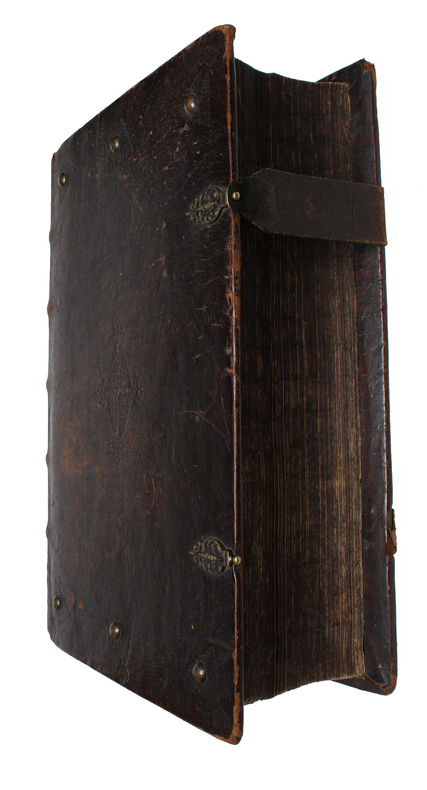
158857770Kiøbenhaffn Matz Vingaard 1588-89. Folio. 39 x 27 cm. Samtidigt hellæderbind i brunt kalveskind over svært træ og med kanter i smig. Lettere ophøjede bind på ryg. Håndsyede kapitælbånd. Lille hak i skindet på nederste rygfelt. Med de 4 originale hængselsbeslag i støbt messing bevarede men den ene strop fornyet og den anden mangler. Permerne har begge blindtrykte arabesker i midterfeltet en stor arabesk og i hjørner og kanter 6 pyramideformede arabesker som alle er med en blindtrykt krone i pyramidens top. Permerne har mindre messingstifter med store hoveder til beskyttelse af bindet ved opslag. Marmoreret snit. Bindet er ganske velbevaret med kun lidt kantslid og let slid på de ophøjede rygbind. 22353i.e.354226159 blade. Komplet men uden de 3 blanke blade. Træskåret titelblad med tekst trykt i rødt i midterfeltet. Titelbladsvarianten med kongens kobberstukne portræt af Goltzius opklæbet på bagsiden en del eksemplarer udkom uden portrættet. Blad 2 med rigsvåbnet bladet er kantrepareret. 2 træskårne deltitelblade. Registerbladene med svag skjold i ydre marginer. De sidste 35 blade delvist omkantede for det meste i ydre marginer. Ganske få spredte brunpletter. Iøvrigt ganske lette brugsspor. Et udmærket velbevaret og komplet eksemplar bortset fra de 3 blanke.På forreste friblad er anført lidt af eksemplarets ejerhistorie fra 1819 - erhvervet af Mikkel Johannesson Fladebøe som her delvist klausulerer dens ejerskab til fremtidige ejere af gården Fladebøe . Senere synes den overgået til andre i slægten bosat i U.S.A. Olaf Albertsen Axel Albertsen Stanley Albertsen Sidney Albertsen. Folio. 39 x 27 cm. Contemporary brown full calf over heavy wooden boards with oblique edges. Sloghtly raised bands to spine. Hand-stitched capital bands. A small notch to the leather of bottom compartment of spine. With the four original brass clasps preserved but one strap has been renewed and the other is missing. Boards with large blindstamped centre-arabesque and six pyramid shaped arabesques to corners and edges all with a blindstamped crown on top. Large-headed bras spins to boards to protect the boards when open. Marbled edges. A bit of wear to edges and light wear to the raised bands. 22 353i.e.354 226 159 ff. Complete save for the three blank leaves. Woodcut title-page with centre-text printed in red. The title-page variant with the engraved portrait of the king by Goltzius mounted on verso. Several copies were issued without portrait and some were issued as here with the title-page mounted on verso. F. 2 with the royal arms restored at edges. Two woodcut helf-titles. The index-leaves with a vague damp stain to the outer margins. The last 35 leaves have been partly re-edged mostly at the very outer margins. A bit of light scattered brownspotting. Light signs of wear. An overall well preserved copy in- as well as externally. Front free end-paper with handwritten notes on provenance from 1819 onward – bought by Mikkel Johannesson Fladebøe who partly clauses the ownership of the copy to the future owners of the estate Fladebøe. It seems to have then passed to other generations of the same lineage located in The United States Olaf Albertsen Axel Albertsen Stanley Albertsen Sidney Albertsen. <br/><br/><em>The magnificent first printing of the second Danish-Norwegian Bible in folio. This the second Danish Bible in folio is also the first to be printed by a Dane. The scarce and famous "Frederik II-Bible" constitutes the magnum opus of the famed book printer Mads Vingaard "and the most extensive work of printing undertaken in Denmark during the sixteenth century. The book is profusely illustrated with woodcuts copied from a german Bible issued by Sigmund Feyerabend in Frankfurt a. M. 1560. The original woodcuts were made by the artist and craftsman Virgil Solis. Wide woodcut borders together with pictures using themes from the Scriptures surround the title pages and the illustrations. On the reverse of the first title page many copies have pasted in a portrait of Frederich II engraved by the Dutch artist Hendrick Goltzius. However this portrait may also be found on a separate leaf." Thesaurus I.Lauritz Nielsen 405. - Thesaurus I 129. - Birkelund 34. </em> hardcover
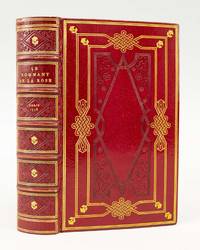
1538ST14933<p>Paris: Jehan Masse Jean Macé 1538. Fourth Edition. 182 x 91 mm. 6 3/8 x 3 3/4". 8 p.l. ccciii 1 blank leaves.Edited by Clément Marot. <br />ELEGANT SCARLET MOROCCO BY LORTIC stamp-signed on front turn-in covers tooled in gilt and blind in a Grolieresque strapwork design raised bands spine compartments with central gilt rose surrounded by blind tooling gilt titling turn-ins richly gilt marbled endpapers all edges gilt. With title page vignette and 49 impressions of 26 CHARMING WOODCUTS in the text. Front pastedown with engraved bookplate of P. Grandsire. Brunet III 1175; Bourdillon "Early Editions of the Roman de la Rose" the "S" version pp. 62-63. ◆Leaves lightly washed and pressed following the bibliophilic fashion at the time of binding occasional mild browning or small marginal stains but still A LOVELY COPY clean and still crisp IN A SPARKLING BINDING.<br /><br />Beautifully bound this is a most attractive copy of the last early edition of this classic of courtly love perhaps the most influential work in Medieval French literature. An allegorical love poem that unfolds as a dream vision the "Romance of the Rose" is the work of two authors Guillaume de Lorris who composed the first 4000 or so lines around 1230 and Jean de Meun who contributed an additional 18000 lines 40 years later. Our version was edited by the poet Clément Marot 1496-1544 to make the language more accessible to 16th century French readers and his efforts contributed to a renewed popularity for the tale. Marot did four recensions of the text; this is the final one. After our printing no other edition appeared until 1735. According to Bourdillon the woodcuts here are copied from the "very pretty" series in the 1529 edition. The scenes are impressive in the level of detail especially considering their diminutive size. Pierre Marcellin Lortic 1822-92 was one of the great binders of 19th century Paris known for his superb interpretations of traditional styles as in the present binding. According to Flety "at once artisan and artiste intelligent and conscientious an expert and a lover of his metier he knew how to give his work the finish the brilliance that very few practitioners of his time could attain." Our copy comes from the library of French bibliophile Paul Grandsire of Nogenten-Bassigny Haute-Marne whose notable collection of French imprints from the 15th to the 18th centuries was sold in 1930. All early versions of the "Romance of the Rose" are sought after and this is especially true of well-preserved copies of those editions with charming illustrations and in fine bindings favored by discriminating bibliophiles.</p> Jehan Masse [Jean Macé]
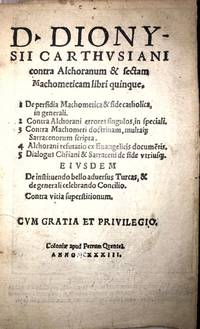
15331027Coloniae Köln: apud Peter Quentel 1533. First edition. In later gilt burgundy maroquin. Gilt floral ornaments and title on spine. Marbled endpapers. Gilt edges. Green silk bookmark. Two leaves misbound: Oov–vi after Qqiiii. Pages trimmed that occasionally effects the printed marginals and page headers. Two wormholes effects the upper part of the last four signatures slightly the text as well partly restored with old paper. Otherwise clean. Engraved bookplate and printed bibliographic reference on inner front panel. Collection vignette on front and rear endpapers. Collection inscription and stamp on additional endpaper. Overall in fine condition. With two large woodcut illustrations the Virgin and Child on verso of title and woodcut of the author at end. Woodcut initials. With two large woodcut illustrations the Virgin and Child on verso of title and woodcut of the author at end. Woodcut initials. First edition. In later gilt burgundy maroquin. Gilt floral ornaments and title on spine. Marbled endpapers. Gilt edges. Green silk bookmark. 16 628 i.e. 626 2 p. Pages 113 and 178 omitted in pagination. Signatures: AA8 A-Z8 Aa-Nn8 Oo10 Pp-Qq8. <p><br /> First edition of Denis the Carthusian’s treatise against Islam with numerous quotations from the Qurʼan. Preceded the earliest complete Latin edition of the Qurʼan by ten years. <br /> <p><p><br /> “Contra Alchoranum†the anti-Islamic work of the Carthusian monk Dionysius 1402–1471 was written around 1454 but only printed some eighty years later in this edition. It was edited by Petrus Blomeuenna whose dedicatory epistle is addressed to Emperor Ferdinand I. The laudatory poem about Dionysius Carthusianus that closes the book was written by Nicolas van Essche 1507–1578.<br /> <p><p><br /> Dionysius cites passages of the Qur’an in the Latin translation of Robert of Ketton and counters them by biblical quotations he places these Qur’anic theses and biblical antitheses in the mouths of a Christian and a Saracen as a fictitious dialogue. He also encourages crusades against the Ottoman Turks who shortly before he wrote this treatise had conquered Constantinople. <br /> <p><p><br /> “Contra Alchoranum†is considered to be the first printed source in Latin of the legend of Bahira or Sergius the Nestorian Monk who according to the story together with three Jews conveyed the text of the Qur'an to Mohammed with massive falsification of the Biblical traditions.<br /> <p><p><br /> The book has been published ten years earlier than the first printed version of the entire text of the Qurʼan in Latin translation Machumetis Saracenorum principis; Basel 1543 and uses the same translation by the English scholar Robert of Ketton Robertus Ketenensis; 1110–1160. In 1540 a paraphrased abridged German translation of “Contra Alchoranum†was published in Strasbourg under the title “Alchoran. Das ist des Mahometischen Gesatzbuchs …†whose translator was probably Heinrich von Eppendorff.<br /> <p><p><br /> Bibl.: Francisco A.: Martin Luther and Islam. A Study in Sixteenth-Century Polemics and Apologetics. Leiden; Boston: Brill 2007. pp. 16–17.<br /> <p><p><br /> VD 16 D 1863.; USTC 626366.; Adams D 539.<br /> <p>. apud Peter Quentel unknown
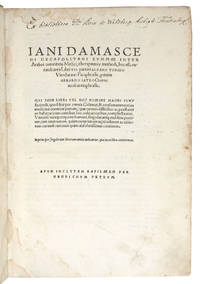
1543IB7BGV3WR8OIBasel: Heinrich Petri 1543. 17th century black vellum made from an earlier liturgical music manuscript. Folio 20.5 x 29 cm. Important Latin edition of an Arabic medical compendium first printed also in Latin in 1479 with additions by Gerard de Cremona. It provides a collection of opinions voiced by Greek and Arabic physicians on pathology and therapeutics. "No Arabic printed edition exists so far" Choulant. The ninth-century Christian physician perhaps in or near Damascus Yahya ibn Sarabiyun son of a Bagarma physician wrote his great medical work Al-Kunnas in Syriac but it was soon translated into Arabic by scholars such as Musa Ibrahim al-Haditi and ibn Bahlul. Manuscripts survive in twelve and in seven books. "The seven-book edition was frequently printed in Latin translations as 'Breviarium' and 'Practica therapeuticae methodus' or here Therapeutice methodi. Albanus Torinus the editor of the Basel 1543 edition called the author Janus Damascenus for which reason he has been confused with the well-known theologian of that name. He is also often mistaken for his younger namesake Serapio junior" GAL. Some catalogues even ascribe this work to the Baghdad physician Abu-Zakariya Yuanna Ibn-Masawaih.Minor water stains; some unobtrusive worming to front board and flyleaves. Binding rubbed; extremities bumped with chipping to spine-ends. A wide-margined copy. With a 1677 owners inscription of the pharmacist and medical student Joseph Franz König on front paste-down; later owners inscription on the title-page of Bonifacius Brix von Wahlberg 1726-1776 court physician to the Princes of Fürstenberg.l Adams I14; BM STC German p. 932; Choulant Handb. p. 347; Durling 4778; GAL I 233 & S 417; USTC 606427; VD16 Y11; not in Waller. Heinrich Petri, hardcover
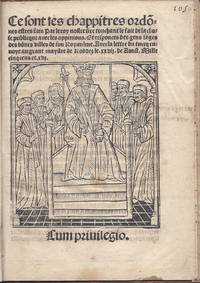
15161704S.l.: s.n. 1516. First edition. Title page with large woodcut illustration showing the King on his throne surrounded by the delegates. In Bastarda type with two floral woodcut initials. In later hard paper. Gilt title vignette on spine damaged. Concise marginal notes and page-numbers in ink by a contemporary hand throughout. Trimming of the leaves slightly affects the glosses with no effect to legibility otherwise the margins are wide. Title page crinkled at the upper right corner with a small tear that only affects the margin. Narrow inkblot to the lower margin throughout. B4 with two light brown stains C1 crinkled at lower corner. Bookplates on the inner front panel G. J. Arvanitidi; Antoine Mouradian. Overall in very good condition. First edition. Title page with large woodcut illustration showing the King on his throne surrounded by the delegates. In Bastarda type with two floral woodcut initials. In later hard paper. Gilt title vignette on spine damaged. 20 p. <p><br /> A bibliographically unrecorded early sixteenth-century French book about royal ordinances regarding the commonwealth along with the French translation of Sultan Selim I's letter of conquest fethname addressed to the Grand Master of Rhodes. <br /> <p><p><br /> The first and major part of the book presents nine concepts of orders of Francis I 1494-1547 King of France from 1515 until his death regarding the commonwealth chose publique. The drafts concern such topics as the commerce of spices and drugs wool cloth and other goods chapter 1-4 the weights and equivalents of coins and the recognized foreign currencies chapter 5 the recognized units of measures chapter 6 the regulation of the extravagance of clothing chapter 7 the inn trade chapter 8 and the money that goes to Rome for obtaining Bulls chapter 9. <br /> <p><p><br /> The second section comprises the responses to the aforementioned concepts of the representatives of the Good Cities Bonnes Villes Provence and Dauphiné who had been previously assembled in Paris by the order of the King in March 1516. In most cases they requested a delay of reply to discuss the matters with those who they were representing.<br /> <p><p><br /> The third section presents the grievances and requests delivered to the King by the delegates regarding the provincial councils conciles provinciaux the prolixity of the trials the tariffs the public officers the superior courts cours souveraines the land taxes tailles and the abuse and plunder by the soldiers crossing the kingdom. <br /> <p><p><br /> These sections were recorded and written down by the court clerk Jean Hesselin Seigneur of Girodon. Hesselin mentions himself twice p. 14 and 17 once by name p. 14 within the text.<br /> <p><p><br /> The final part is the French translation of the Ottoman Sultan Selim I's fethname letter of conquest sent on 27 August 1516 from Aleppo to Fabrizio del Carretto 1455-1521 Grand Master Magnus Magister of the Knights Hospitaller in Rhodes between 1513 and 1521. The fethname accordingly to its genre details Selim's expedition and the conquest and emphasizes the power and grandeur of the Sultan and his army. <br /> <p><p><br /> Selim I 1470-1520 ascended the throne as the Sultan of the Ottoman Empire in 1512. He is remembered for the enormous expansion of the Empire during his reign thus raise the Ottomans to the leaders of the Muslim world. Selim's most notable deed was the conquer of the Mamluk Sultanate which included Levant Hejaz and Egypt in 1516 and 1517 at the Battles of Marj Dabiq and Ridaniya.<br /> <p><p><br /> The Battle of Marj Dabiq near Aleppo took place on August 24 1516 where Selim defeated the Mamluk Sultan Al-Ashraf Qansuh al-Ghuri. This was a decisive victory of the war between the Ottoman Empire and the Mamluk Sultanate which ended in the conquest of much of the Middle East. Such an expansion of the Ottoman territory was a clear threat to Rhodes which was the nearest Christian possession to the coast of Asia halfway between Constantinople and Egypt. At the time the Grand Master in Rhodes was the Italian admiral Fabrizio del Carretto 1455-1521; Grand Master from 1513 to 1521 for a short interlude of a course of fifty-five years of Frenchmen serving as the supreme heads of the Order. Selim announced his victory and forecasted his threat to del Carretto in a fethname presented here in French translation however eventually he did not have the time to conduct the campaign against Rhodes. It was his successor Suleiman I who conquered the island in 1522 thus gained control over the eastern Mediterranean for the next centuries. By the time of the siege the commander of the Order was again a Frenchman Grand Master Philippe Villiers de L'Isle-Adam 1464-1534. Suleiman allowed him and the surviving knights to leave unmolested and eventually the Hospitallers were quartered permanently on Malta in 1530.<br /> <p><p><br /> To the best of our knowledge the original fethname has not survived and we could not trance any other printed version or edition of the French translation. We could find one surviving copy of a Spanish translation of Selim's letter which was addressed to Pope Leo X titled Carta de nuevas grandes buenas y ciertas embiada a nuestro s. padre Leon X de las cosas que han passado en Levante entre el gran turcho y el gran solda Valencia Juan Viñao 1517; Norton 1256 IB 11215 USTC 344377 kept at Cambridge University Library F151.d.8.12.<br /> <p><p><br /> Provenance: Bookplate of Georgios Arvanitidis 1876-1953 a noted Constantinopolitan collector of books on Turkish and Greek history. Bookplate with the motto "On abuse du vrai" of Antoine Mouradian.<br /> <p><p><br /> Ref.: Bibliographically unrecorded.<br /> <p><p><br /> Bibl.: Setton K. M. Hazard H. W. ed.: A History of the Crusades. Vol. 3. Wisconsin: The University of Wisconsin Press 1975. pp. 332-335. Pedani-Fabris M. P.: Ottoman Fetihnames. The Imperial letters announcing a Victory. In: Tarih İncelemeleri Dergisi 13 1998. 181-192. <br /> <p>. [s.n.] unknown
156532099Antwerp: John Laet 1565. Five books in one volume. A VERY RARE COMPLETE COPY the First Edition of Historia ecclesiastica gentis Anglorum translated into English. Provenance: Montanus 1602 -- Sir Roger Twysden 1648 and Sir John Saunders Sebright armorial bookplate. With woodcut device on titlepage woodcut armorial dedication to Queen Elizabeth woodcut plate of St. Augustin with Elbert King of Kent in anno 596 woodcut plate of King Oswald uniting the Umbrian kingdoms halfpage woodcut of Elbert building St. Paul's and with many large and handsome woodcut initials all throughout. The woodcuts are possibly by Arnaud Nicolai. Small 4to 188 x 140 mm in antique three-quarter russia over marbled boards the spine with raised bands ruled in gilt one compartment gilt lettered gilt dating at the tail gilt lined back and cornerpieces. 1-6 >1-4 #1-4 192 9 pp. A truly excellent survival of a book rarely found complete. The text-block is especially fresh and well preserved crisp and very clean. The blanks date from the time of the binding but the text is otherwise wholly complete and original the binding is handsome though its age is evident and there was restoration some time ago to the hinges the front of which is also strengthened from within. VERY RARE FIRST EDITION IN ENGLISH OF THE FIRST AND GREATEST WORK OF ENGLISH HISTORY BY THE FATHER OF ENGLISH HISTORY. RARE IN COMPLETE STATE when one reads the catalogue entries of copies in even some of the worlds most prestigious institutions one finds descriptions of missing signatures facsimile titles or entire sections excised to be quite the norm. This copy but for its probable early 19th century blank flies and endpapers is wholly intact and in a truly exceptional state of preservation.<br> The Venerable Bede's title of "The Father of English History" is well deserved. He was England’s greatest historian in the Middle Ages. His greatest work is the Historia Ecclesiastica here in its first English edition. It is an ecclesiastical history of the English people. Bede begins with Caesar’s invasion in 55 BCE and St. Alban’s martyrdom in Roman Britain tracks the spread of Christianity following St. Augustine’s mission to England in 597 and provides an account of critical events such as the Council of Whitby which decided that Roman rather than Celtic Christian customs would be followed in Britain.<br> Bede drew on the many manuscripts in the Jarrow monastery’s outstanding library and correspondents provided him materials. He was a diligent scholar and properly credited his sources. To the benefit of historical scholarship Historia Ecclesiastica spread widely throughout Europe in the Middle Ages with some 160 manuscripts still surviving. Not long after his death he became known as the Venerable Bede. His was one of the first printed history books published in Latin in Strasbourg about 1475. Highly popular on the Continent and in Britain it was reprinted in 1500 1506 and 1514.<br> Due to its strong association with Catholicism this first translation into the English tongue was published in Antwerp as the book was then prohibited in England as traitorous. Stapleton was educated in Oxford where he became a fellow in 1553. On Queen Elizabeth’s accession he left England to study theology in Louvain and Paris. His translation of Bede was his first of many fine works. Stapleton used Bede’s history to remind the reader that “we Englishmen also these many hundred of years kept and preserved sound and whole the precious perle of right faith and belefe†and he admonished that “after we forsooke the first paterne off the Christen faith delievered to us we have fallen in to plenty of heresies.†He added that the Venerable Bede a most reliable source describes many miracles that occurred in Britain under the true faith. Stapleton's translation has been called an "enduring contribution to this sparkling collection of recusant prose" -DNB <br> This is also a copy of fine and established provenience. It was formerly owned by the renown historian and antiquary Roger Twysden whose ownership signature is dated 1648. Having been caught up in civil war strife Twysden retired to his seat Roydon Hall and devoted himself to his study and writings particularly on early English histories and monasticism. His collection passed to Sir John Sebright who sold the main portion at auction in 1807. Much of Twysden's collection later passed to Sir John Sebright whose fine engraved armorial plate is afixed to the front paste-down. The present binding was likely made while the book was in Sebright's possession. <br> Contrary to the implications of Stapleton's edition of Bede Twysden's Historical vindication of the Church of England 1657 argued that it was the Church of England rather than Rome which had held fast to the true faith and that the pope's powers over England gained gradually over the centuries had been submitted to voluntarily out of love not duty for the archbishop of Canterbury had no mediate superior but only Christ and God see Jessup Sir Roger Twysden pp. 192-5. Completed in 731 Bede's Historia ecclesiastica gentis Anglorum is 'probably one of the most popular history books in any language and has certainly retained it popularity longer than any rival. The enthusiasm shown for his writings in the eighth century by English missionaries on the Continent such as Boniface Lul and others led to the spread of knowledge of his works not only in England but also in western Europe . . . . From then on as the spread of his manuscripts shows the History became popular all over western Europe and 160 of them survive today in spite of all the wars and other dangers to which manuscripts are always subject' Colgrave & Mynors p. xvii. It was first printed c. 1475 at Strasbourg PMM 16. 'Bede provided for over a thousand years and to a large extent still provides nearly all the knowledge available of the early history of England. His Historia is the only work other than parts of the Bible which has been read by every English generation from his own day to the present. It has the power to move and to convey something of the personality of its author to a degree which has called forth not only admiration but a kind of affection' Oxford DNB. John Laet hardcover
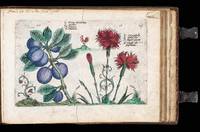
159416352Amsterdam 1594-1635. Oblong quarto 260 by 170mm 176 engraved plates numbered in an early hand 1-46 48-54 57-69 80-189 including 8 title-pages all with fine contemporary hand-colour in full occasionally heightened in silver two plates torn with slight loss to image and with early repairs six plates with slight worming to margins and three plates trimmed to neatline and laid down on old paper front free endpaper with later ownership inscription; mid-seventeenth century English red morocco elaborately gilt silver clasps and catches. A magnificent album of natural history engravings collected and bound for an English patron containing two complete suites of plates: Hoefnagel's 'Diversæ insectarum volatilium'; and Woutneel's 'Cognoscite lilia agri quomodo crescent' often bound as the fifth part 'Altera Pars' to the Crispin de Passes' 'Hortus Floridus' - the "most ambitions if not the first early effort to employ Continental resources to produce a set of botanical engravings designed for the English market" Gerard; and nine near complete or partial suites including an early issue of tulip plates from the 'Hortus Floridus'. All plates have been numbered consecutively in manuscript at the time of binding to a rudimentary scientific rubric: insects first then aquatic animals quadrupeds birds and botanicals last but not least. As a result some plates are bound with like subject rather than with their original publications. The album represents the work of some of the most famous natural history artists of the late sixteenth and early seventeenth centuries. The majority are published by Claes Jansz Visscher 1587-1652 the most important publisher of prints and maps in Amsterdam of his day. Recorded as an engraver in Amsterdam as early as 1608 he built a distinctive inventory of prints after the designs of Flemish artists which proved extremely popular and formed the basis of Visscher's early success as a publisher. INSECTS HOEFNAGEL Jacob. Diversæ insectarum volatilium: icones ad vivum accuratissmè depictæ per celeberrimum pictorem D.I. Hoefnagel typisq. Mandatae a Nicolao Ioannis Visscher anno 1630 Engraved title-page complete with 15 numbered plates of insects misbound including some upside-down bound with plates 11 and 12 from 'Volatilium varii generis effigies' after Nicolaes de Bruyn all with contemporary hand-colour heightened in silver consecutively numbered in an early hand 1-18. North German insects with the exception of the tarantula and scorpion. Engraved by Visscher after those by Jacob Hoefnagel 1573-1632 court painter for Emperor Rudolph from 1607 son of Joris Hoefnagel whose drawings of animals flowers and insects he engraved and published as the 'Archetypa Studiaque Patris Georgii Hoefnagelii' 1592. He also engraved plates for Braun and Hogenburg's 'Civitates Orbis Terrarum' 1512 - 1617. Ebert 798; Hagen I 371f; Hollstein IX 46 1-16; Nissen 1955; Horn-Schenkl. 10473. AQUATIC ANIMALS BRUYN Nicolaes de. Libelius sic varia genera piscium compectens pictoribus sculptoribus etc mire utilis et necessaries Nicolaes de Bruyn inventor Claes Ianss. Visscher excudit. interspersed with: COLLAERT Adrian. Piscium vivae icones inventae ab Adrian Collardo et excusae a Nicolao Ioannis Visscher anno 1634 Engraved allegorical title-page for 'Libillus' 11 of 12 without the sea-horse plates of aquatic animals and sea-monsters; 19 of 20 engraved plates of aquatic animals numbered in an early hand 19-44 followed by the allegorical title-page for 'Piscium' numbered 45 all with contemporary hand-colour all annotated in an early hand with common names in English. An early state of the title-page for de Bruyn's 'Libellus' before correction. Nicolaes de Bruyn 1571-1656 is best known for his large engraved landscapes "after designs by artists such as Gillis van Coninxloo and David Vinckboons from around 1600 his pupil and brother-in-law was Jan van Londerseel" Hollstein online A near complete suite of plates from a later edition of Collaert's famous work on fish first published in about 1598 in which the original engravings included elaborate landscape backgrounds. For his version Claes Visscher has incorporated his harpoon monogram into the dramatic title-page. Collaert 1560-1618 married engraver and publisher Philippe Galle. WEYER Gabriel. Monstra marina dat is verscheydon zee-monsters ge inventeert door Gabriel Weyer gedrucht by Claes Ianss. Visscher a.o 1634 Engraved allegorical title-page 7 of 12 plates of mermaids and mermen all with contemporary hand-colour numbered in an early hand 46 48-54. Berliner 'Ornamentstichkatalog' 4292 I; Nagler XXIV S. 220 I QUADRUPEDS BOLSWERT Boetius Adams after Adrien BLOEMAERT. Natus Dei solius ad servitium cinctis homo per hund creates imperat. Volentibus promisq.e; ut huic puessulo blande Leo Jouisq.e ales submittitur. ABloemaert invent: BA. Bolsuerd: sculp C Visscher excudebat 1632 G. Ryckius interspersed with: BRUYN Nicolaes de. Animalium quadrupedum varii generis effigies Allerley viervuessiger thier eigentliche abbildung den goltschmieden dienlich 1594. 8 of 14 without plates 1 5 and 11 plates 12 13 14 bound below with 'Volatilium' engraved plates of pastoral scenes from 'Natus'; 11 of 12 bound without the title-page engraved plates of animals from 'Animalium' all with contemporary hand-colour numbered in an early hand 57-69 and 80-85 allegorical title-page for 'Natus' numbered 86 annotated with the common names in English. The artistic Bolswert and Bloemaert families of Utrecht seem to have been very close frequently working together. Bloemaert met a grisly death at the hands of one of his students in 1666. 'Animalium' cf Hollstein 303-310; 'Natus' cf Hollstein 406-419 BIRDS BRUYN Nicolaes de. Volatilium varii generis effigies in tyronum praecipue vero aurisabrorum gratiam aeri incisa Claes Ianss. Visscher exu. NB. interspersed with: COLLAERT Adrian. Avium vivae icones Adriano Collardo inventore et excusum apud C Visscher anno 1625. 9 of 13 without plate 13 and plates 11 and 12 bound with 'Diversæ insectarum volatilium' above engraved plates of birds from 'Volatilium'; 12 of 18 without plates 4 9 14 15 18 plate 1 title-page bound separately below engraved plates of birds from 'Avium'; plates 12 13 and 14 from 'Natus' see above all with contemporary hand-colour numbered in an early hand 87-110 allegorical title-page for 'Volatilium' numbered "1" in the plate in manuscript "iii" ie 111 and with "Thretti" in the lower margin. BOTANICAL PASSE Crispin van de the elder and younger. Hortus Floridus Utrecht 1614 12 engraved plates of tulips numbered 32 43-53 all with early hand-colour numbered in an early hand 112-123 one ascribed to Willem de Pass in the plate. An early issue with no text on verso and captions only in Latin of a selection of tulip plates from "the most popular florilegium ever published" 'An Oak Spring Flora'. The work was first issued in a number of states between 1614 and 1617 and is often hailed as "the most important of early examples of botanical illustration" Gerard. It was issued in four sections on for each season with text in Latin and subsequently a selection of vernacular languages. 'An Oak Spring Flora' 12 WOUTNEEL Hans; and possibly Crispin van de PASSE the elder. Cognoscite lilia agri quomodo crescent non laborant neque nent: attamen dico vobis ne salomonem quidem in universa Gloria sua sic amic tum fuisse.ut unum ex his. Matthe: 6 Cap. Formulis Crispiam Passaei et Joannis Waldnelij 1603-1608 Allegorical title-page 61 engraved plates captions in Latin French English and Dutch all with early hand-colour numbered in manuscript 124-185 annotated throughout in two early hands with the months in which they flower and their medicinal properties in the "first" "second" and "third degree" misbound. The "most ambitions if not the first early effort to employ Continental resources to produce a set of botanical engravings designed for the English market" Gerard. Complete a suite of 61 plates depicting 120 plants published as a separate work in its own right but often issued as the fifth part of the de Passe's 'Hortus Floridus' when it appears with an additional letterpress title-page as the 'Altera Pars'. An early issue with no text on verso. "Traditionally the 'Alera Pars' has been considered as an aesthetically inferior appendage to the 'Hortus Floridus' and has received little attention from historians of prints or botanical illustration. However the presence on the title-page of the imprint of Hands Woutneel "Joannis Waldelij" an Antwerp native who was a bookseller and publisher in London from 1576 until his death sometime between 1603 and 1608 implies that the 'Altera pars' had a significant English component. As such it stands as an early example of Anglo-Continental print publishing collaboration. Prior to publication of the 'Altera Pars' the demand in England for botanical illustrations had been met primarily by relatively crude highly schematic collections of woodcuts such as those in Jacques LeMoyne de Morgue's 'La Clef des Champs' 1586 and John Norton's publication of Gerard's 'Herball' 1597. The 'Altera Pars' with its more naturalistic depictions of 120 plants set a new standard and served as the primary source of botanical images for English engravers and publishers from the late years of the reign of James I through the Restoration' Gerard. Hans Woutneel first appears in London on being admitted to the Stationers Company in 1579-80. Cartographer Abraham Ortelius mentions him frequently in his correspondence with his nephew Jacob Cole Gerard and Woutneel appears to have worked as Christopher Plantin's London agent. de Belder 272; Gerard 'Woutneel de Passe and the Anglo-Netherlandish Print Trade' 1996; Hunt 199; Nissen BBI 1494 Avium vivae icons Adriano Collardo inventore et excusum apud C Visscher anno 1625 Engraved allegorical title-page numbered 186 see above for plates. Untitled composite natural history. Claes Janss Visscher excudibat A.o 1625 A suite of 12 numbered engraved plates of composite natural history subjects all with early hand-colour numbered in manuscript 187-198 11 with the joint imprint of Assuerus van Londerseel and Claes Visscher. In the style of Hoefnagel's 'Archetypa Studiaque ' 1592 this is a very scarce suite of plates with only one uncoloured set known in the British Library.