116 résultats
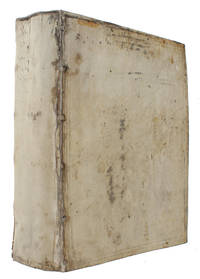
154421323Paris: Petrum Regnault 1544. First Edition. . Hardcover. Good. Folio. Vignette title not in British library 261pp Vellum <br/> <br/> Petrum Regnault hardcover
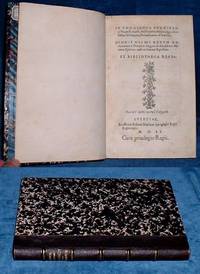
15174451Maguntie [Mainz], Joannes Schöffer, 1517. In-4 de 46 pages, titre orné de gravures. Cartonnage de papier marbré noir (19ème). Ex-libris de la bibliothèque du docteur Georges Kloss, dont la vente eu lieu en 1835, réalisée par Sotheby, et qui contenait de très nombreux ouvrages en provenance de la bibliothèque du réformateur Mélanchthon.In-4 of 46 pages, title decorated with engravings. Original cased binding of black marbled paper (19th). Bookplate from the library of doctor Georges Kloss, the sale of which took place in 1835, carried out by Sotheby's, and which contained a large number of works from the library of the reformer Mélanchthon.
159260391(Rostock, Stephan Mölleman, 1592) 4to. In contemporary limp vellum. Extremities with light soiling and miscolouring. Front free end-paper annotated in contemporary hand. Three leaves (T-Tiii) with repairs with loss of text and woodcut. Title-page and colophone supplied in facsimilie. Internally with light occassional browning but in general good condition. 272 ff (f. 272 erroneously printed as f. 273) with 44 woodcut illustrations in text.
159260391Rostock Stephan Mölleman 1592 4to. In contemporary limp vellum. Extremities with light soiling and miscolouring. Front free end-paper annotated in contemporary hand. Three leaves T-Tiii with repairs with loss of text and woodcut. Title-page and colophone supplied in facsimilie. Internally with light occassional browning but in general good condition. 272 ff f. 272 erroneously printed as f. 273 with 44 woodcut illustrations in text. <br/><br/><em>Later Rostock edition of the famous epic. Circulating from the 12th-century and derived in part from Aesop Reynard the Fox is one of the most popular and enduring beast-epics. Reynard the Fox is a collection of fables that originated in medieval Europe and the exact authorship is unknown. The stories were likely passed down orally before being written down in various versions over the centuries. The fables with the wily fox as a central character lent themselves to satire and it became a vehicle used by the Protestant reformers and others. The Low-German version first appeared at Lubeck in 1498 and the Rostock editions which followed from 1517 facilitated the spread of the epic towards the east. The woodcuts had previously illustrated the 1539 Rostock edition of which 36 are attributed to Erhard Altdorfer. Stylistically they depend on the first Lubeck and Rostock editions. </em> hardcover
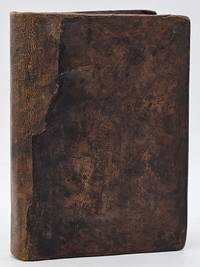
1541357266Basileae.: No publisher. 1541. 1st Edition. 8vo. Ancient brown leather boards with an old leather replacement spine edges stained red. Good. Moderate dampstains throughout scattered ink notes boards bowed. 14.3x10x2.5 cm. Latin text. Four short works in one volume â€On the best Emperor and his office a work no less learned than pleasant†“On the office of princes dukes and the ancient militia Book One very learned and useful†“On the office of the king to Justinian Caesar a small work filled with very salutary aphorisms†and “On the doctrine of princes Book Iâ€. Scarce. Woodcut headpieces historiated initials. weight: 0.4 lb. Nicolas of Saguntum; Alban of Turin; Erasmus of Rotterdam translators No publisher. hardcover
15821906030028Venetiis apud Aldum colophon: ex typographia Georgii Angelerii sumptibus Mag. D. Aldi Mannuccii M.D. LXXXI 1582. Hardcover. Acceptable. Aldine edition of the Works of Cicero 7 volume set bound in 3. The first 7 of 10 books. Originally issued separately 1578-83. Folios 33 cm. Rebound in 17th century calf. Binding worn boards detached. Institutional stamps and book plates renewed end pages. All edges red. Engraved title page with Aldine device. Woodcut titles for vols. III & VI. An important edition: "Ces volumes . sont toujours consideres comme une des plus importants editions de Cicero . Un exmeplaire d'une parfaite conservation est un livre fort rare et toujours digne de toute l'attention des amateurs." - Renouard. Renouard 232. Adams C 1660. Brunet II p. 8. Venetiis, apud Aldum [colophon: ex typographia Georgii Angelerii sumptibus Mag. D. Aldi Mannuccii M.D. LXXXI hardcover
1533177400Basileae: Andreas Cratander & Johann Bebel 1533. hardcover. very good. Edited by Simon Grynaus. Main title in Greek and Latin; editor's 4pp dedicatory epistle in Latin; all other text in Greek. 4 369 leaves. Printer's device on title and some other decorative woodcut initials throughout. Short thick folio bound in 19th century leather-backed marbled boards front hinge repaired; some dampstains mostly on preliminary pages and in margins towards rear; several small worm holes at front; neatly inked marginalia in Greek & Latin on scattered pages. Basileae: Andreas Cratander & Johann Bebel 1533.<br/><br/> Plutarch's Lives printed in Basel by Cratander & Bebel whose device appears on title. This edition corrects the errors of the manuscript and first Aldine edition. -Adams P1611.<br/><br/> Andreas Cratander & Johann Bebel unknown books
1551V73009Paris Lutetiae: Robertus Stephanus Cum privilegio Regis 1551. Hardcover. Very Good. Nice Estienne printer's device on titlepage of basilisk wound round vine and floral headpiece and initial on first page of life of Pompey the Great. Small quarto 23.5x14mm half 19th century morocco on 5 bands gilt ruled with Greek title and brown marbled boards marbled endpapers with neat Greek Athens bookseller's label 357pp 3pp Variae Lectiones & Errata. Beautifully clean and crisp handsome Greek typography. Editio princeps of the epitome of Dio's Roman history abridged in the 11th century by Joannes Xiphilinus the only source for Dio's lost books 61-80 dealing with events from 47 B.C. to 235 A.D. Robert Estienne issued this epitome to compliment his folio edition of Dio Cassius of 1548. Printed in the gros-romain font of the "grecs du roi" cut by Claude Garamond. Robertus Stephanus Cum privilegio Regis hardcover
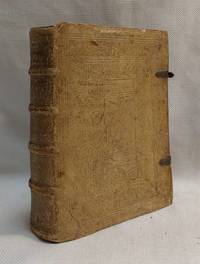
1544321627Wittenberg Germany: Veit Kreutzer 1544. Hardcover. Very Good. Wittenberg: Veit Kreutzer 1544 German edition of Melanchthon's Loci Communes first published in Latin in 1521 as "Loci communes or Loci communes rerum theologicarum seu hypotyposes theologicae" Latin for Common Places in Theology or Fundamental Doctrinal Themes. Very good. Pages of the text are numbered entirely in roman numerals to page CCCLIII. With an unnumbered register index of 23 pages. Beautiful contemporary stamped ivory vellum veneer boards with a set of elegant silver clips. No front endpaper. The copy bears an early bookplate "Ex bibliotheca Gust. Ad. Hauseri theol et philos. stud. Cl nr" inside the front board. Light pencil signatures from the 19th century trace the stewardship of Ole Lokensgaard 1854-1931 Granite Falls Minnesota who came to the US in 1857. The family was associated through his son Gerhard W. Lokensgard with St. Olaf College in Northfield. It has been held by the family through 3 generations. The Loci Communes evolved with the reform movement. This 1544 edition is translated by Justus Jonas into German based on Melanchthon's 1542 revision. Title in English: "The Heubtartike Christian Literature/ drawn together/ By Philippum Melanthon/ called in Latin/ Loci Communes Theologici. Germanized by Justum Jonam/Doctor/ and in the 1542nd year/ By Philip. Melanth. checked again and improved." The Loci Communes evolved with the movement. Philipp Melanchthon 1497 – 1560 was a German reformer a collaborator with Martin Luther and part of the Wittenberg team that established the foundation of the Protestant Reformation. Melanchthon was its first systematic theologian and an intellectual leader of the Lutheran Reformation who with Luther was a primary founder of Lutheranism. Loci Communes was Melanchthon's Magnum Opus. "Melanchthon points out that he wrote the Loci Communes to encourage people to bypass extra-biblical sources and go straight to scripture. He does not believe it makes sense to try to integrate philosophy with the interpretation of the Holy Scriptures. Melanchthon berates the scholastic methodology of dialectic. He discusses the skewing of scripture that those who employ such methodology foisted upon the interpretation of scripture". The colleagues that Luther assembled in Wittenberg’s theological faculty formed the nucleus of his team. This included Justus Jonas 1493 –1555 who served in addition to roles as advisor and legal expert as translator of the works of Luther and Melanchthon from Latin into German or German into Latin. In the 16th century intellectuals across Europe spoke Latin. To spread the Wittenberg message this process of translation and revision was essential to the maturing of the movement. The later editions were published from 1543-1559 with the final edition being published just one year before Melanchthon’s death in 1560. The 1560 edition is four times the size of the original 1521 edition. "The German text of the third generation remains close to the second generation of the Latin Loci; the text is a revision by Melanchthon of the translation of Jonas.He once confessed that he found the final revision of this German translation better than the Latin Loci CR 22 31/32." We believe that this 1544 Jonas translation may be the one to which Melanchthon refers. But that is a matter for further scholarly investigation. The simple beauty of the copy with its silver clasps is exceptional. Veit Kreutzer hardcover
15541506230049Venice: Apud Hieronymum Scotum 1554-01-01. Hardcover. Good. Folio. Original vellum. Minor soiling to cover. Good binding and cover. Later leather binding straps. Later end pages. Printer's device on title page. Text generally clean a few lines of early marginal notation and underlining. Collated: A-L8 M-M6 N-N4 in 8's with the title as leaf A1. Faint stain on first few leaves. Edito princeps 1535. Refs: British Museum p. 44. STC Italy Vol I. p. 99; Not in Brunet. <br><br> Johannes Philoponus John the Grammarian or John of Alexandria was an important Aristotelian commentator and Christian theologian. John's commentaries on Aristotle were influential on medieval and early modern thinkers in Europe such as Gianfrancesco Pico della Mirandola and Galileo. Philoponus has been seen as an important precursor to the establishment of empirical philosophy. <BR> In this book Philoponus comments on Aristotle's De Anima On the Soul and substantially modifies Aristotle's ideas. His commentary deals specifically with Aristotle's theory of light "Philoponus contends that Aristotle' view fails to account both for the laws of optics. Philoponus modifies the theory so as to save the phenomena he proceeds to re-interpret the term Energeia not as a state of actuality but rather as an 'incorporeal activity' which besides constituting the transparency of the medium is also capable of warming bodies.Due to this novel interpretation of Aristotle's terminology light is now understood not statically but as something dynamical." - Stanford Philosophical Encyclopedia. <BR>It should also be noted that since Michael Hayduck's edition Berlin 1897 it is generally assumed by scholars that the third book of the commentary that had been ascribed to John Philoponus wasoriginally written by Stephanus of Alexandria as is attested in the manuscript Parisinus gr. 1914 11th/12th cent. An important early work in physics and natural philosophy. Venice: Apud Hieronymum Scotum hardcover
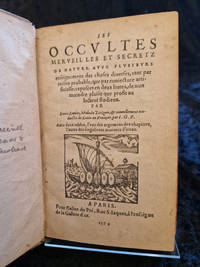
1574001927<p>Paris: pour Galliot du Pre 1574. 3rd Edition . Hardcover. Very Good. French translation from the 1st edition in Latin Occulta Naturae Miracula published 1559. 12mo collated as Title page with woodcut of viking ship pp2 pp213 plus 30 pages of alphabetical index to rear. Hardcover issued without dust jacket. Slightly later rebind of full leather with 5 raised bands and leather title label to spine and half of the "Gen de Paris" stamp to front cover. Binding in good condition with some rubbing to all edges and boards and a little chipping to top of back board. Inside except for the very odd mark all pages with all edges dyed red in excellent clean and bright condition with no foxing waterstains fingermarks etc. . For added interest the bookplate of Baron Hyacinthi Theodori dean of the Faculté de médecine de Paris circa 1720s is pasted to front pastedown. Levinus Lemnius was a celebrated Dutch physician whose medical writings were much translated. He studied under the famous Swiss botanist and bibliographer Konrad Gesner at the University of Louvain and under the famous Flemish anatomist Andreas Vesalius at the University of Padua. This Renaissance treatise on natural philosophy and medicine draws on classical sources particularly Aristotle with Lemnius being influenced by the "airs waters places" doctrine from the Hippocratic Corpus. This important work includes explanations of demonology somnambulism and the physical causes of mental illness the properties and healing virtues of herbs and gemstones alongside oddities like hermaphrodites. An superb copy of a very scarce early work with an interesting provenance. <br /><br /></p> pour Galliot du Pre hardcover
158326929Paris 1583. Engraved portrait oval with surrounding legend and text beneath on laid paper 6 7/8 x 4 1/4 inches. Cut to just within platemark and inlaid into later wove paper sheet. Later ink inscription on verso reading "from Holland / 1809." Minor wear and soiling. Very good. A very early engraved portrait of Sir Francis Drake.<br/> <br/> A clean impression of the second state of this famous portrait of Sir Francis Drake at age forty-three shortly after he returned from circumnavigating the globe the basis for most of the later images of him. The image is taken from a portrait purportedly painted from life by Jean Rabel the Elder and is said to be a credible likeness of the famed navigator. The legend beneath the portrait indicates the dates of Drake's circumnavigation listing Rabel as the painter and Thomas de Leu as the engraver. Thomas de Leu 1560-1612 a pupil of Rabel's moved to Paris around 1576 and became one of the most noted portrait engravers of his time. This engraving of Drake was the basis for many later images of him including the well-known engravings by Jodocus Hondius and Crispin van de Passe. The earliest graphic image of one of the greatest figures in maritime history.<br/> <br/> Marianne Grivel "Au Sieur Rabel Parangon du la 'pourtraicture'." in H. Zerner and M. Bayard's RENAISSANCE EN FRANCE Paris 2009 pp. 227-92 2d state. unknown
159355259(Slesvig, Nicolai Wegener), 1593. 4to. Helpergamentsbind fra 1600-taller. Ved ombindingen er bagerst indsat ca. 100 blanke blade. Forgyldt titeletiket i skind på ryg. Etiketten med lidt tab. Gl. ejernavn Bille Brahe (Hvedholm). 129 blade. På titelbladet er 2 linier, som var trykt med rødt overskrevet med sort. Blad 1b med stort træsnit af Danmarks våben. Blad 2a med helsides træsnit, Christian IV's portræt. Gl. ejernavn på titelbladet. Rent eksemplar trykt på kraftigt skrivepapir og med talrige samtidige tilskrifter i en net hånd.
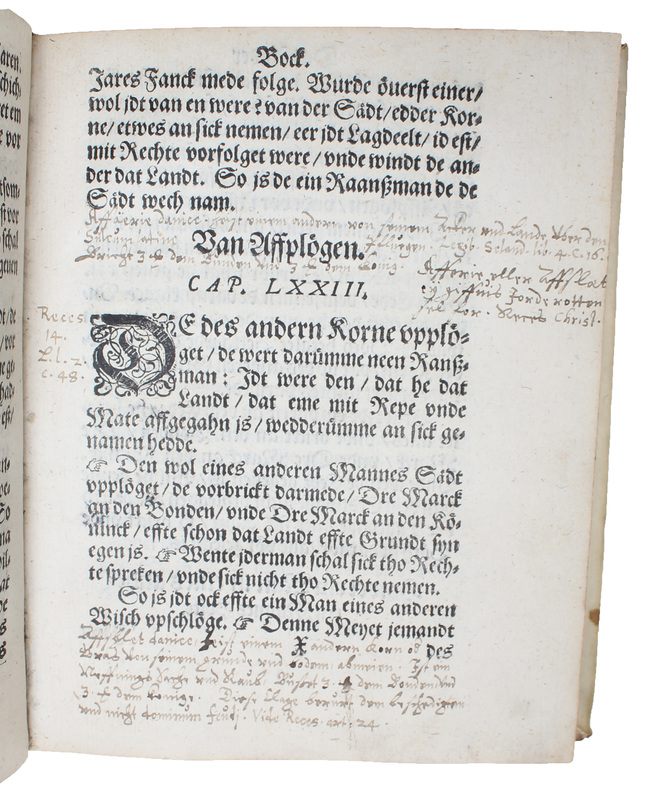
159355259Slesvig Nicolai Wegener 1593. 4to. Helpergamentsbind fra 1600-taller. Ved ombindingen er bagerst indsat ca. 100 blanke blade. Forgyldt titeletiket i skind på ryg. Etiketten med lidt tab. Gl. ejernavn Bille Brahe Hvedholm. 129 blade. På titelbladet er 2 linier som var trykt med rødt overskrevet med sort. Blad 1b med stort træsnit af Danmarks våben. Blad 2a med helsides træsnit Christian IV's portræt. Gl. ejernavn på titelbladet. Rent eksemplar trykt på kraftigt skrivepapir og med talrige samtidige tilskrifter i en net hånd. <br/><br/><em>Yderst sjældent forekommende anden udgave den første trykt af Brandis 1486 af den plattyske oversættelse af Jyske Lov ved Blasius Eckenberger. Der eksisterer kun en lille håndfuld bevarede eksemplarer i privat ejerskab. Det foreliggende eksemplar er en af varianteksemplarerne som er beskrevet af Lauritz Nielsen Dansk Bibliografi p.348 no.1072 og som gør sig bemærket ved flere udeladelser. Således er udeladt oversætterens eneretsprivilegium dedikationen fra oversætteren Chr. IV's autorisation m.v. = læg 2 og 3. I dette eksemplar starter teksten med "Vörrede" som har arksignatur D og slutter med blad 139 b som er et helsides træsnit af oversætterens bomærke. Repertoriet som Eckenberger udgav 1594 sammen med loven er heller ikke tilstede.Lauritz Nielsen 1072. - Thesaurus I 167. </em> unknown
1570801Basel: Eusebius Episcopius 1570. Hardcover. Poor. Heinrich Vogtherr the Elder. Rich provenance adorns this wonderful renaissance work capturing the myths geometry and observational data of the ancient world's heavens adorned with 48 beautiful illustrations of the constellations. Although the illustrator wasn't named scholars generally attribute the 48 woodcuts of constellations to Heinrich Vogtherr the Elder who was active in Basel at the time and shared a similar style. These blocks reflect a more modern 16th century approach to the constellations in comparison the 15th century Ratdolt illustrations of the same work. Provenance - A Latin scholar likely circa 16-17th century wrote witty Latin phrases at the front and rear. The title page has an inscription warning that roughly translated ""a fat belly does not produce subtle thoughts"". At the colophon is a lengthy indictment of the Roman Church drawing from phrases found in Graecimus by Eberhard of Bethune 13th century and Albertus de Rosate 14th century. Adding more context this book was printed in Basel at the height of the reformation. The large front ex libris plate is of Sir William Stirling-Maxwell. The book is listed in his 1860 library catalogue and he wrote page 197 "".useful collection of ancient mythologists. Included here for the curious fragments of ancient lore and table-talk ana preserved in the Fabulae and the astrological traditions."" At the rear pastedown is a ticket from Stirling-Maxwell's library assigning it to the ""Ana"" section. The ex libris on the FEP is that of the noted Harvard astronomer historian bibliophile and author Owen Gingerich. Bibliographic Details - Universal Short Title Catalogue USTC number 617529 41 copies recorded in the world's finest libraries. Physical Attributes - Measures approx. 30.5 x 20.5 x 2.5 cm. Old repair to even older leather binding. Boards with faint blind fillets forming double borders with corner florets. Spine with five raised bands author/title/date/Basel in gilt in compartments/at base. Edges mostly red but along fore-edge also in green sections. USTC calls it a folio but it might be a large quarto but regardless gatherings of 6. Printer's device on title page. Some initials. 48 in-text illustrations. Pages - viii 251 1 - blank 26 - Index Collation - a4 a-y6 z7. The z7 is odd but the 13 leaves of y6 and z7 index equal the 26 pages of the USTC catalogue entry so it appears complete and not missing a blank z8. Condition - See pictures. Old repair of even older leather binding with a new spine and corners but the corners are worn through exposing and wearing on pasteboard. Original leather dried and crazed little cracks newer repairs worn through and worn also. Some rubs to binding and spine bands also and a light bump on the front board. Large ex libris applied to pastedown small ex libris ticked applied to FEP. Gutter cracked. A moisture mark occasionally from edge throughout possibly from the application of text block edge coloring. Text block with toning occasional thumbing dog-eared or chipped corner page edge chip fox mark candle ember mark errant annotation/ink mark/doodle etc. throughout. Title page with a handful of inscriptions ink and graphite; trimmed slightly different from following page. 4th leaf Index trimmed tight at top edge. Several ink smudges on b6. Moisture mark bottom corner g and h gathering. Ink drop btm margin l3. No blank z8 if ever. Writing on colophon. More ex libris marks/tickets on rear binder's endpaper. Eusebius Episcopius
1518elala713Colophon on kk7r: Venice: In Aedib. Aldi Et Andreae Asulani Soceri June 1518. 1518. 8vo. pp. 26 p.l. 525 1 leaf. Aldine anchor device on title & at end. 19th century red morocco Aldine anchor device in gilt on covers all edges gilt rubbed title lightly toned & with small paper repair in lower margin x in colophon date erased with tiny hole. probably from the Syston Park Library of Sir John Thorold. Second Aldine Edition. The letters of the consul and Governor of Biyhinia friend of Tacitus and Suetonius provide an interesting view of the varied interests of a cultivated Roman gentleman. "The etiquette of the imperial circle scenes from the law-courts and the recitation-room the reunions of dilettanti and philosophers the busy life of the capital or of the municipal town the recreations of the seaside and of the country all these he brings vividly before our eyes". Encyc. Britan. 11th Edn. Topics range from his Tuscan villa happy memories of Lake Como love for his wife Calpurnia dreams ghost-stories the beauties of the Clitumnus and the floating islands of the Vadimonian lake the eruption of Vesuvius in connection with the last days and death of Pliny the Elder the deaths of Silius Italicus and Martial the principles that should guide a Roman governor in Greece the government of Bithynia and the relations between the governor and the Emperor. "The Letters are models of graceful thought and refined expression each of them dealing with a single topic and generally ending with an epigrammatic point." Ibid. The whole of Book 8 was first published in its proper place by Aldus Manutius in 1508. Adams P1538. BM STC Italian p. 525. Renouard I 195.4. Dibdin 4th Edn. II p. 330. Moss II pp. 493-94. Hardcover. Very Good. [Colophon on kk7r:] Venice: In Aedib. Aldi, Et Andreae Asulani Soceri, June 1518. Hardcover
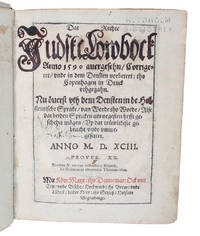
1559717111559. London 1559. London 1559. "The Booke That Teacheth" Great Britain. Justices of the Peace. Courts Leet and Baron. The Contentes of This Boke. Fyrst the Booke for a Iustice of Peace. The Boke that Teacheth to Kepe a Courte Baron Or a Lete. The Boke Teachynge to Kepe a Courte Hundred. The Boke Called Returna Brevium. The Boke Called Carta Feodi Conteynynge the Forme of Dedes Releasses Indentures Obligacions Acquitaunces Letters of Atturney Letters of Permutacion Testamentes And Other Thynges. And the Boke of the Ordinaunce to be Observed by the Offycers of the Kynges Escheker for Fees Takinge. London: In Fletestreete within Temple barre At the Signe of the Hande and Starre by Richard Tottil The XIII. Daye of Maye. Anno Domini 1559. 195 11 ff. Lacking Final two blank leaves. Octavo 5-1/4" x 3-1/2". Recent period-style calf blind rules to boards raised bands to spine endpapers renewed blank interleaves added in a few places. Moderate toning edges trimmed touching headlines in a few places worming with occasional minor loss to text repairs to corners of a few leaves. Faint stain and faint fragment of an annotation to final leaf early illegible owner signatures to title page. $2500. First printed in 1505 by Richard Pynson this is a handy anthology of treatises for justices of the peace sheriffs bailiffs. It includes the Carta Foedi and exchequer ordinance. It is sometime attributed erroneously to Sir Anthony Fitzherbert. OCLC locates 5 copies of this edition in North American law libraries Columbia Harvard LA County Library of Congress University of Minnesota. English Short-Title Catalogue S102175. Beale A Bibliography of Early English Law Books T154. unknown books
158041650Antwerp 1580. Print. 3 1/2 x 2 2/3 inches. Engraved portrait on laid paper. Latin text around oval vignette with caption below. Stamp on verso of Frederic R. Halsey. Image: 3 2/5 x 2 3/4 inches. Matted: 18 x 14 inches. Provenance: Frederic R. Halsey collection.<br/> <br/> One of the earliest portaits of one of the greatest figures in maritime history Sir Francis Drake.<br/> <br/> Sir Francis Drake c.1540-1596 was an English explorer pirate and politician best known for his circumnavigation of the world in a single expedition in his galleon the Golden Hind. Drake left England with five ships in December of 1577 as is noted in the present print. He returned three years later having challenged Spain's hegemony over the Atlantic Ocean and the New World. Drake would go on to help defeat the Spanish Armada in 1588. Drake is pictured half-length in an oval vignette which is lettered in Latin text meaning: "Most Noble English Knight Very Experienced in All Things Nautical and Military." Wierix captures Drake around the age of 43 with signs of age. He engraved this image after a portrait purportedly painted from life by Jean Rabel the Elder; it is said to be a credible likeness of the famed navigator. Drake is in a three-quarter view looking to his right wearing etched armor with a sash a lace collar over his gorget and holding a shield on his right arm which is decorated with two ships. The legend beneath the portrait indicates the date of Drake's circumnavigation and reads: "Hic est qui toto terrarum Orbe duorum annor. Spatio et mensium to circumducto Angliam patriam revisit 1577 id Dece." This is the one known throughout the world. He circumnavigated England and returned 1577 December. "Drake's voyage of 1577-80 had two purposes - to discover trading bases in the legendary "Terra Australis" and the Moluccas and to raid the west coast of South America. Sailing up the coasts of Chile Peru and Mexico Drake sacked towns and plundered shipping. He reached California which he named New Albion and claimed for England in the name of Queen Elizabeth. Returning to England via the Pacific and Indian Oceans Drake was the first Englishman to circumnavigate the world." Hill The printmaker Hieronymus Wierix was one of three brothers who were all engravers. Hieronymus was a child prodigy who went to work for the legendary printer Christophe Plantin in 1570. There he learned to engrave copper engraving his first plate for Plantin at the age of seventeen. Wierix made over 120 engravings for Plantin from 1569 to 1576. He became a master printer known for his "very delicate religious prints on a very small scale" and lived in Antwerp the remainder of his life. It is unclear if Plantin had a hand in the publication of the present print but he did live in Antwerp until 1589 and he was a close associate of Wierix's. Wierix's portrait of Drake is the basis for later derivative images by other printmakers including Jodocus Hondius and Crispin van de Passe. In those other prints of Drake the image and his face are in reverse orientation and most are inaccurate copies of copies presenting a Drake far afield from his actual appearance. This print from the esteemed Frederic R. Halsey print collection with Halsey's stamp on its verso has impeccable provenance to match its quality. Halsey was a notable book and print collector attorney member of the council of the Grolier Club and trustee of the New York Public Library. His collection of prints was estimated to hold about ten thousand items the scale and scope of which would be near to impossible to replicate. Halsey collected Americana and prints of sporting Napoleonia and etchings by old and modern masters. His collection was sold through Anderson Galleries in New York November-December 1916 and its catalog remains an essential reference.<br/> <br/> Graesse V: 154. Grivel "Au Sieur Rabel Parangon du la 'Pourtraicture'" in Renaissance en France pp. 227-92. Hill p.86. Hollstein Dutch and Flemish Etchings XV.709. Kraus Drake 59. O'Donoghue Catalog of Engraved British Portraits O8.88. Sabin 58995. unknown
1548227758Venice: Alessandro Brucioli & i Frategli 1548. First Antonio Brucioli translation. Full vellum skiver leather title and date spine labels. Deaccession library stamps title page; marginalia p. 544; .5" chip lower corner p. 768 no loss; period ink mark affecting text p.980; pps. 950-1068 faint water stain lower corners & corners curled chipped frayed with some loss to margins and one part of marginal annotation. Octavo. xvi; 24; 1-1068 numbered in roman numerals. Gathering "O" misbound out of order but complete pp. 490-490 mispaginated as 494-495. The succession of translations of Pliny's Historia Naturale from the earliest printed incunables to Cinquecento Italian editions is a complex study of the collaborative process among humanist intellectual peers. Renaissance translators of early Greek thought worked with previously published translations offering emendations and alterations to improve or correct an earlier text. Antonio Brucioli edited Cristoforo Landino's well-received translation in 1543 which he then sought to improve upon with his own edition in 1548 making corrections to the table of contents offering an extended preface and including a “Life of Pliny.†Ultimately Landino's translation was the preferred text supplanting this Brucioli edition making it the only edition of this version of Pliny's Historia Naturale. Alessandro Brucioli & i Frategli unknown
153045363Parisiis, Ex officina Simonis Colinaei, 1530. 8vo. Bound in a very fine later full calf (around 1700), profusely gilt spine, titlelabel in leather with gilt lettering, broad gilt borders on covers, edges of covers gilt, edges of leaves gilt. A very small nick to top of spine. (8) lvs. + (1-)256,(3) lvs. + 1 blank. A small and very faint dampstain to upper inner margins of the first 8 lvs. Otherwise very clean throughout. A beautifull printed and wide-margined copy (17x11,5 cm).
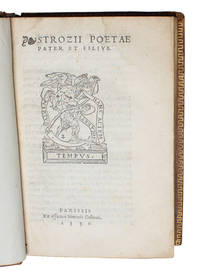
153045363Parisiis Ex officina Simonis Colinaei 1530. 8vo. Bound in a very fine later full calf around 1700 profusely gilt spine titlelabel in leather with gilt lettering broad gilt borders on covers edges of covers gilt edges of leaves gilt. A very small nick to top of spine. 8 lvs. 1-2563 lvs. 1 blank. A small and very faint dampstain to upper inner margins of the first 8 lvs. Otherwise very clean throughout. A beautifull printed and wide-margined copy 17x115 cm. <br/><br/><em>Scarce second edition of the "opera" of the poetical works of both father and son. Their collected opere were first published by Aldus Manutius in 1513 together with works of his son under the title Strozii poëtae pater et filius. The offered edition is copied from this Aldus-edition. They were both members of the famous Strozzi-family exiled from Florence.Adams S 1957. - Graesse VI: 512. </em> hardcover
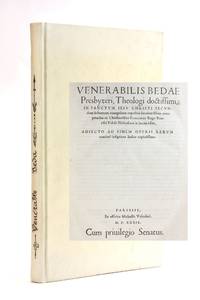
1539505317Michaelis Vascosani Michel Vascosan 1539. Leather. NEAR FINE. 4 218pp. 9 Index. Folio in 6's collation complete: 2 A3-T6 2. Vulgate text printed in larger font with woodcut drop caps marginal references. Nicely bound in recent vellum with hand-written spine title in a convincing antiquarian hand. Some light staining to the edges small wormhole to top margin toward the gutter not affecting text; else FINE internally; a nice fresh copy. Bede the Venerable was one of the greatest minds of the Middle Ages and his immense learning is on full display in this commentary on the Fourth Gospel drawing on the church fathers as well as interlocating Old Testament and intertextual references. Bede had a particular devotion to the Johnannine gospel; his translation of the Vulgate into Old English is held as the first vernacular translation. The value of this particular edition is due to its significance in the history of printing. Vascosan set up his press 1530 under the banner of his father in law the famed printer Badius and adorned his title pages with the Badius printer's device through the decade. For reasons unclear possibly a dispute with relatives sharing an interest in the firm in 1539 Vascosan stopped using the Badius device. Rather than cut his own device Vascosan simply printed his title pages without one remarkably becoming the first printer to forego this branding tool that was so essential to printer differentiation in an age when books were sold without bindings. While his motivations at the outset are unclear it may have been simply needing to sell some books before a proper device could be cut he took a liking to it and maintained this style throughout his career. Today he is remembered as a pioneer of this 'unadorned elegance of his editions' Oxford Companion to the Book p. 1238. His text-only title pages were 'a harbinger of a new approach to title pages. Vascosan’s decision flew in the face of the Parisian and more generally European book-trade where printers’ devices had played a vital role in the identification and marketing of printers’ and booksellers’ output. He was trail-blazing a new method of promoting his works – a minimalist style which would challenge the use of ornate devices so popular among the first generation of Parisian printers and booksellers. Coupled with his rejection of a printer’s device was what one might call his ‘purification’ of the title page for his title pages are incredibly simple in style the whiteness of the paper dominating. Henri-Jean Martin wittily calls this ‘the graphic mode’ of ‘solemnization of the title page’ as opposed to the second ‘monumental mode’ which by the end of the sixteenth century became saturated with symbols and architectural motifs.' Exhibition Catalog 'Printing in Sixteenth-Century France at the Edward Worth Library.' While we cannot speculate on the priority of printings within the year 1539 we can say that no other copies of a 1539 Vascosan imprint are available in trade at this time and only one appears in auction records. OCLC 60698411 listes 8 copies. Michaelis Vascosani [Michel Vascosan] unknown
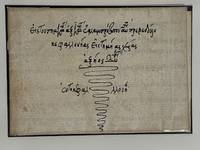
1591BOSTONVB11<br />MOREA OTTOMAN GREEK TURKISH PRISONERS Entire Letter writen from Chlonmontsi to "Lord David di Bembo Lord of Cephelonia" acknowledging receipt of nine Turkish Prisoners who are listed sent by the Lord of Cephalonia to "our Lord Bairakbasha Governor of the Morea". A very interesting and early letter during the period that Morea was under Ottoman rule expressing gratitude for the lenient treatment of Turkish prisoners. Surviving Ottoman letters in Greek are extremely rare. in commerce. A full translation and transcription is included.
1552V48030Basel: H. Froben 1501-1563 1552. Hardcover. Very Good. Large Froben printer's device on titlepage historiated woodcut initials throughout. . Four Volumes in One large folio bound in blind-stamped pigskin dated 1564 with initials I.D.F.H. on bevelled wooden boards with metal clasps lacking one clasp each board has 16 small marginal panels of biblical scenes and four larger central stamps of Justice Fortitude etc with legends under each spine on four raised double bands with MS title and shelf mark "Basilius 39" some small worm holes tips worn. Title page catalogue 6 787pp with colophon "Basiliae apud Hier. Frobenium et Nic. Episcopium anno M.D.LI" 1551 21pp index 3pp blank with large Froben device on last page. Bookplate with coronet initials dated 1913 inscription "Ex bibliotheca Johannis Mathon Lugd. Bat." with MS devices on free endpaper & another inscription on titlepage. Collated complete &4 a-z A-M6 N8 O-Z Aa-Ss6 Tt8 Vv-Xx6 with pagination continuous each of 4 vols has divisional titlepage see Adams B340. Crisp and clean throughout but with quite extensive worming of pages near front and back of book. NB large heavy book so extra shipping/postage costs. H. Froben (1501-1563) hardcover
1572EE4911Haeredum Iohannis Quentel / Viduam Mauricii a Porta / et al 1572. ~DATE RANGE: 1547-1572 ~FULL TITLES: D. Dionysii Carthusiani Enarrationes piae ac eruditae in quatuor prophetas quos vocant maiores. Imprint: Coloniae : Ex Officina Haeredum Iohannis Quentel. M.D. LVII. BOUND WITH: D. Dionysii Carthusiani Enarrationes piae ac eruditae in duodecim prophetas quos vocant minores. IMPRINT: Coloniae Apud Geruuinum Calenium & haeredes Iohannis Quentel. M. D. LXVIII. 2 VOLS IN 1. / D. Dionysii Carthusiani Insigne commentariorum opus in Psalmos omnes Davidicos. Imprint: Parisiis Apud Dionysiam & Hieronymum de Marnes viduam spectabilis viri Ambrosii Girault. M.D. XLVII. BOUND WITH: D. Dionysii Carthusiani Enarrationes piae ac eruditae in quinque libros Sapientiales. IMPRINT: Coloniae ex officina Haeredum Ioannis Quentel. M. D. LV. 2 VOLS IN 1. / D. Dionysii Carthusiani Enarrationes piæ ac eruditæ in quinque Mosaicæ legis libros. Imprint: Coloniae : Apud haeredes Joannis Quentel et Geruuinum Calenium M.D. LXVI. / D. Dionysii Carthusiani enarrationes piae ac eruditae in libros Iosue Iudicum Ruth Regum Primum secundum tertium & quartum item Paralipomenon primum & secundum . Coloniae Ex Officina Haeredum Ioannis Quentel. M.D.LII. BOUND WITH: D. Dionysii Carthusiani eruditae ac piae enarrationes in Librum Iob Tobiae Iudith Hester Nehemiae Machabaeorum primum & II. IMPRINT: Coloniae. Impensis Geruini Calenii & haeredum Iohannis Quentel. Anno M. D. LXXII. 2 VOLS IN 1. / D. Dionysii Carthusiani in quatuor Evangelistas enarrationes. Paris. Apud Viduam Mauricii a Porta. M.D.LII. BOUND WITH: D. Dionysii Carthusiani in omnes B. Pauli epistolas commentaria. IMPRINT: Parisiis Apud spectabilem viduam Maruicii a Porta. 1548. BOUND WITH: D. Dionysii Carthusiani in Catholicas septem epistolas piae ac eruditae admodum enarrationes. Eiusdem Commentarii doctissimi in Acta Apostolorum Apocalypsim ac Hymnos ecclesiasticos. IMPRINT: Parisiis. Apud Viduam Maruitii a Porta. 1548. 3 VOLS IN 1. ~PAGINATION: 16 814 2 12 358pp. 12 327ff. 28 593 2pp. 12 1015pp. 12 611 4 501pp. 10 348 4 130 5 170ff. ~Full uniform 18th-century mottled calf bindings raised bands to spines. Spines decorated in gilt with small tools. Blind triple fillets to boards. Gilt decor to board edges much rubbed. Two brown gilt labels per spine intact only on 'libros Iosue .'. Other vols have single label remaining or none 'Prophetas'. All edges red. Endpapers marbled in Placard pattern. Folios 21 x 31.5cm. Library markings to prelims including Pusey Library markings to all vols. Owner's signature of E. B. Pusey to vols I & II. Loss to spines of 'Prophetas' & 'Pentateuch'. Headbands loose. Splitting over all outer hinges but all hinges holding. Decorated initials throughout to all vols. Publisher's devices to all title pages. Dedicatory epistle to Henry VIII dated 1532 to 'in quatuor Evangelistas enarrationes'. A little sidelining and annotation in old hand especially to final vol. with some more recent pencil sidelining throughout. Text printed in double columns. Some age-browning and foxing mostly to vol. I & 'enarrationes in Librum Iob .'. Tiny amount of worm damage to inside front board of 'Psalmi'. Tear 7cm to p. 1015 of 'Pentateuch' minor effect to text. With tickets from 2005 Christie's sale. 19th-century bookmarks to vols I & II one with Pusey's name on part of ironmonger's bill. 5 striking identical woodcuts 12.5 x 16.2cm of Denis with the Virgin and Child to verso of some tps in vols I-IV. Woodcut of Denis triumphing over devil 12.7 x 17cm to final page of vol. I. All woodcuts signed with monogram 'A W' i.e. Anton Woensam c.1493/1496 - c.1541 a frequent collaborator with the Quentel publishing house. Denis the Carthusian 1402-1471 theologian and mystic. Collection of 16th century editions of his influential Biblical commentaries with close association with E. B. Pusey 1800-1882 leading figure in Oxford Movement. ~Robust packaging. All UK orders trackable others on request. Used books are exempt from USA tariffs. Hardback. Hardback. Good/Fine. c. 500pp. per vol. Haeredum Iohannis Quentel / Viduam Mauricii a Porta / et al Hardcover