[THE ASAHI SHIMBUN]. 朝日新聞社.Biblio.com
109 résultats
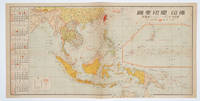
1572160545No place of publication.: 朝日新聞社. The Asahi Shimbun. 昭和十五1940. Published by 朝日新聞社 The Asahi Shimbun Japanese folding coloured WWII map with a calendar from January to June Shōwa 15 at the left scale 1:300000. Map includes French Indochina Dutch East Indies and parts of the territory of Papua China and British India. Some light browning and foxing otherwise very good. Text in Japanese. 25.3 x 51cm. Legend at lower left lists the boundaries between continents countries and provincials or regions railways airline routes capitals and Japanese embassies and consulates. <br> <br>The natural resources are indicated across the map. The map also shows parts of the territory of Papua under Australia's administration " 濠洲委任統治領 Gōshū inin tōchiryō". . 朝日新聞社. [The Asahi Shimbun]. unknown
15191338406Anderson: Anderson High School 1915-1916. Hardcover. Octavo; Fair; Hardcover; Spine black with gold print on brown banner raised bands; Boards in black cloth with gold print on brown leather band tattered spine caps and corners fading/rubbing/shelfwear owner initial in gold print on front; Text block consists of bound issues of periodical cracked hinges front and rear shaken binding front flyleaf torn along spine spine break in center of text block penciled name on cover of most issues occasional pencil notation within; Variously paged illustrated b&w. 1338406. FP New Rockville Stock. Anderson High School hardcover books
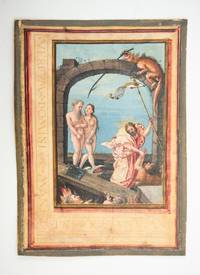
1540ST20622Germany ca. 1540. 183 x 133 mm. 7 1/8 x 5 1/4". <br/> WITH A FULL-PAGE MINIATURE DEPICTING THE HARROWING OF HELL featuring a naked Adam and Eve on the left and on the right Christ bending down to rescue John the Baptist the figures framed by a stone archway supporting a hairy creature who aims the point of a spear directly at Adam and Eve the miniature in a thin brown frame with gilt lines surrounded on two sides by the words "VERBUM DOMINI MANET IN ETERNUM" in gilt all framed in gray and red washes with double rules of black and gilt. Light soiling to frame a little flaking to the gray border and a couple of small scuffs and smudges elsewhere verso with spotting but the miniature vibrant and well preserved with only very trivial imperfections.<br/> <br/> A close copy of an early 16th century engraving by Albrecht Dürer this powerful miniature depicting the Harrowing of Hell is an intriguing artifact that ties together manuscript art print culture and the Reformation. The image depicts an apocryphal tale in the Gospel of Nicodemus in which Christ following his death but before his Resurrection descends into Limbo in order to save righteous souls who had passed away before him particularly figures from the Old Testament. Christ appears here in pale pink robes carrying a long staff with a cross and banner adorning the top. Having just brought down the gates of Hell he stoops to rescue John the Baptist here dressed in furs from its depths. A naked Adam and Eve covering their loins stand at the left of the composition--Adam now a gray-bearded old man as a reflection of sin and mortality but Eve still as she was at the Expulsion in keeping with the period's inclination to retain the classically idealized youthful feminine form. Above them is a stone arch upon which a dog-like demon perches stealthily aiming a spear directly at the oblivious couple. Another demon snaps its jaws at the feet of Christ and we can see a lick of flames below the broken gate as more captive souls clamor to escape. The painting is skillfully done showing the artist's facility with anatomy proportion and foreshortening. The bodies of Adam and Eve are particularly excellent with lovely skin tones and convincing molding. The composition is clearly based on an engraving by Dürer published in 1513 as part of a major series of 16 images known as the "Engraved Passion." In translating a black & white print into a full-color painting the artist here dispensed with a few details seen in Dürer's work such as the shadowy figure behind Adam and Eve and the stigmata on Christ's hand; however the overall composition deviates little from the original suggesting that the artist may have been working from an actual engraving. Although this leaf contains just a few words in the form of a border inscription--"Verbum Domini manet eternum" "the Word of the Lord endures forever"--they are monumentally important. This line from Isaiah 40:8 and 1 Peter 1:25 became the motto of the Lutheran Reformation appearing on art clothing coins and even armor of the 16th century. The Schmalkaldic League an influential group of allied Lutheran principalities in the Holy Roman Empire at the time also adopted it as their motto. Given the dominance of print materials during the Reformation period our hand-painted miniature--possibly produced as a frontispiece--must have been a very special commission. It is also an object that is prime for further study touching on aspects of book production religious art and the transmission of images and ideas in the early modern period. unknown
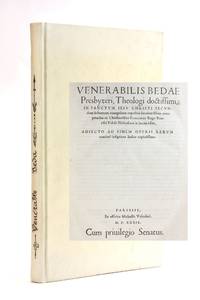
1539505317Michaelis Vascosani Michel Vascosan 1539. Leather. NEAR FINE. 4 218pp. 9 Index. Folio in 6's collation complete: 2 A3-T6 2. Vulgate text printed in larger font with woodcut drop caps marginal references. Nicely bound in recent vellum with hand-written spine title in a convincing antiquarian hand. Some light staining to the edges small wormhole to top margin toward the gutter not affecting text; else FINE internally; a nice fresh copy. Bede the Venerable was one of the greatest minds of the Middle Ages and his immense learning is on full display in this commentary on the Fourth Gospel drawing on the church fathers as well as interlocating Old Testament and intertextual references. Bede had a particular devotion to the Johnannine gospel; his translation of the Vulgate into Old English is held as the first vernacular translation. The value of this particular edition is due to its significance in the history of printing. Vascosan set up his press 1530 under the banner of his father in law the famed printer Badius and adorned his title pages with the Badius printer's device through the decade. For reasons unclear possibly a dispute with relatives sharing an interest in the firm in 1539 Vascosan stopped using the Badius device. Rather than cut his own device Vascosan simply printed his title pages without one remarkably becoming the first printer to forego this branding tool that was so essential to printer differentiation in an age when books were sold without bindings. While his motivations at the outset are unclear it may have been simply needing to sell some books before a proper device could be cut he took a liking to it and maintained this style throughout his career. Today he is remembered as a pioneer of this 'unadorned elegance of his editions' Oxford Companion to the Book p. 1238. His text-only title pages were 'a harbinger of a new approach to title pages. Vascosan’s decision flew in the face of the Parisian and more generally European book-trade where printers’ devices had played a vital role in the identification and marketing of printers’ and booksellers’ output. He was trail-blazing a new method of promoting his works – a minimalist style which would challenge the use of ornate devices so popular among the first generation of Parisian printers and booksellers. Coupled with his rejection of a printer’s device was what one might call his ‘purification’ of the title page for his title pages are incredibly simple in style the whiteness of the paper dominating. Henri-Jean Martin wittily calls this ‘the graphic mode’ of ‘solemnization of the title page’ as opposed to the second ‘monumental mode’ which by the end of the sixteenth century became saturated with symbols and architectural motifs.' Exhibition Catalog 'Printing in Sixteenth-Century France at the Edward Worth Library.' While we cannot speculate on the priority of printings within the year 1539 we can say that no other copies of a 1539 Vascosan imprint are available in trade at this time and only one appears in auction records. OCLC 60698411 listes 8 copies. Michaelis Vascosani [Michel Vascosan] unknown
154421323Paris: Petrum Regnault 1544. First Edition. . Hardcover. Good. Folio. Vignette title not in British library 261pp Vellum <br/> <br/> Petrum Regnault hardcover
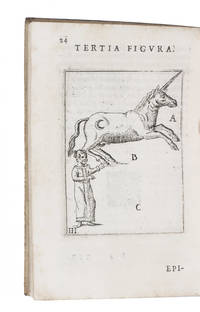
1596F75BBB01U79OBrescia 1596. Small 8vo 14.5 x 10 cm. Pietro Maria Marchetti Contemporary limp sheepskin parchment sewn on 3 alum-tawed thongs with manuscript title on smooth spine. With Marchetti's woodcut anchor and dolphin device imitating Aldus's on the title-page 16 numbered engraved emblematic illustrations plate size 8.5 x 6.5 cm woodcut headpieces tailpieces and decorated initials 3 series and decorations built up from cast fleurons. With the Latin text set in italic and the Italian translation in roman. 106 6 blank pp. First edition of the so-called Oracles of Leo the Wise with a bilingual Latin an Italian text and 16 lovely and rather surreal engravings: an emblematic book of prophecies traditionally attributed to Leo VI 866-911/12 Emperor of Byzantium from 866 to his death and at least here also to Antonius Severus 188-217 sole Emperor of Rome from his murder of his brother in December 211 to his death the book does not indicate which Severus is intended but the preface notes that he reigned from 212. The Latin text was circulated already attributed to Leo the Wise in the 12th century but Christians revived it in the 16th century and interpreted it as a prophecy that the Ottoman Empire would fall in 1622. These oracles remained popular in the 17th century when they were presented as having predicted the setbacks that the Ottomans suffered in Europe in that period.Owner's inscriptions on the title-page further with a bookplate. With a water stain in the first quire but otherwise in very good condition with only very minor foxing. The sewing supports have broken at the back hinge the thong ties are lost and the vellum is slightly wrinkled but the binding is still in good condition.l BMC STC Italian p. 622; Caillet 11042; Edit16/ICCU CNCE 28586; Mortimer Italian 254. hardcover
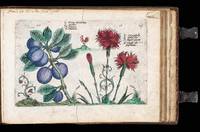
159416352Amsterdam 1594-1635. Oblong quarto 260 by 170mm 176 engraved plates numbered in an early hand 1-46 48-54 57-69 80-189 including 8 title-pages all with fine contemporary hand-colour in full occasionally heightened in silver two plates torn with slight loss to image and with early repairs six plates with slight worming to margins and three plates trimmed to neatline and laid down on old paper front free endpaper with later ownership inscription; mid-seventeenth century English red morocco elaborately gilt silver clasps and catches. A magnificent album of natural history engravings collected and bound for an English patron containing two complete suites of plates: Hoefnagel's 'Diversæ insectarum volatilium'; and Woutneel's 'Cognoscite lilia agri quomodo crescent' often bound as the fifth part 'Altera Pars' to the Crispin de Passes' 'Hortus Floridus' - the "most ambitions if not the first early effort to employ Continental resources to produce a set of botanical engravings designed for the English market" Gerard; and nine near complete or partial suites including an early issue of tulip plates from the 'Hortus Floridus'. All plates have been numbered consecutively in manuscript at the time of binding to a rudimentary scientific rubric: insects first then aquatic animals quadrupeds birds and botanicals last but not least. As a result some plates are bound with like subject rather than with their original publications. The album represents the work of some of the most famous natural history artists of the late sixteenth and early seventeenth centuries. The majority are published by Claes Jansz Visscher 1587-1652 the most important publisher of prints and maps in Amsterdam of his day. Recorded as an engraver in Amsterdam as early as 1608 he built a distinctive inventory of prints after the designs of Flemish artists which proved extremely popular and formed the basis of Visscher's early success as a publisher. INSECTS HOEFNAGEL Jacob. Diversæ insectarum volatilium: icones ad vivum accuratissmè depictæ per celeberrimum pictorem D.I. Hoefnagel typisq. Mandatae a Nicolao Ioannis Visscher anno 1630 Engraved title-page complete with 15 numbered plates of insects misbound including some upside-down bound with plates 11 and 12 from 'Volatilium varii generis effigies' after Nicolaes de Bruyn all with contemporary hand-colour heightened in silver consecutively numbered in an early hand 1-18. North German insects with the exception of the tarantula and scorpion. Engraved by Visscher after those by Jacob Hoefnagel 1573-1632 court painter for Emperor Rudolph from 1607 son of Joris Hoefnagel whose drawings of animals flowers and insects he engraved and published as the 'Archetypa Studiaque Patris Georgii Hoefnagelii' 1592. He also engraved plates for Braun and Hogenburg's 'Civitates Orbis Terrarum' 1512 - 1617. Ebert 798; Hagen I 371f; Hollstein IX 46 1-16; Nissen 1955; Horn-Schenkl. 10473. AQUATIC ANIMALS BRUYN Nicolaes de. Libelius sic varia genera piscium compectens pictoribus sculptoribus etc mire utilis et necessaries Nicolaes de Bruyn inventor Claes Ianss. Visscher excudit. interspersed with: COLLAERT Adrian. Piscium vivae icones inventae ab Adrian Collardo et excusae a Nicolao Ioannis Visscher anno 1634 Engraved allegorical title-page for 'Libillus' 11 of 12 without the sea-horse plates of aquatic animals and sea-monsters; 19 of 20 engraved plates of aquatic animals numbered in an early hand 19-44 followed by the allegorical title-page for 'Piscium' numbered 45 all with contemporary hand-colour all annotated in an early hand with common names in English. An early state of the title-page for de Bruyn's 'Libellus' before correction. Nicolaes de Bruyn 1571-1656 is best known for his large engraved landscapes "after designs by artists such as Gillis van Coninxloo and David Vinckboons from around 1600 his pupil and brother-in-law was Jan van Londerseel" Hollstein online A near complete suite of plates from a later edition of Collaert's famous work on fish first published in about 1598 in which the original engravings included elaborate landscape backgrounds. For his version Claes Visscher has incorporated his harpoon monogram into the dramatic title-page. Collaert 1560-1618 married engraver and publisher Philippe Galle. WEYER Gabriel. Monstra marina dat is verscheydon zee-monsters ge inventeert door Gabriel Weyer gedrucht by Claes Ianss. Visscher a.o 1634 Engraved allegorical title-page 7 of 12 plates of mermaids and mermen all with contemporary hand-colour numbered in an early hand 46 48-54. Berliner 'Ornamentstichkatalog' 4292 I; Nagler XXIV S. 220 I QUADRUPEDS BOLSWERT Boetius Adams after Adrien BLOEMAERT. Natus Dei solius ad servitium cinctis homo per hund creates imperat. Volentibus promisq.e; ut huic puessulo blande Leo Jouisq.e ales submittitur. ABloemaert invent: BA. Bolsuerd: sculp C Visscher excudebat 1632 G. Ryckius interspersed with: BRUYN Nicolaes de. Animalium quadrupedum varii generis effigies Allerley viervuessiger thier eigentliche abbildung den goltschmieden dienlich 1594. 8 of 14 without plates 1 5 and 11 plates 12 13 14 bound below with 'Volatilium' engraved plates of pastoral scenes from 'Natus'; 11 of 12 bound without the title-page engraved plates of animals from 'Animalium' all with contemporary hand-colour numbered in an early hand 57-69 and 80-85 allegorical title-page for 'Natus' numbered 86 annotated with the common names in English. The artistic Bolswert and Bloemaert families of Utrecht seem to have been very close frequently working together. Bloemaert met a grisly death at the hands of one of his students in 1666. 'Animalium' cf Hollstein 303-310; 'Natus' cf Hollstein 406-419 BIRDS BRUYN Nicolaes de. Volatilium varii generis effigies in tyronum praecipue vero aurisabrorum gratiam aeri incisa Claes Ianss. Visscher exu. NB. interspersed with: COLLAERT Adrian. Avium vivae icones Adriano Collardo inventore et excusum apud C Visscher anno 1625. 9 of 13 without plate 13 and plates 11 and 12 bound with 'Diversæ insectarum volatilium' above engraved plates of birds from 'Volatilium'; 12 of 18 without plates 4 9 14 15 18 plate 1 title-page bound separately below engraved plates of birds from 'Avium'; plates 12 13 and 14 from 'Natus' see above all with contemporary hand-colour numbered in an early hand 87-110 allegorical title-page for 'Volatilium' numbered "1" in the plate in manuscript "iii" ie 111 and with "Thretti" in the lower margin. BOTANICAL PASSE Crispin van de the elder and younger. Hortus Floridus Utrecht 1614 12 engraved plates of tulips numbered 32 43-53 all with early hand-colour numbered in an early hand 112-123 one ascribed to Willem de Pass in the plate. An early issue with no text on verso and captions only in Latin of a selection of tulip plates from "the most popular florilegium ever published" 'An Oak Spring Flora'. The work was first issued in a number of states between 1614 and 1617 and is often hailed as "the most important of early examples of botanical illustration" Gerard. It was issued in four sections on for each season with text in Latin and subsequently a selection of vernacular languages. 'An Oak Spring Flora' 12 WOUTNEEL Hans; and possibly Crispin van de PASSE the elder. Cognoscite lilia agri quomodo crescent non laborant neque nent: attamen dico vobis ne salomonem quidem in universa Gloria sua sic amic tum fuisse.ut unum ex his. Matthe: 6 Cap. Formulis Crispiam Passaei et Joannis Waldnelij 1603-1608 Allegorical title-page 61 engraved plates captions in Latin French English and Dutch all with early hand-colour numbered in manuscript 124-185 annotated throughout in two early hands with the months in which they flower and their medicinal properties in the "first" "second" and "third degree" misbound. The "most ambitions if not the first early effort to employ Continental resources to produce a set of botanical engravings designed for the English market" Gerard. Complete a suite of 61 plates depicting 120 plants published as a separate work in its own right but often issued as the fifth part of the de Passe's 'Hortus Floridus' when it appears with an additional letterpress title-page as the 'Altera Pars'. An early issue with no text on verso. "Traditionally the 'Alera Pars' has been considered as an aesthetically inferior appendage to the 'Hortus Floridus' and has received little attention from historians of prints or botanical illustration. However the presence on the title-page of the imprint of Hands Woutneel "Joannis Waldelij" an Antwerp native who was a bookseller and publisher in London from 1576 until his death sometime between 1603 and 1608 implies that the 'Altera pars' had a significant English component. As such it stands as an early example of Anglo-Continental print publishing collaboration. Prior to publication of the 'Altera Pars' the demand in England for botanical illustrations had been met primarily by relatively crude highly schematic collections of woodcuts such as those in Jacques LeMoyne de Morgue's 'La Clef des Champs' 1586 and John Norton's publication of Gerard's 'Herball' 1597. The 'Altera Pars' with its more naturalistic depictions of 120 plants set a new standard and served as the primary source of botanical images for English engravers and publishers from the late years of the reign of James I through the Restoration' Gerard. Hans Woutneel first appears in London on being admitted to the Stationers Company in 1579-80. Cartographer Abraham Ortelius mentions him frequently in his correspondence with his nephew Jacob Cole Gerard and Woutneel appears to have worked as Christopher Plantin's London agent. de Belder 272; Gerard 'Woutneel de Passe and the Anglo-Netherlandish Print Trade' 1996; Hunt 199; Nissen BBI 1494 Avium vivae icons Adriano Collardo inventore et excusum apud C Visscher anno 1625 Engraved allegorical title-page numbered 186 see above for plates. Untitled composite natural history. Claes Janss Visscher excudibat A.o 1625 A suite of 12 numbered engraved plates of composite natural history subjects all with early hand-colour numbered in manuscript 187-198 11 with the joint imprint of Assuerus van Londerseel and Claes Visscher. In the style of Hoefnagel's 'Archetypa Studiaque ' 1592 this is a very scarce suite of plates with only one uncoloured set known in the British Library.
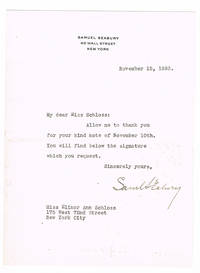
151925338New York: November 15 1933. November 15 1933. Very good. - sc Small quarto 8-1/2 inches high by 12-1/2 inches wide folded to form 4 sides. 21 words typed on the first side of a sheet of his personalized cream letterhead with his Wall Street address printed at the top. Signed "Samuel Seabury". The letter is lightly soiled & slightly darkened along the left side. There are 4 small pieces of tape on the 4th side where the letter was once mounted in an album. Folded once for mailing. Very good. New York: November 15, 1933. unknown
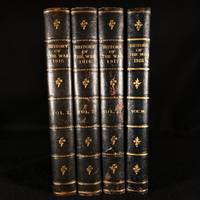
1519731L8London: The Times 1915-1918. Fine Binding. Very Good Indeed. 12" by 8". Various. A finely bound set of four volumes from The Times' popular periodical regarding the First World War. With a folding map frontispiece to volume II. With black and white in-text illustrations throughout. Comprising volumes II VII XI and XIV issued from 1915 to 1918. Battles discussed include the Battle of Jadar The Fall of Antwerp and the The Aisne Battles. In uniform full morocco bindings. Externally very smart. Repair to the rear board of volume XIV. Light rubbing . Rear joint to volume II strained but firm. Patches of rubbing to the front board of volume VII. Very Good Indeed The Times unknown
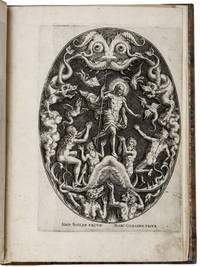
15705934b<b>GHEERAERTS THE ELDER'S GROTESQUE SUITE OF ENGRAVINGS DEPICTING SCENES OF CHRIST'S PASSION</b><br /><br />8vo 1 engraved title page and 13 full-page engravings and extra illustrated with additional 4 engravings from other suites. Quarter bound in 19th-century calf and marbled paper boards gold-stamped lettering piece laid to spine marbled end papers. Only minor edge wear to boards joints tender. The suite of engravings in fine dark strikes with only the occasional minor stain; two of the additional engravings Labors of Hercules are trimmed laid down and carry later annotations in pencil.<br /><br /><p>Rare first and only edition only state of a suite of 14 full-page 16th-century engravings which ingeniously refigure the traditional subjects of Christ's Passion in a manner at once timely/fashionable and archaizing/antique. The <i>Passio verbigenae</i> published by Jan Sadeler I 1550-1600 after the designs of Marcus Gheeraerts the Elder c. 1520-c. 1590 depicts scenes occurring between Christ's meditation on the Mount of Olives and his Resurrection each presented in the manner of ancient Roman <i>grottesche</i> a form widely popular in Renaissance and Mannerist art following the rediscovery in the late 15th-century of grotesque frescos at Nero's Domus Aurea in Rome. The symmetrical exquisite obscure delicate and often bizarre nature of this style suited the Mannerist tastes of Flemish printmakers in the late 16th century. Here however Gheeraerts and Sadeler use the style not for weird or frivolous ancient iconography but instead to recount the most central and important story of Christianity the Crucifixion of Jesus and his triumph over death. In this case it is likely that Gheeraerts and Sadeler saw the grotesque mode as a historical form dating from the time of Christ which conferred authenticity to the subject matter. In this way the suite of engravings is both a fine curio and a document participating in the new movement of Early Christian archeology which rose to prominence in the decades before 1600.</p><p>The suite's engraved title page and 13 full-page engravings are arranged in an oval frame as quasi-symmetrical compositions with a principal iconographic moment from the Passion in the upper-middle register and an ancillary scene below. The title page shows the <i>Arma Christi</i> or Instruments of the Passion surmounting death/demons with Latin verse by Favolius at the bottom the attribution to Favolius "D. Favol: canebat" has been abraded in the present example. The principal plates depict the Last Supper with as the ancillary scene Judas receiving thirty pieces of sliver Agony in the Garden Judas and soldiers enter garden Judas embracing Jesus leading to his arrest Simon Peter cuts off ear of Malchus Christ before Caiaphas the Denial of Peter the Flagellation tormentors bind sticks for flogging Crowning with Thorns Christ given reed <i>Ecce Homo</i> mocking of Christ; Christ carrying Cross Instruments of the Passion Soldiers take Christ's cloak and prepare him for Crucifixion soldiers dig post hole for Cross Crucifixion soldiers roll dice over cloak Descent from Cross tomb sealed Harrowing of Hell demons in Hell and the Resurrection soldiers at tomb.</p><p>The present volume was extra illustrated by an early collector with 4 further grotesque plates designed by Gheeraerts. These are 1 the <i>Ignis</i> Fire plate from the Four Elements series published by Philips Galle 2-3 Hercules fighting Hydra and Hercules afflicted by the Cloak of Nessus from Gheeraerts' suite of the Twelve Labors of Hercules and 4 Hercules drawing his bow against the Centaur Nessus who is absconding with Deianeira from the 'Ornaments for goldsmiths in squares octagons and lozenges' suite by Gheeraerts and Galle.</p><p>Complete suites of the <i>Passio verbigenae </i>are very rare with OCLC locating U.S. examples only at the National Gallery of Art and the Metropolitan Museum of Art; the Blanton Museum of Art Texas holds a partial suite.</p><p><i>Ornamentprenten in het Rijksprentenkabinet</i> 85; Hollstein <i>Dutch and Flemish etchings engravings and woodcuts c. 1450-1700</i> v. 7 p. 102 nos. 87-99; SKB 230; Foulc 544; Jessen 289; E. Hodnett <i>Marcus Gheeraerts the elder of Bruges</i> pp. 60-61 72.</p> hardcover books
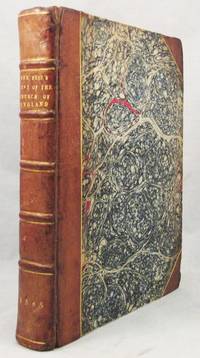
156532099Antwerp: John Laet 1565. Five books in one volume. A VERY RARE COMPLETE COPY the First Edition of Historia ecclesiastica gentis Anglorum translated into English. Provenance: Montanus 1602 -- Sir Roger Twysden 1648 and Sir John Saunders Sebright armorial bookplate. With woodcut device on titlepage woodcut armorial dedication to Queen Elizabeth woodcut plate of St. Augustin with Elbert King of Kent in anno 596 woodcut plate of King Oswald uniting the Umbrian kingdoms halfpage woodcut of Elbert building St. Paul's and with many large and handsome woodcut initials all throughout. The woodcuts are possibly by Arnaud Nicolai. Small 4to 188 x 140 mm in antique three-quarter russia over marbled boards the spine with raised bands ruled in gilt one compartment gilt lettered gilt dating at the tail gilt lined back and cornerpieces. 1-6 >1-4 #1-4 192 9 pp. A truly excellent survival of a book rarely found complete. The text-block is especially fresh and well preserved crisp and very clean. The blanks date from the time of the binding but the text is otherwise wholly complete and original the binding is handsome though its age is evident and there was restoration some time ago to the hinges the front of which is also strengthened from within. VERY RARE FIRST EDITION IN ENGLISH OF THE FIRST AND GREATEST WORK OF ENGLISH HISTORY BY THE FATHER OF ENGLISH HISTORY. RARE IN COMPLETE STATE when one reads the catalogue entries of copies in even some of the worlds most prestigious institutions one finds descriptions of missing signatures facsimile titles or entire sections excised to be quite the norm. This copy but for its probable early 19th century blank flies and endpapers is wholly intact and in a truly exceptional state of preservation.<br> The Venerable Bede's title of "The Father of English History" is well deserved. He was England’s greatest historian in the Middle Ages. His greatest work is the Historia Ecclesiastica here in its first English edition. It is an ecclesiastical history of the English people. Bede begins with Caesar’s invasion in 55 BCE and St. Alban’s martyrdom in Roman Britain tracks the spread of Christianity following St. Augustine’s mission to England in 597 and provides an account of critical events such as the Council of Whitby which decided that Roman rather than Celtic Christian customs would be followed in Britain.<br> Bede drew on the many manuscripts in the Jarrow monastery’s outstanding library and correspondents provided him materials. He was a diligent scholar and properly credited his sources. To the benefit of historical scholarship Historia Ecclesiastica spread widely throughout Europe in the Middle Ages with some 160 manuscripts still surviving. Not long after his death he became known as the Venerable Bede. His was one of the first printed history books published in Latin in Strasbourg about 1475. Highly popular on the Continent and in Britain it was reprinted in 1500 1506 and 1514.<br> Due to its strong association with Catholicism this first translation into the English tongue was published in Antwerp as the book was then prohibited in England as traitorous. Stapleton was educated in Oxford where he became a fellow in 1553. On Queen Elizabeth’s accession he left England to study theology in Louvain and Paris. His translation of Bede was his first of many fine works. Stapleton used Bede’s history to remind the reader that “we Englishmen also these many hundred of years kept and preserved sound and whole the precious perle of right faith and belefe†and he admonished that “after we forsooke the first paterne off the Christen faith delievered to us we have fallen in to plenty of heresies.†He added that the Venerable Bede a most reliable source describes many miracles that occurred in Britain under the true faith. Stapleton's translation has been called an "enduring contribution to this sparkling collection of recusant prose" -DNB <br> This is also a copy of fine and established provenience. It was formerly owned by the renown historian and antiquary Roger Twysden whose ownership signature is dated 1648. Having been caught up in civil war strife Twysden retired to his seat Roydon Hall and devoted himself to his study and writings particularly on early English histories and monasticism. His collection passed to Sir John Sebright who sold the main portion at auction in 1807. Much of Twysden's collection later passed to Sir John Sebright whose fine engraved armorial plate is afixed to the front paste-down. The present binding was likely made while the book was in Sebright's possession. <br> Contrary to the implications of Stapleton's edition of Bede Twysden's Historical vindication of the Church of England 1657 argued that it was the Church of England rather than Rome which had held fast to the true faith and that the pope's powers over England gained gradually over the centuries had been submitted to voluntarily out of love not duty for the archbishop of Canterbury had no mediate superior but only Christ and God see Jessup Sir Roger Twysden pp. 192-5. Completed in 731 Bede's Historia ecclesiastica gentis Anglorum is 'probably one of the most popular history books in any language and has certainly retained it popularity longer than any rival. The enthusiasm shown for his writings in the eighth century by English missionaries on the Continent such as Boniface Lul and others led to the spread of knowledge of his works not only in England but also in western Europe . . . . From then on as the spread of his manuscripts shows the History became popular all over western Europe and 160 of them survive today in spite of all the wars and other dangers to which manuscripts are always subject' Colgrave & Mynors p. xvii. It was first printed c. 1475 at Strasbourg PMM 16. 'Bede provided for over a thousand years and to a large extent still provides nearly all the knowledge available of the early history of England. His Historia is the only work other than parts of the Bible which has been read by every English generation from his own day to the present. It has the power to move and to convey something of the personality of its author to a degree which has called forth not only admiration but a kind of affection' Oxford DNB. John Laet hardcover
1559717111559. London 1559. London 1559. "The Booke That Teacheth" Great Britain. Justices of the Peace. Courts Leet and Baron. The Contentes of This Boke. Fyrst the Booke for a Iustice of Peace. The Boke that Teacheth to Kepe a Courte Baron Or a Lete. The Boke Teachynge to Kepe a Courte Hundred. The Boke Called Returna Brevium. The Boke Called Carta Feodi Conteynynge the Forme of Dedes Releasses Indentures Obligacions Acquitaunces Letters of Atturney Letters of Permutacion Testamentes And Other Thynges. And the Boke of the Ordinaunce to be Observed by the Offycers of the Kynges Escheker for Fees Takinge. London: In Fletestreete within Temple barre At the Signe of the Hande and Starre by Richard Tottil The XIII. Daye of Maye. Anno Domini 1559. 195 11 ff. Lacking Final two blank leaves. Octavo 5-1/4" x 3-1/2". Recent period-style calf blind rules to boards raised bands to spine endpapers renewed blank interleaves added in a few places. Moderate toning edges trimmed touching headlines in a few places worming with occasional minor loss to text repairs to corners of a few leaves. Faint stain and faint fragment of an annotation to final leaf early illegible owner signatures to title page. $2500. First printed in 1505 by Richard Pynson this is a handy anthology of treatises for justices of the peace sheriffs bailiffs. It includes the Carta Foedi and exchequer ordinance. It is sometime attributed erroneously to Sir Anthony Fitzherbert. OCLC locates 5 copies of this edition in North American law libraries Columbia Harvard LA County Library of Congress University of Minnesota. English Short-Title Catalogue S102175. Beale A Bibliography of Early English Law Books T154. unknown books
1590ABC_46070Antwerp 1590. Folio 7 of 8 plates trimmed. Adriaen Collaert 7 plates with the Acts of Mercy & Johannes Galle the Last Judgement Loose prints. 8 engravings ca. 17.5 x 20.5 cm on laid paper by Crispijn de Passe I the elder after Maarten de Vos with the central scene framed by an exquisite ornamental border showing crafts tools and scenes relating to the subject. All engravings captioned with engraved Latin text in a cartouche below the images. Complete series of the Acts of Mercy including the plate of the Last Judgement engraved by the engraver illustrator and publisher Crispijn de Passe I ca. 1564-1637 after Maarten de Vos 1532-1603 one of the most prolific and influential print designers of his generation. They were first published by the engraver Crispijn de Passe the elder I and subsequently by Adriaen Collaert Theodoor Galle and Johannes Galle. Our set shows the 7 prints of the Acts of Mercy in their second state of 4 by Collaert with his monogram "AC" in the plates. The eighth print showing the Last Judgement is in its third state published by Johannes Galle. The acts of mercy depicts feeding the hungry giving drink to the thirsty clothing the naked in a dress shop housing the homeless tending the sick visiting prisoners and burying the dead.One print feeding the hungry untrimmed. The 7 trimmed prints are reinforced with two small white paper slips in the head margin the Last Judgement very slightly toned and with a few spots. Otherwise in good condition with very sharp and dark impressions of the plates. The complete series of the Acts of Mercy including the Last Judgement.l Hollstein XV 471-477; New Hollstein Maarten de Vos 613.3; 614-620.2. ABE CAT Art History ABE CAT Bibles Sermons & Psalmbooks hardcover
15880026748London & Oxford: Oxford University Press Humphrey Milford Horace Hart 1588. First Edition Thus . Soft cover. Very Good. 8vo. FIRST EDITION. OXFORD : 1907 written in 1588 . Grey printed paper covers as issued. Untrimmed edges as issued. Sewn book. With the Editor's compliments' in neat hand to head of title-page. Text tight and clean Covers have edge-wear and are a little dusty. One or two minor marks. VERY GOOD. Full title; The ' Retractation' of Robert Browne . Being 'A reproofe of certeine schismatical persons-i.e. Henry Barrowe John Greenwood and their congregation-and their doctrine touching the hearing and preaching of the Word of God.' Written probably early in the year 1588 since lost and now first published with a brief account of its discovery by Champlin Burrage. VERY GOOD. viii 65 pages. SCARCE. Will be well-packed for posting/shipping. 8vo. Rosley Books for Antiquarian books CHS Cumberland Everyman GKC Inklings Keswick Literature MacDonald Rarities Theology and History. . SCARCE. <br/> <br/> Oxford University Press (Humphrey Milford) Horace Hart paperback
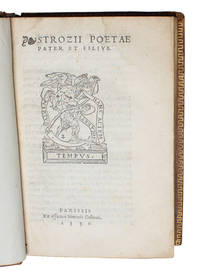
153045363Parisiis Ex officina Simonis Colinaei 1530. 8vo. Bound in a very fine later full calf around 1700 profusely gilt spine titlelabel in leather with gilt lettering broad gilt borders on covers edges of covers gilt edges of leaves gilt. A very small nick to top of spine. 8 lvs. 1-2563 lvs. 1 blank. A small and very faint dampstain to upper inner margins of the first 8 lvs. Otherwise very clean throughout. A beautifull printed and wide-margined copy 17x115 cm. <br/><br/><em>Scarce second edition of the "opera" of the poetical works of both father and son. Their collected opere were first published by Aldus Manutius in 1513 together with works of his son under the title Strozii poëtae pater et filius. The offered edition is copied from this Aldus-edition. They were both members of the famous Strozzi-family exiled from Florence.Adams S 1957. - Graesse VI: 512. </em> hardcover
153045363Parisiis, Ex officina Simonis Colinaei, 1530. 8vo. Bound in a very fine later full calf (around 1700), profusely gilt spine, titlelabel in leather with gilt lettering, broad gilt borders on covers, edges of covers gilt, edges of leaves gilt. A very small nick to top of spine. (8) lvs. + (1-)256,(3) lvs. + 1 blank. A small and very faint dampstain to upper inner margins of the first 8 lvs. Otherwise very clean throughout. A beautifull printed and wide-margined copy (17x11,5 cm).
1501mon0000081633Baldwin Cradock & Joy 1815-01-01. Hardcover. Good. in x in x in. pocket edition printed by scott webster 7 geary a new edition in one volume with 195 wood cuts on green rather worn cloth some looseness Baldwin Cradock & Joy hardcover
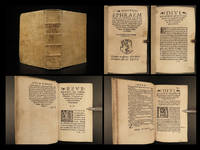
154720350<p><b>1547 1ed Saint Ephrem of Syria Aramaic Hymns Syriac Persian Greek Cologne RARE</b></p><p>Saint Ephrem the Syrian was a 4th-century early church Syriac Christian theologian. He wrote hundreds of hymn texts many of which engage with Greek philosophy and the traditions of Persian symbolism. Each of his writings were originally written in the Syriac language. </p><p>This 1547 edition of the works of Saint Ephrem is incredibly rare with only one known copy in any institution in America! </p><p>Item number: #20350</p><p>Price: $950</p><p>EPHREM Saint the Syrian </p><p><b><i>Sanctiss. Ephraem Syri eremitae archidiaconi & presbyteri ecclesiæ Edissenæ opuscula omnia quæ apud Latinos reperiri potuerunt operosius & auctius multo quam hactenus vnquam suæ integritati restituta & in hanc Enchiridij formam Christiano lectori exhibita.</i></b></p><p>Coloniæ : ex officina Melchioris Nouesiani 1547. First edition.</p><p><br /></p><p><u>Details</u>:</p><p>· Collation: Complete with all pages</p><p>o 40 232 leaves 112</p><p>o Signatures: -2⸠3â´ A-2Nâ¸</p><p>· References: USTC 692042; </p><p>· Language: Latin </p><p>· Binding: Vellum; tight and secure</p><p>· Size: ~6.25in X 4in 16cm x 10cm</p><p>· Very rare and desirable</p><p>Our Guarantee:</p><p>Very Fast. Very Safe. Free Shipping Worldwide.</p><p>Customer satisfaction is our priority! Notify us with 7 days of receiving and we will offer a full refund without reservation!</p><p>20350</p><p>Photos available upon request. </p> Melchioris Nouesiani hardcover
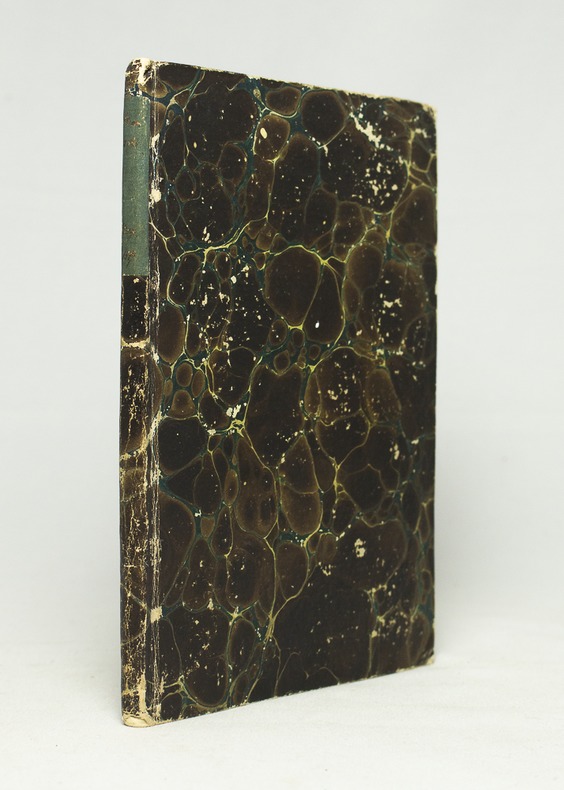
15174451Maguntie [Mainz], Joannes Schöffer, 1517. In-4 de 46 pages, titre orné de gravures. Cartonnage de papier marbré noir (19ème). Ex-libris de la bibliothèque du docteur Georges Kloss, dont la vente eu lieu en 1835, réalisée par Sotheby, et qui contenait de très nombreux ouvrages en provenance de la bibliothèque du réformateur Mélanchthon.In-4 of 46 pages, title decorated with engravings. Original cased binding of black marbled paper (19th). Bookplate from the library of doctor Georges Kloss, the sale of which took place in 1835, carried out by Sotheby's, and which contained a large number of works from the library of the reformer Mélanchthon.
15695032541569. Book. A lengthy series of royal edicts / decrees / writs produced by the court under Philippe's close scrutiny in 1569 regarding financial and other obligations on the part of the persons in the area of Castro del Rio and elsewhere. 49 vellum leaves 98pp of manuscript 4 blank pages. The last page of which bears the date 18 November 1569 and the elaborate signatures and marks of the King and a number of his courtiers. Each page of the text bears 2 flourishes ie initials likely by the King and by the person responsible for the production of the document. In the original leather covers much rubbing and wear with remnants of the binding ribbons but the document still well-bound and with we think the original tri-coloured spine-cord binding the text to the cover. The first page with ornate decoration and illustrations in ink embellished with gold detailing and flourishes. Exquisite calligraphy throughout on well-preserved vellum. No seals present. 14" x 10". hardcover
1562376729Frankfurt am Main: David Zöpfel 1562. Woodcut title vignette 43 woodcut illustrations some repeated. Title page in red and black. 8 300 leaves. Small 4to 7-3/4 x 5-7/8 inches. Late nineteenth century brown crushed morocco gilt by Frances Bedford marbled endpapers gilt edges. Provenance: William Title inscription dated 1856 on front free endpaper; C. S. Ascherson bookplate and inscription to; Edward Ascherson bookplate. Woodcut title vignette 43 woodcut illustrations some repeated. Title page in red and black. 8 300 leaves. Small 4to 7-3/4 x 5-7/8 inches. The first of two Frankfurt printings by David Zöpfel that year using the same woodcuts. The text is descended from the Low German version Reynke de Vos first printed at Lübeck in 1498. <br /> <br /> Among the most widely adapted of the beast fables the tales of Reynard the Fox originated in the 12th and 13th centuries with early versions in French Dutch Latin and German being notable. One of the most important secular literary traditions of the Middle Ages Reynard the Fox is at its essence biting satire and parody. The character of Reynard an anthropomorphic fox and trickster has since become almost an archetype in the literatures of many languages. "The supreme 'anti-hero' of medieval fiction" Cambridge Guide to Children's Books in English.<br /> <br /> This copy from the renowned library of the eminent British architect and book collector Sir William Tite 1798-1873 whose sale at Sotheby's in May-June 1874 took sixteen days certainly one of the greatest collections of the time. [David Zöpfel] unknown
159260391Rostock Stephan Mölleman 1592 4to. In contemporary limp vellum. Extremities with light soiling and miscolouring. Front free end-paper annotated in contemporary hand. Three leaves T-Tiii with repairs with loss of text and woodcut. Title-page and colophone supplied in facsimilie. Internally with light occassional browning but in general good condition. 272 ff f. 272 erroneously printed as f. 273 with 44 woodcut illustrations in text. <br/><br/><em>Later Rostock edition of the famous epic. Circulating from the 12th-century and derived in part from Aesop Reynard the Fox is one of the most popular and enduring beast-epics. Reynard the Fox is a collection of fables that originated in medieval Europe and the exact authorship is unknown. The stories were likely passed down orally before being written down in various versions over the centuries. The fables with the wily fox as a central character lent themselves to satire and it became a vehicle used by the Protestant reformers and others. The Low-German version first appeared at Lubeck in 1498 and the Rostock editions which followed from 1517 facilitated the spread of the epic towards the east. The woodcuts had previously illustrated the 1539 Rostock edition of which 36 are attributed to Erhard Altdorfer. Stylistically they depend on the first Lubeck and Rostock editions. </em> hardcover
159260391(Rostock, Stephan Mölleman, 1592) 4to. In contemporary limp vellum. Extremities with light soiling and miscolouring. Front free end-paper annotated in contemporary hand. Three leaves (T-Tiii) with repairs with loss of text and woodcut. Title-page and colophone supplied in facsimilie. Internally with light occassional browning but in general good condition. 272 ff (f. 272 erroneously printed as f. 273) with 44 woodcut illustrations in text.
157963961Frankfort & Wechelus: Francofurti Ad Moenum Apud and Wechelum 1579. Around 1961 a previous owner writes "According to the recent national archives survey this is the second oldest book in the State of Florida." Ask for scanned images of this rare volume and the laid-in notes of early researcher. "THIS CONSISTS OF ORATIONS AND COMMENTS OF FAZELLUS or FAZELUS WHO WAS PROFESSOR OF THE CUSTOMS OF THE SICILIAR AND SACRED HERITAGE OF THE PREACHER.". First Edition 1st Edition. Hardback LEATHERBOUND. Good Used Antique Condition. 13 3/4 Inches X 8 1/5 Inches X 2 1/4 Inches. Francofurti Ad Moenum Apud and Wechelum Paperback
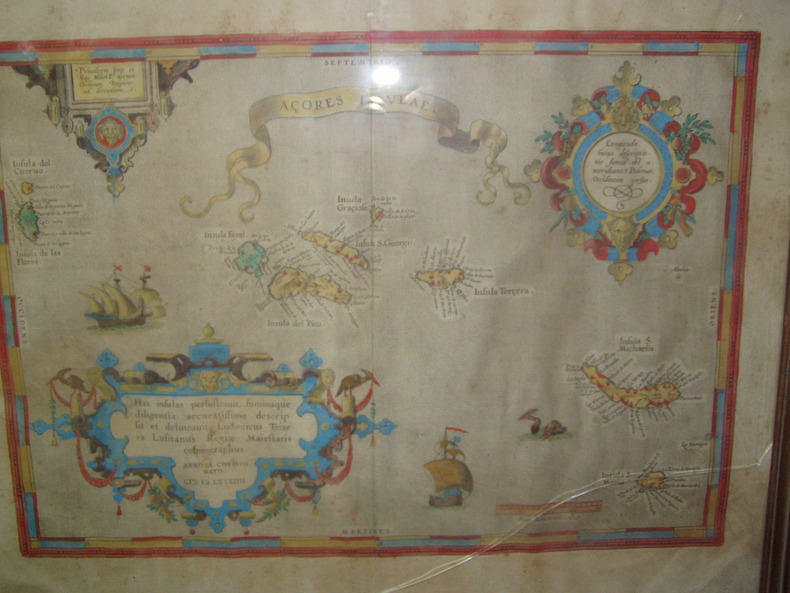
1584224251584 Orig. copper-engraving. Published by A. Ortelius after to L. Teixeira's map of the Açores. Dated 1584. Coloured. With title in decorative border, 3 ornamental cartouches, 2 ships, sea-monster and "Scala Leucarum". 32,5:46,5 cm (12 3/4 x 18 1/4 inch.) 2,5 x 46,5 cm Van der Krogt, Koeman's Atlantes Neerlandici, Vol. III B, 6350:31; Van den Broecke, Ortelius Atlas Maps, Nr. 24. - Stammt aus einer von fünf lateinischen Ausgaben, die in den Jahren 1595 - 1612 erschienen. Alle tragen das Datum 1584 in der großen Kartusche.A splendid sea chart of the Azores with three scrollwork cartouches; the ocean is decorated with sailing vessels. A fresh example of this scarce sea chart, based on Teixeira's single sheet map of Terceira from 1582, and a later manuscript atlas of the Azores islands. The Azores played a significant role in international sea trade as a victualling stop and shelter for ships sailing into the South Atlantic. In very good condition. The map was first issued in an edition of 100 examples in the Additamentum to the 1583 edition of Ortelius' Theatrum Orbis Terrarum, which is widely referred to as the first modern atlas and a landmark in the history of Western map making. Beginning in 1570, Abraham Ortelius and his successors published (and continuously added to) this monumental work for a period of over 40 years (not including the very rare edition of 1641), with text on the verso in Latin, Italian, German, Dutch, French, Spanish and English.References: Van Den Broecke 24. Meurs p 253-254.