The Beatles (written by Paul McCartney)Biblio.com
46 518 résultats
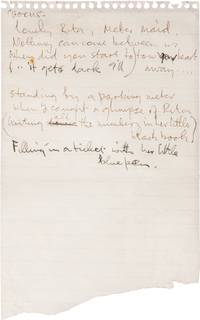
19672451967. Paul McCartney’s handwritten working manuscript as Beatle for “Lovely Rita†from the album Sgt. Pepper’s Lonely Hearts Club Band. the most famous album in the entire panorama of modern music. This is the very first rough draft 10 lines in ink all in Paul’s handwriting and all written on a single side of an irregular scrap of lined paper 7 1/2†X 5†torn from a spiral notebook. 7 lines in black are Paul’s first concept. 3 lines of changes have been added later in blue such as “writing all the numbers in her little black book†changed to “filling in a ticket with her little blue pen†and still later recorded as “filling in a ticket in her little white book.†Near fine condition. Lavishly matted and framed with a full size uncorrected 1st state proof photograph of the album cover varying in that McCartney is kneeling the band instruments have been passed around and 2 people are among the onlookers who would not sign releases and therefore did not appear on the published album. Ex–Butterfield’s Dec. 12 1993. Rare. Icon time. Beatles manuscripts from Sargent Pepper held all the rock & roll world records until Bob Dylan’s Like a Rolling Stone sold at auction for $2000000 in 2014. But it’s been a while now and another Sgt. Pepper manuscript will take the record back eventually and someday soon the only way to see one will be in a museum at the end of a long line behind velvet ropes. The last authentic Sgt. Pepper manuscript at auction A Day in the Life admittedly a greater song sold for $1202500 at Sotheby’s in 2010. The last real McCartney manuscript of a Beatles song at auction was an abridged later fair copy of 10 condensed lines from Hey Jude that he wrote out to be used as a key by a backup musician at a recording session $910000 at Julian’s in 2020 and that one in contrast to ours was not a working manuscript carrying his thoughts inner debates and changes.<br /> <br /> The handwritten lyrics to "Lovely Rita Meter Maid" represent an intimate window into The Beatles' conceptual shift during their psychedelic period showcasing McCartney's evolving storytelling approach. Unlike their earlier love songs centered on direct romantic sentiments this track exemplifies their move toward character-driven narratives with whimsical scenarios and playful humor. This creative direction coincided with broader cultural movements challenging conventional structures and celebrating the previously overlooked aspects of daily life. The track's transformation of a mundane authority figure into the subject of amorous pursuit subtly subverted social norms while maintaining a façade of innocent charm—a hallmark of the band's distinctive cultural impact during this period.<br /> <br /> McCartney's composition emerged during a pivotal moment in Western society when art was increasingly blurring distinctions between "high" and "low" culture. The Beatles' work on "Sgt. Pepper" helped legitimize popular music as culturally significant with songs like "Lovely Rita" demonstrating how seemingly simple pop compositions could contain nuanced social observation. The character sketch format allowed the band to adopt personas and perspectives outside their own experiences expanding their artistic range while connecting with the era's interest in identity exploration and social role-playing. This approach positioned the band as both participants in and commentators on the rapid social changes reshaping 1960s culture making even their lighthearted works like "Lovely Rita" meaningful cultural documents of their time. unknown
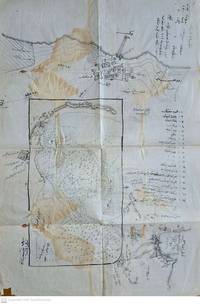
1902000110<p><strong>29 × 20 cm. Comprising 158 text plates including 95 photographs produced by the committee of which 42 photographs appear on separate plates measuring approximately 23 × 15 cm.</strong></p><p>The work documents the Photography Committee's journey from Istanbul to MaÊ¿Än in Transjordan. The accompanying text was compiled from articles originally published without illustrations in various issues of the newspaper <em>Vakit</em> "Time" in 1902.</p><p>This is a unique work prepared for publication with photographs taken by a private committee that included prominent figures such as the German general Karl Auler Pasha who served as an adviser on Hejaz affairs until the fall of Medina in 1918.</p> hardcover
1917000214<p><strong>We believe this to be the first complete collection of its kind</strong> including several items that we have not encountered in public libraries or archival sources. In any case it represents the most comprehensive collection of issues that we have traced over a period of twenty-five years of Ottoman state publications many of which are difficult to assemble. The collection essentially consists of official reports most of which were prepared by the two ambassadors <strong>Fakhr al-Din Rûm Bey Oğlu</strong> and <strong>Muhammad Nâbi</strong>. These reports are highly restricted official documents.</p>Description of the Collection<p>The reports were prepared in <strong>Ottoman Turkish</strong> except for four items written in modern Turkish after the alphabet reform; these were prepared by <strong>İsmail Hakkı Tevfik</strong> and <strong>Abdulgani Seni Bey</strong>.</p>1. <em>Najd Issue</em> Najd Question<p>Ottoman Turkish report published by the Ministry of Foreign Affairs Istanbul 1918. 15 pages octavo.<br />Prepared by Ambassador Fakhr al-Din Rûm Bey Oğlu and the Ottoman Ambassador in Rome Muhammad Nâbi dated 11 March 1917.</p><p>The report discusses the political borders of Ottoman Najd; the treaty signed between Süleyman Şefik Pasha and Abdulaziz ibn Saud; the Ottoman–British treaty concerning Najd including Qatar; and the Ottoman treaty with Ibn Saud converting Najd from a <em>mutasarrifate</em> into a province <em>vilayet</em> appointing Ibn Saud as governor and commander-in-chief including military organization.</p><p>Topics include:<br />Midhat Pasha's report; Wahhabis; the conflict between Saud and Abdullah ibn Faisal; the sheikhs of Muscat Mukalla Oman Hadhramaut and Bahrain and their relations with Britain; Saudi movements along eastern Najd; Ottoman naval response under Midhat Pasha; the administrative difficulty of Najd; support of Mubarak al-Sabah for the Ottomans; coercion of Abdullah al-Faisal to sign the al-Ahsa treaty; Ibn Rashid's advances; tribal dynamics; British support of Al-Sabah; British protection; Ibn Saud and the Muntafiq sheikh; Ottoman–Wahhabi agreements 10 April 1905; British protests regarding Ibn Saud's border violations and interference in Qatar and Oman; the 12-article Ottoman–Ibn Saud treaty of 12 July 1913 including the separation of Qatar from Najd; maritime boundaries; recognition of Jasim Al Thani; compensation to the Sheikh of Bahrain.</p>2. <em>Muscat Issue</em><p>Ottoman Turkish report Ministry of Foreign Affairs Istanbul 1918. 6 pages.<br />Prepared by Fakhr al-Din Rûm Bey Oğlu and Muhammad Nâbi dated 27 November 1916.</p><p>Covers Muscat modern Oman the Imamate foreign involvement Ottoman views rejecting Muscat's independence from the Arabian Peninsula; relations between Najd Muscat and British India; strategic location; occupation history; Al-Sa'id relations with Wahhabis; British and French recognition of Omani independence in 1862; Ottoman perspective on Oman's connection to Arabia.</p>3. <em>Qatar Coasts Issue</em><p>Prepared 8 January 1917. Printed at the Imperial Press. 7 pages plus 9 pages of French appendices.</p><p>Topics include British expansion from Bahrain to Qatar; Ottoman claims; British intervention since 1891; correspondence with the Ottoman state; Bahrain–Qatar disputes over Zubarah and al-'Udayd; appointment of Abd al-Rahman Al Thani; British encroachments; Qatar within the Kuwait treaty framework; confirmation of Jassim Al Thani's authority in 1913.</p>4. <em>Kuwait Issue</em><p>Fakhr al-Din Rûm Bey Oğlu & Muhammad Nâbi. Imperial Press Istanbul 1334 AH. 34 pages.</p><p>Geography population sect history of Al-Sabah; Ottoman administration of Baghdad and Basra; British policy; secret treaties 1899–1904; borders; railways; maritime flags; taxation refusal; British attempts to place Kuwait under protection; Ottoman responses; oil islands Bubiyan Khor Abdullah; Sheikh's declaration of being an officer in the British army. Dated 31 August 1918.</p>5. <em>Basra Gulf Issue</em> Bahrain Qatar Pirate Coast/Emirates<p>İsmail Hakkı Tevfik. Ankara 1931. 32 pages.<br />Political tribal and documentary history in Turkish English and French.</p>6. <em>Irrigation in Arabia</em><p>Fakhr al-Din Rûm Bey Oğlu & Muhammad Nâbi. 14 pages.<br />Ottoman irrigation projects; British interference since 1910; German involvement.</p>7. <em>Asir Revolt of 1911</em><p>Report by Consul General İsmail Hakkı. 31 pages.<br />Ottoman military actions; Idrisi revolt; tribal loyalties; Wahhabi involvement; detailed military maps.</p>8. <em>Aqaba Issue</em><p>By Rashdi Infantry Brigade Commander. Istanbul 1326 AH. 154 pages.<br />Ottoman–British relations; Egypt's role; Hijaz railway; Aqaba dispute.</p>9. <em>War in Arabia between Ibn Saud and the Imam of Yemen</em><p>By Abdülgani Sünni Bey. Ankara 1934. 20 pages.<br />Unique copy. Covers causes tribal alignments Asir Aden Najran foreign involvement.</p>10. <em>Guide to the Gulf of Aden</em><p>Ottoman Turkish. Istanbul 1310 AH. 276 pages.<br />Includes maps; authored by naval officer Süleyman Nutqi.</p>11. <em>Tripoli Benghazi and the Twelve Islands Issue</em><p>Report dated 27 November 1916. 24 pages French treaty texts.<br />Ottoman North Africa American conflicts Italian ambitions Lausanne Treaty.</p>12. <em>Sheikh Sa'id Island Issue</em><p>Istanbul 1916. 4 pages.<br />Strategic Bab al-Mandab island dispute with France.</p>13. <em>Palestine Issue – Zionist Claims</em><p>Istanbul 3 March 1918. 43 pages.<br />Origins of Zionism; European diplomacy; Jerusalem administration.</p>14. <em>Notes on the Iraq War</em><p>Military Press 1333 AH. 88 pages.<br />Translated from English for official use only. Rare.</p>15. <em>Bahrain Issue</em><p>Report dated 8 January 1917. 12 pages French texts.<br />History British protection treaties 1820–1898 inclusion in 1913 Gulf treaty.</p>16. <em>Muhammarah Issue</em><p>Report dated 1 March 1917. 8 pages.<br />Borders oil Sheikh Khaz'al Anglo-Iranian-Ottoman relations.</p>17. <em>Oil Concessions in Arabia</em><p>Report dated 26 March 1917. 9 pages English treaty.<br />Mosul Baghdad Basra Shell Najd Kuwait.</p>18. <em>Baghdad Issue</em><p>Report dated 31 August 1917. 53 pages French texts.<br />Baghdad Railway; British–Ottoman rivalry; Gulf politics.</p>19. <em>Farasan Islands Issue</em><p>Report dated 28 November 1916. 8 pages.<br />German coal depot request; British occupation; oil and gas.</p>20. <em>Hadhramaut Issue</em><p>Report dated 11 March 1917. 6 pages.<br />Tribal governance; British relations via Aden.</p>21. <em>Aden and the Nine Districts</em><p>Report dated 27 November 1916. 39 pages French annexes.<br />Portuguese Ottoman British rule; Yemen administration; sovereignty claims.</p>22. <em>Memorandum on British Claims Regarding the Baghdad Line and Basra Gulf</em><p>Istanbul 21 January 1911. 35 pages appendices.<br />Detailed diplomatic negotiations since 1903.</p>23. <em>Guide to the Red Sea</em><p>Istanbul 1307 AH. 459 pages.<br />Comprehensive nautical and railway guide with ports and routes.</p>24. <em>South Arabia Issue</em> Hadhramaut Socotra etc.<p>İsmail Hakkı Tevfik. Bulgaria 1935. 132 pages with photographs and maps.</p>25. <em>The Egyptian Issue</em><p>Prepared March 1918. 186 pages.<br />Ottoman legal and political analysis of Egypt from Muhammad Ali to British occupation.</p>26. <em>Shatt al-Arab Issue</em><p>Istanbul 1917. 30 pages.<br />1913 treaty with Britain; navigation borders Iran Muhammarah.</p><p><strong>Note</strong><br />İsmail Hakkı Tevfik was a senior Ottoman and Republican diplomat and son-in-law of Sultan Mehmed VI. Fakhr al-Din Rûm Bey Oğlu and Muhammad Nâbi were leading Ottoman statesmen. Other contributors include Süleyman Nutqi naval officer and Abdulgani Seni Bey later a key Republican thinker.</p><ul><li><strong> 26 items</strong></li></ul> Ottoman Ministry of Foreign Affairs paperback
193869823New York:: The Macmillan Company 1938. Reprint of the 1936 first edition. original gray cloth stamped in blue in dust jacket. Ink stamp of Selznick International Pictures Inc. to verso of rear free endpaper; a little browning to the hinges from binder's adhesive; some shelfwear to the bottom edge; but a bright copy. The jacket is chipped at extremities of the backstrip and has a few other tiny chips; good to very good. The framed certificate of appreciation is somewhat rippled and there is some fading to some of the signatures. . 8vo and framed artwork measuring 25 x 21 inches overall. Denoted in pencil "Copy #1" this was Assistant Director Eric Stacey's copy signed by David Selznick Director Victor Fleming and 28 members of the motion picture cast including Vivien Leign Clark Gable and Olivia de Havilland. Eric Stacey has added his ownership signature in pencil on the half-title. Accompanying the book is a framed gift presented to Eric Stacey "In appreciation for his cooperation and unfailing interest during the darker days of "Gone With the Wind." Created by Atlanta artist Jack Conner the signatures of 82 members of the motion motion picture production staff are surrounded by a decorative cartouche in colors featuring Aeolus the Keeper of the Winds as a pair of cherubs amid scrolls the sun moon and stars. In the decorative title lettering "Gone" is windblown. The Macmillan Company, hardcover
196069825Philadelphia:: J. B. Lippincott Company 1960. Thirteenth impression. publisher's cloth-backed boards in dust jacket. Preserved in a quarter morocco folding box. Fresh and bright: better then very good in a very good jacket with the usual rubbing and edgewear. 8vo. This book was a gift for Helen Grotke who was the schoolteacher on the motion picture set tutoring the school-age actors. Inscribed by Harper Lee and twelve members of the cast including Gregory Peck Robert Duvall and the children. Many of the actors have written the names of their characters under their inscriptions. Mary Badham's reads "To Miss Grotke my favorite teacher. Mary Badham Scout." J. B. Lippincott Company, hardcover
1956140943102Various Places: The War Relocation Authority 1956. A substantial archive of over 300 individual documents plus a few duplicates<br /> relating to Japanese internment during WWII<br /> forming a very thorough view of the federal agency that directed their imprisonment The War Relocation Authority. Such a sizeable collection of WRA documents is extremely rare in commerce.<br /> <p>All the major facets of the dark disturbing episode of Japanese internment are represented in this archive: its basic legal and historical outlines the WRA's publicity and propaganda and its reception<br /> in the US the WRA's groundbreaking use of social sciences in service of repressive American policies life and death in the camps and the ending of internment.<br /> <p>The essential history of internment can be said to begin with Franklin D. Roosevelt's Executive Order 9102 establishing the War Relocation Authority included in mimeograph format. Around that time and later an Index-Digest of Opinions by the Office of the Solicitor compiles legal opinions about<br /> internment with commentary by regional attorneys.<br /> <p>Additionally included are many of the WRA's<br /> quarterly and semi-annual reports as well as a<br /> nearly 300-page contemporary history of the<br /> agency by an unknown author untitled and likely written in late 1944.<br /> <p>The publicity campaigns of the agency are reflected in collections of the propaganda leaflets the WRA issued a near-complete run of the abstracts the WRA prepared on press coverage it faced mimeographed speeches presented by WRA head Dillon S. Myer and other agency figures and a file of documents relating to the WRA's investigation by<br /> the House Committee on Un-American Activities<br /> HUAC which would become famous under<br /> Joseph McCarthy in the early 1950s. The WRA's sensitivity to criticism is readily apparent especially in their robust reaction to HUAC's critiques.<br /> <p>One of the most controversial sections of the WRA the Community Analysis Section is heavily represented in this archive by near-complete runs of their Community Analysis and Project Analysis Reports. The Community Analysis Section was largely composed of social scientists primarily anthropologists who studied life in America's WWII concentration camps. Their aim was to aid Franklin D. Roosevelt's administration in running the camps with as little resistance as possible by applying lessons learned in the disciplines of Japan studies<br /> and the human sciences. Although some<br /> Community Analysts voiced objections within<br /> restricted internal communications few brought<br /> these objections before the American public.<br /> Throughout the next six decades anthropologists psychologists and sociologists would become increasingly integral in US military operations and counterinsurgency campaigns leading to controversy with the revelation of their complicity in acts of torture by the American military in Iraq and Afghanistan.<br /> <p>Life and death in the camps is revealed in the previously mentioned reports of the Community Analysis Section as well as in detailed reports of Americans of Japanese ancestry who died in the camps and in military service Cumulative<br /> Casualties by Center documents about Tule<br /> Lake and a death there. The thoroughness of<br /> these reports is undoubtedly of use to future<br /> historians looking into various rebellions within<br /> the camps and the repression which followed<br /> as well as deaths of Nissei in WWII.<br /> A smaller collection of documents outlines the<br /> closing of the camps and attempts to transition<br /> their residents back to normal life.<br /> <p>Most are stapled mimeographed documents; a<br /> few are carbon copy typescriptsas indicated in<br /> their descriptions. Very Good condition overall.<br /> Around ten of the documents are ex-library<br /> copies with their stamps and "discard" written on<br /> them. Occasional holograph notations for<br /> routing in the WRA bureaucracy. Some<br /> documents marked "Confidential" and "Do Not<br /> Publish." Manuscript annotations to some<br /> leaves.<br /> <p>A remarkable collection of documents that<br /> reveal not only what the WRA did but how its<br /> bureaucrats perceived it and themselves. There<br /> is a strange but quintessentially American<br /> mixture of professionalism media savviness<br /> cruelty optimism and racism for historians and<br /> researchers to study here and hopefully for us<br /> all to learn from.<br /> <p>DETAILED DESCRIPTION OF CONTENTS AVAILABLE UPON REQUEST. The War Relocation Authority unknown
1979mon0000031013The Pennsylvania State Universit 1979. Paperback. Good. in x in x in. The Pennsylvania State Universit paperback
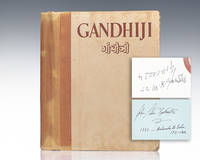
1944149272Bombay: Keshav Bhikaji Dhawale October 2 1944. First unabridged edition of this tribute to Gandhi with introductions by Gandhi and Jawaharlal Nehru and a biographical essay by Albert Einstein. Quarto original publisher's half cloth patterned endpapers illustrated with black and white photographs and tipped-in color plates frontispiece. Boldly signed by Mahatma Gandhi on the half-title page. Association copy additionally signed by John Kenneth Galbraith opposite the copyright page "John Kenneth Galbraith 1987 -- Ambassador to India 1961-1963." Although he remains best known as an iconoclast in the field of economics John Kenneth Galbraith was very active in Democratic Party politics serving in the administrations of Franklin D. Roosevelt Harry S. Truman John F. Kennedy and Lyndon B. Johnson. During his time as an adviser to President John F. Kennedy Galbraith was appointed United States Ambassador to India from 1961 to 1963. Kennedy considered India to be important not just in its own right but also because an Indian diplomat always served as the chief commissioner of the International Control Commission ICC. Thus Galbraith came to be involved in American policy towards Southeast Asia from his perch as an ambassador in New Delhi. During his tenure in India Galbraith developed close ties with Prime Minister Jawaharlal Nehru and engaged deeply with the political and cultural life of the country. He expressed admiration for India’s experiment in democratic socialism and non-alignment and he frequently drew comparisons between Nehru’s political legacy and that of Mahatma Gandhi. While Galbraith did not interact directly with Gandhi—who had been assassinated in 1948—he often invoked Gandhian ideals in his reflections on India’s development and its moral role in the post-colonial world. His writings and diplomatic efforts emphasized the importance of non-violence civil society and moral leadership themes closely associated with Gandhi’s philosophy. In very good condition. A wonderful association copy very rare and desirable signed by Gandhi and even more so with the addition of Galbraith's signature. Published in 1944 to both commemorate Mahatma Gandhi’s 75th birthday and support the Kasturba Gandhi National Memorial Fund Gandhiji: His Life and Work contains essays by various contemporaries examining Gandhi’s political career social reform efforts and influence on Indian society as well as a curated selection of Gandhi’s own writings including speeches and letters. Although Gandhi generally declined to participate in birthday commemorations he wrote a preface for this volume citing its charitable purpose. As a mid-career publication released during Gandhi’s lifetime the book reflects the contemporary reception of his work and offers early interpretations of his role in the Indian independence movement. "Generations to come it may be will scarce believe that such a one as this ever in flesh and blood walked upon this earth" Albert Einstein On Gandhi. Keshav Bhikaji Dhawale hardcover
193816060JBurbank: Warner Brothers Pictures 1938. Original 322 page private in-studio conductor’s score printed in purple ink used by Erich Wolfgang Korngold in recording his musical score for the classic film Robin Hood. With occasional annotations and markings by Korngold in pencil. Additionally each musical sequence is marked with red pencil for recording. This score was presented to Hal Wallis the producer of the film with a large remarkable two page Korngold written inscription: “To Hal Wallis with many thanks in friendship and admiration Erich Wolfgang Korngold Hollywood 4.18.1938â€. On the facing second page Korngold has written out the first bars of music for six of the film’s musical themes “Robin Hood†“Robin Hood’s Companyâ€â€Lady Marian†Lionheart England†“Sir Guy†“Love Themeâ€. Beneath which Korngold has written “One minute - one page†--â€One hour - a million of notes†The genning of each sequence is marked in print CONDUCTOR. Beautifully bound in dark green Niger leather with gilt-stamping. The volume measures 10 1/2 inches wide by 12 1/2 inches tall. It is enclosed in a custom clamshell full linen cloth box. Hal B. Wallis 1899-1986 was one of Hollywood’s greatest film producers whose additional accomplishments include the films Casablanca The Maltese Falcon Yankee Doodle Dandy Dark Victory and many others. The resulting film has come down to us as one of Hollywood’s greatest classics and stars Errol Flynn Olivia de Havilland Claude Rains and Basil Rathbone. Korngold won the Academy Ward for Best Original Score for The Adventures of Robin Hood. The American Film Institute chose Robin Hood as number eleven in its list of the top 25 best American film scores. This score is included in any of the serious lists of the greatest film scores of all time. Warner Brothers Pictures hardcover books
193816060JBurbank: Warner Brothers Pictures 1938. Original 322 page private in-studio conductor’s score printed in purple ink With occasional annotations and markings in pencil. Additionally each musical sequence is marked with red pencil for recording. This score was presented to Hal Wallis the producer of the film with a large remarkable two page Korngold written inscription: “To Hal Wallis with many thanks in friendship and admiration Erich Wolfgang Korngold Hollywood 4.18.1938â€. On the facing second page Korngold has written out the first bars of music for six of the film’s musical themes “Robin Hood†“Robin Hood’s Companyâ€â€Lady Marian†Lionheart England†“Sir Guy†“Love Themeâ€. Beneath which Korngold has written “One minute - one page†--â€One hour - a million of notes†The beginning of each sequence is marked in print CONDUCTOR. Beautifully bound in dark green Niger leather with gilt-stamping. The volume measures 10 1/2 inches wide by 12 1/2 inches tall. It is enclosed in a custom clamshell full linen cloth box. Hal B. Wallis 1899-1986 was one of Hollywood’s greatest film producers whose additional accomplishments include the films Casablanca The Maltese Falcon Yankee Doodle Dandy Dark Victory and many others. The resulting film has come down to us as one of Hollywood’s greatest classics and stars Errol Flynn Olivia de Havilland Claude Rains and Basil Rathbone. Korngold won the Academy Ward for Best Original Score for The Adventures of Robin Hood. The American Film Institute chose Robin Hood as number eleven in its list of the top 25 best American film scores. This score is included in any of the serious lists of the greatest film scores of all time. Warner Brothers Pictures hardcover
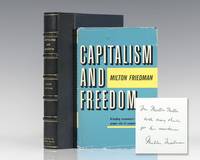
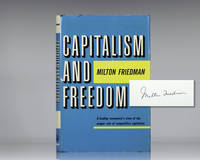
196287436Chicago: University of Chicago Press 1962. First edition of Friedman's magnum opus. Octavo original blue cloth. Association copy inscribed by the author on the front free endpaper to colleague and friend "For Merton Miller with many thanks for his assistance Milton Friedman." Fine in a very good dust jacket with light rubbing. Housed in a custom half morocco clamshell box. An exceptional association linking these two Nobel Prize-winning economists and giants in the field as Friedman revolutionized economic theory with his free-market free-from-government principles and Miller changing the way markets assess a company's value. "Friedman a laissez-faire economist and professor at the University of Chicago is considered one of the leading modern exponents of liberalism in the 19th-century European sense. In Capitalism and Freedom he argued for a negative income tax or guaranteed income to supersede centralized bureaucratized social welfare services which in his view are inimical to the traditional values of individualism and useful work" Britannica. Selected by the Times Literary Supplement as one of the "hundred most influential books since the war". It also placed tenth on the list of the 100 best non-fiction books of the twentieth century compiled by National Review and on Time Magazine's top 100 non-fiction books written in English since 1923. University of Chicago Press hardcover books
19612110502151004207open crotch 1961. Soft Cover. Fine. Number of books: 33 open crotch? paperback
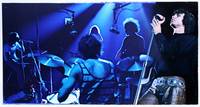
19703038Los Angeles: Elektra Records 1970. first edition. Very Good. STUNNING ORIGINAL DYE-TRANSFER PRODUCTION PHOTOGRAPH used in the preparation of the cover for the band’s first—and only—live album issued during Jim Morrison’s lifetime. With important provenance. Original vintage color dye-transfer print 12 x 23 inches dry-mounted to Bainbridge Bristol Board with visible period blue art-department retouching along the upper and lower edges; accompanied a backing board signed and inscribed in 1975 by Bob Heimall the art director/designer for the album to music-industry executive Stephen Dessau: “To: Stephan sic P. Dessau as in Nassau / Happy Holiday Diamond Studs! / Remember – your sic in over your head! / Bob Heimall ’75â€.<br /> <br /> Issued by Elektra on July 20 1970 Absolutely Live was the Doors’ first live album and the only one released during Jim Morrison’s lifetime; Morrison would be dead in Paris less than a year later on July 3 1971. As such the album occupies a singular place in the group’s history: the sole contemporaneous live statement through which audiences could hear the Doors officially present themselves as a concert act while Morrison was still alive. Compiled by producer Paul A. Rothchild from performances recorded in 1969 and 1970 including material from the Aquarius Theatre and Felt Forum the album captured the band in the form for which many admirers considered them most powerful—improvisatory theatrical blues-driven and unstable in the best sense. It also contained the first full official release of “Celebration of the Lizard†among the most mythic and elusive works in the Doors canon.<br /> <br /> The present dye-transfer print with extremely rich color preserves the underlying live image taken by photographer Frank Lisciandro used in the preparation of the cover prior to the addition of typography and logo design. Morrison – in a superimposed image taken at an earlier date – appears at right isolated at the microphone with the remaining members of the band receding into a saturated blue stage space behind him. The image possesses the nocturnal theatricality appropriate to the band at this moment while the object itself retains the physical traces of period record-cover manufacture: board mount hand retouching and signs of studio handling.<br /> <br /> Contemporary and later accounts held that Elektra initially favored a grainy bluish rear-view stage image from the Aquarius Theatre performances but judged it insufficiently exciting for commercial use. A different earlier more conventionally iconic image of Morrison was then incorporated into the final design. Morrison is said to have hated the final version. By 1969–70 his appearance had changed markedly: heavier bearded and far removed from the lean black-leather rock-star persona through which he had first entered the popular imagination. The dispute reflected a deep struggle over who would determine Morrison’s public image at the end of the Doors’ great period: Morrison himself or the commercial machinery that preferred the older myth.<br /> <br /> Provenance: From the art director for the album Bob Heimall to music-executive Stephen P. Dessau. With an additional CBS memorandum dated 1979 identifying Dessau as Director of Product Management East Coast Epic/Portrait/CBS Associated Labels and a copy of the album.<br /> <br /> Los Angeles: Elektra Records 1970. Original vintage color dye-transfer print 12 x 23 inches. Only the most trivial wear with absolutely no fading - the colors are superbly rich. A remarkable survival. Elektra Records unknown
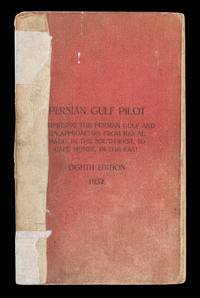
193215952London: Published for the Hydrographic Department Admiralty J.D. Potter Agent for the Sale of Admiralty Charts 145 Minories E.C.3 1932 additions to 1936. 4to 245 by 150mm 4 i-ii 2 iii-xxx 328pp 2 charts 26 plates numerous manuscript annotations in red and black ink text from the annual supplements tipped in throughout the work red buckram boards title to upper board spine strengthened with old cloth. A detailed pilot of the Arabian Gulf with extensive manuscript annotations and additional text and views of Dubai and Abu Dhabi from the 1936 supplement. The present work is the eighth edition of a pilot first published according to the 'advertisement' in 1864 from the remarks and surveys of Commander Charles Constable and Lieutenant Arthur Stiffe. Constable and Stiffe served in the Indian Navy and travelled through the Middle East between 1857-1860 conducting hydrographic surveys. The pilot also shows the influence of Commander Banes-Bruck who had conducted the first systematic survey of Arabian waters while stationed in the Gulf as a member of the Indian Navy in the 1820s. This eighth edition has been compiled by "Commander G. C. Glen D.S.O. O.B.E. R.N. and contains the latest information received in the Hydrographic Office". Published in the same year as oil was discovered in Bahrain the pilot captures the Gulf just before the boom that would transform it into a region of immense global importance. Even before the Middle Eastern oil trade began its rapid expansion however its waters remained an important thoroughfare for European trade and travel with a constant flow of British ships through the Suez canal. The pilot begins with a number of introductory sections explaining how it is to be used and outlining the updates made to the latest edition. There follows a list of illustrations a glossary of terms from various local languages including Arabic Hindustani and Persian and general information about the use and composition of Admiralty charts. The main body of the pilot systematically describes the Persian Gulf from all approaches with information about its marine features political and administrative divisions trade navigational routes and potential hazards from shoals to pirates. Although most of the pilot's 328 pages are dominated by text there are regular illustrations and maps found throughout. These views are different from the typical Admiralty charts being far less technical and some even reproductions of popular watercolours. They nonetheless indicate the profile of the land as well as significant topographical features and important anchorages. The maker assures the ready of the accuracy of the information provided in the pilot since "It is most difficult to get trustworthy information from the Arabs and but the little that they impart can be relied upon". The present edition of the Persian Gulf Pilot is extremely rare. We have been able to trace only five institutional examples: the British Library National Maritime Museum United Nations Library University of Chicago Library and State Library of New Soth Wales. Furthermore we have been unable to trace any editions of the pilot appearing at auction. Published for the Hydrographic Department, Admiralty, J.D. Potter, Agent for the Sale of Admiralty Charts, 145, Minories, E.C.3, hardcover
1931001618London: The Golden Cockerel Press 1931. 7 6-268pp 4. Original half pigskin and buckram over boards by Sangorski and Sutcliffe raised bands spine in six panels title in gilt to second panel cockerel device to fifth t.e.g. remainder untrimmed. Spine very slightly rubbed usual light foxing to cloth covers internally bright and clean and signed by Eric Gill to title 'Eric G' within a small illustration of a ball and chain attached to the foot of the cockerel vignette on the title page. Number three hundred and seventy-two of five hundred copies on paper with another twelve on vellum. Now housed in a drop back box made by Temple Bookbinders. The Four Gospels is widely regarded as one of the best private press books. Cave and Manson 78; Chanticleer 78 "a flower among the best products of English romantic genius"; A Century for the Century 26; Gill 285. Signed by Illustrator. First Thus. Half Pigskin and Buckram. Very Good. Illus. by Gill Eric. Folio. Private Press. The Golden Cockerel Press Hardcover
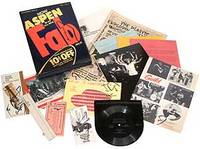
1966349700New York: Aspen 1966. Unbound. Near Fine. The Pop Art Issue." Designed by Andy Warhol and David Dalton. Complete see below. Both the front and the inside front cover of the box are Signed and eight other pieces in the box have been Signed by Warhol a couple of them are Inscribed including: the Ten Trip Ticket Book the movie flip book the Pop-Art Paint card folder the Guild Instruments flyer the Folk Music on Vanguard pamphlet the tabloid newspaper a cardboard divider and the 33 1/3 flexi-disc acetate recording containing the song "Loop" written by John Cale and credited to the Velvet Underground one of the first commercially available recordings by the band. Additional contributors include Willem de Kooning Roy Lichtenstein Claes Oldenburg Ernest Trova Kenneth Noland Gerald Laing Jasper Johns James Rosenquist Lou Reed and Timothy Leary. The box designed to look like a box of detergent is a little crushed as usual with two corners torn some offsetting at the bottom of the box very good with contents fine. Further details available upon request. Aspen unknown
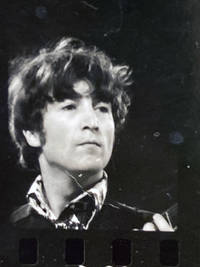
19662777San Francisco 1966. First edition. Very Good. One-of-a-Kind Beatles Images Portend the End of an Era. This original contact sheet of rare 1966 images of The Beatles was discovered by artist photographer musician and Beatles enthusiast Dave Seabury at a garage sale near San Francisco in the late 1980s. These photos which we have on offer were taken at the Fab Four's final concert at Candlestick Park on August 29 1966. <br /> <br /> The story of how these images were discovered is almost as fascinating as the images themselves. Seabury frequented garage sales for years inquiring about Grateful Dead or Beatles photos and never had any luck. On one fateful day the seller said "Yeah there are some Beatles pictures in that box over there." Marks In the box Seabury found a contact sheet with 73 black-and-white images of The Beatles taken by someone who clearly had privileged access to the band. The photos were close-up and deeply moving however there was no date on the photos and no photographer stamp. <br /> <br /> Seabury recalls that every once in a while he'd take out these photos and think "These are really great they deserve some attention." Then many years later he read Joel Selvin's article in the San Francisco Chronicle about The Beatles' last concert at Candlestick Park which included Jim Marshall's famous photos. After looking at the pictures Seabury thought "Those shirts look familiar." He quickly pulled out his Beatles contact sheet and voilà they were wearing the same shirts. Seabury said "That's when I realized the photos on my contact sheet were taken at Candlestick in 1966." Marks<br /> <br /> In 2015 Seabury began his quest to find the photographer. With the 50-year anniversary of The Beatles' final concert on the horizon he said "I contacted all The Beatles collectors I could find. I just kept coming up zero." Marks At the same time Seabury a photographer in his own right was working on a photo exhibition and concert to be called "Lost and Found Beatles." Scheduled to open on the 50th anniversary of the Candlestick show at The Reclaimed Room Gallery in San Francisco he started a Kickstarter campaign to raise the money to turn the contact sheet images into prints. It was a labor of love.<br /> <br /> When the pictures were finally printed Seabury realized that rather than the usual stock photos taken at concerts these images were unusually pensive and intimate. Unbeknownst to their fans at the time John Paul George and Ringo had a secret - they had recently decided that this would be their last live concert together. Amidst 25000 screaming fans the photographer was able to capture what The Beatles knew that this was the end of an era.<br /> <br /> When the "Lost and Found Beatles" show opened on September 29 2016 the identity of the photographer was still a mystery. At the exhibition closing party professional collector Derek Taylor realized that a photo in the exhibit looked familiar. He explained ". the way Lennon's hair was tousled. I just knew I'd seen that photo before like something I'd bought. A few weeks later I happened to be looking for a record and boom that Lennon photo an 8-by-10 falls out." Taylor flipped the photo over and saw a stamp that read "Photo: Eric Weill." Marks Mystery solved. <br /> <br /> Eric Weill who struggled with bipolar disorder for most of his life died in 2006. He was well known for his photos of Bob Dylan and for claiming to be the Zodiac killer on a call-in radio show in 1969. Ethan Byxbe nephew of Weill described his uncle as "a professional photographer. whose news photo called 'The First Hippie Riot' from 1968 is in the collection of the Smithsonian." One of Weill's acquaintances explained that "Eric was just one of those guys who showed up everywhere with a camera." Marks <br /> <br /> Seabury was eager to meet Weill's nephew his only living relative and explains "When I finally connected with Ethan and explained everything to him he was totally blindsided. He was like 'Whoa wait a minute. You published his photos' And I said 'Look man. I want to meet with you. I cede all rights to these photos to you.'" Byxbe was grateful for Seabury and explained "thanks to Dave's project people can enjoy some of my uncle Eric's photographs and he can get credit for some of the work he did. I think he would be happy about that." Marks <br /> <br /> Though the mystery was solved it was still not clear how the contact sheet ended up in a garage sale. Ethan Byxbe believes that "The bulk of my uncle's material was stolen right under our noses. When I was a little kid in the 1970s my grandmother had hired some older neighborhood kids to help her clean up her garage.There were several milk crates full of original negatives and photographs including most of The Beatles' material. I had a bad feeling about them and said 'Grandma maybe you should put Eric's pictures in a closet or something.' She said 'Oh no they're fine.' She was very trusting. And sure enough after they left I checked the garage and the milk crates with Eric's original materials were gone. They had taken everything." Byxbe remembers another theft that occurred years later. He said "My uncle was living in an old 1930s milk truck. People would be in and out of the truck visiting him and one time someone ripped off much of what he had left. Between those two incidents most of his photographic materials that I knew about were gone." Marks Byxbe does not know when the contact sheet was stolen but he assumes that's how it started its journey to a garage sale in Northern California.<br /> <br /> This original contact sheet would be a thrilling addition to any Beatles collection. Weill memorialized one of the most significant turning points in the history of the world's greatest band by inviting the observer into The Beatles' souls and capturing a moment that the audience was not aware of at the time - the beginning of their separation.<br /> <br /> Also part of this lot is a poster-size image of the contact sheet 46x61 cm 18"x24" as well as a poster a flier and 6 postcards promoting the "Lost and Found Beatles" exhibition presented by Seabury in 2016.<br /> <br /> Provenance: From the collection of Dave Seabury artist photographer and musician. <br /> <br /> Contact sheet with 73 photographs by Eric Weill. 21.5x27.5 cm 8½x11". Numerous small creases and surface skratches short closed tear to bottom edge; very good. Poster-size image of the contact sheet 46x61 cm 18x24" and a poster a flier and 6 postcards promoting the "Lost and Found Beatles" exhibition included. <br /> <br /> References:<br /> <br /> Kevin Courrier. Artificial Paradise: The Dark Side of The Beatles' Utopian Dream. New York: Bloomsbury Press 2008.<br /> <br /> Ana Leorne. "The story of The Beatles' last official concert which took place in San Francisco 55 years ago the Fab Four played Candlestick Park." SFGATE. August 25 2021.<br /> <br /> Ben Marks. "A Garage Sale Find of Rare Beatles Photos Took a Collector on a Magical Mystery Tour." Collectors Weekly. March 8 2018.<br /> <br /> Jordan Runtagh. "Remembering Beatles' Final Concert." Rolling Stone. August 29 2016. unknown
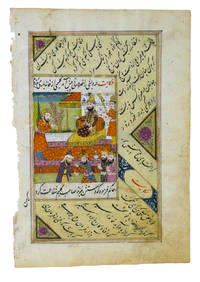
1950ABC_47136Cleveland Ohio: Cleveland Institute of Art or Western Reserve University 1950. Publishers original portfolio 48.5 x 34 x 4.5 cm covered with black cloth with on-lays in black and red on the front and the authors name in white and title in red on the spine with three pairs of black ties one on the inside and a label on the inside of the right black flap giving information about the limited edition: "Edition limited to forty numbered sets of which this is No 33". 15 manuscript leaves in one case a fragment of a scroll of various formats and sizes some glazed see the detailed list of contents for specific dimensions 7 written on straight-forward laid paper European and non-European 6 more problematic probably all non-European 1 on straight-forward wove paper no. 14 supposedly made in Russia and one on vellum no. 7 most rubricated and/or decorated in various colours some decorated or highlighted in gold. Each manuscript leaf is mounted hinged on one edge to allow access to both sides of the leaf in a passe-partout 46.5 x 33 cm and each has a letterpress slip 10 x 18 cm with explanatory text tipped onto the foot of the passe-partout. The publication has no title-page but includes a letterpress folio leaf that serves as a table of contents and has the drop-title given above the present copy contains two copies of that contents leaf. The display typeface used in the letterpress leaves and on the portfolio is the 1938 Libra by the Dutch designer Sjoerd de Roos inspired by uncial manuscripts. Copy number 33 from a limited edition of 40 of Eges famous portfolio containing a collection of 15 leaves from oriental manuscripts written between the 12th and 18th centuries. The press run had to be limited because some of the manuscripts probably had no more than about 40 leaves.Otto Frederick Ege 1888-1951 was the dean of the Cleveland Institute of Art a lecturer on the history and the art of the book at Western later Case Western Reserve University in Cleveland and a famous or infamous biblioclast. He was one of the key figures in creating a market for medieval manuscript leaves in America during the 20th century. Between 1917 and his death in 1951 Ege acquired broke up and subsequently dispersed hundreds of medieval and other interesting manuscripts and early printed books wanting to give as many private collectors and public institutions as possible the opportunity to own these individual leaves. He was convinced that his purpose of inspiring as many people as possible by bringing them in contact with historical and artistic heritage justified the means of scattering the manuscript leaves. In fairness to Ege these were almost certainly incomplete manuscripts to begin with though one could wish he had provided a detailed description of each manuscript before breaking them up and disbursing them and his publications did make them available albeit in the limited form of a single leaf to a much greater audience than could have hoped to see let alone own original manuscripts of this sort. Fortunately people are now more reluctant to break up early manuscripts but that also means that similar publications are less likely to appear in the future. Beginning in the 1940's Ege compiled his most famous portfolios as two limited editions in press runs of 40 copies each: one portfolio with western medieval manuscript leaves and the present one with 12th to 18th century oriental manuscript leaves.The present portfolio includes leaves from 15 manuscripts produced from the 12th to the 18th century in Egypt Iran the Byzantine/Ottoman Empire Persia/Iran Russia Tibet and other places. These mainly religious texts were written in several different languages including Arabic Syriac Armenian Ethiopic Persian Tibetan Greek and Church Slavonic. Two of the fragments one in Greek and one in Church Slavonic even include music notation neumes. Although the publication names no publisher and gives no date of publication Ege compiled it himself and wrote the notes about each manuscript leaf but it is said to have been published after probably soon after his death in 1951 the description of Ege as late dean of . is slightly ambiguous but may indicate that he had died. His brief notes on the manuscripts lack many details and are often not reliable particularly the dating so we have tried to make some additions and corrections in our detailed list of the contents. One of the Cleveland institutions where he worked probably published the portfolio. It is listed in the National Union Catalog of pre-1956 imprints. As Ege intended many of his portfolios and other fragments were sold and distributed worldwide. Beinecke Rare Book & Manuscript Library at Yale University acquired his personal collection including 50 unbroken manuscripts for their special collections in 2015.A detailed list of contents is available upon request.The portfolio the two copies of the contents leaf and the 15 passe-partouts with the manuscript leaves are in very good condition. A detailed condition report of the 15 manuscript leaves included in the detailed list of contents available upon request.l WorldCat 15372178 7 copies 78768040 2 copies 1322443218 1 copy. [Cleveland Institute of Art or Western Reserve University?], hardcover
196223005Chicago: University of Chicago Press 1962. First edition of Friedman's magnum opus. Octavo original blue cloth. Signed by Milton Friedman on the front free endpaper in a contemporary hand. Fine in a very good dust jacket with light rubbing. Housed in a custom half morocco clamshell box. Rare signed. "Friedman a laissez-faire economist and professor at the University of Chicago is considered one of the leading modern exponents of liberalism in the 19th-century European sense. In Capitalism and Freedom he argued for a negative income tax or guaranteed income to supersede centralized bureaucratized social welfare services which in his view are inimical to the traditional values of individualism and useful work" Britannica. Selected by the Times Literary Supplement as one of the "hundred most influential books since the war". It also placed tenth on the list of the 100 best non-fiction books of the twentieth century compiled by National Review and on Time Magazine's top 100 non-fiction books written in English since 1923. University of Chicago Press hardcover books
196223005Chicago: University of Chicago Press 1962. First edition of Friedman's magnum opus. Octavo original blue cloth. Signed by Milton Friedman on the front free endpaper in a contemporary hand. Fine in a very good dust jacket with light rubbing. Housed in a custom half morocco clamshell box made by the Harcourt Bindery. Rare signed. "Friedman a laissez-faire economist and professor at the University of Chicago is considered one of the leading modern exponents of liberalism in the 19th-century European sense. In Capitalism and Freedom he argued for a negative income tax or guaranteed income to supersede centralized bureaucratized social welfare services which in his view are inimical to the traditional values of individualism and useful work" Britannica. Selected by the Times Literary Supplement as one of the "hundred most influential books since the war". It also placed tenth on the list of the 100 best non-fiction books of the twentieth century compiled by National Review and on Time Magazine's top 100 non-fiction books written in English since 1923. University of Chicago Press hardcover
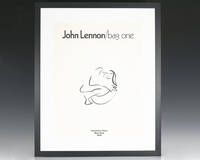
1970123601New York: Cinnamon Press 1970. Rare Bag One lithograph signed by Beatles icon John Lennon. One page the title page from Lennon's Bag One Portfolio. Signed by him beneath the image. One of 300 numbered copies this is number 172. In near fine condition. Matted and framed. Rare and desirable. In 1969 as a wedding gift for Yoko John drew the 'Bag One Portfolio'--a chronicle of their wedding ceremony honeymoon and their plea for world peace in the Bed-In. The following year the artwork was produced in a series of three hundred portfolios of fifteen signed prints each. The majority depict John and Yoko's most intimate private moments--upon their first exhibition in London more than half were deemed 'indecent' and confiscated by Scotland Yard. The rare title page features perhaps the most famous and recognizable print of the suite. Cinnamon Press unknown books
197478309Washington DC: U. S. Government Printing Office 1974. Presumed First Edition First printing. Wraps. Good/No dust jackets present. This is a complete set of the Statement of Information--28 separately bound items. The July 12 1974 the Committee released of its accumulated evidence on the case which ran to thousands of pages. Book I: Events Following the Watergate Break-in June 19 1972-March 1 1974 ix 1 242 pages; Book II: Department of Justice-ITT Litigation ix 1 208 6 pages; Book III: Political Contributions by Milk Producers Cooperatives: The 1971 Milk Price Support Decision ix 1 217 1 pages; Book IV: White House Surveillance Activities ix 1 225 1 pages. Book II: Events Following the Watergate Break-in June 17 1972-February 9 1973 xii 680 4 pages; Book III Part 1 Events Following the Watergate Break-in June 20 1972-March 22 1973 xii 687 5 pages; Book III Part 2 Events Following the Watergate Break-in June 20 1972-March 22 1973 iii 1 689-1281 3 pages; Book IV Part 1 Events Following the Watergate Break-in March 22 1973--April 30 1973 xii 551 5 pages; Book IV Part 2 Events Following the Watergate Break-in March 22 1973-April 30 1973 iii 555-1080 pages; Book IV Part 3 Events Following the Watergate Break-in March 22 1973--April 30 1973 iii 1 1081-1659 1 pages spine discolored; Book V--Part 1 Department of Justice/ITT Litigation--Richard Kleindienst Nomination Hearings xii 477 1; Book V--Part 2 Department of Justice/ITT Litigation--Richard Kleindienst Nomination Hearings ii 2 479-980 4; Book VI--Part 1 Political Contributions by Milk Producers Cooperatives: The 1971 Milk Price Support Decision ix 1462 pages; Book VI--Part 2 Political Contributions by Milk Producers Cooperatives: The 1971 Milk Price Support Decision iii 1463-984 2 pages; Book VII--Part 1 White House Surveillance Activities and Campaign Activities xii 522 2 pages; Book VII--Part 2 White House Surveillance Activities and Campaign Activities iii 1 523-1177 3 pages; Book VII--Part 3 White House Surveillance Activities and Campaign Activities iii 1 1179-1613 1 pages; Book VII--Part 4 White House Surveillance Activities and Campaign Activities iii 1 1615-2090 2 pages; Book VIII: Internal Revenue Service xii 440 4 pages; Book IX--Part 1: Watergate Special Prosecutors Judiciary Committee's Impeachment Inquiry April 30 1973-July 1 1974 xii 521 3 pages; Book IX--Part 2: Watergate Special Prosecutors Judiciary Committee's Impeachment Inquiry April 30 1973-July 1 1974 iii 1 523-1069 1 pages; Book X: Tax Deduction for Gift of Papers vii 1 552 pages; Book XI: Bombing of Cambodia xii 599 1 pages; Book XII: Impoundment of Funds Government Expenditures on President Nixon's Private Properties at San Clemente and Key Biscayne vii 1 187 1 pages; Appendix I: Presidential Statements on the Watergate Break-in and Its Investigation iv 110 2 pages; Appendix II: Papers in Criminal Cases Initiated by The Watergate Special Prosecution Force June 27 1973-August 2 1974 iv 379 3 pages; Appendix III: Supplementary Documents: White House Edited Transcripts April 4 1972 March 22 1973 June 23 1972; John Ehrlichman Handwritten Notes: Affidavit of Bruce A. Kehrli ii 2271 1 pages; and Appendix IV: Political Matters Memoranda August 13 2972-September 18 1972 v 1 151 3 pages. The impeachment process against Richard Nixon began in the United States House of Representatives on October 30 1973 following the series of high-level resignations and firings widely called the "Saturday Night Massacre" during the course of the Watergate scandal. The House Committee on the Judiciary set up an impeachment inquiry staff and began investigations into possible impeachable offenses by Richard Nixon the 37th president of the United States. The process was formally initiated on February 6 1974 when the House granted the Judiciary Committee authority to investigate whether sufficient grounds existed to impeach Nixon of high crimes and misdemeanors under Article II Section 4 of the United States Constitution. This investigation was undertaken one year after the United States Senate established the Select Committee on Presidential Campaign Activities to investigate the break-in at the Democratic National Committee headquarters at the Watergate office complex during the 1972 presidential election and the Republican Nixon administration's attempted cover-up of its involvement; during those hearings the scope of the scandal became apparent and the existence of the Nixon White House tapes was revealed. On May 9 1974 formal hearings in the impeachment inquiry of Nixon began culminating July 27-30 1974 when the Judiciary Committee approved three articles of impeachment. These articles charged Nixon with: 1 obstruction of justice; 2 abuse of power; and 3 contempt of Congress. These articles were reported to the House of Representatives for final action with members of the committee voting in favor of one or more of the articles. Republican congressional leaders met with Nixon and told him that his impeachment and removal were all but certain. Thereupon Nixon gave up the struggle to remain in office resigning the presidency on August 9 1974 before the full House could vote on the articles of impeachment. The House brought the impeachment process against him to an official close two weeks later. U. S. Government Printing Office paperback
1953214h6109Appleton Wisconsin: C.C. Nelson Publishing Company. Fair in Good dust jacket. 1953. Second Printing With Revisions. Hardcover. Charles A. Lindbergh's copy signed and inscribed to him by his fellow seeker of peace justice and historical truth Harry Elmer Barnes 1889-1968 whom Murray Rothbard eulogized as "the last of the truly erudite historians." A truly magnificent provenance for this work which "shows how the extension of military operations to civilian populations and property and the increasingly destructive nature of total warfare menace the very future of humanity and Western civilization. This work makes it clear how the Nuremberg war-crimes trials far from curbing the barbarism of present-day warfare will make it absolutely certain that every known form of destructiveness and mass-murder however fiendish and devastating will surely be brought forth in the desperate effort to avoid a defeat which in all future wars will mean the summary liquidation of the political leaders and top military officers of the vanquished countries." - dust jacket. Saddam Hussein and Muammar Gaddafi among others would probably concur. As the most prominent spokesman for the America First Committee which sought to keep America out of WWII Lindbergh most likely endorsed the conclusions of this book first issued in England in 1948 under a nom de plume by Veale "a lawyer and student of history with a lifelong interest in the cause of peace and international justice." - xi. On page vii Veale refers specifically to Barnes by stating "in accordance with what Dr. Harry Elmer Barnes has called 'The Historical Blackout' the bulk of the British press newspaper and periodical alike rigidly ignored the first edition of this book. Not one London newspaper with a nation-wide circulation reviewed it." Eventually this work was issued in 18 editions and three languages. pp. xvii 1 305. Index. Bibliography. Black and white reproductions of photos. Unmarked with average wear to publisher's red cloth lettered in gilt. Narrow openings along each hinge bear narrow remnants of earlier tape repairs. Small erasure patch atop front free endpaper. Tanning to photo endpapers. Moderate wear to dust jacket now preserved in archival-grade Brodart. Housed in new custom acid-free slipcase. An extraordinary memento from the collection of Charles Lindbergh 1902-1974 the legendary American aviator who rose to global prominence in 1927 by being the first to fly nonstop from New York to Paris. Stimely p.61 Select Bibliography of Revisionist Books p.21.; 8vo; Signed by Notable Personage Related . C.C. Nelson Publishing Company hardcover
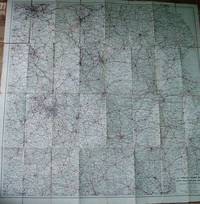
193456Good. 800 x 810 mm. Mounted on original cloth. Some wear especially at upper-left corner as shown. Very rare only 1 record in OCLC/Worldcat. WITH PICTURES. Leicester : The Midland Educational Co. Ltd.,1934
19922110502151005583Hara shobo 1992. Soft Cover. Fine. Number of books: 142 Hara shobo paperback