323 résultats
1633156London: Robert Barker.by the Assignes of John Bill 1633. Very Early Jacobean Printing. Tooled leather. Very Good /Custom Case. 12mo original full leather 17th century tooled and inlaid binding engraved frontispiece closely cut borders all edges gilded green silk page divider decorative marbled endpapers viii blank ~ 524 vi blank pages.<br /> <br /> THE NEW TES_/ <br /> TAMENT /<br /> Of our Lord and /<br /> S A V I O V R /<br /> - Jesus Christ<br /> <br /> Newly translated out of the / <br /> Originall Grrek : and / <br /> with the former transla- /<br /> tions diligently compared /<br /> and revised by his Maie- /<br /> sties special commande- /<br /> ment.<br /> ----------------------------<br /> Imprinted at London / <br /> By Robert Barker Printer / <br /> to the Kings most Excel- /<br /> lent Majesty and by / <br /> the Assignes of John Bill <br /> 1633. <br /> Cum privilegia. A GEM! In an original tooled leather binding in remarkably well preserved condition . Beautiful clear and crisp type. Moderate and quite uniform age-toning to paper with the occasional smudge. Pages closely cropped by the printer so some chapter headings at the top have been partially excised though not the text. Endpapers renewed. Generally minimal wear.<br /> <br /> Finely bound in contemporary tan gilt-embossed calf over wooden boards richly gilt to spine and covers. four hubs and boards. Marbled pastedowns & endpapers renewed a.e.g. and gauffered. Spine very slightly rubbed with partial loss of caps at head and foot restored and slightly visible. Edges of engraved title page reinforced with Japan paper. Previous owner's ink inscriptions on two front free endpapers naming "Edmund James Gore" & his London addresses. <br /> <br /> Housed in a protective clam-shell box custom made for this Rare and Precious 1633 edition of the Authorized King James version of the New Testament. Overall a VG copy.<br /> <br /> The continental binding on this small format Authorized version MAY be a pirated edition of the English Bible from Amsterdam. For example the Stam printing family were printing small format Bibles in 1673-- after our publication see Cambridge History of the Book in Britain IV p.467. <br /> <br /> Herbert 713-14 Wing B2511A. Robert Barker...by the Assignes of John Bill hardcover
1688000011508Coloniae Agrippinae = Cologne: Ioannem Wilhelmum Friessem 1688. Later edition. Hardcover. Very Good. 4 vol. 8 vol. bound in 4. Folio. 8 2-452 2; 1-238 with a section of these leaves mispaginated; 4 2-499 2; 4 2-916 1; 2 2-815; 2 2-851; 4 2-486 1; 4 2-967 a lengthy unpaginated index of words and subjects at the end of the volume plus a blank before the rear endpaper pp. Contemporary full blind-tooled pigskin contemporary ink titling on the spines with the volumes numbers; all edges decoratively stained black. Volume one with an engraved title page and its title page printed in red and black also with several in-text woodcuts and charts. The later volumes each have their own title page all volumes with woodcut initials head and tailpieces. Brunet 276. Graesse 321. NCBEL 346. Oxford DNB J. Campbell "Bede St Bede Bæda known as the Venerable Bede 673/4–735". This edition was first published in Cologne in 1612 these volumes are the second edition printed there. Saint Bede is remembered for his contributions to ecclesiastical and British historical writings. Bede wrote analytically and was fascinated by time and the creation of life as they were written about in early Christian sources. The sources available to him included Eusebius of Caesarea Orosius Eutropius and the earlier British historian Gildas. Historians label his Historia Ecclesiastica Anglis Gentorum as the greatest culmination of his writings and some point out that it helped to create the sense of a national English identity at a time when the Angles and the Saxons were still forging intertribal unity. His history of Christianity in Britain largely focuses on the years 597-731 after a brief explanation of Christianity in Roman-controlled Britain. Bede wrote in his own autobiography that his life was devoted to "learning and letters" and he was well-beloved in his own time and long after including by Britain's first king Alfred which is largely why most of his work survives today. His translations of various religious histories and lives of the Saints into Latin made these works accessible to his fellow monks and Bede even did an Old English translation of St. John's Gospel which had it survived would be the earliest lengthy work of prose in English. Bede was an author who was influenced greatly by the writers of Late Antiquity and his career is one of the most significant among those who wrote during the early Middle Ages. With a small later bookplate and an 18th century ownership mark Signet Library on each front pastedown. No other institutional markings. Boards with a few small spots of wear and yellowing overall a lovely set. Ioannem Wilhelmum Friessem hardcover
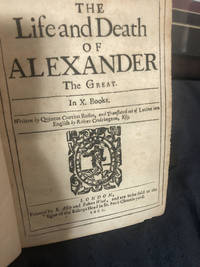
1661Bv1103<p>"NONE BUT ALEXANDER COULD PERFORM WHAT ALEXANDER HATH DONE": SCARCE 1661 EDITION IN ENGLISH OF QUINTUS CURTIUS RUFUS' LIFE AND DEATH OF ALEXANDER THE GREAT CODRINGTON Robert translator. The Life and Death of Alexander the Great. In X. Books. London: E. Alsop and Robert Wood 1661. Small quarto 6 x 7-1/2 modern full brown calf elaborately gilt-decorated spine raised bands black morocco spine label. Housed in a custom black linen slipcase. 1661 edition the scarce second edition of Robert Codrington's esteemed translation into English of this life of Alexander the Great a splendid volume attractively bound in full calf. Curtius Rufus flourished in the first century C.E.; particulars of his life are unknown. His Historiarum Alexandri Magni "introduces a number of picturesque details which are grouped effectively; and the career of the great Macedonian is regarded as a series of brilliant and romantic adventures. There are a number of carefully finished speeches worked into the narrative and much sententious reflection. The style is evidently formed on that of Livy" Peck 449. Preceded by John Brende's 1553 first translation into English which ran through a number of printings in the intervening century before Codrington undertook his new translation "exactly conferred with the Original and purged from many gross errors and absurdities with which it before abounded." Codrington's translation first appeared in 1652 under a slightly different title see Wing C7699. Title page with wood-cut engraved vignette engraved headpieces and ornamental initials. Occasional mispagination toward the end as issued without loss of text. A superlative example handsomely bound. Book Bv1103. $4000. We specialize in rare Ayn Rand as well as other legends and landmarks.</p> E. Alsop and Robert Wood hardcover
161959078Anchorage & Seward A.T.: Alaska Engineering Commission AEC Phinney S. Hunt ca. 1916-1917. 4to. 86 silver print photographs sized 6.25 x 8.25 in. nearly all w/ photographer’s imprint w/in negative at lower fore-edge as well as caption negative number and AEC some w/ occasional pencil annotations on verso all preserved in mylar sleeves occasional creasing at corners a couple w/ slight loss at corners in the small blank margin. Recent 3-ring clamshell binder an excellent set of photos with all retaining bright strong contrast. This outstanding photo archive provides not only some of the earliest photographs of Anchorage Alaska Territory but also this immense railroad project first authorized by the US Congress in 1912. The few existing privately-run railroads operating in Alaska at the time including the Alaska Northern Railway and the Tanana Valley Railroad primarily fulfilled the needs of the mining companies carrying resources to sea ports and very little allowance was made for passenger traffic and it was impossible to travel by rail from Ship’s Creek at the Cook Inlet north to Fairbanks. Through an April 1915 executive order President Wilson directed that the newly created Alaska Engineering Commission construct a railroad along the surveyed “Western Route†from Seward or Portage Bay along the Turnagain & Knik Arms of Cook Inlet North through the Suitna Valley and then follow the Nenana River until it joined the Tanana with the intent it would connect eventually to Fairbanks. Employing discarded surplus railroad equipment from the Panama Canal Railroad project and under the direction of engineer Mears who had worked on both the Panama Canal and Great Northern Railroads the tiny tent city of Ship’s Creek swelled to 5500 people within two years and was officially labeled by the Post Office as “Anchorage.†Photos included here reveal the barren original landscape of Ship’s Creek with one of the photos showing the steam launches “Alaska†& “Seagull†who carried cargo and passengers from ships offshore. In addition there are views of the construction of the immense AEC Railway machine shop by Sept. 1916 as well as the newly completed first Railroad Depot in Anchorage with the progression of buildings erected beyond. These early views of the fast developing project portray the Commissary Hospital Bunkhouses finished machine shop interiors of the powder house for blasting along with a view of the AEC’s photo studio and the completed electrical power house. Early street views of the nascent city are quite scarce and one of particular interest shows Fourth Ave. looking East with newly built stores and homes built along both sides of the roadway stretching into the distance. Brutal working conditions continually interfered with the pace of the project with one of the images showing the AEC’s “Electric Thawing Machine†on a sled whie others depict piles of snow work camps in snow and even sternwheeler and docks trapped in an ice flow in March 1917. A couple of the photographs feature the sternwheeler SS Omineca underway which had been originally constructed in 1909 for the Grand Trunk Railway running the Skeena River from 1909-1912 and powered by the original SS Caledonia’s engines. By the end of 1916 60 miles of track had been laid 100 miles were graded and right-of-way cleared for 230 miles with photos in this archive showing AEC Construction camps at various mile markers blasting activity and track laying. At the same time they rehabilitated the bankrupt Alaska Northern Railroad tracks and by Oct. 24 1917 the first AEC Railway train reached the Chickaloon coal mines 74 miles North of Anchorage. The railroad would actually not be finished until 1923 when the Tanana River Bridge was completed and last 57 miles of track to Fairbank converted to standard gauge. Photos also show the Anchorage Baseball Field which featured games for the Cook Inlet Baseball League composed at the time of Matanuska Anchorage and Turnagain Arm teams. There’s also a very fine series of the Decoration Day parade held May 30 1917 depicting many of the main streets and businesses in the background. In addition several photographs show the ocean docks completed which allowed ships to directly dock at Anchorage rather than lightering passengers and cargo to shore prior to 1917. Hunt 1866-1917 originally worked as a California optician before trekking to Valdez Alaska as a gold rush prospector but quickly established himself as a photographer opening his studio and documenting Valdez and development of the region. He would bring his wife and children to Alaska by 1907. He later secured work as one of the AEC’s official photographers shooting some of the early survey work by 1914 and through the project until suffering a heart attack Oct. 14 1917 in Seward AK. Hunt’s son A.O. Hunt also worked as an assistant photographer for the AEC. A few of these images appear as negatives in the Alaska State Library Historical Collections with a couple shown in their Digital Archives and some appear in the Alaska Engineering Commission archive at the U of W Collect. No. PH0495 but the bulk of that collection features photographs by James McPherson H.G. Kaiser and A.J. Johnson who were the other official photographers on the project; See: Phinney S. Hunt Photographs of Alaska 1902-1909 Photographs in and around Valdez and Sitka Alaska University of Washington Special Collections; Phinney S. Hunt Obituary Alaska Railroad Record Vol. I No. 49 Oct. 16 1917 p. 389. Alaska Engineering Commission, AEC, Phinney S. Hunt, unknown
1619176888東京. Tokyo.: 東京日日新聞社. Tōkyō Nichinichi Shinbunsha. Showa 16 1941. Colour poster from a 1941 calendar. 53.5 x 38.5cm small holes at corners central horizontal fold. Some light even browning but overall a striking WWII image from a Japanese calendar. This colour illustrated calendar shows the months of March April and May 1941. The illustration features four Japanese war ships at sea with two naval guns in the foreground. The calendar is titled "Rough Sea on the Pacific Ocean". The implication being military threats are coming from across the Pacific. . 東京日日新聞社. [Tōkyō Nichinichi Shinbunsha]. unknown
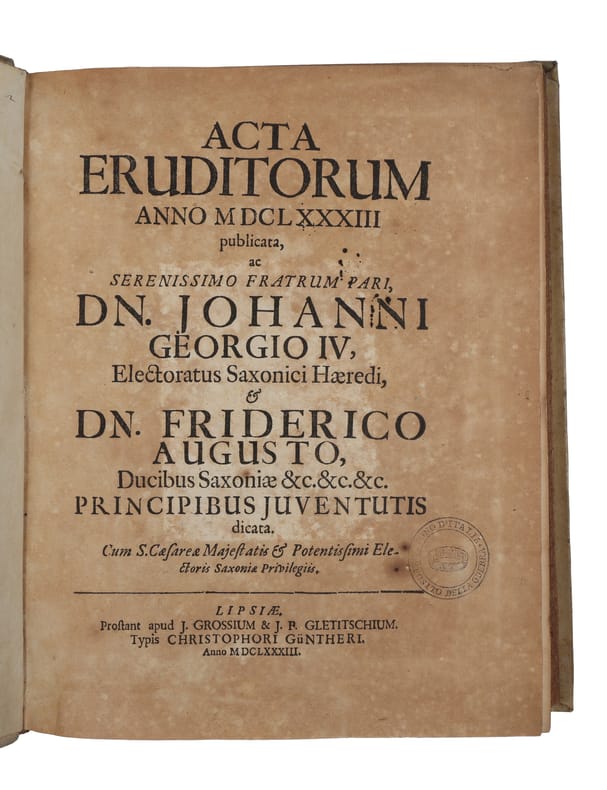
168345600Leipzig Grosse & Gleditsch 1683. 4to. Without wrappers. In: "Acta Eruditorum Anno MDCLXXXIII" No. V May issue. Pp.177-224 entire issue offered. Tschirnhaus' paper: pp. 204-207. Some browning as usual. With titlepage to the volume 1683. Titlepage with a stamp and a faint dampstain. <br/><br/><em>First edition of Tschirnhaus' "Tschirnhaus Tranformation".Tschirnhaus work intensively on finding a general method for solving equations of higher of higher degree. "His transformations constituted the most promising contribution to the solution of equations during the seventeenth century; but his elimination of the second and third coefficients by means of such transformation was far from adequate for the solution of the quintic.Boyer. A History of Mathematics 1968 472 p.Tschirnhaus 1651-1708 a Saxon nobleman had as wide interest as acquaintances: He studied in Leyden served in the Dutch army visited England and Paris several times. He set up a glassworks in Italy and is said to have introduced Porcelain to Europe. He wrote about philosophy and mathematics and was a close friend of Leibniz."In mathematics a Tschirnhaus transformation also known as Tschirnhausen transformation is a type of mapping on polynomials developed by Ehrenfried Walther von Tschirnhaus in 1683. It may be defined conveniently by means of field theory as the transformation on minimal polynomials implied by a different choice of primitive element. This is the most general transformation of an irreducible polynomial that takes a root to some rational function applied to that root."Wikipedia.Parkinson "Breakthroughs 1683 M. </em> unknown
168345599Leipzig Grosse & Gleditsch 1683. 4to. Without wrappers. In: "Acta Eruditorum Anno MDCLXXXIII" No.III X March and October issues. Pp. 81-128 pp. 417-464 a. 2 engraved plates. Entire issues offered. Tschirnhaus's papers: pp. 122-124 pp. 433-437. Some browning as usual. <br/><br/><em>First appearance of Tschirnhaus's two papers in which he used infinitisimal methods which were very close to Leibniz's method and where he tried to lay down criteria for rational quadratures in the case of conic cubic and quadratic curves papers that led Leibniz to publish his first paper on the differential calculus the "Nova Methoda" in the Acta for 1684 in order to secure his priority over Tschirnhaus concerning the calculus. Leibniz discovered when he read Tschirnhaus' papers that Tschirnhaus had here published results showing similarity with Leibniz's invention of the calculus as he had confided to Tschirnhaus earlier during their Parisian stay and this without references to Leibniz.The second issue contains an original paper by LEIBNIZ: "Meditatio Juridico-Mathematica de Interusurio simplice". Pp. 425-32. </em> unknown
1679D11030Lyon: Chez Pierre Guillimin 1679. Hardcover. Very Good. Lyon: Chez Pierre Guillimin M.DC.LXXIX 1679. 8vo 150 x 80mm. 428pp. 43. Full page engraved frontispiece depicting a worshipper at the foot of the cross laden with Passion instruments crown of thorns sponge on reed withes ladder spear pillar with caption Les souffrances & la mort Dun DIEV pour nous Nôtre Continuelle. Meditation. The suffering and death of God for us is our continual meditation. Woodcut device of heraldic shield and cardinals hat with tassels on title. Woodcut chapter head vignettes and tailpieces one repeating of Evangelist John on isle of Patmos and another of Veronicas veil and woodcut historiated initials mostly birds throughout. Dedicated to LÂme Chrétienne. The Christian Soul. Italic and Roman type. Contemporary speckled calf spine gilt in compartments; joints splitting light edgewear; margins trimmed close affecting few engravings. Front pastedown with book label of Justin Godart 1871-1956 a French politician and bibliophile of Lyon. Godarts personal library stamp is also on title with the Lyonnais lion. Internet records show that the library of Justin Godart was sold at auction in Paris by Hôtel Drouot in 1957. Importantly this book remained part of the local fabric of the French city from its publication to over 275 years. Stated seventh edition of this devotional text on the Passion of Christ printed by a public brotherhood of Catholics although no other editions located. It is a highly uncommon pocket prayer book with little traceable history save the fact that this same 1679 edition appeared in an auction by Techener in 1861. Another Meditations publication by the same society appears 39 years later as the Nouvelle édition Chez Barthelemy Martin 1718 now held in the Public Library of Lyon. This elusive and largely anonymous French Catholic confraternity probably a local chapter of Lyon likely had various periods of flourishing and disbands or did not make large print-runs of their books possibly explaining the scarcity. <br/><br/>The aim of this brotherhoods untitled publication was to disseminate widely the prayers and reflections to be offered daily first day of the month second day etc. for the suffering of Christ. By publishing a text like this the brothers would in effect be gathering lower orders to participate in penitential exercises which is in itself an act of devotion and which would win them indulgences. In total there are 41 copperplate engravings attributed to François Houat who came from a family of printers and engravers in Northern France. These engravings are exceptional for their dramatic shadows and perspectives. As well the Guillimin publishers were known for their Catholic devotional imprints. For 31 days a full-page copperplate engraved scene of Christs Passion with captions precedes each daily reflection. The daily meditations build up chronologically ending with Christs death on the cross. Full-page engravings are also for Litany of the Passion Litany to the Infant Christ Nativity Lent repeating frontispiece Resurrection Ascension Pentecost the Blessed Sacrament and the emblemata of the brotherhood skull instruments of Passion candle and hourglass. French penitent confraternities survived during the early modern centuries as they underwent several transformations which made them more reflective of French as opposed to Italian devotional sensibilities. They enjoyed prestige and spiritual currency in Catholic society right up the Revolution. Chez Pierre Guillimin hardcover
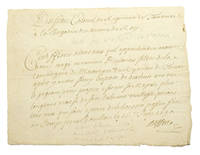
169027724Bouillon: Au Camp Près Bouillon 1690. In French. 1 1/4 pages. 1 vols. 8 1/2 x 6 1/2 inches. Paper. Some light marginal wear else very good. In French. 1 1/4 pages. 1 vols. 8 1/2 x 6 1/2 inches. As Colonel of the Regiment of Touraine and Brigadier des Armés du Roy he certifies that Destoriers Goldar de la Compagnie de Miramone had served in the military and asks for his admittance to Hôtel des Invalides. In 1701 he was made the Commander in Chief . He received the Grand Croix of St. Louis. <br/><br/> Au Camp Près Bouillon unknown
169316116No place no date1693. Very large engraved seechart measuring 60 x 865 cm. in original outline colouring. The chart showing the Northern part of England from Lancaster to Banf of Ireland from Blackrock to Carlingford and all the Islands to the north: Shetland Orkney Faroe etc. etc. A fine impression on good thick paper with the watermark: BYCOLUMBIER. Folded down the center. <br/><br/><em>The "Neptune Francois" was published in 1693 and its charts are larger and more lavishly decorated than those of any preceding book of its kind. The chart is without year place and "par Ordre du Roi" pointing to a later impression but issued from the original copperplate. It is also without "Imprimerie Royale" belonging to the imprints from 1792. Koeman IV425:9. </em> unknown
169316120Large engraved seechart measuring 46 x 89 cm. in original outline colouring. The chart showing the South-east coast of England from Sandwich to Clay. With inset view of The Thames between London and Greane Island. A fine impression on good thick paper with watermark: BYCOLUMBIER. Folded down the center. <br/><br/><em>The "Neptune Francois" was published in 1693 and its charts are larger and more lavishly decorated than those of any preceding book of its kind. This chart is without year place and "par Ordre du Roi" pointing to a later issue but issued from the original copperplate. It is also without "Imprimerie Royale" belonging to the imprints from 1792. Koeman IV425:8. </em> unknown
169316118Very large engraved seechart measuring 61 x 875 cm. in original outline colouring with large inset view of the harbour of Kinsal and Kinsal River. The chart showing the Westcoast of Ireland from Bay of Roonstahound to Kiriec in lower left corner C. Berey scr. A fine impression on good thick paper with the watermark: BYCOLUMBIER. fOLDED DOWN THE CENTER. <br/><br/><em>The "Neptune Francois" was published in 1693 and its charts are larger and more lavishly decorated than those of any preceding book of its kind. The chart is without year place and "par Ordre du Roi" pointing to a later issue but issued from the original copperplate. It is also without "Imprimerie Royale" belonging to the imprints from 1792. Koeman IV425:11. </em> unknown
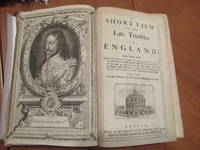
1681037571London: Moses Pitt 1681. 1st Edition 1st Printing. Hardcover. Fair. 6 136 185-294 361-439 449-488 553-650 Treaty For A Peace 4 737-923 1 His Majesties Answers 2 927-959 13: 6 Pp Index 5 Pp Catalog At End. 12 1/8" X 8" Covers; Leaves Are 11 13/16" X 7 5/8". Irregular Pagination. Original Tooled Leather 5 Bands. All Endpapers And Catalog Pages Present. Edges Of Page Block With Original Red Color. First Printing Published Anonymously But By William Dugdale As Later Indicated In The Second Printing. Binding Worn And Spine Much Frayed Enrieely Split And Front Edge And Worn Through To Boards And Cords And Chipped Along Entire Front Spine Edge But Binding Held Solid By All Five Thick Cords. No Names Or Marks Or Bookplates. Pages Lightly Aged No Foxing Spots. Frontispiece Portrait Clean Browning In Narrow Strip Along Fore Edge Outside Of Portrait Border About 3/16" Deep. 12 1/4" X 8 1/2". Slight Worming In Margins For 1" At Foot Of Spine Edge Of Leaves. Text Added In Very Neat Hand Four Lines At Bottom Of P. 574 And 3 Lines At Top Of P. 575 Apparently Left Out By Printer The End Of P. 574 Not Otherwise Connecting To The Beginning Of P. 575 Not Mentioned In Bibliographies We Have Seen Has No One Read This In The Past 100 Years. An Excellent History By An Aristocratic Adherent Of What Soon Became The Losing Side In The Discussions Between The Monarchy And The Parliament. . <br/> <br/> Moses Pitt hardcover
169436324Amsterdam Abraham Wolfgang 1694. Uncut in contemp. blank boards. Title handwritten on spine. Spine a little rubbed. 22307 pp. and 8159 pp. Textillustrations in woodcut illustrating Cartesian physics and world system. A large copy few marginal brownspots. Previous owners name on fly-leaf Vilhelm Maar Danish historian of medicine. <br/><br/><em>First Latin edition The French original from 1690 Voyage du Monde de Descartes of this imaginary travel to find Descartes on the moon and in the upper spheres. The work is one of the most importent anti-Cartesian polemics of the 1690's and it attacs the whole of Descartes system in a satirical way."It aimes principally at the sharp Cartesian distinction between body and soul related in a satirical fashion the voyage of the disembodied souls of the narrator of Mersanne and of another old friend of Descartes in the upper spheres. On their way to visit Descartes in the third heaven they meet the souls of Aristotle and the disciples of descartes clearly refelcting here the philosophical opinions of Gabriel Daniel himself. One of the articles of that treaty stipulates that the Cartesians will refer to Aristotle with more respect whereas the Aristotelians will refrain from calling Descartes "Enthusiast" "Madman" "Heretick" or "Atheist" - all of these evidently labels commonly used by the opponents of Descartes at that time." Michael Heyd in "Be Sober and Reasonable". The work was published anonymous and earlier sometimes attributed to Daniel Defoe. - </em> hardcover
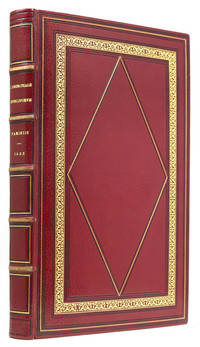
1633306616Paris: Societatis Typographic Librorum Officii Ecclesiastici . 1633. Engraved title numerous small and large engraved vignettes head-and tail-pieces one full-page engraving; text printed in black running headlines and chapter headings in red numerous large decorated initial capitals. 1 vols. Folio. Full red crushed morocco covers decorated with single black and gilt fillets including a central diamond in black and gilt with a gilt-rolled frame spine in six compartments with raised bands gilt lettered in two others with simple frame of black and gilt fillets wide gilt turn-ins with large gilt cornerpieces a.e.g. gilt-stamped on the turn-in of the inside front cover "French Binders Garden City NY" and on that of the rear cover "H. Hardy Relieur 1934 G. Pilon Doreur." Very slight rubbing to extremities still near fine with some toning to text. In a quarter morocco slipcase with chemise. Engraved title numerous small and large engraved vignettes head-and tail-pieces one full-page engraving; text printed in black running headlines and chapter headings in red numerous large decorated initial capitals. 1 vols. Folio. Beautifully bound in full red morocco by The French Binders successors to The Club Bindery and signed on the rear turn in by two of the firm's most distinguished binders Henry Hardy and Gaston Pilon. <br /> The French Binders traces its lineage back to The Club Bindery founded in 1895 by members of the Grolier Club to provide exceptionally fine bindings for American collectors. The Club Bindery moved to Cleveland where it was successively renamed the Rowfant Bindery 1909-1913 the Booklover's Shop 1914-1917 and finally The French Binders 1918-1920s as in-house bindery to Doubelday in Garden City New York. Henry Hardy worked for all incarnations of the bindery starting with The Club Bindery; his brother-in-law Gaston Pilon worked with Chambolle-Duru in Paris and came over to America to join the Rowfant Bindery. Both Hardy and Pilon were named Officers of the French Academy in 1933 the highest recognition given by the French government to naturalized Americans see Martin Antonetti's essay in Bound to Be the Best: The Club Bindery. Provenance: Estelle Doheny red morocco booklabel; Carl C. Kalbfleisch brown morocco booklabel Societatis Typographic Librorum Officii Ecclesiastici .. unknown
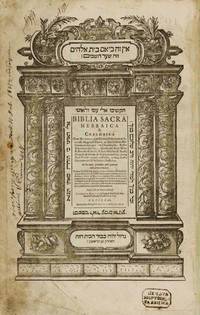
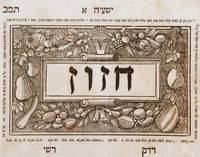
161948847Basel: Ludwig König 1619. First editions. Hardcover. Good. Seven parts in two volumes folio biblical texts and commentary in four parts continuously foliated; two supplemental sections each with separate foliation; Tiberias 1620 with separate pagination here bound after the second part - Vol. 1: 6 title and prelims 1-228 1 sect. title 234-441 1 blankff.; 6 sect. title and prelims 2 blank 114 2 blankpp. Vol. 2: 442-946; 8 Targum Yerushalmi; last leaf unfoliated; 67 Masora 1 blankff. Largely arranged in two columns of biblical texts in square font surrounded by commentaries in rabbinic Rashi font; text reads from right to left. This copy with collective Latin title surrounded by biblical quotations in Hebrew set within elaborate woodcut architectural borders. Hebrew sectional titles set within the same woodcut borders for the second and fourth parts with a plain letterpress half-title for the Five Megillot. The third sectional title for the Latter Prophets is lacking as are the Ashkenazi Haftarot readings not found in all copies. Apart from these lacks the Rabbinic Bible collates complete despite numerous errors in foliation throughout as per the detailed notes in Prijs Die Basler hebräischen Drucke. Opening word of each biblical book set in large one-third to one-half page cartouche vignettes with elaborate woodcut borders and surrounding letterpress Hebrew text. Main Latin title dated 1619 with the editor's Latin preface to the reader appearing at the verso. Jewish date chronogram for the second section Former Prophets dated 5378 1618/1619. Early twentieth-century black cloth boards worn at extremities gilt-lettered spine. Title moderately soiled re-inforced at gutter; neat old repairs to corners and fore-edge of title and next three leaves; old Russian stamp at bottom margin title manuscript entry in Russian along fore-edge dated 1837; intermittent mild to moderate marginal dampstains largely confined to corners and embrowning throughout both volumes somewhat more heavily in the first especially throughout Tiberias; top right corner of the opening leaf in vol. 2 repaired with loss of about 12 words surrounding title cartouche recto and some text in 9 lines of the commentary at the verso. Overall a good set with a notable chain of provenance. <br /> <br /> Sixth Rabbinic Bible in Hebrew: Mikra'ot Gedolot edited by Johann Buxtorf I 1565-1629 professor of Hebrew at the University of Basel and the foremost Christian Hebraist of his era with the assistance of the Jewish scholars Abraham Braunschweig who served as the principal corrector and Mordechai Gumplin of Posen. This was "a truly audacious undertaking for his time" Burnett From Christian Hebraism to Jewish Studies as no Christian scholar had yet attempted to edit the entire biblical corpus including the Aramaic versions Targumim and masoretic notes. Based mainly on the third Rabbinic Bible published by Daniel Bomberg at Venice in 1546-1548 the editor has carefully incorporated elements from two other Venetian editions. At the verso of the Latin title Buxtorf provides a detailed bibliographical excursus on the earlier Venetian editions and offers a tribute to Bomberg's industry by reprinting the colophon of the second Venetian Rabbinic Bible 1524-1525 at the conclusion of the masoretic appendix with text by the Hebrew grammarian and lexicographer Elijah Levita 1468 or 1469-1549 and a new introduction by Abraham Braunschweig. The design of the sectional titles and separate book title vignettes closely model those of the Venetian editions. "Buxtorf did not plan simply to reprint one of the existing Venice editions but rather to assemble the best features of them all into one work" and "to provide theologians with what he considered the most important tools for interpreting the Old Testament" Burnett. Buxtorf served in an official capacity as Basel's Hebrew censor charged with the oversight of all Jewish printing in the city and insuring that "no 'blasphemies' or slurs against Christians or Christianity appear in any book printed in Basel" Burnett. He carefully edited the Jewish commentaries in the Rabbinic Bible in accordance with this mandate "and removed many words and phrases which had escaped the attention of earlier censors" Burnett. <br /> <br /> The Rabbinic Bible contains the vocalized Masoretic text of the Hebrew Scriptures with accents and a vocalized Targum an Aramaic paraphrase of the biblical text: Onkelos for the Pentateuch; Jonathan b. Uzziel for the Prophets; and Targum Hagiographa for the Writings. The Hebrew and Aramaic versions are printed in square characters and presented in facing columns at the center of each page. The Jerusalem Targum of the Pentateuch appears as an appendix. In addition to the Aramaic paraphrases the Rabbinic Bible includes a massive scholarly apparatus of biblical commentaries by Rashi Ibn Ezra Baal ha-Turim Jacob b. Asher R. David Kimchi Radak R. Levi b. Gershon Ralbag Saadia Gaon and R. Isaiah along with the Masora a corpus of critical notes on the external form of the Biblical text compiled by Jewish scholars from late antiquity through the medieval era. As frequently occurs a copy of Buxtorf's work on the textual history of the Hebrew Bible Tiberias the 1620 first edition is bound-in. This work was made possible by the publication in 1538 of Elijah Levita's Masoret ha-Masoret a commentary on the Masora which Buxtorf translated into Latin for his own private use in 1593. "Buxtorf was concerned with the integrity of the consonantal text and the origin and integrity of the vowel points and accents of the Hebrew Bible from the very beginning of his scholarly career" and while he had earlier published a long excursus on the age of the vowel points and accents in his 1609 Thesaurus Grammaticus "Tiberias is Buxtorf's fullest and most impressive work on the history of the biblical text" Burnett. Intended as a reference work for Christian students and scholars interested in studying the Masora Buxtorf was also keen to refute the view advanced by Levita that the Hebrew vowel points were early medieval innovations. Our folio version of Tiberias was intended to accompany the Rabbinic Bible and has the same architectural borders at the title. König also published a quarto edition in the same year but only the folio version includes a critical commentary on the Masora in which Buxtorf proposes various corrections to the Masoretic notes. <br /> <br /> As noted at the title Buxtorf's faithful study and tireless labor studio fido et labore indefesso yielded notably long-lasting results: "The Basel rabbinical Bible became a standard tool for research among Christian scholars and would remain so. until the end of the nineteenth century" Burnett. A vast array of early modern scholars including Protestants like Johannes Drusius and John Selden as well as Roman Catholics like Robert Bellarmine and Andreas Masius owned a copy or two of the Rabbinic Bible. "Johannes Buxtorf's thoroughly censored "Christian" version of the Rabbinic Bible Basel 1618-19 only made it easier for Hebraists to own copies of their own" Burnett Christian Hebraism in the Reformation Era p.163.<br /> <br /> A note on the date of publication: "The actual printing began between the mid-August and mid-September of 1618. According to the colophon production ended on the 24 of Ab 5379 = August 4 1619 but since this date also appeared on the colophon of the Bomberg Biblia rabbinica edition of 1524-25 reprinted unchanged in the 1546-48 and 1568 editions it is suspect. Prijs suggested that the probable completion date was sometime during Ab of 5379 between July 12 and August 10 of 1619" Burnett. <br /> <br /> Provenance: from the library of acclaimed theologian and biblical scholar Brevard Childs with his entry at the free endpaper in the second volume. The earlier bookplate of judge Samuel Heller with his motto in Hebrew: Mi-kol melamdai hiskalti from all my teachers I have learned appears at the front paste-down. An old blue ink-stamp in Hebrew characters makes occasional appearances the text: Bet ha-Midrash ha-Gadol Minsk The Great Synagogue of Minsk. A Russian entry dated 1837 appears at the fore-margin of the main title along with an old ink stamp in Russian at the bottom margin the last word of which reads "Rabbina" References: Biblia Sacra: Burnett 7. Cowley 87. Darlow & Moule 5120 bound with the 1665 second edition of Tiberias cf. 5093. Davidson Otsar ha-shirah vol.1 p.406 no.8954. Prijs 219. Steinschneider 423 423b. VD17 23:675325G. S. Burnett Christian Hebraism in the Reformation Era Leiden: Brill 2012 p.163. Tiberias: Burnett 111. Prijs 222a. For detailed analyses of both works see: S. Burnett From Christian Hebraism to Jewish Studies Leiden: Brill 1996 pp.169-239 chaps. 6 & 7.<br /> <br /> Full Latin title: Biblia Sacra Hebraica & Chaldaica cum Masora quae critica Hebraeorum sacra est Magna & Parva ac selectissimis Hebraeorum interpretum commentariis Rabbi Salomonis Jarchi R. Abrahami Aben Esrae R. Davidis Kimchi R. Levi Gerson R. Saadie Gaon R. Jeschajae & Notis ex authore quem Baal Turim vocant collectis quibus textus grammaticè & historicè illustratur. In his nunc primum post quatuor editiones Venetas textus Chaldaicus qui Targum dicitur à deformitate punctationis & pravitate vocum innumeratum vindicatus; loca in Masora transposita deficientia pugnantia numeris depravata subsidio diversorum exemplarium & Concordantiarum Hebraicarum quantum fieri potuit reposita restituta & conciliata sunt ut in praefatione amplius declarabitur. Studio fido & labore indefesso Johannis BuxtofI linguae sanctae in Academia Basileensi Professoris Ord. Basileae: Sumptibus & typis Ludovici König 1619.<br /> <br /> Collation vol. 1 Rabbinic Bible: ital.a6 a-z8 A-E8 F4 G-Z8 Aa-Hh8 Ii9 Ii10 blank; 1 blank :3 1 blank A-N4 O5.<br /> <br /> Collation vol. 2 Rabbinic Bible: Kk-Rr8 Kk1 lacks Ss6 Tt10 Vv-Zz8 AA-PP8 QQ-TT6 VV9 VV10 blank XX-ZZ8 Aaa-Nnn8 Ooo3 Ooo4 blank PppTtt8 Vuu3 Vuu4 blank Xxx-Zzz8 AAaa-EEee8 8 A-G8 H6 I5 I6 blank. Ludwig König hardcover
161952679Basel: Ludwig König 1619. First edition in part. Hardcover. Good. Eight parts in three volumes folio biblical texts and commentary in four parts continuously foliated; three supplemental sections each with separate foliation; Tiberias 1655 with separate pagination here bound after the Haftarot - Vol. 1: 6 title and prelims 1-228 1 sect. title 234-441 1 blank ff. Vol. 2: 1 sect. title 442-705 3 blank 707 sect. title-837 1 blank ff. Vol. 3: 839 half-title-881 1 blank 883-946; 8 Targum Yerushalmi; last leaf unfoliated; 67 Masorah 1 blank; 1 title 2-36 Haftarot ff.; 8 title and prelims 108pp. Despite the gap in foliation between the first and second parts and numerous errors in foliation throughout the Rabbinic Bible collates complete with all blanks noted in Prijs Die Basler hebräischen Drucke and the Haftarot bound at the end. Largely arranged in two columns of biblical texts in square font surrounded by commentaries in rabbinic Rashi font; biblical texts read from right to left. This copy with collective Hebrew title surrounded by biblical quotations in Hebrew set within elaborate woodcut architectural borders; brief preface in Hebrew by Abraham Braunschweig at the verso. Hebrew sectional titles set within the same woodcut borders for the three other biblical sections and the Haftarot with a plain letterpress half-title for the Five Megillot. Opening word of each biblical book set in large one-third to one-half page cartouche vignettes with elaborate woodcut borders and surrounding letterpress Hebrew text. Main title Jewish date chronogram = 5378 1618-1619. Near-contemporary half calf over speckled boards worn and rubbed; spines with raised bands gilt morocco lettering pieces and old paper labels heavily faded. About two-thirds of the text embrowned ranging from minimal to moderately heavy; worm tracing in a 1- by 2-inch section at leaves 541-553 affecting text. A good complete set notably containing the Ashkenazi Haftarot readings not found in all copies.<br /> <br /> Sixth Rabbinic Bible in Hebrew: Mikra'ot Gedolot edited by Johann Buxtorf I 1565-1629 professor of Hebrew at the University of Basel and the foremost Christian Hebraist of his era with the assistance of the Jewish scholars Abraham Braunschweig who served as the principal corrector and Mordechai Gumplin of Posen. This was "a truly audacious undertaking for his time" Burnett as no Christian scholar had yet attempted to edit the entire biblical corpus including the Aramaic versions Targumim and masoretic notes. Based mainly on the third Rabbinic Bible published by Daniel Bomberg at Venice in 1546-1548 the editor has carefully incorporated elements from two other Venetian editions. At the verso of the Latin title Buxtorf provides a detailed bibliographical excursus on the earlier Venetian editions and offers a tribute to Bomberg's industry by reprinting the colophon of the second Venetian Rabbinic Bible 1524-1525 at the conclusion of the masoretic appendix with text by the Hebrew grammarian and lexicographer Elijah Levita 1468 or 1469-1549 and a new introduction by Abraham Braunschweig. The design of the sectional titles and separate book title vignettes closely model those of the Venetian editions. "Buxtorf did not plan simply to reprint one of the existing Venice editions but rather to assemble the best features of them all into one work" and "to provide theologians with what he considered the most important tools for interpreting the Old Testament" Burnett. Buxtorf served in an official capacity as Basel's Hebrew censor charged with the oversight of all Jewish printing in the city and insuring that "no 'blasphemies' or slurs against Christians or Christianity appear in any book printed in Basel" Burnett. He carefully edited the Jewish commentaries in the Rabbinic Bible in accordance with this mandate "and removed many words and phrases which had escaped the attention of earlier censors" Burnett. <br /> <br /> The Rabbinic Bible contains the vocalized Masoretic text of the Hebrew Scriptures with accents and a vocalized Targum an Aramaic paraphrase of the biblical text: Onkelos for the Pentateuch; Jonathan b. Uzziel for the Prophets; and Targum Hagiographa for the Writings. The Hebrew and Aramaic versions are printed in square characters and presented in facing columns at the center of each page. The Jerusalem Targum of the Pentateuch appears as an appendix. In addition to the Aramaic paraphrases the Rabbinic Bible includes a massive scholarly apparatus of biblical commentaries by Rashi Ibn Ezra Baal ha-Turim Jacob b. Asher R. David Kimchi Radak R. Levi b. Gershon Ralbag Saadia Gaon and R. Isaiah along with the Masora a corpus of critical notes on the external form of the Biblical text compiled by Jewish scholars from late antiquity through the medieval era. As frequently occurs a copy of Buxtorf's work on the textual history of the Hebrew Bible Tiberias the 1655 revised edition is bound-in. This work was made possible by the publication in 1538 of Elijah Levita's Masoret ha-Masoret a commentary on the Masora which Buxtorf translated into Latin for his own private use in 1593. While "Buxtorf was concerned with the integrity of the consonantal text and the origin and integrity of the vowel points and accents of the Hebrew Bible from the very beginning of his scholarly career." While he had earlier published a long excursus on the age of the vowel points and accents in his 1609 Thesaurus Grammaticus "Tiberias is Buxtorf's fullest and most impressive work on the history of the biblical text" Burnett. Intended as a reference work for Christian students and scholars interested in studying the Masora Buxtorf was also keen to refute the view advanced by Levita that the Hebrew vowel points were early medieval innovations. Our folio version of Tiberias was intended to accompany the Rabbinic Bible and has the same architectural borders at the title. König also published a quarto edition in the same year but only the folio version includes a critical commentary on the Masora in which Buxtorf proposes various corrections to the Masoretic notes. <br /> <br /> As noted at the title Buxtorf's faithful study and tireless labor studio fido et labore indefesso yielded notably long-lasting results: "The Basel rabbinical Bible became a standard tool for research among Christian scholars and would remain so. until the end of the nineteenth century" Burnett. A vast array of early modern scholars including Protestants like Johannes Drusius and John Selden as well as Roman Catholics like Robert Bellarmine and Andreas Masius owned a copy or two of the Rabbinic Bible. "Johannes Buxtorf's thoroughly censored "Christian" version of the Rabbinic Bible Basel 1618-19 only made it easier for Hebraists to own copies of their own" Burnett Christian Hebraism in the Reformation Era p.163.<br /> <br /> A note on the date of publication: "The actual printing began between the mid-August and mid-September of 1618. According to the colophon production ended on the 24 of Ab 379 = August 4 1619 but since this date also appeared on the colophon of the Bomberg Biblia rabbinica edition of 1524-25 reprinted unchanged in the 1546-48 and 1568 editions it is suspect. Prijs suggested that the probable completion date was sometime during Ab of 379 between July 12 and August 10 of 1619" Burnett. References: Biblia Sacra: Burnett 7. Cowley 87. Darlow & Moule 5120 like our copy bound with the 1665 second edition of Tiberias cf. 5093. Davidson Otsar ha-shirah vol.1 p.406 no.8954. Prijs 219. Steinschneider 423 423b. VD17 23:675325G. S. Burnett Christian Hebraism in the Reformation Era Leiden: Brill 2012 p.163. Tiberias: Burnett 114. Prijs 272a. For detailed analyses of both works see: S. Burnett From Christian Hebraism to Jewish Studies Leiden: Brill 1996 pp.169-239 chaps. 6 & 7. Ludwig König hardcover
162718927Frankfurt: Matthaeus Merian 1627. First edition. Hardcover. Very good. Matthaeus Merian. Oblong folio leaves: 20.6 by 31.2 cm; plates: 10 to 11.5 by 14.5 to 15.5 cm. Engraved titlepage borders without letterpress; 231 of 233 engraved plates printed on the rectos with no printed text depicting biblical scenes from the Old and New Testaments lacks Gen. XIX: Lot and his daughters after the destruction of Sodom and Gomorrah; Exod. VIII & IX: The plague of frogs. Recent marbled calf lightly rubbed at extremities bordered in blind; gilt-tooled spine with raised bands gilt lettering pieces. Occasional light stains and smudges especially at the outermost leaves and almost entirely restricted to the blank margins; old mostly marginal repairs and reinforcement of tears to about 30 leaves Matt. IV plate with loss of about 10 words of manuscript text. Protected by wide margins the plates are clean fresh and bright with relatively few minor blemishes. Housed and protected in a custom luxurious modern leather clamshell box.<br /> <br /> Rare suite of biblical illustrations printed before letter perhaps as proofs comprising 231 of 233 engraved plates from the Icones Biblicae of Matthaeus Merian the elder 1593-1650. The engravings are printed on large paper and lack any printed text. They are preceded by a leaf of the engraved title borders to the first part in which the central cartouche which would have contained a letterpress title and imprint is here blank. Neat manuscript annotations appear throughout: atop each engraving is a brief title along with a notation of the biblical book and chapters; beneath each engraving are six-lines of rhyming verse in German; at the top corners are leaf numbers in Arabic numerals. All are penned in black ink in the same old cursive German hand. The engraved title leaf is not included in the manuscript foliation. The first three leaf numbers and several others among the first 23 leaves are obscured by wear or later marginal repairs. The foliation ends at leaf 233 and is discontinuous where one would expect to find numbers 15 and 38 corresponding to the missing plates noted above. As noted by Wütrich only four of the 233 plates are signed by Merian all in the New Testament series. Each of these signed plates appears in our suite: Matthaei I. - page 7; Johannis VIII. - page 65; Matthaei XXVII. - page 101; Apocalyps. IX. - page 145 header titles and page numbers from the first edition.<br /> <br /> The first editions were published at Frankfurt in four parts between 1625 and 1627. The Pentateuch series was published in 1625. The second part illustrating the Old Testament books from Joshua to Kings appeared in 1626. These first two series were published under the name of Merian's father-in-law the printer and bookseller Johann Theodor de Bry 1561-1623 whose heirs retained title to the business. The third part illustrates the remainder of the Old Testament and Apocrypha; the fourth the New Testament. These last two parts were published in 1627 under the engravers's own name. Verses in Latin German and French accompany each plate in the three Old Testament series the French verses being omitted in the 1627 New Testament series.<br /> <br /> While the eminent Swiss draughtsman and engraver Matthaeus Merian is best known for his topographical depictions of the German speaking lands which appeared in the Theatrum Europaeum his novel selection of biblical stories and innovative stylistic approach revealed in the present series of plates proved highly influential ushering in a new age of copperplate engraving in Bible illustration. Merian broke with the century-long tradition of woodcuts which had accompanied countless editions of Luther's German Bible. Even as he drew on the Bible illustrations of Jost Amman Hans Holbein Virgil Solis and Tobias Stimmer Merian greatly expanded the traditional iconographic and compositional repertoire. The Old Testament alone contains 23 prints depicting stories that had never before been the subject of an engraver. While earlier New Testament woodcuts focused on the Book of Revelation Merian now provided a rich series of plates to illustrate the Gospels and Acts of the Apostles as well.<br /> <br /> Merian had an obvious preference for crowd scenes and battles along with some of the novelistic features of the Old Testament such as Jacob's lentil dish Solomon and Shulamit in the Song of Songs or the apocryphal story of the Dragon in Babylon. Merian sometimes provides local color from his home town of Basel as in his depiction of Solomon's Temple Consecration in which despite the baroque redesign the Basel Cathedral with the old choir is easily recognizable. The costumes and gestures of Merian's biblical characters display a baroque fantasy of the ancient Near East as reflected in the theater of his day; in depicting cities and buildings however Merian generally prefers to follow contemporary models. In individual cases such as Bathsheba's Bath he succumbed to the temptation as an engraver and artist to show off his skills in a magnificent fashionable palace and garden complex. All-in-all Merian's engravings initiated a development in Bible illustration "that led further and further away from the didactic Reformation purpose of Bible pictures to purely artistic-representational purposes and finally ended in the well-known pathos of the German Romantic Nazarenes" Schmidt.<br /> <br /> In the first few decades after their appearance these Bible plates were widely copied throughout Europe especially in the Netherlands and France Poortman. The first folio Bible to use Merian's copper plates to illustrate the text was published by the heirs of Lazarus Zetzner at Strasbourg in 1630. Subsequent editions of the "Merian Bible" were published at Frankfurt where Merian had taken over his father-in-law Johann de Bry's business. For over a century as Merian's heirs continued to publish new editions this would become "the most widespread German illustrated Bible in southern Germany Basel and Alsace primarily in wealthy households" Schmidt. After the demise of the Merian publishing house in 1727 the bookseller Philip Heinrich Hütter acquired the copper plates which he used to illustrate a Catholic Bible edition published at Frankfurt in 1740 Poortman.<br /> <br /> A very notable instance of transposing Merian's biblical engravings into another context occurs in the famous and oft-reprinted Amsterdam Haggadah the ritual for the Jewish Passover meal first published in 1695. The engravings were made by Abraham ben Jacob a former Protestant preacher who converted to Judaism. Introducing skills he had earlier acquired when working outside the Jewish community Abraham ben Jacob "widened the scope of Jewish book illustration" Rosenau and introduced new elements into the traditional iconography of the Haggadah. "He chose many of the same incidental scenes as had appeared in the Venice Haggadot 1599-1604 but he drew them afresh basing his work on the biblical pictures in the Icones Biblicae by Matthew Merian" EJ. Among them was the image of the Temple of Solomon in Jerusalem. As Merian used a wide variety of prototypes Rosenau suggests that the two free-standing columns Jachin and Boaz depicted at the front porch of the Temple in Merian's engraving and Abraham ben Jacob's adaptation may have ultimately been derived from the woodcuts which accompany Estienne's Bible Paris 1540 based upon the scholarship of Franciscus Vatablus.<br /> <br /> In Das druckgraphische Werk von Matthaeus Merian d. Ae. 1993 L. H. Wüthrich describes a "Spezialausgabe ohne Drucktext" complete with 233 biblical engravings located in Darmstadt at the Hessische Landesbibliothek 31/643. This "separate edition without text or a series of proofs" which he describes has three notable features: 1 an undated first edition title page of the second part Pars II of the Old Testament which has been "corrected. by crossing out or shaving" to read "Pars I"; 2 the first edition title page of the New Testament series dated 1627; 3 an engraving of the The Fall of Man probably after Johann Theodor de Bry which later appears in Gottfried's Chronicle part 1 1629/1630 but which differs from that found in most copies of the first edition Wütrich 1a. The copies containing this plate after de Bry Wütrich 1aa. were likely printed in 1626. Further research perhaps locates only one other suite of Merian plates without text at the Herzog August Bibliothek Wolfenbüttel catalogued under two call numbers: the Old Testament series dated 1626-1627 comprising 157 leaves including an engraved title A: 30.1 Geom. 2 "Ausg. ohne Text von Ps. 1 und 2." = VD17 23:289608V and the New Testament series dated 1627 comprising 78 leaves including an engraved title A: 30.1 Geom. 3 "Ausg. ohne Text" = VD17 23:655618H. The catalogue entry for the Old Testament series references Wütrich's "Spezialausgabe ohne Drucktext." Surprisingly the key images provided for this entry illustrate the same three notable features of the "Spezialiausgabe" which Wütrich located at Darmstadt !. Our suite of plates is provided with a single blank engraved title leaf the one used for the first series of the Old Testament plates which lacks any letterpress. The third plate which depicts the Fall of Man is here in Merian's style and is the image more commonly found in the first printings Wütrich 1a.<br /> <br /> In the first edition of the Icones Biblicae the title page notes "Mit Versen und Reymen in dreien Sprachen geziert und erkläret Durch Johann Ludwig Gottfried" decorated and described with verses and rhymes in three languages by Johann Ludwig Gottfried. In the first three parts of Icones Biblicae Gottfried's German verses are in four lines with a rhyme scheme of ABBA. In the fourth part the New Testament the German verses are modified to six lines with a rhyme scheme of AABCCB. The manuscript verses in German which accompany each of the 231 plates in our suite differ from both of these formats being composed in six lines of iambic hexameter with a rhyme scheme of ABABCC. To give a sense of how these versions differ the four lines of the German printed verses which accompany the first plate The Creation may be compared with the following transcript of the written verses which describe this scene in our set.<br /> <br /> in the first edition of Merian's Bilderbibel<br /> <br /> Im Anfang Gott Erschuff den Himmel und die Erden<br /> Die Wasser und das Meer das Liecht der Sternenschein<br /> Die Vögel Fisch Gewürm alle Thier groß und klein<br /> Warauß sein Gütigkeit und Kraft erkant mag werden.<br /> <br /> the hand of anonymous versifier<br /> <br /> Im Anfang schuff der Herr den Himmel und die Erden<br /> Das Licht die Sonn den Mond die Sternen und das Meer<br /> Gras Bäume Laub und Kraut und was genannt mag werden<br /> Von Thieren Vögel Fisch in ihrem grosen Heer<br /> Nur durch ein einig Wort: Ich kan hieraus erkennen<br /> O Gott! dein ew'ge Krafft und dich den Schöpffer nennen.<br /> <br /> Watermark: flambeau surrounded by garland<br /> <br /> Provenance: laid-in typed description on a half-sheet bearing the early twentieth-century letterhead of Harry A. Levinson Rare Books: "There appears to be no record of another such copy of proofs before letter." References: L. H. Wüthrich Das druckgraphische Werk von Mattaeus Merian d. Ae. Basel: Bärenreiter 1993 vol. 3 p.16: "Spezialausgabe ohne Drucktext;" Enc. Jud. 2nd ed. 8:215; W. C. Poortman Bijbel en Prent 's-Gravenhage 1986 2:56-59; H. Rosenau Vision of the Temple London: Oresko 1979 pp. 135; 146f. Ph. Schmidt Die Illustration der Lutherbibel Birsfelden/Basel 1977 pp. 304-329; VD17 23:289608V and 23:655618H. [Matthaeus Merian] hardcover
165349198Leiden, Joannis Maire, 1653 - Amsterdam, Ioannes Blaeu, 1650. 4to. One contemp. full vellum. Contemp. handwritten titles (weak) to spine. First title in red/black with large engraved titlevignette. (8),154,(1) pp. (Ars Historica 1653) - (16),94,(14) pp. (Grammatistice etc. 1650) - (8),83,(15) pp. (De Philologia, 1650) - (16),467,(33) pp. (De Universae Mathesios..., 1650). Fine and clean.
168346399Leipzig, Grosse & Gleditsch, 1683. 4to. Contemporary full vellum. Handwritten title on spine. Library label to pasted down front free end-paper and a small stamps on titlepage. In: ""Acta Eruditorum Anno MDCLXXXIII"". As usual with various browning to leaves and plates. Tschirnhaus' paper: pp. 122-124" Pp. 204-207" Pp. 433-437. [Entire volume: (8), 561, (7) pp + 13 plates].
169961164Copenhagen, Joachim Schmedtgen, 1699. 8vo. In contemporary full calf with five raised bands and richly gilt spine and two clasps. With King Christian V's monogram in gold to upper part of spine. Edges of boards gilt. All edges gilt. Small paper-label pasted on to spine. A few wormholes to back board, leather on spine cracked, cornes bumped. A few small worm-tracts to last leaves. Last two blanks with annotations in contemporary hand. Internally generally nice and clean. (22), 104, 112, 142, 110, 84, (4) pp. (Including three blanks in the front and back).
170046424Hannover, Nicolai Förster, 1700 - Leipzig, Nicolai Förster, 1698. 4to. Contemp. full calf. Raised bands, richly gilt spine. (16),315,40,124,119 pp. Tome 2: (12),292,592 pp. First titlepage and Praefatio (16) leaves a bit browned, otherwise clean with only a few scattered brownspots. Some neath marginal notes in 2 contemporary hands.
169441704Leipzig, Grosse & Gleditsch, 1694. 4to. Contemp. full vellum. Faint handwritten title on spine. a small stamp on titlepage. In: ""Acta Eruditorum Anno MDCXCIV"". (2),518 pp.. and 11 folded engraved plates. As usual with various browning to leaves and plates. The entire volume offered. Leibniz's papers: pp. 311-316, pp. 364-375. - Johann Bernoulli's papers: pp. 200-206, pp. 394-99, pp. 435-437, pp. 437-441. - Huygen's papers: pp. 338, pp. 339-41. - Jakob Bernoulli's papers: pp. 262-276, pp. 276-280, pp. 336-338, pp. 391-400. Some mispaginations.
169141859Leipzig, Grosse & Gleditsch, 1691. 4to. Contemp. full vellum. Faint handwritten title on spine. a small stamp on titlepage. In: ""Acta Eruditorum Anno MDCLXXXXI"". (8),590,(6) pp. and 13 (of 15) folded engraved plates. The 2 first plates lacks, but they do not belong to the papers listed.Leibniz' papers: pp.277-281 a. 1 plate, pp. 435-439. Johann Bernoulli: pp. 274-276 a. 1 plate. Huygens: pp. 281-282. - Jacob Bernoulli: pp. 282-290 a. 1 plate.
169745644Leipzig, Grosse & Gleditsch, 1697. 4to. No wrappers. In: ""Acta Eruditorum Anno MDCXCVII"", No V, May-issue. Pp. 193-240 (entire issue offered). With titlepage to the volume 1697. Leibniz: pp. 201-205. Johann Bernoulli: pp. 206-211. Jacob Bernoulli: pp. 211-214. Newton: pp. 223-224. As usual, some leaves with browning.