By the CongregationBiblio.com
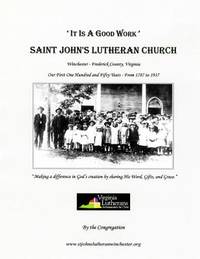
'It Is A Good Work': Saint John's Lutheran Church our first one hundred and fifty years 1787 - 1937
A9781517103767Paperback / softback. New. paperback
The Saint Bookstore · Royaume-Uni41,66 £GB≈ 47,57 €
122 150 résultats
138004250X<p>New. Never used book</p>
17966On his letterhead with autograph address Green Gates 55 Corton Road Lowestoft Suffolk . 16 September 1948. 1p. 8vo. In fair condition aged and creased. The letterhead in orange and blue boasts that Franklin is 'The World's Worst Wizard' and is headed 'Too Tuubes sic The original cod prestidigitateur with a new act which is packed with crazy comedy and clean fun'. He asks him to send 'Stevenson Toy Theatre Book' and asks if he has 'any books on Marionette & string Puppets'. On his letterhead, with autograph address Green Gates, 55 Corton Road, Lowestoft [ Suffolk ]. 16 September 1948. unknown
2471517 October 1836; on letterhead of Bardon Hill Weetwood Leeds Yorkshire. See his entry in the Oxford DNB. In good condition lightly aged. Folded twice for postage and in envelope with stamp and Leeds postmark addressed in autograph to ‘Mrs. Stopford / Sussex Lodge / Horsham / Sussex’. Addressed to ‘Dear Mrs. Stopford’ and signed ‘J B. Baillie’. He begins in almost philosophical terms: ‘Dear Mrs. Stopford / How very kind of you to remember this little request. It was such a pleasure to receive the cutting. So few people carry out casual promises which are easily made & as quickly forgotten: when they are fulfilled they seem to contribute to human happiness out of all proportion to their importance. How does a wise person like yourself explain that’ In the last two paragraphs he discusses the weather and his regret about her early departure on their previous meeting. 17 October 1836; on letterhead of Bardon Hill, Weetwood [Leeds, Yorkshire]. unknown
A9781517103767Paperback / softback. New. paperback
B9781517103767Paperback / softback. New. paperback
1517103762.Gpaperback. Good. Access codes and supplements are not guaranteed with used items. May be an ex-library book. paperback
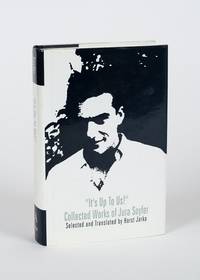
1996200081AB1996. Riverside California Ariadne Press 1996. 15 cm x 22.5 cm. 591 pages. 34 illustrations. Original Hardcover with dustjacket. Very good condition with only minor signs of external wear. Jura Soyfer 1912-1939 was born in Kharkov Ukraine. He was eight when he arrived in Vienna after fleeing the Bolshevik revolution with his parents. In 'Red Vienna' Soyfer became a fervent socialist and and was an outspoken writer of the Viennese subculture during the Austrofascist regime 1934-1938. He spent three months in jail for subversive activities. On 13 March 1938 he was arrested as he tried to cross the Austrian border at St. Antonien Joch above Gargellen into Switzerland. He was later transported to Dachau concentration camp. Here Soyfer met the composer Herbert Zipper and together they wrote the famous Dachaulied the Dachau song which cynically took up the Nazi motto Arbeit macht frei "work liberates" written above the entrance to such camps. In the autumn of that year Soyfer was transferred to Buchenwald concentration camp where he died of typhoid fever the day after his release was granted on 16 February 1939. His remains were sent to the United States and are buried at the Hebrew Free Burial Association's Mount Richmond Cemetery. Wikipedia This collection is arranged under the headings of Verse and Short Prose including for example: Lullaby for an Unborn Baby / Object Lesson for a Race Theory / Youth in Despair / 'Heil Hitler' / 'Fury' / etc. Plays including for example: The End of the World / Broadway Melody 1492 / etc. The Novel: 'Thus Died a Party' - combines politcal analysis and literary imagination and examines the underlying causes of the Social Democratic defeat of 1934. The volume closes with 'Dachau Song' a triumph of human dignity over barbarism. hardcover
228384 March 1847 and 31 January 1848. Both from the Theatre Royal Dublin. Both letters 2pp 12mo. In good condition lightly aged. Cole's handwriting is difficult. The recipient is not named. The first letter 34 lines long concerns a bill which Cole has drawn on the recipient of the letter. It is coming due and he is uncertain whether it is for £90 or £100. He asks him to withhold payment for a while as 'Lent is always a dead time with me'. He is 'going to try the experiment of Mr Butter for 6 nights' and has 'good hopes of the result'. The second letter begins: 'My dear Sir I have made most liberal offers to Farren Mrs. Nesbitt & Mr. Glen as Mr Lee will tell you & with the exception of the old lady none of the parties appear to have the least consideration or wish to accommodate or help a manager who pays them so liberally as you do - It is not I am sorry to say an uncommon case.' The latter part of the letter is not easily read but concludes: 'I sincerely hope the Keans & the Wife's Secret are showing you full houses.' 4 March 1847 and 31 January 1848. Both from the Theatre Royal, Dublin. unknown
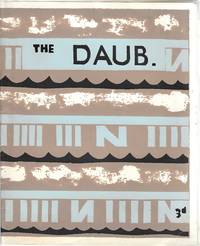
13366Working Men's College Camden London. July 1958. An interesting and scarce item. There are no copies of any issues of this magazine on either OCLC WorldCat or COPAC and there is no record whatsoever of 'Group IV' itself. Now acknowledged as one of Britain's finest landscape painters Keith Grant joined the Working Men's College on finishing his National Service with the RAF; he then enrolled at Willesden Art School before joining the Royal College of Art where he studied under Colin Hayes John Minton and Kenneth Rowntree. 22pp. 4to. With two illustrations on black and white photographic prints stapled to pp.7 and 19: the first being a cartoon captioned 'The Sketch Club Committee meet each other for the first time' and the second a photograph of a young man sketching by a canal'. Mimeographed typed magazine with drophead title on p.2: '"DAUB" GROUP IV'S MAGAZINE July 1958.' In silkscreened wraps printed with attractive abstract design in black light brown and powder blue with title 'THE DAUB.' and price '3d'. The introduction by the unnamed editor states that 'this magazine comes to you largely by courtesy of the Working Men's College the Ministry of Education and the National Union of Sheet Metal Workers although the latter two bodies may not be aware of the fact.' The penultimate paragraph reads: 'Lastly this issue was to have been in the form of a Keith Grant Tribute. It still is but I am glad to say that he won't be going so far away after all.' The concluding paragraph congratulates 'Sidney Knight on his winning of the Lowes Dickinson prize. Working. Men's. College's latest gift to painting will be spending his scholarship money in Paris.' Pp.4-18 carry Grant's 'Some reflections in the Royal College of Art during Diploma Week and a review of the Lowes Dickinson Exhbition'. Grant begins by expressing satisfaction that he is 'part of a year that shows much talent. I wonder if this year will mark English painting as those golden years the Slade School enjoyed with John Spencer Gertler Nash and later Rowntree and many of the other well-known names. Will Plummer Robin Plummer b.1931 Messenger Anthony Messenger 1936-2001 Clairmonte Christopher Clairmonte 1932-2012 Chalk Michael Chalk b.1933 and William Green William Henry Green 1934-2001 be as parallels to the Slade painters of the first decades of this century' His discussion of the Lowes Dickinson Exhibition includes the work of 'Mr. E. H. Bennett a person to whom all in Group IV are indebted for his energy and hard work in organising the Sketch Club and his enthusiasm for the College' and the winner of the Lowes Dickinson Travelling Scholarship Sidney Knight 'Mr. Knight S. A. K.'. The final three pages 20-22 carry the 'Sketch Club Cuttings' consisting of short entries by the editor on eight outings to areas on the Thames. Of 'Chelsea' he writes: 'Lots of people. Another kind of farewell party to Keith. Our youngest painter and member practised his art in a skiff using oars instead of brushes. Round and round the Horses' Mouth - the barge for the film; perhaps hoping for a view of Alec Guiness sic and his lovelies. A most amusing jolly tea and cakes etc. passed up the hatch to the row of members sitting along the roof of a neighbouring boat.' See Image. [Working Men's College, Camden, London.] July 1958. paperback
1789660 Killick Street Caledonian Road King's Cross N1. 8 July 1946. On his letterhead with photograph. 1p. 4to. On shiny art paper. In fair condition lightly aged and worn with one dogeared corner. On letterhead which covers half of the page with photograph of the pair and text in red and black 'Presenting Comdey Cartoons and "Fashions from Rags" Dress Designing Extraordinary! Two or Three Entirely Different Comdey Spots if required introducing Monologues Conjuring Numbers etc. Evening Dress when required. Special Clowning and Conjuring Act for the Children. Road Show Production Panto Variety or C.P.' The letter offers for sale 'a lot of old John Dick's "Penny" Plays'. With autograph postscript. 60 Killick Street, Caledonian Road, King's Cross, N1. 8 July 1946. On his letterhead, with photograph. unknown
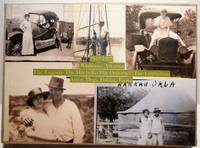
kx23Photographic Image. Good. No Binding. 1917-27. 107 b&w Photos. Disbound sheets housed in a protective custom-made box 7"x10"; leaves have been extensively repaired. 'Country Folks & Life on the Southern Plains'-- in the years prior to the Depression & Dust Bowl photos of rural Oklahoma Arkansas & Missouri show folks having good times in the back-woods and countryside. Names of folks inscribed in ink: 'Taggart Mitchell Osborne Brown Linthicum'. 107 PHOTOS from 1917-1927 -- People in homemade rakish ready-made clothes/ men wear fedoras/ old-time motor cars/ folks doing manual labor/ wheel carts hand-drawn wells oil wells/ fishing/ farms/ rural byways/ small town life/ nature shots- mountain-top at Little Rock/ men in WW1 uniforms/ kids & summer fun/ dogs/ water-hole by small dam/ ladies on factory stairs. Domestic s/h $15. hardcover
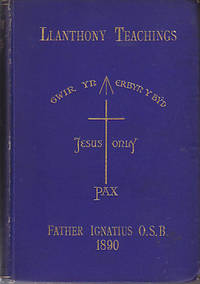
1890005704London: Reginald Berkeley 1890 With a typed letter from the Llanthony Abbey in Wales dated 1908 tipped-in. xiv 2 334pp 8 bound in bright blue cloth with gilt still bright hinges starting binding tight. With the frontis-piece photograph of Father Ignatius intact. Reginald Berkeley hardcover
101125A colour linocut on paper image size 151 × 230 mm; paper size 165 × 243 mm with the edition number 85/100 title and artist's signature in ink in the lower margin. The paper is moderately foxed but this is really only noticeable in the narrow margins because of the black olive green and brown colours of the print; in excellent condition unmounted as issued. 'In the late 1930s Warner designed a series of linocuts which were cut by his daughter and printed by his son. These works were signed "The Warners"' from the introduction by Roger Butler National Gallery of Australia to the catalogue of works by Warner published by Josef Lebovic Gallery in 2009. unknown
22267Berlin; 4 September 1820. The letter announces the transfer to Berlin of 'Monsieur de Wagner' London Chargé d'Affaires of the the Kingdom of Württemberg resident at 42 Alpha Place Regent's Park. The recipient Sir John Coxe Hippisley whom George III had described as a 'busy man' and 'grand intriguer' had retired from public life two years previously but was clearly still involved in diplomatic affairs. 2pp 4to. Bifolium. Forty-one lines of neatly-written text addressed to 'Sir J C Hippisley Bart. Lower Grosvenor Street.' On aged and worn paper with short closed tears at edges of folds. On paper with two prominent circular watermarks one a regal eagle with motto 'Gott bewahre sein Reich' the other a portrait of 'Friedrich Wilhelm III Koenig von Preussen'. Wagner begins with 'the most humble and anxious apology' for his late letter which he hopes to excuse by explaining the 'circumstances': 'Soon after my arrival in Stuttgart I had the honor to see the King and to deliver your letters and parcels; I delivered also those to the Queen Dowager Augusta of Brusnwick wife of Frederick I who had died in 1816 in her own hands as well as to Baron Maucler who probably has written to you since'. Wagner delayed writing to Hippisley as Maucler had 'promised me a letter for you'. Wagner was 'received very graciously and promoted to the rank of Councillor of Legation'. A bout of ill health was cured by a two-month tour of Switzerland. 'The King and Queen as you will have heard were in Italy and derived benefit from the baths tho' as yet without the desired effect for the prospect of the throne' i.e. no pregnancy. On Wagner's return to Stuttgart 'the situation as Chargé d'Affaires at Berlin was offered to me under favorable conditions' which he accepted. The previous holder Count Mandelsloh is to be Wagner's 'second successor in London' and will 'present you this himself and I beg to recommend him to you most particularly for you will find him worthy in every respect of the kind reception and confidence with which I have been honored by you myself'. He will write to Hippisley 'more at length on another opportunity when I shall have more leasure sic'. In the meantime he presents his respects 'to Lady and to Miss Hippisley as well as to Mr. Hippisley'. He ends with an expression of the 'due sense of gratitude for the kindness you have conferred on me'. Berlin; 4 September 1820. unknown
21253United Kingdom Foreign Office Whitehall London. Circa 1953. The Mau Mau uprising began in 1952 and the atrocities committed by the rebels were matched by those of the British whose Attorney General in Kenya Eric Griffith-Jones wrote to Governor Baring in 1957 that the colony's detention camps for Mau Mau suspects were 'distressingly reminiscent of conditions in Nazi Germany or Communist Russia'. He advised that suspects be beaten mainly on their upper bodies and that those administering violence should 'remain collected balanced and dispassionate' also commenting: 'If we are going to sin we must sin quietly.' Among the victims of British brutality was Hussein Onyango Obama grandfather of President Barack Obama. From a batch of Foreign Office documents including material from the Information Research Department for whose activities financed from the budget of the Special Intelligence Service otherwise MI6 see The Times 17 August 1995; and also Michael Cullis's obituary of Sir John Peck in the Independent 20 January 1995. Duplicated typescript. Headed: 'a The political and economic effect of MAU MAU in KENYA.' 8pp foolscap 8vo. Paginated 'a 1' to 'a 7' including interpolated passage on 'a 2A'. Complete with catchwords to all but the last page. Divided into five sections headed: 'What is Mau Mau' 'Action against Mau Mau terrorism' 'Sir Philip Mitchell's dispatch on East African economic problems' with subsections on 'Population Problems' 'Labour problems and Wages' 'Social Welfare' 'Royal Commission for East Africa' 'Development plans for Kenya'. The first section begins: 'Before considering in detail what the secret society called Mau Mau is and what are its aims; it will be as well to examine traditional background of the tribe of Africans involved – the Kikuyu.' The section includes an 'account of the barbaric rites practised at Mau Mau initiation ceremonies' from 'the Nairobi Correspondent of The Times' 9 October 1952. The section on 'Mau Mau terrorism' begins with a description of the police response to 'the murder of Chief Waruhiu' and discusses the activities of Jomo Kenyatta. The points of Sir Evelyn Baring's 'programme for the economic and social development of Kenya' 28 October 1952 are enumerated in the last section followed by a description of Governor Baring's'defence plans'. No other copy traced. [United Kingdom Foreign Office, Whitehall, London. Circa 1953.] unknown
531520 September 1893; 4 Bentinck Terrace Regent's Park London N.W. One page 12mo. Very good on lightly aged paper. Giving details of a proposed lecture. He was to have been in Salford Manchester but the dates have been changed. Can only offer two dates. '<> the two years' <> has been a huge success & a most interesting journey by which we have all benefited. I remember the Bolton audience with great pleasure. Kindly name the subject you choose. My fee: ten guineas as before.' Accompanied by magazine cutting of photographic portrait captioned 'M. PAUL BLOUET "MAX O'RELL" NEW EDITOR OF THE PARIS "FIGARO." 20 September 1893; 4 Bentinck Terrace, Regent's Park, London N.W. unknown
16794Without place or date but after the demise of the 'New Witness' in 1923 and before G. K. Chesterton's death in 1936. 3pp. 4to. In fair condition on aged worn and browned paper. Ada Chesterton worked with her brother-in-law while assistant editor of the 'New Witness'. Her admiration for his talents was fully reciprocated G. K. Chesterton describing his sister-in-law as 'brilliant'. It begins: 'Very much has been written and said of G. K. C. the poet the pamphleteer the genius of paradox who holds the attention of his listeners by his dazzling sleight of words. I am going to write of him from a different angle - G. K. C. the journalist as he is known and gauged in Fleet Street. There is held generally speaking a most mistaken view of that same Fleet Street which is for the most part regarded as the mere receptacle for the Capitalist press: the place where mis-statements by the million are issued from a rapidly revolving hoe and distributed broadcast.' She proceeds to describe 'another side of Fleet Street' 'an informal tribunal where men are tried for offences never mentioned in the public press' a place where arrogance is 'a sin'. It is here that there is 'no greater idol' than Chesterton 'a supreme journalist' who 'can write anywhere and anywhen on anything'. She recounts an anecdote regarding an incident involving a 'distinguished literary critic' and Chesterton 'during the life of the New Witness'. She concludes by stating that having 'worked with him in difficult and troublous circumstances' she feels that Chesterton proves 'his title to genius more in his capacity for turning the commonplace of existence into the pure gold of fine thought'. It is unknown whether the piece was published. Without place or date, but after the demise of the 'New Witness' in 1923, and before G. K. Chesterton's death in 1936. unknown
19516pjheDagbreek-Boekhandel Edms Bpk 1951. First Edition. Hardcover. Good/No Jacket. Afrikaans text. A gift inscriptions was written by the previous owner. Frontispiece. Publication of 395 pages. There is gilt to the spine and the front of the book. The boards are a little shelf rubbed and minor marks. The cloth on the spine of the book is slightly frayed. Internally the pages are bright and clear. The binding has been repaired. GK. Our orders are shipped using tracked courier delivery services. Dagbreek-Boekhandel (Edms) Bpk hardcover
19515rfDagbreek-Boekhandel 1951. First Edition. Hardcover. Good/No Jacket. Afrikaans text. shelf wear on boards. foxing and marks. a few stamps and sticker residue. binding is intact and all text clear and visible. SK. Our orders are shipped using tracked courier delivery services. Dagbreek-Boekhandel hardcover
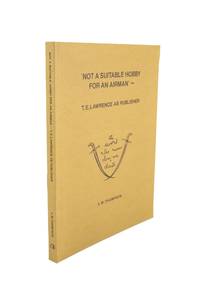
19864835Oxford UK: Orchard Books 1986. Octavo pale tan printed wrappers xii 174 pp. frontispiece one black-and-white illustration eight appendices included. Top left corner of back cover slightly bumped tail end of text box lightly spotted otherwise a fine copy. First edition signed by the author. An account of the history of T. E. Lawrence's masterpiece Seven Pillars of Wisdom as well as an examination and record of the visual aspects of the book itself. In addition to the writing Lawrence put an enormous amount of effort into the production of his work in order to realise his own ideas of printing perfection. Thompson analyses Lawrence's design in great detail and includes descriptions of the images the work contains. O'Brien E404. Orchard Books unknown
13980Printed prospectus dated Edinburgh 14 July 1847. Circular letter from Committee Rooms Cranston's Temperance Coffee House High St Edinburgh; 1 August 1844. Accounts at 12 August 1844. Surprisingly little appears to have been written about the public baths at 12 Nicolson Square Edinburgh; with no references to it on the Scottish Archives Network. There is however an informative reference to the subject in Francis H. Groome's 'Ordnance Gazetteer of Scotland' 1884: 'Good public baths of various kinds and various extent for the upper and the middle classes are in several parts both of the city and its environs. Public baths for the working classes were long a desideratum though earnestly desired by many of the working classes themselves. A proposal to establish them by subscription was at length spiritedly begun in 1844 but somewhat flaggingly carried out. The chief suite of them was fitted up in a tenement purchased for the purpose in Nicolson Square. They cost upwards of £1000 beyond the amount of the subscriptions paid in or obtainable; passed under the immediate management of persons who became bound for the extra sum; and were so well constructed and so much appreciated that nothing but the debt upon them prevented the immediate extending and cheapening of baths for working men.' ITEM ONE. Printed prospectus headed 'PUBLIC BATHS FOR THE WORKING CLASSES.' Signed in type by 'D. McLAREN' and 'WM. JOHNSTON'. Dated 'Edinburgh 14th July 1847.' 1p. 4to. Begins: 'SIR AT a Meeting of the Association for the establishment of BATHS FOR THE WORKING CLASSES held in the Council Chambers on the 6th. inst. - the Right Hon. Lord Dunfermline in the Chair - a Report was laid before the Meeting giving a statement of the whole proceedings of the Association together with a detailed account of the total receipts and expenditure. It appeared from these documents that the PUBLIC BATHS ARE NOW COMPLETED and ready for being opened in Nicolson square one of the most central situations in town for those who are expected to use them. There are Fourteen Baths on the Lowest Floor and Back Area for which the charge of Fourpence is proposed to be made including Hot Baths; Five on the Street Floor fitted up in a superior manner for which Sixpence will be charged; and Five on the Upper Floor having accommodation equal to any in town for which a Shilling will be charged. From this class it is expected a profit will be derived so as with the others to make the whole Establishment self-supporting if opened free from the incumbrance of debt. last eight words in italics With reference to the Expenditure and Receipts it appeared that the whole outlay in reference to and including the original purchase-money of the property had been £2585 8s. 5d. of which £1645 0s. 10d. have been paid thus leaving a deficiency of £940 7s. 7d.' An appeal for subscriptions is made and the name of members who have 'agreed to double their subscriptions' is given including Bishop Gillis. Eight parties receiving subscriptions are named from 'MESSRS WILLIAM BLACKWOOD & SONS 45 George Street' to 'MR THOMAS IRELAND 4 Hunter Square General Collector to the Baths Fund.' It is stressed that the matter is 'peculiarly important at the present period when the promotion of habits of personal cleanliness may be instrumental in preventing the spreading of contagious disease which prevails to such a great extent in this City.' Similar items concerning meeting at the Hopetoun Rooms and Music Hall are listed on COPAC but this item is not to be found either on COPAC or WorldCat. ITEM TWO: Secretarial Letter signed by Charles Gardner Secretary of 'the Committee appointed for establishing working Men's Baths in Edinburgh' to the Directors of the Bank of Scotland. Committee Rooms Cranston's Temperance Coffee House High Street Edinburgh. 1 August 1844. 3pp. 4to. Bifolium. In fair condition on aged and worn paper with a closed tear repaired with archival tape. Giving 'a brief statement of our present case' beginning: 'By subscriptions among the working men themselves we have now collected somewhat more than a thousand pounds. The Sum of two thousand is required for the proper construction of the Baths and a large portion of this Sum we expect to obtain in the course of a few months by collections now going on among the operatives and further Subscriptions from among the middle and upper classes. It has occurred to several gentlemen who take an interest in the proposed Baths that we might allowably make an Appeal to the Banks and other great establishments in Edinburgh trusting that they might be disposed to regard the object as one justifying an exercise in their liberality.' The 'establishment of Baths is an idea originating amongst the working men themselves and which they have much at heart and promises to add much to their health and comfort'. It will also assist 'the moral improvement of the humbler classes of society' and it is 'also very clear that when the health of the humbler inhabitants of a large City is improved the benefit is reflected upon the superior classes both in preserving their own health and in reducing the burdens to which they are subject from all causes which promote indigence. This view of course bears in an especial manner upon the Banks and Public offices'. The working classes 'are in a manner compelled to ask aid from their more amply endowed brethren trusting that the kindly charities which exist among the different classes of Society in <> will hear them out in the attempt'. THREE: Manuscript titled 'State of the Funds belonging to the Association for the erection of Baths for the Working classes as at 12th August 1844.' 3pp. 4to. Bifolium. Good on aged paper with similar closed tear to that of Item Two and repaired in the same way. Lists '1. Higher Class Subscriptions' including £100 from 'His Royal Highness Prince Albert'. This is followed by '2. Middle Class Subscriptions' and '3. Trades' followed by 'Note -. Many of the Trades have subscribed considerable sums particularly the Cabinet Makers & who contributed to 36 the average subscription of the operatives is a days wage for each man'. Followed by 'Remarks' of 33 lines. 'The use of the Bath they conceive is pregnant with the most beneficial results to this class by cleaning the skin and imparting a new tone the nerves are invigorated a desire for improvement springs up and the nurseries of disease in which so many operatives reside are by a natural consequence wholesome and healthful abodes . filthy habits aer the parents of crime . The working man would submit that they are not proceeding too far when they say that it is in the interest of the public establishments to patronize a Scheme which carries such important benefits to all classes of the community'. Printed prospectus dated Edinburgh, 14 July 1847. Circular letter from Committee Rooms, Cranston's Temperance Coffee House, High unknown
1981346589.Gpaperback. Good. Access codes and supplements are not guaranteed with used items. May be an ex-library book. paperback
1995282487PN. New. 1995. Soft Cover. Date is original print. This is a reprint edition . PN paperback
1872355490724164London 1872. First Edition. Hard Cover. London: Horace Cox 1872. First UK Edition. Publisher's original blue cloth blind-stamped cloth gilt. Yellow end-papers. The half-title often found missing is present in this copy. A small piece missing from the top right-hand corner of the front free end-paper. Small W H Smith embossment to the front free end-paper. Front hinge starting. Softening and surface loss to the spine tips. Marks to the boards in places. A good copy missing its rear free end-paper. Wood-engraved illustrations in text 8pp. advertisements at end. Quite uncommon. Photographs/scans available upon request. hardcover
2565524 February 1836. A document of some historical significance. The context of is described in Chalmers' entry in the Oxford DNB: 'In 1835 the whig government of Viscount Melbourne appointed a royal commission of inquiry to investigate church accommodation in Scotland but the commission moved slowly about its work and angered Chalmers and the church extensionists by what they perceived as stalling methods and a bias towards the dissenters.' Lister's entry explains his involvement stating that on 19 July 1835 'he was one of those commissioned to investigate the opportunities for religious worship and the means of religious instruction in Scotland.' From the papers of Lister's wife the future Lady Theresa Lewis 1803-1865. 4pp 12mo. Forty-five lines. On bifolium. In good condition lightly aged. Folded for postage. Signed ‘Thos Chalmers. / With Dr Chalmers most respectful acknowledgments to Mr Lister.’ Dated in pencil by Lister ‘Feb 24. 1836.’ Chalmers dives straight in without a salutation: ‘1. It is most desired that an interim report on the Statistics of those localities for which New Churches are now in preparation and their claims to an endowment - should be completed as soon as possible.’ In the second point Chalmers states ‘That an endowment should in every instance be accompanied by the enactment of a low rent rent and a district be assigned to the place of worship with a preference to its sittings in favour of the people who reside in that district.’ The third and last point covers two pages of close text. It goes into greater detail about ‘a low-rent rent and a territorial district’ with respect to ‘dissenting ministers’ ‘established church’ ‘Legislature’ and ‘meeting-houses’. [24 February 1836.] unknown