Union Pacific, The Overland RouteBiblio.com
122 150 résultats
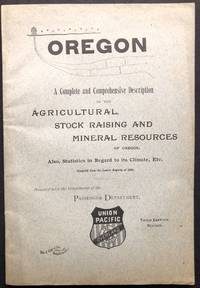
1890H22859Battle Creek MI: Wm. C. Gage & Son 1890. Paperback. Very Good. Stated Third Edition Revised. 8.25 x 5.5 inches gray printed wraps very good contents tanning. 108 pp full page map on inside front cover no other illustrations. A more substantial 264 pp. version seems also to have been issued interspersed with many ads. This promotional pamphlet is rarer. Wm. C. Gage & Son paperback
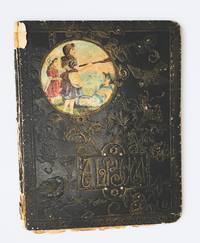
18900011056Aurora Indiana. Fair with no dust jacket. 1890s. Hardcover. On offer is an interesting and genuinely adorable autograph book dating from the 1890s in Indiana United States. The diary was a gift to a young girl named Jennie Boldrey from Santa in 1892. From context we can determine that she lived in Indiana likely in or near the community of Aurora just west of Cincinnati Ohio. Although the book was given to her in 1892 it appears to have been used not by Jennie but by young Anna Annie Boldrey in the later 1890s. Our informal research has not been able to identify any additional biographical information on the two girls. The album's pages are full of loving messages and best wishes for Annie from family and friends. Some pages are adorned with stickers or pictures cut out and pasted to the page such as flowers or birds. Some examples of the handwritten messages Annie collected in her special album: My Dear Daughter Annie May your road be long and and the end be far out of sight face it bravely strong and mery. Trust in God and do the right. Your mother Abbie Boldrey Aurora Ind April 1st 1897. Dear Cousin Annie When far off in distant land/You see the writing of my hand/My face you cannot see/Remember it was May who wrote these lines for thee Your Cousin May Rollenberger June 15 1901. When the golden sun is setting and your mind from care is free/When of absent friends your thinking will you think of me Your Uncle John W. Boldrey Summan Ind Apr 25 1897. This autograph book while simple helps us to reflect on the timelessness of the child's passion for collecting children's need to feel loved and validated and the familial love that knows not the bounds of time. For a genealogist this is an excellent resource for tracing family relationships in Indiana at the end of the 19th century. This slim album measures 8.5 inches by 5.5 inches and contains 42 pages. It is 100% complete. The cover is in fair condition. It shows many wear marks and the exterior of the spine is torn in places. The binding has broken and many of the pages are loose. The pages are in fair condition with wear marks around each edge. The handwriting is legible. ; Autograph; 8vo 8" - 9" tall; 42 pages; Signed by Author . hardcover
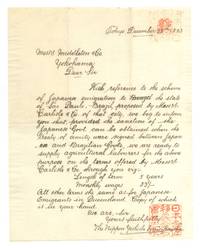
1893541904Japan 1893. Hardcover. Near Fine/Near Fine. Quarto sheet. Measuring 8¼" x 10½". Holograph letter with two Japanese stamps hanko. Neat old folds from mailing near fine. An 1893 letter from The Nippon Yoshisa Imin Kaisha Emigration Company to John Middleton & Company of Yokohama responding to a proposal to have Japanese workers emigrate to San Paulo Brazil to fill jobs in the agricultural sector. The deal "provided the sanction of the Japanese Govt. can be obtained" agrees to a five year term of service at a monthly wage of 33 with "all other terms the same as the Japanese Emmigrants in Queensland Australia." A third entity Carlisle & Co. a London-based shipping company is referenced as proposing the offer and terms to The Nippon Yoshisa Imin Kaisha on behalf of Middleton.<br /> <br /> According to The New York Times obituary of owner John Middleton he was a businessman originally from Mystic Connecticut who served as a tea broker in New York City starting in 1855. In 1860 he left for China working for various firms until 1871 when he established Middleton & Company with headquarters in Yokahama and a branch in New York City. He died in April 1893 eight months before this letter.<br /> <br /> Following the end of feudalism in Japan the rural parts of the country fell into poverty forcing workers to look for work outside the country. Unfortunately various exclusion policies by majority white nations such as America and Australia prevented the Japanese from entering the country. Brazil was one destination open to them. A treaty between the two countries in 1907 opened the doors for large movement of Japanese emigrants leading to a Brazil population today consisting of nearly 2 million residents of Japanese decent the largest population outside of Japan. This early document shows an early attempt to lease some workers to Brazil which at the time was suffering from a massive labor shortage. A similar effort appears to have been achieved by Middleton & Co. in Queensland Australia as reference at the end of the document.<br /> <br /> An interesting document of early Japanese emigrants to Brazil worthy additional research. hardcover
18930002122CROTON-ON-HUDSON WESTCHESTER COUNTY NEW YORK. Good. 1893. On offer is a super original manuscript relic of late 19th Century secret societies and fraternal organizations being an 1893 - 1895 IMPROVED ORDER OF RED MEN TRIBES Minutes Book. The book proper published specifically for the Club has printed forms for the IMPROVED ORDER OF RED MEN TRIBES. Pages on the left side of the open ledger have a Printed Heading with space for filling in information by hand. The page heading reads: "HUNTING GROUNDS OF" "WIGWAM OF" "TRIBE NO" "IMP. O.R.M." "SLEEP" and "MOON G.S.D.4" then below the heading information is printed information for the TRIBE to record Minutes Activities Events the INITIATION OF NEW MEMBERS etc. Includes such titles as: "Keeper of Wampum" "Application of Paleface" "Record of Previous Council Fire read" "Twig box was opened by" "New Business" "Council Fire was then Quenched" etc. Almost all pages are filled in with various handwritten minutes and notes about the REDMEN meetings including dates 1893-1895 place Croton-on-Hudson New York events New Member Induction Bill needing Payment Committee Reports Problem members General Problems Plans Political Stands etc. Pinned-on to one of the pages is a 2 page handwritten letter on "Improved Order of Red Men Wigwam of Kitchawau Tribe No. 237" letterhead. We cannot help but note that this book and the Society it represents predates the Washington Redskins baseball team controversy declaring the team name racist yet this fraternal organization clearly honors Native Americans and stands as an homage to their tribal attributes. Please read the Wiki article after the description. The ledger is also a treasure trove of genealogical and social history of the Westchester County area with many many names of members and their activities. The book has a leather spine and corners leather edged with gilt paper title label on front cover 8.5" x 13.5" pages printed on watermarked paper "Kenilworth" approximately 200-300 unnumbered pages. The front cover is split at its spine fold and is almost disbound. Internally a couple signatures including the first are shaky; one page is loose and is pinned-on to another page otherwise the pages are quite nice - tight bright and clean with writing that is clear and fully legible. HISTORICAL NOTES: Wiki: The Improved Order of Red Men traces its origin to certain secret patriotic societies founded before the American Revolution. They were established to promote Liberty and to defy the tyranny of the English Crown. Among the early groups were: The Sons of Liberty the Sons of St. Tammany and later the Society of Red Men. Their rituals and regalia are modeled after those used by Native Americans. The organization claimed a membership of about half a million in 1935 but has declined to less than 38000. Notable members: Theodore Roosevelt Warren G. Harding and Franklin D. Roosevelt. ; Manuscript; Folio - over 12" - 15" tall; KEYWORDS: HISTORY OF RED MEN FRATERNITY IMPROVED ORDER OF THE RED MEN KITCHAWAU TRIBE CROTON-ON-HUDSON WESTCHESTER COUNTY NEW YORK WASHINGTON REDSKINS SECRET PATRIOTIC SOCIETIES AMERICAN REVOLUTION THE SONS OF LIBERTY THE SONS OF ST. TAMMANY THE SOCIETY OF RED MEN DEGREE OF POCAHONTAS KNIGHTS OF PYTHIAS FRATERNAL ORGANIZATIONS SOCIETIES BROTHERHOODS SECRET SOCIETIES MOUND CITY LODGE PYTHIAN CASTLES PYTHIAN SISTERS DRAMATIC ORDER KNIGHTS OF KHORASSAN THE NOMADS OF AVRUDAKA PYTHIAN SUNSHINE GIRLS AND THE JUNIOR ORDER ORDER OF THE EASTERN STAR HALF CENTURY MATRONS CLUB PRINCE HALL AFFILIATION SISTERHOODS RELIGION AOKMC THE ANCIENT ORDER OF KNIGHTS OF THE MYSTIC CHAIN MASONS MASONIC FREEMASONS CHIVALRY ARCANE OCCULT AMERICANA HANDWRITTEN MANUSCRIPT AUTOGRAPHED AUTHORS DOCUMENT LETTER AUTOGRAPH KEEPSAKE WRITER HAND WRITTEN DOCUMENTS SIGNED LETTERS MANUSCRIPTS HISTORICAL HOLOGRAPH WRITERS AUTOGRAPHS PERSONAL MEMOIR MEMORIAL PERSONAL HISTORY ARCHIVE DIARY DIARIES JOURNAL LOG PRIMARY SOURCE FIRST HAND ACCOUNT SOCIAL HISTORY PERSONAL STORIES LIVING HISTORY ANTIQUITÉ CONTRAT VÉLIN DOCUMENT MANUSCRIT PAPIER ANTIKE BRIEF PERGAMENT DOKUMENT MANUSKRIPT PAPIER OGGETTO D'ANTIQUARIATO ATTO VELINA DOCUMENTO MANOSCRITTO CARTA ANTIGÜEDAD HECHO VITELA DOCUMENTO MANUSCRITO PAPEL . hardcover
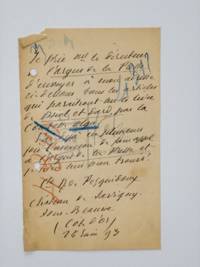
18930010235France. Fair with no dust jacket. 1893. Ephemera. On offer is a note written by one of Frances great writers Joseph de Pesquidoux Count of Pesquidoux in 1893 nicknamed the Gascon Virgil. In this note Pesquidoux references his mother Countess Olga by name and a book that she has just published titled Miel et Dard a book of short and sometimes caustic sayings. His note is a request to an unnamed recipient an excerpt of which follows: Je prie au directeur d'envoyer a ci-dessous tous les articles qui parcitrout du le livre de Miel et Dard par la Comtesse Olga. .Translation: I am asking the Director of to send to below all the articles that the Countess Olga has published in the book of Miel et Dard Pesquidoux was born at the castle of Savigny-lès-Beaune located in Burgundy. In December 1869. His parents were Léonce Dubosc Count of Pesquidoux and Olga Beuverand de la Loyère who wrote under the name Countess Olga. Both were accomplished and well-known writers. Pesquidoux served in the French Army and saw action in WWI. Returning to literature following the war he won the Grand Prix de littérature de lAcadémie française in 1927 and was elected to the Academy in 1936. For a historian or a lover of French literature this is a direct connection to one of Frances celebrated authors and literary families. This small note measures 6.75 inches by 4.25 inches. The page has 2 small holes punched in the left margin which likely were made to accommodate a binding. Written in 1893 there are pencil markings on the note likely put there by an auction house that had this note in their possession prior to it being acquired by this seller but they do not obscure the contents. The paper is in good condition. ; Manuscripts; 6.75" x 4.25"; 1 pages; Signed by Author . unknown
189340375London Pastime Ltd. 1893. Small 8vo. 109pp.9pp. publisher's advertisements. Original printed wrappers. Front wrapper slightly soiled otherwise in good condition. An account of the 1893-94 rugby union season. unknown
0012267Bartlett Carroll New Hampshire Usa. Fair with no dust jacket. Hardcover. On offer is a neat piece of New Hampshire history being the first minute book of Bartlett New Hampshires newly formed Order of the Kings Daughters and Sons Chapter. The book opens to handwritten details of what appear to be four affiliated chapters of the Order but the remainder of the minute book makes it clear that only Chapter No. 1 became operational. The date of organization for Chapter No. 1 whose circle name is the Union Helpers is Dec 10 1894. The Union Helpers inaugural leader is A. L. Russell Vice leaders is Mrs. Frank Burbank Jane A. Burbank b. 1857 Secretary is Mrs. Lydia Freeman Treasurer is Reverend A. M. Freeman and their line of work is set to be furnishing the church. Following the information on the chapters begins the Secretarys report of the first Union Helpers meeting written by Lydia Freeman who was elected at the meeting. This entry is undated but it was likely Dec 10 1894. Following that are minutes of the Union Helpers meetings which begin in January of 1895 and continue intermittently through 1900. While the chapter meets almost weekly with the exception of summer in 1895 the meetings taper off significantly in 1896 and beyond. It is clear by the 1900 minutes that the group is having a difficult time keeping up interest and membership. In total there are 33 numbered pages of minutes ending with the final recorded meeting on March 15 1900 signed by the treasurer at the time Rebecca Allan. Beginning on page 44 of the book is the Treasurers Report which is a ledger of money spent and received and provides even more insight into the activities of the Kings Daughters and the people involved. Again this ledger was kept consistently in the first year and then intermittently. One entry from the minute book is transcribed here: Circle met with Mrs. Allen. Leader being present read a Chapter from the Bible and Prayer was offered by Mr. Allen. Members present were Mrs. Russell Mrs. Adelaide Mead Mrs. Merry Mrs. Allen Mrs Burbank and one associate member Mrs. Martha Mead. Three new members were accepted and given the obligation by the Leader. They were Mr. Archibald Allen Mrs. Abbie Hall Mrs. Sarah Mead. Work was worsted and print patchwork and fancy work. Circle was invited to meet on the following Thursday with Mrs. John Eastman - Mrs. F. E. Burbank Secretary April 11 1895. This minute book is a treasure trove of genealogical information for the Bartlett New Hampshire region as well as an intimate look into the charitable work women took on in the 19th century. The organization is technically called the Order of the Kings Daughters and Sons and therefore the men are often named and involved as they attend meetings and contribute funds. This helps draw conclusions about relationships within Bartlett at the time. Note: There are dozens of Bartlett names contained within the minute book. Some of these include Frank E Burbank b. Sept 1853 Jane A Burbank b. March 1857 Adelaide Gray Mead 1840-1929 Rebecca J Allan b. 1847 Archibald Allan Arvesta S. Deering b. 1860 Abigail Drown Nute b. 1847 Daniel Nute b. 1843 Joseph Mead b. 1838 Gertrude Mead Merry b. 1871 Daniel Merry b. 1861 Walter Perkins R. W. Chandler Sarah Mead Abbie Hall Rufus Hall Delora Hanscom Flora Hall.and so many more! ! Minute book measures 8.5x6.5 inches. The hard covers are in fair condition with loosening and some ripping and significant signs of age and wear. The pages have loosened from the spine but remain intact. The book contains 91 lined pages in good condition. There 33 pages of handwritten minutes and 17 pages of ledger notes. Handwriting is legible. Overall Fair. BIO NOTES: Established in 1886 as a Protestant non-denominational group consisting primarily of women the Order of the King's Daughters and Sons distributed aid to the poor while raising awareness of their plight. The group experienced tremendous growth through the early part of the 20th Century inspiring the formation of numerous other women's charity groups. He group met in member's homes and the parsonage of the local church. ; Manuscripts; 8vo 8" - 9" tall; 50 pages; Signed by Author . hardcover
Ida Nicolaisen and TinnaNot in perfect condition. unknown
189616029NY: The Ashcroft Manufacturing Co. Fine. 1896. First Edition; First Printing. Hardcover. Small 4to 9" - 11" tall; 113 pages . The Ashcroft Manufacturing Co. hardcover
1897AZ774-008Alliance Ohio: The Senior Class of Mount Union College 1897. Book. Very Good. Hardcover. 4to - over 9¾ - 12" tall. Binding tight and square. Pages clean and free of writing or marks. The Senior Class of Mount Union College Hardcover
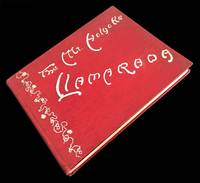
1897375294<p>Privately Printed by the Press of the Bryant Printing Co 1897. Hardcover. Very Good. Original 1898 Mt. Holyoke College Yearbook: Llamarada South Hadley Massachusetts. Mt. Holyoke is the oldest member of the historic Seven Sisters colleges. Bound in dark-red cloth with silver gilt lettering and botanical decoration to front panel. Much historical content including rosters of faculty students alumni and much much more. Densely illustrated with photos and drawings. Includes many period ads. Obituary of 10th President Elizabeth Storrs Mead laid in. 260 pp. 34 pp. of ads. Tight unmarked copy with one slightly pulled but strongly attached signature. Light shelf wear to extremities. Genealogy resource. In all a very presentable copy of an important historical resource. Photographs of or additional information about this item are available on request. All inquiries answered promptly.</p> Privately Printed by the Press of the Bryant Printing Co hardcover
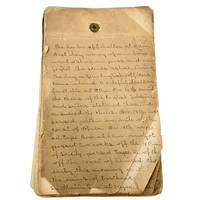
18990012049Donsol Pilar Manila Philippines New York Malta. Poor with no dust jacket. 1899-1901. Other. On offer is an unbelievable handwritten account of 19 months of action on the frontlines of the Philippine Insurrection the Philippine-American War between November 1899 and June 1901. An unknown American soldier writes of his experiences in a level of detail that cannot be overstated. This diary places the reader in the Philippines with shocking realism making this diary exceedingly rare. The 139 pages of this journalled account of events have been removed from a larger document and someone has pinned these loose pages together. This writing begins at the end of a sentence penned on presumably November 17 1899 and concludes half way through a sentence written on June 23 1901. There seem to be very few missing pages from within the journal and it reads very smoothly. The content is outstanding. The diary opens with our soldier diarist sailing from New York to the Philippines via the British Naval base at Gibraltar and the Suez Canal. He describes his experiences sailing sharing about a stop ashore in Malta a Thanksgiving spent at sea a concert enjoyed aboard the gunboat Nashville on the way to Manila and more. He arrives with his regiment in Manila on Dec 22 1899. The troops explore Manila and meet Filipino locals. In early January of 1900 they receive orders to head to southern Luzuon on the Kobbe Expedition which refers to General William Kobbes Expedition to Bicolandia. This expedition was in response to an urgent order from Washington to open up hemp ports of Southern Luzon due to an American hemp shortage. The problem was the port towns were largely controlled by Filipino Insurgents. Our diarist provides absolutely remarkable detail about Americas role in defeating the Insurgents and the tragedy of the Filipino peoples experience. Context indicates that our diarist was possibly a member of the 43rd Volunteer Infantry Regiments USV Company A. An excerpt that provides a sense of how our soldier explains the circumstances in the Philippines follows: Jan 16th we got the order to pack up and get ready to leave Mikata and to proceed to the Southern part of Luzon we were put aboard the transport Hancock which was at anchor in the Bay of Manila All combined we were named the Kobbe Expedition to the Southern Luzon to open up the Hemp ports and protect the natives from the Insurgents down there On the 21st of Jan 1900 our boats dropped anchor in a bay named the bay of Sorsogon in the Province of Albay All over this province there are large gangs of Insurgents holding the towns so at many towns our boys had a hard fight with the Insurgents before they could take the towns and the gun boat had to shell many of the towns. Our Regt. Occupied nine towns. Our detachment of A and D. Co. Were taken to a town named Donsol the gunboat Helena took us ashore from the Hancock On their arrival ashore they were met by a crowd of Philippinos. They had an order from the officers of the Insurgents it read saying that they would not haul down their colors nor surrender for three days. So our Major returned to the gunboat and a short conversation was held with the officers of the gun-boat and it was decided to prepare the gun boat for action and land all of us. If the Insurgents fired one shot at us the gun-boat would shell the town The hills were full of fleeing people. A detail of men were sent out on the hills at once then the Insurgents fired their first shot at us. Our boys had a warm fight for 15 minutes. They found the hills well entrenched and also found one big cannon. Lots of spears Bolas and wooden guns. They returned to town bringing in a few prisoners. A scouting party was seent and they saw a lot of Philippinos fleeing to the mountains. This town had a population of 10000 and three hundred were Insurrectors. The next thing we done was to find ourselves some good houses to live in. Outposts were put out all around the town. A few natives came across our post for a few nights and on the 22th Jan the Insurgents paid our town a visit setting fire to one of the big houses where our men were sleeping. Our men got out of the house without anyone being hurt. We surrounded the town fired a few volleys . Later in January our soldiers regiment goes on the first of many missions all of which he describes in glaring detail. On this mission the troops attempt to leave Donsol for Pilar when they run into trouble as the connecting bridge was destroyed by Insurgents. They make it to Pilar and find the town has been deserted. As they march back to Donsol they find someone has lit the bridge ablaze: Jan 28th We had a very hard time crossing the bridge burning our shoes and legs but we got safely on the Donsol side before the bridge fell with a crash into the river. We marched on we heard several shots from the Mauser and Remington rifles. Next we discovered a big fire and a call to arms and fire call was sounded The fire of the Insurgents got heavier. Our Major gave an order not to fire. He was going out in the front of our lines. He went out with a detail of men and discovered that our town was surrounded and the hills were full of Insurgents. He fired a few volleys then he came into town. The Insurgents answered him by firing a cannon. Then the Insurgents gave a yell and started to advance and we kept quiet and let them get close to our lines. Then we got the order to commence firing and the boys opened up all around the town and we soon put the Insurgents to flight firing a few shots as they ran. Next morning we discovered a few dead Insurgents close to our lines. The Insurgents almost always carry their dead and wounded along with them in their flight Our soldier does an absolutely phenomenal job of describing not only the day-to-day in Donsol where he spends majority of his time but also the various missions in which he participates. His words paint a fulsome picture of the war: 21st Feb at noon our Major asked for a detachment of men to volunteer to go up the river on a scouting expedition. I along with 12 more men went out of our company and 12 out of D. Co. Along with Capt. Hart of D. Co. And our Major left Donsol in a hard paddle boat and one white boat in tow On our way up the river we could see high hills on each side and the river was very narrow. There were many Insurgents outposts in the high trees all the way up and we fired at every one we saw. We went up a distance of 8 miles before we thought of coming home as it was getting late We had traveled one mile on our homeward way when the Insurgents fired on us from the left hand ashore. Our men in the rear boat fired a volley into the two Insurgents and were taking good aim for a second volley when the hills fairly echoed with the yells from the Insurgents. They then opened up on the right hand side which was aimed at the white boat hitting one of our men our company in the head and he was killed instantly. Then we answered their shots from each of our boats and from that time until we got back to Donsol we were under the hot fire of the Insurgents we could see the hills full of Insurgents and we had plenty to shoot at. We made every shot count. The insurgents even fired rocks at us from the high hills . More texture is added when our soldier discusses aspects of the war that dont involve active fire. Some examples follow: March 5th Gen Kobbe of the 8th Army Cor was here on a visit and he said these two companies were a very industrious lot of men and that the building of the stocade and trenches was a very sensible work he also brought us 17 of the Battery G 3rd Artillery men and one Hotch Kiss gun for reinforcements. April 10th the mail boat was here bringing the report of Gen. Pawa likely Jose Ignacio Paua an Insurgent Gen in Command of the Insurgent troops through this province. He surrender to our Colonel in Legaspi Legazpi and was sent to the Military Prison in Manila. April 21st We took a long march across the hills in a round about manner to a town named Sevilla merely an Insurgent camp. The town was deserted on our arrival. Fires were still burning in the houses. Everything was just as they had dropped it in their flight. We passed through the town and discovered many traps laid in the roads for us. One trap was an arrow trap on each side of the path in the bushes and by pulling a strong the arrows would stick into anyone going down the path. None of their traps caught us. Our soldier writes frequently about expeditions for which he volunteers. He describes a mission to Banningaran sic. En route the men captured Captain Hernandiz sic; possibly Adriano Hernández y Dayot and his family before being caught unprepared by the Insurgents who severely injured one of the American sargeants. On their hike back to Donsol they are again attacked by the Insurgents this time caught off guard as they attacked from the rear. And so it goes for many more months. Our author describes the movements of the men with whom he is stationed his commanding officers and the various wins and setbacks of both the Americans and the Insurgents. In May of 1901 our soldier and his regiment begin the process of boarding a ship to return to America. There is of course never a straightforward path and there are many bumps in the road. However our soldier does eventually board a ship and begins again to describe his journey in detail. The diary cuts off abruptly mid-sentence on June 23 1901 as our soldier is describing being at sea with nothing but a sailboat in sight for miles. While we do not know our soldiers identity we do know he was safely heading home at the conclusion of his diary. We know he was a highly motivated volunteer soldier who displayed total buy-in to the mission of the Americans in the Philippines and we know he was a gifted writer penning his experiences with such texture and realism that the reader feels as though they too have been on the front lines of a bloody wet miserable war in the Philippines - fighting for America and for the displaced Philippino people forced to flee from the Insurgents to the mountains. This journal measures 8x5 inches and contains 139 single-sided sheets. The pages were all loose so the author has pinned them together with a single round-headed fastener post. There are no covers to this journal. As a result the first and last few pages show obvious and significant wear and tear including a large corner of the first page being completely ripped off obstructing the text. The handwriting is quite legible. Overall Fair to Poor. ; Manuscripts; 8vo 8" - 9" tall; 139 pages . unknown
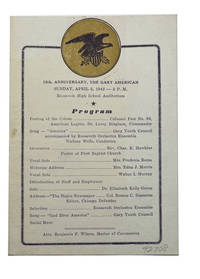
92708Small broadside flyer/program. Approximately 13 x 18 cm Minor spot on edge. Information found online has The Gary American an African American newspaper in Gary as publishing its first first issue on Nov. 10 1927 so it unclear to us why their 18th anniversary was being celebrated in 1942. Roscoe Conkling Simmons identified on the program as Col. Roscoe C. Simmons Editor of the Chicago Defender was the featured speaker . The title of his address is listed as "The Negro Newspaper. unknown
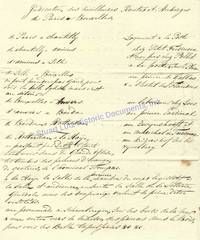
6798PARIS TO THE NETHERLANDS. D. 3 pg. c. 1790s-1800s. Paris France. A list of directions from Paris to Netherlands. The translated French text reads Indication of the best Routes and Inns from Paris to Brussels. From Paris to Chantilly: Stay at La Poste. From Chantilly to Amiens: Stay at Petit Fresinoix and not at Pollet. From Amiens to Lille: At La Poste on the Square. From Lille to Brussels: At the Prince de Galles & the Htel des Flandres. One can go via Ghent to see the beautiful Church but it is a detour. From Brussels to Antwerp: At Le Laboureur at Looss. From Antwerp to Breda: At the Prince Cardinal. From Breda to Rotterdam: At the Zwijnshoofd and the Marchal de Turenne. From Rotterdam to The Hague: Passing through Delft you must go see the tombs of the Princes of Orange Grotius and Admiral Tromp in the Great Church. In The Hague: The hall of the first chamber of the legislative body and the audience hall then the General Lottery Hall with the Flags are worth visiting. A walk in Scheveningen by the seaside and another toward the House of the Princes in the Woods to see the beautiful tapestries etc. From The Hague to Amsterdam: Stay at the Doele on the shrimp market Garnalenmarkt at Mrs. Oosterlings. The town hall the Felix Meritis the workhouse and the National Theater are worth seeing. From Amsterdam to Haarlem: Go there on a Sunday dine in one of the inns in the Woods then see the beautiful house of Mr. Hope and several country estates nearby in the villages of Santpoort Velsen & Beverwijk. Enthusiasts sometimes go to see the gardens and greenhouses of some famous florist. From Amsterdam a trip to Utrecht: This is best done in the "Roeff" covered cabin of a boat to see the singular beauty of the canal and the countryside from Nieuwersluis to Utrecht. Two hours before Utrecht in the village of Maarssen you will find the beautiful estate of Mr. Nepveu called Elsenburg. Lodging in Utrecht at the Chteau dAnvers at Oblets. The Dome Cathedral Tower the botanical garden and the anatomy room of the Academy have a reputation for being curious. Then two leagues from Utrecht in the village of Zeist there is a Moravian settlement. Taverns recommended Pons Croix-Dore. Peronne Verd Gallant the other side of the town. Arras Le Griffon not good but the best! Lille at Fiquets grand Place where Ld. Malmesbury lived get the front room as you see by the windows that respectable women have been there. Courtray Lion dor charming country. Ghent Buys grand Place bad but best see the old cathedral not far from the Tavern. Brussels by all means go to Mr. Follie Hotel de Galles the park an excellent house & an intelligent & trustworthy polite landlord. Buy a Guide de Bruxelles. Antwerp or Anvers Grand Laboureur. Breda Prince Cardinal. Rotterdam Marechal Turenne bad but best. Hague Marechal Turenne Schlopser Leyden Golden Lion. Robert will show you the town. Haarlem Golden Fleece see the Church & hear the Organ see Hopes House near the wood & the wood & see Taylors museum the superb electrical machine. Amsterdam The Arms of Amsterdam observe the Rhine lose itself near Katwick on Zee Saa Brock cross the river some Sunday & take two hours to see the Stadthouse The Foreign ministers at the Hague are Ct. de Lowenhielm Sweden Chevalier dAnduaga Spain Count Lutenum son of the Genl. Denmark Baron Hugel Wurtemberg Baron Bielfeld unaccredited charge for Prussia Mr. Bossert Hesse Cassel & Hanse towns Mr. Galdi Cisalpine Mr. Semonville France. Swedish Secretary of Legation Chevalier Reuterswerd. These directions show significant tourist spots and landmarks of the time. The mention of Mr. Hopes House refers to Villa Welgelegen in Haarlem built by the wealthy banker Henry Hope. The superb electrical machine in Haarlem refers to the massive electrostatic generator at the Teylers Museum which is still there today. Page 3 offers honest reviews of the places it discusses making it a dependable travel guide. This document is in good condition. unknown
1990DWthNEW 42New York: .Distributed By Harry N. Abrams Inc. 1990. 1990. 4to. pp. 288. profusely illus. colour frontis. biblio. index. cloth. dw. Hardcover. New York: .Distributed By Harry N. Abrams, Inc., 1990. Hardcover
1939HALL509825Paperback. 1939. 1. BACH A. Planning Science. 2. BORIN K. Socialist farming. 3. GOLENKINA Vera. The Soviet Press. 4. GOLOSSOV I. Soviet Cities New and Renewed. 5. ILIN M. The Little Citizen of a Big Country. 6. KHAZAN D. Light Industries of the U.S.S.R. 7.KOROBOV I. How Soviet Workers Spend their Leisure. 8. KOVARDAK P. New People of the Soviet Countryside. 9. KRENKEL Camping at the Pole. 10. LOBANOV P. The State Farms of the U.S.S.R. 11. MOLYAKOV V. The Countryside Past and Present. 12. OBRAZTSOV V. The Railroads of the U.S.S.R. 13. PAPANIN I. The Soviet Wintering Station on the Drifting Ice. 14. PAPYAN M. Industrial Progress in the Soviet Republics of the Non-Russian Nationalilties. 15. PROPPER-GRASHCHENKOV N. Public Health Protection in the U.S.S.R. 16. SHABUROVA M. How Old Age is Provided For in the U.S.S.R. 17. STAROSTIN A. Sport in the U.S.S.R. 18. VYSHINSKY A. Crime Recedes in the U.S.S.R. 19. ZHEMCHUZHINA P.S. The Food Industry of the U.S.S.R. 28 to 44pp each 11cm x 14cm card covers. All published by Foreign Languages Publishing House Moscow 1939. With the exception of nos. 1 15 & 18 all have pictorial front covers. All contain black & white photograph illustrations except no 18. Nos. 4 12 & 14 have an 8-page English-Russian vocabulary loosely inserted. All very copies . paperback
19062080502106911896Not Available 1906. Soft Cover. Fine. The book is in fine condition. Not Available paperback
2110502150908261Not Available N.A. Soft Cover. Fine. Number of books: 19 Not Available paperback
19112091502135420550Not Available 1911. Soft Cover. Fine. Number of books: 1 Not Available paperback
190244306The Savannah Morning News. VG-/NONE. 1902. Non-Book. 4-page 1902 calendar published by The Savannah Morning News J. H. Estill company president and featuring the face in color of an infant smiling sad pouting crying. Three months per page; tied at top with string that appears to be original and in good condition. Light minor wear; small crease at lower right corner of each page due to thumbing. No tears. Measures 7 x 10 inches. Quite nice condition with attractive artwork done on textured relatively high-quality paper. Not a reproduction. ; . The Savannah Morning News, unknown
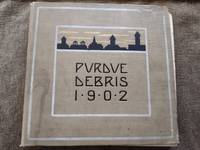
1902960This one is in rough condition but appears to be complete and the only known original Perdue Debris Yearbook on the market before 1949. Please see photos for Fair condition. A very interesting early look at Perdue University from the Class of 1902. There are some ads at the end. No autographs other than the original owner on the ffep. R.R. Donnelly and Sons Printing Co. hardcover
1390459926.Gpaperback. Good. Access codes and supplements are not guaranteed with used items. May be an ex-library book. paperback
19060008210AMHERST MASSACHUSETTS. Good. 1906. On offer is an outstanding collection of minute books records and ledger of a significant Women's Club that has been in continuous operation for well over 100 years. In 1900 Minnie Dana founded a club for women with a mission "To promote interest of the members in Literature Science Art and other timely topics of vital importance; to further social relations among its members; and to contribute to the welfare of the community" Thus began the Thursday Club a club that operates to this day well over a century later. The meetings focused on an eclectic range of subjects and members were expected to speak on a wide variety of topics. These topics included biographies the suffrage movement the effects of industrialization a trip to Hawaii Shakespeare History taking care of the feeble minded etc. It is clearly evident that these were well-educated women who were engaged in the world around them. Each journal follows a consistent format with the exception of the last one - it is a Treasurer's Report and ledger book. The first journal covers a time period of 1906 to 1913. It contains a copy of their constitution and most importantly a listing of members. Each meeting followed a standard format: minutes of the previous meeting were read new business discussed and then the program for the afternoon. The report of the Dec 6th 1906 meeting included the topics addressed: 'Topics for the first part were "The Young Nation from 1787 -1815" and "Statesmen of the 18th Century" led by Mrs. Pomeroy who read a paper on the trials discouragements and victories of this. Mrs. Herbert Dickinson gave a sketch of the period life of Alexander Hamilton the youngest statesman of that period and Mrs. Pomeroy a short sketch of Benjamin Franklin the oldest statesman. The 2nd part of the program American Inventors and Inventions was in the charge of Miss Armstrong. Dec 6 1906 This was standard fare for these ladies as the following excerpts will show: Mrs. Gleason and Mrs. Hammond had charge of the program for the afternoon the subject being Later-day Crusades and Crusaders. Mrs. Gleason taking the life and works of Jacob Riis and Judge Ben B. Lindsey and Mrs. Hammond Booker T. Washington and Theodore Roosevelt. . Jan 16 1908 The program in charge of Mrs. Wales consisted of the reading of the first three acts of Shakespeare's play "Julius Caesar". The readers of the play were as follows . a number of ladies' names are then listed Nov 18 1909 The program for the afternoon Famous Canadians of the Twentieth Century in charge of Mrs Mary Pomeroy and Mrs. Albert Wales was then taken up. Mrs. Pomeroy . read an interesting paper on Sir Wilfred Laurier Gov Gen'l Connaught Dr. William Miss Kathleen Parlow musician of note. . Jan 4 1912 The second journal continues the record of meetings held in 1906 picking up in December of that year. The Mar 7th 1907 meeting tackled head on the uncomfortable topic of slavery. The notes record the discussion: . For 1/4 of a century before the War there was a controversy between North and South over the extension of slavery. The South feared the North would soon have large representation in Congress and abolish slavery . Mar 7 1907 The third journal covers 1915 and 1916 The program for the afternoon "Needle and Tongue" in charge of Mrs. Davie was then taken up. Mrs. Howlett played two selections on the Victrola. Mrs. Davie then introduced Miss. Ruth Henry of Amherst as speaker for the afternoon. While the ladies were engaged in various kinds of needlework they listened to a very interesting talk by Miss Henry on her life in Hawaii. . Dec 2 1915 The fourth journal also records meetings in 1915 and 1916 while the fifth journal covers a 6 year period from 1922 until 1928. The latter contains minutes of a number of annual meetings. These meeting offer many details about various members their roles and contributions and their finances. Club membership numbers indicate a healthy and thriving organization: About 100 Club members and three guests gathered in the Vestry of the Church for the Annual Guest Night of the Thursday Club Jan 11th. . p 129 The Treasurers Ledger Book is a detailed record of revenues received mostly raised from dues and a Penny Collection taken each meeting and expenses incurred in operating the Club. The expense listing shows that these women were well aware of issues and events far beyond their walls and include donations to the Red Cross China relief Boys Services and the Western Massachusetts Women's Club. This is an outstanding collection. Although they follow a standardized format the warm personalities of these women still shines through. Along with their weighty discussions there are references to needlework during presentations penny collections etc. They clearly illustrate the depth and breadth of thinking and interests of these women over a period of 100 years. These would be a valuable addition to any Women's Studies program. The continual listing of members by full name makes these very valuable for genealogists. Inventory: The following table summarizes the size and condition of each volume: 1906-1913 8.25 x 6.75 148 100 Good / Good / Good; 1907-1913 8.0 x 6.5 116 100 Good / Good / Good; 1915-1916 8.5 x 6.5 116 50 Good / Fair / Good; 1915-1916 8.0 x 6.5 116 50 Good / Fair / Good; 1922-1928 8.5 x 9.75 152 96 Good / Good / Good and Ledger 1924-46 7.5 x 5.0 172 100 Fair / Fair / Good.; Manuscript; 8vo - over 7¾" - 9¾" tall; KEYWORDS: HISTORY OF UNITED STATES; MASSACHUSETTS; HAMPSHIRE COUNTY; NEW ENGLAND; EARLY 20TH CENTURY; 1900s; 1910s; PROGRESSIVE ERA; WOMEN CLUBS; THE THURSDAY CLUB; AMHERST MA; MINNIE DANA; CLUB MOVEMENT; AMERICAN WOMEN SOCIAL MOVEMENT; SOUTHERN AMHERST; WOMEN STUDIES; SOCIAL LIFE IN AMHERST IN THE EARLY 20TH CENTURY; AMERICANA HANDWRITTEN MANUSCRIPT DOCUMENT LETTER AUTOGRAPH WRITER HAND WRITTEN DOCUMENTS SIGNED LETTERS MANUSCRIPTS DIARY DIARIES JOURNALS PERSONAL HISTORY SOCIAL HISTORY HISTORICAL HOLOGRAPH WRITERS AUTOGRAPHS PERSONAL MEMOIR MEMORIAL ANTIQUITÉ CONTRAT VÉLIN DOCUMENT MANUSCRIT PAPIER ANTIKE BRIEF PERGAMENT DOKUMENT MANUSKRIPT PAPIER OGGETTO D'ANTIQUARIATO ATTO VELINA DOCUMENTO MANOSCRITTO CARTA ANTIGÜEDAD HECHO VITELA DOCUMENTO MANUSCRITO PAPEL . unknown
19314017-C-0041Utrecht: Burgemeester en Wethouders 1931. 27x20 cm. original softcover sewn. 57 pp. many ills folding map. -cover slightly foxed. Book design: K. Kuiler. Printed by J. van Boekhoven Burgemeester en Wethouders paperback