2 085 résultats
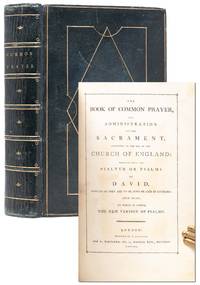
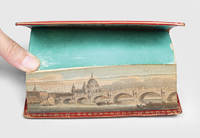
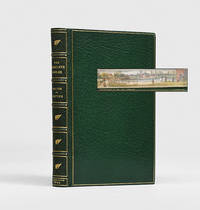
180971005hLondon: Vernor Hood and Sharpe 1809. Book. Fine. Hardcover. 12mo - over 6¾ - 7¾" tall. Contemporary full gilt green straight-grain morocco with gilt edges and grey endpapers. "Taylor and Hessey" mark to fore-edges of boards. With a hidden fore-edge painting of a marine scene of Richmond Bridge on the Thames. Light scuffing to covers. Old owner's name to front fly-leaf. Otherwise clean tight and unmarked. Very neat -- a sound and handsome copy. With matching cloth-bound slip-case. Vernor, Hood and Sharpe Hardcover
179471006hLondon: T. Cadell Junior and W. Davies 1794. Book. Fine. Hardcover. 12mo - over 6¾ - 7¾" tall. Contemporary full gilt crimson straight-grain morocco with gilt edges and marbled endpapers. With a hidden fore-edge painting of a marine scene of the Cromer seashore. Mild scuffing and toning to covers. Contemporary and early owners' names to front fly-leaf. Otherwise clean tight and unmarked. Very neat -- a sound and handsome copy. With custom crimson quarter-morocco slip-case and chemise. T. Cadell, Junior, and W. Davies Hardcover
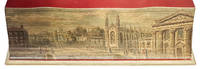
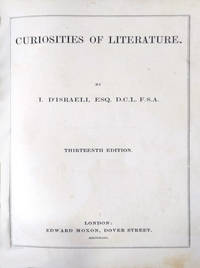
2108PA542<p>By. D.C.L. F.S.A. Thirteenth Edition. Edward Moxon. London. MDCCCXLIII 1843.</p>_x000d_<p>De 24x17 cm. Com xiv 578 págs.</p>_x000d_<p>Encadernação de Asprey e Co.Lt. inteira de pele com nervos e ferros a ouro na lombada nas pastas e seixas onde consta a assinatura do encadernador. Corte das folhas dourado e com <em>fore-edge painting</em> com uma vista de uma cidade do séc. XIX. Com folhas de guarda em papel marmoreado.</p>_x000d_<p>Ilustrado em extratexto com um retrato do autor frontispÃcio gravado datado de 1840 e um fac-simile de um manuscrito de Alexander Pope com uma passagem da sua versão da Ãliada.</p>_x000d_<p>Texto em duas colunas com cercadura de duplo filete.</p>_x000d_<p>A obra contem uma mirÃade de anedotas sobre pessoas e acontecimentos históricos livros invulgares e os hábitos dos coleccionadores de livros. A obra era muito popular e amplamente vendida no século XIX.</p>_x000d_<p>Isaac D´Israeli 1766 1848 foi um escritor estudioso e homem de letras britânico. É mais conhecido pelos seus ensaios pelas suas associações com outros homens de letras e como pai do primeiro-ministro britânico Benjamin Disraeli.</p>_x000d_<p>EN 24x17 cm. xiv 578 pp.</p>_x000d_<p>Bound by Asprey and Co.Lt. in full leather with raised bands and gilt tools on spine gilt framed on the pastedowns and gilt double line frame on the back of the boards which also have the bookbinder's signature. Gilt coloured edges and fore-edge painting with a view of a 19th century city. Marbled endpapers.</p>_x000d_<p>Illustrated <em>hors text</em> with a portrait of the author an engraved frontispiece dated 1840 and a facsimile of a manuscript by Alexander Pope with a passage from his version of the Iliad.</p>_x000d_<p>Double framed text in two columns.</p>_x000d_<p>The work contains various anecdotes about historical characters and events unusual books and the habits of book-collectors. The work was very popular and sold widely in the 19th century.</p>_x000d_<p>Isaac D´Israeli 1766 - 1848 was a British writer scholar and man of letters. He is best known for his essays his associations with other men of letters and as the father of British Prime Minister Benjamin Disraeli.</p> M-17-B-12 hardcover
17926999London: Printed by T. Davidson for L. Wayland 1792. First thus. Near Fine. Handsomely bound in contemporary full dark blue straight-grained morocco. Small quarto 250 x 155 mm. collating complete with thirteen fine engraved plates including frontispiece. Geometric gilt design to boards gilt spine with five raised bands and turn-ins with gilt floral roll. With a very fine double fore-edge painting by Martin Frost. The painting which fans open to 4 in. 100 mm. captures two views: the first is of the Cantebury and Salisbury Cathedrals and the second of Westminster Abbey and Chester Cathedral. A Near Fine copy clean and bright throughout with just a bit of edgewear and some foxing to versos of plates. In a custom silk-lined dark blue linen clamshell case with gilt-lettered leather spine label.<br /> <br /> Martin Frost is a master craftsman who was awarded the MBE in the New Years Honours list in 2019 for his work to preserve the art of fore-edge painting. This lovely colorful double-view example demonstrates the height of his skill as an artist presented here on an attractively printed and elegantly bound volume. Near Fine. Printed by T. Davidson for L. Wayland unknown
17922110502150906716Not Available 1792. Soft Cover. Fine. Number of books: 1 width Not Available paperback
2092902138300533Tsuta kichi-ban N.A. Soft Cover. Fine. The book is in fine condition. Tsuta kichi-ban paperback
1811182444London: Published for John Reeves Esq 1811. With a beautiful early fore-edge painting An attractively bound 19th-century Book of Common Prayer with a charming contemporary fore-edge painting of a Thames-side view depicting Blackfriar's Bridge and St Paul's Cathedral. Provenance: the Zion Research Library with their bookplate dated 1937. The library was a Protestant non-sectarian library based in Boston Massachusetts dedicated to the study of the Bible and the history of the Christian Church. Duodecimo 140 x 80 mm. Contemporary red morocco spine ruled and lettered in gilt boards and edges ruled in gilt turn-ins with gilt foliate design green coated endpapers edges gilt with contemporary fore-edge painting 2 silk bookmarkers. Housed in a custom red cloth chemise and red pull-off case. Recent pencil annotations to title page. Rubbing to spine ends and corners a couple of nicks to front free endpaper. A very good copy. hardcover
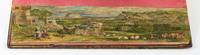
1809ST12251Londini: Impensis J. Johnson et al. 1809. 248 x 146 mm. 9 3/4 x 5 3/4". 2 p.l. 700 pp.With commentary by Christian Gottlob Heyne. <br/> HANDSOME CONTEMPORARY NAVY BLUE STRAIGHT-GRAIN MOROCCO DENSELY GILT covers with thick and thin gilt rule border and large central laurel wreath that on the front with the Latin motto "Honoris Causa" "For the sake of honor" that on the rear with the name Thomas T. Churton and the date 1817 raised bands spine lavishly gilt in compartments filled with foliage and small tools emanating from a central fleuron gilt titling and turn-ins all edges gilt. WITH A SPLENDID LATER PAINTING OF MOUNT ETNA ON THE FORE EDGE. In a recent plush-lined blue folding cloth box with gilt spine titling. With ink stamp of Bolton Public Library on verso of title and first page of text. Lowndes IV 2777. Corners slightly bumped boards a little faded first two gatherings mildly foxed isolated rust spots or faint freckled foxing but still AN ESPECIALLY DESIRABLE COPY the handsome binding virtually unworn the text clean and smooth and the unusual fore-edge painting very well preserved.<br/> <br/> This scholarly edition of Heyne's acclaimed Virgil comes in a fine contemporary binding with a noteworthy fore-edge painting. Dibdin Gibbon and Sandys all praise Heyne's edition of Virgil and Sandys credits him with being "the first who with any decisiveness attempted . . . to read in the writings of the Ancients not their language alone or even their detached opinions and records but their spirit and character their way of life and thought." First published in Leipzig in 1767-88 Heyne's edition was deemed "incomparable" by Dibdin and even inspired a poem by William Cowper "On Receiving Heyne's Virgil from Mr. Hayley." Our painting shows a coastal landscape in Sicily rendered in strong greens and deep blues. There is a bay on the left and a tiny village perched above the sandy beach with white-capped Mount Etna emitting a thin wisp of smoke in the background. Purplish clouds are gathering in the distance which combined with the smoking volcano lend a frisson of foreboding to an otherwise tranquil scene. As often the age of the painting is difficult to determine: not the work of any recognizable painter it is very probably not as old as the binding yet is almost certainly not something done during the last 100 years. In any case the quality of its execution is high and the subject matter--which is something quite different from the typical fore-edge design--is entirely appropriate for the classical contents of the book. The attractive binding indicates a milestone in the life of its owner Thomas Townson Churton 1798-1865. The phrase "Honoris Causa" on a 19th century binding or bookplate is often found in conjunction with an academic prize being granted and in 1817 Churton then a top student at Rugby School was awarded a prestigious "leaving exhibition" to support his further education which he duly started the same year at Brasenose College Oxford. He was one of only two students in his year granted the full seven-year exhibition funding that was more than sufficient to support undergraduate studies and beyond at the university. In keeping with the content of the book at hand and with the subject of its fore-edge painting Churton was a classicist and he excelled at Oxford as he had at Rugby being elected Dean of Brasenose in 1828 and being a Fellow from 1821 to 1852. Not emblazoned with the Rugby arms this exceedingly fine binding was possibly commissioned privately perhaps by family to commemorate Churton's superb performance at Rugby and in hopes of a bright future at Oxford. Impensis J. Johnson et al. unknown
1818FF2535London:: John Murray 1818. 1818. 8vo. viii 576 pp. Original full double gilt-ruled vellum gilt embellished spine olive-brown morocco spine label all edges gilt red endleaves. Fine copy. With a glorious fore-edge painting on the painted edge by the Dover painter of "King's College Chapel Cambridge" and labeled in the artist's ink hand. The artist is known to have worked in the 1920s and 1930s in London thus it is interesting to note that there are two notations with dates: a dated inscription in the back E.H.W. 25/3/31 March 25 1931 $85. - with a cost code showing B/-/- over B/H/E. Surely an indication that this was painted by March 1931 and offered for sale by an American bookseller for $85. The label shown for the painting also has a code: 116/1/24 which looks like a code/date - if a date then the year would be 1924. This is very much within this artist's time period of activity. Weber Jeff Annotated Dictionary of Fore-edge Painting Artists & Binders 2010 pp. 98-103. John Murray, 1818. hardcover
2091502135300212Not Available N.A. Soft Cover. Fine. Number of books: 4 Not Available paperback
18652110502150908523Not Available 1865. Soft Cover. Fine. Number of books: 3 Not Available paperback
18022110502150903360Hanmoto fumei 1802. Soft Cover. Fine. Number of books: 1 Hanmoto fumei paperback
18022110502150903459Hanmoto fumei 1802. Soft Cover. Fine. Number of books: 1 Hanmoto fumei paperback
2091502135300249Not Available N.A. Soft Cover. Fine. Number of books: 1 width Not Available paperback
36047501Japan ca. 1800. Kakemono hanging scroll: size 66.4 x 1m.26 painting size: 54.5 x 41.7 cm. an excellent example brush signed by the artist with his red Hanko seal beautifully mounted on brocade silk DeLuxe size. A RARE EXAMPLE . . . . AN EXCEPTIONALLY FINE ORIGINAL PAINTED SCROLL . . . A TRIBUTE TO TANI BUNCHO . . . JAPAN'S MOST CELEBRATED PAINTER . . . CONSIDERED ONE OF JAPAN'S BEST 10 ARTISTS OF ALL TIME . . A TRIBUTE TO THE ARTIST TOSA Mitsunari 1646-1710: This painting is a later tribute to Tani Bucho. . WHO WAS TANI BUNCHO PAINTER & POET 1763-1840: Buncho was a Japanese painter who founded an eclectic school influenced by Chinese Japanese and Western styles. . Buncho was an the most famous of Japan's Bunjin literati painters and poets of the late 18th and early 19th centuries. . He was the son of the respected Samurai-poet TANI Rokkoku 1729-1809 retainers to the Tayasu family descendents of the Tokugawa Shogun. . ARTISTIC STUDY: Bunsho first studied first with under KATO Bunrei 1706-82 a master of the Kano school stressing Chinese themes & techniques. After Bunrei's death Buncho worked with school masters such literati painter KITAYAMA Kangen 1767-1801 where he developed a broad stylistic range. He continued with a painter of the Hoku-ga or Northern school of Chinese art. . He was also influenced by Nan-ga The Southern school of Chinese art also known in Japanese as the Bunjin-ga or "Literati Painting" as well as of Yamato-e traditional Japanese paintings of scenes from daily life. He founded a new school of painting called "Nanboku Goitsu" or "The South and East school" and he introduced the use of Western perspective a technique further refined by his most famous pupil Watanabe Kazan. . His technique was outstanding and his knowledge of Chinese Japanese and European art had a major influence on him. Extracted from Encyclopedia Britannica see below. . . BUNCHO'S STYLES OF PAINTING: Buncho is best known for his literati style "Nanga" a a Japanese interpretation of Chinese paintings. And "Bunjin-ga" or literati idealized landscapes. Unlike other contemporary "Bunjin-ga" painters Buncho was an exceptionally eclectic artist painting idealized Chinese landscapes our example Japanese examples based on real places and poetically-inspired traditional scenery. . PORTRAITS: He painted portraits of his contemporaries such as Ono Ranzan and Kimura Kenkado as well as imagined images of such famous Chinese literati and historic heroes as Su Shi and Tao Yuan-ming. . TRAVEL AND EXPOSURE: During his lifetime Buncho like all Japanese were not allowed to travel abroad being forbidden by the Tokugawa Shogunate. He did however spent many years traveling throughout Japan eventually going to Nagasaki. . NAGASAKI EXPOSURE TO CHINESE & DUTCH ART: In Nagasaki Bunsho saw Dutch imported Chinese classic painting manuals like the Ten Bamboo & Mustard Seed Garden. During his sojourn in Nagasaki he studied under a Chinese painter. While there His studied the "Nagasaki School" as well as "Dutch Painting" styles and was exposed to other imported European art works "You-Ga" were a major influence on his painting techniques and career. See Murase p.374 below. . HIS DISCIPLES: Watanabe Kazan Sakai Hoitsu and Takaku Aigai were among his disciples. One of his most famous pupils was the renowned painter Okuhara Seiko. Above liberally extracted & re-edited from Wikipedia see below. . "NANGA" OR LITERATI SCROLL SUBJECTS: . The subject portrays some of the typical literati-style "Yama to Mizu" "Mountains & Water" or "Shan-Sui" in Chinese stylized water & landscape features. Lovely examples of unique mountains waterfalls landscapes groups of scholars or literati Bunjin/intellectuals at their favorite pastimes. . The Literati are reading writing poetry painting carrying books & scrolls discussing arguing debating the literary and salient artistic points. . The top of the scroll painting begins with some very lovely and attractive mountains with evergreen trees. There is also a fast downward flowing river which originates behind the upper-most green and brown mountains. . At the upper right is a waterfall which creates its own tributary river joining the larger river flow. Along the shores on both sides are groups of literati. They are engaged in reading writing poems reflecting inspired by the stunning landscape and lavish scenery. . There is a small pavilion on the right shore adjacent to a forest with lush-green trees. In the pavilion appears a grand-master literati seated before his writing desk with ink stone brush and paper at the ready. He is accompanied by two attendants in the background and a young child carrying a bowl of food. He has an excellent view of the other scholars on both sides of the river and the activities of other groups just below him. . The small groups of scholars and literati are reading recitations writing or discussing. Some carry books tied by silken cords suspended over their shoulders. Most all are engaged in some form of artistic or literary activity some carry books and scrolls. . At the bottom left where the artist's brushed signature and red cinnabar Hanko seal/chop appears there is a small bridge over the river. A young disciple carries a long paper rolled into a scroll just behind two elder scholars and literate who are about to cross the bridge. Above them are some pairs of literati pouring over scrolls large papers and blue-bound books. Nearby above them is a young disciple who carries two large sets of similar blue-bound books in cases over his shoulder tied with a white silk cloth. He attends to the two elder literati above and to his right. They also carry identical blue-bound sets of books. . Above this young disciple noted above we see other groups of young disciples attending the elder literati to their rear. These young people also carry more books a red bound text and his companion a brown bound book. . The painting shows a lively and large group of scholars and literati with their disciples and attendants at what appears to be an extraordinary grand yet unnamed meeting and celebration. The majority of the those present are actively engaged in literary or artistic activities. . Though there is no text the visual graphic messages convey the story the artist created. . Scholars and painters have come together to create write share discuss and argue the finer points of poetry literature and paintings. Although we can not find or read any of the creations held in member hands based on the stunning landscape and festive mood on the faces of the participants one can assume the reason for this gathering is to share their thoughts & compositions with their community. . THE MEANING OF THE GATHERING OF SCHOLARS & PAINTERS IS REVEALED: A fascinating and illuminating article reveals who the people are in this scroll painting. . Per the above please see Paget's article citation below where she talks about "Buncho's circle." . She states: ".collaborative works and other objects give intimations of the creative exchange and gregarious atmosphere of Buncho's extensive circle which encompassed such cultural luminaries as Sakai Hoitsu 1761-1828 Kameda Bosai 1752-1826 and Kimura Kenkado 1736-1802" all of whom were part of his "extensive circle." . From this article we can derive the meaning of our painting which clearly represents the "creative exchange and gregarious atmosphere of Buncho's extensive circle." His "extensive circle.with "cultural luminaries" that he thought worthy of executing "collaborative works" with. Who would challenge this idea given the large number of "cultural luminaries" portrayed in this painting. . We can firmly understand who the large numbers of literati were. They are his colleagues his "cultural luminaries" and "collaborators" who shared in the production of some of his paintings. In this painting Buncho faithfully and expertly illustrates his respect for and to honor to his fellow "master painters" from his "extensive circle" and "Bunjin" genre. . SIZE AND FORMAT: DELUX GRAND SIZE PAINTING: . This is an extraordinary wide and long hand-painted Kakejiku hanging scroll in full vivid color. . The scroll overall is 1 m. 2 cm. wide. The painting is 87 cm. wide. . The length of the entire scroll is 2 m. 26 cm. long. The painting is 1 m. 69.2 cm. long. . THE ELEGANT & STUNNING SCROLL MOUNTING: . SKILLED WORK OF A MASTER HYOGUSHI: . The work is superbly elegantly and lavishly mounted by a master Hyogushi a scroll maker using the finest contemporary materials of the highest quality. . Stunning contemporary period gold-brocade silk is used at the top sides and bottom. Use of this extravagant and superbly elegant high-quality silk is indicative of very important and high-value painting. This use of lavish embroideries and materials show appropriate respect and honor to TANI Buncho's painting. . Gold-silk textiles of this high quality and caliber were hand-woven and took great skill to create. . The scroll ends Jiku are "Zogejiku" or ivory of the highest quality. . Add to the above the use of a great and skilled master Hyogushi to mount all of the precious materials. This results in a stunningly beautiful elegant and marvelous mounting. The mounting combines with the superb painting to celebrate the master work by the celebrated TANI Buncho. . CONDITION: The Painting: The painting is in excellent condition with lively colors and no damage or issues. There is a small scratch just near the signature and artist's seal. Otherwise an excellent example. The verso remains clean without mark or issues. . The Kakejiku or Hanging Scroll Mounting: The gold-silk brocade is original and has some of the usual surface rubbing. The lower cloth at the bottom by the "Jiku" lower roll hinge has some wear and is restored from the verso. There is also a bit of wear to a small place that covers part of the Jiku where there are loose threads. There are no other major issues which detract greatly from the mounting. . KIRI BAKO: THE CRYPTOMERIA PAULOWNIA WOOD CUSTOM BOX: This Kakejiku is contained in a lovely Kiri box with black lacquered edges on the top. The box is nicely intact and in very good to excellent condition. There are a few of the usual very minor bumps dings and other colorless marks typical of the attrition to such soft-wood boxes from a bygone era. . It has two typical convex cradles to hold the Jiku scroll ends at each end. The cover closes tightly omitting air and insects. The scroll has been housed in its container since 1952. The box has properly protected the contents for which it was designed. . The age of the box is difficult to determine it has bamboo pegs instead of metal nails which again is typical of Kiri boxes from early periods. The top lid/cover has no artist or title brushed on it and likewise the "Gedai" exterior scroll author/title slip does not indicate a title or artist. An educated guess is the box was made about 1850-1900. . PRECIOUS PROTECTION: It has been a Japanese custom for centuries to place precious objects of all varieties in Kiri boxes. Because of Japan's sultry and high-humidity weather in addition to a large number of paper-loving insects Kiri Bako has protected vulnerable items like silk clothing paper books paintings scrolls and others from the ravages and attrition rate. Items of innate value were and are still placed in Kiri Bako. . REFERENCES: . TODA Kenji.: DESCRIPTIVE CATALOGUE OF JAPANESE AND CHINESE ILLUSTRATED BOOKS IN THE RYERSON LIBRARY OF THE ART INSTITUTE OF CHICAGO p.292-393 for an excellent biography. ROBERTS Laurance P.: A DICTIONARY OF JAPANESE ARTISTS: PAINTING SCULPTURE CERAMICS PRINTS LACQUER p.10. He states: of Tani Buncho: "One of the most important painters of his period with a tremendous influence on his contemporaries." Buncho is exceptionally well-collected by world museums Brenda G. Jordan: ed. et al. : COPYING THE MASTER AND STEALING HIS SECRETS: Talent and Training in Japanese Painting. University of Hawaii Press pp.47 116-118. Co-editor was Victoria Weston.6 Murase Miyeko.: BRIDGE OF DREAMS: The Mary Griggs Burke Collection of Japanese art. A catalog from The Metropolitan Museum of Art Libraries. Contains material on Tani Buncho see pp.113 310 314 374. Page 405 shows a Tani Buncho signature and seal exhibit 168. Available on line: NESE SCROLL PAINTINGS:A Handbook of Mounting Techniques. MITCHELL C.H. et al.: THE ILLUSTRATED BOOKS OF THE NANGA MARUYAMA SHIJO AND OTHER RELATED SCHOOLS OF JAPAN: A Bibliography Tani Buncho: pp.21-22. Per Mitchell p21: "He Buncho considered by some as throne of the ten greatest painters of Japan of all time." . BUNCHO was also a woodblock printed book illustrator Ehon for a copious list of his title see Mitchell pp.23-24 Christine Guth.: ART OF EDO JAPAN. Yale University Press 1996 Timon Screech.: OBTAINING IMAGES. University of Hawaii Press 2012 pp.124 317-319. Frank L. Chance.: "Tani Buncho and the Edo School of Japanese Painting" Ph.D. Dissertation University of Washington 1986. Rhinnon PAGET.: THE DIFFERENT BRUSH STROKES OF TANI BUNCHO. Japan Times article: erent-brush-strokes-of-tani-buncho/#.V5lCpLaANBc SUNTORY MUSEUM OF ART. "Tani Buncho: Commemorating the 250th Anniversary of his Birth." 2013. www.suntory.com/sma TANI BUNCHO: tannica.com/biography/Tani-Buncho . unknown
8327118. ALBUM PAINTING NAKAJIMA Yusho. SHOKEI GAFU Orihon folding painting album in gafu style full of lovely views of Japan. 28 x 16.8 CM. Preliminary and final decorated pages plus a 2 page table of contents and 42 double page color paintings each 28.2 X 33.4 CM in a late Shijo Kyoto-school style by Nakajima Yusho 1837-1905 the son of Nakajima Raisho and a talented artist in his own right. In brocade covers with a brushed title label and enclosed in a clasped chitsu case. Lovely throughout delicate colors skilled brushwork. unknown
FF2545Los Angeles:: Jeff Weber 2005. 2005. 8vo. xxvi 164 pp. Color frontispiece 10 plates including 10 color illus. chronology. Special copy in trial binding for the author in full navy-blue straight grain morocco spine with gilt title all edges gilt navy cloth felt-lined slip-case each bound by David Weinstein for Jeff Weber. Unique deluxe format for copy #1. SIGNED BY THE AUTHOR AND BINDER. Fine. C330/046 ONE OF 3 COPIES with fore-edge paintings by Martin Frost the painting inspired by the history of John T. Beer his life and work. The regular edition was limited to 210 copies printed by the Castle Press Pasadena. Those copies were bound in blue cloth. This copy is the most deluxe form of the edition. / Forty years after the second edition of Professor Carl J. Weber's book Fore-edge Painting; an historical survey Second edition 1966 his grandson antiquarian bookseller Jeff Weber has written a book that puts an end to the phrase: "Carl Weber's book is the only book written on fore-edge painting." This new book provides new and complete insight into the history of John T. Beer's fore-edge paintings and generally a new approach to studying and discovering the factual history of this unique form of book decoration. The book revises and enlivens the history of John T. Beer's remarkable fore-edge painting work. /What was the history of Beer's fore-edge paintings Was he a private collector who painted on his own books or did he paint on books from his family's library When did he do these paintings Where was he How many pieces did he paint What were the patterns of his work and how can one identify his work After more than 100 years of his passing is it possible to find out and build a catalogue raisonné of his work Meaning: is it possible to reconstruct a full catalogue of all his known works their distribution and histories from 1903 to the present Why is finding all this out important Indeed all of these points are key in this book the first full account of a fore-edge painter. The bibliographic puzzle of this man and his work was answered by a lot of sleuthing. After more than 30 years of effort and thanks to many disparate sources this book now handles Beer's work seriously and uncovers the work of a remarkable mind. For me the moment of coup de grace was learning the exact date and source that Beer bought some of his books then painted on the edges and then in 1903 he sold his library just as he was also about to die. / In addition the book offers a beginner's guide to fore-edge painting. The ABC's of Fore-edge Painting is a brief account of what the basics are in fore-edge painting. Every collector will want to have a chance to understand the language and art of fore-edge paintings. Jeff Weber, 2005. hardcover
19072110502150903206Matsuki Heikichi-ban 1907. Soft Cover. Fine. Number of books: 1 Matsuki Heikichi-ban paperback
2080502106602793Not Available N.A. Soft Cover. Fine. Number of books: 2 consecutive Not Available paperback
1788ST19954London: Printed for the Author and sold by Edwards in Pall Mall; Also by Edwards's in Halifax 1788. FIRST EDITION quarto issue with the etchings printed directly above the text. 257 x 205 mm. 10 1/8 x 8 1/8". iv 27 1 pp. 25 leaves; 11 1 pp. 25 leaves. Two parts bound in one volume. <br/> HANDSOME ORIGINAL ESTRUSCAN CALF BY EDWARDS OF HALIFAX covers with central panel of tree calf enclosed by a gilt Greek key border and a frame of stenciled dark brown palmettes on light tan calf this surrounded by graceful gilt ivy roll on dun-colored calf all within a gilt pentaglyph-and-metoped border smooth spine divided into panels by strips of inlaid black morocco tooled with gilt Greek key roll panels with inlaid central oval medal featuring an Etruscan vase calligraphic gilt flourishes at corners black morocco label bright pink endpapers all edges gilt expertly rebacked preserving original spine. WITH A FINE BRIGHTLY COLORED FORE-EDGE PAINTING OF THE CRAIGMILLAR CASTLE RUINS WITH EDINBURGH IN THE DISTANCE. WITH 50 ENGRAVED VIGNETTES 60 x 85 mm. of the ruins of Scottish castles and abbeys. A Large Paper Copy. Front pastedown with engraved armorial bookplate of Christopher Turnor Stoke Rochford Library. Lowndes 370; ESTC T153718 but with a variant title page. Front cover with a couple small areas of lost patina from insect activity rear cover just slightly marked upper corners a bit bumped faint freckled foxing in the margins more noticeable on the first two leaves slight offsetting of engravings on facing blank versos. A few condition issues but still a very attractive book the lovely binding retaining virtually all of its antique appeal and the contents with nothing approaching a significant problem.<br/> <br/> This is an excellent atypically large example of an Edwards of Halifax binding enhanced with a most appealing early fore-edge painting depicting one of the castles pictured in this attractive quarto edition. Scottish surgeon and antiquary Adam de Cardonnel 1746/7 - 1820 wrote and illustrated the present work "to preserve from oblivion the ancient remains of Caledonian splendour." Originally intended as a supplement to the popular "Pennant's Tour" of Scotland it appeared in four parts the first two in 1788 in a few different forms including an octavo edition and the second two published in 1793. The fore-edge painting features Craigmillar castle a Medieval fortress located a few miles from Edinburgh whose most famous guest was Mary Queen of Scots. One of her stays resulted in the so-called "Craigmillar bond" which set in motion plans to dispatch Mary's husband Henry Stuart. By the late 18th century the castle had fallen into disrepair and it appears in the present painting as an idyllic ruin with sheep and cows grazing in the fore-ground and the city with Edinburgh Castle rising in the distance. The Edwards of Halifax bindery was founded by William Edwards 1723-1808 and continued by several of his brothers half-brothers and sons by far the most important of the sons being Thomas who lived from 1762-1834. This famous firm produced a number of important innovations in binding design the most significant being the idea of concealing a painting under the gilt of the fore edge. This hidden treasure could be revealed once the edge was fanned out as a special surprise element of the volumes the Edwards firm bound--typically in Etruscan calf as here or in their patented transparent vellum. Although bindings produced by the Edwards workshop are almost never signed the present item is surely Edwards' work as indicated by the characteristic binding style and by the fact that our volume was actually sold by the Edwards firm. As usual there is no clear way to assign a precise date to the painting; while it is not done in the soft grays that can be firmly associated with the earliest Edwards examples it clearly is a painting done before 1850. While fore-edge paintings likely produced at the Edwards bindery and especially produced by their imitators appear in the marketplace with some regularity most offered are octavo or duodecimo in size. Of the fore-edge paintings attributed to Edwards of Halifax that have appeared in RBH over the past 65 years fewer than one in 10 were on quarto volumes. This copy was previously owned by the MP Christopher Turnor 1809-86 a member of the House of Commons and owner of more than 20000 acres in Linconshire where he built the grand Stoke Rochford Hall. Printed for the Author, and sold by Edwards, in Pall Mall; Also by Edwards's, in Halifax unknown
1800227046Edinburgh: Printed by Sir J.H. Blair and J. Bruce 1800. 1 vols. 18mo. Near contemporary blue cloth with floral gilt tooled border rose silk endsheets with gilt tooled braid borders title page with ornamental gilt tooled border a.e.g. wih a vertical fore-edge painting of a flower. Provenance: Ownership signature of "Mary Lister May 18 1804" on first blank. 1 vols. 18mo. An early cloth binding with the unusual addition of gilt tooling on the endleaves and title page. Printed by Sir J.H. Blair and J. Bruce unknown
05168Edinburgh: Archibald Constable and Company 1811. Day set on Norham's castled steep.<br /> And Tweed's fair river broad and deep. "<br /> Bound by Taylor & Hessey and with a Fine Fore-Edge Painting <br /> by the "Double-Line Painter"<br /> <br /> FORE-EDGE PAINTING. TAYLOR & HESSEY binder. DOUBLE-LINE PAINTER artist. SCOTT Sir Walter. Marmion: A Tale of Flodden Field. The eighth edition. Edinburgh: Archibald Constable and Company 1811. <br /> <br /> With a very fine early twentieth century fore-edge painting by the "Double-Line Painter" showing a view of Norham Castle in Northumberland depicting the opening lines of the poem.<br /> <br /> Octavo 8 1/4 x 5 1/4 inches; 210 x 133 mm. viii 1-377 1 blank i-cxxviii pp. Additional engraved vignette title-page and nine engraved plates. The title-page and plates with old water stain at top left corner some occasional and light spotting otherwise near fine.<br /> <br /> Handsomely bound ca. 1811 by Taylor and Hessey Booksellers London. Stamp-signed in gilt on the fore-edge of the front board "Bound by Taylor & Hessey". Full dark blue straight-grain morocco covers elaborately paneled in gilt spine with five raised bands three of them double elaborately decorated and lettered in gilt in compartments decorative gilt board-edges and turn-ins ochre watered silk liners and endleaves all edges gilt. With the engraved bookplate of Isabel Beckwith Closson on front blank. A lovely example.<br /> <br /> The "Double-Line Painter" was an English artist name unknown possibly active in the 1920s. The most identifiable feature of this artist's work is the label for the painting. The artist labels his own paintings on the the front fly-leaf. If you look carefully you will see a neat light penciled double-line above and below the written title like an architect would do. The painting title itself is also neatly written in tiny letters. This artist is highly skilled painter with high productivity." Jeff Weber. Annotated Dictionary of Fore-Edge Painting Artists & Binders pp. 95-96. Jeff Weber cites eight examples of the "Double-Line" artist in his book on pp. 96-97.<br /> <br /> 'Norham Castle' is in Northumberland England overlooking the River Tweed on the border between England and Scotland. In the nineteenth century Norham Castle became well known far and wide from the paintings of J. M. W. Turner. He first painted the castle in 1797 but returned to paint it many times.<br /> <br /> "Taylor & Hessey were busy throughout these fifteen years 1808-1823 not only in publishing and in binding but also in re-binding books published by others. They issued among other works Pope's translation of the Iliad and Thomson's Seasons; but they also put fine bindings upon books by Milton Crabbe Cowper Scott and others published by Johnson or by Sharpe or by Hatchard or by Reeves or by Longman. Taylor & Hessey usually bound their fine books in morocco-red blue brown crimson green-and "signed" their bindings by stamping their name in gilt in the fore-edge of the binding not the leaves note whenever the boards inside the leather were thick enough to carry the name of the firm. C.J. Weber Fore-Edge Painting pp. 106-7.<br /> <br /> Provenance: Isabel Beckwith Closson 1907-2004; Weber. 1001 Fore-Edge Paintings. Maine 1949. P. 152; Randall Moscovitz. Edinburgh: Archibald Constable and Company, 1811 unknown
1834180996London: Allan Bell & Co.; Simpkin & Marshall; Fraser & Co. Edinburgh; W. Curry Jun. & Co. Dublin 1834. The Doris Louise Benz copy A fine Zaehnsdorf binding with a detailed fore-edge painting from 1925 depicting an 18th-century riverside view of Broxbourne. Traditionally fore-edge paintings did not represent subjects or scenes relevant to the books they adorned but this depiction appropriately celebrates the pastoral life characterized in Walton and Cotton's piscatorial masterpiece. The Compleat Angler was first published in 1653. Provenance: Stephen C. Massey. Duodecimo 164 x 101 mm. Engraved frontispiece and 3 plates further illustrations in text. Early 20th-century green morocco by Zaehnsdorf spine lettered in gilt compartments with gilt central tool of fly fishing hook gilt rule to spine covers and turn-ins Dahlia pattern marbled endpapers edges gilt fore edge with colour fore-edge painting by C. Wain 1925 their stamp on rear turn-in. Blue morocco book label of American philanthropist and book collector Doris Louise Benz 1907-1984. Superficial split to front inner hinge sporadic foxing a couple of neat pencil annotations a fine copy. unknown
18812110502150906869Kuma Fukuda two good editions 1881. Soft Cover. Fine. Number of books: 1 Kuma Fukuda two good editions paperback
2110502150901861Nagoya student painter 6th year student N.A. Soft Cover. Fine. Number of books: 1 width Nagoya student, painter, 6th year student paperback