3 339 résultats
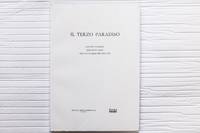
223475Roma: ARNOLDO MOSCA MONDADORI &";" RAM radioartemobile 2009. Brossura custodia wrappers slip-case. Nuovo New. Volume-opera d'arte realizzato con il contributo di Gianna Nannini Ermanno Olmi Michelangelo Pistoletto. L'opera di Pistoletto è"; realizzata a pennarello su foglio specchiato cm 50x35 . CM 50x35. pp. 40. Nuovo New. Edizione originale di 40 VII es. numerati e firmati dagli autori al colophon. <em>Il volume della collana intitolato “Terzo Paradiso” si sviluppa intorno al lavoro di <strong>Michelangelo Pistoletto</strong> dedicato alla raffigurazione simbolica di questo Terzo Paradiso il nuovo stadio di civiltà planetaria che ponendo l'arte la scienza politica e la cultura al servizio della natura e delle reali esigenze dell'uomo restituirà la vita alla terra ormai minacciata d'estinzione. </em><br /><em>Nell'opera originale realizzata per il volume l'artista richiama con il suo ormai inconfondibile segno dell'infinito ognuno di noi ad assumersi la sua personale responsabilità" in questo frangente epocale della storia umana. Messaggio condiviso dalle lettere e dalle poesie del regista <strong>Ermanno Olmi</strong> che invitano l'uomo a fare "un po' di silenzio&hellip";"per ascoltare parole nuove". </em><br /><em>Completano la trilogia i contributi letterali e musicali di <strong>Gianna Nannini</strong> icona della musica rock italiana: nella scultura sonora racchiusa al centro del libro è"; inserita la Pen drive che consentirà" ai lettori di oltrepassare la porta del suo terzo paradiso.</em> ARNOLDO MOSCA MONDADORI &";" RAM radioartemobile, unknown
In-4°; pp. (12), 88; marca tipografica su legno al frontespizio, fregi tipografici nel testo. Al frontespizio una nota manoscritta “Crusca. Costò L. 24”. A p. 28 l'errata incollata su "El or" per "El'onor". Esemplare in barbe. Legatura in cartonato antico. Buona copia. Dedica al cardinal Maffeo Barberini. EDIZIONE ORIGINALE dell’intera opera poetica di Michelangelo (1475-1564), che Michelangelo Buonarroti il Giovane fece pubblicare attingendo a manoscritti dello zio conservati nella “Libreria Vaticana” e presso gli eredi. Buonarroti il Giovane professò lungo tutta la vita un vero e proprio culto dell’antenato; amante delle lettere e delle arti studiò filosofia a Pisa dove conobbe Galileo e consolidò l’amicizia con Maffeo Barberini. La dedica a Maffeo Barberini ancora Cardinale avviene nello stesso anno in cui diverrà papa col nome di Urbano VIII. Gamba 248: «Il Buonarroti nipote dedica quest'edizione al card. Maffeo Barberini. [...] Le Rime furono in gran parte tratte da Codici esistenti in Roma e in Firenze; ma [...] furono omessi alcuni componimenti spezzatamente citati dal Varchi e da altri, col desiderio di pubblicarli quando venisse fatto di ritrovarli integri». Razzolini, p. 77; Parenti, p. 108; Brunet I, 1394. In-4 °; pp. (12), 88; woodcut printer’s mark on the title page, typographical friezes in the text. On the title page a handwritten note “Crusca. It cost L. 24 ". On p. 28 the errata glued on "El or" for "El'onor". Deckle edges. Contemporary hardcover binding. Dedication to Cardinal Maffeo Barberini. ORIGINAL EDITION of Michelangelo's entire poetic work (1475-1564), which Michelangelo Buonarroti the Younger had published checking his uncle's manuscripts kept in the "Vatican Library" and with his heirs. Buonarroti the Younger professed a real cult of the ancestor throughout his life; lover of letters and arts, he studied philosophy in Pisa where he met Galileo and consolidated his friendship with Maffeo Barberini. The dedication to Maffeo Barberini as Cardinal takes place in the same year in which he will become pope with the name of Urban VIII. Gamba 248: «The nephew Buonarroti dedicates this edition to card. Maffeo Barberini. [...] The Rhymes were largely taken from existing Codes in Rome and Florence; but [...] some compositions were omitted variously cited by Varchi and others, with the desire to publish them when it was done to find them intact ». Razzolini, p. 77; Relatives, p. 108; Brunet I, 1394.
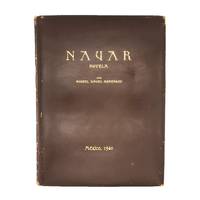
194061ORIGINAL TYPESCRIPT ANNOTATED BY THE AUTHOR OF THE NOVEL THAT WON THE FIRST MEXICAN NATIONAL PRIZE FOR LITERATURE AND THE HONOURABLE MENTION AT THE FIRST LATIN AMERICAN PRIZE NOVEL CONTEST IN NEW YORK 1940-41.<br /><br />Large 4to. Initial blank title leaf 197 ff. final blank. Occasional pen annotations in dark blue ink throughout the text by the author. Elegant presentation binding in brown soft faux leather with gilt letterings stamped on front cover and spine. Brown synthetic cloth endpapers with light reflective effect creating wavy lines. Typed on high-quality paper handmade thin and very crisp showing pattern of half rising suns as watermark. Trimmed edges styled unevenly rough irregular surface. A few marks chipping and rubbing to binding mostly along board extremities and spine. We did not manage to locate duplicates nor other similar typescripts in public libraries. Excellent condition. An exceptional item through which the final steps of the novel's genesis can be studied. Thanks to the annotations of the author who proofread the text sometimes elegantly overwriting little parts of it adding words and entire phrases or erasing unnecessary elements one can appreciate the last changes the final touching and retouching of the author before submitting his typescript to the jury. A comparison between this typescript and the novel's first printed edition reveals that not all these changes were eventually included in the final version. It is of the greatest interest to observe the "labor limae" of the artist and be in the capacity to learn which words he first used and then decided to exclude forever from the text.<br /><br />THE NOVEL. <i>There are no better words than those chosen by Howard S. Phillips in his article Mexico's Prize Novel which appeared in the University of Oklahoma literary magazine Books Abroad 1941 to introduce this outstanding piece of writing on the everyday life and exploitation of the indigenous Cora people in the Nayarit state: "Original in structure word-lean yet evolved in distinguished lyrical prose allusive rather than graphic in its nonetheless profoundly incisive characterization the story of Nayar dealing with a small and isolated corner of Mexico projects in its social purport a singularly true and comprehensive panorama of the entire country and even more – of all Latin America. Though as an example of creative writing its virtues are manifold this is its salient merit. Its opening chapters devoted in large part to the creation of the primordial background the description of the sierra and jungle of Nayarit attain a beauty and puissance fairly comparable to Hudson's 'Green Mansions.' The episodes though wrought with an almost austere realism are not presented mainly for their story content but each embodies a profound symbolical significance." Furthermore as Phillips pointed out this important novel that contributed to popularise greatly the Latin American "indigenista" genre is also: "a deeply penetrating study … of the mestizo: the most authentic Mexican type who after four centuries of biological assimilation has yet failed to achieve his complete social and psychological integration. The book voices the drama of the Mexican mestizo aimlessly groping through the jungles of his existence in pursuit of his own ultimate destiny." In addition to this splendidly written review it should be stated that Nayar impresses also for the powerful magical elements illustrated in it taken from the old traditions of the native world as well as its richness in indigenous vocabularies a list of which follows the text at the end of the book.<br /></i><br />THE AUTHOR. <i>Born in Izamal the author Miguel Ãngel Menéndez 1905-1982 studied at the Escuela Modelo and the Instituto Literario de Yucatán. Then he moved to Hollywood where he worked for a while in the film industry. Returned to Mexico he held political charges and contributed to founding the National Revolutionary Party 1929. Throughout more than 60 years he dealt with journalism publishing several reports and articles and also establishing and directing the Mexico City Herald. Besides award-winning novels he wrote essays and several poems. In his crucial study on C20th Mexican literature José Luis MartÃnez has it this way while introducing the author: "Menéndez que se dio a conocer como poeta alcanzó su mayor acierto con una hermosa novela indigenista… Pese a sus restricciones y a una consistencia más lÃrica que genuinamente novelesca Nayar de Miguel Ãngel Menéndez es la mejor novela aparecida en 1941. El cuidado estilo la atención que tuvo el autor en su composición y las dotes de mesura unidas a la buena intención social con que Menéndez se encaró al problema de los indÃgenas nayaritas justifican sin duda tal aserto." p. 116 see references section.<br /></i><br />THE CONTEXT. <i>It is worth illustrating thoroughly the historical and political context in which Nayar originated in order to fully understand its relevance which is not just literary but diplomatic as well. In 1940 Washington-based Pan-American Union 1889-1949 today's OAS Organization of American States jointly with Farrar & Rinehart Publishing House of New York summoned the writers of all the Latin American countries to take part in a continental competition for the first Pan-American literary award. This event was part of a number of initiatives taken in several fields and at various levels aimed to tighten friendly relationships between North Central and South America. In the wake of the tragic outbreak of WWII and the proliferations of dictatorial regimes and extreme ideologies the PanAmerican Union felt urgently the need to foster peace and unity within the Americas. Thus following the idea known as Moral Disarmament and the Good Neighbour policy the Union started to encourage international cooperation and understanding to ensure that war between nations could no longer be possible. In this scenario the main obstacle to the Pan-American Union's plan was to beat the historical distrust that Latin America had towards the idea of Pan-Americanism especially if it came from an organisation on which the United States had great influence. Any such attempt coming from the US was often seen as northern American imperialism. However as Veremundo Carillo Reveles showed in his crucial study on the topic this problem found solution mainly thanks to the woman behind the organisation of the Latin American Prize Novel Contest Mexican Concha Romero James who in 1935 became head of the Division of Intellectual Cooperation of the Pan-American Union. Thanks to Concha Romero the competition had an important feature: the organisers sought the support of circles of Latin American thinkers and their collaboration with US writers and publishers. In other words it was not just unilateral initiative coming from the north to the south of the continent but it was structured horizontally on two levels. The call for participants and selection of the novels that represented the 20 Latin American republics and Puerto Rico were carried out by independent national committees. Then the selected works competed in front of an international jury that granted the final award.<br /></i><br /><i>The international jury had a double function: to offer certainty of impartiality and to include the United States so that the contest had a true Pan-American meaning. Its members were carefully selected. American novelist John Dos Passos was the most relevant figure among the judges who provided highlevel legitimacy to the competition. At that time Dos Passos son to Portuguese immigrants was already a world-renowned storyteller with several works translated into Spanish. The second member of the jury was Chilean writer Ernesto Montenegro whose moral authority was greatly appreciated among the literary circles of Latin America and the United States. In addition to collaborating with various newspapers including The New York Times El Mercurio La Nación Excelsior and El Universal de Venezuela Montenegro delivered lectures at various US universities on Latin American literature. In this sense he was a link between the two Americas the Latin and the Anglo-Saxon. The third person to join the international jury was American novelist Blair Niles. She was a student of the indigenous and Afro-descendant peoples from various regions of Latin America. Her inclusion also sought to promote the participation of Latin American female writers and make visible in general the intellectual work of women. The collaboration of the New York publisher Farrar & Rinehart and Reedbook Magazine was in turn a central element. On the one hand it showed the interest of certain sectors of the North American literary scene to meet and connect with the storytellers from the south of the continent. On the other hand it validated the seriousness of the competition and was a great incentive both for the commitment to publish the winning novel and for the prize offered: 2500 dollars plus royalties on sold copies. The call specified that only original typescripts of unpublished novels whose rights were the exclusive property of the author would be accepted precisely in order to guarantee that the benefits of the distribution would fall to the winning authors and the publishers. No restriction was imposed on the subject of the novel but it was pointed out that it had to have a minimum length of 50 thousand words and be presented by Latin American writers who resided in any Latin American nation even if it was not the country of birth and that the text had to be written in the language of the country in which he lived. In this way the works were intended to be effectively representative of local literary scenes. 300 novels participated at continental level.<br /></i><br /><i>The Mexican board of judges was formed by Alfonso Reyes Genaro Fernández MacGregor Julio Jiménez Rueda Alfonso Teja Zabre and Octavio Barreda. Letras de México the most prestigious periodical in the Central American country at the time was the advertiser of the competition at national level. The magazine gave birth to vast debates on the essence of Americanity and in particular on Ibero-American literature. Hence the contest was welcomed with interest and sympathy. Both the judges and the periodical assumed the organisation of the event as their own to the extent of introducing an innovation: the author of the winning novel as well as the second and third places would be awarded by the Mexican government. Thanks to an agreement with the Ministry of Public Education the National Prize for Literature was instituted with a total purse of 10000 pesos half of which being reserved for the first place. It was a way to fully "nationalise" the Pan-American award. 34 novels were eventually submitted. Miguel Ãngel Menéndez obtained the first place with Nayar Gregorio López y Fuentes the second with A los cuatro vientos and En la Rosa de los Vientos by José Mancisidor the third position. Nayar was Menéndez's first novel ever. López and Mancisidor were already renowned novelists. The decisions drawn up by the national jury were published in Letras de México No. 24 vol. 2 p. 4 December 16 1940.<br /></i><br /><i>As the Mexican winner Nayar competed with the novels that won the other national contests about 24 before the international jury. The verdict was announced in early March 1941 and the news spread immediately via Associated Press cables throughout the continent. Peruvian writer Ciro AlegrÃa's El mundo es ancho y ajeno was the winner. The jury awarded also three honourable mentions: to the Mexican Menéndez Ecuadorian Enrique Gil Gilbert for Nuestro Pan and Brazilian Cecilio J. Carneiro for his A Fogueira. Farrar & Rinehart committed to publish all four novels. The formal announcement of the awards was scheduled on one of the most symbolic dates for Pan-Americanism: April 14 1941 Day of the Americas. Thanks to the coverage of agencies such as the Associated Press and the radio broadcasting of the Columbia Broadcasting System with which the Pan-American Union constantly collaborated news of the awards spread at national and international level. The works were reviewed by The New York Times The Nation The Chicago News The Philadelphia Inquirer and by specialised magazines such as The Antioch Review the afore-mentioned Books Abroad and Columbia University's Revista Hispánica Moderna. Latin American countries had as well great expectations. In 1941 the novels of AlegrÃa and Menéndez were published in Spanish in Santiago del Chile and Mexico respectively. Menéndez's work appeared in the classic paperback edition for the wider public see image on this page and a limited hardback edition of 600 copies 500 of which numbered and signed by the author dated 1940 and illustrated by M. Cadena. Ãngel Flores's English translation of Nayar published by Farrar & Rinehart appeared on the US market in early January 1942. It had great sales success in bookstores. In response to the demand of the Latin American public Mexican publisher La Prensa reprinted it in 1959 and 1965 and later Editorial Porrúa in 1978 and 1991.<br /></i><br />PROVENANCE AND AUTHENTICITY. <i>According to the newspaper article reporting the Mexican jury's decision which was published in Letras de México on the 15th of December 1940 Menéndez submitted his typescript under the pseudonym of "Manuel Briseño". The judges eventually found out the real name of the author only on the day of the public announcement of the awards. Thus bearing the name of Menéndez clearly stated on the title-page </i><i>there is reason to believe that this is the typescript</i><i> prepared for submission to the Pan American contest in New York in which the author participated with his real name as the official winner of the Mexican award. Indeed in addition to show all the physical features of a book that has to be presented for evaluation on an important occasion that is it is made of high-quality materials for presentation the typescript was acquired by its previous owner exactly in New York. It was part of Italian Hispanist Gaetano Massa's private library. Arrived in New York in 1933 Massa lived and worked in the American metropolis for about 40 years. He first studied Spanish and Portuguese literature at Columbia University then being aware of the rising success of Spanish literature in the city he founded the publishing house and bookstore Las Américas which marked an entire tradition of Spaniards and Latin Americans in the US. Among Massa's early undertakings as a publisher there was Las Américas Series of Contemporary Latin American Writers 1942-43. Throughout 30 years Massa's Manhattan-based Las Américas was the heart of the Latin American intellectual community in New York. A voracious book collector he was acquainted with the most influential writers and thinkers of the time. In 1971 Massa returned to Italy with his private library and sold his firm to publisher Germán Sánchez Ruipérez who in turn sold it to legendary bookseller Eliseo Torres. The latter is renowned for having stored about one million books in a Bronx building which at his death were acquired by another bookseller Abelardo Linares from Sevilla who took all of them to Spain for more information on Massa and his activity see Fernando González Ariza "Las Americas 1940-1970 una editorial hispánica en Nueva York" en Encarnación Castro Páez Pedro Cervera Corbacho y Ana MarÃa Bocanegra Valle coords. Historias y desafÃos de la edición en el mundo hispánico vol II 2013 pp. 289-303.<br /></i><br /><i>San Nicolás de Los Garza's Capilla Alfonsina University Library which is part of the Universidad Autónoma de Nuevo León Mexico preserves the library of Alfonso Reyes one of the most prestigious members of the Mexican jury that awarded Menéndez. The Capilla Alfonsina holds the copy of Nayar's hardback limited edition that the author dedicated to Reyes. Through the person of Dr Leticia Garza Moreno who is Head of Public Relations the Capilla Alfonsina confirmed the authenticity of the item. By comparing Menéndez's handwritten dedication on the Reyes copy with the manuscript notes on this typewritten copy it is possible to acknowledge a common feature relating to the author's style that is the roundness and clarity of the handwriting. <br /></i><br />REFERENCES: CARRILLO REVELES V. "'Las Américas' una historia de novelas. El Concurso Literario de la Unión Panamericana como instrumento diplomático The Americas a story of novels. The Latin American Prize Novel of the Pan American Union as a diplomatic tool" Revista de Historia de América no. 156 Jan-Jun. 2019 pp. 279-319; MARTÃNEZ J. L. La literatura mexicana del siglo XX 1910-1949 2001; PANE R. U. "A Selected Bibliography of Latin-American Literature in English Translation" The Modern Language Journal Vol. 26 No. 2 Feb. 1942 pp. 116-122; PHILLIPS H. S. "Mexico's Prize Novel" Books Abroad Vol. 15 No. 3 Summer 1941 pp. 276-79; Diccionario de escritores mexicanos siglo XX Vol. 5 desde las generaciones del Ateneo y Novelistas de la Revolución hasta nuestros dÃas 2000 p. 291-92; MORAN LÓPEZ G. Nayar Novela Indigenista De Miguel Ãngel Menéndez doctoral dissertation Mexico D. F.1990.
162367330Florence: Appresso i Giunti 1623. BUONAROTTI. Rime di Michelagnolo Buonarroti. Raccolta da Michelagnolo suo Nipote. Florence: Appresso i Giunti 1623.<br> <br> First edition. Small quarto 9 1/4 x 6 1/4 inches. 12 88 pp. Woodcut device on title-page decorative woodcut head- and tail-pieces and initials typographic ornaments throughout.<br> <br> Uncut and bound in modern full brown speckled calf decoratively blindstamped on covers gilt-stamped on spine with five raised bands. Minimal foxing throughout. Very good.<br> <br> We read in the preface that the intent of Michelangelo's heirs was to publish a definitive volume of verses as an antidote to the many spurious editions produced since his death. Michelangelo's grandnephew goes on to say that these verses were in large part taken from a manuscript in the Vatican Library most of which is in his granduncle's hand.<br> <br> While this book is now hailed as a classic in modern gay literature for many years this was not the case due to some creative editing by Michelangelo the Younger. The homoeroticism of Michelangelo's poetry was obscured when his grand nephew Michelangelo the Younger published an edition of the poetry in 1623 with the gender of pronouns changed from male to female. John Addington Symonds reclaimed Michelangelo's homoeroticism by translating his sonnets into English and writing a two-volume biography and publishing it in 1893.<br> <br> "But when the queer art historian John Addington Symonds was granted access to the Buonarroti family archives in Florence in 1863 he discovered a note written in the margin of the poems by Michelangelo's grand-nephew called Michelangelo the Younger saying that the poems must not be published in their original form because they expressed 'amor . . . virile' literally 'masculine love' a Renaissance polite euphemism for paiderastia better translated as 'male-male desire'. Symonds thus was able to make public the fact that when Michelangelo the Younger prepared his great-uncle's poetry for posthumous publication in 1623 he had changed all the masculine pronouns in the love poems to feminine pronouns thus ensuring that any sentiments in the poems that could not be interpreted as being merely platonic would at least be interpreted as being normal i.e. heterosexual" Rictor Norton.<br> <br> This edition was printed by one of the most famous printers of their day the Giunti family whose device on the title page included the Florentine giglio or lily. These fine productions are still known to book collectors as "Giuntine."<br> <br> Gamba 248.<br> <br> HBS 67330<br> <br> $5000. Appresso i Giunti unknown
162367330Rime di Michelagnolo Buonarroti Now Hailed a Classic in Modern Gay Literature MICHELANGELO BUONAROTTI. Rime di Michelagnolo Buonarroti. Raccolta da Michelagnolo suo Nipote. Florence: Appresso i Giunti 1623. First edition. Small quarto 9 1/4 x 6 1/4 inches. 12 88 pp. Woodcut device on title-page decorative woodcut head- and tail-pieces and initials typographic ornaments throughout. Uncut and bound in modern full brown speckled calf decoratively blindstamped on covers gilt-stamped on spine with five raised bands. Minimal foxing throughout. We read in the preface that the intent of Michelangelo's heirs was to publish a definitive volume of verses as an antidote to the many spurious editions produced since his death. Michelangelo's grandnephew goes on to say that these verses were in large part taken from a manuscript in the Vatican Library most of which is in his granduncle's hand. While this book is now hailed as a classic in modern gay literature for many years this was not the case due to some creative editing by Michelangelo the Younger. The homoeroticism of Michelangelo's poetry was obscured when his grand nephew Michelangelo the Younger published an edition of the poetry in 1623 with the gender of pronouns changed from male to female. John Addington Symonds reclaimed Michelangelo's homoeroticism by translating his sonnets into English and writing a two-volume biography and publishing it in 1893. "But when the queer art historian John Addington Symonds was granted access to the Buonarroti family archives in Florence in 1863 he discovered a note written in the margin of the poems by MichelangeloÃs grand-nephew called Michelangelo the Younger saying that the poems must not be published in their original form because they expressed ëamor .†.†. virileà literally ëmasculine loveà a Renaissance polite euphemism for paiderastia better translated as ëmaleñmale desireÃ. Symonds thus was able to make public the fact that when Michelangelo the Younger prepared his great-uncleÃs poetry for posthumous publication in 1623 he had changed all the masculine pronouns in the love poems to feminine pronouns thus ensuring that any sentiments in the poems that could not be interpreted as being merely platonic would at least be interpreted as being normal i.e. heterosexual" Rictor Norton. This edition was printed by one of the most famous printers of their day the Giunti family whose device on the title page included the Florentine giglio or lily. These fine productions are still known to book collectors as "Giuntine." Gamba 248. HBS 67330 $5000 Appresso i Giunti hardcover books
In-4°; edizione originale; cc. 91, 1 cb, bel ritratto xilografico dell’autore al frontespizio. Mezza pelle rossa. Niccolò Martelli (1498- fiorentino di nascita studiò e visse a Roma dove fu introdotto da Pietro Aretino nella cerchia letteraria di papa Leone X. Gran parte della sua produzione è costituita dal ricco epistolario che intrattenne con i maggiori esponenti della cultura umanistica del tempo (Bembo, Aretino, Brucioli, Varchi, Doni, Alamanni, Firenzuola), e artisti primi fra tutti Michelangelo Buonarroti e Cellini. Questo Primo libro delle lettere ci restituisce una straordinaria ricchezza di notizie sulla società dell’epoca.
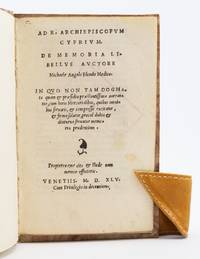
1545ST19432bVenetiis Venice: Giovanni Antonio & Pietro Nicolini da Sabbio 1545. FIRST EDITION. 152 x 97 mm. 6 3 3/4". 20 leaves. <br/> Modern rose and cream-colored marbled paper boards. Verso of title page stamped in red ink: "Duplicate / ex-libris Bernard Zufall." Young "Bibliography of Memory" p. 34. ◆Paper boards lightly soiled negligible foxing to a couple of leaves but a fine copy clean and fresh in a sturdy binding.<br/> <br/> This rare work on the preservation of memory offers advice to those seeking to optimize their cognitive functions providing guidance about the best foods to eat and avoid the best days and times for recollection according to the planetary hours and most interestingly recipes to calm the mind and boost one's memory. This last section includes several formulas for various drams salves and confections that incorporate ingredients such as gingers cinnamon coriander and rosemary. The compact size of this work suggests that it was meant to be portable and consulted frequently; our copy however has obviously been very little used and consequentially is extremely well preserved. Italian physician and polymath Michelangelo Biondo or Blondus 1497-1565 was the author of at least two dozen works on a variety of subjects including art astronomy rhetoric medicine cognition and philosophy. The present copy comes from the library of magician and memory expert Bernard Zufall 1894-1971 known as the "Human Encyclopedia." Zufall amassed the largest known collection of books on mnemonics in excess of 1000 titles which except for duplicates like the present work he donated to Yale University. This appears to be a genuinely rare book: RBH records just one copy at auction selling at Lyon and Turnbull in 2015 for 1000 approximately $1640 all in. Giovanni Antonio & Pietro Nicolini da Sabbio unknown
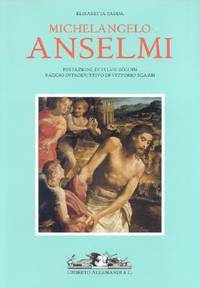
200793384Umberto Allemandi. New. 2007. HARDCOVER. 8842209627 . FREE UPGRADE to Courier/Priority Shipping Upon Request - IN STOCK AND IMMEDIATELY AVAILABLE FOR SHIPMENT - FLAWLESS COPY BRAND NEW PRISTINE NEVER OPENED --HARDCOVER. Text in Italian. 206 pages; 103 black and white and 32 color illustrations. Catalogue Raisonne Catalog Raisonné Complete Works Catalogo Ragionato Catalogo delle Opere L'Opera Completa Raisonnee Umberto Allemandi hardcover
197391191Rizzoli. As New. 1973. Hardcover. FREE UPGRADE to Courier/Priority Shipping Upon Request - IN STOCK AND IMMEDIATELY AVAILABLE FOR SHIPMENT - AS NEW THE TEXT BLOCK IS PRISTINE CLEAN UNMARKED AND IN EXCELLENT CONDITION - - Text in Italian. 116 pages; 144 illustrations including 64 in color. Catalogue Raisonne Catalog Raisonné Complete Works Catalogo Ragionato Catalogo delle Opere L'Opera Completa Raisonnee Rizzoli hardcover
200786923Bruno Alfieri. New. 2007. Hardcover. 8890280409 . FREE UPGRADE to Courier/Priority Shipping Upon Request - IN STOCK AND IMMEDIATELY AVAILABLE FOR SHIPMENT - Flawless copy brand new pristine never opened -- 348 pages; well illustrated. Catalogue Raisonne Catalog Raisonné Complete Works Catalogo Ragionato Catalogo delle Opere L'Opera Completa Raisonnee Bruno Alfieri hardcover
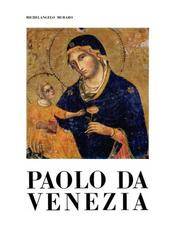
197052953Pennsylvania State University Press / AW Fine Arts Distribution. New. 1970. Hardcover. 0271000988 . FREE UPGRADE to Courier/Priority Shipping Upon Request IN STOCK AND IMMEDIATELY AVAILABLE FOR SHIPMENT - FLAWLESS COPY BRAND NEW PRISTINE NEVER OPENED -- - Corresponds to ASIN: 0271000988. 4to. 186 pp. 273 illustrations and 23 color plates hors texte. With a catalogue raisonné of the 14th century founder of the Venetian School Catalogue Raisonné Catalogue Raisonne Catalog Raisonnee Complete Works Pennsylvania State University Press / AW Fine Arts, Distribution hardcover
1960133246Italy: Nepi Film 1960. Vintage oversize double weight borderless photograph from the 1961 film. A candid on-the-set photograph of director Michelangelo Antonioni cinematographer Gianni Di Venanzo Jeanne Moreau and others working on a balcony shot part of the long party sequence that makes up the last third of the film. <br/><br/>The second film in the trilogy that begins with "L'Avventura" 1960 and ends with "L'Eclisse" 1962. Shot on location in Milan. <br/><br/>Probably no one has ever said it better than Bosley Crowther who reviewed the film for the New York Times in 1961: "Too sensitive and subtle for apt description are Antonioni's pictorial fashionings of a social atmosphere a rarefied intellectual climate a psychologically stultifying milieu-and his haunting evocations within them of individual symbolisms and displays of mental and emotional aberrations. Even boredom is made interesting. There is for instance a sequence in which a sudden downpour turns a listless garden party into a riot of foolish revelry exposing the lack of stimulation before nature takes a flagellating hand. Or there's a shot of the crumpled wife leaning against a glass wall looking out into the rain that tells in a flash of all her ennui desolation and despair."<br/><br/>In a custom museum-quality frame archivally mounted with UV glass. 9 x 12 inches. Near Fine. <br/><br/>Criterion Collection 678. Eureka Masters of Cinema 61. Nepi Film unknown books
196927345Milano Italy: Rizzoli Editore / Classici Dell' Arte Rizzoli. New. 1969. Hardcover Monograph. FREE UPGRADE to Courier/Priority Shipping Upon Request - IN STOCK AND IMMEDIATELY AVAILABLE FOR SHIPMENT - FLAWLESS COPY BRAND NEW PRISTINE NEVER OPENED -- Catalogue Raisonne Catalog Raisonné Complete Works Catalogo Ragionato Catalogo delle Opere L'Opera Completa Raisonnee Rizzoli Editore / Classici Dell' Arte Rizzoli hardcover
2007C93384Umberto Allemandi. As New. 2007. HARDCOVER. 8842209627 . FREE UPGRADE to Courier/Priority Shipping Upon Request - IN STOCK AND IMMEDIATELY AVAILABLE FOR SHIPMENT - FLAWLESS COPY BRAND NEW PRISTINE NEVER OPENED --HARDCOVER. Text in Italian. 206 pages; 103 black and white and 32 color illustrations. Catalogue Raisonne Catalog Raisonné Complete Works Catalogo Ragionato Catalogo delle Opere L'Opera Completa Raisonnee -- with a bonus offer-- - May be EITHER: out of print OOP and extremely rare in this pristine condition; signed by author or contributor; or a first or special edition; inquire for details . Umberto Allemandi hardcover
02-02031782. Woodcut print after Michelangelo. One line block brown on tan paper. 385 x 250 mm. Nagler 14. Le Blanc 14. Kennedy 167. 1782. unknown
Bulino misure: mm 282 x 375, foglio: mm 390 x 530 Incisore francese attivo soprattutto in Italia come incisore di traduzione. Si trasferì a Roma a partire dal 1540 e vi lavorò fino al 1562. Nelle sue prime opere è ben visibile l'influenza di Agostino Veneziano e successivamente di Giorgio Ghisi. Cercò di migliorare la tecnica incisoria mediante un taglio più largo ma non superò mai i suoi maestri. In questa stampa l'artista riprende un disegno di Michelangelo oggi a Londra, Windsor Castle, Royal Library. Tra il 1532 e il 1533 Michelangelo creò una serie di disegni mitologici, di altissima qualità, per il giovane nobile Tommaso de Cavalieri come segno della loro profonda amicizia. Questi disegni a gessetto acquisirono grande fama e subito dopo la loro esecuzione furono molto ambiti dai collezionisti, perciò copiati da diversi incisori. La critica ha associato questo soggetto al Ratto di Ganimede: una sorta di dittico raffigurante le due facce dell’amore. Da un lato l’elevazione dell’anima, naturalmente rappresentata da Ganimede rapito, dall’altro l’eterno tormento, rappresentato da Tizio il cui fegato è incessantemente divorato. Si è inoltre ritenuto che dietro ai due disegni ci possa essere un riferimento autobiografico. Il paesaggio è caratterizzato sullo sfondo da Templi in rovina mentre in prossimità della scena una piccola cascata e l'acqua di un torrente circondano la roccia. Il tratto netto e sottile crea un'atmosfera grigio-argentea. In basso a sinistra "MICH.A.B./INVENT" e a destra l'excudit di Salamanca, al centro oltre l'immagine inciso il titolo. Esemplare nel I/IV stato, prima della comparsa dell'indirizzo di De Rossi e della data "1649" sotto la parola "LACERATUS". Impressione eccellente su carta vergellata con filigrana "losanga entro cerchio sormontato da stella a sei punte" (simile a Woodward, 288). Lievi tracce d'uso e minimi difetti. Un altro esemplare è conservato presso la Raccolta delle Stampe Achille Bertarelli Bibliografia: Bartsch XV.259.39; Alessia Alberti, Alessandro Rovetta and Claudio Salsi (eds.), 'D'après Michelangelo: La fortuna dei disegni per gli amici nelle arti del Cinquecento', Venice, Marsilio, 2015, vol. 2, p. 131, no. 228 catalogo della mostra tenutasi a Milano presso il Castello Sforzesco, 30 settembre 2015-10 gennaio 2016.
1973C91191Rizzoli. As New. 1973. Hardcover. FREE UPGRADE to Courier/Priority Shipping Upon Request - IN STOCK AND IMMEDIATELY AVAILABLE FOR SHIPMENT - AS NEW THE TEXT BLOCK IS PRISTINE CLEAN UNMARKED AND IN EXCELLENT CONDITION - - Text in Italian. 116 pages; 144 illustrations including 64 in color. Catalogue Raisonne Catalog Raisonné Complete Works Catalogo Ragionato Catalogo delle Opere L'Opera Completa Raisonnee -- with a bonus offer-- - May be EITHER: out of print OOP and extremely rare in this pristine condition; signed by author or contributor; or a first or special edition; inquire for details . Rizzoli hardcover
2007C86923Bruno Alfieri. As New. 2007. Hardcover. 8890280409 . FREE UPGRADE to Courier/Priority Shipping Upon Request - IN STOCK AND IMMEDIATELY AVAILABLE FOR SHIPMENT - Flawless copy brand new pristine never opened -- 348 pages; well illustrated. Catalogue Raisonne Catalog Raisonné Complete Works Catalogo Ragionato Catalogo delle Opere L'Opera Completa Raisonnee -- with a bonus offer-- - May be EITHER: out of print OOP and extremely rare in this pristine condition; signed by author or contributor; or a first or special edition; inquire for details . Bruno Alfieri hardcover
1970C52953Pennsylvania State University Press / AW Fine Arts Distribution. As New. 1970. Hardcover. 0271000988 . FREE UPGRADE to Courier/Priority Shipping Upon Request IN STOCK AND IMMEDIATELY AVAILABLE FOR SHIPMENT - FLAWLESS COPY BRAND NEW PRISTINE NEVER OPENED -- - Corresponds to ASIN: 0271000988. 4to. 186 pp. 273 illustrations and 23 color plates hors texte. With a catalogue raisonné of the 14th century founder of the Venetian School Catalogue Raisonné Catalogue Raisonne Catalog Raisonnee Complete Works -- with a bonus offer-- - May be EITHER: out of print OOP and extremely rare in this pristine condition; signed by author or contributor; or a first or special edition; inquire for details . Pennsylvania State University Press / AW Fine Arts, Distribution hardcover
170078351700 In Roma: G. G. Komarek, 1700. In-4: 19 x 26 cm, 1 f. de titre grav., 8 ff. n. chiff. de pièces lim. y c. titre, 82 pp. de textes de légendes, 1 f. n. chiff. dindex des auteurs, 200 pl. grav. chiff. 1 à 200. Édition originale de cet admirable recueil de gemmes antiques riche de 200 figures gravées par Pietro Santi Bartoli, accompagnées de leur légende explicative. Reliure de lépoque en veau blond aux armes de Jean-Baptiste Colbert de Torcy. Dos à cinq nerfs avec pièce de titre en maroquin rouge et caissons ornés du chiffre du marquis de Trocy. Tranches rouges. Jean-Baptiste Colbert de Torcy (1665-1746), un des plus remarquables diplomates du règne de Louis XIV, était le neveu du grand Colbert. Dos entièrement restauré en veau orangé avec la pièce de titre et les caissons chiffrés incrustés. Volume parfaitement propre et de fort belle présentation. Banquier, consule, garde des archives, mais aussi archéologue et érudit, «auteur de publications estimées», Michel-Ange de la Chausse (1655-1724) fut une figure omniprésente de la vie des établissements français de Rome. (Brunel, «Michel-Ange de la Chausse», PEFR, 1981, p. 723-724).
02-02021783. Woodcut print after Michelangelo. Three color blocks: tan medium brown dark brown. 198 x 154 mm. Initialed and dated. 1783. unknown
1969C27345Milano Italy: Rizzoli Editore / Classici Dell' Arte Rizzoli. As New. 1969. Hardcover Monograph. FREE UPGRADE to Courier/Priority Shipping Upon Request - IN STOCK AND IMMEDIATELY AVAILABLE FOR SHIPMENT - FLAWLESS COPY BRAND NEW PRISTINE NEVER OPENED -- Catalogue Raisonne Catalog Raisonné Complete Works Catalogo Ragionato Catalogo delle Opere L'Opera Completa Raisonnee -- with a bonus offer-- - May be EITHER: out of print OOP and extremely rare in this pristine condition; signed by author or contributor; or a first or special edition; inquire for details . Rizzoli Editore / Classici Dell' Arte Rizzoli hardcover
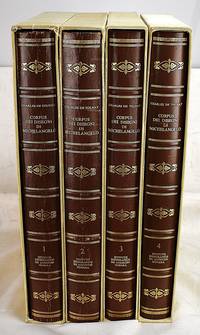
2110250025Novara : Istituto geografico De Agostini 1975-01-01. Hardcover. Very Good. 4 volume set. Folio 45 x 33 cm. Near fine. Hardcover in slip case. Good binding and cover. Clean unmarked pages. Vol.1 : Disegni degli esordi e della gioventá fino al 1520 circa.--V.2 : Disegni in rapporto con la Cappella Medicea e altri studi fino al 1534 circa.--V.3 : Disegni del periodo del "Giudizio Universale" 1534-1541 : fino alla morte.--V.4 : Disegni architettonici. <br> This is an oversized or heavy book which requires additional postage for international delivery outside the US. Novara : Istituto geografico De Agostini hardcover
2010C91398Nabu Press / Library. As New. 2010. Paperback. 1142564452 . FREE UPGRADE to Courier/Priority Shipping Upon Request - IN STOCK AND IMMEDIATELY AVAILABLE FOR SHIPMENT - Flawless copy brand new pristine never opened -- Corresponds to ISBN: 1142564452 and ASIN: B002IIEKGM. Text in French. 418 pages. Catalogue Raisonne Catalog Raisonné Complete Works La Vie et L'uvre Oeuvre Raisonnee -- with a bonus offer-- - May be EITHER: out of print OOP and extremely rare in this pristine condition; signed by author or contributor; or a first or special edition; inquire for details . Nabu Press / Library paperback
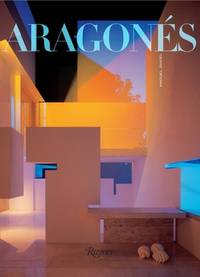
2013105443Rizzoli International Publications. New. 2013. Hardcover. 0847839877 . FREE UPGRADE to Courier/Priority Shipping Upon Request - IN STOCK AND IMMEDIATELY AVAILABLE FOR SHIPMENT - Flawless copy brand new pristine never opened -- Text in Spanish and English. 430 pages; many illustrations most in English. -- with a bonus offer-- . Rizzoli International Publications hardcover