8 977 résultats
Ritratto di Massimiliano II Emanuele di Baviera, firmato da Nicolò Billy “il vecchio”. L’opera appartiene ad una rarissima serie di incisioni di personaggi illustri, probabilmente mai pubblicata come raccolta. Non è noto sapere il numero delle incisioni che compongono la raccolta; sicuramente molto più delle 8 tavole - tra l’altro, erroneamente attribuite a Nicolò Billy “il giovane” - nel catalogo dell’Istituto d'Arte "Duccio di Buoninsegna" di Siena, che apparentemente possiede la collezione più grande di questi bellissimi ritratti. Solo uno dei ritratti è tra gli 11 in nostro possesso. Pertanto, il numero delle lastre conosciute sale, quantomeno, a 18. Nicolò o Nicola Billy “il vecchio” fu incisore, calcografo e mercante di stampe, occasionalmente anche disegnatore. Di origine francese, legato a Giacomo (Jacques Belly) e Vincenzo Billy, a lui affini per attività, fu attivo a Roma dalla fine del Seicento alla prima metà del Settecento. Apparentemente il primo della dinastia; poco chiari i repertori tanto sul genere e sugli estremi cronologici della sua attività, quanto sui rapporti che lo legarono ai figli Antonio e Nicola. Quale "intagliatore e mercante di stampe" sottoscrisse "vicino all'Orologgio della Chiesa Nuova", "a San Salvatore di Lavoro" e "vicino a Pasquino". Quale incisore lavorò per i più abili mercanti di stampe romani, da Giovanni Marco Paluzzi a Vincenzo Billy "alla Chiesa Nuova", dal Komarek ai molti membri della calcografia De Rossi "alla Pace": vasta fu la produzione incisoria, talora dai repertori ignorata o talora (tranne le generiche assegnazioni del Gori Gandellini, 1771, che gli dà come collaboratore il figlio Antonio) confusa con quella del figlio Nicola, anche per l'identità di firma. Il carattere più artigianale che artistico, la resa diseguale, l'incisione a tratti spesso rozzi e sbrigativi, può far attribuire al Billy un gruppo di stampe: soggetti religiosi e ritratti in specie. Come editore ristampò molte delle opere di Pietro Testa. Acquaforte e bulino, 1685, firmata in lastra in basso. Magnifica prova, ricca di toni, impressa su carta vergata coeva, con margini, in perfetto stato di conservazione. Molto rara. Bibliografia Fabia Borroni, BILLY, Nicola, il Vecchio in “Dizionario Biografico degli Italiani” - Volume 10 (1968); Ch. Le Blanc, Manuel de l'amateur d'estampes, I, Paris 1854, p. 340, con un elenco di 47 pezzi ascrivibili ai due Nicola Billy. Portrait of Maximilian II Emanuel, Elector of Bavaria, signed by Nicolò Billy "the elder". The work belongs to a very rare series of engravings of famous people, probably never published as a collection. It is not known how many engravings compose the collection; certainly, far more than the 8 plates -among other things, erroneously attributed to Nicolò Billy "the younger" - in the catalog of the "Duccio di Buoninsegna" Art Institute in Siena, which apparently own the largest collection of these beautiful portraits. Only one of the portraits is among the 11 in our possession. Therefore, the number of known plates rises, at the very least, to 18. Nicolò or Nicola Billy “the elder” was an engraver, publisher and print dealer, occasionally also a draughtsman. Of French origin, related to Giacomo (Jacques Belly) and Vincenzo Billy, who were related to him in activity, he was active in Rome from the late seventeenth Century to the first half of the eighteenth Century. Apparently the first of the dynasty; unclear repertoires as much on the genre and chronological extremes of his activity as on the relations that bound him to his sons Antonio and Nicola. As an "engraver and merchant of prints," he subscribed near the “Orologgio della Chiesa Nuova”, “in San Salvatore di Lavoro” and “vicino a Pasquino”. As an engraver he worked for the most skilled Roman print dealers, from Giovanni Marco Paluzzi to Vincenzo Billy “alla Chiesa Nuova”, from Komarek to many members of the De Rossi Family “alla Pace”: vast was his engraving production, sometimes ignored by the repertories or sometimes (except for the generic assignments of Gori Gandellini, 1771, which gives him as collaborator his son Antonio) confused with that of his son Nicola, also because of the identity of signature. The more artisanal than artistic character, the uneven rendering, the engraving with often crude and hasty strokes, may attribute a group of prints to Billy: religious subjects and portraits in particular. As a publisher he reprinted many of Pietro Testa's works. Etching and engraving, 1685, signed in plate at the bottom. Magnificent proof, rich in tone, impressed on contemporary laid paper, with margins, in perfect condition. Very rare. Bibliografia Fabia Borroni, BILLY, Nicola, il Vecchio in “Dizionario Biografico degli Italiani” - Volume 10 (1968); Ch. Le Blanc, Manuel de l'amateur d'estampes, I, Paris 1854, p. 340, con un elenco di 47 pezzi ascrivibili ai due Nicola Billy.
Incisione tratta dal celebre Pictorum aliquot celeberium praecipue Germaniae Inferioris, magnifica raccolta di ritratti edita da Hendric Hondius a Den Haag, nel 1610 circa. L’opera consta di 69 ritratti dei principali esponenti della pittura fiamminga, olandese e tedesca. Le incisioni al bulino sono opera principalmente di Simon Frisius, anche se alcune sono firmate dallo stesso Hondius ed altre da Andries Stock e Robert de Baudous. Bellissima prova, impressa su carta vergata coeva, rifilata al rame, applicata, su un lato, su un antico supporto di collezione, in ottimo stato di conservazione. Engraving, from the famous Pictorum aliquot celeberium praecipue Germanie Inferioris, magnificent collection of portraits printed by Henricl Hondius in Den Haag, around 1610. The work is made up of 69 portraits of the most important Flemish and German painters. The engravings have been mainly realized by Simon Frisius, even though some of them have been signed by Hondius himself and others by Andries Stock and Robert Baudous. Magnificent work, printed on contemporary laid paper, trimmed to platemark, laid on old collection paper, in excellent condition. Hollstein 52
Acquaforte e bulino, circa 1625. Magnifica prova, impressa su carta vergata coeva applicata su antico supporto di collezione, con piccoli margini, tracce di colla agli angoli, per il resto in eccellente stato di conservazione. Celebre per i suoi ritratti di tutta l’aristocrazia romana degli inizi del XVII secolo, il Leoni, romano di nascita, deve il suo soprannome alla città natale del padre, anch’egli pittore di ritratti. Etching and engraving, circa 1625. Magnific impression on contemporary paper, laid down on antique paper, with small margins, in good condition. Bartsch 8
Acquaforte e bulino, circa 1625. Magnifica prova, impressa su carta vergata coeva applicata su antico supporto di collezione, con piccoli margini, tracce di colla agli angoli, per il resto in eccellente stato di conservazione. Celebre per i suoi ritratti di tutta l’aristocrazia romana degli inizi del XVII secolo, il Leoni, romano di nascita, deve il suo soprannome alla città natale del padre, anch’egli pittore di ritratti. Etching and engraving, circa 1625. Magnific impression on contemporary paper, laid down on antique paper, with small margins, in good condition. Famous for his portraits of all the Roman aristocracy in the early seventeenth century, Ottavio Leoni, Roman by birth, owes its nickname to the birthplace of his father, also a painter of portraits. Bartsch 14
Acquaforte e bulino, 1625, firmato e datato in lastra in basso. Magnifica prova, ricca di toni, impressa su carta vergata coeva priva di filigrana, rifilata al rame, in eccellente stato di conservazione. Celebre per i suoi ritratti di tutta l’aristocrazia romana degli inizi del XVII secolo, il Leoni, romano di nascita, deve il suo soprannome alla città natale del padre, anch’egli pittore di ritratti, effigiato in questo lavoro. Etching and engraving, circa 1625. Magnific impression on contemporary paper, with small margins, in good condition. Famous for his portraits of all the Roman aristocracy in the early seventeenth century, Ottavio Leoni, Roman by birth, owes its nickname to the birthplace of his father, also a painter of portraits. Bartsch 28; Petrucci, Il Caravaggio acquafortista, pp. 35/46.
Acquaforte e bulino, circa 1625. Magnifica prova, impressa su carta vergata coeva applicata su antico supporto di collezione, con piccoli margini, tracce di colla agli angoli, per il resto in eccellente stato di conservazione. Celebre per i suoi ritratti di tutta l’aristocrazia romana degli inizi del XVII secolo, il Leoni, romano di nascita, deve il suo soprannome alla città natale del padre, anch’egli pittore di ritratti. Etching and engraving, circa 1625. Magnific impression on contemporary paper, laid down on antique paper, with small margins, in good condition. Famous for his portraits of all the Roman aristocracy in the early seventeenth century, Ottavio Leoni, Roman by birth, owes its nickname to the birthplace of his father, also a painter of portraits. Bartsch 11
Bulino, 1560, privo di firma e indicazioni editoriali. Magnifica prova, ricca di toni, impressa su carta vergata coeva, rifilata al rame, in ottimo stato di conservazione. Ritratto di Caio Giulio Cesare inciso da Enea Vico per illustrare l’opera Ex libris XXIII commentariorum in vetera imperatorum Romanorum numismata Aeneae Vici liber primus pubblicata a Venezia dalla tipografia di Aldo Manuzio nel 1560. Il libro, illustrato scritto e inciso da Enea Vico in latino, contiene un frontespizio inciso, dieci tavole, la prima con questo ritratto del busto di Giulio Cesare di profilo, otto tavole numerate con medaglie di Giulio Cesare. Timbro di collezione di Frederick Augustus II of Saxony (Lugt 971). Bibliografia Spike, John, ed. The Illustrated Bartsch, 30. Italian masters of the sixteenth century: Enea Vico. New York: Abaris Books, 1985. No. 408; Miller, E., 16th-century Italian ornament prints in the Victoria and Albert Museum, London, 1999, p. 135 (cat. 41a). Engraving, 1560, lacking signature and printing details. Magnificent proof, richly toned, impressed on contemporary laid paper, trimmed to copperplate, in excellent condition. Portrait of Julius Caesar engraved by Ena Vico to illustrate the work Ex libris XXIII commentariorum in vetera imperatorum Romanorum numismata Aeneae Vici liber primus published in Venice by Aldo Manuzio's printing house in 1560. The book, illustrated written and engraved by Aeneas Vici in Latin, contains an engraved frontispiece, ten plates, the first with this portrait of Julius Caesar's bust in profile, eight numbered plates with medals of Julius Caesar. Collection mark of Frederick Augustus II of Saxony (Lugt 971). Bibliografia Spike, John, ed. The Illustrated Bartsch, 30. Italian masters of the sixteenth century: Enea Vico. New York: Abaris Books, 1985. No. 408; Miller, E., 16th-century Italian ornament prints in the Victoria and Albert Museum, London, 1999, p. 135 (cat. 41a).
Ritratto di Carlo II d'Austria. Bulino, 1568 circa, firmato in lastra in basso al centro. Magnifica prova, ricca di toni, impressa su carta vergata coeva, rifilata al rame, piccolo restauro all'angolo superiore destro, per il resto in ottimo stato di conservazione. L'opera appartiene alla rara raccolta Ritratti di alcuni prencipi, et huomini illustri o Imagines quorundam principum et illustrium virorum pubblicata a Venezia da Bolognino Zaltieri nel 1568. Carlo II Francesco d'Austria (Vienna, 3 giugno 1540 – Graz, 10 luglio 1590) è stato arciduca d'Austria, membro della dinastia degli Asburgo e ha governato sull'Austria Interiore dal 1564 alla morte. Timbro di collezione di Friedrich August II de Saxe (Lugt 971) all'angolo inferiore destro. Portrait of Charles, Margrave of Burgau, half-length in profile to the left, wearing armour and sash; in lettered oval within a decorative setting wth scrolls, angels and hybrid figures. Engraving, circa 1568, lettered around the oval with title and with production detail "Dmco. Zenoi f. - Cum privilegio". A fine impression, printed on contemporary laid paper, trimmed to the platemark, a small repair at the upper left corners, otherwise very good. From the Ritratti di alcuni prencipi, et huomini illustri also titled Imagines quorundam principum et illustrium virorum published by Bolognino Zaltieri in Venice in 1568. Collector's mark - at the lower right corner - of Friedrich August II de Saxe (Lugt 971). Rare.
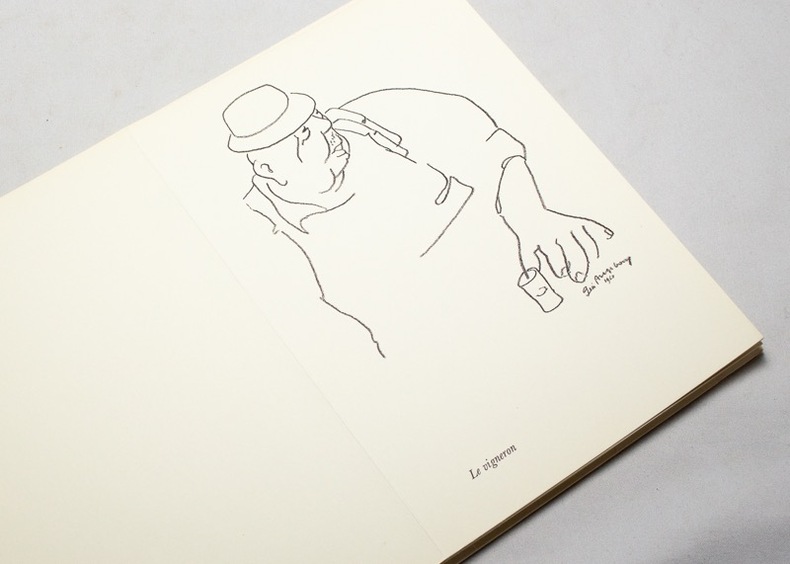
196811477Lausanne, éditions EDIP, 1968. In-4 à l'italienne en [12] feuillets sous chemise à un rabats sur lequel se trouve l'achevé d'imprimer. Fac-similé d'une lettre de Simenon au second plat, premier plat orné d'un fac-similé de Géa Augsbourg.
Two volumes. Fifty remarkable plates, after Petitot's miniature, portraits engraved by Luigi Ceroni, illustrating biographies of important figures from the era of King Louis XIV. Large 4to. 300 mm. All edges gold. Magnificently bound in full morocco leather, decorated in gold gilt with the arms of Louis XIV. Though rubbed in places, this sumptuous binding really reflects this highest style of the art in the 17th century. The plates and text are remarkably clean and beautifully presented. Jean Petitot (1607-1691) was a court painter to Louis XIV who specialized in enamel portrait miniatures. It is especially nice that a self-portrait is included in this impressive set. First edition. "Il a ete fait un premier tirage de 100 exemplaires (avec épreuves d'artistes) . sur papier de Chine, avant la lettre et . sur papier blanc, avant la lettre"--Vicaire. Manuel de l'Amateur de livres. A wonderful production. **PRICE JUST REDUCED! W139
713469,8 x 7,9 cm.
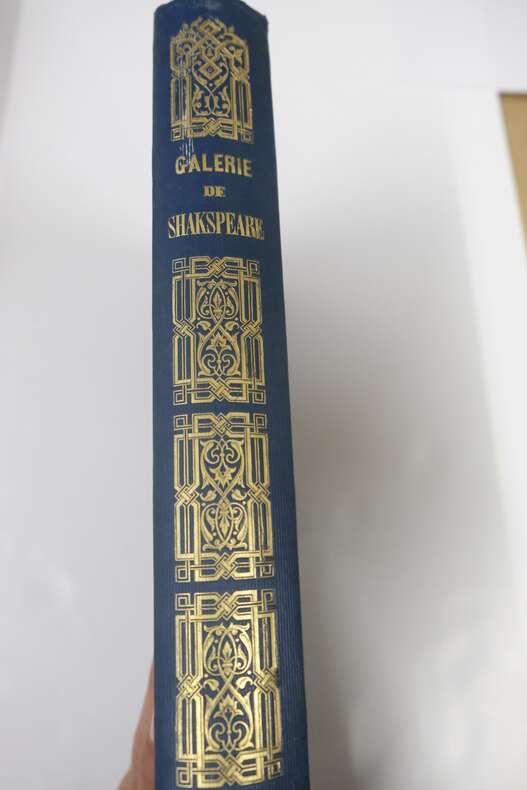
1849lit1413mgrand in 8 (26x17cm), relié, 126pp. Edition originale illustrée de 80 gravures hors texte. Chaque pièce possède une gravure sur acier et une sur bois. Les noms sur les gravures sont Geofffroy, Verdeil, Rouargue, Harvey, mais la plupart des aciers très beaux et très fins, à l'imagination souvent délirante, ne sont pas signés. Cartonnage d'éditeur Bleu marine en pleine percaline aux motifs dorés , dos très orné d'un entrelac géométrique et d'un feuillage , sur les plats un grand encadrement romantique à froid et deux motifs différents, un représentant Falstaff et l'autre une composition avec une lyre, une médaille… Un feuillet très légèrement ressorti. Edtions Baudry
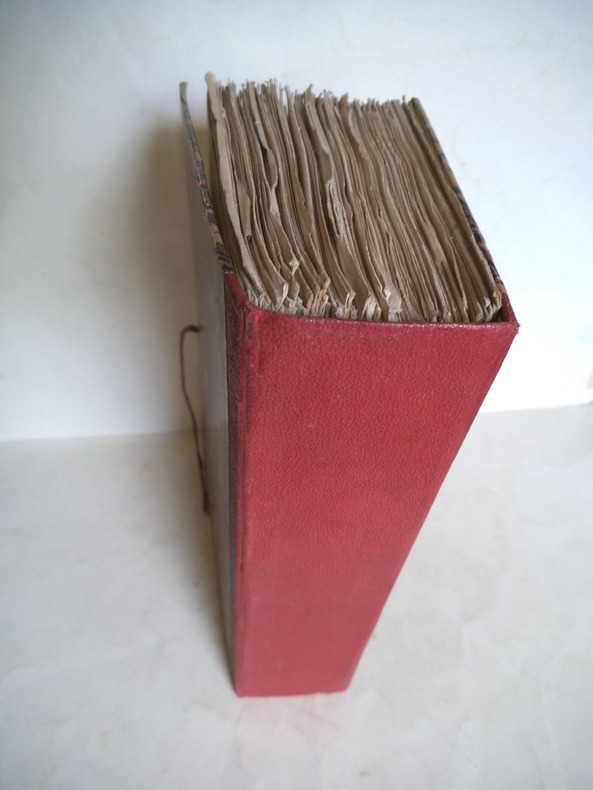
5933extraits des attiques du Palais de Versailles et gravées sur acier.Collection spécialement destinée à illustrer les mémoires de Saint Simon.Elle est imprimée dans le même format que les éditions anciennes et nouvelles de ces mémoires et renferme les portraits des personnages cités dans la table alphabétique qui termine le 20ème volume de l’édition que Hachette vient de publier.Format in 8 sous serpente,dans un portefeuille demi-toile rouge,plats cartonné, fermoir à rubans.Bien complet des 180 portraits et de la table. Paris Bureau des galeries historiques de Versailles. Des rousseurs à certaines planches, principalement en marges,ou sur les serpentes.
Format (aufgewalztes Chinapapier): 270 x 205 mm. (Bildformat: 180 x 155 mm). Blattgröße: 350 x 270 mm. *Elisabeth Amalie Eugenie, Herzogin in Bayern (auch Sisi oder Sissi) war eine Prinzessin des Hauses Wittelsbach und durch ihre Heirat mit Franz Joseph I. ab 1854 Kaiserin von Österreich. - Vorliegend eines der frühen Mädchenporträts im Alter von ca. 13 bis 14 Jahren in München, noch bevor der Österreichische Kronprinz Franz Joseph sie kennenlernte. Das vorliegende Bildnis entstand vermutlich nach einer zeitgenössischen Photographie. Es existieren von dieser Ansicht und Pose (auf dem Stuhl in kariertem Kleid) mehrere lithographische Varianten nach dem gleichen Vorbild. Der bayerische Maler und Lithograph Friedrich Hohe (1802-1870) zeigt das Gesicht der späteren Kaiserin von Österreich hier in noch ganz mädchenhaften Zügen. Die anderen Varianten in gleicher Pose tragen nicht den Lithographennamen von Friedrich Hohe und dort ist das Gesicht der Elisabeth reifer und mehr als junge Frau dargestellt. Die vorliegende frühe Variante (Bildnachweis: ÖNB PORT_00052040_01) scheint sehr selten, Exemplar des Hauses Wittelsbach (Schloß Tegernsee). - Vollrandig, sauber und sehr gut erhalten. Graphiken de
Format (Platte): 33,3 x 25,5 cm. (Blattgröße: 46,5 x 34 cm). *Graf Ewald Friedrich von Hertzberg (1725-1795 in Berlin) war ein preußischer Staatsmann. Er war Kabinettsminister unter Friedrich II und als solcher maßgeblich an den Vorverhandlungen zum Warschauer Vertrag von 1773 beteiligt, in dem die Übereignung Pommerellens an Preußen und der endgültige Verzicht Polens auf das Gebiet von Draheim festgeschrieben wurden. Er gilt als Vertreter der Aufklärung. - Hochwertiges Bildnis des Ignaz Klauber, des berühmtesten Mitgliedes der Kupferstecherdynastie Klauber in Augsburg. Schüler von Wille in Paris, sodann 1795 Hofkupferstecher des Trierer Kurfürsten Clemens Wenzelslaus und schließlich 1796 Anstellung in St. Petersburg, wo er bis zum Lebensende blieb. Vorliegend ein schöner gratiger Abzug in tadelloser Erhaltung. Graphiken de
Format (Platte): 370 x 290 mm. Blattgröße: 440 x 330 mm. *Nagler 2 (für den Stecher Morace). - Christian Friedrich Daniel Schubart war ein schwäbischer Dichter des 18. Jahrhunderts. Historische Bedeutung erlangte er insbesondere durch seine scharf formulierten sozialkritischen Schriften, mit denen er die absolutistische Herrschaft und deren Dekadenz im damaligen Herzogtum Württemberg öffentlich anprangerte. - Der Stecher Ernest oder Ernst Morace wurde 1774 in die Hohe Karlsschule aufgenommen; als Herkunftsort wurde Neapel angegeben. Er war einer der Schüler Johann Gotthard von Müllers und wurde später Hofkupferstecher. - Gratiger Abzug in sehr guter Erhaltung, Ränder etwas gebräunt. Graphiken de
19813116362Fine in Fine dust jacket. 1981. First Edition; First Printing. Softcover. First trade edition after a signed limited of 150 copies bound in leather in 1980 INSCRIBED in 1983 by both Isherwood and Bachardy on title page. Fine in oversize white paperback with dark blue titles in clear acetate protective wrapper. 85pp. 9 1/4" X 12" Features 32 b&w drawings by Bachardy. 3000 copies printed. ; 9 1/4" X 12"; 85 pages . paperback
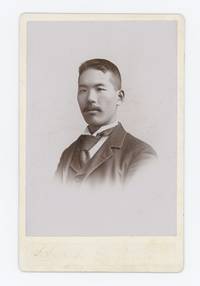
189012This 6 1/2" x 4 1/4" albumen cabinet card of a male Japanese sitter was produced by Schumacher Portraits in Los Angeles California c. 1890. There are very lite scattered surface abrasions otherwise in fine condition. Embossment on recto 'Schumacher 107 North Spring St. Los Angeles Cal.' Schumacher logo embossed on recto. Schumacher Portraits label with address printed on verso.<br /><br /><b> Price includes discount </b>
1887131978Paris, Dentu & Cie 1887 In-4 26 x 15 cm. Reliure demi-maroquin rouge signée Petitot, dos à nerfs, tête dorée, couvertures et dos conservés, XXII-361 pp., orné de 12 portraits hors texte selon les originaux de femmes du XVIIIe siècle dont 2 en couleurs, avec notices biographiques sur celles-ci, table alphabétique des noms d’artistes, table des gravures. Bel exemplaire avec menus frottements.
16825986La Haye, Arnout Leers, 1682. In-12 de [48]-600-[14]p., plein veau marron, dos à nerfs orné de filets dorés, coiffes et coins frottés, ex-libris moderne d'un collectionneur genevois.
19311030DG1931 Kohle und Kreide auf festem Papier, unten links signiert und datiert. 63 x 46 cm.
19291143DG1929. Farbiges Aquarell auf Karton. Unten in der Mitte monogrammiert und datiert. 49 x 31 cm.
0138250 En feuilles
1955013858Paris Gallimard NRF 1955 In-8 Broché Signé par l'auteur