8 977 résultats
Format (Platte): 368 x 265 mm. Blattgröße: 425 x 310 mm. *Nagler 48, Probeabzug vor der Schrift. - Maria Thaddäus von Trautmannsdorff, geb. 1761 in Graz, gest. 1819 in Wien, war Bischof von Königgrätz und danach Erzbischof von Olmütz sowie 1816 Kardinal. - Der Kupferstecher Carl Pfeiffer (1769-1829) war ein in Frankfurt geborener Kupferstecher, tätig in Wien, er fertigte eine große Zahl von Blättern, hauptsächlich in der beliebten englischen Punktiermanier. "Sehr zahlreich sind seine Bildnisse, die teilweise in grossem Formate dargestellt und sehr schätzbar sind ... Von einigen gibt es Abdrücke ohne Schrift und solche mit Nadelunterschrift (Nagler, Bd. 12, S. 359). - Sauber und sehr gut erhalten. Graphiken de
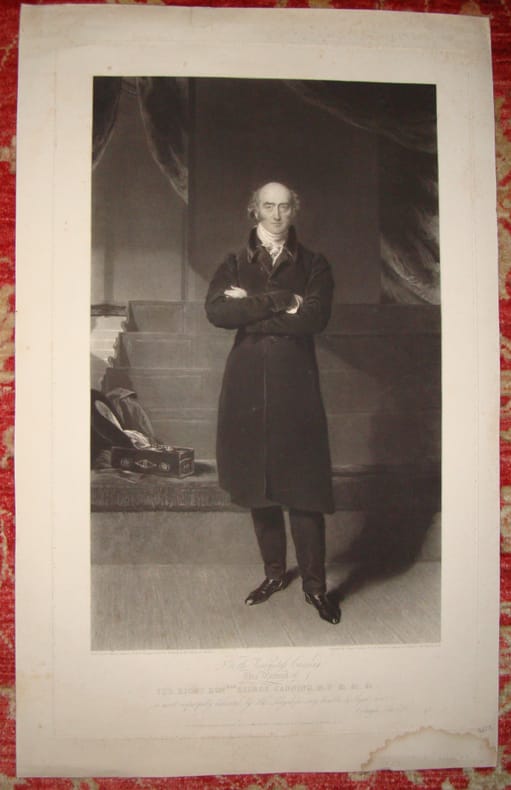
182914652Très belle planche gravée en manière noire par Charles Turner d'après le tableau de Thomas Lawrence. en feuille Très bon Londres Colnaghi 1829 63 x 45 cm
Incisione tratta dalla celebre raccolta Icones principum, virorum, doctorum, pictorum, chalcographorum, di Anton van Dyck, edita per la prima volta ad Anversa verso il 1640. Opera celebre ed importante, vero monumento dell’arte incisoria fiamminga del sec. XVIII, contiene le biografie ed i ritratti degli uomini illustri che Van Dyck aveva conosciuto e con i quali aveva avuto importanti rapporti. L’artista ne eseguì le effigi in numerosi dipinti e disegni che poi decise di pubblicare, affidandone la trasposizione calcografica ai migliori incisori del suo tempo, come Bolswert, Pontius, Vorsterman, de Jode, Hollar, molti dei quali aveva avuto come condiscepoli nell’atelier di Rubens. "Sir Anthony Van Dyck stands out as the solitary great etcher of the school. Portrait etching had scarcely had an existence before his time, and in his work it suddenly appears at the highest point ever reached in the art" (Hind, p. 165). "The plan of this publication took shape after Van Dyck returned from Italy (1626) and before he went to England (1632). He made careful preparatory drawings in chalk and brush for the publication. He directed and revised the work of the engravers, the best of the Rubens circle; he collaborated with his etching needle in some of the plates and himself etched the most beautiful set, mainly portraits of artists. One of the most brilliant in human characterization is the portrait of Peter Brueghel the Younger, son of the great Peasant Brueghel. It is remarkable that the etching appeared in this sketchy form in the book, proving that the master regarded it as finished. All interest is focussed on the wonderful had. The first edition was published in Antwerp in 1635-1636. Yet it was not complete, and the title-page did not appear before the Gillis Hendricx edition of 1645, engraved by Jacob Neels" (Benesch, Artistic and Intellectual Trends, p. 32.) Hofer, Baroque Book Illustrations 132. Acquaforte con ritocchi al bulino, stampata su carta vergata coeva, filigrana del “giullare”, con margini, in ottimo stato di conservazione. Etching and engraving, circa 1645, signed on plate at lower edge. A fine impression, printed on contemporary laid paper, with margins, very good condition. From Icones principum, virorum, doctorum, pictorum, chalcographorum by Anton van Dyck, printed for the first time in Antwerp, 1645. A famous and important work, a real monument of the Flemish engraving art of the XVIII century, containing the biographies and portraits of the famous artists Van Dyck had met and with whom he had worked. Following the success of his portrait paintings and in the tradition of Italian and Flemish portrait series, Van Dyck decided to organise a print publication containing portraits of the most prominent men during his lifetime, divided into three categories: princes, politicians and soldiers (16), statesmen and scholars (12), artists and art connoisseurs (52). The initial idea could have been that Van Dyck would etch the faces (a process possibly learnt from Vorsterman) while others would finish the plates in engraving. Designs were needed for the plates and several drawings and oil sketches (grisailles, sometimes in different versions) have survived. Van Dyck only etched 17 plates himself, while he commissioned others to complete the set, overseen by Lucas Vorsterman I (especially after Van Dyck settled in England in the Spring of 1632). Although this project was started by Van Dyck around 1630, he never saw it completed. The Antwerp publisher Maarten van den Enden may have been involved from the start as eighty early impressions bear Van den Enden's address. They are engraved by Paulus Pontius (30 plates), Lucas Vorsterman I (22), Pieter de Jode II (12), Schelte a Bolswert (7), Robert van Voerst (4), Willem Hondius (2), Willem Jacobsz Delff (1), Cornelis Galle (1), and Nicolaes Lauwers (1). It is known that Van den Enden was in debt to Gillis Hendricx around 1644, the Antwerp publisher who must have obtained Van den Enden's plates which he published in 1645 in the first edition of these plates (containing between 100 and 104 portrait plates). Hendricx continued to publish these plates until his death in 1677 when they were auctioned off by the St Luke guild (keeping the Iconography plates together). It is not clear who bought these plates but they re-appeared around 1720 when they were published by Hendrick and Cornelis Verdussen in Antwerp.
Incisione tratta dalla celebre raccolta Icones principum, virorum, doctorum, pictorum, chalcographorum, di Anton van Dyck, edita per la prima volta ad Anversa verso il 1640. Opera celebre ed importante, vero monumento dell’arte incisoria fiamminga del sec. XVIII, contiene le biografie ed i ritratti degli uomini illustri che Van Dyck aveva conosciuto e con i quali aveva avuto importanti rapporti. L’artista ne eseguì le effigi in numerosi dipinti e disegni che poi decise di pubblicare, affidandone la trasposizione calcografica ai migliori incisori del suo tempo, come Bolswert, Pontius, Vorsterman, de Jode, Hollar, molti dei quali aveva avuto come condiscepoli nell’atelier di Rubens. "Sir Anthony Van Dyck stands out as the solitary great etcher of the school. Portrait etching had scarcely had an existence before his time, and in his work it suddenly appears at the highest point ever reached in the art" (Hind, p. 165). "The plan of this publication took shape after Van Dyck returned from Italy (1626) and before he went to England (1632). He made careful preparatory drawings in chalk and brush for the publication. He directed and revised the work of the engravers, the best of the Rubens circle; he collaborated with his etching needle in some of the plates and himself etched the most beautiful set, mainly portraits of artists. One of the most brilliant in human characterization is the portrait of Peter Brueghel the Younger, son of the great Peasant Brueghel. It is remarkable that the etching appeared in this sketchy form in the book, proving that the master regarded it as finished. All interest is focussed on the wonderful had. The first edition was published in Antwerp in 1635-1636. Yet it was not complete, and the title-page did not appear before the Gillis Hendricx edition of 1645, engraved by Jacob Neels" (Benesch, Artistic and Intellectual Trends, p. 32.) Hofer, Baroque Book Illustrations 132. Acquaforte con ritocchi al bulino, stampata su carta vergata coeva, filigrana del “giullare”, con margini, in ottimo stato di conservazione. Etchings with engraving, printed on contemporary laid paper, “jester” watermark with margins, in excellent condition.From the famous Icones principium, virorum, doctorum, pictorum, chalcographorum, by Anton van Dyck, printed for the first time in Antwerp around 1640. A famous and important work, a real monument of the Flemish engraving art of the XVIII century, containing the biographies and portraits of the famous artists Van Dyck had met and with whom he had worked. The artist realized many paintings and drawings with these portraits, which he then decided to publish commissioning the engraving part to the best artists of his time, such as Bolswert, Pontius, Vorsterman, de Jode, Hollar, who had also been his schoolfellows in Rubens’ workshop.
Incisione tratta dalla celebre raccolta Icones principum, virorum, doctorum, pictorum, chalcographorum, di Anton van Dyck, edita per la prima volta ad Anversa verso il 1640. Opera celebre ed importante, vero monumento dell’arte incisoria fiamminga del sec. XVIII, contiene le biografie ed i ritratti degli uomini illustri che Van Dyck aveva conosciuto e con i quali aveva avuto importanti rapporti. L’artista ne eseguì le effigi in numerosi dipinti e disegni che poi decise di pubblicare, affidandone la trasposizione calcografica ai migliori incisori del suo tempo, come Bolswert, Pontius, Vorsterman, de Jode, Hollar, molti dei quali aveva avuto come condiscepoli nell’atelier di Rubens. "Sir Anthony Van Dyck stands out as the solitary great etcher of the school. Portrait etching had scarcely had an existence before his time, and in his work it suddenly appears at the highest point ever reached in the art" (Hind, p. 165). "The plan of this publication took shape after Van Dyck returned from Italy (1626) and before he went to England (1632). He made careful preparatory drawings in chalk and brush for the publication. He directed and revised the work of the engravers, the best of the Rubens circle; he collaborated with his etching needle in some of the plates and himself etched the most beautiful set, mainly portraits of artists. One of the most brilliant in human characterization is the portrait of Peter Brueghel the Younger, son of the great Peasant Brueghel. It is remarkable that the etching appeared in this sketchy form in the book, proving that the master regarded it as finished. All interest is focussed on the wonderful had. The first edition was published in Antwerp in 1635-1636. Yet it was not complete, and the title-page did not appear before the Gillis Hendricx edition of 1645, engraved by Jacob Neels" (Benesch, Artistic and Intellectual Trends, p. 32.) Hofer, Baroque Book Illustrations 132. Acquaforte con ritocchi al bulino, stampata su carta vergata coeva, filigrana del “giullare”, con margini, in ottimo stato di conservazione. Etching and engraving, circa 1645, signed on plate at lower edge. A fine impression, printed on contemporary laid paper, with margins, very good condition. From Icones principum, virorum, doctorum, pictorum, chalcographorum by Anton van Dyck, printed for the first time in Antwerp, 1645. A famous and important work, a real monument of the Flemish engraving art of the XVIII century, containing the biographies and portraits of the famous artists Van Dyck had met and with whom he had worked. Following the success of his portrait paintings and in the tradition of Italian and Flemish portrait series, Van Dyck decided to organise a print publication containing portraits of the most prominent men during his lifetime, divided into three categories: princes, politicians and soldiers (16), statesmen and scholars (12), artists and art connoisseurs (52). The initial idea could have been that Van Dyck would etch the faces (a process possibly learnt from Vorsterman) while others would finish the plates in engraving. Designs were needed for the plates and several drawings and oil sketches (grisailles, sometimes in different versions) have survived. Van Dyck only etched 17 plates himself, while he commissioned others to complete the set, overseen by Lucas Vorsterman I (especially after Van Dyck settled in England in the Spring of 1632). Although this project was started by Van Dyck around 1630, he never saw it completed. The Antwerp publisher Maarten van den Enden may have been involved from the start as eighty early impressions bear Van den Enden's address. They are engraved by Paulus Pontius (30 plates), Lucas Vorsterman I (22), Pieter de Jode II (12), Schelte a Bolswert (7), Robert van Voerst (4), Willem Hondius (2), Willem Jacobsz Delff (1), Cornelis Galle (1), and Nicolaes Lauwers (1). It is known that Van den Enden was in debt to Gillis Hendricx around 1644, the Antwerp publisher who must have obtained Van den Enden's plates which he published in 1645 in the first edition of these plates (containing between 100 and 104 portrait plates). Hendricx continued to publish these plates until his death in 1677 when they were auctioned off by the St Luke guild (keeping the Iconography plates together). It is not clear who bought these plates but they re-appeared around 1720 when they were published by Hendrick and Cornelis Verdussen in Antwerp.
Format (Platte): 16,5 x 11,5 cm (mit kleinem Rändchen). *Johannes Werner (1468-1522) war ein deutscher Pfarrer in Nürnberg sowie ein bedeutender Mathematiker und Astronom. - Seltenes Bildnis, die innere Platte enthält das Portrait mit untenstehender Namensbezeichnung, die äußere Platte enthält eine architektonische Rahmenverzierung, die gleiche Umrahmung wurde auch für ein Porträt der Nürnberger Astronomen Johannes Schöner (1477-1547) verwendet. Graphiken de
Bulino, 1572 circa, tratta da Pictorum Aliquot Celebrium Germaniae Inferioris Effigies. Primo stato. La prima edizione viene pubblicata dalla vedova di Hieronymus Cock ad Anversa nel 1572. Pictorum aliquot celebrium Germaniae inferioris effiges, una serie di 23 ritratti di artisti dei Paesi Bassi, è pubblicato nel 1575 con imprint “In de Vier Winden”, una delle principali stamperie di Amsterdam. Sebbene alcuni abbiano suggerito che la serie è stata concepita dall'umanista Dominicus Lampsonius, che ha composto versi per accompagnare i ritratti, è più probabile che l'autore sia stato Hieronymus Cock, il fondatore della tipografia con sede “In de Vier Winden”. La serie è apparsa in un momento in cui l'interesse per la vita degli artisti stava crescendo e di conseguenza ha attraversato diverse edizioni e interpretazioni di altri editori. Ottime condizioni. Engraving, 1572 circa, from Pictorum Aliquot Celebrium Germaniae Inferioris Effigies. First state. The first edition published by the widow of Hieronymus Cock in Antwerp in 1572. The Pictorum aliquot celebrium Germaniae inferioris effiges, a series of 23 portraits of artists from the Low Countries, published in 1575 by In de Vier Winden, a leading Amsterdam printing house. Although some have suggested that the series was conceived by the humanist Dominicus Lampsonius, who composed verses to accompany the portraits, the author is more likely to have been Hieronymus Cock, the founder of In de Vier Winden. The series appeared at a time when interest in the lives of artists was growing and consequently went through multiple editions and reinventions by other publishers. Very good condition.
Format (Platte): 34,5 x 25 cm (trimmed to the plate). *Chaloner Smith 113. - Prince William, Duke of Gloucester (24 July 1689 – 30 July 1700), was the son of Princess Anne (later Queen of England from 1702) and her husband, Prince George of Denmark. Gloucester`s precarious health was a constant source of worry to his mother. His death in 1700 at the age of 11 precipitated a succession crisis as his mother was the only individual remaining in the Protestant line of succession established by the Bill of Rights 1689. - Trimmed to the plate marks, else in good condition. Graphiken de
Format (Bildbereich): 17 x 15 cm. Blattgröße: 44,5 x 31,5 cm. *Theophil (auch Teofil) Wisniowski (1806-1847) war Präsident des Revolutionstribunals im galizischen Aufstand 1846. Die demokratischen Bewegungen im Untergrund versuchten einen polnischen nationalistischen Aufstand in Galizien gegen Österreich. Dieser wurde niedergeschlagen, die Anführer des Aufstand verhaftet. Theophil Wisniowski wurde 1847 in Lemberg hingerichtet. - Seltenes Bildnis, unten in 3 Sprachen als Märtyrer der "Cause Polonaise" bezeichnet. Leichte Alterbräunung, vollrandig und insgesamt gut erhalten. Graphiken de
Format (Bildbereich): 22 x 15 cm. Blattgröße: 47,5 x 30 cm. *Theophil (auch Teofil) Wisniowski (1806-1847) war Präsident des Revolutionstribunals im galizischen Aufstand 1846. Die demokratischen Bewegungen im Untergrund versuchten einen polnischen nationalistischen Aufstand in Galizien gegen Österreich. Dieser wurde niedergeschlagen, die Anführer des Aufstand verhaftet. Theophil Wisniowski wurde 1847 in Lemberg hingerichtet. - Seltenes Bildnis. Mäßige Alterbräunung, vollrandig und insgesamt gut erhalten. Graphiken de
1905YRG-461In-12, édition originale, demi cuir dos à cinq nerfs, tête dorée, 364 pp + table, dos non conservé, intérieur jauni. Chacornac . Paris.
1900303550Verschiedenste Orte und Jahre, alle wohl vor 1900. Vorliegend eine Sammlung gegliedert in sieben Heftern, alphabetisch sortiert. Die Stichgrößen zwischen 5x5 bis zu 10x10 variierend, teils ovale Portraits, teils eckige. Einige auf Papier aufgeklebt. Einige Blätter mit Stockflecken. Sonst gut erhalten. [6 Warenabbildungen]
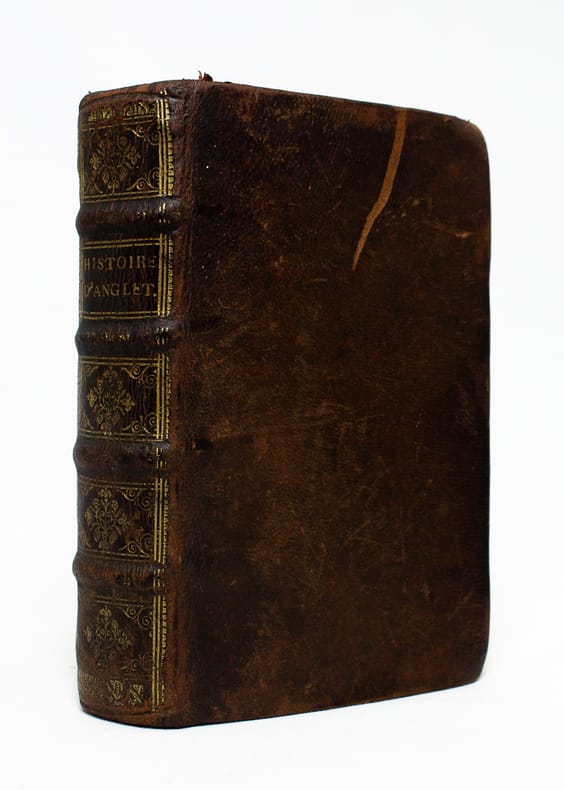
169517644La Haye, Etienne Foulque, 1695. In-12 de [1]-525 pages, pleine basane brune, dos à nerfs orné de fleurons et petits fers dorés, tranches mouchetés de rouge.
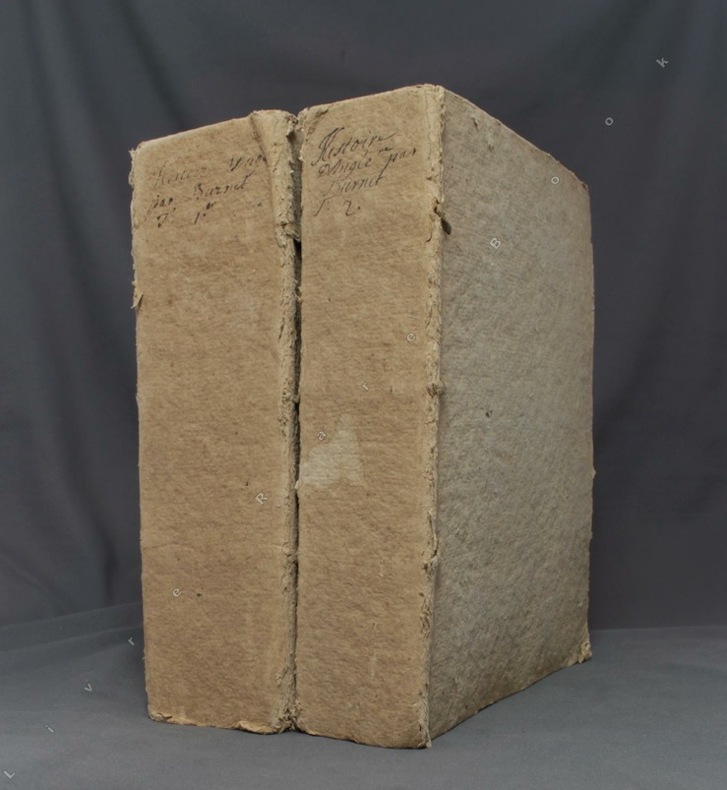
17358788A la Haye, Chez Jean Neaulme, 1735. 2 forts volumes in-4 de [14]-866-[44-table] et [2]-408-[3]-348-[40-table] pages, cartonnage d'attente, titre à la plume au dos. Très rares rousseurs.
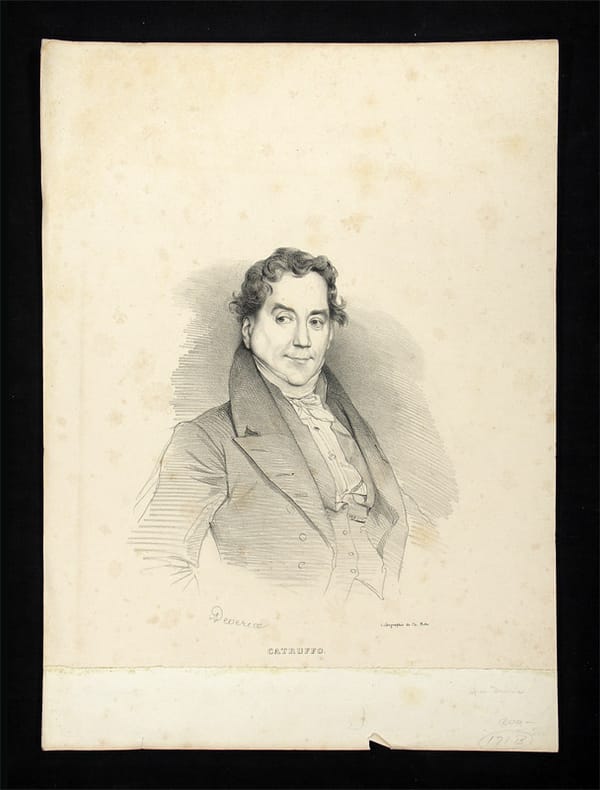
1840171BGO.J. (um 1840). Lithographie von Ch. Motte nach Achille Devéria (1800-1857). Bildgrösse: 22 x 20 cm. Blattgrösse: 37 x 31 cm.
19101375AGO.J. (um 1910). Photographie (Brustbild) von Mac Walten. Format: Postkarte.
19301862AG1930 Federzeichnung in Tusche. Unten links beschriftet. 21 x 18 cm.
19351087DGca. 1935. Kohle und Kreide auf festem Papier, unten rechts monogrammiert und datiert. 63 x 48.
1931793DG(1931?) Ölgemälde auf Spanplatte, unten rechts monogrammiert. 51 x 37 cm.
19311034DG(1931) Kohle und Kreide auf festem Papier, unten rechts monogrammiert. 62 x 46 cm.
1600709CGO.O., um 1600. Kupferstich. Plattengrösse: 17,2 x 14,1 cm. Blattgrösse: 18 x 15,3 cm.