ALBERTILivre Rare Book
8 977 résultats
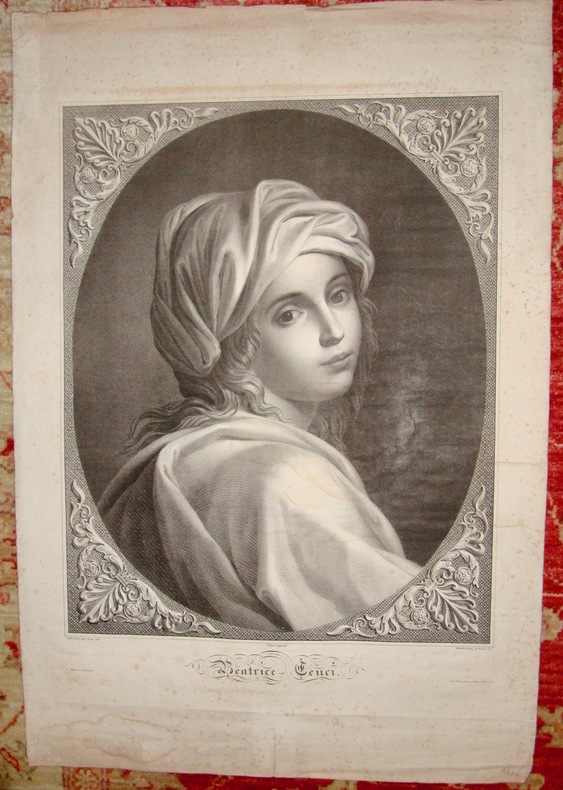
182314700Magnifique portrait dans un encadrement. Rare lithographie d'après Guido Reni. En feuille Bon Paris Alberti 1823 42,8 x 50,5 cm
Format (Bildbereich): 325 x 180 mm. Blattgröße: 49 x 34 cm. *Alexander Paul Ludwig Konstantin von Württemberg (geb. 9. September 1804 in St. Petersburg; gest. 4. Juli 1885 in Tüffer) war das jüngste Kind des Prinzen Ludwig von Württemberg. Alexander wurde wegen seiner Eheschließung mit einer bürgerlichen Frau von der Thronfolge ausgeschlossen. Er trat sehr jung in die württembergische Armee ein. 1830 wechselte er in österreichische Dienste, 1850 ernannte ihn der Kaiser zum Befehlshaber des 11. Husarenregiments. - Sehr gut erhalten. Graphiken de
Format (Bildbereich): 320 x 270 mm. Blattgröße: 610 x 445 mm. *Amalie war eine Tochter des Landgrafen Ludwig IX. von Hessen-Darmstadt und durch ihre Heirat (1774) Erbprinzen Karl Ludwig von Baden wurde sie Markgräfin von Baden. Nach dem frühen Tod ihrer Schwiegermutter galt Amalie als Autorität und als erste Dame am badischen Hof. Sie hatte während des Wiener Kongresses starken Einfluss auf ihren Schwiegersohn Zar Alexander I. - Vollrandiges Exemplar des großformatigen Bildnisses, Papier mit den originalen Schöpfrändern. Ränder etwas gebräunt, sonst sehr gut erhalten. Graphiken de
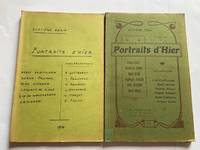
28996Photographies instantanées et sans retouches exécutées par un Amateur. En vente chez tous les libraires. 1875. In-12 en demi-reliure. 70 pages. Bon état.Portraits écrits de diverses personnalités,par ordre alphabétique.
Format (Platte): 248 x 182 mm. Blattgröße: 375 x 235 mm. *Blatt aus der berühmten "Iconographia" oder Iconographie, einer Sammelausgabe von ca. 100 der gemalten Bildnisse des Anthonis van Dyck (1599-1641) in Kupferstich. - Wibiral 19, IV (von IV). - Albert von Arenberg war ein Südniederländischer Feldherr, spanischer Generalkapitän, Gouverneur von Namur. - Untere Ecke rechts etwas fingerfleckig, sonst gut erhalten. Graphiken de
1849EEZZ5587Wien, Lechner 1849. 544 S. (in fortlauf. Pag.), 143 Kupfer-Tafeln, HLnBde.d. spät. 19. Jh., Kanten berieben, Text u. Tafeln überaus frisch u. fleckenfrei, keine Gebrauchsspuren Gegenüber der 1. Ausgabe (Wien, Doll 1833) erweitert. Das Werk war ursprünglich "für die Besitzer des Conversationslexikons" konzipiert. [3 Warenabbildungen]
Format (Platte): 36,4 x 23,7 cm. Blattgröße: 41 x 28,5 cm. *Friedrich Freiherr Binder von Krieglstein (1708-1782), Reichshofrat und kaiserlicher Minister im niederrheinisch-westfälischen Kreise, Mitarbeiter des Staatskanzlers Kaunitz, Hofrat und Referent der Staatskanzlei, 1762 Staatsrat und 1772, bereits als Commandeur des Stephansordens. - Minimal angestaubt, insgesamt sehr gut erhalten. Graphiken de
Blattgröße (Querformat): 31,5 x 39 cm - Bildgröße: 15,5 x 22 cm. *Sehr seltenes Doppelporträt nach der Hinrichtung von Robert Blum und Messenhauser. - Diepenbroick, Porträt-Katalog Nr. 2372. - Robert Blum war ein deutscher Politiker, Publizist, Verleger und Dichter in den Jahren vor und während der Märzrevolution von 1848, bedeutendes Mitglied der Frankfurter Nationalversammlung. Wenzel Messenhauser war ein österreichischer Offizier und Schriftsteller böhmischer Herkunft. Nachdem er im Wiener Oktoberaufstand 1848 zusammen mit anderen Aufständischen (u.a. Alfred Julius Becher, Robert Blum, Hermann Jellinek etc.) vergeblich die Stadt Wien verteidigt hatte, ergab er sich am 30. Oktober 1848 den angreifenden Truppen des Feldmarschalls Windisch-Graetz. Als er danach den Kampf trotzdem wieder aufnahm, wurde er wegen Bruch der Kapitulation zusammen mit Robert Blum standrechtlich erschossen. - Die weißen Außenränder leicht gebräunt und etwas angestaubt, insgesamt gut erhalten. Graphiken de
Incisione tratta dalla celebre raccolta Icones principum, virorum, doctorum, pictorum, chalcographorum, di Anton van Dyck, edita per la prima volta ad Anversa verso il 1640. Opera celebre ed importante, vero monumento dell’arte incisoria fiamminga del sec. XVIII, contiene le biografie ed i ritratti degli uomini illustri che Van Dyck aveva conosciuto e con i quali aveva avuto importanti rapporti. L’artista ne eseguì le effigi in numerosi dipinti e disegni che poi decise di pubblicare, affidandone la trasposizione calcografica ai migliori incisori del suo tempo, come Bolswert, Pontius, Vorsterman, de Jode, Hollar, molti dei quali aveva avuto come condiscepoli nell’atelier di Rubens. "Sir Anthony Van Dyck stands out as the solitary great etcher of the school. Portrait etching had scarcely had an existence before his time, and in his work it suddenly appears at the highest point ever reached in the art" (Hind, p. 165). "The plan of this publication took shape after Van Dyck returned from Italy (1626) and before he went to England (1632). He made careful preparatory drawings in chalk and brush for the publication. He directed and revised the work of the engravers, the best of the Rubens circle; he collaborated with his etching needle in some of the plates and himself etched the most beautiful set, mainly portraits of artists. One of the most brilliant in human characterization is the portrait of Peter Brueghel the Younger, son of the great Peasant Brueghel. It is remarkable that the etching appeared in this sketchy form in the book, proving that the master regarded it as finished. All interest is focussed on the wonderful had. The first edition was published in Antwerp in 1635-1636. Yet it was not complete, and the title-page did not appear before the Gillis Hendricx edition of 1645, engraved by Jacob Neels" (Benesch, Artistic and Intellectual Trends, p. 32.) Hofer, Baroque Book Illustrations 132. Acquaforte con ritocchi al bulino, stampata su carta vergata coeva, filigrana del “giullare”, con margini, in ottimo stato di conservazione. Etching and engraving, circa 1645, signed on plate at lower edge. A fine impression, printed on contemporary laid paper, with margins, very good condition. From Icones principum, virorum, doctorum, pictorum, chalcographorum by Anton van Dyck, printed for the first time in Antwerp, 1645. A famous and important work, a real monument of the Flemish engraving art of the XVIII century, containing the biographies and portraits of the famous artists Van Dyck had met and with whom he had worked. Following the success of his portrait paintings and in the tradition of Italian and Flemish portrait series, Van Dyck decided to organise a print publication containing portraits of the most prominent men during his lifetime, divided into three categories: princes, politicians and soldiers (16), statesmen and scholars (12), artists and art connoisseurs (52). The initial idea could have been that Van Dyck would etch the faces (a process possibly learnt from Vorsterman) while others would finish the plates in engraving. Designs were needed for the plates and several drawings and oil sketches (grisailles, sometimes in different versions) have survived. Van Dyck only etched 17 plates himself, while he commissioned others to complete the set, overseen by Lucas Vorsterman I (especially after Van Dyck settled in England in the Spring of 1632). Although this project was started by Van Dyck around 1630, he never saw it completed. The Antwerp publisher Maarten van den Enden may have been involved from the start as eighty early impressions bear Van den Enden's address. They are engraved by Paulus Pontius (30 plates), Lucas Vorsterman I (22), Pieter de Jode II (12), Schelte a Bolswert (7), Robert van Voerst (4), Willem Hondius (2), Willem Jacobsz Delff (1), Cornelis Galle (1), and Nicolaes Lauwers (1). It is known that Van den Enden was in debt to Gillis Hendricx around 1644, the Antwerp publisher who must have obtained Van den Enden's plates which he published in 1645 in the first edition of these plates (containing between 100 and 104 portrait plates). Hendricx continued to publish these plates until his death in 1677 when they were auctioned off by the St Luke guild (keeping the Iconography plates together). It is not clear who bought these plates but they re-appeared around 1720 when they were published by Hendrick and Cornelis Verdussen in Antwerp.
Format (Bildbereich): 50 x 36,5 cm. Blattgröße: 79,5 x 57 cm. *Louis Napoleon war Kaiser von Frankreich als Napoleon III. Er brachte sich durch einen Staatstreich 1851 an die Macht und eröffnete das zweite Kaiserreich. - Großformatiges Bildnis, die weißen Außenränder mit leichter Altersbräunung, insgesamt sehr gut erhalten mit breitem Rand. Graphiken de
Format (Platte): 233 x 171 mm. Blattgröße: 375 x 235 mm. *Blatt aus der berühmten "Iconographia" oder Iconographie, einer Sammelausgabe von ca. 100 der gemalten Bildnisse des Anthonis van Dyck (1599-1641) in Kupferstich. - Wibiral 44, IV. - Breuck (auch Brueck, Jacob Dubroeucq oder Jacques Du Brouecq etc.), war Architekt in Mons (in Belgien). Seine Lebensdaten werden in der Literatur regelmäßig mit "ca. 1500 bis 1580" benannt, was aber kaum stimmen kann, wenn van Dyck ihn um 1635 gemalt hatte. - Außenränder minimal gebräunt, insgesamt sehr gut erhalten. Graphiken de
Format: 393 x 318 mm (bis zum Plattenrand beschnitten, mit kleinem umlaufenden Rändchen um die Darstellung). *Andresen Handbuch für Kupferstichsammler, (S. 13) No. 6. Die Datierung 1677 folgt den Angaben der Bibliothek Lille für dieses Blatt. Ein ganz ähnliches Porträt wurde 1690 auch von Pesne gestochen. - Guillaume V de La Brunetière de Plessis, 1677-1702 Eveque de Saintes. Er war Bischof von Saintes, einer Bischofsstadt der Provinz Saintonge im Westen Frankreichs. - Leichte Mittelfalte, Oberrand leicht berieben. Graphiken de
Bildgröße: 375 x 270 mm (und kleiner Rand). In alter Zeit an 2 Ecken auf größeres Papier montiert. *Pedro Rodríguez, Conde de Campomanes (1. Juli 1723 - 3. Februar 1802), spanischer Staatsmann und Schriftsteller, wurde in Santa Eulalia de Sorribia in Asturien geboren. - Sehr gut erhalten. Graphiken de
Format (Platte): 142 x 105 mm. Blattgröße: 230 x 145 mm. *Rosalba Carriera (geb. 7. Oktober 1675 in Venedig; gest. 15. April 1757 ebenda) war eine berühmte italienische Malerin. Sie schuf hauptsächlich Werke der Miniaturmalerei und der Pastellmalerei. Schon zeitgenössisch wurde sie gefeiert und bewundert und bereiste Europa. - Der Stecher Lepicie (1735-1784) war ein Pariser Kupferstecher. Nagler 48: "kleines Bildniss, für Odieuvre gestochen". - Seltenes Blatt, gut erhalten. Graphiken de
Plattengröße: 310 x 235 mm (Bildoval: 145 x 120 mm). Blattgröße: 360 x 270 mm. *Wünsch Werkverzeichnis Blasius Höfel, No. 51. - Angelica Catalani (geb. 10. Mai 1780 in Senigallia bei Ancona; gest.13. Juni 1849 in Paris) war eine italienische Opernsängerin in der Stimmlage Sopran. - Nachdem sie 1795 in Venedig am Teatro La Fenice debütiert und hier sowie in den anderen großen Städten Italiens glänzende Erfolge errungen hatte, erhielt sie 1801 ein Engagement in Lissabon, wo sie fünf Jahre hindurch das Publikum entzückte. 1806 Vortragsreise in Madrid, Paris und schließlich London mit großen Erfolgen und ebenso großen Gagen. 1814 übernahm sie die Direktion der Italienischen Oper. - Siehe Flatz (Theaterhistorische Porträtgraphik), No. 751. - Einfühlsames und schönes, ausdrucksvolles Bildnis, sauber und sehr gut erhalten. Graphiken de
87173Couverture rigide. Bon/1909. in-8. Paris 1909-10-11- in-8 broché Très bel exemplaire! unknown
190987173Paris, 1909-10-11-, in-8, , broché, Très bel exemplaire!
Bildformat: 338 x 272 mm (mit kleinem Rand). *Daum stammte aus einer sächsischen Advokatenfamilie, er gründete 1712 zus. mit Splitgerber das Bank- und Handelshaus Splitgerber & Daum. Sie waren bald Preußens größter Waffen- und Munitionslieferant, das Unternehmen wuchs zu einem konzernartigen Großunternehmen, das eine weit über Berlin hinausragende Bedeutung erlangte. 1725/26 schloss sich der Konzern mit 14 anderen Berliner Firmen zur "Russischen Handels-Compagnie" zusammen. Die Firma belieferte Preussen wie auch Russland und war um 1740 zum größten Waffenproduzenten des Staates geworden. Das Bank- und Handelshaus wurde nach dem Tod der beiden Gründer von den Gebr. Schickler übernommen und als „Bankhaus der Könige“ berühmt. 1910 fusionierte das Bankhaus mit der Bank „Delbrück Leo & Co“. Sie blieb eine der ältesten dt. Privatbanken bis sie 2002 von der Niederländischen Staatsbank ABN AMRO N.V. übernommen wurde. - Am Unterrand leicht gebräunt, insgesamt gut erhalten. Graphiken de
Incisione tratta dalla celebre raccolta Icones principum, virorum, doctorum, pictorum, chalcographorum, di Anton van Dyck, edita per la prima volta ad Anversa verso il 1640. Opera celebre ed importante, vero monumento dell’arte incisoria fiamminga del sec. XVIII, contiene le biografie ed i ritratti degli uomini illustri che Van Dyck aveva conosciuto e con i quali aveva avuto importanti rapporti. L’artista ne eseguì le effigi in numerosi dipinti e disegni che poi decise di pubblicare, affidandone la trasposizione calcografica ai migliori incisori del suo tempo, come Bolswert, Pontius, Vorsterman, de Jode, Hollar, molti dei quali aveva avuto come condiscepoli nell’atelier di Rubens. "Sir Anthony Van Dyck stands out as the solitary great etcher of the school. Portrait etching had scarcely had an existence before his time, and in his work it suddenly appears at the highest point ever reached in the art" (Hind, p. 165). "The plan of this publication took shape after Van Dyck returned from Italy (1626) and before he went to England (1632). He made careful preparatory drawings in chalk and brush for the publication. He directed and revised the work of the engravers, the best of the Rubens circle; he collaborated with his etching needle in some of the plates and himself etched the most beautiful set, mainly portraits of artists. One of the most brilliant in human characterization is the portrait of Peter Brueghel the Younger, son of the great Peasant Brueghel. It is remarkable that the etching appeared in this sketchy form in the book, proving that the master regarded it as finished. All interest is focussed on the wonderful had. The first edition was published in Antwerp in 1635-1636. Yet it was not complete, and the title-page did not appear before the Gillis Hendricx edition of 1645, engraved by Jacob Neels" (Benesch, Artistic and Intellectual Trends, p. 32.) Hofer, Baroque Book Illustrations 132. Acquaforte con ritocchi al bulino, stampata su carta vergata coeva, filigrana del “giullare”, con margini, in ottimo stato di conservazione. Etching and engraving, circa 1645, signed on plate at lower edge. A fine impression, printed on contemporary laid paper, with margins, very good condition. From Icones principum, virorum, doctorum, pictorum, chalcographorum by Anton van Dyck, printed for the first time in Antwerp, 1645. A famous and important work, a real monument of the Flemish engraving art of the XVIII century, containing the biographies and portraits of the famous artists Van Dyck had met and with whom he had worked. Following the success of his portrait paintings and in the tradition of Italian and Flemish portrait series, Van Dyck decided to organise a print publication containing portraits of the most prominent men during his lifetime, divided into three categories: princes, politicians and soldiers (16), statesmen and scholars (12), artists and art connoisseurs (52). The initial idea could have been that Van Dyck would etch the faces (a process possibly learnt from Vorsterman) while others would finish the plates in engraving. Designs were needed for the plates and several drawings and oil sketches (grisailles, sometimes in different versions) have survived. Van Dyck only etched 17 plates himself, while he commissioned others to complete the set, overseen by Lucas Vorsterman I (especially after Van Dyck settled in England in the Spring of 1632). Although this project was started by Van Dyck around 1630, he never saw it completed. The Antwerp publisher Maarten van den Enden may have been involved from the start as eighty early impressions bear Van den Enden's address. They are engraved by Paulus Pontius (30 plates), Lucas Vorsterman I (22), Pieter de Jode II (12), Schelte a Bolswert (7), Robert van Voerst (4), Willem Hondius (2), Willem Jacobsz Delff (1), Cornelis Galle (1), and Nicolaes Lauwers (1). It is known that Van den Enden was in debt to Gillis Hendricx around 1644, the Antwerp publisher who must have obtained Van den Enden's plates which he published in 1645 in the first edition of these plates (containing between 100 and 104 portrait plates). Hendricx continued to publish these plates until his death in 1677 when they were auctioned off by the St Luke guild (keeping the Iconography plates together). It is not clear who bought these plates but they re-appeared around 1720 when they were published by Hendrick and Cornelis Verdussen in Antwerp.
Incisione tratta dalla celebre raccolta Icones principum, virorum, doctorum, pictorum, chalcographorum, di Anton van Dyck, edita per la prima volta ad Anversa verso il 1640. Opera celebre ed importante, vero monumento dell’arte incisoria fiamminga del sec. XVIII, contiene le biografie ed i ritratti degli uomini illustri che Van Dyck aveva conosciuto e con i quali aveva avuto importanti rapporti. L’artista ne eseguì le effigi in numerosi dipinti e disegni che poi decise di pubblicare, affidandone la trasposizione calcografica ai migliori incisori del suo tempo, come Bolswert, Pontius, Vorsterman, de Jode, Hollar, molti dei quali aveva avuto come condiscepoli nell’atelier di Rubens. "Sir Anthony Van Dyck stands out as the solitary great etcher of the school. Portrait etching had scarcely had an existence before his time, and in his work it suddenly appears at the highest point ever reached in the art" (Hind, p. 165). "The plan of this publication took shape after Van Dyck returned from Italy (1626) and before he went to England (1632). He made careful preparatory drawings in chalk and brush for the publication. He directed and revised the work of the engravers, the best of the Rubens circle; he collaborated with his etching needle in some of the plates and himself etched the most beautiful set, mainly portraits of artists. One of the most brilliant in human characterization is the portrait of Peter Brueghel the Younger, son of the great Peasant Brueghel. It is remarkable that the etching appeared in this sketchy form in the book, proving that the master regarded it as finished. All interest is focussed on the wonderful had. The first edition was published in Antwerp in 1635-1636. Yet it was not complete, and the title-page did not appear before the Gillis Hendricx edition of 1645, engraved by Jacob Neels" (Benesch, Artistic and Intellectual Trends, p. 32.) Hofer, Baroque Book Illustrations 132. Acquaforte con ritocchi al bulino, stampata su carta vergata coeva, filigrana del “giullare”, con margini, in ottimo stato di conservazione. Etching and engraving, circa 1645, signed on plate at lower edge. A fine impression, printed on contemporary laid paper, with margins, very good condition. From Icones principum, virorum, doctorum, pictorum, chalcographorum by Anton van Dyck, printed for the first time in Antwerp, 1645. A famous and important work, a real monument of the Flemish engraving art of the XVIII century, containing the biographies and portraits of the famous artists Van Dyck had met and with whom he had worked. Following the success of his portrait paintings and in the tradition of Italian and Flemish portrait series, Van Dyck decided to organise a print publication containing portraits of the most prominent men during his lifetime, divided into three categories: princes, politicians and soldiers (16), statesmen and scholars (12), artists and art connoisseurs (52). The initial idea could have been that Van Dyck would etch the faces (a process possibly learnt from Vorsterman) while others would finish the plates in engraving. Designs were needed for the plates and several drawings and oil sketches (grisailles, sometimes in different versions) have survived. Van Dyck only etched 17 plates himself, while he commissioned others to complete the set, overseen by Lucas Vorsterman I (especially after Van Dyck settled in England in the Spring of 1632). Although this project was started by Van Dyck around 1630, he never saw it completed. The Antwerp publisher Maarten van den Enden may have been involved from the start as eighty early impressions bear Van den Enden's address. They are engraved by Paulus Pontius (30 plates), Lucas Vorsterman I (22), Pieter de Jode II (12), Schelte a Bolswert (7), Robert van Voerst (4), Willem Hondius (2), Willem Jacobsz Delff (1), Cornelis Galle (1), and Nicolaes Lauwers (1). It is known that Van den Enden was in debt to Gillis Hendricx around 1644, the Antwerp publisher who must have obtained Van den Enden's plates which he published in 1645 in the first edition of these plates (containing between 100 and 104 portrait plates). Hendricx continued to publish these plates until his death in 1677 when they were auctioned off by the St Luke guild (keeping the Iconography plates together). It is not clear who bought these plates but they re-appeared around 1720 when they were published by Hendrick and Cornelis Verdussen in Antwerp.
Incisione tratta dalla celebre raccolta Icones principum, virorum, doctorum, pictorum, chalcographorum, di Anton van Dyck, edita per la prima volta ad Anversa verso il 1640. Opera celebre ed importante, vero monumento dell’arte incisoria fiamminga del sec. XVIII, contiene le biografie ed i ritratti degli uomini illustri che Van Dyck aveva conosciuto e con i quali aveva avuto importanti rapporti. L’artista ne eseguì le effigi in numerosi dipinti e disegni che poi decise di pubblicare, affidandone la trasposizione calcografica ai migliori incisori del suo tempo, come Bolswert, Pontius, Vorsterman, de Jode, Hollar, molti dei quali aveva avuto come condiscepoli nell’atelier di Rubens. "Sir Anthony Van Dyck stands out as the solitary great etcher of the school. Portrait etching had scarcely had an existence before his time, and in his work it suddenly appears at the highest point ever reached in the art" (Hind, p. 165). "The plan of this publication took shape after Van Dyck returned from Italy (1626) and before he went to England (1632). He made careful preparatory drawings in chalk and brush for the publication. He directed and revised the work of the engravers, the best of the Rubens circle; he collaborated with his etching needle in some of the plates and himself etched the most beautiful set, mainly portraits of artists. One of the most brilliant in human characterization is the portrait of Peter Brueghel the Younger, son of the great Peasant Brueghel. It is remarkable that the etching appeared in this sketchy form in the book, proving that the master regarded it as finished. All interest is focussed on the wonderful had. The first edition was published in Antwerp in 1635-1636. Yet it was not complete, and the title-page did not appear before the Gillis Hendricx edition of 1645, engraved by Jacob Neels" (Benesch, Artistic and Intellectual Trends, p. 32.) Hofer, Baroque Book Illustrations 132. Acquaforte con ritocchi al bulino, stampata su carta vergata coeva, filigrana del “giullare”, con margini, in ottimo stato di conservazione. Etching and engraving, circa 1645, signed on plate at lower edge. A fine impression, printed on contemporary laid paper, with margins, very good condition. From Icones principum, virorum, doctorum, pictorum, chalcographorum by Anton van Dyck, printed for the first time in Antwerp, 1645. A famous and important work, a real monument of the Flemish engraving art of the XVIII century, containing the biographies and portraits of the famous artists Van Dyck had met and with whom he had worked. Following the success of his portrait paintings and in the tradition of Italian and Flemish portrait series, Van Dyck decided to organise a print publication containing portraits of the most prominent men during his lifetime, divided into three categories: princes, politicians and soldiers (16), statesmen and scholars (12), artists and art connoisseurs (52). The initial idea could have been that Van Dyck would etch the faces (a process possibly learnt from Vorsterman) while others would finish the plates in engraving. Designs were needed for the plates and several drawings and oil sketches (grisailles, sometimes in different versions) have survived. Van Dyck only etched 17 plates himself, while he commissioned others to complete the set, overseen by Lucas Vorsterman I (especially after Van Dyck settled in England in the Spring of 1632). Although this project was started by Van Dyck around 1630, he never saw it completed. The Antwerp publisher Maarten van den Enden may have been involved from the start as eighty early impressions bear Van den Enden's address. They are engraved by Paulus Pontius (30 plates), Lucas Vorsterman I (22), Pieter de Jode II (12), Schelte a Bolswert (7), Robert van Voerst (4), Willem Hondius (2), Willem Jacobsz Delff (1), Cornelis Galle (1), and Nicolaes Lauwers (1). It is known that Van den Enden was in debt to Gillis Hendricx around 1644, the Antwerp publisher who must have obtained Van den Enden's plates which he published in 1645 in the first edition of these plates (containing between 100 and 104 portrait plates). Hendricx continued to publish these plates until his death in 1677 when they were auctioned off by the St Luke guild (keeping the Iconography plates together). It is not clear who bought these plates but they re-appeared around 1720 when they were published by Hendrick and Cornelis Verdussen in Antwerp.
Format (Bildbereich): ca. 270 x 270 mm. Blattgröße: 505 x 390 mm. *Gebhardt: Hanfstaengl Werkverzeichnis, S. 251, I. Maillinger I, 2125. Graf Bernhard Erasmus von Deroy war ein General der bayerischen Armee, zuletzt unter dem Oberbefehl Napoleons. Er kämpfte auch noch in Napoleons Rußlandfeldzug 1812, wo er zuletzt tödlich verwundet wurde. Er erhielt zahlreiche Orden und Ehrungen. - Der Lithograph Franz Seraph Hanfstaengl (1804-1877) war ein deutscher Maler, Lithograf und Fotograf. Er studierte 1819-25 an der Akademie der Bildenden Künste in München und wurde in Lithographie ausgebildet. Als Porträtlithograf der Münchner Gesellschaft erfreute sich Hanfstaengl großer Beliebtheit, was ihm den Spitznamen „Graf Litho“ eintrug. 1833 gründete er in München die berühmt gewordene lithografische Anstalt Hanfstaengl, die er selbst bis 1868 leitete. - Großformatiges recht seltenes Bildnis. Ränder minimal gebräunt, insgesamt sehr gut erhalten. Graphiken de
Plattengröße: 400 x 294 mm. Blattgröße: 455 x 340 mm. *Dietrich V. war der Sohn des Grafen Florenz I. von Holland und Gertrud von Sachsen, Tochter Herzog Bernhards II. Bereits 1061 folgte er seinem Vater als Graf von Holland. - Das schöne Bildnis von Cornelius Visscher stammt aus einer Folge von Bildnissen, welche 1650 mit Nennung des Stechers erschienen. - Hier ein früherer Abzug noch vor der Nennung des Stechers - siehe Nagler, Band 23, No 54/10 (Abzug I oder II). - Gleichmäßige leichte Bräunung, einige hinterlegte kleine Einrisse im weißen Außenrand (davon zwei bis knapp an den Plattenrand). Graphiken de
Format: 32,5 x 22,5 cm (mit kleinem Rändchen um die Plattenkante und in alter Zeit flächig auf getöntes Untersatzpapier montiert). *"Herzog Eberhard Ludwig (* 18. September 1676 in Stuttgart; † 31. Oktober 1733 in Ludwigsburg) war von 1677 bis 1733 der zehnte (ab 1693 regierende) Herzog von Württemberg. Er begründete im Herzogtum Württemberg den Absolutismus, konnte diesen jedoch aufgrund des Widerstandes der württembergischen Landstände nie in voller Ausprägung durchsetzen. Einerseits reformierte er das Steuerwesen, förderte Manufakturen und Bergbau, machte durch die Aufnahme der Hugenotten neue Gewerbe heimisch und setzte ein stehendes Heer durch. Andererseits hinterließ er mit seinem höfischen Repräsentationsbedürfnis, das allerdings typisch für die Zeit des Barock war, einen hohen Schuldenberg. Mit der außerehelichen Beziehung zu seiner Mätresse Wilhelmine von Grävenitz provozierte Eberhard Ludwig eine Staatsaffäre. Als erfahrener Feldherr stieg er bis zum Reichsgeneralfeldmarschall des Heiligen Römischen Reiches auf. Da er ohne männlichen Abkömmling blieb, fiel nach seinem Tod die Regentschaft im lutherischen Württemberg an die katholische Nebenlinie Württemberg-Winnental. Auf Eberhard Ludwig geht die barocke Gründung von Residenzschloss und Stadt Ludwigsburg zurück" (Wikipedia). Graphiken de
Blattgröße: 570 x 420 mm. Bildgröße: 420 x 320 mm. *Elisabeth Amalie Eugenie, Herzogin in Bayern (auch Sisi, Sissi oder Lisi genannt; geboren am 24. Dezember 1837 in München; gest. am 10. September 1898 in Genf) war eine Prinzessin des Hauses Wittelsbach und durch ihre Heirat mit Franz Joseph I. ab 1854 Kaiserin von Österreich. - Gedenkblatt zur Hochzeit mit architektonischer Ornamentik, mittig mit 2 kleinen Porträtmedaillons von Franz Josef und Elisabeth und Liedtext, unten flankiert von Noten. - Sauber und sehr gut erhalten. Graphiken de