484 résultats
2812313641.Gpaperback. Good. Access codes and supplements are not guaranteed with used items. May be an ex-library book. paperback
N°14, de 1984, (et 1er n° d'une nouvelle série) de ces "Cahiers", consacré aux événements culturels à Vienne au tournant du siècle, réunissant des textes de spécialistes dont "un certain nombre des communications" du colloque éponyme (Centre Pompidou, 1984): Robert WAISSENBERGER: "Vienne, art et réalité"; Werner HOFMANN: "Laboratoire pour une apocalypse"; Jean CLAIR: "De la "Gründerzeit" à "l'Untergründ-Gründerzeit""; André CHASTEL: "Julius von Schlosser et la "Kunstliteratur""; Dieter BOGNER: "Empirisme et spéculation - Aloïs Riegl et l'Ecole viennoise d'histoire de l'art"; Yves KOBRY: "Klimt derrière le décor"; Carl E. SCHORSKE: "Mahler et Klimt: épreuve sociale et évolution artistique"; Wieland SCHMIED: "La peinture autrichienne entre les deux guerres - La fin d'une époque"; Monika FABER: "La photographie à Vienne de 1890 à 1920"; Yves KOBRY: "Redécouvrir Ernst Mach 1838-1916", suivi de ses traductions d'extraits d'ouvrages d'Ernst MACH ("Remarques préliminaires antimétaphysiques") et d'Ernst BLOCH ("Effets d'éloignement: autoportrait sans miroir"); notes et références; reproductions et photos. Français
1981LFA-126739385Un ouvrage de 207 pages, format 270 x 360 mm, illustré, relié cartonnage couleurs, publié en 1981, CELIV, bon état
18910Lausanne / Paris, Bibliothèque des Arts, 1994 1 volume 23,5 x 27,5cm Cartonnage éditeur illustré couleurs en étui carton muet. 124p., 2 feuillets; nombreuses illustrations in texte, vignettes en noir et 60 planches couleurs. Très bon état.
Catalogue publié par l'Österreichische Galerie Belvedere ("Galerie autrichienne", musée d'art du Palais du Belvédère, à Vienne): 59 n°s avec reproductions couleurs à pleine page; précédé d'une note historique sur le Château du Belvédère et la "Galerie autrichienne" par son directeur Gerbert FRODL, et d'un texte sur "La Peinture autrichienne XIXè - début du XXè" par l'historien d'art autrichien Stephan KÖJA, conservateur de la collection de peintures du XIXè siècle de la "Galerie autrichienne", illustré de vignettes en noir; suivi de la présentation de 27 artistes avec portrait, notice biographique et bibliographie pour chacun d'eux, par Katja MIKSOVSKY; liste des 59 oeuvres exposées; bibliographie; photo couleurs du palais en frontispice. Titre précédé en couverture de "De Waldmüller à Klimt". Exemplaire bien complet de son étui. Français
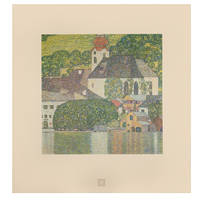
1219691931 . Collotype in colours 1931 on chine colle paper laid down on heavy cream wove paper from the edition of 500 the full sheet with deckled edges published by Max Eisler Vienna 48 x 45.5 cm. 19 x 18 in.<br /> <br /> 1931 unknown
3310353Oceano. Hardcover. Good. 23 cm. 62 p. il. Encuadernación en tapa dura de editorial ilustrada. ISBN: 8449437397 Erótico Oceano. hardcover
198939292ABDortmund, Harenberg, 1989. 18 cm. 192 S. : überwiegend Ill. (z.T. farb.)) Pp. Sehr guter Zust. Die @bibliophilen Taschenbücher ; 544
198920304BBDortmund, Harenberg, 1989. 8°. 192 S., überwiegend Ill. (z.T. farb.)). kart., Deckelillustr. guter Zustand, ungelesen, jedoch schwarzer Punkt a. Buchrü. Die bibliophilen Taschenbücher ; 544.
1991BN49487Dortmund: Harenberg-Edition 1991. 2. Auflage. <br/><br/>Kunst Dortmund: Harenberg-Edition unknown
20121205249München : Siedler, 2012. 703 S. : Ill., graph. Darst. ; 24 cm Gebundener Originalpappband mit Umschlag
Erste dt. Ausgabe. Sehr sauber erhaltenT E I L E I N S Eine psychoanalytische Psychologie und Kunst der unbewussten Gefühle KAPITEL I Die W e n d u n g nach innen: »Wien 1900« 21 K A P I T E L 2 Die Erforschung der Wahrheit u n t e r der Oberfläche: Ursprünge einer wissenschaftlichen Medizin 4 0 KAPITEL 3 W i e n e r Künstler, Autoren u n d Wissenschaftler geben sich i m Salon Zuckerkandl ein Stelldichein 50 K A P I T E L 4 Die Erforschung des Gehirns u n t e r d e m Schädel: Ursprünge einer wissenschaftlichen Psychiatrie 59 K A P I T E L 5 Die gleichzeitige Erforschung v o n Geist u n d Gehirn: Die Entwicklung einer gehirnbasierten Psychologie 73 K A P I T E L 6 Die getrennte Erforschung von Geist u n d Gehirn: Ursprünge einer dynamischen Psychologie 9 0 K A P I T E L 7 Die Suche nach d e m Innenleben in der Literatur 1 0 6 K A P I T E L 8 Die Darstellung der weiblichen Sexualität in der Kunst 120 K A P I T E L 9 Die Darstellung der Psyche in der Kunst 158 K A P I T E L 10 Die Verknüpfung von Erotik, Aggression u n d Angst in der Kunst T E I L Z W E I Eine kognitive Psychologie der visuellen Wahrnehmung und der emotionalen Reaktion a u f Kunst K A P I T E L i i Die Entdeckung der Relevanz des Betrachters 225 K A P I T E L 12 Betrachten bedeutet Erfinden: Das Gehirn als Kreativitätsmaschine 2 4 7 K A P I T E L 13 D e r W e g zur Malerei des 20. Jahrhunderts 256 T E I L D R E I D i e Biologie der visuellen Reaktion auf Kunst K A P I T E L 14 D i e Verarbeitung visueller Bilder durch das G e h i r n 2 6 7 K A P I T E L 15 D i e Dekonstruktion des visuellen Bildes: Bausteine der F o r m w a h r n e h m u n g 281 K A P I T E L 16 D i e Rekonstruktion der Welt, die wir sehen: Sehen ist Informationsverarbeitung 301 K A P I T E L 17 Sehprozesse der oberen Ebene u n d die W a h r n e h m u n g v o n Gesicht, H ä n d e n u n d Körper durch das G e h i r n 328 K A P I T E L 18 Top-down-Verarbeitung v o n Informationen: A u f der Suche nach Bedeutungen helfen Erinnerungen K A P I T E L 19 D i e Dekonstruktion v o n Gefühlen: A u f der Suche nach emotionalen U r f o rmen 375 K A P I T E L 2 0 D i e künstlerische Darstellung v o n Gefühlen: Gesichter, H ä n d e , Körper u n d Farbe 384 K A P I T E L 21 Unbewusste Emotionen, bewusste Gefühle u n d ihre Ä u ß e r u n g d u r c h d e n Körper T E I L V I E R D i e Biologie der emotionalen Reaktion auf Kunst K A P I T E L 22 Die Top-down-Steuerung kognitiver emotionaler Informationen 423 K A P I T E L 23 D i e biologische Reaktion a u f Schönheit u n d Hässlichkeit i n der Kunst 4 3 7 K A P I T E L 24 D e r Anteil der Betrachter: Z u g a n g zur Gedankenwelt eines anderen Menschen 4 5 6 K A P I T E L 2 5 D i e Biologie des Anteils der Betrachter: Modelle fremder Gedankenwelten 4 6 6 K A P I T E L 2 6 W i e das G e h i r n E m o t i o n u n d E m p a t h i e steuert 4 8 8 T E I L F Ü N F D i e Entwicklung eines Dialogs zwischen bildender Kunst und Wissenschaft K A P I T E L 2 7 Künstlerische Universalien u n d die österreichischen Expressionisten 5 0 9 K A P I T E L 2 8 Das kreative Gehirn 5 2 1 K A P I T E L 2 9 Das kognitive Unbewusste u n d das kreative G e h i r n 5 3 5 K A P I T E L 3 0 Hirnschaltkreise i m Dienste der Kreativität 5 4 9 K A P I T E L 3 1 Talent, Kreativität u n d die Entwicklung des Gehirns 5 6 4 K A P I T E L 3 2 Selbsterkenntnis: D e r neue Dialog zwischen Kunst u n d Naturwissenschaft D a n k 595 A n m e r k u n g e n 6 0 1 Literatur 617 Bildnachweis 6 7 8 Register 6 9 2 ISBN 9783886809455
22525Salzburg, Verlag Galerie Welz, sans date. In-12 de 76 pages, cartonnage couleurs. A l'état de neuf. Nombreuses reproductions en couleurs, phothographies en noir.
1980155254-1München, DTV 1980. 230 S. Mit 65 teils farb. Tafn. Original-Kartonband
197071950Stgt.: Goverts Krüger Stahlberg (c 1970). 306 Ss., 1 Bl. 8°. Ln. mit farbgeprägt. Rückentitel u. Umschl. (kl. Umschlageinrisse hinterlegt).
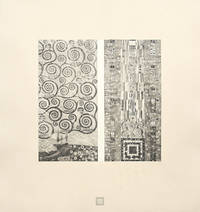
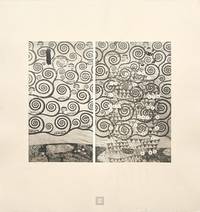
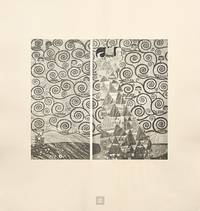
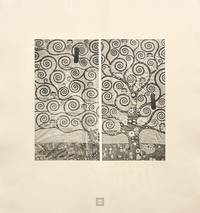
1931142899Vienna: Österreichische Staatsdruckerei 1931. Edition of 500. One of 30 prints from the Eine Nachlese portfolio. Max Eisler 1881-1937 the publisher of this print was an art historian at Vienna University who published the first Klimt monograph in 1914. He intended Eine Nachlese to complement Das Werk the only folio set produced in Klimt's lifetime which was overseen by Klimt up to 1913. Fragile hand-printed collotype plates cannot be reused so the run must be completed on the first go and in only a limited number. The complicated lengthy process involves gelatin colloids mixed with dichromates. Thin 16-colour separation glass filters achieve the light-sensitive internegative images which capture the original tonal gradations. These are exposed to actinic light. Finally the delicate chine colle paper allows for greater colour saturation. Dark grey monochrome collotype on chine colle paper laid down on heavy cream wove paper with untrimmed deckled edges. Image size: 27.3 x 27.7 cm. Sheet size: 48 x 45.5 cm. Excellent condition. unknown
1931142898Vienna: Österreichische Staatsdruckerei 1931. Edition of 500. One of 30 prints from the Eine Nachlese portfolio. Max Eisler 1881-1937 the publisher of this print was an art historian at Vienna University who published the first Klimt monograph in 1914. He intended Eine Nachlese to complement Das Werk the only folio set produced in Klimt's lifetime which was overseen by Klimt up to 1913. Fragile hand-printed collotype plates cannot be reused so the run must be completed on the first go and in only a limited number. The complicated lengthy process involves gelatin colloids mixed with dichromates. Thin 16-colour separation glass filters achieve the light-sensitive internegative images which capture the original tonal gradations. These are exposed to actinic light. Finally the delicate chine colle paper allows for greater colour saturation. Dark grey monochrome collotype on chine colle paper laid down on heavy cream wove paper with untrimmed deckled edges. Image size: 27.2 x 32 cm. Sheet size: 48 x 45.5 cm. Excellent condition. unknown
1931142896Vienna: Österreichische Staatsdruckerei 1931. Edition of 500. One of 30 prints from the Eine Nachlese portfolio. Max Eisler 1881-1937 the publisher of this print was an art historian at Vienna University who published the first Klimt monograph in 1914. He intended Eine Nachlese to complement Das Werk the only folio set produced in Klimt's lifetime which was overseen by Klimt up to 1913. Fragile hand-printed collotype plates cannot be reused so the run must be completed on the first go and in only a limited number. The complicated lengthy process involves gelatin colloids mixed with dichromates. Thin 16-colour separation glass filters achieve the light-sensitive internegative images which capture the original tonal gradations. These are exposed to actinic light. Finally the delicate chine colle paper allows for greater colour saturation. Dark grey monochrome collotype on chine colle paper laid down on heavy cream wove paper with untrimmed deckled edges. Image size: 27 x 30.7 cm. Sheet size: 48 x 45.5 cm. Excellent condition. unknown
1931142897Vienna: Österreichische Staatsdruckerei 1931. Edition of 500. One of 30 prints from the Eine Nachlese portfolio. Max Eisler 1881-1937 the publisher of this print was an art historian at Vienna University who published the first Klimt monograph in 1914. He intended Eine Nachlese to complement Das Werk the only folio set produced in Klimt's lifetime which was overseen by Klimt up to 1913. Fragile hand-printed collotype plates cannot be reused so the run must be completed on the first go and in only a limited number. The complicated lengthy process involves gelatin colloids mixed with dichromates. Thin 16-colour separation glass filters achieve the light-sensitive internegative images which capture the original tonal gradations. These are exposed to actinic light. Finally the delicate chine colle paper allows for greater colour saturation. Dark grey monochrome collotype on chine colle paper laid down on heavy cream wove paper with untrimmed deckled edges. Image size: 27.2 x 29.4 cm. Sheet size: 48 x 45.5 cm. Excellent condition. unknown
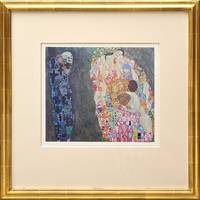
1931182262Vienna: Österreichische Staatsdruckerei 1931. One of 30 prints from the Eine Nachlese/Dernière gerbe/An Aftermath portfolio. Max Eisler 1881-1937 the publisher of this print was an art historian at Vienna University who published the first Klimt monograph in 1914. He intended Eine Nachlese to complement Das Werk the only folio set produced in Klimt's lifetime which was overseen by Klimt up to 1913. The collotype produces fine tonal gradations sharp detail and a continuous-tone effect unmatched by most other photomechanical processes. However the surface of the gelatin-coated plate is extremely delicate and can break down under friction or over-inking. Plates wear out quickly giving a short print-run and maintaining consistent humidity during printing is crucial - even small fluctuations can ruin the plate. As a result collotype printing is slow exacting and vulnerable to failure but when successful it yields some of the finest printed images ever produced. Edition of 500. Collotype in colours on chine colle paper laid down on heavy cream wove paper with untrimmed deckled edges. Image size: 28 x 30.7 cm. Sheet size: 48 x 45.5 cm. Framed size: 59 x 56.3 cm. Presented in a handmade gold leaf frame with conservation acrylic glazing. Small public library stamp lower left minor spotting to margins otherwise in excellent condition. unknown
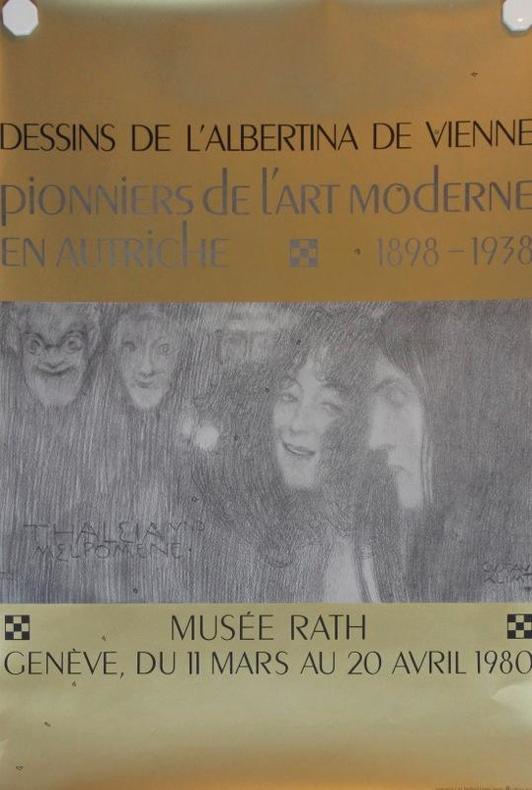
7948Affiche offset 64 X 94.
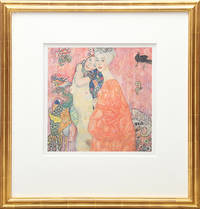
1931187329Vienna: Osterreichischen Staatsdruckerei 1931. One of 30 prints from the Eine Nachlese/Dernière gerbe/An Aftermath portfolio. The first reproduction of Klimt's original painting. Die Freundennen was one of 16 original paintings by Klimt which were destroyed on 8 May 1945. The paintings were in storage in the Schloss Immendorf a 16th century castle in Lower Austria which was set on fire by a retreating tank division of the German army. Max Eisler 1881-1937 the publisher of this print was an art historian at Vienna University who published the first Klimt monograph in 1914. He intended Eine Nachlese to complement Das Werk the only folio set produced in Klimt's lifetime which was overseen by Klimt up to 1913. The collotype produces fine tonal gradations sharp detail and a continuous-tone effect unmatched by most other photomechanical processes. However the surface of the gelatin-coated plate is extremely delicate and can break down under friction or over-inking. Plates wear out quickly giving a short print-run and maintaining consistent humidity during printing is crucial - even small fluctuations can ruin the plate. As a result collotype printing is slow exacting and vulnerable to failure but when successful it yields some of the finest printed images ever produced. Edition of 500. Collotype in colours on chine colle paper laid down on heavy cream wove paper with untrimmed deckled edges. Image size: 29.5 x 30 cm. Sheet size: 48 x 45.5 cm. Framed size: 59 x 56.3 cm. Presented in a handmade gold leaf frame with conservation acrylic glazing. Excellent condition. unknown
190763832Leipzig, Julius Zeitler, 1907. Fol. Mit 15 Lichtdrucktafeln nach Zeichnungen von Gustav Klimt. 2 Bll., 37 S., 1 Bl., Grauer Orig.-Sämischldr.-Bd. m. goldener Deckelplakette u. Kopfgoldschnitt (am Rückendeckel unten sign. ?Wiener Werkstätte J[osef] H[offmann]?).
Druck des Gala Verlag, Hamburg, in 500 nummerierten Exemplaren auf Büttenpapier. Mit 15 ganzseitigen erotischen Tafeln nach Zeichnungen von Gustav Klimt. Die Hetärengespräche des Lukian zählen zu den schönsten Büchern des Künstlers. Tadellos erhalten. - Hayn/Gotendorf, Bd. IV,294.
20051070661München : Prestel, 2005. 289 S. KARTONIERTE Museumsausgabe, Mit zahlr. auch farb. Abb.