KLIMT, GustavBiblio.com
199 résultats
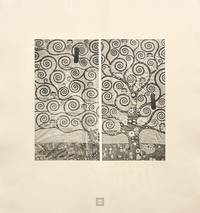
1219681931 . Collotype in colours 1931 on chine colle paper laid down on heavy cream wove paper from the edition of 500 the full sheet with deckled edges published by Max Eisler Vienna 48 x 45.5 cm. 19 x 18 in.<br /> <br /> 1931 unknown
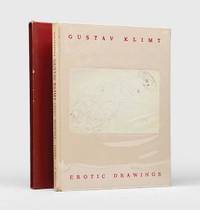
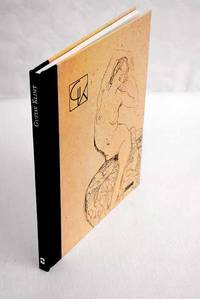
1980190316London: Thames and Hudson 1980. The nudes of Klimt First edition in English first impression number 52 of 1000 copies. Originally published in German by DuMont Buchverlag Cologne in 1979 this handsome volume reproduces Klimt's superb pencil and crayon erotic drawings. Folio. Original beige cloth lettering to spine and front cover in red pictorial inlay to front cover beige endpapers. With glassine dust jacket. Housed in the original red card slipcase. Frontispiece and 35 full-page colour reproductions. Slip case rubbed to corners and fore edge; a fine copy. hardcover
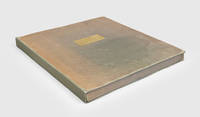
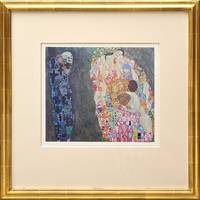
1931190931Vienna: Osterreichischen Staatsdruckerei 1931. A spectacular portfolio First edition number 124 of 200 copies printed in German. This spectacular portfolio reproduces six of Klimt's paintings that were destroyed at the end of the Second World War. The total edition comprised 500 numbered copies issued in French German and English. Of these 200 copies were printed in German of which 30 copies were bound as a book in a deluxe binding; 150 copies in French under the title "Dernière gerbe" of which 20 were bound as a book in a deluxe binding; and 150 copies in English under the title "An Aftermath" of which 20 were bound as a book in a deluxe binding. The six works destroyed in the war perished on 8 May 1945. Sixteen of Klimt's paintings were in storage in the Schloss Immendorf a 16th-century castle in Lower Austria which was set on fire by a retreating tank division of the German army. The six include two from Klimt's Faculty Paintings originally created for the ceiling of the Great Hall of the University of Vienna "Medizin" printed here in colour and heightened in gold and "Jurisprudenz" and four from the famous Lederer collection: "Die Freundinnen" "Malcesine am Gardasee" "Bauerngarten mit Hühnern" each printed here in colour and "Gastein". The publisher of this portfolio Max Eisler 1881-1937 was an art historian at Vienna University who published the first Klimt monograph in 1920. He intended this portfolio to compliment the only folio set produced in Klimt's lifetime Das Werk which had featured Klimt's works and was overseen by him up to 1913. Fragile collotype plates cannot be reused. As such this necessitates the completion of a run on the first go and also dictates a limited production number. Printed by hand the collotypes required deft handling by the printer Osterreichische Staatsdruckerei. A complicated and lengthy process involving gelatin colloids mixed with dichromates the creation of 16 colour separation thin glass filters to achieve the light-sensitive internegative images that could faithfully capture all of the painting's tonal gradations and colours exposure to actinic light and delicate chine colle papers that allow for greater colour saturation. Folio. With 30 full-page collotype plates after Klimt printed on chine colle paper laid down on heavy cream wove paper with untrimmed deckled edges of which 15 are in colour 2 heightened in metallic gold and silver ink and 1 heightened in gold ink and 15 in monochrome. Sheet sizes: 48 x 45.5 cm. Together with 18 pages. Collotypes and pages loose in original green silk clamshell box artist's name in gilt to front cover. Box lid split to corners four prints with pin holes to extreme corners not affecting the images a couple with light marks to the margins not affecting the images otherwise all bright impressions. unknown
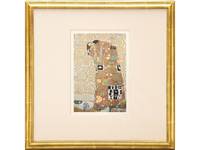
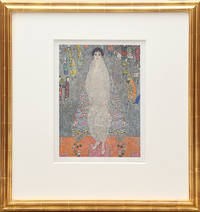
1931182247Vienna: Osterreichischen Staatsdruckerei 1931. One of 30 prints from the Eine Nachlese/Dernière gerbe/An Aftermath portfolio. Max Eisler 1881-1937 the publisher of this print was an art historian at Vienna University who published the first Klimt monograph in 1914. He intended Eine Nachlese to complement Das Werk the only folio set produced in Klimt's lifetime which was overseen by Klimt up to 1913. Fragile hand-printed collotype plates cannot be reused so the run must be completed on the first go and in only a limited number. The complicated lengthy process involves gelatin colloids mixed with dichromates. Thin 16-colour separation glass filters achieve the light-sensitive internegative images which capture the original tonal gradations. These are exposed to actinic light. Finally the delicate chine colle paper allows for greater colour saturation. Edition of 500. Collotype in colours with metallic gold and silver on chine colle paper laid down on heavy cream wove paper with untrimmed deckled edges. Image size: 31.2 x 19.4 cm. Sheet size: 48 x 45.5 cm. Framed size: 59 x 56.3 cm. Presented in a handmade gold leaf frame with conservation acrylic glazing. Small public library stamp lower left minor spotting to margins otherwise in excellent condition. unknown
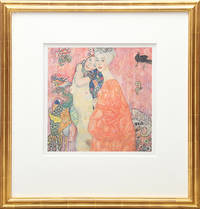
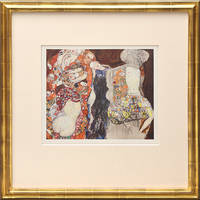
1931187329Vienna: Osterreichischen Staatsdruckerei 1931. One of 30 prints from the Eine Nachlese/Dernière gerbe/An Aftermath portfolio. The first reproduction of Klimt's original painting. Die Freundennen was one of 16 original paintings by Klimt which were destroyed on 8 May 1945. The paintings were in storage in the Schloss Immendorf a 16th century castle in Lower Austria which was set on fire by a retreating tank division of the German army. Max Eisler 1881-1937 the publisher of this print was an art historian at Vienna University who published the first Klimt monograph in 1914. He intended Eine Nachlese to complement Das Werk the only folio set produced in Klimt's lifetime which was overseen by Klimt up to 1913. The collotype produces fine tonal gradations sharp detail and a continuous-tone effect unmatched by most other photomechanical processes. However the surface of the gelatin-coated plate is extremely delicate and can break down under friction or over-inking. Plates wear out quickly giving a short print-run and maintaining consistent humidity during printing is crucial - even small fluctuations can ruin the plate. As a result collotype printing is slow exacting and vulnerable to failure but when successful it yields some of the finest printed images ever produced. Edition of 500. Collotype in colours on chine colle paper laid down on heavy cream wove paper with untrimmed deckled edges. Image size: 29.5 x 30 cm. Sheet size: 48 x 45.5 cm. Framed size: 59 x 56.3 cm. Presented in a handmade gold leaf frame with conservation acrylic glazing. Excellent condition. unknown
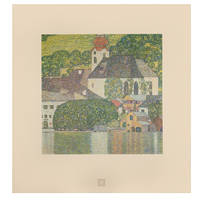
1931182262Vienna: Österreichische Staatsdruckerei 1931. One of 30 prints from the Eine Nachlese/Dernière gerbe/An Aftermath portfolio. Max Eisler 1881-1937 the publisher of this print was an art historian at Vienna University who published the first Klimt monograph in 1914. He intended Eine Nachlese to complement Das Werk the only folio set produced in Klimt's lifetime which was overseen by Klimt up to 1913. The collotype produces fine tonal gradations sharp detail and a continuous-tone effect unmatched by most other photomechanical processes. However the surface of the gelatin-coated plate is extremely delicate and can break down under friction or over-inking. Plates wear out quickly giving a short print-run and maintaining consistent humidity during printing is crucial - even small fluctuations can ruin the plate. As a result collotype printing is slow exacting and vulnerable to failure but when successful it yields some of the finest printed images ever produced. Edition of 500. Collotype in colours on chine colle paper laid down on heavy cream wove paper with untrimmed deckled edges. Image size: 28 x 30.7 cm. Sheet size: 48 x 45.5 cm. Framed size: 59 x 56.3 cm. Presented in a handmade gold leaf frame with conservation acrylic glazing. Small public library stamp lower left minor spotting to margins otherwise in excellent condition. unknown
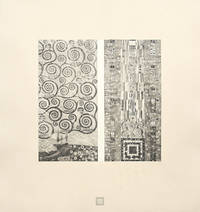
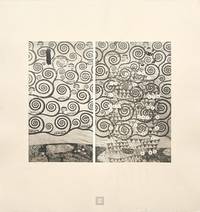
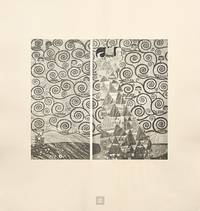
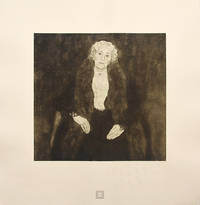
1931142899Vienna: Österreichische Staatsdruckerei 1931. Edition of 500. One of 30 prints from the Eine Nachlese portfolio. Max Eisler 1881-1937 the publisher of this print was an art historian at Vienna University who published the first Klimt monograph in 1914. He intended Eine Nachlese to complement Das Werk the only folio set produced in Klimt's lifetime which was overseen by Klimt up to 1913. Fragile hand-printed collotype plates cannot be reused so the run must be completed on the first go and in only a limited number. The complicated lengthy process involves gelatin colloids mixed with dichromates. Thin 16-colour separation glass filters achieve the light-sensitive internegative images which capture the original tonal gradations. These are exposed to actinic light. Finally the delicate chine colle paper allows for greater colour saturation. Dark grey monochrome collotype on chine colle paper laid down on heavy cream wove paper with untrimmed deckled edges. Image size: 27.3 x 27.7 cm. Sheet size: 48 x 45.5 cm. Excellent condition. unknown
1931142898Vienna: Österreichische Staatsdruckerei 1931. Edition of 500. One of 30 prints from the Eine Nachlese portfolio. Max Eisler 1881-1937 the publisher of this print was an art historian at Vienna University who published the first Klimt monograph in 1914. He intended Eine Nachlese to complement Das Werk the only folio set produced in Klimt's lifetime which was overseen by Klimt up to 1913. Fragile hand-printed collotype plates cannot be reused so the run must be completed on the first go and in only a limited number. The complicated lengthy process involves gelatin colloids mixed with dichromates. Thin 16-colour separation glass filters achieve the light-sensitive internegative images which capture the original tonal gradations. These are exposed to actinic light. Finally the delicate chine colle paper allows for greater colour saturation. Dark grey monochrome collotype on chine colle paper laid down on heavy cream wove paper with untrimmed deckled edges. Image size: 27.2 x 32 cm. Sheet size: 48 x 45.5 cm. Excellent condition. unknown
1931142896Vienna: Österreichische Staatsdruckerei 1931. Edition of 500. One of 30 prints from the Eine Nachlese portfolio. Max Eisler 1881-1937 the publisher of this print was an art historian at Vienna University who published the first Klimt monograph in 1914. He intended Eine Nachlese to complement Das Werk the only folio set produced in Klimt's lifetime which was overseen by Klimt up to 1913. Fragile hand-printed collotype plates cannot be reused so the run must be completed on the first go and in only a limited number. The complicated lengthy process involves gelatin colloids mixed with dichromates. Thin 16-colour separation glass filters achieve the light-sensitive internegative images which capture the original tonal gradations. These are exposed to actinic light. Finally the delicate chine colle paper allows for greater colour saturation. Dark grey monochrome collotype on chine colle paper laid down on heavy cream wove paper with untrimmed deckled edges. Image size: 27 x 30.7 cm. Sheet size: 48 x 45.5 cm. Excellent condition. unknown
1931142897Vienna: Österreichische Staatsdruckerei 1931. Edition of 500. One of 30 prints from the Eine Nachlese portfolio. Max Eisler 1881-1937 the publisher of this print was an art historian at Vienna University who published the first Klimt monograph in 1914. He intended Eine Nachlese to complement Das Werk the only folio set produced in Klimt's lifetime which was overseen by Klimt up to 1913. Fragile hand-printed collotype plates cannot be reused so the run must be completed on the first go and in only a limited number. The complicated lengthy process involves gelatin colloids mixed with dichromates. Thin 16-colour separation glass filters achieve the light-sensitive internegative images which capture the original tonal gradations. These are exposed to actinic light. Finally the delicate chine colle paper allows for greater colour saturation. Dark grey monochrome collotype on chine colle paper laid down on heavy cream wove paper with untrimmed deckled edges. Image size: 27.2 x 29.4 cm. Sheet size: 48 x 45.5 cm. Excellent condition. unknown
1991BN49487Dortmund: Harenberg-Edition 1991. 2. Auflage. <br/><br/>Kunst Dortmund: Harenberg-Edition unknown
3310353Oceano. Hardcover. Good. 23 cm. 62 p. il. Encuadernación en tapa dura de editorial ilustrada. ISBN: 8449437397 Erótico Oceano. hardcover
1219691931 . Collotype in colours 1931 on chine colle paper laid down on heavy cream wove paper from the edition of 500 the full sheet with deckled edges published by Max Eisler Vienna 48 x 45.5 cm. 19 x 18 in.<br /> <br /> 1931 unknown
2812313641.Gpaperback. Good. Access codes and supplements are not guaranteed with used items. May be an ex-library book. paperback
1931170055Vienna: Österreichische Staatsdruckerei 1931. One of 30 prints from the Eine Nachlese portfolio. Max Eisler 1881-1937 the publisher of this print was an art historian at Vienna University who published the first Klimt monograph in 1914. He intended Eine Nachlese to complement Das Werk the only folio set produced in Klimt's lifetime which was overseen by Klimt up to 1913. The collotype produces fine tonal gradations sharp detail and a continuous-tone effect unmatched by most other photomechanical processes. However the surface of the gelatin-coated plate is extremely delicate and can break down under friction or over-inking. Plates wear out quickly giving a short print-run and maintaining consistent humidity during printing is crucial - even small fluctuations can ruin the plate. As a result collotype printing is slow exacting and vulnerable to failure but when successful it yields some of the finest printed images ever produced. Edition of 500. Collotype in colours on chine colle paper laid down on heavy cream wove paper with untrimmed deckled edges. Image size: 26.7 x 30.8 cm. Sheet size: 48 x 45.5 cm. Framed size: 59 x 56.3 cm. Presented in a handmade gold leaf frame with conservation acrylic glazing. Excellent condition. unknown
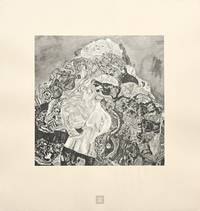
1931142900Vienna: Österreichische Staatsdruckerei 1931. Edition of 500. One of 30 prints from the Eine Nachlese portfolio. Max Eisler 1881-1937 the publisher of this print was an art historian at Vienna University who published the first Klimt monograph in 1914. He intended Eine Nachlese to complement Das Werk the only folio set produced in Klimt's lifetime which was overseen by Klimt up to 1913. Fragile hand-printed collotype plates cannot be reused so the run must be completed on the first go and in only a limited number. The complicated lengthy process involves gelatin colloids mixed with dichromates. Thin 16-colour separation glass filters achieve the light-sensitive internegative images which capture the original tonal gradations. These are exposed to actinic light. Finally the delicate chine colle paper allows for greater colour saturation. Dark sepia monochrome collotype on chine colle paper laid down on heavy cream wove paper with untrimmed deckled edges. Image size: 29.5 x 29.9 cm. Sheet size: 48 x 45.5 cm. Excellent condition. unknown
1931187325Vienna: Osterreichischen Staatsdruckerei 1931. One of 30 prints from the Eine Nachlese/Dernière gerbe/An Aftermath portfolio. The first reproduction of Klimt's original painting created in 1914-16. The painting sold on 18 November 2025 at Sotheby's for $236.4m. The first reproduction of Klimt's original painting created in 1914-16. The painting sold on 18 November 2025 at Sotheby's for $236.4m this is the second most expensive painting ever. Max Eisler 1881-1937 the publisher of this print was an art historian at Vienna University who published the first Klimt monograph in 1914. He intended Eine Nachlese to complement Das Werk the only folio set produced in Klimt's lifetime which was overseen by Klimt up to 1913. The collotype produces fine tonal gradations sharp detail and a continuous-tone effect unmatched by most other photomechanical processes. However the surface of the gelatin-coated plate is extremely delicate and can break down under friction or over-inking. Plates wear out quickly giving a short print-run and maintaining consistent humidity during printing is crucial - even small fluctuations can ruin the plate. As a result collotype printing is slow exacting and vulnerable to failure but when successful it yields some of the finest printed images ever produced. Edition of 500. Collotype in colours on chine colle paper laid down on heavy cream wove paper with untrimmed deckled edges. Image size: 31.6 x 24.4 cm. Sheet size: 48 x 45.5 cm. Framed size: 59 x 56.3 cm. Presented in a handmade gold leaf frame with conservation acrylic glazing. Support paper cleaned otherwise in excellent condition. unknown
1931142902Vienna: Österreichische Staatsdruckerei 1931. Edition of 500. One of 30 prints from the Eine Nachlese portfolio. Max Eisler 1881-1937 the publisher of this print was an art historian at Vienna University who published the first Klimt monograph in 1914. He intended Eine Nachlese to complement Das Werk the only folio set produced in Klimt's lifetime which was overseen by Klimt up to 1913. Fragile hand-printed collotype plates cannot be reused so the run must be completed on the first go and in only a limited number. The complicated lengthy process involves gelatin colloids mixed with dichromates. Thin 16-colour separation glass filters achieve the light-sensitive internegative images which capture the original tonal gradations. These are exposed to actinic light. Finally the delicate chine colle paper allows for greater colour saturation. Dark grey monochrome collotype on chine colle paper laid down on heavy cream wove paper with untrimmed deckled edges. Image size: 29.3 x 29.5 cm. Sheet size: 48 x 45.5 cm. Excellent condition. unknown
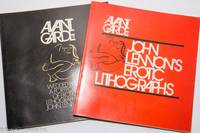
1970300953New York: Avant-Garde Media 1970. Magazine. Two copies of the issue variant covers 70p. 10.75x11.25 inches illustrated with photos and artworks essays articles reviews poetry fiction light wear to covers else very good magazines in variant black & red pictorial wraps. The contents are identical. separate covers. No indication of priority. Avant-Garde Media unknown
20172090202120414820Shueisha 2017. Soft Cover. Fine. Number of books: 1 Shueisha paperback
73-1439New York: Serge Sabarsky Gallery 1979. 8vo. 4pp. Soft cover. Bifold brochure. Very Good. Color plates. From the collection of Peter Selz Art History Professor at UC Berkeley. New York: Serge Sabarsky Gallery, 1979 paperback
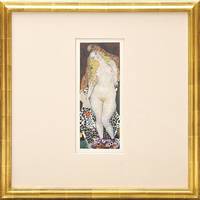
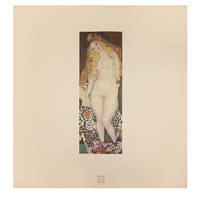
1931182248Vienna: Osterreichischen Staatsdruckerei 1931. One of 30 prints from the Eine Nachlese/Dernière gerbe/An Aftermath portfolio. Max Eisler 1881-1937 the publisher of this print was an art historian at Vienna University who published the first Klimt monograph in 1914. He intended Eine Nachlese to complement Das Werk the only folio set produced in Klimt's lifetime which was overseen by Klimt up to 1913. The collotype produces fine tonal gradations sharp detail and a continuous-tone effect unmatched by most other photomechanical processes. However the surface of the gelatin-coated plate is extremely delicate and can break down under friction or over-inking. Plates wear out quickly giving a short print-run and maintaining consistent humidity during printing is crucial - even small fluctuations can ruin the plate. As a result collotype printing is slow exacting and vulnerable to failure but when successful it yields some of the finest printed images ever produced. Edition of 500. Collotype in colours on chine colle paper laid down on heavy cream wove paper with untrimmed deckled edges. Image size: 31.6 x 11.2 cm. Sheet size: 48 x 45.5 cm. Framed size: 59 x 56.3 cm. Presented in a handmade gold leaf frame with conservation acrylic glazing. Small public library stamp lower left minor spotting to margins otherwise in excellent condition. unknown
1219641931 . Collotype in colours 1931 on chine colle paper laid down on heavy cream wove paper from the edition of 500 the full sheet with deckled edges published by Max Eisler Vienna 48 x 45.5 cm. 19 x 18 in.<br /> <br /> 1931 unknown
1922KLIMTGUS000943Thyrsos Verlag Leipzig & Wien. 1922. First edition. Fifty 28 x 21 cm card sheets reproducing Klimt's drawings of women some erotic in nature. Hermann Bahr's Vorwort is printed as an eight-page quarto pamphlet. The plates and the pamphlet are loose within the publisher's vellum-backed card portfolio stamped in gilt and red.Number 279 of 375 copies. Inside the upper cover of the portfolio is the pictorial bookplate of Eva and Otto Freund. The latter was a Director of the National Bank in Prague where he sat at the artist's request for portraits by Egon Schiele. Freund's wife Eva was an opera singer of some repute and also the subject of a portrait by Schiele.The portfolio is a bit rubbed at the corners. The plates are all in fine state. Thyrsos Verlag, Leipzig & Wien. hardcover