Goya, FranciscoBiblio.com
2 389 résultats
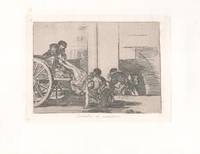
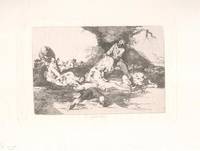
1930Biblio1070Estampe. eaux-forte lavis burin . no 69 de la suite "Los desastres de la guerra" publiée originalement en 1863 posthume. Ce tirage de 1930 constitue l'avant dernière 6ième édition sur 7 la dernière et finale tiré à 100 ex sur vergé avec filigrane.voir photo Excellent état.Feuille - sheet = 368 x 278image - 201 x 155 Real Academia de Bellas Artes de San Fernando
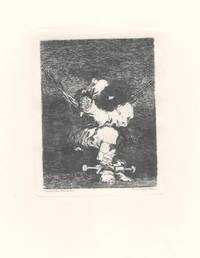
Acquaforte e bulino, circa 1810/15. Il titolo dell’opera è tratto da una scrittura a mano in una prova di stampa dell’opera che Goya include nell’album dei “Disastri della guerra” che donò al suo amico Ceán Bermúdez e che ora è conservato al British Museum di Londra. Il disegno preparatorio dell’opera è conservato al Prado di Madrid. Esemplare nel terzo stato di quattro, inserito nella Gazette des Beaux-Arts (1867); si tratta della prima vera edizione dell’opera, conosciuta altrimenti solo attraverso due prove di stampa. "A seated prisoner raises his clasped hands, both fastened with chains, in a gesture of supplication. We cannot see his features since his face is hidden beneath his long, dark hair. His feet are fastened in large shackles. Both the chains and the shackles are of considerable size, underlining their importance in any interpretation of the print. In fact, just as the title of the etching shows, the painter is comparing the excessive zeal employed in preventing the prisoner from escaping to the brutality of the crime he is accused of. It is possible that the way in which the prisoner is secured in this work by Goya was habitual at the time, an idea which is supported by certain passages of Forensic Discourses (Discursos forenses), by Juan Meléndez Valdés (Ribera del Fresno, Badajoz, 1754- Montpellier, 1814), whose portrait Goya painted in 1797. This book, published in Madrid in 1821, speaks of the cumbersome chains and shackles used to hold one María Vicente, put to death on the 23rd April 1798. Goya could well have known of her story: "But it is said that Doña María Vicente must have been treated, as the noblewoman that she is, in a very different manner, and not locked in shackles; and even thus fettered it was the judge's responsibility to examine their state and quality beforehand, to order them put on correctly". The painter has made extensive use of the etching technique here, building up the background with short, horizontal lines, whilst leaving large areas on the prisoner's clothing untouched and white, underlining his innocence. This etching would have been made at the same time as two others: The custody of a prisoner does not call for torture and If he is guilty, let him die quickly. In these images, Goya openly expresses his repulsion of the way in which prisoners were treated, as well as his opposition to the death penalty, echoing the ideas of Cesare Beccaria (Milan, 1738- Milan, 1794). In the pages of the work entitled Dei deliti e delle pene, published between 1763 and 1764, the Milanese talks of the need to modify the penal system, to lessen the severity of punishments and to seek out mechanisms for preventing crime. It is possible that these etchings also contributed to the debate on the abolition of torture which was being discussed in the Courts of Cádiz. Goya reiterates this same topic in some of the prints in his Disasters of War series, such as no. 15, And it can't be helped, no. 31, That's tough!, no. 32, Why?, no. 34, On account of a knife, no. 35, One can't tell why and no. 36, Not in this case either. Despite the gritty subject matter, the figure depicted in this etching possesses great dignity, recalling some earlier precedents which Goya may have been familiar with. One of these is an anonymous print based on Interior of a Prison (16th century, Museum of Fine Arts, Boston), by Giulio Romano (Rome, 1499-Mantua, 1596). When he was making this print, Goya may also have had in mind the disturbing, gloomy ambience of the prisons of Giambattista Piranesi (Mogliano Veneto, Treviso, 1720- Roma, 1778)." (cfr. https://fundaciongoyaenaragon.es/eng/obra/tan-barbara-la-seguridad-como-el-delito/712). Tomás Harris ritiene che la matrice di rame si trovi in una collezione privata di Parigi. Bibliografia Harris 26 III/IV; Delteil 31. Etching and engraving, circa 1810/15. The title of this work is taken from the handwritten title of a state proof that Goya included in the album of his Disasters of War prints which he gave to his friend Ceán Bermúdez and which is now in the British Museum, London. The preparatory drawing for this etching is in the Prado Museum, Madrid. Example of the third state of four, form the Gazette des Beaux-Arts (1867), firts edition of this work, before known only for proof states. "A seated prisoner raises his clasped hands, both fastened with chains, in a gesture of supplication. We cannot see his features since his face is hidden beneath his long, dark hair. His feet are fastened in large shackles. Both the chains and the shackles are of considerable size, underlining their importance in any interpretation of the print. In fact, just as the title of the etching shows, the painter is comparing the excessive zeal employed in preventing the prisoner from escaping to the brutality of the crime he is accused of. It is possible that the way in which the prisoner is secured in this work by Goya was habitual at the time, an idea which is supported by certain passages of Forensic Discourses (Discursos forenses), by Juan Meléndez Valdés (Ribera del Fresno, Badajoz, 1754- Montpellier, 1814), whose portrait Goya painted in 1797. This book, published in Madrid in 1821, speaks of the cumbersome chains and shackles used to hold one María Vicente, put to death on the 23rd April 1798. Goya could well have known of her story: "But it is said that Doña María Vicente must have been treated, as the noblewoman that she is, in a very different manner, and not locked in shackles; and even thus fettered it was the judge's responsibility to examine their state and quality beforehand, to order them put on correctly". The painter has made extensive use of the etching technique here, building up the background with short, horizontal lines, whilst leaving large areas on the prisoner's clothing untouched and white, underlining his innocence. This etching would have been made at the same time as two others: The custody of a prisoner does not call for torture and If he is guilty, let him die quickly. In these images, Goya openly expresses his repulsion of the way in which prisoners were treated, as well as his opposition to the death penalty, echoing the ideas of Cesare Beccaria (Milan, 1738- Milan, 1794). In the pages of the work entitled Dei deliti e delle pene, published between 1763 and 1764, the Milanese talks of the need to modify the penal system, to lessen the severity of punishments and to seek out mechanisms for preventing crime. It is possible that these etchings also contributed to the debate on the abolition of torture which was being discussed in the Courts of Cádiz. Goya reiterates this same topic in some of the prints in his Disasters of War series, such as no. 15, And it can't be helped, no. 31, That's tough!, no. 32, Why?, no. 34, On account of a knife, no. 35, One can't tell why and no. 36, Not in this case either. Despite the gritty subject matter, the figure depicted in this etching possesses great dignity, recalling some earlier precedents which Goya may have been familiar with. One of these is an anonymous print based on Interior of a Prison (16th century, Museum of Fine Arts, Boston), by Giulio Romano (Rome, 1499-Mantua, 1596). When he was making this print, Goya may also have had in mind the disturbing, gloomy ambience of the prisons of Giambattista Piranesi (Mogliano Veneto, Treviso, 1720- Roma, 1778)." (cf. https://fundaciongoyaenaragon.es/eng/obra/tan-barbara-la-seguridad-como-el-delito/712). Tomás Harris believes that the plate for this etching may be in a private collection in Paris. Literature Harris 26 III/IV; Delteil 31. Harris 26, III/IV; Delteil 31.
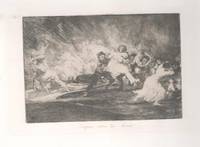
76-0143Madrid: Real Academia 1903. Etching aquatint and drypoint on wove paper. 23.5 x 33 cm sheet. Limited edition to 100. Very Good light specks of foxing in the margins.Ref.: Harris 184; Delteil 183. Madrid: Real Academia, 1903. unknown
76-0144Madrid: Real Academia 1903. Etching aquatint and drypoint on wove paper. 24 x 33 cm sheet. Limited edition to 100. Very Good light specks of foxing in the margins.Ref.: Harris 161; Delteil 160. Madrid: Real Academia, 1903. unknown
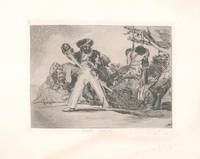
76-0145Madrid: Real Academia circa 1906. Etching aquatint and drypoint on laid paper. 23.5 x 32 cm sheet. Very Good light toning in the margins.Ref.: Harris 151; Delteil 160. Madrid: Real Academia, [circa 1906]. unknown
76-0142Madrid: Real Academia 1903. Etching aquatint and drypoint on wove paper. 23.5 x 33 cm sheet. Limited edition to 100. Good light specks of foxing throughout.Ref.: Harris 188; Delteil 187. Madrid: Real Academia, 1903. unknown
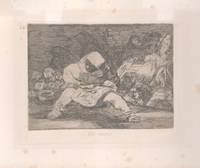
76-0146Madrid: Real Academia circa 1906. Etching aquatint and drypoint on laid paper. 23.5 x 32 cm sheet. Very Good.Ref.: Harris 136; Delteil 135. Madrid: Real Academia, [circa 1906]. unknown
76-0147Paris: Gazette des Beaux Arts Vol. XXII page 196 1867. Etching and burin on laid paper. 26 x 17 cm sheet. First Edition Posthumous impression with letters masked. Printed by Delatre Pars. Very Good.Ref.: Harris 26; Delteil 312. Paris: Gazette des Beaux Arts, Vol. XXII, page 196, 1867. unknown
19802090202118103472Iwanamishoten 1980. Soft Cover. Fine. The book is in fine condition. Iwanamishoten paperback
16-4471Madrid: Edición de la Calcografía Nacional Real Academia de San Fernando para el Banco de España 1966. Original aquatint and etching from the 1966 edition. 37.5 x 26.5 cm. sheet size. Printed on rag paper with the blind stamp of the Real Academia de San Fernando. Harris no. 51; this edition printed after the Harris catalogue was published in 1964.Grabado original. Edición de la Calcografía Nacional Real Academia de San Fernando para el Banco de España 1966. Tamaño del papel: 38x26 cm. Huella impresa: 20x15 cm. Sello en seco de la Real Academia de San Fernando. Se entrega enmarcado. Muy buen estado de conservación. Madrid: Edición de la Calcografía Nacional (Real Academia de San Fernando) para el Banco de España, 1966. unknown
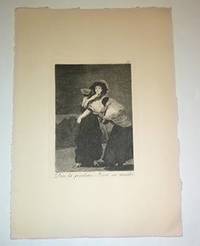
Opera tratta dai "Los Caprichos", per la prima volta pubblicati nel 1799. Prova della quarta edizione di dodici, stampata dalla calcografia di Madrid, circa 1870. Aquaforte, acquatinta brunita e puntasecca, in perfetto stato di conservazione. La serie chiamata Los Caprichos, è composta da ottanta incisioni, la cui prima edizione [l’unica a non essere pubblicata postuma] venne alla luce ne 1799. Curata in fase d’edizione dallo stesso artista, la serie fu commercializzata e dopo poco tempo ritirata dal mercato. Infatti, a causa dei numerosi soggetti che ironizzavano sulla società spagnola di fine secolo, il Goya subì una censura. L’interpretazione dei soggetti rappresentati su queste lastre, sempre enigmatiche, è spesso controversa Etching with burnished aquatint and engraving, 1799. From the fourth edition of twelve of the so-called "Los Caprichos" series, edited by the Madrid Calcografia [circa 1870].A very good impression, with good contrast, printed on contemporary paper, customary margins, in very good conditions. The series called Los Caprichos, consists of eighty etchings. This first edition of 1799, the only one not to be published posthumously, is imprinted on soft laid pape. Cured in phase edition by the same artist, the series was marketed and before long withdrawn from the market. In fact, because of the many subjects that mocked the Spanish society of the century, Goya suffered censorship. The interpretation of the subjects represented on these plates, always enigmatic, is often controversial. Harris 63, Delteil 65.
Opera tratta dai "Los Caprichos", per la prima volta pubblicati nel 1799. Prova della quarta edizione di dodici, stampata dalla calcografia di Madrid, circa 1870. Aquaforte, acquatinta brunita e puntasecca, in perfetto stato di conservazione. La serie chiamata Los Caprichos, è composta da ottanta incisioni, la cui prima edizione [l’unica a non essere pubblicata postuma] venne alla luce ne 1799. Curata in fase d’edizione dallo stesso artista, la serie fu commercializzata e dopo poco tempo ritirata dal mercato. Infatti, a causa dei numerosi soggetti che ironizzavano sulla società spagnola di fine secolo, il Goya subì una censura. L’interpretazione dei soggetti rappresentati su queste lastre, sempre enigmatiche, è spesso controversa. Etching with burnished aquatint and engraving, 1799. From the fourth edition of twelve of the so-called "Los Caprichos" series, edited by the Madrid Calcografia [circa 1870].A very good impression, with good contrast, printed on contemporary paper, customary margins, in very good conditions. The series called Los Caprichos, consists of eighty etchings. This first edition of 1799, the only one not to be published posthumously, is imprinted on soft laid pape. Cured in phase edition by the same artist, the series was marketed and before long withdrawn from the market. In fact, because of the many subjects that mocked the Spanish society of the century, Goya suffered censorship. The interpretation of the subjects represented on these plates, always enigmatic, is often controversial. Harris 113, Delteil 115.
Opera tratta dai Los Caprichos, per la prima volta pubblicati nel 1799.Prova della quarta edizione di dodici, stampata dalla calcografia di Madrid, circa 1870.Acquaforte, acquatinta brunita e puntasecca, in perfetto stato di conservazione.La serie chiamata Los Caprichos, è composta da ottanta incisioni, la cui prima edizione [l’unica a non essere pubblicata postuma] venne alla luce ne 1799. Curata in fase d’edizione dallo stesso artista, la serie fu commercializzata e dopo poco tempo ritirata dal mercato.Infatti, a causa dei numerosi soggetti che ironizzavano sulla società spagnola di fine secolo, il Goya subì una censura. L’interpretazione dei soggetti rappresentati su queste lastre, sempre enigmatiche, è spesso controversa. In questo soggetto Goya affronta il tema del mondo alla rovescia. Nella scena ci sono tre personaggi, il centro dell'attenzione è l'uomo che sta mangiando, e che cerca di evitare tutti gli sguardi, vergognandosi dei tratti osceni del suo viso. L'artista ha chiaramente indicato il suo pensiero disegnando la cintura di un paio di pantaloni sopra la testa del personaggio. I nasi assumono una presenza notevole sul viso, e nel linguaggio popolare "nasi" è un chiaro eufemismo sessuale. Il modo in cui il viso è costruito, in modo che sopracciglia, occhi e naso evochino l'apparato genitale maschile, rafforzerebbe lo stesso senso. Altri commenti insinuano che la figura, nel piano superiore, con i suoi grandi pugni serrati, stia commettendo sodomia con la figura che tiene il vaso da cui mangia l'uomo vergognoso. L'anno 1799 è uno dei momenti chiave nella vita e nel lavoro di Francisco de Goya. Oltre ad essere nominato primo pittore da camera di Goya, a godere di un crescente prestigio come ritrattista e ad inaugurare la cappella di San Antonio de la Florida, che aveva decorato, il 6 febbraio il Diario de Madrid pubblicò un annuncio in cui venivano messe in vendita le ottanta stampe che compongono la serie dei Caprichos. Etching with burnished aquatint and engraving, 1799.From the fourth edition of twelve of the so-called Los Caprichos series, edited by the Madrid Calcografia [circa 1870].A very good impression, with good contrast, printed on contemporary paper, usual wide margins, in very good conditions.The series called Los Caprichos, consists of eighty etchings. This first edition of 1799, the only one not to be published posthumously, is imprinted on soft laid pape.Cured in phase edition by the same artist, the series was marketed and before long withdrawn from the market. In fact, because of the many subjects that mocked the Spanish society of the century, Goya suffered censorship.The interpretation of the subjects represented on these plates, always enigmatic, is often controversial. In this print Goya approaches the theme of the world upside down. In the scene there are three characters, being the focus of attention the man who is eating, and tries to avoid all eyes, ashamed of the obscene features of his face. The artist has clearly indicated his thinking by drawing above the character's head the waistband of a pair of pants. The noses take on a notable presence on the face, and in popular language "noses" is a clear sexual euphemism. The way the face is constructed, so that eyebrows, eyes and nose evoke the male genital apparatus, would reinforce the same sense. Other comments insinuate that the figure, in the upper plane, with his large clenched fists, is committing sodomy with the figure holding the vessel from which the shameful man eats. The year 1799 is one of the key moments in the life and work of Francisco de Goya. In addition to being named first chamber painter, enjoying a growing prestige as a portrait painter and the inauguration of the chapel of San Antonio de la Florida, which he had decorated, on February 6 the announcement of the sale of the eighty prints that form the series of the Caprichos was published in the Diario de Madrid. Here, Goya focuses his social criticism on the bestiality of a deformed man whose head emerges from his breeches. Among the slight variations between the print and the preparatory drawing, the most striking is that, in the former, he wears his trousers, but in the latter, he does not. As a result, the latter came to be known as The satire of man’s lechery. Moreover, this is the only drawing in the series to mix red-ink wash with pen. Valentín Carderera’s handwritten commentaries on the Caprichos, which are in both the Biblioteca Nacional and the Museo del Prado, further clarify this subject. The first reads: Men with large noses also tend to have large arrows [here, “arrow” is a euphemism for penis] and fat gandumbas [testicles]. As they are often sodomites, this one is depicted with his breeches on his head, with his pudenda hanging out as he lies on top of a poor devil and pulls up his skirts. The second commentary completes the information: There are men whose face is the most indecent part of their body, and it would be good if those whose face is that disgraceful and ridiculous would stick it in their breeches. Example fomr the HENRI MARIE PETIET (Saint-Prix, Seine-et-Oise, 1894-1980) collection (Lugt 5031). Harris 89; Delteil 91.
Opera tratta dai "Los Caprichos", per la prima volta pubblicati nel 1799. Prova della quarta edizione di dodici, stampata dalla calcografia di Madrid, circa 1870. Aquaforte, acquatinta brunita e puntasecca, in perfetto stato di conservazione. La serie chiamata Los Caprichos, è composta da ottanta incisioni, la cui prima edizione [l’unica a non essere pubblicata postuma] venne alla luce ne 1799. Curata in fase d’edizione dallo stesso artista, la serie fu commercializzata e dopo poco tempo ritirata dal mercato. Infatti, a causa dei numerosi soggetti che ironizzavano sulla società spagnola di fine secolo, il Goya subì una censura. L’interpretazione dei soggetti rappresentati su queste lastre, sempre enigmatiche, è spesso controversa. Etching with burnished aquatint and engraving, 1799. From the fourth edition of twelve of the so-called "Los Caprichos" series, edited by the Madrid Calcografia [circa 1870].A very good impression, with good contrast, printed on contemporary paper, customary margins, in very good conditions. The series called Los Caprichos, consists of eighty etchings. This first edition of 1799, the only one not to be published posthumously, is imprinted on soft laid pape. Cured in phase edition by the same artist, the series was marketed and before long withdrawn from the market. In fact, because of the many subjects that mocked the Spanish society of the century, Goya suffered censorship. The interpretation of the subjects represented on these plates, always enigmatic, is often controversial. Harris 82, Delteil 84.
Opera tratta dai "Los Caprichos", per la prima volta pubblicati nel 1799. Prova della quarta edizione di dodici, stampata dalla calcografia di Madrid, circa 1870. Aquaforte, acquatinta brunita e puntasecca, in perfetto stato di conservazione. La serie chiamata Los Caprichos, è composta da ottanta incisioni, la cui prima edizione [l’unica a non essere pubblicata postuma] venne alla luce ne 1799. Curata in fase d’edizione dallo stesso artista, la serie fu commercializzata e dopo poco tempo ritirata dal mercato. Infatti, a causa dei numerosi soggetti che ironizzavano sulla società spagnola di fine secolo, il Goya subì una censura. L’interpretazione dei soggetti rappresentati su queste lastre, sempre enigmatiche, è spesso controversa. Etching with burnished aquatint and engraving, 1799. From the fourth edition of twelve of the so-called "Los Caprichos" series, edited by the Madrid Calcografia [circa 1870].A very good impression, with good contrast, printed on contemporary paper, customary margins, in very good conditions. The series called Los Caprichos, consists of eighty etchings. This first edition of 1799, the only one not to be published posthumously, is imprinted on soft laid pape. Cured in phase edition by the same artist, the series was marketed and before long withdrawn from the market. In fact, because of the many subjects that mocked the Spanish society of the century, Goya suffered censorship. The interpretation of the subjects represented on these plates, always enigmatic, is often controversial. Harris 56, Delteil 78.
Opera tratta dai "Los Caprichos", per la prima volta pubblicati nel 1799. Prova della quarta edizione di dodici, stampata dalla calcografia di Madrid, circa 1870. Aquaforte, acquatinta brunita e puntasecca, in perfetto stato di conservazione. La serie chiamata Los Caprichos, è composta da ottanta incisioni, la cui prima edizione [l’unica a non essere pubblicata postuma] venne alla luce ne 1799. Curata in fase d’edizione dallo stesso artista, la serie fu commercializzata e dopo poco tempo ritirata dal mercato. Infatti, a causa dei numerosi soggetti che ironizzavano sulla società spagnola di fine secolo, il Goya subì una censura. L’interpretazione dei soggetti rappresentati su queste lastre, sempre enigmatiche, è spesso controversa. Etching with burnished aquatint and engraving, 1799. From the fourth edition of twelve of the so-called "Los Caprichos" series, edited by the Madrid Calcografia [circa 1870].A very good impression, with good contrast, printed on contemporary paper, customary margins, in very good conditions. The series called Los Caprichos, consists of eighty etchings. This first edition of 1799, the only one not to be published posthumously, is imprinted on soft laid pape. Cured in phase edition by the same artist, the series was marketed and before long withdrawn from the market. In fact, because of the many subjects that mocked the Spanish society of the century, Goya suffered censorship. The interpretation of the subjects represented on these plates, always enigmatic, is often controversial. Harris 94, Delteil 96.
1858003173Paris Schulz et Thuillié 1858 In-12 Demi-reliure Edition originale
A beautiful, haunting livre d'artiste illustrated with 22 original aquatints by Andre Villeboeuf, 16 of which are full-page and hors-texte. The artist wrote extensively about Goya, and we see Goya's influence both in the technique (aquatints with subtle shades, derived from multiple bitings) and in the subject matter (surreal beasts, the occult). From a total edition of 230 copies, this is one of 195 copies beautifully printed (by Daragnes) on fine Lana wove paper. Folio. Loose as issued in original wraps. Fine and bright, with no defects. In the original board chemise and slipcase.
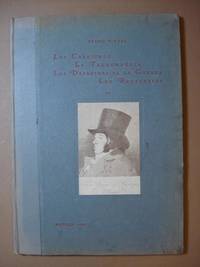
FIRST AND ONLY EDITION in book form of the first systematic catalogue raisonne of Goya's etchings and lithographs. (It had initially appeared, in uncorrected form, in a series of articles in the Gazette des Beaux-Arts.) 2 leaves, 140 pp. plus frontispiece portrait of Goya. The catalogue raisonne of the prints occupies pp. 31-139. 278 items described. Large 8vo. Printed publisher's wraps. Wraps lightly worn. Internally clean. Very scarce, especially in original wraps.
1922EXE-786Paris, chez l'auteur, 1922. In-4°, reliure cartonnée, dos de toile. Tome 14 de la série "Le peintre graveur illustré" de Loys Delteil. Les deux parties consacrées à Goya sont ici reliées en un seul volume, bien complètes de la gravure originale " L'aveugle assis". 289 oeuvres décrites.
First and only edition. A biography of Goya and a catalogue raisonne of his works in all media. Profusely illustrated. With 14 full-page hors-texte plates, INCLUDING THE HORS-TEXTE ETCHING "UN MENDIANT" (A Beggar)--a moving image then attributed to Goya but NOW KNOWN TO BE THE WORK OF EUGENIO LUCAS, Goya's most important follower (see Arnaiz, p. 163--it is, in fact, Lucas' only known original print.) There are also full-page hors-texte etchings by Bracquemond, Jacquemart, Flameng, and others after Goya, and a lithograph by Fuchs. Folio, recent cloth. Original wraps bound in. Fine. Very scarce.
192840.404Madrid: Librería de Pedro Videl 1928. 1ª ed. Holandesa tela editorial. 22.5x32. 31 láminas 2h. Librería de Pedro Videl hardcover
Acquaforte, acquatinta brunita, puntasecca misure: mm 335 x 245 Pittore di corte, autore di celebri ritratti, disegnatore e stampatore spagnolo. Ha anticipato con le sue opere e il suo stile molte delle tendenze artistiche di fine Ottocento ed è considerato il primo vero artista moderno. Egli utilizza l'incisione come mezzo per esprimere e diffondere quei 'sogni dell'immaginazione' che tanto lo affascinano. Nasce cosi la serie chiamata "Los Caprichos" composta da ottanta incisioni, la cui prima edizione venne pubblicata nel 1799. La serie dei Capricci è caratterizzata da scene brutali, grottesche, figure oscene e sgradevoli ma anche animali e maschere tutte immagini di fantasia che servono all'artista per incriminare i vizi e la meschinità dell'uomo. Egli realizza circa 700 dipinti, 900 disegni e 300 stampe attraverso le quali è possibile rivivere la sua attività artistica. Nella tavola 29 il soggetto è un uomo grottesco che sembra leggere nonostante gli occhi socchiusi e due servi; uno intento a sistemare i capelli e l'altro, raffigurato in ginocchio, mentre lo aiuta a calzare le scarpe. Impressione eccellente. Stampata dalla Calcografia della Real Academia tra il 1905 e il 1907 su carta sottile e liscia. Titolata nel margine in basso e numerata "29" in alto a destra. Ottimo stato di conservazione, probabilmente ottava edizione. Bibliografia: Harris 1964 64.II; Delteil 66.
Opera tratta dai "Los Caprichos", per la prima volta pubblicati nel 1799. Prova della quarta edizione di dodici, stampata dalla calcografia di Madrid, circa 1870. Aquaforte, acquatinta brunita e puntasecca, in perfetto stato di conservazione. La serie chiamata Los Caprichos, è composta da ottanta incisioni, la cui prima edizione [l’unica a non essere pubblicata postuma] venne alla luce ne 1799. Curata in fase d’edizione dallo stesso artista, la serie fu commercializzata e dopo poco tempo ritirata dal mercato. Infatti, a causa dei numerosi soggetti che ironizzavano sulla società spagnola di fine secolo, il Goya subì una censura. L’interpretazione dei soggetti rappresentati su queste lastre, sempre enigmatiche, è spesso controversa Etching with burnished aquatint and engraving, 1799. From the fourth edition of twelve of the so-called "Los Caprichos" series, edited by the Madrid Calcografia [circa 1870].A very good impression, with good contrast, printed on contemporary paper, customary margins, in very good conditions. The series called Los Caprichos, consists of eighty etchings. This first edition of 1799, the only one not to be published posthumously, is imprinted on soft laid pape. Cured in phase edition by the same artist, the series was marketed and before long withdrawn from the market. In fact, because of the many subjects that mocked the Spanish society of the century, Goya suffered censorship. The interpretation of the subjects represented on these plates, always enigmatic, is often controversial. Harris 48, Delteil 50
76-0141Paris: Gazette des Beaux-Arts 1867. Etching aquatint and drypoint on laid watermark paper. 21 x 29 cm sheet. Printed by Delatre Paris. From the first edition with lettering. Very Good light staining in margins.Ref.: Harris 25; Delteil 24. Paris: Gazette des Beaux-Arts, 1867. unknown