423 résultats
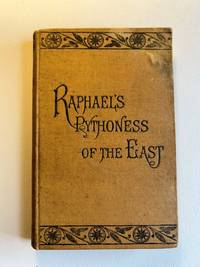
188328858London: Raphael. Good with no dust jacket; Slightly bumped shelfworn. Pages yellowed. . Small stains on edges text block not affecting interior. 1883. Hardcover. Supplemental ephemeris for 1819 published 1900 bound in back of volume. ; 8vo . Raphael hardcover
188329965London 1883. Good condition; Covers quite worn. 19 individual years bound together in limp leather covers; Each year 25 pages. unknown
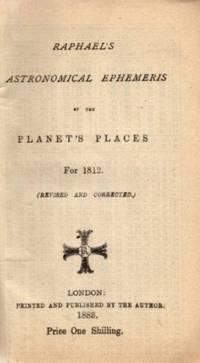
1891033314London: W. Foulsham & Co. Ltd. 1891. Handsomely bound volume of charts and tables of planetary positions for the years 1890-99. The 1890 section is second edition 1896 all others are first edition. Three quarter forest green leather over black cloth raised spine bands with gilt lettering and floral embellishments in compartments 7" tall. Some edgewear corners scuffed binding sound pages a bit age-toned but clean a few pages with pencil notes in the margins. First Edition. Hard Cover. Good. 12mo - over 6¾" - 7¾" tall. W. Foulsham & Co., Ltd. Hardcover
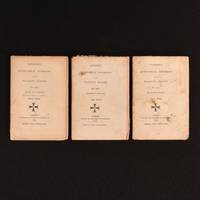
1896959P15London: Printed and Published by the Author; Robert Thomas Cross 1896-1910. Paperback. Very Good. 7.5" by 5". None. Three scarce reprints of Raphael's important ephemeris for various years across the nineneenth century. Three scarce volumes of 'Raphael's Astronomical Ephemeris' reprints of the late nineteenth and early twentieth centuries for the years 1842 1878 and 1891.This series of ephemeris originated by Robert Cross Smith an astrology using the pseudonym 'Raphael' first published in the early nineteenth century though the name was owned by a handful of people during the decades. The 1842 'Ephemeris' was by a Mr. Medhurst whereas both 1878 and 1891 were by Robert Thomas Cross who was still 'Raphael' by the time that these reissues were published. The Raphael ephemeris present a series of tables used in astrology to determine the position of the sun moon and planets. Each of these volumes details their positions for each of the years. Thus these scientific works offer a unique insight into life during these years. The original Raphael Robert Cross Smith was significant for popularising the system of astrological house division known as the Placidean. In the original publisher's paper wraps. Externally generally smart a little edge worn. Wraps are age-toned with spots and handling marks. Wear to the backstrip of 1842. Internally firmly bound. Pages are bright and generally clean with a few spots and pencil marks. Pages of 1842 are unopened to the fore edge. Very Good Printed and Published by the Author; [Robert Thomas Cross] paperback
189411241London: W. Foulsham and Co. Limited 1894. Later Printing. Hardcover. Very Good. Later Printing. Hardcover. Robert Cross Smith 1795-1832 was an English astrologer writing under the pseudonym of "Raphael". He married in 1820 and moved to London where he became interested in astrology. Together with G. W. Graham he published a book on geomancy in 1822. Smith began to edit a periodical entitled The Straggling Astrologer in 1824 but failed to receive enough subscribers and the periodical had to be discontinued after a few issues. He collected the issues of the failed periodical in a volume entitled The Astrologer Of The Nineteenth Century in the same year. From 1827 until his death in 1832 he edited an astrological almanac entitled The Prophetic Messenger. Also published by Smith was The Familiar Astrologer and A Manual of Astrology both in 1828. Smith died on 26 February 1832 in London. His almanac continued to be edited as Raphael's Ephemeris and would become a standard work in British and US American astrology. Raphael's Ephemeris popularized the system of Placidian system of astrological houses in the English-speaking world and in modern western astrology in general. Published posthumously. Original copies come with two "cards to be used with Raphael's Pythoness" on tear sheets lacking in this copy. Moderate wear to boards darkened scuffing bumped corners toning else tight bright and unmarred. Tape repair p. 15. Gold cloth with black titling decorations. Small 8vo. 212pp. Illus. b/w charts. Decorative endpapers. Missing two perforated tearout leaves. W. Foulsham and Co., Limited hardcover
1834D6891London: William Charlton Wright n.d. 1834. First Edition. Hardcover. Very Good. Contemporary gilt-ruled calf gilt-stamped ornament on raised bands and in spine compartments inside gilt dentelles t.e.g.; 12mo 4.25 x 7.25 inches; pp. i-vii 1 blank 3-220 plus full-color folding frontispiece. Light scuffing along joints and edges of boards; tiny chips at spine tips. Frontispiece torn along creases leaving 2 whole and intact panels bound in and the rest detached but complete and laid-in. An easy repair. The rest of the text block is nice and bright with just a few instances of some very faint foxing. A nice copy of an uncommon title. <br/><br/> William Charlton Wright hardcover
188471283Gravures par Tiburce de Mare, 1 vol. in-4 reliure postérieure demi-chagrin à coins rouge, dos à 4 nerfs, . Gazette des Beaux-Arts, Paris, 1884, 132 pp. avec 14 planches hors texte
188361100Paris Calmann Lévy 1883 1 vol. relié in-12 (182 x 118 mm), cartonnage demi-percaline rouge, dos lisse, 297 pp. Rousseurs intérieures. Sinon bon état, dans un cartonnage d'époque modeste mais solide.
188158931881 reliure plein chagrin bleu-marine (binding full shagreen) in-quarto, dos 5 nerfs (spine with raised bands) - décoré à froid (blind-stamping decoration) - entre-nerfs à fleuron (floweret) - titre frappé or (gilt title), plats magnifiquement décorés à froid (cover blind-stamping) avec un médaillon or en relief au centre (with a medallion gold in relief in the center), toutes tranches dorées (all edges gilt), ex-libris (book-plate) de François Merlant Député-Maire de Nantes gravé à l'Eau-Forte par René Pinard (book-plate engraved with Etching), illustrations : 155 reproductions de tableaux ou fac-similés de dessins (reproductions of painting or facsimiles of drawings) et 41 planches hors-texte (plates), naissances de rousseurs (beginning of the redness marks), 658 pages, 1881 à Paris Librairie Hachette et Compagnie,
188665469Hachette 1886 1 vol. relié fort gr. in-8, reliure demi-chagrin brun à coins bordés d'un double-filet doré, dos à nerfs, caissons décorés de motifs dorés, tête dorée, 714 pp., 244 reproductions in-texte et 51 planches hors-texte. Mors et coiffes un peu frottés. Quelques rousseurs intérieures. Sinon bel exemplaire, bien relié à l'époque.
186034891860 Paris: Jules Renouard, 1860. Complet en 2 vol. in-8: 15 x 22 cm. I/ viii-582 pp.; II/ 644 pp. Étude pionnière sur Raphael parue pour la première fois à Leipzig en 1839 sous le titre «Rafael von Urbino und sein Vater Giovanni Santi». Avec le portrait de Raphael gravé par Girard en frontispice du 1er volume, une vue de la maison de l'artiste à Rome en frontispice du second volume et un fac-similé d'un autrographe de Raphael. Charmantes reliures en basane lavallière. Dos à nerfs maqurés de filets dorés avec pièces de titre en chagrin noir. Piqûres épases. Collection très décorative.
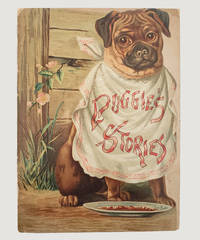
189012468London Paris & New York; Raphael Tuck & Sons circa 1890. 1890. Original Wrappers. Undated but pre the 1895 change of name to "Raphael Tuck & Sons Ltd".Softcover octavo picture book pp. 12. With colour printed covers two full page illustrations and double-page spread in colour plus line drawings throughout. Stapled pictorial card wraps with cutaway die-cut front cover featuring a pug wearing a dinner napkin. Spine rubbed with closed split to lower 3 cm; covers lightly surface soiled. Four-digit number inscribed in a small neat hand inside front cover; first leaf soiled to edge in shape of die-cut to cover. A very good copy. Charming children's picture book comprising 6 short stories in verse with accompanying illustrations. Tuck Number 591 from their Artistic Series. Scarce- just a single copy listed on Jisc and none found in commerce. London, Paris & New York; Raphael Tuck & Sons, circa [1890]. unknown
181324007REIMPRESO EN PALMA: Imprenta de Brusi 1813. Tercera edición.- 4º.- Rústica.- 183 páginas. . Palau 357747 - Bover Apéndice 685 Imprenta de Brusi unknown
181230921PALMA: En la Imprenta de Brusi 1812. Segunda edición.- 4º.- Rústica cubiertas en papel de aguas de época.- 183 páginas. Precedencia: Al final de la obra hay un texto bibliográfico manuscrito de mano de Fray Luis de Villafranca 1770-1847. Erudito Capuchino que fue utilizado por el propio Jovellanos en sus escritos desde su destierro en Mallorca. Segunda edición del mismo año que la primera impresa en Cádiz que tuvo muchas otras hasta el Trienio Liberal. La obra analiza histórica y filosóficamente toda la Revolución Francesa el reinado de Carlos IV y la Guerra de la Independencia. Tiene una continuación en la obra de Matias Vinuesa López de Alfaro Observador Político-Religioso de hecho el Padre Vinuesa fue el encargado de imprimir y aumentar ediciones posteriores a partir de este año de 1812. Ver en este mismo catálogo: Vinuesa. Observador Político-Religioso. Palau 357747 - Bover Apéndice 685 En la Imprenta de Brusi unknown
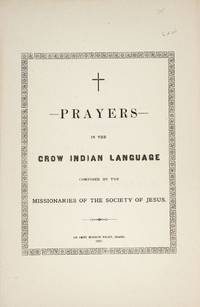
1891353993De Smet Mission Idaho: De Smet Mission Print 1891. 2 10; 11-17 1 blankpp. 8vo. Wrappers. 2 10; 11-17 1 blankpp. 8vo. "Though the Prayers was published separately this work often appears bound with other imprints from the same press particularly with Cataldo's Catechism . It is probable that the greatest portion of the work was done by Prando recognized by Jesuits as their great authority on the Crow language" Schoenberg. Because he wore spectacles Father Prando was known as Iron Eyes among the Crow. Schoenberg 74; Eberstadt 131-347 De Smet Mission Print unknown
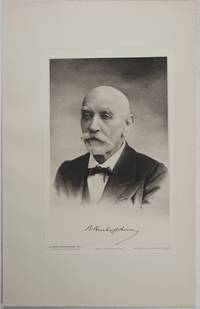
190063416ca. 1900. Le Monde Intellectuel. - La France Contemporaine 5302. - Berlin-Charlottenburg Adolf Eckstein Editeur o.J. ca.1900 300 x 460 mm; beigelegt 2 Blatt Biographie. Raphaël-Louis Bischoffsheim 1823-1906 est un banquier homme politique et mécène français fondateur de l'Observatoire de Nice. unknown
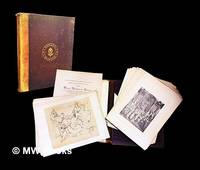
1866451247s.l. : s.n. 1866. First Edition. Hardcover. Very good portfolio copy in leather-backed cloth boards. Some light scuffs and speckling to covers with spine somewhat worn. Inside the prize sketches by Raphael are embossed on the upper margin by the awarding institution. The miscellaneous reproductions feature gilt outer edges. Some light smudges to leaves' margins with plates in very good condition. An overall well-preserved portfolio. Physical description; 30 loose leaves 29 cm. Contents; Twelve Raphael sketch reproductions on card stock constitute the Third Grade Prize in Art at the Warrington School of Art awarded in 1866 as introduced by the prize label and table of contents. An additional presumably later seventeen sketch reproductions are also enclosed with Raphael represented in addition other Renaissance artists. Subjects; Raphael 1483-1520—Reproductions. Art—Study and teaching—England—Warrington—19th century. Drawing Renaissance—Reproductions. [s.l.] : [s.n.] hardcover
1876189593Madrid: Librerías de A. de San Martín 1876. First edition. Hardcover. Very Good. 2 vols. boards. On colonization and colonial administration of the Spanish Colonies. Librerías de A. de San Martín hardcover
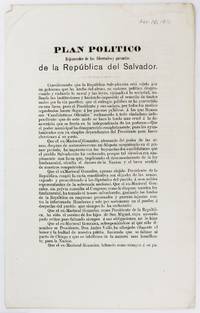
18765735Chalchuapa El Salvador 1876. Still very good. 3pp. on a bifolium. Folio. Crinkling and minor wear at edges. Faint dampstain to upper right corner. The president of Guatemala Justo Rufino Barrios invaded El Salvador in 1876 following the presidential election there. Barrios suspected that both the elected and former presidents had been harboring Guatemalan opponents to his regime and hope to install someone more favorable. The present "political plan" for El Salvador reads more as an indictment of the two leaders Santiago Gonzalez and Andres del Valle than an as organizing document for a new government. The first signer here is Rafael Zaldivar the choice of Barrios for next president of El Salvador and the work was printed in the field at Chalchuapa on April 10 1876 approximately one week before the decisive battles that forced the capitulation of the Salvadoran government. Not in OCLC. unknown
189191687Imprenta de M. Ginesta 1891. hardcover. Bueno. Madrid 1891. Imprenta de M. Ginesta. Colección de Libros Españoles Raros ó Curiosos. Tomo XX. Pasta española con dorados. 452 pp. 18x12. Lomo con nervios. Cantos superiores coloreados. Imprenta de M. Ginesta hardcover
1900118492Santiago de Chile: Imprenta Litografía i Encuadernación Barcelona/Imprenta San Buenaventura 1900. Cloth. Good. 214; ii; 282 1; 193p. lvip. boardsforest green cloth newly rebound pages yellowing. Three legal and political documents. Only one copy on OCLC at the National Library of Chile. Imprenta, Litografía i Encuadernación Barcelona/Imprenta San Buenaventura unknown
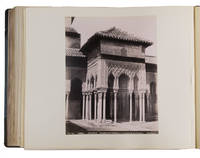
1890ABC_473841890. Half blind-tooled greenish brown calf and grey/green net grained cloth over boards with the title in gold on the front board red edges and decorated endpapers. Large oblong album 32 x 40 cm. 89 original photographs mostly 20 x 26 cm. In 711 a Muslim army led by Tariq ibn Ziyad conquered most of the Iberian Peninsula which was then part of the Visigothic Kingdom. This region became known as Al-Andalus with Cordoba serving as its capital. In 756 Abd ar-Rahman I established the Emirate of Cordoba as an independent state. The present photo album covers in many photographs the magnificent architecture and features of the Great Mosque of Cordoba which is considered one of the most significant architectural monuments of the western Islamic world. Built in 785 the mosque's most notable feature was its enormous hypostyle hall comprised of rows of columns connected by double tiers of arches. The lower tier included horseshoe arches and was constructed with alternating red brick and light-colored stone. Abd ar-Rahman II expanded the mosque's dimensions in 836 while preserving its original design. His successors Muhammad Al-Mundhir and Abdallah also added new features to the mosque. One of the mosque's western gates Bab al-Wuzara' now known as Puerta de San Esteban is a famous prototype of later Moorish architectural forms and motifs featuring horseshoe arches with alternating coloured and decorated voussoirs set within a decorative rectangular frame called an alfiz. At the centre of Garzóns photographic work on Córdoba was the Palace of the Lions also known as the Court of the Lions Patio de los Leones; . Situated in the center of the Alhambra with its ancient citadel consisting of a complex of forts palaces and gardens this is one of the most buildings of the period of Muslim rule. The palace was commissioned by the Nasrid sultan Muhammed V of the Emirate of Granada during the second phase of his reign between 1362 and 1391 AD. The general layout of the Palace of the Lions courtyard comprises an elongated rectangle with two halls facing each other at opposite ends which is a common feature in numerous earlier palaces throughout Al-Andalus including other Nasrid palaces located within the Alhambra such as Comares Palace. Similar designs can even be traced back to the 10th century at Madinat al-Zahra located near Cordoba. What sets the Palace of the Lions apart is the addition of two more halls which face each other across the courtyard's shorter axis. This innovation is accompanied by an extension of the columned portico to encompass all four sides of the courtyard. The four converging water channels within the courtyard's floor are generally believed to be a symbolic representation of Paradise which both Muslim and Christian traditions describe as having four rivers. This arrangement may have drawn inspiration from the Persian chahar bagh tradition which involves a garden divided into four symmetrical parts along its central axis. The Palace of the Lions combines this with the classical peristyle tradition which features a portico or arcade surrounding a courtyard. Other monuments in Al-Andalus and North Africa where they are commonly referred to as a riad or riyad also feature gardens with a chahar bagh-type quadripartite division.Rafael Garzón 1863-1923 was born in Granada became known as one of Spains foremost photographers of the early twentieth century. He owned studios situated inside the Alhambra of Granada and in Seville. His photographic work mainly focused on capturing the landscapes and monuments of Andalucía particularly his photographic portraits which gained him recognition. His studio inside The Alhambra became particularly famous. Upon his arrival in Seville in 1901 he established a studio with an elaborate Arabic theme to enhance his photographs. He photographed the aristocrats of Seville as well as the earliest tourists of the 19th century who visited Andalucía. The spread of his photographs contributed greatly to the rising touristic interest in Spain. Garzón's photography encompassed two distinct styles. His monumental photography of prominent Spanish structures such as the Alhambra the Mosque-Cathedral of Córdoba and the Cathedral and Reales Alcázares of Seville. The other style was a popular type of photography designed to cater to the preconceived notions of foreign visitors seeking classic gypsy portraits from Sacromonte or the Carmenes from Córdoba or Seville. His photographic work was both of high quality and commercially attractive and Garzón distributed them in various formats including postcards collector's items and travel books.The binding shows very slight signs of wear mainly around the foot of the spine the interleaved tissue paper is slightly browned the upper-outer corner of the leaves is occasionally slightly dustsoiled. hardcover
190050259- Photographie 4 x 7, 5 cm. Notice biographique collée au dos.