423 résultats
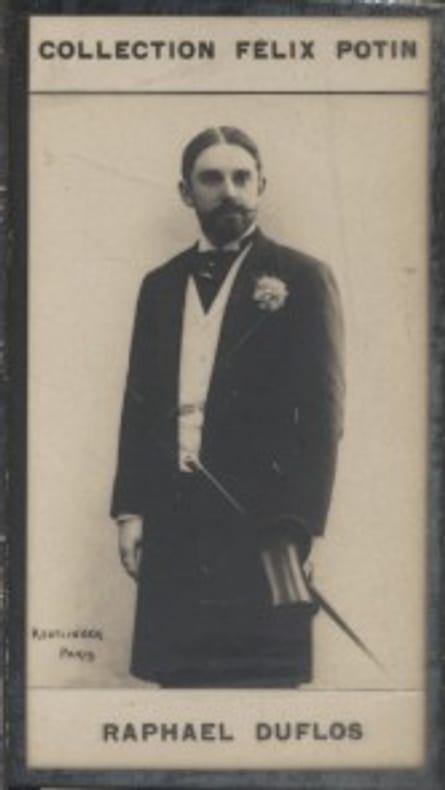
190053614- Photographie 4 x 7, 5 cm. Collée sur carton.
190050115- Photographie 4 x 7, 5 cm. Notice biographique collée au dos.
190052434- Photographie 4 x 7, 5 cm. Notice biographique collée au dos.
190053577- Photographie 4 x 7, 5 cm collée sur carton.
190050149- Photographie 4 x 7, 5 cm. Notice biographique collée au dos.
190051410- Photographie 4 x 7, 5 cm. Notice biographique collée au dos.
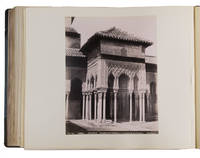
1890ABC_473841890. Half blind-tooled greenish brown calf and grey/green net grained cloth over boards with the title in gold on the front board red edges and decorated endpapers. Large oblong album 32 x 40 cm. 89 original photographs mostly 20 x 26 cm. In 711 a Muslim army led by Tariq ibn Ziyad conquered most of the Iberian Peninsula which was then part of the Visigothic Kingdom. This region became known as Al-Andalus with Cordoba serving as its capital. In 756 Abd ar-Rahman I established the Emirate of Cordoba as an independent state. The present photo album covers in many photographs the magnificent architecture and features of the Great Mosque of Cordoba which is considered one of the most significant architectural monuments of the western Islamic world. Built in 785 the mosque's most notable feature was its enormous hypostyle hall comprised of rows of columns connected by double tiers of arches. The lower tier included horseshoe arches and was constructed with alternating red brick and light-colored stone. Abd ar-Rahman II expanded the mosque's dimensions in 836 while preserving its original design. His successors Muhammad Al-Mundhir and Abdallah also added new features to the mosque. One of the mosque's western gates Bab al-Wuzara' now known as Puerta de San Esteban is a famous prototype of later Moorish architectural forms and motifs featuring horseshoe arches with alternating coloured and decorated voussoirs set within a decorative rectangular frame called an alfiz. At the centre of Garzóns photographic work on Córdoba was the Palace of the Lions also known as the Court of the Lions Patio de los Leones; . Situated in the center of the Alhambra with its ancient citadel consisting of a complex of forts palaces and gardens this is one of the most buildings of the period of Muslim rule. The palace was commissioned by the Nasrid sultan Muhammed V of the Emirate of Granada during the second phase of his reign between 1362 and 1391 AD. The general layout of the Palace of the Lions courtyard comprises an elongated rectangle with two halls facing each other at opposite ends which is a common feature in numerous earlier palaces throughout Al-Andalus including other Nasrid palaces located within the Alhambra such as Comares Palace. Similar designs can even be traced back to the 10th century at Madinat al-Zahra located near Cordoba. What sets the Palace of the Lions apart is the addition of two more halls which face each other across the courtyard's shorter axis. This innovation is accompanied by an extension of the columned portico to encompass all four sides of the courtyard. The four converging water channels within the courtyard's floor are generally believed to be a symbolic representation of Paradise which both Muslim and Christian traditions describe as having four rivers. This arrangement may have drawn inspiration from the Persian chahar bagh tradition which involves a garden divided into four symmetrical parts along its central axis. The Palace of the Lions combines this with the classical peristyle tradition which features a portico or arcade surrounding a courtyard. Other monuments in Al-Andalus and North Africa where they are commonly referred to as a riad or riyad also feature gardens with a chahar bagh-type quadripartite division.Rafael Garzón 1863-1923 was born in Granada became known as one of Spains foremost photographers of the early twentieth century. He owned studios situated inside the Alhambra of Granada and in Seville. His photographic work mainly focused on capturing the landscapes and monuments of Andalucía particularly his photographic portraits which gained him recognition. His studio inside The Alhambra became particularly famous. Upon his arrival in Seville in 1901 he established a studio with an elaborate Arabic theme to enhance his photographs. He photographed the aristocrats of Seville as well as the earliest tourists of the 19th century who visited Andalucía. The spread of his photographs contributed greatly to the rising touristic interest in Spain. Garzón's photography encompassed two distinct styles. His monumental photography of prominent Spanish structures such as the Alhambra the Mosque-Cathedral of Córdoba and the Cathedral and Reales Alcázares of Seville. The other style was a popular type of photography designed to cater to the preconceived notions of foreign visitors seeking classic gypsy portraits from Sacromonte or the Carmenes from Córdoba or Seville. His photographic work was both of high quality and commercially attractive and Garzón distributed them in various formats including postcards collector's items and travel books.The binding shows very slight signs of wear mainly around the foot of the spine the interleaved tissue paper is slightly browned the upper-outer corner of the leaves is occasionally slightly dustsoiled. hardcover
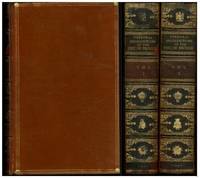
1887111111111423Generic 1887-01-01. Leather Bound. Very Good. Ward and Downey; London 1887. Hardcover. Complete 2 Volume Set. Set is heavy and additional shipping cost may apply. A Very Good full leather binding 5 raised bands and 6 compartments gilt ruled along board edges decorative gilt design on boards decorative endpapers/pastedowns gilt dentelles gilt ruled edges binding sturdy and intact some discoloration to leather boards some rubbing to joints spine leather a bit brittle fraying to spine edges with some loss TEG with some blemishes some age spotting/discoloration/foxing to front/back matters small chip missing to 2nd from top compartments Volume 1 leather split to front joint Volume 2 but board still attached some age toning to pages few small soiled spots to text block edges tissue protected frontis-piece Volume 1. A nice clean and unmarked set. 8vooctavo or approx. 6 x 9 inches. Vol.1 476pp. Vol.2 546pp. indexed. We pack securely and ship daily with delivery confirmation on every book. The picture on the listing page is of the actual book for sale. Additional Scans are available for any item please inquire. Generic hardcover
1886H41787Wien & Leipzig: Urban & Schwarzenberg 1886. First Printing. Hardcover. Good. Old pebbled charcoal cloth stamped in gilt on spine not a publisher's binding good to very good light toning inner hinges cracked namestamp of Dr. Emil Froschels on title page and note in magenta pencil on flyleaf citing two pages in the contents: there are light magenta pencil marks on those two pages probably by Froschels. According to a web page managed by Judy Duchan at SUNY Buffalo Coen "was a physician specializing in speech disorders of children. In Vienna in 1886 he opened the first language outpatient clinic of Austria. He coined the term "audimute" for children who did not speak after 4 years German word: Horstummheit. He identified various speech disorders in addition to audimute and developed elaborate therapy regimens including a 70 week program of daily lessons to remedy audimutism and a program of exercise electro-therapy and elocution to remedy stammering.Coen’s therapy for children with audimutism involved several steps. One involving a “bodily gymnastic†involving strengthening exercises. A second step involved identifying pictures and objects that were named. A third step involved matching sounds spoken to the child with a letter. The child was then asked to produce the sound in isolation. Finally the child was engaged in general academic instruction involving reading writing and arithmetic." Froschels was also an important Austrian speech therapist. As a laryngologist and chief speech therapist in 1924 he introduced the term logopedics i.e. speech therapy into medical usage. He established the International Society of Logopedics and Phoniatrics and was a co-founder with Karl Cornelius Rothe of the Vienna School for Speech-Disturbed Children. Urban & Schwarzenberg hardcover
18868223AB1886. Wien und Leipzig Urban & Schwarzenberg 1886. 3 Holzschn. IV 1 246 S. Hlwd. d. Zt. leicht bestoßen. - Titel mit hs. Besitzvermerk. unknown
189819535Mercadier 1898 approx.
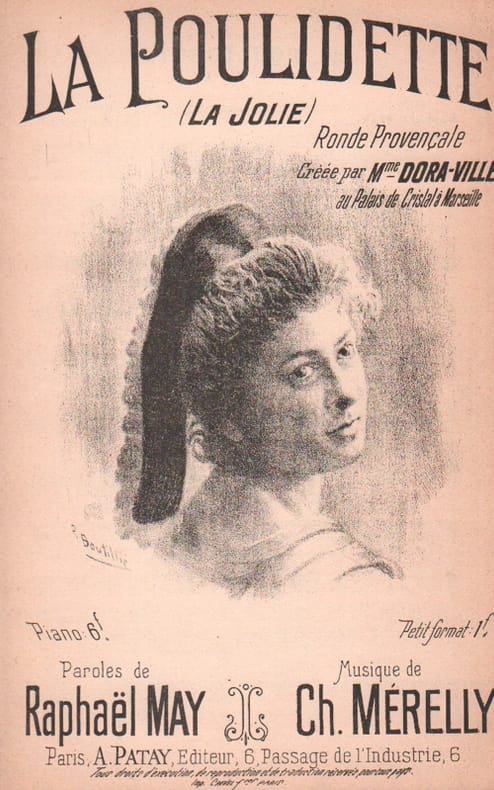
1890111791Partitions sur la Provence Patay 1890 approx.
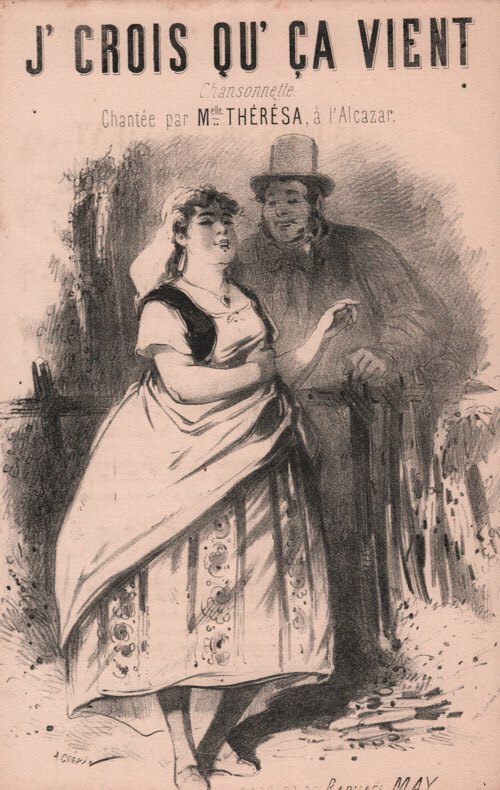
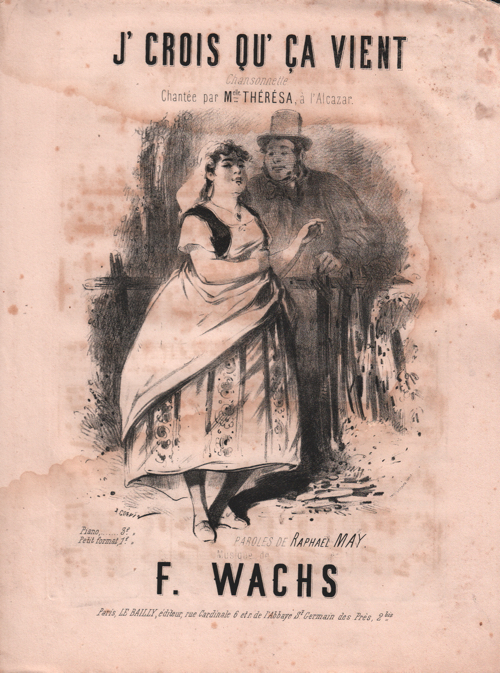
187975024Partitions sur les travailleurs ouvriers,Partitions sur l'entre deux guerres Le Bailly 1879 approx.
186580494Goubert Arsène 1865 approx.
186525340Le Bailly 1865 approx.
190096487Partitions sur la Révolution Française Coutarel,Lyre Musicale 1900 approx.
190017708Partitions sur l'Abus d'alcool Orgeret 1900 approx.
188520200Rouart,Lerolle 1885 approx.
186580492Egrot 1865 approx.
188018881Partitions sur la Terre et paysan Challiot Etienne 1880 approx.
190091927Partitions sur les Guinguettes et bal musette,Partitions illustrées PARIS SERA TOUJOURS ... Librairie Parisienne 1900 approx.
188013691Katto J.B. 1880 approx.
190013440Joubert 1900 approx.
187018063Partitions sur les Oiseaux Egrot 1870 approx.