Raphael (Raffaello) SavonarolaBiblio.com
132 résultats
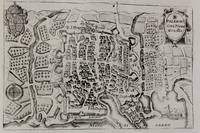
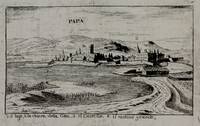
1713M8142Italy c.1713. Very Good. Notes: Savonarola used the pseudonym Alphonsus Lasor a Varea. Monk of Theatine order who worked in the monastery library in Padua. He was also Professor of Holy Scripture. Universes Terrarum Orbis Scriptorum. Size : 61x105 mm 2.40x4.13 Inches Coloring: Black & White Reference: Mickwitz A.M. Miekkavaara L. and Rantenen T. The A.E. Nordenskiold Collection in the Helsinki University Library Volume 2 1981 pp. 269- 276 Category: Maps Europe Italy Rome; unknown
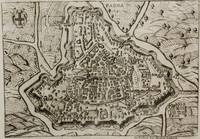
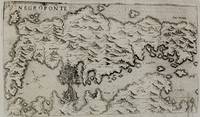
1713M8143Italy c.1713. Very Good. Notes: Savonarola used the pseudonym Alphonsus Lasor a Varea. Monk of Theatine order who worked in the monastery library in Padua. He was also Professor of Holy Scripture. Universes Terrarum Orbis Scriptorum. Size : 115x172 mm 4.53x6.77 Inches Coloring: Black & White Reference: Mickwitz A.M. Miekkavaara L. and Rantenen T. The A.E. Nordenskiold Collection in the Helsinki University Library Volume 2 1981 pp. 269- 276 Category: Maps City Maps; Maps Mediterranean Islands; unknown
1713M8173Italy c.1713. Very Good. Notes: Savonarola used the pseudonym Alphonsus Lasor a Varea. Monk of Theatine order who worked in the monastery library in Padua. He was also Professor of Holy Scripture. Universes Terrarum Orbis Scriptorum. Size : 123x175 mm 4.84x6.89 Inches Coloring: Black & White Reference: Mickwitz A.M. Miekkavaara L. and Rantenen T. The A.E. Nordenskiold Collection in the Helsinki University Library Volume 2 1981 pp. 269- 276 Category: Maps Europe Italy; unknown
17035770Rome: Gaetano Zenobi 1703. First edition. The author was a Spanish engraver and printer who lived and worked in Rome for part of his life. The text is a defense of Raphael and others from some dismissive remarks made by Carlo Cesare Malvasia in his promotion of the Carracci and of the Bolognese school "La Felsina Pittrice" 1678. Vittoria wrote the material probably in Spanish while still living in Valencia. In the preface he apologizes for his Italian which "lacks purity." The significance of the book according to the art historian Anthony Blunt lies in the author's descriptions of several drawings by Raphael and his contemporaries which are either lost or known only in engraved copies. Condition noted. . Octavo 23 cm; 114 2 pages. Vignette with arms of Pope Clement XI flanked by putti on title page. LACKS FRONTISPIECE PORTRAIT. Decorated letters and ornaments in text. Bound in mottled calf weak at joints and worn at extremities. Early inscription abraded at base of title page. Pages lightly toned with occasional stains. References: Cicognara 2404; Anthony Blunt "Don Vincenzo Vittoria" in The Burlington Magazine 109:766 1967 31-32. Gaetano Zenobi unknown books
17035770Rome: Gaetano Zenobi 1703. First edition. Octavo 23 cm; 114 2 pages. Vignette with arms of Pope Clement XI flanked by putti on title page. LACKS FRONTISPIECE PORTRAIT. Decorated letters and ornaments in text. Bound in mottled calf weak at joints and worn at extremities. Early inscription abraded at base of title page. Pages lightly toned with occasional stains. References: Cicognara 2404; Anthony Blunt "Don Vincenzo Vittoria" in The Burlington Magazine 109:766 1967 31-32. <br /><br />The author was a Spanish engraver and printer who lived and worked in Rome for part of his life. The text is a defense of Raphael and others from some dismissive remarks made by Carlo Cesare Malvasia in his promotion of the Carracci and of the Bolognese school "La Felsina Pittrice" 1678. Vittoria wrote the material probably in Spanish while still living in Valencia. In the preface he apologizes for his Italian which "lacks purity." The significance of the book according to the art historian Anthony Blunt lies in the author's descriptions of several drawings by Raphael and his contemporaries which are either lost or known only in engraved copies. Condition noted. Gaetano Zenobi unknown
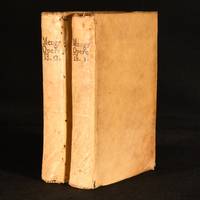
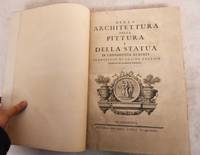
1787935P23Roma: Stamperia Pagliarini 1787. Vellum. Good Only. 8" by 5". Various. A scarce two volume edition collecting together the artistic writings of Neoclassical painter Anton Raphael Mengs. Complete in two volumes the scacer edition by Pagliarini who also published an edition in one volume.Illustrated with a frontispiece to each volume. In Italian.The collected writings by the noted eighteenth century Neoclassical painter Anton Raphael Mengs.Mengs' writings were all on the theory of art and on the lives of eminent painters throughout history. This includes his 1762 'Reflections on Beauty and Taste in Painting' an influential treatise which inspired the artistic society of his day. His other writings includes 'Reflections on the Three Great Painters Raphael Correggio and Titian and on the Ancients' 'Practical Painting Lessons' 'Reflection on the Academy of Fine Arts in Madrid' a selection of letters written to Antonio Ponz 'Dreams on Beauty' and more. As an artist Mengs painted many of the important figures of his day such as Charles IV of Spain Maria Luisa of Spain and Johann Joachim Winckelmann as well as striking religious and mythological scenes of figures such as Helios and St. John the Baptist. Including a life of Mengs by Jose Nicolas d'Azara edited by Carlo Fea.Collated complete. In the original vellum binding. Externally generally smart. Vellum is discoloured as is usual to see heavier to the spines. Minor marks to the boards and spine. Light bumping to the head and tail of the spines and to the extremities. Chip and lifting to the fore edge of the rear board of Volume I. Heavier patch of discolouration to the rear board of Volume II. A few small chips to the vellum mostly to the spines and joints. Hinges are tender. Front endpapers are detached and edge worn. Lacking the paper to the rear paste downs. Internally generally firmly bound. Pages are lightly age-toned and generally clean with scattered spots. Dampstain to the first few pages of Volume I with amateur repairs from the half-tile to page xvi. Frontispiece and page xxix of Volume I are detached but present as if the half-title frontispiece and title of Volume II. Mark to the bottom edge of the first half of the text and final few pages of Volume II. Good Only Stamperia Pagliarini hardcover
1782189785Bologna: In the Institute os Science 1782. Hardcover. Very Good Cover has general wear Leather peeling corner/edge damage. Spine has damage to top/bottom. Bookblock has age toning. Interior pages have age toning and foxing. Brown cloth boards with gilt highlights Black leather corners and spine. Gilt lettering and design elements on 5 raised band spine. xiii 3 341 pages 69 leaves of plates some folded : illustrations plans. Title vignette tail-pieces and plates engraved by Pio Panfili. In the Institute os Science hardcover
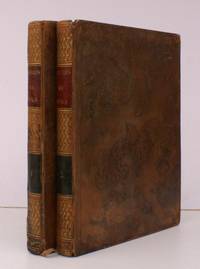
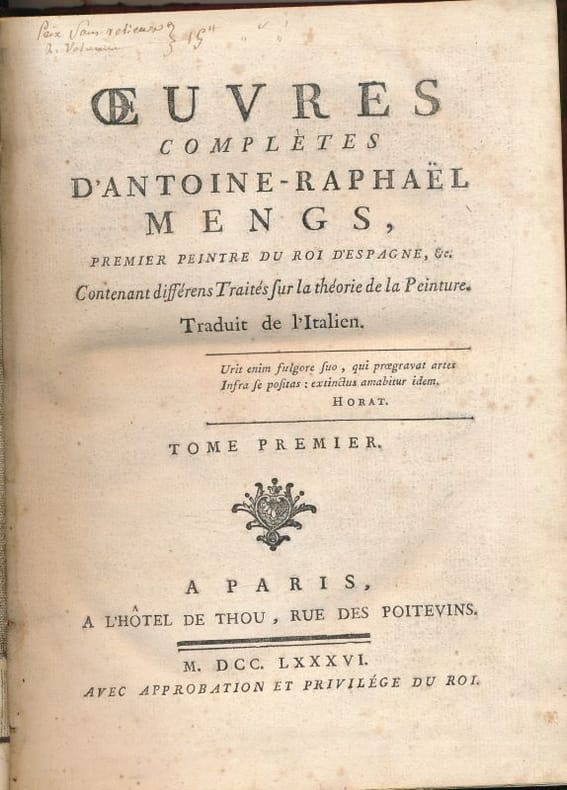
17867634à Paris: A l'hôtel de Thou 1786. Fine. A l'hôtel de Thou à Paris 1786 25.50 x 20 cm deux volumes reliés First French edition translated from Italian by M. Jansen the work was indeed first published in Italian by Bodoni. Near-contemporary full sheep bindings with smooth spines bronze title and volume labels. Handsome copy. The work begins with memoirs on the life and works of Mengs 1728-1779 by Chevalier d'Azara and a notice on Mengs's paintings followed by the painter's treatises on painting covering beauty taste technical aspects of painting as well as various celebrated painters Raphael Correggio Titian. The preface contains a paragraph by Klopstock the German editor and Fuessli. Court painter to the King of Poland he joined the Spanish court at the behest of Charles III King of Spain; his paintings quite early in the neoclassical taste see his Cleopatra secured him fame and wealth and the writings he left on painting and the arts are marked by research and subtlety. A l'hôtel de Thou unknown
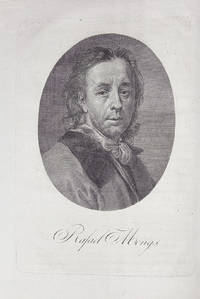
178629839A l'Hotel de Thou Rue des Poitevins Paris 1786. 2 vols. 4to. First Edition thus with engraved portrait frontispiece; handsomely bound in contemporary tree calf backs with four flat bands ruled in gilt second and fourth compartments with leather labels red/green respectively lettered and numbered in gilt all other compartments richly tooled in glt gilt dentelles blue speckled edges marbled endpapers red silk markers joints cracked but binding entirely sound boards lightly age-marked else a remarkably bright crisp copy in wholly unrestored period binding. FIRST EDITION IN FRENCH following publication in Italian by Bodoni. VERY SCARCE. Palau 164521. A l'Hotel de Thou, Rue des Poitevins, Paris, hardcover
178646036Paris:: A ;'Hotel de Thou 1786. contemporary full mottled sheep. . One joint in each volume just starting to split; cords sound; corners rubbed; shallow chipping at the extremities of the spine. Small 4to. This copy lacks and apparently never had the frontispiece portrait. Traduit de l'Italien. Half-title present in each volume. A ;'Hotel de Thou, unknown
17867634A l'hôtel de Thou | à Paris 1786 | 25.50 x 20 cm | deux volumes reliés
1786165424Hôtel de Thou A Paris Hôtel de Thou 1786, 2 volumes In-4 reliés, demi basane blonde à coins, dos lisses à filets dorés, pièces de titre et de tomaison rouges. VIII + 354 + 392 pages. Bien complet du portrait en frontispice . Mémoires sur la vie et sur les ouvrages de M. Mengs par le Chevalier d'Azara en début d'ouvrage. Traduit de l'italien, première édition française. Plats cartonnés des reliures un peu frottés, coins un peu émoussés, Une moullure angulaire au frontispice, brunissures éparses. Bon exemplaire, peu courant.
17814031781 Couverture rigide A Amsterdam, chez Pissot et Desenne, 1781. In-8, reliure plein veau d'époque, dos lisse orné de fleurons dorés, caissons dorés, pièce de titre rouge, titre doré, filet à froid d'encadrement sur les plats, manque à la charnière supérieure, petits manques au dos et au second plat, accroc à la coiffe supérieure, coins émoussés. Xxiv, 248 pages, deux feuillets non chiffrés de tables ; petite déchirure page v dans la marge supérieure et sans atteindre le texte, rousseurs marquées pages 135-136. Première édition française des écrits sur l'art du peintre Antoine Raphael Mengs (1728-1779), très proche des conceptions sur l'art de son ami Johann Joachim Winckelmann. La traduction de cet ouvrage fut réalisée par Hendrik Jansen. Bon état intérieur (en dehors des quelques pages mentionnées), bon exemplaire.
179713068Madrid: Imprenta Real 1797. 243x190mm. 9½x7½". Madrid Imprenta Real 1797. En 4º 243 x 190mm. 6 h. 1 retrato lii-402 pp. Encuadernación de la época en plena piel lomera con ruedas doradas formando nervios y hierro dorado en las calles tejuelo en marroquén. MagnÃfico ejemplar de esta obra estimada muy bien impresa en la Imprenta Real a expensas de Julián Pereyra. Segunda edición copia exacta de la primera. Contiene además de las obras completas de Mengs un "Comentario al Tratado de la Belleza" de Mengs por Joseph Azara y varias cartas. Al fin un tratado con lecciones prácticas de pintura. Obra importante. Antonio Rafael Mengs gozó de un buen prestigio y sus obras eran consultadas por todos los artistas de la época. El libro contiene además de las obras completas de Mengs un "Comentario a su Tratado de la Belleza" por Joseph Azara quien además se encargó de recoger los textos del pintor. Al fin un tratado con lecciones prácticas de pintura. Perfecto ejemplar. Imprenta Real unknown
1713M8168Italy c.1713. Very Good. Notes: Eastern Greece.<br>Savonarola used the pseudonym Alphonsus Lasor a Varea. Monk of Theatine order who worked in the monastery library in Padua. He was also Professor of Holy Scripture. Universes Terrarum Orbis Scriptorum. Size : 100x175 mm 3.94x6.89 Inches Coloring: Black & White Reference: Mickwitz A.M. Miekkavaara L. and Rantenen T. The A.E. Nordenskiold Collection in the Helsinki University Library Volume 2 1981 pp. 269- 276 Category: Maps Europe Greece Macedonia; unknown
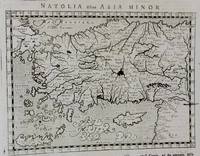
1713M8157Italy c.1713. Very Good. Notes: Savonarola used the pseudonym Alphonsus Lasor a Varea. Monk of Theatine order who worked in the monastery library in Padua. He was also Professor of Holy Scripture. Universes Terrarum Orbis Scriptorum. Size : 126x173 mm 4.96x6.81 Inches Coloring: Black & White Reference: Mickwitz A.M. Miekkavaara L. and Rantenen T. The A.E. Nordenskiold Collection in the Helsinki University Library Volume 2 1981 pp. 269- 276 Category: Maps Asia Near East Turkey; unknown
177420168Rome 1774. Copper engraving on two joined sheets by Ottaviani after drawings by Savorelli and Camporesi printed in light brown coloured ink with contemporary hand-colouring. Neat marginal restoration. A stunning plate from "Logge di Rafaele nel Vaticano": with contemporary colouring of the highest quality from the golden age of the hand-coloured print. The main panel shows Moses coming down from Mount Sinai holding the tablets bearing the ten words of the Covenant his face "horned from the conversation of the Lord". Aaron and the children of Israel seeing the face of Moses "horned" are afraid to come near.<br/> <br/>A very fine image from the second part of a work titled "Loggie di Rafaele nel Vaticano" depicting the decorative work executed by Raphael and his assistants between 1518-1519 in the Vatican. They were drawn by Gaetano Savorelli a Roman painter and draughtsman best known for his Raphael drawings and Pietro Camporesi a Roman architect who worked for Pope Clemens XIII and Pius VI on rooms for the Vatican Museum. The first to illustrate the famous frescoes these beautiful plates were probably planned as early as 1760 but were not executed until 1772 to 1776. The plate is remarkable not only as the first important visual record of Raphael's work but also for the quality of the hand-colouring - the work on this image is in our opinion some of the greatest to be produced in Europe during the whole of the eighteenth century: the golden age of the hand-coloured print. They were remarkable not just for their size and magnificent colouring but also because of the influence they had on contemporary taste. The decision was made to "borrow" elements from Raphael's Vatican tapestries and insert them where the original frescoes were in too poor a state to be legible. The finished plates therefore represented an amalgam of design elements presented with a crisp freshness of colour that held enormous appeal and did much to stimulate the taste for the "grotesque" in the Neo-classical period. A year after the death of his principal patron Julius II Raphael succeeded Donato Bramante in 1514 as the official Vatican architect. Having previously adorned the "Stanze" or chambers of Julius on the second floor of the papal apartments in the Vatican palace he was commissioned by Leo X in 1517 to decorate the adjacent Logge. He designed an elaborate cycle of ornamental frescoes for the room's ceiling vaults doors and auxiliary pillars which were executed by his assistants Giulio Romano and Giovanni da Udine. Twelve of the quadrilateral ceiling vaults were adorned with murals of familiar Old Testament scenes and one with a scene from the New Testament while the more decorative frescoes painted on the pilasters by Udine were covered with imaginative compositions of 'grotesque' motifs like foliage fruit and chimerical beasts.<br/> <br/>Cf. Brunet IV 1110 & 1111; cf. Berlin "Kat". 4068 & 4066; "Raphael Invenit: Stampe da Rafaello" 1985 Ottaviano 22; cf. "Raphael: Reproduktions-graphik aus vier Jahrhunderten" Coburg 1984 104 & no. 245. unknown books
177420168Rome 1774. Copper engraving on two joined sheets by Ottaviani after drawings by Savorelli and Camporesi printed in light brown coloured ink with contemporary hand-colouring. Neat marginal restoration. A stunning plate from "Logge di Rafaele nel Vaticano": with contemporary colouring of the highest quality from the golden age of the hand-coloured print. The main panel shows Moses coming down from Mount Sinai holding the tablets bearing the ten words of the Covenant his face "horned from the conversation of the Lord". Aaron and the children of Israel seeing the face of Moses "horned" are afraid to come near.<br/> <br/> A very fine image from the second part of a work titled "Loggie di Rafaele nel Vaticano" depicting the decorative work executed by Raphael and his assistants between 1518-1519 in the Vatican. They were drawn by Gaetano Savorelli a Roman painter and draughtsman best known for his Raphael drawings and Pietro Camporesi a Roman architect who worked for Pope Clemens XIII and Pius VI on rooms for the Vatican Museum. The first to illustrate the famous frescoes these beautiful plates were probably planned as early as 1760 but were not executed until 1772 to 1776. The plate is remarkable not only as the first important visual record of Raphael's work but also for the quality of the hand-colouring - the work on this image is in our opinion some of the greatest to be produced in Europe during the whole of the eighteenth century: the golden age of the hand-coloured print. They were remarkable not just for their size and magnificent colouring but also because of the influence they had on contemporary taste. The decision was made to "borrow" elements from Raphael's Vatican tapestries and insert them where the original frescoes were in too poor a state to be legible. The finished plates therefore represented an amalgam of design elements presented with a crisp freshness of colour that held enormous appeal and did much to stimulate the taste for the "grotesque" in the Neo-classical period. A year after the death of his principal patron Julius II Raphael succeeded Donato Bramante in 1514 as the official Vatican architect. Having previously adorned the "Stanze" or chambers of Julius on the second floor of the papal apartments in the Vatican palace he was commissioned by Leo X in 1517 to decorate the adjacent Logge. He designed an elaborate cycle of ornamental frescoes for the room's ceiling vaults doors and auxiliary pillars which were executed by his assistants Giulio Romano and Giovanni da Udine. Twelve of the quadrilateral ceiling vaults were adorned with murals of familiar Old Testament scenes and one with a scene from the New Testament while the more decorative frescoes painted on the pilasters by Udine were covered with imaginative compositions of 'grotesque' motifs like foliage fruit and chimerical beasts.<br/> <br/> Cf. Brunet IV 1110 & 1111; cf. Berlin Katalog 4068 & 4066; "Raphael Invenit: Stampe da Rafaello" 1985 Ottaviano 22; cf. "Raphael: Reproduktions-graphik aus vier Jahrhunderten" Coburg 1984 104 & no. 245. unknown
17976966Madrid: Imprenta de Sancha 1797. First Edition — Primera edición. Hardcover — Tapa dura. 204x135mm. 8x5¼". Madrid Imprenta de Sancha 1797. En 4º menor 204 x 135mm. 4-xv-1 330 2-cv pp. Encuadernación de la época en piel. Primera edición de este libro apreciado y poco común tocante a la historia del comercio entre España y América; ya Palau decÃa en su época que el libro escaseaba. A partir de la p. 330 un Apéndice con copias de algunos documentos citados en estas memorias históricas. Antúnez y Acevedo 1736-1800 cultivó el estudio de la jurisprudencia mercantil en todos sus ramos siendo un profundo conocedor de las leyes y costumbres del comercio hispano-indiano. Portada con ligeras manchas papel tostado. Libro raro en comercio. Imprenta de Sancha hardcover
177715684Rome 1777. Copper engraving by Volpato after a drawing by Camporesi later professional hand-colouring. Good condition. Expert strengthening to verso of right outer blank margin some old light creasing to 3 inches of the sheet. This beautiful perspective view of Raphael's Loggia served as the frontispiece to the celebrated text "Loggie di Rafaele nel Vaticano".<br/> <br/>This arresting print is a general perspective view of Raphael's design for the Loggia at the Vatican with a large profile portrait of Raphael in a medallion over the entrance to the corridor. The plate served as the frontispiece to the first part of the "Logge di Rafaele nel Vaticano" which depicted the decorative work executed by Raphael and his assistants between 1518-1519 in the Vatican. This remarkable print one of the first to be published of the decoration of the Logge on the main storey of the Vatican apartments was probably planned as early as 1760 but was not executed until between 1772 and 1776. The project as a whole was carried out by the painter Gaetano Savorelli the draughtsman Ludovico Teseo the architect Pietro Camporesi and the engravers Giovanni Ottaviani and Giovanni Volpato. The whole series was of importance not just for the size and magnificent colouring of the prints but also because of the influence they had on contemporary taste. The decision was made to "borrow" elements from Raphael's Vatican tapestries and insert them where the original frescoes were in too poor a state to be legible. The finished plates therefore represented an amalgam of design elements presented with a crisp freshness of colour that held enormous appeal and stimulated the taste for the "grotesque" in the neo-classical period.<br/> <br/>Cf. Brunet IV 1110; cf. Berlin Kat. 4068; Lambert Pattern and Design V. & A.: 1983 p. 26; "Raphael Invenit: Stampe da Rafaello" 1985 Volpato 1; Raphael: Reproduktions-graphik aus vier Jahrhunderten Coburg: 1984 p. 104; G. Marini editor Giovanni Volpato 1735-1803 1988 no. 198. unknown books
177216447Rome 1772. Copper engraving with stunning early colour. Printed on laid paper with added wove margins. In excellent condition with the exception of some light foxing in the margins. Image size: 22 7/8 x 15 3/4 inches. This beautiful perspective view of Raphael's Loggia with contemporary colouring of the highest quality from the golden age of the hand-coloured print served as the frontispiece to the celebrated text "Loggie di Rafaele nel Vaticano".<br/> <br/> This arresting print is a general perspective view of Raphael's design for the Loggia at the Vatican with a large profile portrait of Raphael in a medallion over the entrance to the corridor. The plate served as the frontispiece to the first part of the "Logge di Rafaele nel Vaticano" which depicted the decorative work executed by Raphael and his assistants between 1518-1519 in the Vatican. The project as a whole was carried out by the painter Gaetano Savorelli the draughtsman Ludovico Teseo the architect Pietro Camporesi and the engravers Giovanni Ottaviani and Giovanni Volpato. The plate is remarkable not only as the first important visual record of Raphael's work but also for the quality of the hand-colouring - the work on this image is in our opinion some of the greatest to be produced in Europe during the whole of the eighteenth century: the golden age of the hand-coloured print. The whole series was remarkable not just for the size and magnificent colouring of the prints but also because of the influence they had on contemporary taste. The decision was made to "borrow" elements from Raphael's Vatican tapestries and insert them where the original frescoes were in too poor a state to be legible. The finished plates therefore represented an amalgam of design elements presented with a crisp freshness of colour that held enormous appeal and stimulated the taste for the "grotesque" in the neo-classical period.<br/> <br/> Cf. Brunet IV 1110; cf. Berlin Katalog 4068; Lambert Pattern and Design V. & A.: 1983 p. 26; "Raphael Invenit: Stampe da Rafaello" 1985 Volpato 1; Raphael: Reproduktions-graphik aus vier Jahrhunderten Coburg: 1984 p. 104; G. Marini editor Giovanni Volpato 1735-1803 1988 no. 198. unknown
1777120471Lettera di Don Antonio Raffaele Mengz : primo pittor di camera di S.M.C. a Don Antonio Ponz / tradotta dall'originale Spagnuolo manualemente scritto. Turin: Nella stamperia Reale, 1777. 56 pages. bound in period paper wrappers. 23x17.5cms. Text in Italian.
1777120471Lettera di Don Antonio Raffaele Mengz : primo pittor di camera di S.M.C. a Don Antonio Ponz / tradotta dall'originale Spagnuolo manualemente scritto. Turin: Nella stamperia Reale, 1777. 56 pages. bound in period paper wrappers. 23x17.5cms. Text in Italian.
1780404758Rome: Ludwig Sommerau 1780. Hardcover. both boards separated disbound and first two blanks lacking. some stains and foxing throughout. some plates have pencil notes at the bottom. despite flaws plates are very sharp and bright. see scans all plates are shown. folio 19" x 15-1/2". Sommerau's engravings depict tapestries designed by Raphael and made between 1517 and 1521 in the workshop of Pieter van Aelst in Brussels. Originally made for the Sistine Chapel the tapestries are now housed in the Vatican Library.per Bonhams. Ludwig Sommerau hardcover