(Greco, Giochino)Biblio.com

2 526 résultats
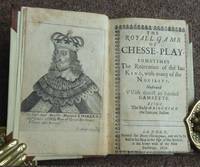
165621872London: Printed for Henry Harriman 1656. First edition. Hardcover. Very good. 12mo. 141202. Plate of chessboard present. Contemporary sheep blind rules on the boards. Light dampstain across the top the leather cracked and rubbed especially at the spine lacking the preliminary blank and the portrait of the King else a very good copy. Makes one wonder if the portrait of Charles II was deliberately destroyed.<br /> <p><br /> A translation by Francis Beale of Trattato del Nobilissimo Giuco degli Scacchi by Giachino Greco and consists of 94 chess gambits. Contains the first documented use of 'castle' as a chess verb according to the OED.<br /> <p><br /> ESTC R23418; Wing G1810.<br /> <p>. Printed for Henry Harriman hardcover
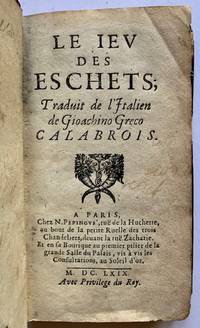
166920514Paris: Chez N. Pepingve Avec Privilege du Roi 1669. Full leather. The 1669 1st French edition --and 1st published edition-- of Gioachino Greco's seminal "Le Jeu des Eschets". Greco c. 1600 - c. 1634 was the strongest player in Europe in the early 17th century and among the first to record entire games not just particular openings or combinations. His vast influence as cited by H.J.R. Murray among other historians of the game is keenly felt to this day. This copy is likely in its original full-leather binding certainly in a contemporary-to-the-period binding. Solid and VG with minor forgivable wear along the edges and the preliminaries. The interior though is very clean the pages surprisingly crisp and clean. Originally recorded by hand in Greco's native Italian here translated --and issued in book form-- for the first time. Chez N. Pepingve (Avec Privilege du Roi) unknown
165653269<p>London printed for Henry Herringman and are to be sold at his shop at the sign of the Anchor in the lower walk of the New Exchange 1656. FIRST ENGLISH EDITION 1656 translation by Francis Beale of Gioachino Greco: Trattato del nobilissimo giuoco degli scacchi. 12mo approximately 145 x 90 mm 5½ x 3½ inches engraved portrait of King Charles by P. Stent as frontispiece and a woodcut text illustration of a chess board on page 14 pages: 18 1-120 followed by 1 leaf advert to recto and Errata on verso a poem on A5 recto and verso signed E. Revet. Bound in modern polished half calf pale cream boards gilt lettering and rules to spine new cream endpapers. Lacks first blank endpaper which is counted in the collation but final one is present neat narrow repairs to stab holes to several inner margins including title page and following page plus1 outer margin using archival tape most hard to see probably done when rebound portrait slightly trimmed at outer edge with loss of blank margin no loss to image the same to title page affecting engraved outer decorative border and foot of title page with slight loss to decorative borders pale age toning throughout pale ink letter and number to bottom margin of first dedication page final blank has pale staining to outer edges otherwise a very good tight copy. See: Whyld and Ravilious Chess Texts in the English Language Printed before 1850 page 21-22 No.1656:2; Murray A History of Chess page 830: "Greco's great service to chess lies in the fact that he made his material known to a wider circle of players than Polerio and his contemporaries ever reached. In this way his MSS became one of the most important productions in the literature of chess"; George Thomason Catalogue of Pamphlets Books etc. Relating to the Civil War 1640-1662 Volume 2 page 148 May 12. E. 1612 1.; Sotheby's catalogue of the chess collection of Lothar Schmid April 17th 2026 Lot 37; Sotheby's The Robert S. Spirie Collection part 1 page 242 Lot No. 403; ESTC R23418. MORE IMAGES ATTACHED TO THIS LISTING ALL ZOOMABLE. FURTHER IMAGES ON REQUEST. POSTAGE AT COST. Seller Inventory # 40643</p> London, printed for Henry Herringman and are to be sold at his shop at the sign of the Anchor in the lower walk of the New Excha hardcover
In folio (mm. 455 x 305), cartonato marmorizzato ottocentesco, 4 cc.nn. (la prima bianca), 176 pp.num., 2 cc.nn., stampato a 2 colonne, il testo greco e la versione latina accanto. Vi sono raccolte 149 favole, senza commenti. Cfr. Brooks,796: "D’une simple beauté incomparable (Geering)”. (Nello stesso anno il Bodoni stampò la stessa opera in-4 gr., a singole colonne: il testo greco colla versione latina a fronte) - Brunet,I,87: “Edition de luxe”. Solo qualche lieviss. traccia d’uso, altrim. fresco esempl. con barbe, ben conservato.
[Incunabolo-Grammatica] (cm.32,5) ottima mz. pelle sec. XIX, doppio tassello al dorso, titolo e fregi in oro, lievi spellature.-- cc. 308 (con numerazione romana e araba), caratteri romani e greci, 59 linee di commento, vari errori di numerazione, la penultima carta è numerata 313, l' ultima è al recto e al verso porta il solo nome " Priscianus "; la prima è bianca. Celebre grammatica assolutamente completa sia della prima carta bianca originale che dell' ultima col solo nome dell' autore. il testo contiene vari passi e molte parole in greco. L' edizione riunisce la versione di B. Brognolus, il commento di J. de Aingre e vari componimenti degli autori citati nel titolo. Tutte le grammatiche del '400 sono notoriamente rare, la nostra è veramente rarissima, non vista da Hain, Goff registra solo due copie in America, Sander " Princes " non cita alcuna vendita. Manca a Polain, Harvard, Oates, Harper, e a molti grandi cataloghi di Maggs, Olschki, Rosenthal e Quaritch. ottimo restauro integrativo all' angolo in alto di oltre 200 fogli dall' inizio ascomparire con perdita a volte di alcune lettere e parole, per precedente rosicchiatura, insignificante forellino di tarlo a varie carte interne in basso al margine bianco interno; altrimenti esemplare bellissimo, fresco, nitido e a grandi margini assolutamente privo di scritte, sottolineature e note. * Hain-Copinger 13362; * Proctor 5293; * I.G.I. 8054; * Klebs 806-10; * Goff P 969; * BMC V 493. [F80] Libro
In -4°, pp. (20), 82, (2). Marocchino, fregi dorati ai piatti e al dorso. Il conte Enrico Trivelli (1709-1737) fu un turbolento intellettuale e poeta napoletano, con ascendenze abruzzesi. La famiglia era di Vasto, ma trasferitasi temporaneamente a Napoli, dove nacque Enrico, che però compì gli studi nella cittadina abruzzese, dove la famiglia era tornata pochi anni dopo la sua nascita. Tornò a Napoli e poi andò a Roma dove, indebitato e in ristrettezze, si impiegò come copista presso la bottega di Martorello e Martino Dominici. Autore di poesia umoristica, satira, pasquinate, dialoghi irriverenti fra cardinali, sonetti contro la Chiesa cattolica e opere politiche. Si attirò il dispetto delle autorità politiche ed ecclesiastiche, compreso Clemente XII, e fu decapitato davanti a Castel Sant’Angelo, “per composizioni di scritture malediche e sediziose contro il Pontefice della Santa Sede”. Questo trattato è l’unico vero e proprio volume pubblicato dal Trivelli, che nello stesso anno aveva pubblicato anche un opuscolo celebrativo proprio di Clemente XII (la “Canzone del conte Errico Trivelli per l’esaltazione di N.S. Papa Clemente XII”, Firenze, 1732, della quale però non si conoscono copie complete): il trattato in sé è un fitto concentrato di erudizione retorica e letteraria, nel quale spicca l’affollamento di riferimenti, di citazioni e di autori rammentati, sia nell’ambito della composizione in volgare (da Dante, Petrarca, Ariosto, a Castiglione, Sannazzaro, Marino “e i suoi poco giudiziosi seguaci”), della critica (Valla, Muratori), degli autori classici (l’elenco dei citati è impressionante considerata la relativa esiguità del testo; numerose le citazioni composte in caratteri greci). Al di là dell’intento esibitorio condotto nel testo dal giovane Trivelli nei confronti del lettore, sono numerosi gli spunti e i dettagli originali, nell’arco del trattato: un esempio su tutti può essere la segnalazione di un’“improprietà” in un componimento del Sannazzaro (“non condonabile” la definisce T.), la seconda egloga, in cui il poeta pecca di superficialità nel tempo della narrazione, visto che la notte subentra al “mezzo giorno”, secondo Trivelli, “in brevissimo spazio di tempo, in cui appena Montano, ed Uranio avevan potuto far un colloquio di pochi versi”: la parte più originale del libro è proprio quella in cui l’autore, ambizioso e “scapestrato” si dedica a criticare speciosamente alcuni passi di autori, senza risparmiare dalla sua lente Ariosto, Tasso, Ovidio e via dicendo. L’urgenza di ottenere riconoscimento è peraltro confermata dalla collezione di testi che fanno da prefazione alla “Lettera” vera e propria, firmati Matteo Egizio (con lettera e replica dell’autore, a sua volta inclusa nel volume), Tommaso Bugassi, Matteo Piccoli Lettor Celestino. Nobile e letterato di area napoletana, il Francesco Caraffa (sc. Carafa) destinatario della “lettera” aveva pubblicato nel ’30 una poderosa raccolta di “Rime varie… Composte nella sua solitaria dimora nel monte Caprario della baronia di Formicola” (Firenze, 1730). Una nota manoscritta al recto del foglio di guardia anteriore recita “Ad usum Friderici Valignani ex dono Authoris…” Valignani (Chieti, 1700 – Torrevecchia Teatina, 1754) era considerato un letterato piuttosto illustre, che ebbe contatti con molti personaggi importanti dell’epoca (uno su tutti il Muratori, citato moltissime volte nella “Lettera” del Trivelli), e nel 1720 aveva fondato la “Colonia Tegea” dell’Arcadia Romana (accademia nella quale era stato accolto anche Trivelli, a Roma, col nome di Idasio Nivalgo. D’interesse la pagina degli imprimatur, che chiude il volume, e comprende la nota di approvazione del Vico. La nota manoscritta che precede il volume prosegue – da altra mano – “Qui Roma ob satyram in Clementem XII Pont: Max severi percussus fuit frustra ante mortem elegenti carmine eniam petente quam tamen assecutus fuerit a clementis principe si ipsa carmina ad aures opportuno tempore pervenissent.” Count Enrico Trivelli (1709-1737) was a turbulent thinker and poet, from Naples but with ancestry from Abruzzo, in Central Italy. In Rome, where he was living in poverty, emploied himself as a copyst in Dominici Brothers’ typography. Humour and satyric writer, he clashed against Vatican, included pope Clemente XII, and he was beheaded in front of Castel Sant’Angelo because of his “seditious” compositions against the Pope. This work is the only real volume ever published by Trivelli: it’s a dense concentrate of rethorics and erudition, with a large number of captions and mentions of authors from Italian, Latin, Greek and classic tradition. Beyond its meaning to exhibit knowledge, the book contains some original thoughts and interesting details. A manuscript note before the title page: “Ad usum Friderici Valignani ex dono Authoris…” Valignani was a well considered literary man with relations with many contemporary important personalities (as the Muratori, for instance). On “imprimatur” page there’s also the authorization to print by Giovan Battista Vico.
In-8 p. (mm. 200x145), p. pergamena antica (risg. rifatti), 38 cc.nn., con decorazioni xilografiche al frontespizio e grande marca tipografica in fine di ”Valentinus Curio”. Il testo, in greco e latino, è ornato da bei capilettera figurati inc. su legno. "Rara edizione separata" di quest’opera, pubblicata in greco originale e accompagnata da un’anonima traduzione in latino fatta, come si legge al frontespizio, per assistere gli studenti che imparano il greco. La “’Storia Vera’, scritta in due libri, composta da Luciano di Samosata (ca. 125-185 d.C.) nell’ultimo periodo della sua attività letteraria, è classificato nel gruppo delle opere miranti a parodiare le invenzioni e le fantasie dei poeti. Dopo aver avvertito nel proemio il lettore che non dirà una parola di vero, Luciano dà libero corso alla sua fantasia vivacissima, e narra, con una facilità, un brio e un’eleganza degni di un grande scrittore, una lunga serie di avventure curiose e fantastiche, che crea prendendo lo spunto dai grandi poeti, storici, filosofi antichi, come Omero, Ctesia, Erodoto, Pitagora, Empedocle, Platone, ecc.; isole misteriose, cuccagne, fiumi di vino, balene gigantesche, lotte di esseri immaginari con sirene, ippogrifi, centauri, ogni sorta di luoghi e personaggi strani popolano il racconto e si alternano con la descrizione di ascensioni attraverso lo spazio, di visite alla luna, al sole, di escursioni sottomarine e nel regno dei morti; l’instancabile ricchezza di invenzioni ha fatto di quest’opera un modello del suo genere; essa è stata rifatta in italiano dal Gozzi e ha ispirato i racconti meravigliosi degli scrittori di ogni tempo, dal Rabelais allo Swift e al Voltaire: i "Viaggi di Gulliver" e le "Avventure del barone di Munchhausen" trovano qui il loro tipo primo”. Cfr. Diz. Opere Bompiani,VII, pp. 239-40. “Luciano di Samosata, raffinato scrittore greco del sec. II, porta un nome personale che è tipicamente latino, ma era nato in Oriente, nella lontana regione della Siria Commagene, in un ambiente di lingua e di costumi orientali.. I dati della sua vivace e irrequieta biografia si desumono tutti dai suoi scritti, che sono conferenze e libelli in forma di prolusioni, di dialoghi, di racconti.. Così Diz. Autori Bompiani, II,p. 558. Esemplare ben conservato.
In-8°; I) cc. (172) grande marca tipografica incisa su legno all’ultima pagina non numerata; il frontespizio è in greco e latino, tutto il testo in greco. II) pp. 132, (4) con un legno all’ultima p. non num., pp. 105, (7 di cui 2 cc. bianche) un legno all’ultima p. non num.; capilettera figurati incisi su legno. la prima parte è in greco la seconda in latino. Mezza pelle verde con tassello e titolo in oro al dorso.
.REGIS GRATIA AC PRIVILEGIO AD SEPTENNIUM. Basileae, (in fine): J. Oporinus 1541.[Prima edizione-Greco] (cm.30) curioso cartonato originale con frammenti di pergamena manoscritta, doppi nervi esterni. -- cc. 6 nn., pp. 291 + 1 pag. bianca. Fregi e capilettera in xilografia. La prefazione di Heronymus Gemusaeus, è in latino, tutto il testo è in greco a piena pagina e molto elegante. Prima edizione rarissima del sec. XVI della celebre opera scientifica, botanica e medica, preceduta solo dall' edizione Aldina del 1498. Il nostro esemplare non porta al frontis il nome del Camerario e la sua prefazione, ma è una variante rara con la prefazione del Gemuseo. Manca a CHOIX, DURLING e WALLER mentre ADAMS e WELLCOME hanno solo l' edizione col Camerario. Qualche lievissima ombreggiatura a poche carte in fine altrimenti esemplare molto bello nitido e marginoso. Nella sua interessante legatura originale che sia all' interno che all' esterno dei piatti conserva frammenti cartacei e membranacei manoscritti del XIV e XV secolo. L' opera, verosimilmente doveva essere ricoperta in pergamena che attualmente manca. PRITZEL 9190; BM. STC. GERMAN 856; GRAESSE VII 124; FEDERICI " SCRITTORI GRECI " p. 163 illustra le due varianti.[f30] Libro
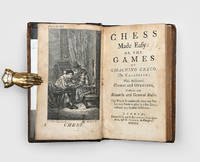
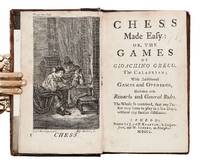
52700<p>London printed for J. and P. Knapton in Ludgate-Street and W. Sandby in Fleet-Street MDCCL 1750. TITLE CONTINUED: The Whole so contrived that any Person may learn to play in a few Days without any farther Assistance. SECOND EDITION 1750. A translation of Greco's Tratto del nobilissimo giuoco degli scacchi. 12mo approximately 4¾ x 3 inches engraved frontispiece and a double page engraved plate of a chess board pages: xiii 1 1-212 errata leaf following page xxiii bound in full calf gilt lettered title label and gilt rules and date to spine gilt rule to edges of covers. Binding slightly rubbed margin of pages 3 and 6 have old ink note not affecting text occasional pale spotting small tear to lower margin of chessboard see attached image a very good copy. See: Whyld and Ravilious Chess Texts in the English Language Printed before 1850 page 37 No. 1750:1; ESTC T128171. MORE IMAGES ATTACHED TO THIS LISTING ALL ZOOMABLE FURTHER IMAGES ON REQUEST. POSTAGE AT COST.</p> London, printed for J. and P. Knapton in Ludgate-Street and W. Sandby in Fleet-Street, MDCCL, 1750.
199121746Nashville TN: Rutledge Hill Press. As New. 1991. 1558538488 . FREE UPGRADE to Courier/Priority Shipping Upon Request - IN STOCK AND IMMEDIATELY AVAILABLE FOR SHIPMENT - 224 pages with index and color photo illustrations. -- Paperback; like new condition; Interior text is clean tight and unmarked. Pages are intact and tight to the spine. 8vo - over 7¾" - 9¾" tall. -- with a bonus offer-- . Rutledge Hill Press paperback
In -8°, cc. (8), 179, (1). Pergamena, tit. ms. al dorso, marca editoriale al frontespizio. Prima edizione della Politica di Aristotele tradotta (e pubblicata) da Brucioli, umanista e noto “eretico”, nato a Firenze alla fine del XV secolo e morto a Venezia, dove nel 1541 aprì una stamperia coi suoi fratelli. L’anno dopo la pubblicazione di questa traduzione aristotelica il Brucioli fu processato dalla Serenissima per eresia, condannato e bandito dalla città per due anni. Le sue opere che trattavano di fede furono date alle fiamme (è celebre la sua traduzione della “Bibbia”, fra le prime in volgare, messa all’indice nel 1559). Nel 1555, tornato a Venezia dopo aver scontato l’esilio, fu processato nuovamente e condannato ancora per eresia. Opera rara e ben conservata, bella marca al frontespizio. The first and only edition of Aristotle’s Politics translated and published by Antonio Brucioli, a well known “heretic” and humanist, born in Florence at the end of XV century and dead in Venice, where he established a tipography with his brothers. In 1547 he was convicted of heresy by Venice authorities and banished from the city for two years. His religious works were burned (his notorious translation of the Bible, between the first ones in Italian, was put on the banned books list in 1559). In 1555, still in Venice, he was convicted again of heresy. A rare and well preserved book, with a nice publisher’s mark on title page.
Dedica in latino a : Joanni suo Oporino Simon Grinaeus salutem, a carta a2, curatore dell'opera. In 4to, mm. 325x195; 1 bianca + 4 carte non numerate + 369 carte numerate solo al recto + 1 finale con marca tipografica + 1 bianca finale. Capolettera ornamentali in xilografia disegnati da Hans Holbein il giovane. Bella legatura coeva in mezza pergamena su assi di legno, con impressioni a secco e fermagli, nervature al dorso e traccia di titolo manoscritto. Ottimo lo stato di conservazione, con buoni margini, piccoli forellini di tarlo su alcune carte. Testo in elegante carattere greco. Doppio ex libris, uno in carta al contropiatto, l'altro sotto la data di stampa sul frontespizio, a tampone. Raro esemplare, ben conservato nella sua legatura originale. Codice inv.1031240
1750192547London: printed for J. and P. Knapton and W. Sandby 1750. An early guide to Greco First edition based on Greco's Tratto del nobilissimo giuoco degli scacchi. Reckoned as the greatest chess player of the 17th century Greco circulated his manuscripts of games among wealthy patrons from around 1620 and these manuscripts "became one of the most important productions in the literature of chess" Murray p. 830. Gioachino Greco c.1600-1634 dominated the era that fell between Ruy López and Philidor earned his living through chess and was among the game's first professional players. "A complete game appeals to a larger public than does analysis however accurate and it is to this novel feature of Greco's work that its instant and lasting popularity was due" Murray p. 830. Duodecimo 116 x 68 mm pp. xxvi 212. Copper-engraved frontispiece by I. S. Müller after C. D. Moor folding engraved chess board diagram. Contemporary calf spine rebacked and lettered in gilt covers ruled in gilt renewed patterned endpapers. Early ownership inscription on frontispiece recto "George Johnson his Book"; bookplate of Poul Hage 1906-1984 Danish chess champion on front pastedown. Covers slightly rubbed small wear to corners faint damp stain to inner margin of initial leaves occasional light foxing folding diagram with partial split to fold and manuscript title on reverse. A very good copy. ESTC T128171. H. J. R. Murray A History of Chess 1913. unknown
65563London: Printed for J. and P. Knapton 1750. 12mo. 11.5 x 7 cm. pp.xxvi 212. Contemporary calf spine rebacked and lettered in gilt covers ruled in gilt renewed patterned endpapers. Copper-engraved frontispiece by I. S. Müller after C. D. Moor folding engraved chess board diagram. Early ownership inscription on frontispiece recto "George Johnson his Book"; bookplate of Poul Hage 1906-1984 Danish chess champion on front pastedown. Covers slightly rubbed small wear to corners faint damp stain to inner margin of initial leaves occasional light foxing folding diagram with partial split to fold and manuscript title on reverse. A very good copy. First edition based on Greco's Tratto del nobilissimo giuoco degli scacchi. Reckoned as the greatest chess player of the 17th century Greco circulated his manuscripts of games among wealthy patrons from around 1620 and these manuscripts "became one of the most important productions in the literature of chess" Murray p. 830. Gioachino Greco c.1600-1634 dominated the era that fell between Ruy López and Philidor earned his living through chess and was among the game's first professional players. "A complete game appeals to a larger public than does analysis however accurate and it is to this novel feature of Greco's work that its instant and lasting popularity was due" Murray p. 830. London: Printed for J. and P. Knapton, 1750. unknown
71832Milano: Vanni Scheiwiller Libri d'Artista 1975. Molto buono Very Good. Dedica e firma autografe dell'Artista datata Gennaio 1976 Inscribed and signed by the Artist January 1976. Libro-oggetto edito in coincidenza dell'esposizione retrospettiva allestita dal Comune di Palermo sull'opera dell'Artista nel 1975. Con un testo di Giuseppe Marchiori in italiano e inglese. Con 6 multipli originali realizzati in serigrafia e litografia su materiali diversi cm 28x205";" 28x63. 170 foto in nero di Aldo Bonasia Gianni Berengo-Gardin Ugo Mulas Davide Mosconi e altri. Biografia. 8vo cm 28x22. pp. 160. Dedica e firma autografe dell'Artista datata Gennaio 1976 Inscribed and signed by the Artist January 1976. Molto buono Very Good. Timbro di appartenenza Owner's stamp. Prima edizione First Edition. This Object-book is a documentation of the most representative developements in Pizzo Greco's aesthetic language: by means of the continuing sequence of the images also of an autobiographical nature the book moves forward as a documentation of the artist's free conscience succeding in bringing to light the essential characteristics of his very inherent ''creative being''. With 6 original multiples by the Artist lithographs and silkscreens on various materials. Vanni Scheiwiller, Libri d'Artista unknown
In-4°, (303cc), 1 c.b., (215cc), 2 voll. in uno, legatura in pergamena, nervature, tassello in marocchino e titolo in oro al dorso con cornice in oro, illustrazioni, i frontespizi sono in due diverse cornici xilografiche (il secondo frontespizio in rosso e nero), marca editoriale sul colophon del secondo volume. Il primo volume è tradotto da Battista Alessandro Jaconello, il secondo da Giulio Bordoni. Come in molti esemplari manca la vita di Marco Bruto, inserita dopo il colophon. (Essling 598, Sander 5787-8). Buona copia. In-4 °, (303cc), 1 c.b., (215cc), 2 vols. in one, vellum binding, bands, label in morocco, gilt title on the spine within gold frames, illustrations, the title pages are in two different woodcut frames (the second title page in red and black), printer’s mark on the colophon of the second volume . The first volume is translated by Battista Alessandro Jaconello, the second by Giulio Bordoni. As in many copies, the present copy is missing the life of Marcus Brutus, included after the colophon. (Essling 598, Sander 5787-8). Fair copy.
200987866Foundation; Et Al. New. 2009. Paperback. 0981966608 . FREE UPGRADE to Courier/Priority Shipping Upon Request - IN STOCK AND IMMEDIATELY AVAILABLE FOR SHIPMENT - Flawless copy brand new pristine never opened -- 132 pages; 84 illustrations most in color. -- with a bonus offer-- . Foundation; Et Al paperback
200994691TF Editores. New. 2009. Hardcover. 8492441771 . FREE UPGRADE to Courier/Priority Shipping Upon Request - IN STOCK AND IMMEDIATELY AVAILABLE FOR SHIPMENT - Flawless copy brand new pristine never opened -- Text in Spanish. 204 pages; 112 illustrations. -- with a bonus offer-- . TF Editores hardcover
2009123551Naus Editoria. New. 2009. Paperback. 8874780125 . FREE UPGRADE to Courier/Priority Shipping Upon Request - IN STOCK AND IMMEDIATELY AVAILABLE FOR SHIPMENT - Flawless copy brand new pristine never opened. Text in Italian. with a bonus offer-- . Naus Editoria paperback
195984018Phaidon Publishers. As New. 1959. Hardcover. FREE UPGRADE to Courier/Priority Shipping Upon Request - IN STOCK AND IMMEDIATELY AVAILABLE FOR SHIPMENT - AS NEW THE TEXT BLOCK IS PRISTINE CLEAN UNMARKED AND IN EXCELLENT CONDITION - - 20 pages text 220 illus. 4to. -- with a bonus offer-- . Phaidon Publishers hardcover
200891828Skira. New. 2008. Paperback. 8861303021 . FREE UPGRADE to Courier/Priority Shipping Upon Request - IN STOCK AND IMMEDIATELY AVAILABLE FOR SHIPMENT - Flawless copy brand new pristine never opened -- 272 pages. Description: "Over the past fifteen years Beijing has experienced unprecedented changea change more dramatic and profound than ever before. Contemporary skyscrapers and architectural forms are gradually enclosing the historic city centre. Steel and glass structures constructions reminiscent of distant metropolises highways viaducts and sports facilities have given Beijing a new face. Speed combined with ever-changing rules and regulations are the main characteristics of contemporary Beijings transformation. Understanding this process means arranging intermediate and transitional phases into a logical sequence in a historical and urban context of reference. The speed at which the city is changing means that the work site phase and the actual moment of transformation have become an integral part of project elaboration thereby influencing and modifying its development. This state of sudden and seemingly chaotic evolution is nonetheless supported by an urban structure dating back thousands of years and by a well-defined past. It is essential to understand this in order to identify the continuity in the midst of change which in itself seems to be the real essence of the citys evolution. " -- with a bonus offer-- . Skira paperback
200360215Yale University Press Distribution. New. 2003. Hardcover. 1857099338 . FREE UPGRADE to Courier/Priority Shipping Upon Request IN STOCK AND IMMEDIATELY AVAILABLE FOR SHIPMENT - Flawless copy brand new pristine never opened -- 320 pp. With 175 ills. 168 col. . 33 x 25 cm. -- with a bonus offer-- . Yale University Press (Distribution) hardcover
200463663Yale University Press Distribution. New. 2004. Paperback. 1857093151 . FREE UPGRADE to Courier/Priority Shipping Upon Request IN STOCK AND IMMEDIATELY AVAILABLE FOR SHIPMENT - Flawless copy brand new pristine never opened -- 48 pp. With 23 col. Ills. 27 x 22 cm. -- with a bonus offer-- . Yale University Press (Distribution) paperback
201088304Museum; Et Al. New. 2010. Hardcover. 0578060663 . FREE UPGRADE to Courier/Priority Shipping Upon Request - IN STOCK AND IMMEDIATELY AVAILABLE FOR SHIPMENT - Flawless copy brand new pristine never opened -- Text in English and Spanish with portions in English only. 128 pp. ; 61 illus. -- with a bonus offer-- . Museum; Et Al hardcover