428 résultats
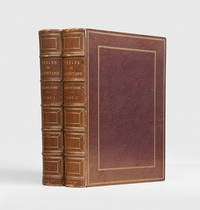
1873159315Paris: Garnier Frères 1873. First Edition. Folio. First Edition. A monumental two-volume collection of the works of François Rabelais illustrated with frontispiece portrait 60 plates and 658 in-text illustrations by Gustave Doré. Text and titles in French. <br /> <br /> Both volumes Very Good plus with light foxing on the endpapers and page edges. Garnier Frères unknown
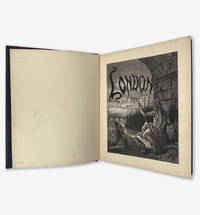
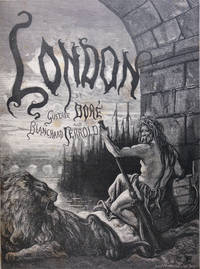
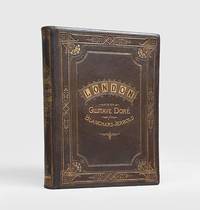
187221212321872. London: Grant & Co. 1872. Folio. Original burgundy cloth lettered in gilt to front and spine bevelled edges; pp. x xii 191 1 illustrated by Dore with 54 full page wood engraved plates with titled tissue-guards and 126 engravings throughout the text; a little shelf wear to extremities occasional foxing generally very good.First edition. The theme of this book had been anticipated by Matthew Arnold three years earlier when he wrote of ""London with its unutterable external hideousness and with its internal canker of publice egestas priviatim opulentia - to use the words which Sallust puts into Cato's mouth about Rome - unequalled in the world"" Culture and Anarchy London 1869 p.31. Gustave Dore collaborated with the journalist Blanchard Jerrold to explore Victorian London spending four years to produce this masterpiece in which the chiaroscuro illustrations embody the light and shade of the city. ""Dore's devastating realization of the contrast of wealth and poverty in a modern metropolis makes London one of the great illustrated books of the world."" Gordon Ray The Illustrator and the Book in England from 1790 to 1914 describing the English edition.This book had a considerable influence on Vincent van Gogh who dubbed it ""superb and noble in sentiment"". hardcover
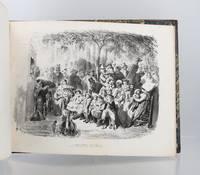
187576484London:: Dore Gallery 1875. First edition thus; presentation copy inscribed by Dore on the original plain front wrapper to a contemporary publisher "A Monsieur Goupil Hommage Affectueux G. Dore.". rebound inappropriately in 20th c. gilt-lettered leatherette but with the original plain wrappers bound in. Custom clamshell box. Some scattered foxing and slight marginal waterstaining to a few leaves. Oversised folio. Illustrated by Gustave Dore: title page vignette frontispiece and 38 black and white plates. Additional postage charge applicable for this oversized book. Dore Gallery, hardcover
187234677London: Grant & Co. 1872. First Edition of “Doré’s chef d’oeuvre†Bland. With one hundred and eighty truly brilliant engraved illustrations by Gustave Doré including many folio size plates each with descriptive tissue guard. Large Folio in a stately and handsome binding of three-quarter blue-black polished calf over blue cloth covered boards the spine with raised bands ruled in gilt the compartments fully gilt decorated with panels incorporating double gilt fillet rules corner and central tooling gilt one compartment with a red morocco label gilt lettered turnovers and borders of the calf ruled in gilt the upper cover with gilt titling and authorship decoration marbled endpapers all edges gilt. xii 191 10 Table of Contents and Table of Illustrations pp. A handsome and stately copy very sturdy and the binding strong and well preserved the thick paper generally clean and crisp and solid. Some occasional foxing to some leaves as is normal with the book more to the front preliminary leaves some rubbing to the extremities some age . A very well preserved copy. FIRST EDITION IN A STATELY BINDING OF WHAT MANY CONSIDER TO BE DORE'S GREATEST MOST IMPORTANT AND FANTASTIC WORK. This is also one of Doré’s less common works rarely encountered and a superb example of his talent. It is a great book especially because it is the work of an artist capturing what he sees of the London of the streets and of the backs a place seldom encountered by the public at large. It is a book that rocked the book world and English sensibilities when it first appeared. <br> "Doré produced the drawings for this work under great emotional strain. France was involved in the Franco-Prussian War and his brother was a soldier in it. With Jerrold he had walked the streets of London like Dickens and Wilkie Collins before at night and viewed the working of the City the London labourers and the London poor. At this period he had also attended a garden party with Queen Victoria with whom he had a long conversation. He experienced all the delights of the London Season from the Boat Race the Derby and various Balls and Salons. His work was criticised for its exposure of the less salubrious side of the city from its Opium dens the homeless and the ugly back streets at the same time gently mocking Society Ladies admiring monkeys in cages from the animals point of view and the prisoners exercise yard which inspired Van Gogh.<br> The British public were not amused with what had promised to be a light and entertaining work. Instead came a work of uncomfortable social reflection of the juxtaposition between wealth and poverty the upper classed the work and dispossessed. The text by Blanchard Jerrold is light and amusing hardly reflecting the grim realities of Doré's representation.<br> “Doré’s devastating realization of the contrast of wealth and poverty in a modern metropolis makes LONDON one of the great illustrated books of the world. The English edition antedates the French by four years and indeed it is a handsomer book†Ray. Ruari McLean in his book VICTORIAN BOOK DESIGN says of it: “.perhaps the finest and most original book of monochrome wood engraving published in London during this period was the work of a Frenchman Gustave Doré. This was his LONDON A PILGRIMAGE. Doré’s illustrations make the English illustrations of the sixties look puny.â€<br> The engraved illustrations and accompanying text show many aspects of the city but dwell on the picturesque clutter and the squalor of the poorer districts. ‘Jerrold whose text accompanies the plates was a well known London journalist who conceived the work and accompanied the artist in exploring London--sometimes with special police protection. Doré was able to explore the vitality and ruthlessness of Victorian London and depict these conditions through his extraordinary graphics.’ Grant & Co. hardcover
186084302Paris: Féchoz & Letouzey 1860. Fine. Before the golden age of comics the ""Age of Doré"" Féchoz & Letouzey Paris s. d. 1860 36 x 27.50 cm relié Album of lithographed plates in third state first cover printed in 3 tones black bistre with gradients and white highlights followed by 24 lithographs in black on 12 double-sided pages. Gray half calf binding smooth spine some foxing original soft cover preserved binding signed by Charles Septier. Created in 1851 this youthful work influenced by Rodolphe Töppfer's style is now considered an incunabulum of comic strips. Féchoz & Letouzey paperback
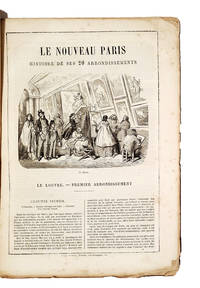
18601681711860. DORE Gustave and Emile de la BEDOLLIERE. Le Nouveau Paris. Histoire de ses 20 arrondissements. 440 pp. illustrated with a frontispiece and 66 wood-engravings by Doré throughout the text plus 21 double-page coloured maps of the arrondissements designed by Desbuissons and engraved by Erhard. Large 8vo 300 x 210 mm in the original publisher's illustrated and printed wrappers preserved in a new cloth folding box. Paris: Gustave Barba 1860. First edition first issue with the address of Barba on the rue Cassette. This copy includes all of the original parts in their illustrated publisher's wrappers the complete compliment of coloured maps of Paris with a copy of the general plan of Paris which was not included with the publication in parts laid in. The original first printing is nearly a different work in terms of quality and visual impact compared to the later reprints. This wonderful guide captures Paris in a moment of astounding transformation. The "modernization" of the city of Paris by Baron Haussmann was in the middle period when the Doré guide to Paris was issued. Much of the old Paris and a bit of the brand-new Paris is captured in the wood-engraved illustrations of Doré the maps by Desbuissons and the text by La Bedollière. There are parts devoted to: Le Louvre La Bourse L'Hotel-de-Ville Le Pantheon Le Luxembourg Le Palais-Bourbon L'Elysee L'Opera Les Gobelins Vaugirard Passy Les Buttes de Montmartre etc. plus 2 parts of Dictionnaire de Besoins Usuels two parts of Dictionnaire des Rues de Paris and one final part on Histoire Géneral de Paris. "Les transformations de Paris décidées par Haussmann furent radicales notamment par l'annexion des communes limitrophes portant le nombre d'arrondissements de 12 à 20. Le livre de La Bédollière est conçu comme un guide touristique de ce nouveau Paris. Contrairement à ce que l'on pourrait attendre Gustave Doré ne s'attache pas à une description topographique de la ville. Dédaignant l'enveloppe il s'intéresse à son contenu et il adopte un ton humoristique et plein de fantaisie pour décrire les détails piquants et pittoresques de l'histoire ou de la vie quotidienne qui animait chaque arrondissement. La bonhomie et la bonne humeur qui s'expriment dans les illustrations de Gustave Doré n'augurent en rien la prise de conscience sociale que l'artiste éprouvera lors de son pélerinage londonien" Strasbourg Exhibition nº 605. Some wear to the wrappers but nevertheless sound and desirable in the rare original wrappers. Leblanc 195. Vicaire IV 732. hardcover
1867189937Paris: Librairie de L. Hachette et Cie 1867. Masterfully illustrated fables First Doré edition this set including the additional plate "Les devineresses" bound in Volume II. In this period Doré went from being "virtually unknown in England to being the most famous illustrator in the world" Malan 67. His illustrated edition was serialized in 60 parts from 1866 to 1868 and published in book form simultaneously in Paris and London. 2 vols folio 300 x 420 mm. Steel-engraved portrait frontispiece of the author by Delannoy after Sandoz 85 plates with grey border and tissue guard steel engravings in text by Doré. Titles and headings printed in red and black contents printed within red double-rule border. Early 20th-century brown morocco spines lettered in gilt compartments framed in gilt two sets of quadruple gilt rules bordering covers gilt fillet to board edges turn-ins with gilt fillets and crosses at corners red moiré silk doublures and free endpapers edges gilt. Spines and front cover edges lightly sunned gilt bright small chip to spine foot of vol. II rubbing and slight wear to extremities couple marks to covers sporadic foxing. A very good set. Beraldi VI 151. unknown
1856302070Paris: Michel Lévy frères 1856. First Edition. 12 plates on wood after the designs of Gustave Doré. 1 vols. Folio. Quarter publisher's black morocco and pebbled cloth small loss at bottom of spine. Doré Gustave. First Edition. 12 plates on wood after the designs of Gustave Doré. 1 vols. Folio. "Le chef-d'oeuvre de Doré dans le genre fantastique.et puis le format est formdable!" Beraldi. Renonciat p. 92; Leblanc 217 Michel Lévy frères unknown
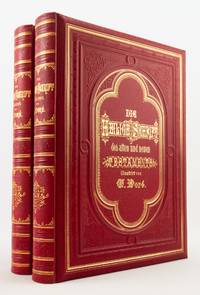
1877ST20670Stuttgart: Edward Hallberger ca. 1877. Fourth Edition. 430 x 315 mm. 16 3/4 x 12 1/4". Two volumes. Translated into German by Dr. Joseph Franz Allioli. <br/> PUBLISHER'S SPLENDID RED CLOTH VERY ELABORATELY STAMPED IN GILT AND BLIND covers with bevelled edges thick and thin gilt-rule border enclosing ornate blind-stamped frame large central oval containing a lobed gilt frame with gilt lettering inside spine divided into blind-stamped panels by decorative and plain gilt rules two large panels with gilt lettering and volume number original cloth hinges white moiré paper endpapers all edges gilt. IN THE ORIGINAL PRINTED GRAY DUST JACKETS jacket of second volume with small very expert repairs at bottom and the original black cardboard clamshell boxes solidly reinforced with black tape. WITH 230 DRAMATIC PLATES BY GUSTAVE DORÉ. Volume I with four leaves for recording family members marriages births and deaths each with a decorative frame all unused. Malan "Doré" p. 85. Isolated spots of minor foxing due to paper content one cover of the very rarely seen dust jackets with red offsetting from the frame on the cover but AN UNSURPASSABLE COPY--clean fresh and bright internally the bindings and jackets IN SPARKLING CONDITION.<br/> <br/> This is a time-capsule copy of perhaps the most popular illustrated Bible ever issued and one of the very few Bibles which has always been known by the name of its illustrator. According to his biographer the artist was excited by the "almost endless series of intensely dramatic events" he would get to portray; the results originally created for the 1866 Grand Bible of Tours are so evocative that the critic Bouchot called them "the terror of frail readers." Doré 1832-83 makes remarkable use of light shadow and composition to convey the full range of splendor horror pathos and ecstasy contained in the Scriptures. Because he was so prolific it is estimated that he made more than 100000 designs in his lifetime Doré inevitably had his detractors but Ray says simply that he was "one of the greatest of all illustrators." Taine says that "every imagination appeared languid in comparison with his. For energy force superabundance originality sparkle and gloomy grandeur I know of only one equal to his--that of Tintoretto." The Doré Bible was translated into at least 24 languages; ours is the German version by Catholic theologian Joseph Franz Allioli 1793-1873. According to Malan "The Roman Catholic Church has never diminished its praise of these illustrations." And these illustrations endured in many Catholic and Protestant Bibles especially during the last third of the 19th century but actually until the present. The Bible was such a cultural phenomenon that Mark Twain even mentioned it in “Tom Sawyer†as a motivating prize for students to learn Scripture. The Bible’s success prompted Doré to reinterpret his illustrations in huge paintings that were displayed at Doré Gallery in London. Malan says that the exhibition “was considered the greatest collection of religious paintings in the world." The boxes that were issued with our set have clearly weathered some blows over the years but they did their job perfectly as the volumes they protected hardly seem to have been opened in their lifetime and their dust jackets even considering the minor repair are also in a breathtaking state of preservation. Edward Hallberger unknown
1872189822London: Grant & Co. 1872. One of the great illustrated books of the world First edition in the publisher's deluxe morocco binding. Showcasing Doré and Jerrold's beautiful and influential "Pilgrimage" around the great metropolis of 19th-century London the ambitious project took four years to complete and was published with 180 engravings depicting various scenes around the city. Doré's striking chiaroscuro drawings faithfully rendered by a team of the finest French wood-engravers reflects the closeness and contrast of London's social classes. The book gained popularity and financial success in both Britain and America. Gordon Ray describes it as simply "one of the great illustrated books of the world". Folio. Wood-engraved frontispiece decorative title page 52 plates with captioned tissue guards illustrations in the text all after Doré. Title and letterpress printed within red double-rule border. Original brown morocco over bevelled boards spine and covers lettered and elaborately decorated in gilt inner dentelles gilt loose French curl patterned endpapers edges gilt. A little rubbing inner hinges reinforced with cloth shallow chips to foot of front free endpaper repaired closed tear to upper margin of engraved title pale damp stains to a few plates contents a little foxed and cockled. A very good copy. Beraldi VI 157; Ray 207 and listed as one of his "Outstanding Books". hardcover
185484305Paris: Au bureau du journal amusant 1854. Fine. Au bureau du journal amusant Paris S.d 1854 34.50 x 26.50 cm relié Gustave's 'jeunesse Doré' talent's no need of years First edition first printing of this rare album with its precious publisher's lithographed green cover by Belin and twenty original captioned lithographed plates by Gustave Doré. One of Doré's earliest efforts his debut album of illustrations he published at age twenty-two: ""In this album Doré begins to display an unprecedented mastery of comedy and exuberance. We are constantly drawn in by the abundant playfulness of his verve and as Béraldi says 'by a very accurate very witty and yet measured observation'""Henri Leblanc Catalogue de l'oeuvre complète de Gustave Doré. Later olive-green 3/4 Russian morocco binding faded spine light scuffing to the corners marbled pastedowns and endleaves original covers preserved binding signed Ch. Septier. Au bureau du journal amusant unknown
18541692561854. DORE Gustave. Histoire Dramatique Pittoresque et Caricaturale de la Sainte Russie D'après les Chroniquers et Historiens Nestor Nikan Sylvestre Karamsin Segur etc. 4 207 pp. printed on recto only illustrated with 500 engraved illustrations by Gustave Doré cut onto woodblocks by Sotain. 4to 290 x 195 mm. bound in contemporary brown quarter cloth over marbled boards with the original front and rear wrappers preserved. Paris: Lacour for J. Bry Ainé 1854. First edition early issue. Containing 500 surreal illustrations by Doré this volume presents a blistering criticism of the tyranny of the Russian Czars. In the first issue pages 89 and 97 have large blots of red ink depicting "le regné d'Ivan-le-Terrible." In this copy there is a red blot on page 97 but page 89 is blank. The collaboration between Gustave Doré and the woodcutter Sotain represents an important moment in both artist's development. "Sotain began engraving for the Magasin Pittoresque having executed for Philipon the plates to Beau Monde by Gustave Doré. The understanding that Sotain had for his art his methods and his ingenuity reassured the artist for this project. In the designs of this album Gustave Doré voluntarily multiplied the details of the images which are not usually found in such clarity" Valmy-Baysse Gustave Doré p. 150. Binding repaired and a few spots but overall a fine copy of an extremely rare work. Forberg Gustave Doré: Das graphische Werk II pp. 900-925. Leblanc Catalogue de l'Oeuvre Complet de Gustave Dore p. 135. hardcover
18721270541872. First Edition. LONDON DORÉ Gustave and JERROLD Blanchard. London: A Pilgrimage. London: Grant 1872. Large folio 13-1/2 by 17 inches contemporary three-quarter red morocco raised bands marbled boards and endpapers top edge gilt. $5800.First edition of Doré and Jerrold's London ""superb and noble in sentiment"" van Gogh with 54 striking full-page wood-engravings and 126 in-text vignettes of ""all segments of London society"" by Doré. Handsomely bound.""One can hardly deny that Doré is not merely one of the most popular but also one of the greatest of all illustrators Perhaps Taine summed up Doré's appeal most eloquently: 'every imagination appeared languid in comparison with his. For energy force superabundance originality sparkle and gloomy grandeur I know only one equal to his that of Tintoretto' Doré's devastating realization of the contrast of wealth and poverty in a modern metropolis makes London one of the great illustrated books of the world. The English edition antedates the French by four years and indeed it is a handsomer book"" Ray 327-29. ""By 1872 Doré was the most popular artist in England illustrator or painter. This work was eagerly awaited by the English public having been postponed by the Franco-Prussian War The idea was to match Doré's artistic genius with an in-depth view of all segments of London societythe rich and the poor the common people at work and play famous sites and slums nobility and criminals Many were the days and nights that Doré went in disguise with undercover policemen for protection to see parts of London not listed in any tour guide The result was a book often hailed as the greatest visual expression of the social class struggle ever published"" Malan 127. ""The other day"" once wrote Vincent van Gogh ""I saw a complete set of Doré's pictures of London. I tell you it is superb and noble in sentiment."" Indeed Van Gogh based his 1890 painting ""En Prison"" or ""Prisoner's Round"" on Doré's illustration ""Newgate Exercise Yard"" which appears on page 136. There were two sizes issued by Grant in 1872 albeit without a huge difference between the two: one with the text block measuring 12-1/2 by 16 inches and another at 13 by 16-1/2 inches. This copy is from the larger of the two issues. Malan 281. Plates and text clean corners somewhat rubbed. A few closed tears to first few leaves and tissue guard. A near-fine copy. hardcover
185070018Paris: Chez Aubert & Cie 1850-51. First Edition First Issue of one of the two earliest and most rare of all Doré's illustrated books. Only Les Travaux d'Hercule precedes this book and like the Trois Artistes Incompris et Mecontens is very rarely if ever seen in commerce. Illustrated with an engraved title-page as the upper cover illustration of the book and over 150 woodcut illustrations throughout. Folio publisher's original and earliest binding of pictorially illustrated yellow paper over boards the upper cover with all-over illustrations printed in red and black. 1 25 pp. A well preserved and handsome copy of this very rare and fragile book some expert and unobtrusive strengthening at the tips and edges a book seldom if ever encountered and even then nearly always with very considerable wear and breakage. FIRST EDITION OF ONE OF THE EARLIEST AND MOST RARE OF DORÉ'S ILLUSTRATED WORKS. 'At 15 years of age Doré had begun his career working as a caricaturist for the French paper Le journal pour rire. Wood-engraving was his primary method at this time. In the late 1840s and early 1850s he made several text comics like Les Travaux d'Hercule 1847 Trois artistes incompris et mécontents 1850-1 Les Dés-agréments d'un voyage d'agrément 1851 and L'Histoire de la Sainte Russie 1854 but subsequently went on to win commissions to depict scenes from books by Cervantes Rabelais Balzac Milton and Dante. He also illustrated "Gargantua et Pantagruel" in 1854.<br> 'Trois Artists is a fascinating book.but dating the Trois Artistes original is a bibliographical challenge. The earliest Journal pour Rire advertisement was in November 29 1850 and the book itself has a Dec. 1850 date in the publisher's catalogue. The second larger Journal pour Rire advertisement was dated January 31 1851 and the book was listed by February 11 1851 in Bibliographie de la France. Whether December or January the book remains along with Les Travaux d'Hercule the most rare of Gustave Doré's illustrated books and one of the earliest "comic books" produced.<br> Gustave Doré 1832-1883 was described by Saturday Review as “The <br>most startling art phenomenon in Europe; his genius at each turn changes like the colors in a kaleidescope into something new and unexpected.†The Fine Arts Quarterly Review also wrote: “Doré is a great and marvelous genius a poet a nation produces once in a thousand years. He is the most imaginative the profoundest the most productive poet that ever sprang from the French race.†These are 1860s quotes from England about a French artist. What did Doré actually do He created a series of dozens of literary folios with thousands of full-page engravings that are still being borrowed today in hundreds of popular culture genres. The Doré phenomenon was all the more remarkable because he was being viciously attacked by British elitists like John Ruskin who asserted that Doré was the Devil come to destroy the morality of the British public who were unsophisticated peasants. But those “unsophisicated peasants†who admired Doré art included the Queen of England the Prince of Wales the Poet Laureate Charles Dickens plus Leo Tolstoy Mark Twain not to mention the Pope. Doré’s <br>dramatic mystical otherworldly imagery transcended dimensions of the physical and the spiritual. While other illustrators showed people standing in a room talking Doré showed images of Spiral Nebula Flying Saucers the depths of Hell and the opening of Heaven in his folios for Dante Milton Tennyson The Bible Rabelais Shakespeare Fairy Tales Fables Don Quixote Baron Munchausen The Ancient Mariner Doré’s social commentary masterpiece London A Pilgrimage and Poe’s The Raven which Doré did not live to see published. Doré was a creative geniuses with unlimited imagination. <br> Consider that Gustave Doré at the age of 15 years and a diminutive teenager walked into the office of Charles Philipon to show his drawings. It is said that he looked to be about 12. Philipon was mesmerized as Doré created new <br>drawings with lightning-fast rapidity right before his eyes. Shortly thereafter a book appeared with a most curious introduction by the Aubert Publishing Company that read “The Labours of Hercules was written drawn and lithographed by a 15-year-old artist who has no teacher or art training.†Thus began the art career of the most prolific and popular illustrator of all time. He wrote and drew several “comic books†before he began the transition to Literary Folios Painting & Sculpture. But the only other edition of Doré’s Hercules in 145 years was a German edition in 1922. Charles Philipon’s company Aubert contracted with Doré'’s father to hire the boy to draw for his Journal pour Rire and Doré had over a thousand engravings published while still a teenager. In 1850 TROIS ARTISTES INCOMPRIS ET MÉCONTENS Three Misunderstood Malcontent Artists with 155 drawings was published. One of the two earliest and now most rare of the young genius's books. And one of the earliest of all "comic books".<br> Considering his illustrations for Cervantes's Don Quixote his depictions of the knight and his squire Sancho Panza have become so famous that they have influenced subsequent readers artists and stage and film directors' ideas of the physical "look" of the two characters. Doré also illustrated an oversized edition of Edgar Allan Poe's "The Raven" an endeavor that earned him 30000 francs from publisher Harper & Brothers in 1883.<br> Doré's illustrations for the Bible 1866 were a great success and in 1867 Doré had a major exhibition of his work in London. This exhibition led to the foundation of the Doré Gallery in Bond Street London. In 1869 Blanchard Jerrold the son of Douglas William Jerrold suggested that they work together to produce a comprehensive portrait of London. Jerrold had obtained the idea from The Microcosm of London produced by Rudolph Ackermann William Pyne and Thomas Rowlandson published in three volumes from 1808 to 1810. Doré signed a five-year contract with the publishers Grant & Co that involved his staying in London for three months a year and he received the vast sum of Å10000 a year for the project. Doré was mainly celebrated for his paintings in his day. His paintings remain world-renowned but his woodcuts and engravings like those he did for Jerrold are where he excelled as an artist with an individual vision.<br>The completed book London: A Pilgrimage with 180 wood-engravings was published in 1872. It enjoyed commercial and popular success but the work was disliked by many contemporary critics. Some of these critics were concerned by the fact that Doré appeared to focus on the poverty that existed in parts of London. Doré was accused by The Art Journal of "inventing rather than copying". The Westminster Review claimed that "Doré gives us sketches in which the commonest the vulgarest external features are set down". The book was a financial success however and Doré received commissions from other British publishers.<br> Doré's later work included illustrations for new editions of Coleridge's Rime of the Ancient Mariner Milton's Paradise Lost Tennyson's Idylls of the King The Works of Thomas Hood and The Divine Comedy. Doré's work also appeared in the weekly newspaper The Illustrated London News.' Wiki Chez Aubert & Cie hardcover
18551696331855. DORÉ Gustave. Les Contes Drolatiques. By Honore de Balzac. 8vo. 205 x 130 mm bound in nineteeenth century full crushed brown morocco in a slipcase. Paris: Garnier Freres 1873. A superb copy of this Doré masterpiece with fine impressions of the engraving printed on Chine and with "huitieme edition" on the title-page. Gordon Ray called Doré'ss illustrations for the Contes Drolatiques "Doré's early masterpiece." The first illustrated edition was issued with 425 original designs by Gustave Doré comprising 103 full-page engravings and 322 vignettes of varying sizes. It is well recorded that Balzac's widow granted permission for the illustrated edition only on the condition: "that no artist but Doré should be allowed to illustrate her husband's works" Anthony North-Peat Gossip from Paris 1864-69 p. 324. "Si de tous les ouvrages illustrés par Gustave Doré il ne devait en rester qu'un ce serait celui-là: l'illustration est à la hauteur du texte et ce n'est pas peu dire puisque Balzac considérait les "Contes drolatiques" comme son chef-d'oeuvre" Brivois Bibliographie des ouvrages illustrés du XIXe siècle 1883 p. 32. "Ce livre est considéré comme le chef-d'oeuvre d'illustration de Gustaf Doré il est apprécié pour son format agréable et la qualité de son illustration variée et abondante: 425 compositions vignettes et grands bois compris dans la pagination." Carteret III p. 50. Ray Art of the French Illustrated Book 244. See: Rahir 304. Beraldi VI 34 "Un des chef-d'oeuvres de Doré: cette illustration est étonnante d'invention de joyeuse humeur vraiment gauloise et rabelaisienne et pétillante d'esprit." Leblanc 39. Provenance: The library of William Ivins inscribed to him by his father. unknown
1872302978London: Grant & Co 1872. First edition. Wood-engraved title page illustrated with numerous wood-engraved plates vignettes head- and tail-pieces after Doré. 13 parts in 12. 1 vols. Folio. Original printed wrappers spines repaired. Very good clean set. Cloth folding box. Doré Gustave. First edition. Wood-engraved title page illustrated with numerous wood-engraved plates vignettes head- and tail-pieces after Doré. 13 parts in 12. 1 vols. Folio. "Doré's devastating realization of the contrast of wealth and poverty in a modern metropolis makes LONDON one of the great illustrated books of the world.". Ray p. 134; Malan pp. 126-9; Grant & Co unknown