3 803 résultats
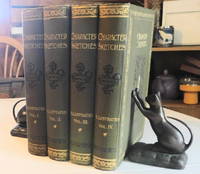
189298686New York: Selmar Hess: 1892-1896. 1892-1896. Very good. - Quarto 11-1/2 inches high by 9 inches wide. Four hardcover volumes bound in pictorial olive green cloth with gilt decorations and an art nouveau illustration stamped on the front covers with moire pastedowns and endpapers. Titled in gilt on the spines. All edges are gilt. The corners and head & tail of the spines are lightly bumped and the bottom edges of the covers are slightly rubbed. Volume 1 1892: viii & 408 pages. Volume 2 1896: vi & 408 pages. Volume 3: 1896: vi & 408 pages. Volume 4 1892: vi & 384 pages. Each volume is illustrated with a color frontispiece and 84 plates with printed tissue guards a total of 340 plates in all including works by Gustave Dore Sir Edwin Landseer Holman Hunt Sir Frederick Leighton E.A. Abbey and G. Moreau. The front hinge of the second volume is cracked opposite the front blank leaf. An attractive set. <p>Volume 4 contains an "English and American bibliography" pages 285-336 and "Authors and dates of dramas and operas" pages 342-384. New York: Selmar Hess: 1892-1896. hardcover
1996Q-188895700XMCE Publishing Co 1996-06-01. Hardcover. New. New. In shrink wrap. Looks like an interesting title! MCE Publishing Co hardcover
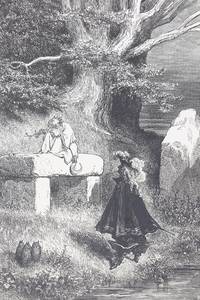
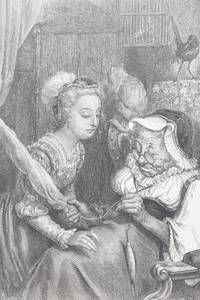
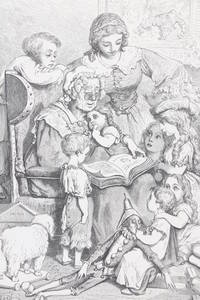
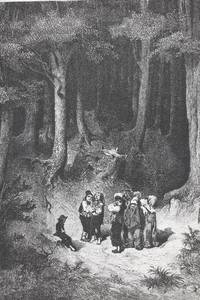
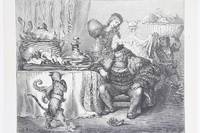
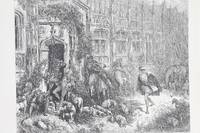
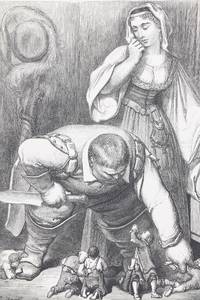
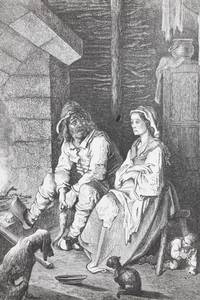
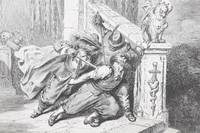
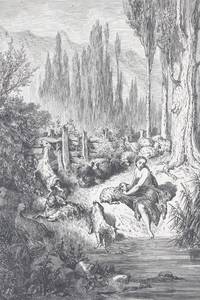
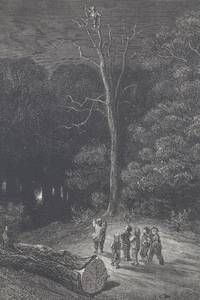
186279664Paris: Hetzel 1862. Fine. Hetzel Paris 1862 29.90 x 42.10 cm une feuille Original wood engraving signed in the plate by the artist and engraver. Composition created by Gustave Doré and engraved by Boetzel on China paper and mounted on Holland laid paper at the request of publisher Hetzel to illustrate his folio edition of Perrault's Contes in 1862. Occasional light worming in margins not affecting the engraving. These illustrations for the Contes are considered the most successful of this text: Gustave Doré offers an unprecedented dramatic vision. With him everything contributes to the dramatization of the tale from the theatrical staging of the composition to the smallest details that generate terrifying realism through the technique known as ""tinted wood."" He uses India ink or gouache previously diluted as required by the ""wash"" technique. For Perrault's tales the eleven best engravers of the period were employed to engrave with the burin the forty wooden plates: Pannemaker Pisan Pierdon Maurand Boetzel Brevière Hébert Deschamps Dumont Delduc and Fagnon. Gustave Doré's work in illustrating the Contes is paramount; he does not reduce engraving to its ornamental function but transforms it into a true object of narration. These illustrations are Doré's most famous works and immediately received enthusiastic reviews notably that of Sainte-Beuve in Les Nouveaux lundis December 23 1861: ""A Perrault like there never was until now and like there will never be again. . I can only say that these drawings seem very beautiful to me richly and opulently turned that they have a grandiose character that renews the aspect of these humble tales and restores to them their first marvel prior to Perrault himself."" Hetzel unknown
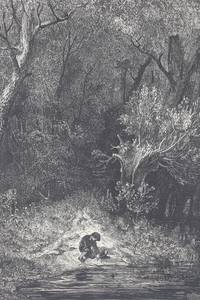
186279637Paris: Hetzel 1862. Fine. Hetzel Paris 1862 29.90 x 42.10 cm une feuille Original wood engraving on end-grain wood signed in the plate by the artist and engraver. Composition created by Gustave Doré and engraved by Charles Maurand on China paper and mounted on Holland laid paper at the request of publisher Hetzel to illustrate his folio edition of Perrault's Contes in 1862. A pale marginal dampstain not touching the image. These illustrations of the Contes are considered the most successful of this text: Gustave Doré offers an unprecedented dramatic vision. With him everything contributes to the dramatization of the tale from the theatrical staging of the tableau to the smallest details that generate terrifying realism through the technique known as ""tinted wood"". He uses India ink or gouache previously diluted as required by the ""wash"" technique. For Perrault's tales the eleven finest engravers of the period were enlisted to engrave with burin the forty wood blocks: Pannemaker Pisan Pierdon Maurand Boetzel Brevière Hébert Deschamps Dumont Delduc and Fagnon. Gustave Doré's work in the context of illustrating the Contes is paramount; he does not reduce engraving to its ornamental function but transforms it into a true object of narration. These illustrations are Doré's most famous works and immediately received enthusiastic reviews notably that of Sainte-Beuve in Les Nouveaux lundis 23 December 1861: ""Un Perrault comme il n'y en eut jamais jusqu'ici et comme il ne s'en verra plus. . Je ne puis que dire que ces dessins me semblent fort beaux d'un tour riche et opulent qu'ils ont un caractère grandiose qui renouvelle l'aspect de ces humbles contes et leur rend de leur premier merveilleux antérieur à Perrault même."" ""A Perrault such as there never was until now and such as there will never be again. . I can only say that these drawings seem very beautiful to me of a rich and opulent turn that they have a grandiose character that renews the aspect of these humble tales and restores to them their original wonder that predates Perrault himself."" Hetzel unknown
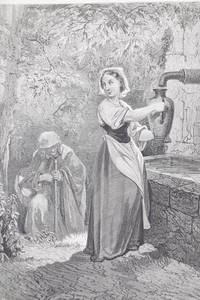
186279669Paris: Hetzel 1862. Fine. Hetzel Paris 1862 29.90 x 42.10 cm une feuille Original wood engraving signed on the plate by the artist and engraver. Composition created by Gustave Doré and engraved by Charles Maurand on China paper and mounted on laid Holland paper at the request of publisher Hetzel to illustrate his folio edition of Perrault's Contes in 1862. Occasional worming and soiling to lower right corner not affecting the engraving. These illustrations of the Contes are considered the most successful of this text: Gustave Doré presents an unprecedented dramatic vision. With him everything contributes to the dramatization of the tale from the theatrical staging of the scene to the smallest details that generate terrifying realism through the technique known as ""tinted wood"". He uses India ink or gouache previously diluted as required by the ""wash"" technique. For Perrault's tales the eleven best engravers of the time were employed to engrave with burin the forty wooden plates: Pannemaker Pisan Pierdon Maurand Boetzel Brevière Hébert Deschamps Dumont Delduc and Fagnon. Gustave Doré's work in illustrating the Contes is paramount; he does not reduce engraving to its ornamental function but transforms it into a true object of narration. These illustrations are Doré's most famous works and immediately received enthusiastic criticism notably that of Sainte-Beuve in Les Nouveaux lundis December 23 1861: ""Un Perrault comme il n'y en eut jamais jusqu'ici et comme il ne s'en verra plus. . Je ne puis que dire que ces dessins me semblent fort beaux d'un tour riche et opulent qu'ils ont un caractère grandiose qui renouvelle l'aspect de ces humbles contes et leur rend de leur premier merveilleux antérieur à Perrault même."" ""A Perrault like there never was before and as will never be seen again. . I can only say that these drawings seem very beautiful to me of a rich and opulent turn that they have a grandiose character that renews the aspect of these humble tales and restores to them their original marvelous quality that existed before Perrault himself."" Hetzel unknown
186279649Paris: Hetzel 1862. Fine. Hetzel Paris 1862 29.90 x 42.10 cm une feuille Original wood engraving signed in the plate by the artist and engraver. Composition created by Gustave Doré and engraved by Emile Deschamps on China paper and mounted on Holland laid paper at the request of publisher Hetzel to illustrate his folio edition of Perrault's Contes in 1862. Occasional light foxing in margins not affecting the engraving. These illustrations of the Contes are considered the most successful of this text: Gustave Doré offers an unprecedented dramatic vision. With him everything contributes to the dramatization of the tale from the theatrical staging of the tableau to the smallest details that generate terrifying realism through the technique known as ""tinted wood"". He uses India ink or gouache previously diluted as required by the ""wash"" technique. For Perrault's tales the eleven best engravers of the period were enlisted to engrave with burin the forty wooden plates: Pannemaker Pisan Pierdon Maurand Boetzel Brevière Hébert Deschamps Dumont Delduc and Fagnon. Gustave Doré's work in illustrating the Contes is paramount; he does not reduce engraving to its ornamental function but transforms it into a true narrative object. These illustrations are Doré's most famous works and immediately received enthusiastic reviews notably that of Sainte-Beuve in Les Nouveaux lundis December 23 1861: ""Un Perrault comme il n'y en eut jamais jusqu'ici et comme il ne s'en verra plus. . Je ne puis que dire que ces dessins me semblent fort beaux d'un tour riche et opulent qu'ils ont un caractère grandiose qui renouvelle l'aspect de ces humbles contes et leur rend de leur premier merveilleux antérieur à Perrault même."" ""A Perrault like none there has ever been until now and like none will ever be seen again. . I can only say that these drawings seem very beautiful to me of a rich and opulent style that they have a grandiose character that renews the aspect of these humble tales and restores to them their first wonder prior to Perrault himself."" Hetzel unknown
186279646Paris: Hetzel 1862. Fine. Hetzel Paris 1862 29.90 x 42.10 cm une feuille Original wood engraving signed in the plate by the artist and engraver. Composition created by Gustave Doré and engraved by François Pannemaker on China paper and mounted on Dutch laid paper at the request of publisher Hetzel to illustrate his folio edition of Perrault's Contes in 1862. A very light marginal dampstain not affecting the design as well as some soiling in the left margin. These illustrations of the Contes are considered the most successful of this text: Gustave Doré offers an unprecedented dramatic vision. With him everything contributes to the dramatization of the tale from the theatrical staging of the tableau to the smallest details that generate terrifying realism through the technique known as ""tinted wood."" He uses India ink or gouache previously diluted as required by the ""wash"" technique. For Perrault's tales the eleven best engravers of the time were enlisted to engrave the forty wood plates with the burin: Pannemaker Pisan Pierdon Maurand Boetzel Brevière Hébert Deschamps Dumont Delduc and Fagnon. Gustave Doré's work in illustrating the Contes is essential; he does not reduce engraving to its ornamental function but transforms it into a true object of narration. These illustrations are Doré's most famous works and immediately received enthusiastic reviews notably that of Sainte-Beuve in Les Nouveaux lundis December 23 1861: ""Un Perrault comme il n'y en eut jamais jusqu'ici et comme il ne s'en verra plus. . Je ne puis que dire que ces dessins me semblent fort beaux d'un tour riche et opulent qu'ils ont un caractère grandiose qui renouvelle l'aspect de ces humbles contes et leur rend de leur premier merveilleux antérieur à Perrault même."" ""A Perrault the likes of which has never existed until now and the likes of which will never be seen again. . I can only say that these drawings seem very beautiful to me of a rich and opulent style that they have a grandiose character that renews the aspect of these humble tales and restores to them their first marvelous quality that preceded Perrault himself."" Hetzel unknown
186279633Paris: Hetzel 1862. Fine. Hetzel Paris 1862 29.90 x 42.10 cm une feuille Original wood engraving signed on the plate by the artist and engraver. Composition created by Gustave Doré and engraved by François Pannemaker on chine collé mounted on Holland laid paper commissioned by publisher Hetzel to illustrate his folio edition of Perrault's Contes in 1862. A light marginal dampstain not affecting the design. These illustrations for the Contes are considered the most successful of this text: Gustave Doré offers an unprecedented dramatic vision. With him everything contributes to the dramatization of the tale from the theatrical staging of the tableau to the smallest details that generate terrifying realism thanks to the technique known as ""tinted wood."" He uses India ink or gouache previously diluted as required by the ""wash"" technique. For Perrault's tales the eleven best engravers of the period were enlisted to engrave with burin the forty wood plates: Pannemaker Pisan Pierdon Maurand Boetzel Brevière Hébert Deschamps Dumont Delduc and Fagnon. Gustave Doré's work in illustrating the Contes is paramount; he does not reduce engraving to its ornamental function but transforms it into a true object of narration. These illustrations are Doré's most famous works and immediately received enthusiastic reviews notably that of Sainte-Beuve in Les Nouveaux lundis December 23 1861: ""Un Perrault comme il n'y en eut jamais jusqu'ici et comme il ne s'en verra plus. . Je ne puis que dire que ces dessins me semblent fort beaux d'un tour riche et opulent qu'ils ont un caractère grandiose qui renouvelle l'aspect de ces humbles contes et leur rend de leur premier merveilleux antérieur à Perrault même."" ""A Perrault like there never was before and like there will never be again. . I can only say that these drawings seem very beautiful to me of a rich and opulent manner that they have a grandiose character which renews the aspect of these humble tales and restores to them their original marvel that preceded Perrault himself."" Hetzel unknown
186279638Paris: Hetzel 1862. Fine. Hetzel Paris 1862 29.90 x 42.10 cm une feuille Original wood engraving signed on the plate by the artist and engraver. Composition created by Gustave Doré and engraved by François Pierdon on China paper and mounted on Dutch laid paper at the request of publisher Hetzel to illustrate his folio edition of Perrault's Contes in 1862. A pale marginal dampstain not touching the image as well as some worming in the margin. These illustrations for the Contes are considered the most successful for this text: Gustave Doré offers an unprecedented dramatic vision. With him everything contributes to the dramatization of the tale from the theatrical staging of the tableau to the smallest details that generate terrifying realism through the technique known as ""tinted wood."" He uses India ink or gouache previously diluted as required by the ""wash"" technique. For Perrault's tales the eleven best engravers of the period were enlisted to engrave with burin the forty wooden plates: Pannemaker Pisan Pierdon Maurand Boetzel Brevière Hébert Deschamps Dumont Delduc and Fagnon. Gustave Doré's work in illustrating the Contes is essential; he does not reduce engraving to its ornamental function but transforms it into a true object of narration. These illustrations are Doré's most famous works and immediately received enthusiastic reviews notably that of Sainte-Beuve in Les Nouveaux lundis December 23 1861: ""Un Perrault comme il n'y en eut jamais jusqu'ici et comme il ne s'en verra plus. . Je ne puis que dire que ces dessins me semblent fort beaux d'un tour riche et opulent qu'ils ont un caractère grandiose qui renouvelle l'aspect de ces humbles contes et leur rend de leur premier merveilleux antérieur à Perrault même."" ""A Perrault like there never was before and as there will never be again. . I can only say that these drawings seem very beautiful to me of a rich and opulent style that they have a grandiose character that renews the aspect of these humble tales and restores to them their original wonder that preceded even Perrault."" Hetzel unknown
186279647Paris: Hetzel 1862. Fine. Hetzel Paris 1862 29.90 x 42.10 cm une feuille Original wood engraving signed in the plate by the artist and engraver. Composition created by Gustave Doré and engraved by François Pannemaker on China paper and mounted on Holland laid paper at the request of publisher Hetzel to illustrate his folio edition of Perrault's Contes in 1862. Very faint marginal dampstain not affecting the drawing and foxing in upper margin not affecting the engraving. These illustrations of the Contes are considered the most successful of this text: Gustave Doré offers an unprecedented dramatic vision. With him everything contributes to the dramatization of the tale from the theatrical staging of the tableau to the smallest details that generate terrifying realism through the technique known as ""tinted wood"". He uses India ink or gouache previously diluted as required by the ""wash"" technique. For Perrault's tales the eleven best engravers of the period were enlisted to engrave with burin the forty wooden plates: Pannemaker Pisan Pierdon Maurand Boetzel Brevière Hébert Deschamps Dumont Delduc and Fagnon. Gustave Doré's work in illustrating the Contes is paramount; he does not reduce engraving to its ornamental function but transforms it into a true narrative object. These illustrations are Doré's most famous works and immediately received enthusiastic reviews notably that of Sainte-Beuve in Les Nouveaux lundis December 23 1861: ""Un Perrault comme il n'y en eut jamais jusqu'ici et comme il ne s'en verra plus. . Je ne puis que dire que ces dessins me semblent fort beaux d'un tour riche et opulent qu'ils ont un caractère grandiose qui renouvelle l'aspect de ces humbles contes et leur rend de leur premier merveilleux antérieur à Perrault même."" ""A Perrault like none there has ever been until now and like none will ever be seen again. . I can only say that these drawings seem very beautiful to me of a rich and opulent style that they have a grandiose character that renews the aspect of these humble tales and restores to them their first wonder prior to Perrault himself."" Hetzel unknown
186279632Paris: Hetzel 1862. Fine. Hetzel Paris 1862 29.90 x 42.10 cm une feuille Original wood engraving signed on the plate by the artist and engraver. Composition created by Gustave Doré and engraved by François Pannemaker on chine collé mounted on Holland laid paper commissioned by publisher Hetzel to illustrate his folio edition of Perrault's Contes in 1862. A light marginal dampstain not affecting the design. These illustrations for the Contes are considered the most successful of this text: Gustave Doré offers an unprecedented dramatic vision. With him everything contributes to the dramatization of the tale from the theatrical staging of the tableau to the smallest details that generate terrifying realism thanks to the technique known as ""tinted wood."" He uses India ink or gouache previously diluted as required by the ""wash"" technique. For Perrault's tales the eleven best engravers of the period were enlisted to engrave with burin the forty wood plates: Pannemaker Pisan Pierdon Maurand Boetzel Brevière Hébert Deschamps Dumont Delduc and Fagnon. Gustave Doré's work in illustrating the Contes is paramount; he does not reduce engraving to its ornamental function but transforms it into a true object of narration. These illustrations are Doré's most famous works and immediately received enthusiastic reviews notably that of Sainte-Beuve in Les Nouveaux lundis December 23 1861: ""Un Perrault comme il n'y en eut jamais jusqu'ici et comme il ne s'en verra plus. . Je ne puis que dire que ces dessins me semblent fort beaux d'un tour riche et opulent qu'ils ont un caractère grandiose qui renouvelle l'aspect de ces humbles contes et leur rend de leur premier merveilleux antérieur à Perrault même."" ""A Perrault like there never was before and like there will never be again. . I can only say that these drawings seem very beautiful to me of a rich and opulent manner that they have a grandiose character which renews the aspect of these humble tales and restores to them their original marvel that preceded Perrault himself."" Hetzel unknown
186279661Paris: Hetzel 1862. Fine. Hetzel Paris 1862 29.90 x 42.10 cm une feuille Original wood engraving signed in the plate by the artist and engraver. Composition by Gustave Doré and engraved by François Pannemaker on China paper and laid down on Dutch laid paper at the request of publisher Hetzel to illustrate his folio edition of Perrault's Contes in 1862. Worming to margins not affecting the engraving. These illustrations of the Contes are considered the most successful for this text: Gustave Doré offers an unprecedented dramatic vision. With him everything contributes to the dramatization of the tale from the theatrical staging of the tableau to the smallest details that generate terrifying realism thanks to the technique known as ""tinted wood."" He uses India ink or gouache previously diluted as required by the ""wash"" technique. For Perrault's tales the eleven best engravers of the period were employed to engrave with burin the forty wood plates: Pannemaker Pisan Pierdon Maurand Boetzel Brevière Hébert Deschamps Dumont Delduc and Fagnon. Gustave Doré's work in illustrating the Contes is paramount; he does not reduce engraving to its ornamental function but transforms it into a true object of narration. These illustrations are Doré's most famous works and immediately received enthusiastic criticism notably that of Sainte-Beuve in Les Nouveaux lundis December 23 1861: ""Un Perrault comme il n'y en eut jamais jusqu'ici et comme il ne s'en verra plus. . Je ne puis que dire que ces dessins me semblent fort beaux d'un tour riche et opulent qu'ils ont un caractère grandiose qui renouvelle l'aspect de ces humbles contes et leur rend de leur premier merveilleux antérieur à Perrault même."" ""A Perrault such as there never was until now and such as will never be seen again. . I can only say that these drawings seem very beautiful to me of a rich and opulent turn that they have a grandiose character that renews the aspect of these humble tales and restores to them their first marvelous quality prior to Perrault himself."" Hetzel unknown
186279644Paris: Hetzel 1862. Fine. Hetzel Paris 1862 29.90 x 42.10 cm une feuille Original wood engraving signed in the plate by the artist and engraver. Composition created by Gustave Doré and engraved by François Pannemaker on China paper and mounted on Dutch laid paper at the request of publisher Hetzel to illustrate his folio edition of Perrault's Contes in 1862. A faint marginal dampstain not affecting the design as well as some spotting in the margins. These illustrations of the Contes are considered the most successful of this text: Gustave Doré offers an unprecedented dramatic vision. With him everything contributes to the dramatization of the tale from the theatrical staging of the tableau to the smallest details that generate terrifying realism thanks to the technique known as ""tinted wood."" He uses India ink or gouache previously diluted as required by the ""wash"" technique. For Perrault's tales the eleven best engravers of the time were called upon to engrave with burin the forty wooden plates: Pannemaker Pisan Pierdon Maurand Boetzel Brevière Hébert Deschamps Dumont Delduc and Fagnon. Gustave Doré's work in illustrating the Contes is paramount; he does not reduce engraving to its ornamental function but transforms it into a true narrative object. These illustrations are Doré's most famous works and immediately received enthusiastic criticism notably that of Sainte-Beuve in Les Nouveaux lundis December 23 1861: ""Un Perrault comme il n'y en eut jamais jusqu'ici et comme il ne s'en verra plus. . Je ne puis que dire que ces dessins me semblent fort beaux d'un tour riche et opulent qu'ils ont un caractère grandiose qui renouvelle l'aspect de ces humbles contes et leur rend de leur premier merveilleux antérieur à Perrault même."" ""A Perrault as there never was before and as there will never be again. . I can only say that these drawings seem very beautiful to me rich and opulent in character that they have a grandiose quality that renews the aspect of these humble tales and restores to them their original wonder that preceded Perrault himself."" Hetzel unknown
186279662Paris: Hetzel 1862. Fine. Hetzel Paris 1862 29.90 x 42.10 cm une feuille Original wood engraving signed in the plate by the artist and engraver. Composition by Gustave Doré and engraved by François Pannemaker on China paper and laid down on Dutch laid paper at the request of publisher Hetzel to illustrate his folio edition of Perrault's Contes in 1862. Rare worming to margins not affecting the engraving and crease to lower left corner of margin. These illustrations of the Contes are considered the most successful for this text: Gustave Doré offers an unprecedented dramatic vision. With him everything contributes to the dramatization of the tale from the theatrical staging of the tableau to the smallest details that generate terrifying realism thanks to the technique known as ""tinted wood."" He uses India ink or gouache previously diluted as required by the ""wash"" technique. For Perrault's tales the eleven best engravers of the period were employed to engrave with burin the forty wood plates: Pannemaker Pisan Pierdon Maurand Boetzel Brevière Hébert Deschamps Dumont Delduc and Fagnon. Gustave Doré's work in illustrating the Contes is paramount; he does not reduce engraving to its ornamental function but transforms it into a true object of narration. These illustrations are Doré's most famous works and immediately received enthusiastic criticism notably that of Sainte-Beuve in Les Nouveaux lundis December 23 1861: ""Un Perrault comme il n'y en eut jamais jusqu'ici et comme il ne s'en verra plus. . Je ne puis que dire que ces dessins me semblent fort beaux d'un tour riche et opulent qu'ils ont un caractère grandiose qui renouvelle l'aspect de ces humbles contes et leur rend de leur premier merveilleux antérieur à Perrault même."" ""A Perrault such as there never was until now and such as will never be seen again. . I can only say that these drawings seem very beautiful to me of a rich and opulent turn that they have a grandiose character that renews the aspect of these humble tales and restores to them their first marvelous quality prior to Perrault himself."" Hetzel unknown
186279660Paris: Hetzel 1862. Fine. Hetzel Paris 1862 29.90 x 42.10 cm une feuille Original wood engraving signed in the plate by the artist and engraver. Composition created by Gustave Doré and engraved by François Pannemaker on China paper and mounted on Holland laid paper at the request of publisher Hetzel to illustrate his folio edition of Perrault's Tales in 1862. Some soiling and foxing in the margins not affecting the engraving. These illustrations of the Tales are considered the most successful of this text: Gustave Doré offers an unprecedented dramatic vision. With him everything contributes to the dramatization of the tale from the theatrical staging of the tableau to the smallest details that generate terrifying realism through the technique known as ""tinted wood."" He uses India ink or gouache previously diluted as required by the ""wash"" technique. For Perrault's tales the eleven best engravers of the time contributed to engrave with burin the forty wooden plates: Pannemaker Pisan Pierdon Maurand Boetzel Brevière Hébert Deschamps Dumont Delduc and Fagnon. Gustave Doré's work in illustrating the Tales is essential; he does not reduce engraving to its ornamental function but transforms it into a true narrative object. These illustrations are Doré's most famous works and immediately received enthusiastic criticism notably that of Sainte-Beuve in Les Nouveaux lundis December 23 1861: ""Un Perrault comme il n'y en eut jamais jusqu'ici et comme il ne s'en verra plus. . Je ne puis que dire que ces dessins me semblent fort beaux d'un tour riche et opulent qu'ils ont un caractère grandiose qui renouvelle l'aspect de ces humbles contes et leur rend de leur premier merveilleux antérieur à Perrault même."" ""A Perrault such as there never was until now and such as will never be seen again. . I can only say that these drawings seem very beautiful to me of a rich and opulent style that they have a grandiose character which renews the aspect of these humble tales and restores to them their first marvelous quality anterior to Perrault himself."" Hetzel unknown
186279650Paris: Hetzel 1862. Fine. Hetzel Paris 1862 29.90 x 42.10 cm une feuille Original wood engraving signed in the plate by the artist and engraver. Composition created by Gustave Doré and engraved by François Pannemaker on China paper and mounted on Holland laid paper at the request of publisher Hetzel to illustrate his folio edition of Perrault's Contes in 1862. Light lack to lower right corner of margin not affecting the engraving. These illustrations of the Contes are considered the most successful of this text: Gustave Doré offers an unprecedented dramatic vision. With him everything contributes to the dramatization of the tale from the theatrical staging of the tableau to the smallest details that generate terrifying realism thanks to the technique known as ""tinted wood"". He uses India ink or gouache previously diluted as required by the ""wash"" technique. For Perrault's tales the eleven best engravers of the period were enlisted to engrave with burin the forty wooden plates: Pannemaker Pisan Pierdon Maurand Boetzel Brevière Hébert Deschamps Dumont Delduc and Fagnon. Gustave Doré's work in illustrating the Contes is paramount; he does not reduce engraving to its ornamental function but transforms it into a true object of narration. These illustrations are Doré's most famous works and immediately received enthusiastic reviews notably that of Sainte-Beuve in Les Nouveaux lundis December 23 1861: ""Un Perrault comme il n'y en eut jamais jusqu'ici et comme il ne s'en verra plus. . Je ne puis que dire que ces dessins me semblent fort beaux d'un tour riche et opulent qu'ils ont un caractère grandiose qui renouvelle l'aspect de ces humbles contes et leur rend de leur premier merveilleux antérieur à Perrault même."" ""A Perrault such as there never was before and as will never be seen again. . I can only say that these drawings seem very beautiful to me of a rich and opulent character that they have a grandiose quality that renews the aspect of these humble tales and restores to them their original wonder that predates Perrault himself."" Hetzel unknown
186279643Paris: Hetzel 1862. Fine. Hetzel Paris 1862 29.90 x 42.10 cm une feuille Original wood engraving signed in the plate by the artist and engraver. Composition created by Gustave Doré and engraved by Georges Perrichon on China paper and mounted on Dutch laid paper at the request of publisher Hetzel to illustrate his folio edition of Perrault's Contes in 1862. A faint marginal dampstain not affecting the design. These illustrations of the Contes are considered the most successful of this text: Gustave Doré offers an unprecedented dramatic vision. With him everything contributes to the dramatization of the tale from the theatrical staging of the tableau to the smallest details that generate terrifying realism thanks to the technique known as ""tinted wood."" He uses India ink or gouache previously diluted as required by the ""wash"" technique. For Perrault's tales the eleven best engravers of the time were called upon to engrave with burin the forty wooden plates: Pannemaker Pisan Pierdon Maurand Boetzel Brevière Hébert Deschamps Dumont Delduc and Fagnon. Gustave Doré's work in illustrating the Contes is paramount; he does not reduce engraving to its ornamental function but transforms it into a true narrative object. These illustrations are Doré's most famous works and immediately received enthusiastic criticism notably that of Sainte-Beuve in Les Nouveaux lundis December 23 1861: ""Un Perrault comme il n'y en eut jamais jusqu'ici et comme il ne s'en verra plus. . Je ne puis que dire que ces dessins me semblent fort beaux d'un tour riche et opulent qu'ils ont un caractère grandiose qui renouvelle l'aspect de ces humbles contes et leur rend de leur premier merveilleux antérieur à Perrault même."" ""A Perrault as there never was before and as there will never be again. . I can only say that these drawings seem very beautiful to me rich and opulent in character that they have a grandiose quality that renews the aspect of these humble tales and restores to them their original wonder that preceded Perrault himself."" Hetzel unknown
186279636Paris: Hetzel 1862. Fine. Hetzel Paris 1862 29.90 x 42.10 cm une feuille Original wood engraving on end-grain wood signed in the plate by the artist and engraver. Composition created by Gustave Doré and engraved on China paper and mounted on Holland laid paper at the request of publisher Hetzel to illustrate his folio edition of Perrault's Contes in 1862. A pale marginal dampstain not touching the image as well as a discreet black spot in the center of the engraving. These illustrations of the Contes are considered the most successful of this text: Gustave Doré offers an unprecedented dramatic vision. With him everything contributes to the dramatization of the tale from the theatrical staging of the tableau to the smallest details that generate terrifying realism through the technique known as ""tinted wood"". He uses India ink or gouache previously diluted as required by the ""wash"" technique. For Perrault's tales the eleven finest engravers of the period were enlisted to engrave with burin the forty wood blocks: Pannemaker Pisan Pierdon Maurand Boetzel Brevière Hébert Deschamps Dumont Delduc and Fagnon. Gustave Doré's work in the context of illustrating the Contes is paramount; he does not reduce engraving to its ornamental function but transforms it into a true object of narration. These illustrations are Doré's most famous works and immediately received enthusiastic reviews notably that of Sainte-Beuve in Les Nouveaux lundis 23 December 1861: ""Un Perrault comme il n'y en eut jamais jusqu'ici et comme il ne s'en verra plus. . Je ne puis que dire que ces dessins me semblent fort beaux d'un tour riche et opulent qu'ils ont un caractère grandiose qui renouvelle l'aspect de ces humbles contes et leur rend de leur premier merveilleux antérieur à Perrault même."" ""A Perrault such as there never was until now and such as there will never be again. . I can only say that these drawings seem very beautiful to me of a rich and opulent turn that they have a grandiose character that renews the aspect of these humble tales and restores to them their original wonder that predates Perrault himself."" Hetzel unknown
186279671Paris: Hetzel 1862. Fine. Hetzel Paris 1862 29.90 x 42.10 cm une feuille Original wood engraving signed on the plate by the artist and engraver. Composition created by Gustave Doré and engraved on China paper and mounted on laid Holland paper at the request of publisher Hetzel to illustrate his folio edition of Perrault's Contes in 1862. Small fold to lower right corner not affecting the engraving and occasional light worming to margin. These illustrations of the Contes are considered the most successful of this text: Gustave Doré presents an unprecedented dramatic vision. With him everything contributes to the dramatization of the tale from the theatrical staging of the scene to the smallest details that generate terrifying realism through the technique known as ""tinted wood"". He uses India ink or gouache previously diluted as required by the ""wash"" technique. For Perrault's tales the eleven best engravers of the time were employed to engrave with burin the forty wooden plates: Pannemaker Pisan Pierdon Maurand Boetzel Brevière Hébert Deschamps Dumont Delduc and Fagnon. Gustave Doré's work in illustrating the Contes is paramount; he does not reduce engraving to its ornamental function but transforms it into a true object of narration. These illustrations are Doré's most famous works and immediately received enthusiastic criticism notably that of Sainte-Beuve in Les Nouveaux lundis December 23 1861: ""Un Perrault comme il n'y en eut jamais jusqu'ici et comme il ne s'en verra plus. . Je ne puis que dire que ces dessins me semblent fort beaux d'un tour riche et opulent qu'ils ont un caractère grandiose qui renouvelle l'aspect de ces humbles contes et leur rend de leur premier merveilleux antérieur à Perrault même."" ""A Perrault like there never was before and as will never be seen again. . I can only say that these drawings seem very beautiful to me of a rich and opulent turn that they have a grandiose character that renews the aspect of these humble tales and restores to them their original marvelous quality that existed before Perrault himself."" Hetzel unknown
186279645Paris: Hetzel 1862. Fine. Hetzel Paris 1862 29.90 x 42.10 cm une feuille Original wood engraving signed in the plate by the artist and engraver. Composition created by Gustave Doré and engraved on China paper and mounted on Dutch laid paper at the request of publisher Hetzel to illustrate his folio edition of Perrault's Contes in 1862. A light marginal dampstain not affecting the design as well as some foxing in the margin. These illustrations of the Contes are considered the most successful of this text: Gustave Doré offers an unprecedented dramatic vision. With him everything contributes to the dramatization of the tale from the theatrical staging of the tableau to the smallest details that generate terrifying realism through the technique known as ""tinted wood."" He uses India ink or gouache previously diluted as required by the ""wash"" technique. For Perrault's tales the eleven best engravers of the time were enlisted to engrave the forty wood plates with the burin: Pannemaker Pisan Pierdon Maurand Boetzel Brevière Hébert Deschamps Dumont Delduc and Fagnon. Gustave Doré's work in illustrating the Contes is essential; he does not reduce engraving to its ornamental function but transforms it into a true object of narration. These illustrations are Doré's most famous works and immediately received enthusiastic reviews notably that of Sainte-Beuve in Les Nouveaux lundis December 23 1861: ""Un Perrault comme il n'y en eut jamais jusqu'ici et comme il ne s'en verra plus. . Je ne puis que dire que ces dessins me semblent fort beaux d'un tour riche et opulent qu'ils ont un caractère grandiose qui renouvelle l'aspect de ces humbles contes et leur rend de leur premier merveilleux antérieur à Perrault même."" ""A Perrault the likes of which has never existed until now and the likes of which will never be seen again. . I can only say that these drawings seem very beautiful to me of a rich and opulent style that they have a grandiose character that renews the aspect of these humble tales and restores to them their first marvelous quality that preceded Perrault himself."" Hetzel unknown
186279668Paris: Hetzel 1862. Fine. Hetzel Paris 1862 29.90 x 42.10 cm une feuille Original wood engraving signed in the plate by the artist and engraver. Composition executed by Gustave Doré and engraved by Hébert on China paper and mounted on Holland laid paper at the request of publisher Hetzel to illustrate his folio edition of Perrault's Contes in 1862. Fold in the lower left corner and very rare and pale worming. These illustrations of the Contes are considered the most successful of this text: Gustave Doré offers an unprecedented dramatic vision. With him everything contributes to the dramatization of the tale from the theatrical staging of the tableau to the smallest details that generate terrifying realism through the technique known as ""tinted wood."" He uses India ink or gouache previously diluted as required by the ""wash"" technique. For Perrault's tales the eleven best engravers of the period were enlisted to engrave with burin the forty wooden plates: Pannemaker Pisan Pierdon Maurand Boetzel Brevière Hébert Deschamps Dumont Delduc and Fagnon. Gustave Doré's work in illustrating the Contes is paramount; he does not reduce engraving to its ornamental function but transforms it into a true object of narration. These illustrations are Doré's most famous works and immediately received enthusiastic reviews notably that of Sainte-Beuve in Les Nouveaux lundis December 23 1861: ""Un Perrault comme il n'y en eut jamais jusqu'ici et comme il ne s'en verra plus. . Je ne puis que dire que ces dessins me semblent fort beaux d'un tour riche et opulent qu'ils ont un caractère grandiose qui renouvelle l'aspect de ces humbles contes et leur rend de leur premier merveilleux antérieur à Perrault même."" ""A Perrault such as there never was before and such as will never be seen again. . I can only say that these drawings seem very beautiful to me richly and opulently executed that they have a grandiose character that renews the aspect of these humble tales and restores to them their original wonder that predates Perrault himself."" Hetzel unknown
186279641Paris: Hetzel 1862. Fine. Hetzel Paris 1862 29.90 x 42.10 cm une feuille Original wood engraving signed on the plate by the artist and engraver. Composition by Gustave Doré and engraved by Hélène Boetzel on China paper and mounted on Dutch laid paper at the request of publisher Hetzel to illustrate his folio edition of Perrault's Contes in 1862. A pale marginal dampstain not touching the image. These illustrations of the Contes are considered the most successful of this text: Gustave Doré offers an unprecedented dramatic vision. With him everything contributes to the dramatization of the tale from the theatrical staging of the tableau to the smallest details that generate a terrifying realism through the technique known as ""tinted wood."" He uses India ink or gouache previously diluted as required by the ""wash"" technique. For Perrault's tales the eleven finest engravers of the period were enlisted to engrave with burin the forty wooden plates: Pannemaker Pisan Pierdon Maurand Boetzel Brevière Hébert Deschamps Dumont Delduc and Fagnon. Gustave Doré's work in illustrating the Contes is paramount; he does not reduce engraving to its ornamental function but transforms it into a true narrative object. These illustrations are Doré's most famous works and immediately received enthusiastic reviews notably that of Sainte-Beuve in Les Nouveaux lundis 23 December 1861: ""Un Perrault comme il n'y en eut jamais jusqu'ici et comme il ne s'en verra plus. . Je ne puis que dire que ces dessins me semblent fort beaux d'un tour riche et opulent qu'ils ont un caractère grandiose qui renouvelle l'aspect de ces humbles contes et leur rend de leur premier merveilleux antérieur à Perrault même."" ""A Perrault such as there has never been until now and such as will never be seen again. . I can only say that these drawings seem very beautiful to me rich and opulent in style that they have a grandiose character that renews the aspect of these humble tales and restores to them their first wonder anterior even to Perrault."" Hetzel unknown
186279672Paris: Hetzel 1862. Fine. Hetzel Paris 1862 29.90 x 42.10 cm une feuille Original wood engraving signed in the plate by the artist and the engraver. Composition created by Gustave Doré and engraved by Héliodore Pisan on China paper and mounted on Dutch laid paper at the request of publisher Hetzel to illustrate his folio edition of Perrault's Contes in 1862. Worming in margins not touching the engraving. These illustrations of the Contes are considered the most successful of this text: Gustave Doré offers an unprecedented dramatic vision. With him everything contributes to the dramatization of the tale from the theatrical staging of the scene to the smallest details that generate terrifying realism through the technique known as ""tinted wood"". He uses India ink or gouache previously diluted as required by the ""wash"" technique. For Perrault's tales the eleven best engravers of the time were enlisted to engrave with burin the forty wooden plates: Pannemaker Pisan Pierdon Maurand Boetzel Brevière Hébert Deschamps Dumont Delduc and Fagnon. Gustave Doré's work in illustrating the Contes is paramount; he does not reduce engraving to its ornamental function but transforms it into a true narrative object. These illustrations are Doré's most famous works and immediately received enthusiastic reviews notably that of Sainte-Beuve in Les Nouveaux lundis December 23 1861: ""Un Perrault comme il n'y en eut jamais jusqu'ici et comme il ne s'en verra plus. . Je ne puis que dire que ces dessins me semblent fort beaux d'un tour riche et opulent qu'ils ont un caractère grandiose qui renouvelle l'aspect de ces humbles contes et leur rend de leur premier merveilleux antérieur à Perrault même."" ""A Perrault like none before and like none to come. . I can only say that these drawings seem very beautiful to me richly and opulently executed having a grandiose character that renews the aspect of these humble tales and restores their original wonder that predates even Perrault."" Hetzel unknown
186279667Paris: Hetzel 1862. Fine. Hetzel Paris 1862 29.90 x 42.10 cm une feuille Original wood engraving signed in the plate by the artist and engraver. Composition executed by Gustave Doré and engraved by Héliodore Pisan on China paper and mounted on Holland laid paper at the request of publisher Hetzel to illustrate his folio edition of Perrault's Contes in 1862. Fold in the lower right corner and very rare worming. These illustrations of the Contes are considered the most successful of this text: Gustave Doré offers an unprecedented dramatic vision. With him everything contributes to the dramatization of the tale from the theatrical staging of the tableau to the smallest details that generate terrifying realism through the technique known as ""tinted wood."" He uses India ink or gouache previously diluted as required by the ""wash"" technique. For Perrault's tales the eleven best engravers of the period were enlisted to engrave with burin the forty wooden plates: Pannemaker Pisan Pierdon Maurand Boetzel Brevière Hébert Deschamps Dumont Delduc and Fagnon. Gustave Doré's work in illustrating the Contes is paramount; he does not reduce engraving to its ornamental function but transforms it into a true object of narration. These illustrations are Doré's most famous works and immediately received enthusiastic reviews notably that of Sainte-Beuve in Les Nouveaux lundis December 23 1861: ""Un Perrault comme il n'y en eut jamais jusqu'ici et comme il ne s'en verra plus. . Je ne puis que dire que ces dessins me semblent fort beaux d'un tour riche et opulent qu'ils ont un caractère grandiose qui renouvelle l'aspect de ces humbles contes et leur rend de leur premier merveilleux antérieur à Perrault même."" ""A Perrault such as there never was before and such as will never be seen again. . I can only say that these drawings seem very beautiful to me richly and opulently executed that they have a grandiose character that renews the aspect of these humble tales and restores to them their original wonder that predates Perrault himself."" Hetzel unknown
186279640Paris: Hetzel 1862. Fine. Hetzel Paris 1862 29.90 x 42.10 cm une feuille Original wood engraving signed on the plate by the artist and engraver. Composition created by Gustave Doré and engraved by Héliodore Pisan on China paper and mounted on Dutch laid paper at the request of publisher Hetzel to illustrate his folio edition of Perrault's Contes in 1862. A pale marginal dampstain not touching the image as well as a small tear without loss and not affecting the engraving at the bottom and wormhole in the lower margin. These illustrations for the Contes are considered the most successful for this text: Gustave Doré offers an unprecedented dramatic vision. With him everything contributes to the dramatization of the tale from the theatrical staging of the tableau to the smallest details that generate terrifying realism through the technique known as ""tinted wood."" He uses India ink or gouache previously diluted as required by the ""wash"" technique. For Perrault's tales the eleven best engravers of the period were enlisted to engrave with burin the forty wooden plates: Pannemaker Pisan Pierdon Maurand Boetzel Brevière Hébert Deschamps Dumont Delduc and Fagnon. Gustave Doré's work in illustrating the Contes is essential; he does not reduce engraving to its ornamental function but transforms it into a true object of narration. These illustrations are Doré's most famous works and immediately received enthusiastic reviews notably that of Sainte-Beuve in Les Nouveaux lundis December 23 1861: ""Un Perrault comme il n'y en eut jamais jusqu'ici et comme il ne s'en verra plus. . Je ne puis que dire que ces dessins me semblent fort beaux d'un tour riche et opulent qu'ils ont un caractère grandiose qui renouvelle l'aspect de ces humbles contes et leur rend de leur premier merveilleux antérieur à Perrault même."" ""A Perrault like there never was before and as there will never be again. . I can only say that these drawings seem very beautiful to me of a rich and opulent style that they have a grandiose character that renews the aspect of these humble tales and restores to them their original wonder that preceded even Perrault."" Hetzel unknown