Paul GavarniBiblio.com
1 882 résultats
42327Contentum Ltd. Loose sheet. New. High-quality art print based on an original work from the Artic. Created in the 19th century 1853. Professionally printed on premium fine-art paper Museum Etching museum quality in size A2. The artwork is printed with a white border museum-style presentation. Contentum Ltd. unknown
42325Contentum Ltd. Loose sheet. New. High-quality art print based on an original work from the Artic. Created in the 19th century 1853. Professionally printed on premium fine-art paper Photo Matt Fibre in size A2. The artwork is printed with a white border museum-style presentation. Contentum Ltd. unknown
42324Contentum Ltd. Loose sheet. New. High-quality art print based on an original work from the Artic. Created in the 19th century 1853. Professionally printed on premium fine-art paper Museum Etching museum quality in size A3. The artwork is printed with a white border museum-style presentation. Contentum Ltd. unknown
42326Contentum Ltd. Loose sheet. New. High-quality art print based on an original work from the Artic. Created in the 19th century 1853. Professionally printed on premium fine-art paper Photo Rag Bright White premium quality in size A2. The artwork is printed with a white border museum-style presentation. Contentum Ltd. unknown
42298Contentum Ltd. Loose sheet. New. High-quality art print based on an original work from the Artic. Created in the 19th century 1852. Professionally printed on premium fine-art paper Museum Etching museum quality in size A3. The artwork is printed with a white border museum-style presentation. Contentum Ltd. unknown
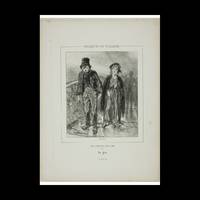
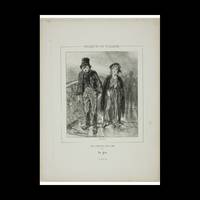
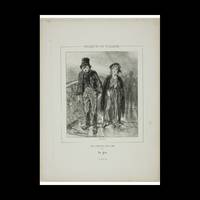
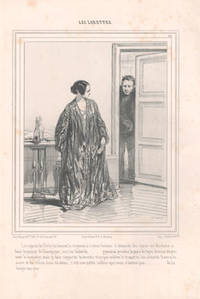
16-6133Paris: Chez Bauger Chez Aubert 1841. Lithograph sur blanc. 33.3 x 23.5 cm. Plate no. XIII from the series: "Les Lorettes." Armelhault and Bocher no. 775. Les Lorettes described by scholars:MLA citation: Murphy Libby and Greggor Mattson. A la Recherche des Femmes Perdues. Oberlin College 2016.Prostitution was a common social phenomenon that was practiced by women regardless of class but the type of prostitute varied depending on the status of the men involved. The social standing of prostitutes often shifted throughout their lifetimes but their roles generally remained within four basic levels of prostitution. This exhibit focuses on these four important types of prostitutes imagined and mythologized in various media of the time. The lorette the aspiring courtesan was the prostitute of mystery elusive and secretive often evading the government’s health regulations. The grisette was a prostitute from a working-class background often found inhabiting the apartments of young Parisian students. The fille publique or streetwalker was from the lowest class of prostitute and often attracted the poorest customers. Walking the street alone or in groups la fille publique was most vulnerable to police repression. And finally women in “maisons closes†or brothels catered to men of different social classes. The most luxurious brothels attracted middle class men with their continuous business. These women though varying in status participated in a form of sexual commerce that was common in French society in the 19th century. Paris: Chez Bauger, Chez Aubert, 1841 unknown
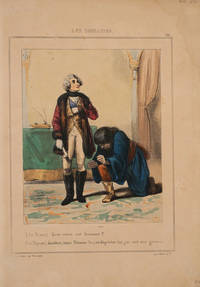
185724514Paris: Chez Aubert & Cie 1857. Very good condition. Caricature by Paul Gavarni 1804 - 1866 French satirical artist noted for his clever observations of contemporary life and elegant genre scenes and imitated by artists such as James McNeill Whistler. The image depicts a dandified prince with kneeling peasant at his feet asking for justice and hurry up my knee hurts!. Handsome colored lithograph highlighted with gum arabic printed at upper right border is the number 26. Faint damp stain upper right margin. Paper size approximately 9 1/2 x 12 1/2" Chez Aubert & Cie unknown
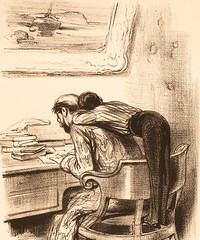
04-1781Paris: Le Charivari 1840. Lithograph. Image: 20 x 15.5 cm. Sheet: 34 x 24 cm. Armelhault & Bocher no. 487. Published in Le Charivari text verso. Paris: Le Charivari, 1840. unknown
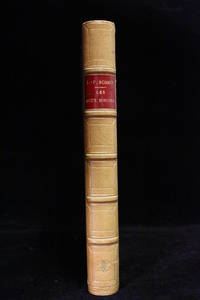
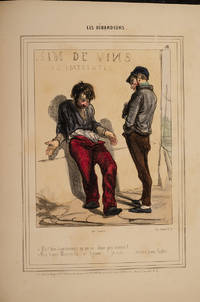
1840GT1000Paris: Aubert & Co 1840. Original First Edition . Hardback. Fine. Published originally in 'Le Charivi'. Prints made by Paul Gavarni and printed by Aubert & Cie. 35x26cms. Printed on heavy paper. Bound in a contempary hardback binding with an attractive floral patterned black cloth. Black calf spine with attractive gilt decoration and titles. These illustrations of stevedores are all in nice condition but occasional margin foxing. A COMPLETE SET <br/> <br/> Aubert & Co, hardcover
184468289à Paris: Chez A. Royer 1844. Fine. Chez A. Royer à Paris 1844 16.50 x 26 cm relié First edition illustrated with a frontispiece drawn by Schmit and engraved by Hilaire Guesnu with 37 color plates hors-texte instead of 38 and vignettes by Schmit Gavarni Nanteuil and Schlesinger. Half green shagreen binding faded spine with four raised bands set with gilt cartouches and gilt compartments decorated with typographical corner motifs double gilt fillets framing the green boards yellow paper endpapers and pastedowns edges gilt. Some occasional foxing one gathering entirely yellowed pages 26 to 35 one color plate and one gathering foxed one color hors-texte engraving is missing. Handsomely illustrated first edition. Chez A. Royer hardcover
184455454à Paris: Chez A. Royer 1844. Fine. Chez A. Royer à Paris 1844 15 x 25.50 cm relié First edition illustrated with a frontispiece drawn by Schmit and engraved by Hilaire Guesnu 38 plates and vignettes by Schmit Gavarni Nanteuil and Schlesinger. Full green shagreen binding spine with four raised bands set with gilt dentelle compartments decorated with quadruple gilt framing fillets and cold-stamped fillets double fillets and dotted gilt rolls at head and foot fine hatchings on headcaps cold-stamped fillets and multiple gilt fillets framing the boards gilt rolls framing the pastedowns gilt fillet on leading edges. Some foxing. Handsomely illustrated first edition. Chez A. Royer hardcover
184449301Paris: A. Royer 1844. Fine. A. Royer Paris 1844 - relié First edition illustrated with a frontispiece 37 lithographed plates and numerous vignettes by C. Nanteuil Gavarni Français J.P. Schmit De Beaumont Bertand. Half havana brown morocco binding with corners spine with five raised bands decorated with gilt compartments gilt date and monogram at foot red morocco title label gilt fillet frame on marbled paper boards marbled endpapers and pastedowns one corner slightly bumped top edge gilt elegant binding signed by Petit. Foxing. A. Royer hardcover
Paris, A. Royer, 241, place du Palais Royal, au premier, 1844. In-4 Relié en demi-basane verte, dos lisse à faux-nerfs dorés, fleurons et titre doré. XIV + 458 pages. Edition originale illustrée d'un frontispice, de 37 planches lithographiées ainsi que de nombreuses vignettes de C. Nanteuil, Gavarni, Français, J.P. Schmit, De Beaumont, Bertand.; Rousseurs aux premiers feuillets ainsi que mention manuscrite au stylo bille au verso du frontispice.
04-1800Paris: Le Charivari 1840. Lithograph. Image: 19.5 x 16 cm. Sheet: 22.5 x 31.5 cm. Armelhault & Bocher no. 308. Foxing. Paris: Le Charivari, 1840. unknown
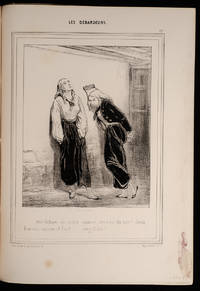
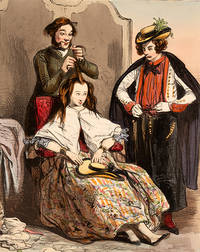
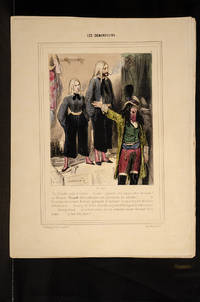
05550Paris: Au Bureau du Charivari 1840. Sixty-Six Lithographed Plates by Gavarni<br /> "Stevedores" at the Carnival of Paris <br /> <br /> GAVARNI pseudonym of Guillaume Sulpice Chevallier. Les Débardeurs. Album Comique par Garvarni. Paris: Au Bureau du Journal Amusant & Petit Journal pour Rire. Chez Bauger 1840-1842.<br /> <br /> Three large quarto volumes 13 1/4 x 10 inches; 337 x 253 mm. Sixty-six numbered lithographed plates. Plates printed by Aubert & Cie. Mixed states of the plates as per Armelhault & Bocher. The first forty-four plates with some occasional marginal staining not affecting images some light foxing affecting just a few plates.<br /> <br /> Publisher's printed green paper wrappers with original glassine wrappers. Front wrappers of parts 1 & 2 with some minor discoloration on foredge. Overall an excellent example - the first that we have seen in the original printed wrappers.<br /> <br /> A series of sixty-six lithographs of which nine first appeared in other journals eight in La Caricature plates 21 23 and 24 under the title "Souvenirs du Carnaval" and 32 44 49 54 and 61 under the title "Les Débardeurs" and one plate 58 in La Mode prior to the publication of the entire series in Le Charivari from 19 January 1840 to 5 February 1842.<br /> <br /> "In Les Débardeurs.a series of sixty-six lithographs published in Le Charivari between 1840 and 1843 Gavarni depicts a variation on the most famous of the costumes he designed for the masquerade balls the débardeur stevedore. The braided wig loose shirt black velvet trousers fastened with brass buttons and tied with a fringed sash are derived from the working costume of the longshoreman or stevedore who unloaded the barges that traveled up the Seine to Paris. As Nancy Olsen points out in Gavarni: The Carnival Lithographs the majority of Gavarni's carnival lithographs reflect his interest in the small groups that drift away from the crowd as a consequence of the romantic liaisons that preoccupied many of the participants at a masked ball. Intrigue was the name of the gave and the information being conveyed in this scene comes in all probability from an agent provocateur" Beatrice Farwell The Charged Image: French Lithographic Caricature 1816-1848 p. 88.<br /> <br /> "This is the most considerable of the several series of lithographs devoted by Gavarni to the balls which were a passion with him. He was an organizer and patron of the more elegant and he found the popular balls at the Opera and elsewhere an attractive subject for his designs. Théophile Gautier who believed that at this period Parisian balls had virtually 'effaced the former carnival of Venice' called Gavarni 'their depicter and historian.' As dancers throw themselves into their round of pleasure 'a man stands with his back against a pillar; he watches he listens he observes.' And the following day on stone 'he lends his own wit to all the masks perhaps stupid in themselves; he sums up in a profound word the chit-chat of the foyer; he translates into a pleasant legend the hoarse excitement of the hall.' Quoted by Lemoisne I 120" Ray The Art of the French Illustrated Book.<br /> <br /> Such elements have made Gavarni's carnival lithographs among his finest most famous and desired works of art.<br /> <br /> Armelhault & Bocher nos. 486-542 307-309 plates 21 23 and 24 259-263 plates 44 49 32 54 and 61 and 1223 plate 58. Ray The Art of the French Illustrated Book 154. Paris: Au Bureau du Charivari, 1840 unknown
05942Paris: Au Bureau du Journal Amusant & du Petit Journal pour Rire 1840. One Hundred and Twenty-Two Hand Colored Lithographed Plates by Paul Gavarni<br /> Including the "Stevedores" at the Carnival of Paris <br /> Le Carnaval a Paris 1e Série & Le Carnaval a Paris<br /> <br /> GAVARNI pseudonym of Guillaume Sulpice Chevallier. Oeuvres de Garvarni. Les Debardeurs: Le Carnaval: Le Carnaval a Paris. Paris: Chez Aubert 1838-1843. <br /> <br /> Folio. All plates measuring 13 3/8 x 10 1/8 inches; 339 x 257 mm.<br /> <br /> Contents: <br /> <br /> Les Debardeurs. A complete series of sixty-six hand colored lithographs of which nine first appeared in other journals eight in La Caricature plates 21 23 and 24 under the title "Souvenirs du Carnaval" and 32 44 49 54 and 61 under the title "Les Débardeurs" and one plate 58 in La Mode prior to the publication of the entire series in Le Charivari from 19 January 1840 to 5 February 1842. <br /> <br /> and:<br /> <br /> Le Carnaval 1e. Série. Paris: Chez Auberrt 1838-1839.<br /> <br /> First series complete. Twenty-seven superb hand colored lithograph plates all with printed captions. Armelhault & Bocher 375-397. <br /> <br /> and:<br /> <br /> Le Carnaval a Paris. Paris: Chez Aubert 1841-1843.<br /> <br /> 29 0f 40 hand colored lithograph plates missing plate nos. 1 4 5 6 15 21 22 23 24 25 & 32.<br /> <br /> A total of 122 superb hand colored lithographs all heightened with gum arabic.<br /> <br /> Housed together in the original quarter scored calf over mottled blue boards clamshell case with original blue cloth ties.<br /> <br /> "In Les Débardeurs.a series of sixty-six lithographs published in Le Charivari between 1840 and 1843 Gavarni depicts a variation on the most famous of the costumes he designed for the masquerade balls the débardeur stevedore. The braided wig loose shirt black velvet trousers fastened with brass buttons and tied with a fringed sash are derived from the working costume of the longshoreman or stevedore who unloaded the barges that traveled up the Seine to Paris. As Nancy Olsen points out in Gavarni: The Carnival Lithographs the majority of Gavarni's carnival lithographs reflect his interest in the small groups that drift away from the crowd as a consequence of the romantic liaisons that preoccupied many of the participants at a masked ball. Intrigue was the name of the gave and the information being conveyed in this scene comes in all probability from an agent provocateur" Beatrice Farwell The Charged Image: French Lithographic Caricature 1816-1848 p. 88.<br /> <br /> "This is the most considerable of the several series of lithographs devoted by Gavarni to the balls which were a passion with him. He was an organizer and patron of the more elegant and he found the popular balls at the Opera and elsewhere an attractive subject for his designs. Théophile Gautier who believed that at this period Parisian balls had virtually 'effaced the former carnival of Venice' called Gavarni 'their depicter and historian.' As dancers throw themselves into their round of pleasure 'a man stands with his back against a pillar; he watches he listens he observes.' And the following day on stone 'he lends his own wit to all the masks perhaps stupid in themselves; he sums up in a profound word the chit-chat of the foyer; he translates into a pleasant legend the hoarse excitement of the hall.' Quoted by Lemoisne I 120" Ray The Art of the French Illustrated Book.<br /> <br /> Such elements have made Gavarni's carnival lithographs among his finest most famous and desired works of art.<br /> <br /> There was another similar title by Gavarni Le Carnaval. Paris: Chez Aubert 1838-39 which had twenty-seven completely different plates <br /> <br /> This series of plates by Gavarni is quite rare; only three copies are listed in OCLC and it has not sold at auction in the last forty-two years. <br /> <br /> In the nineteenth century the Paris carnival was the most extravagant among the European carnivals. It would last for several days and consist of masked balls both private and public street processions and feasting during which vibrant street scenes costumes and decorated floats would be on display.<br /> <br /> Armelhault & Bocher Les Debardeurs 486-542 307-309 plates 21 23 and 24 259-263 plates 44 49 32 54 and 61 and 1223 plate 58; Le Carnaval 375-397; Le Carnaval a Paris 251-257 398-422 1232 1709-1711.<br /> Ray The Art of the French Illustrated Book 154. Paris: Au Bureau du Journal Amusant & du Petit Journal pour Rire, 1840 unknown
05232Paris: Au Bureau du Charivari 1840. Sixty-Four of Sixty-Six<br /> Hand-Colored Lithographed Plates by Gavarni<br /> Depicting "The Stevedores"<br /> <br /> GAVARNI Paul pseudonym of Guillaume Sulpice Chevallier. Les Débardeurs. Album par Garvarni. Paris: Au Bureau du Charivari n.d. 1840-1842.<br /> <br /> Large quarto 14 1/2 x 11 1/4 inches; 367 x 285 mm. Sixty-four of sixty-six superb numbered hand-colored lithographed plates heightened with gum arabic loose as issued. Plates printed by Aubert & Cie.<br /> <br /> The two missing plates are numbers 59 & 65.<br /> <br /> A few plates with some light foxing to blank margins only plates 14 29 43 & 51 with small marginal tears not affecting images otherwise a remarkably fine and clean suite of these wonderful plates. <br /> <br /> A series of sixty-six lithographs of which nine first appeared in other journals eight in La Caricature plates 21 23 and 24 under the title "Souvenirs du Carnaval" and 32 44 49 54 and 61 under the title "Les Débardeurs" and one plate 58 in La Mode prior to the publication of the entire series in Le Charivari from 19 January 1840 to 5 February 1842.<br /> <br /> "This is the most considerable of the several series of lithographs devoted by Gavarni to the balls which were a passion with him. He was an organizer and patron of the more elegant and he found the popular balls at the Opera and elsewhere an attractive subject for his designs. Théophile Gautier who believed that at this period Parisian balls had virtually 'effaced the former carnival of Venice' called Gavarni 'their depicter and historian.' As dancers throw themselves into their round of pleasure 'a man stands with his back against a pillar; he watches he listens he observes.' And the following day on stone 'he lends his own wit to all the masks perhaps stupid in themselves; he sums up in a profound word the chit-chat of the foyer; he translates into a pleasant legend the hoarse excitement of the hall.' Quoted by Lemoisne I 120" Ray The Art of the French Illustrated Book.<br /> <br /> "In this work "Ton Alfred est un gueux: il est ici avec l'autre.calme-toi!" from a series of sixty-six lithographs published in Le Charivari between 1840 and 1843 Gavarni depicts a variation on the most famous of the costumes he designed for the masquerade balls the débardeur the stevedore. The braided wig loose shirt black velvet trousers fastened with brass buttons and tied with a fringed sash are derived from the working costume of the longshoreman or stevedore who unloaded the barges that traveled up the Seine to Paris. As Nancy Olsen points out in Gavarni: The Carnival Lithographs the majority of Gavarni's carnival lithographs reflect his interest in the small groups that drift away from the crowd as a consequence of the romantic liaisons that preoccupied many of the participants at a masked ball. Intrigue was the name of the gave and the information being conveyed in this scene comes in all probability from an agent provocateur" Beatrice Farwell The Charged Image: French Lithographic Caricature 1816-1848 p. 88.<br /> <br /> Armelhault & Bocher nos. 486-542 307-309 plates 21 23 and 24 259-263 plates 44 49 32 54 and 61 and 1223 plate 58. Ray The Art of the French Illustrated Book 154.<br /> <br /> The Plates:<br /> <br /> 1. Le Débardeur mâle et femelle.vivants!.<br /> 2. Caporal on gele dans votre satanè violon!.<br /> 3. Amanda l'Ecuyer. Rue.<br /> 4. Qui Moi et Zélie Achille et toi.<br /> 5. Un amour de petit ménage; quoi! Ça se retire à la pointe du jour bien paisibles!.<br /> 6. On va pincer son petit cancan mais bien en douceur.<br /> 7. Le Vicomte Aime de Trois Etoiles et Dame Eloa de Tremblement.<br /> 8. Ah! qu'il est beau!.<br /> 9. Malheureuse enfant! Qu'as - tu fait de ton sexe.<br /> 10. Pauvre Elvire emportée aux flots du bal Musard.<br /> 11. C'est comme ça que tu les intrigues.merci!<br /> 12. En voulez-vous de la crevette.pas cher.<br /> 13. Va dire à ta mère qu'a te mouche.<br /> 14. Je vous dis que vous avez dansé d'une façon.<br /> 15. Comment Lili ne reconnait pas son Nini!<br /> 16. Y en-a-ti des femmes y'en a-t-i.<br /> 17. Allons Landerneau mon bonhomme!.<br /> 18. Ça ne te regarde pas de quoi te mèles-tu.<br /> 19. .être fichues au violon comme des rien du tout!.<br /> 20. Six pouces de jambes et le dos tout de suite!.<br /> 21. "L'Intolérance est fille des faux Dieux!".<br /> 22. Voyons Angelina as-tu assez fait poser Mosieu<br /> 23. Va donc!.Singulier masculin!<br /> 24. C'est mon Débardeur!.<br /> 25. C'est d'main matin qu'mon tendre époux va beugler.<br /> 26. Te v'la ici toi! C'est comme ça qu'tas ta migraine.<br /> 27. J'espère que tu vas te tenir Angélique.<br /> 28. Voilà un fénéant qui dort et qui laisse une pauv femme danser toute la nuit!.<br /> 29. .une douzaine d'huitres et mon coeur.<br /> 30. V'la qu'i fait jour: j'suis échigné moi dam! Et toi.<br /> 31. On rit avec vous et tut e faches.en voilà un drôle de pistolet!<br /> 32. Tais-toi moutard faut laisser jaser l'autorité!.<br /> 33. V'là un gueux de petit pékin qui se divertit au bal comme un grain de plomb dans du champagne.<br /> 34. .Et si Cornélie ne trouvait pas de voiture.<br /> 35. Toi je te repigerai!<br /> 36. Qu'est-ee que c'est Tu vous deranges pour ça et t'en voudrais déja p'us.<br /> 37. Le Débardeur - Ne me parlez pas des femmes en Carnaval pour s'amuser!.<br /> 38. Ils vont venir: écoute Hortense! Sur le coup de minuit minuit et demi vois-tu.<br /> 39. V'là qu'elles ont des mots!.Fameux!.<br /> 40. Et ton Epouse.<br /> 41. Est-ce que vous n'en avez pas bientot assez Angélina du Carnaval.<br /> 42. As-tu vu M'ame Alexandre et l'ancienne à Paul qui sont à se peigner en bas pour ce Paltoquet d'Eugène!.<br /> 43. Aurai-je l'honneur de danser un galop ávec Mosieu le Baron.<br /> 44. P'us que ça de bouillon! Merci.<br /> 45. J'te parie mon Alezan doré contre ta Vicomtesse que j'emporte ce soir le petit rat du Baron.<br /> 46. Ton Alfred est un gueux: il est ici avec l'autre.<br /> 47. Qu'est-ce que t'as mon vieux Auguste - Rien!.<br /> 48. Eh! b'en Landerneau ça ne vas donc pas mieux.<br /> 49. Allons! allons Mazuzi! Tiens-toi allons!.<br /> 50. Mon cher le municipal a emporté le petit muf'e avec qui je dansais parcequ'I voulait pincer son Cancan.<br /> 51. Ah! ça décidément Caroline est folle du petit Anglais.<br /> 52. J'i ai dit! J i dit Madame si vous vous permettez de fich.<br /> 53. As tu vu M'ame Chose et le petit Baron qui ne peuvent pas se voir.<br /> 54. Monter à cheval sur le cou d'un homme qu'on ne connait pas t'appelle çà plaisanter toi!<br /> 55. Je f'avertis Milord.sit u dines demain avec cette Andalouse-lá.<br /> 56. Qu'est que t'as la Mômignarde.<br /> 57. Çà! C;est pas la perruque à Jules!.<br /> 58. Un honnête Domino! Des airs décents.<br /> <br /> 60. Voyez-vous mon petit Larrims j'ai de l'amitié pour vous tout plein tout plein! Mais.<br /> 61. Tu danseras Coquardeau!.<br /> 62. Doux Jésus! Où que je vas me sauver.<br /> 63. Agathe et toi mon vieux Ferdinand ça ne sera pas long.<br /> 64. V'là trois heures Titine; filons! Faut que je sois levé au petit jour.<br /> <br /> 66. Oh! Hé! Viens-tu souper la Gustine! Paris: Au Bureau du Charivari, 1840 unknown
05386Paris: Au Bureau du Charivari 1840. Sixty-Six Magnificent Hand-Colored Lithographed Plates by Gavarni<br /> Depicting "The Stevedores"<br /> <br /> GAVARNI Paul pseudonym of Guillaume Sulpice Chevallier. Les Débardeurs. Paris: Au Bureau du Charivari n.d. 1840-1842.<br /> <br /> Folio 13 7/8 x 10 3/8 inches; 353 x 264 mm. Sixty-six superb numbered hand-colored lithographed plates heightened with gum arabic. Plates printed by Aubert & Cie. Plate numbers 316 29 32 33 39 43 51 & 52 a little shorter on outer margins. Plate number 52 with neat repairs to top and bottom blank margins. A few plates slightly toned still an excellent copy of this extremely rare Gavarni title.<br /> <br /> Modern blue cloth over boards front cover with dark green straight-grain morocco label bordered and lettered in gilt. An excellent example of this exceptionally rare and highly amusing book <br /> <br /> A series of sixty-six lithographs of which nine first appeared in other journals eight in La Caricature plates 21 23 and 24 under the title "Souvenirs du Carnaval" and 32 44 49 54 and 61 under the title "Les Débardeurs" and one plate 58 in La Mode prior to the publication of the entire series in Le Charivari from 19 January 1840 to 5 February 1842.<br /> <br /> Exceptionally Rare with OCLC locating just one complete colored copy in libraries and institutions worldwide: Morgan Library and Museum - the Gordon Ray copy NY US. <br /> <br /> OCLC also locates two other copies neither of which states 'color' plates: Yale University Library CT US and Clark Art Institute MA US.<br /> <br /> "In this work. from a series of sixty-six lithographs published in Le Charivari between 1840 and 1843 Gavarni depicts a variation on the most famous of the costumes he designed for the masquerade balls the débardeur the stevedore. The braided wig loose shirt black velvet trousers fastened with brass buttons and tied with a fringed sash are derived from the working costume of the longshoreman or stevedore who unloaded the barges that traveled up the Seine to Paris. As Nancy Olsen points out in Gavarni: The Carnival Lithographs the majority of Gavarni's carnival lithographs reflect his interest in the small groups that drift away from the crowd as a consequence of the romantic liaisons that preoccupied many of the participants at a masked ball. Intrigue was the name of the gave and the information being conveyed in this scene comes in all probability from an agent provocateur" Beatrice Farwell The Charged Image: French Lithographic Caricature 1816-1848 p. 88.<br /> <br /> Armelhault & Bocher nos. 486-542 307-309 plates 21 23 and 24 259-263 plates 44 49 32 54 and 61 and 1223 plate 58. Ray The Art of the French Illustrated Book 154.<br /> <br /> The Plates:<br /> <br /> 1. Le Débardeur mâle et femelle.vivants!.<br /> 2. Caporal on gele dans votre satanè violon!.<br /> 3. Amanda l'Ecuyer. Rue.<br /> 4. Qui Moi et Zélie Achille et toi.<br /> 5. Un amour de petit ménage; quoi! Ça se retire à la pointe du jour bien paisibles!.<br /> 6. On va pincer son petit cancan mais bien en douceur.<br /> 7. Le Vicomte Aime de Trois Etoiles et Dame Eloa de Tremblement.<br /> 8. Ah! qu'il est beau!.<br /> 9. Malheureuse enfant! Qu'as - tu fait de ton sexe.<br /> 10. Pauvre Elvire emportée aux flots du bal Musard.<br /> 11. C'est comme ça que tu les intrigues.merci!<br /> 12. En voulez-vous de la crevette.pas cher.<br /> 13. Va dire à ta mère qu'a te mouche.<br /> 14. Je vous dis que vous avez dansé d'une façon.<br /> 15. Comment Lili ne reconnait pas son Nini!<br /> 16. Y en-a-ti des femmes y'en a-t-i.<br /> 17. Allons Landerneau mon bonhomme!.<br /> 18. Ça ne te regarde pas de quoi te mèles-tu.<br /> 19. .être fichues au violon comme des rien du tout!.<br /> 20. Six pouces de jambes et le dos tout de suite!.<br /> 21. "L'Intolérance est fille des faux Dieux!".<br /> 22. Voyons Angelina as-tu assez fait poser Mosieu<br /> 23. Va donc!.Singulier masculin!<br /> 24. C'est mon Débardeur!.<br /> 25. C'est d'main matin qu'mon tendre époux va beugler.<br /> 26. Te v'la ici toi! C'est comme ça qu'tas ta migraine.<br /> 27. J'espère que tu vas te tenir Angélique.<br /> 28. Voilà un fénéant qui dort et qui laisse une pauv femme danser toute la nuit!.<br /> 29. .une douzaine d'huitres et mon coeur.<br /> 30. V'la qu'i fait jour: j'suis échigné moi dam! Et toi.<br /> 31. On rit avec vous et tut e faches.en voilà un drôle de pistolet!<br /> 32. Tais-toi moutard faut laisser jaser l'autorité!.<br /> 33. V'là un gueux de petit pékin qui se divertit au bal comme un grain de plomb dans du champagne.<br /> 34. .Et si Cornélie ne trouvait pas de voiture.<br /> 35. Toi je te repigerai!<br /> 36. Qu'est-ee que c'est Tu vous deranges pour ça et t'en voudrais déja p'us.<br /> 37. Le Débardeur - Ne me parlez pas des femmes en Carnaval pour s'amuser!.<br /> 38. Ils vont venir: écoute Hortense! Sur le coup de minuit minuit et demi vois-tu.<br /> 39. V'là qu'elles ont des mots!.Fameux!.<br /> 40. Et ton Epouse.<br /> 41. Est-ce que vous n'en avez pas bientot assez Angélina du Carnaval.<br /> 42. As-tu vu M'ame Alexandre et l'ancienne à Paul qui sont à se peigner en bas pour ce Paltoquet d'Eugène!.<br /> 43. Aurai-je l'honneur de danser un galop ávec Mosieu le Baron.<br /> 44. P'us que ça de bouillon! Merci.<br /> 45. J'te parie mon Alezan doré contre ta Vicomtesse que j'emporte ce soir le petit rat du Baron.<br /> 46. Ton Alfred est un gueux: il est ici avec l'autre.<br /> 47. Qu'est-ce que t'as mon vieux Auguste - Rien!.<br /> 48. Eh! b'en Landerneau ça ne vas donc pas mieux.<br /> 49. Allons! allons Mazuzi! Tiens-toi allons!.<br /> 50. Mon cher le municipal a emporté le petit muf'e avec qui je dansais parcequ'I voulait pincer son Cancan.<br /> 51. Ah! ça décidément Caroline est folle du petit Anglais.<br /> 52. J'i ai dit! J i dit Madame si vous vous permettez de fich.<br /> 53. As tu vu M'ame Chose et le petit Baron qui ne peuvent pas se voir.<br /> 54. Monter à cheval sur le cou d'un homme qu'on ne connait pas t'appelle çà plaisanter toi!<br /> 55. Je f'avertis Milord.sit u dines demain avec cette Andalouse-lá.<br /> 56. Qu'est que t'as la Mômignarde.<br /> 57. Çà! C;est pas la perruque à Jules!.<br /> 58. Un honnête Domino! Des airs décents.<br /> 59. Avec l'agrément de cet agréable muf'e là pourraît-on Madame pincer avec toi le prochain rigodon<br /> 60. Voyez-vous mon petit Larrims j'ai de l'amitié pour vous tout plein tout plein! Mais.<br /> 61. Tu danseras Coquardeau!.<br /> 62. Doux Jésus! Où que je vas me sauver.<br /> 63. Agathe et toi mon vieux Ferdinand ça ne sera pas long.<br /> 64. V'là trois heures Titine; filons! Faut que je sois levé au petit jour.<br /> 65. Voyons sit u te souviens!.Numéro.<br /> 66. Oh! Hé! Viens-tu souper la Gustine! Paris: Au Bureau du Charivari, 1840 unknown
04-1782Paris: Le Charivari 1839. Lithograph. Image: 20 x 15.5 cm. Sheet: 34 x 24 cm. Armelhault & Bocher no. 371. Published in Le Charivari text verso. Paris: Le Charivari, 1839. unknown
04-1783Paris: Le Charivari 1839. Lithograph. Image: 20 x 15.5 cm. Sheet: 34 x 24 cm. Armelhault & Bocher no. 572. Published in Le Charivari text verso. Foxing. Paris: Le Charivari, 1839. unknown
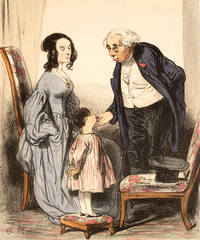
05982Paris: Bauger et Cie. 1838-42. Gavarni's "Terrible Children"<br /> Fifty Superb Hand Colored Lithographs Including the Pictorial Title-Page<br /> <br /> GAVARNI Paul pseudonym of Guillaume Sulpice Chevallier. Les Enfans terribles. Paris: Bauger et Cie. n.d. 1838-1842.<br /> <br /> First edition. Large quarto 13 11/16 x 10 1/2 inches; 345 x 267 mm. Pictorial hand-colored lithograph title-page and forty-nine numbered hand-colored lithographed plates printed by Aubert & Cie. Imprints vary plate 1 has imprint: Edite par le Charivari; plates 2-5 have imprint: Au Bureau du Charivari; plates 6-13 15-24 and 38-43 have imprint: Chez Bauger; plates 14 and 44-49 have imprint: Chez Bauger & Cie.; plates 25-37 have imprint: Se vend chez Bauger & Cie. Editeurs des Dessins de la Caricature du Figaro et du Charivari; plates 11 44 47 and 49 have additional imprint: Chez Aubert; and plate 25 has no imprint. Bound in at the end is a leaf of advertisement Des Modes Parisiennes verso blank and the sixteen page Aubert et Cie. Livres et Albums. <br /> <br /> Mid-twentieth century quarter dark blue cloth over blue imitation leather boards covers decoratively stamped in blind front cover decoratively lettered in gilt. Smooth spine lettered horizontally in gilt. The superb hand-colored lithographs bright and colorful. <br /> <br /> "Gavarni's conception of the enfant terrible has passed into a proverb. For all their apparent ingenuousness his appealing children are preternaturally sharp. They see and hear everything in their little world and they are infallible in announcing their discoveries where they will cause the most embarrassment. So a little boy asks a visitor: 'Sir who is it that invented gunpowder.since Papa says it isn't you' no. 10; or a little girl informs a suitor: 'Aunt Amelia says that you are very nice; but it's a pity that you are too stupid' no. 32" Ray The Art of the French Illustrated Book.<br /> <br /> "The forty-nine prints in Gavarni's series Les enfants terribles are among his most popular and well-known works legendary for their witty and memorable captions. Gavarni's enfants terribles are social landmines "holy terrors" who wittingly or unwittingly reveal the pettiness and duplicity of their parents. An illustrator of children's books Gavarni was the father of two children of his own to whom he was very attached. Gavarni loved the spontaneous poses and gestures of children and admired them for their disarming honesty. The term enfants terribles originally reserved for terrifyingly candid children who embarrass their parents came to be used to describe unconventional or unorthodox artists and writers-like Baudelaire and Flaubert-whose works reveal harsh truths about society that are embarrassing to guardians of the status quo." Allen Memorial Art Museum.<br /> <br /> "As the historical antecedent to Dennis the Menace and Calvin and Hobbes Les Enfans terribles was far more incisive and revealing in its social commentary. In its images Gavarni regularly uses the quasi-innocent questions or remarks of children to put the world of the adults around them in disarray. The subject is more often than not the marital or extra-marital situations of the grown-ups" Beatrice Farwell The Charged Image p. 91.<br /> <br /> According to OCLC there is just one example in libraries & institutions worldwide: The Gordon Ray copy at The Morgan Library & Museum NY USA - also apparently without the pictorial hand colored title-page.<br /> <br /> Paul Gavarni 1804-1866. "A French artist best known for his lithographs Paul Gavarni née Chevalier Suplice Guillaume was born in Paris on January 13 1804. Throughout his lifetime Gavarni produced over 4000 satirical prints for journals and fashion magazines. Both delicately witty and elegantly revealing of human behavior and character Gavarni's genre scenes made him one of the most important and popular nineteenth-century artists. He is often critically paired with Honoré Daumier with whom he and other young printmakers like Jean-Jacques Grandville and Joseph Traviés raised the status and importance of social lithography and printmaking as an art form.<br /> <br /> The Plates:<br /> <br /> 1. J'ai assez vu mon Cousin moi! M'man viens tu t'en<br /> 2. Adieu Madame à bientôt puisque vous permettez que je vienne amsi vous ennuyer quelquefois.<br /> 3. Petit Chérubin j'ai apporté du bonbon pour vous: Je vous le donnerai quand je m'en irai.<br /> 4. Monsieur! N'est - ce pas que ça n'est pas vrai quevous n'avez pas les Cheveux peints<br /> 5. Oh! c'est vrai! T'as les yeux comme les lanternes de ton cabriolet.ah bien!.<br /> 6. Grand Papa sa fiche de petite maman parceque petite Maman s'est fait des tetais avec du coton na!<br /> 7. Mère! Est-ce que c'est le crevè de ce matin que t'as dit que ça serit toujours assez bon pour lui<br /> 8. Petit amour comment s'appelle Madame votre maman.<br /> 9. Maman v avenir pas tout de suite: elle est avec Madame Pelet. Vous ne la connaissez pas Madame Pelet.<br /> 10. Qu'est-ce donc qui l'a inventée la poudres Monsieur.que papa dit que ce n'est pas vous.<br /> 11. Après diner Maman n'est ce pas j'ai été bien sage nous irons chez mon bon ami.<br /> 12. N'est-ce pas ma mère que c'est bien vilain de dire: vous m'embêtez Eh! bien ma bonne a dit tout-a-l'heure à mon Papa.<br /> 13. Quand Maman aime bien petit Papa elle appelle petit Papa "ma niniche".<br /> 14. La rose que vous avez donnée à Maman. Ah! oui oui!. que vous avez manque de vous casser le cou pour l'avoir.<br /> 15. N'est-ce pas Maman que le petit peigne à moustaches que Cornelie a trouvé ce matin dans ta chambre c'est pour moi<br /> 16. Maman! Maman! Ce Monsieur du Luxembourg que tu as dit tu sais bien que c'etait nn grand ami de Papa!.<br /> 17. Est-ce que c'est vrai Monsieur le Marquis que vous êtes toujours toujours oblige de regarder en Bourgogne si la Champagne brûle.<br /> 18. C'est vous qu'ètes le grand sec qui vient toujours pour diner. Monsieur Papa n'y est pas.<br /> 19. Ils t'on dit de jouer tant que tu voudras dans la salle à manger> et ta mère!. t'a donné!.<br /> 20. Voyons! Faites attention: Que doit on faire lorsqu'on a pêché.<br /> 21. Monsieur Albert C'est un monsieur du Jardin-des-Plantes qui vient tous les jours pour faire l'explication des bêtes à Maman.<br /> 22. Houp! Houp! Papa.ah! mais tu ne fais pas si bien le cheval que Janisset dam!.<br /> 23. Mais pourquoi donc Mosieu Bachu que tu viens toujours embêter Papa comme ça pour ta mécanique.<br /> 24. Le spectacle etait-ce bien Et à-t-il été raisonnable Lolo - Lolo! Ne m'en parle pas.je dis en entrant.<br /> 25. Ma bonne bisque va M'man de se lever comme ça de bonne heure depuis que l'es revenue.<br /> 26. Que tu es donc godiche Tomon de venir tous les matins comme ça pour que Papa te mette de l'argent dans ton affaire.<br /> 27. Maman c'est Mosieu.tu sais ce Mosieu qui a ce nez.<br /> 28. Maman dit que vous savez tous les secrets de Polichinelle Mosieu d'Alby: qu'est-ce qui peut donc lui avoir abime le nez comme ça.dites!<br /> 29. Tu mettras plus jamais ton chapeau qui sent la pipe n'est pas m'man<br /> 30. Je le dirai!.que t'as encore pris dans le petit pot du rouge que Maman se met.<br /> 31. Papa empèche donc Françoise de se moquer toujours de moi parceque je lui dis que Monsieur Ward a montré l'Anglais à Maman.<br /> 32. Ma tante mélie dit que t'es bien gentil; mais que c'et dommage!.<br /> 33. Tu ne sais pas Petite Papa.cet animal de Maurice il n'a fait que faire pleurer Maman ce matin.<br /> 34. Ma tante Aurélie qui disait l'autre jour à Maman qu'elle t'en ferait voir des grises sit u deviens son mari.<br /> 35. La canne que Papa a trouvée dans l'armoire de Maman le jour qu'il était si en colère elle était bien plus belle que ça!.<br /> 36. Tu ne sais pas ta leçon ta tante va venir: tu seras grondé!.<br /> 37. Est-ce que c'est vrai Mosieu d'Alby que tu couperais des liards en quatres.<br /> 38. Si tu touches encore à la bouteille du vin muscat tu seras bien attrapée parceque papa a fait une marque au bouchon etune marque au goulot.<br /> 39. Un petit de la pension qui disait que t'étais renégat; j'y ai fichu des giffles.n'est ce pas père que t'es catholique<br /> 40. Est-ce que vous payez des impositions comme papa Mosieu Pastorin pour être usurier<br /> 41. Mosieu on ne peut pas voir papa il es ten train de faire faillite.<br /> 42. Cette madame de Lieusaint est-elle bête! Puisque je suis Charles Dubourg et que tu es mon papa.<br /> 43. Dis-donc Miroux.dis-donc Miroux.dequoi donc que madame Miroux te fait porter<br /> 44. Papa voilà ton homme de paille!<br /> 45. Mosieu Belassis moi j'ai pas des jambes en manches de veste.<br /> 46. Décidément mon cher ami vous n'êtes pas de force au piquet: je vous enfonce.<br /> 47. M'man n'y est pas parceque tu rentres avant cinq heures puisque si t'etais pas revenue avant cinq heures.<br /> 48. N'est-ce pas Mosieu Prud homme qu'il ne faut pas mettre un H à omelette.là! vois-tu M'man!<br /> 49. Maman a écrit à mosieu Prosper et papa a vu la lettre. O il était joliment en colère papa.parceque maman avait fait une faute.<br /> <br /> Armelhault & Bocher 565-613; Bobins V 1538; Ray The Art of the French Illustrated Book 152. Paris: Bauger et Cie., 1838-42 unknown
06002Paris: Bauger et Cie. 1838-42. Gavarni's "Terrible Children"<br /> Fifty Superb Hand Colored Lithographs Including the Pictorial Title-Page<br /> <br /> GAVARNI Paul pseudonym of Guillaume Sulpice Chevallier. Les Enfans terribles. Paris: Bauger et Cie. n.d. 1838-1842.<br /> <br /> First edition. Large quarto 13 11/16 x 10 1/2 inches; 345 x 267 mm. Pictorial lithograph title-page printed in black & blue and forty-nine numbered lithographed plates printed by Aubert & Cie. Imprints vary plate 1 has imprint: Edite par le Charivari; plates 2-5 have imprint: Au Bureau du Charivari; plates 6-13 15-24 and 38-43 have imprint: Chez Bauger; plates 14 and 44-49 have imprint: Chez Bauger & Cie.; plates 25-37 have imprint: Se vend chez Bauger & Cie. Editeurs des Dessins de la Caricature du Figaro et du Charivari; plates 11 44 47 and 49 have additional imprint: Chez Aubert; and plate 25 has no imprint. Bound in at the end is a leaf of advertisement Des Modes Parisiennes verso blank and the sixteen page Aubert et Cie. Livres et Albums. Some light foxing throughout. <br /> <br /> Late nineteenth century quarter red calf over red pebbled cloth boards. Smooth spine elaborately decorated and titled in gilt. Title-page neatly re-inserted with white archival tape. With the bookplates of Bernard Mamy and André Villet on front paste-down. A very good copy of a rare suite of plates. <br /> <br /> "Gavarni's conception of the enfant terrible has passed into a proverb. For all their apparent ingenuousness his appealing children are preternaturally sharp. They see and hear everything in their little world and they are infallible in announcing their discoveries where they will cause the most embarrassment. So a little boy asks a visitor: 'Sir who is it that invented gunpowder.since Papa says it isn't you' no. 10; or a little girl informs a suitor: 'Aunt Amelia says that you are very nice; but it's a pity that you are too stupid' no. 32" Ray The Art of the French Illustrated Book.<br /> <br /> "The forty-nine prints in Gavarni's series Les enfants terribles are among his most popular and well-known works legendary for their witty and memorable captions. Gavarni's enfants terribles are social landmines "holy terrors" who wittingly or unwittingly reveal the pettiness and duplicity of their parents. An illustrator of children's books Gavarni was the father of two children of his own to whom he was very attached. Gavarni loved the spontaneous poses and gestures of children and admired them for their disarming honesty. The term enfants terribles originally reserved for terrifyingly candid children who embarrass their parents came to be used to describe unconventional or unorthodox artists and writers-like Baudelaire and Flaubert-whose works reveal harsh truths about society that are embarrassing to guardians of the status quo." Allen Memorial Art Museum.<br /> <br /> "As the historical antecedent to Dennis the Menace and Calvin and Hobbes Les Enfans terribles was far more incisive and revealing in its social commentary. In its images Gavarni regularly uses the quasi-innocent questions or remarks of children to put the world of the adults around them in disarray. The subject is more often than not the marital or extra-marital situations of the grown-ups" Beatrice Farwell The Charged Image p. 91.<br /> <br /> According to OCLC there is just one example in libraries & institutions worldwide: The Gordon Ray copy at The Morgan Library & Museum NY USA - also apparently without the pictorial hand colored title-page.<br /> <br /> Paul Gavarni 1804-1866. "A French artist best known for his lithographs Paul Gavarni née Chevalier Suplice Guillaume was born in Paris on January 13 1804. Throughout his lifetime Gavarni produced over 4000 satirical prints for journals and fashion magazines. Both delicately witty and elegantly revealing of human behavior and character Gavarni's genre scenes made him one of the most important and popular nineteenth-century artists. He is often critically paired with Honoré Daumier with whom he and other young printmakers like Jean-Jacques Grandville and Joseph Traviés raised the status and importance of social lithography and printmaking as an art form.<br /> <br /> The Plates:<br /> <br /> 1. J'ai assez vu mon Cousin moi! M'man viens tu t'en<br /> 2. Adieu Madame à bientôt puisque vous permettez que je vienne amsi vous ennuyer quelquefois.<br /> 3. Petit Chérubin j'ai apporté du bonbon pour vous: Je vous le donnerai quand je m'en irai.<br /> 4. Monsieur! N'est - ce pas que ça n'est pas vrai quevous n'avez pas les Cheveux peints<br /> 5. Oh! c'est vrai! T'as les yeux comme les lanternes de ton cabriolet.ah bien!.<br /> 6. Grand Papa sa fiche de petite maman parceque petite Maman s'est fait des tetais avec du coton na!<br /> 7. Mère! Est-ce que c'est le crevè de ce matin que t'as dit que ça serit toujours assez bon pour lui<br /> 8. Petit amour comment s'appelle Madame votre maman.<br /> 9. Maman v avenir pas tout de suite: elle est avec Madame Pelet. Vous ne la connaissez pas Madame Pelet.<br /> 10. Qu'est-ce donc qui l'a inventée la poudres Monsieur.que papa dit que ce n'est pas vous.<br /> 11. Après diner Maman n'est ce pas j'ai été bien sage nous irons chez mon bon ami.<br /> 12. N'est-ce pas ma mère que c'est bien vilain de dire: vous m'embêtez Eh! bien ma bonne a dit tout-a-l'heure à mon Papa.<br /> 13. Quand Maman aime bien petit Papa elle appelle petit Papa "ma niniche".<br /> 14. La rose que vous avez donnée à Maman. Ah! oui oui!. que vous avez manque de vous casser le cou pour l'avoir.<br /> 15. N'est-ce pas Maman que le petit peigne à moustaches que Cornelie a trouvé ce matin dans ta chambre c'est pour moi<br /> 16. Maman! Maman! Ce Monsieur du Luxembourg que tu as dit tu sais bien que c'etait nn grand ami de Papa!.<br /> 17. Est-ce que c'est vrai Monsieur le Marquis que vous êtes toujours toujours oblige de regarder en Bourgogne si la Champagne brûle.<br /> 18. C'est vous qu'ètes le grand sec qui vient toujours pour diner. Monsieur Papa n'y est pas.<br /> 19. Ils t'on dit de jouer tant que tu voudras dans la salle à manger> et ta mère!. t'a donné!.<br /> 20. Voyons! Faites attention: Que doit on faire lorsqu'on a pêché.<br /> 21. Monsieur Albert C'est un monsieur du Jardin-des-Plantes qui vient tous les jours pour faire l'explication des bêtes à Maman.<br /> 22. Houp! Houp! Papa.ah! mais tu ne fais pas si bien le cheval que Janisset dam!.<br /> 23. Mais pourquoi donc Mosieu Bachu que tu viens toujours embêter Papa comme ça pour ta mécanique.<br /> 24. Le spectacle etait-ce bien Et à-t-il été raisonnable Lolo - Lolo! Ne m'en parle pas.je dis en entrant.<br /> 25. Ma bonne bisque va M'man de se lever comme ça de bonne heure depuis que l'es revenue.<br /> 26. Que tu es donc godiche Tomon de venir tous les matins comme ça pour que Papa te mette de l'argent dans ton affaire.<br /> 27. Maman c'est Mosieu.tu sais ce Mosieu qui a ce nez.<br /> 28. Maman dit que vous savez tous les secrets de Polichinelle Mosieu d'Alby: qu'est-ce qui peut donc lui avoir abime le nez comme ça.dites!<br /> 29. Tu mettras plus jamais ton chapeau qui sent la pipe n'est pas m'man<br /> 30. Je le dirai!.que t'as encore pris dans le petit pot du rouge que Maman se met.<br /> 31. Papa empèche donc Françoise de se moquer toujours de moi parceque je lui dis que Monsieur Ward a montré l'Anglais à Maman.<br /> 32. Ma tante mélie dit que t'es bien gentil; mais que c'et dommage!.<br /> 33. Tu ne sais pas Petite Papa.cet animal de Maurice il n'a fait que faire pleurer Maman ce matin.<br /> 34. Ma tante Aurélie qui disait l'autre jour à Maman qu'elle t'en ferait voir des grises sit u deviens son mari.<br /> 35. La canne que Papa a trouvée dans l'armoire de Maman le jour qu'il était si en colère elle était bien plus belle que ça!.<br /> 36. Tu ne sais pas ta leçon ta tante va venir: tu seras grondé!.<br /> 37. Est-ce que c'est vrai Mosieu d'Alby que tu couperais des liards en quatres.<br /> 38. Si tu touches encore à la bouteille du vin muscat tu seras bien attrapée parceque papa a fait une marque au bouchon etune marque au goulot.<br /> 39. Un petit de la pension qui disait que t'étais renégat; j'y ai fichu des giffles.n'est ce pas père que t'es catholique<br /> 40. Est-ce que vous payez des impositions comme papa Mosieu Pastorin pour être usurier<br /> 41. Mosieu on ne peut pas voir papa il es ten train de faire faillite.<br /> 42. Cette madame de Lieusaint est-elle bête! Puisque je suis Charles Dubourg et que tu es mon papa.<br /> 43. Dis-donc Miroux.dis-donc Miroux.dequoi donc que madame Miroux te fait porter<br /> 44. Papa voilà ton homme de paille!<br /> 45. Mosieu Belassis moi j'ai pas des jambes en manches de veste.<br /> 46. Décidément mon cher ami vous n'êtes pas de force au piquet: je vous enfonce.<br /> 47. M'man n'y est pas parceque tu rentres avant cinq heures puisque si t'etais pas revenue avant cinq heures.<br /> 48. N'est-ce pas Mosieu Prud homme qu'il ne faut pas mettre un H à omelette.là! vois-tu M'man!<br /> 49. Maman a écrit à mosieu Prosper et papa a vu la lettre. O il était joliment en colère papa.parceque maman avait fait une faute.<br /> <br /> Armelhault & Bocher 565-613; Bobins V 1538; Ray The Art of the French Illustrated Book 152. Paris: Bauger et Cie., 1838-42 unknown
1850903023AGParis, Charivari, [um 1850]. Lithographie 19,5 x 15,5 cm (hoch), Blattgröße 29 x 20,5 cm.
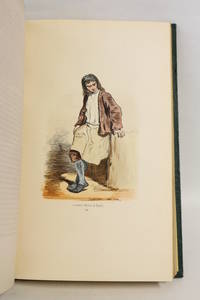
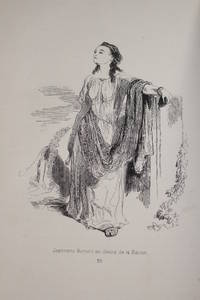
In-8 gr. (mm. 274x168), mz. pelle coeva (con abras.), fregi e tit. oro al dorso, pp. XXXV,525,(3), con centinaia di illustrazioni nel t. e 28 (su 30) tavv. f.t. dei migliori artisti dell'epoca, fra cui il celebre Gavarni, tutte inc. su legno (come da Indice). Famosa raccolta sui costumi dei personaggi d’ogni nazione che popolavano la capitale francese (il russo, il cinese, l'arabo, l'americano, lo svizzero, l'italiano e tanti altri), molto interessante per l'iconografia dell'epoca. I testi sono di autori diversi. "Edizione originale". Cfr. Carteret,III,224. Alone al marg. infer. sulle prime 60 carte, altrim. ben conservato.
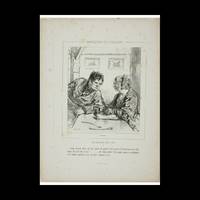
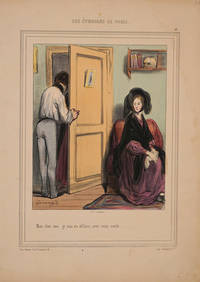
185724520Paris: Imp. d'Aubert 1857. Very good condition. Magnificently hand colored lithograph highlighted with gum arabic by Paul Gavarni 1804 - 1866 French satirical artist noted for his clever observations of contemporary life and elegant genre scenes and imitated by artists such as James McNeill Whistler. <br /> <br /> Depicting a young student with female visitor in his room fibbing to a visitor at his door that he is meeting with his uncle. Signed in the print at the lower left; Printed at the upper right border is the number 15. Paper size approximately 9 1/2 x 12 1/2" Imp. d'Aubert unknown